
Support BA! Burning Ambulance is a 501(c)(3) tax-exempt nonprofit. Donations to us are tax deductible under Internal Revenue Code (IRC) Section 170, and we are qualified to receive tax deductible bequests, devises, transfers, and gifts under sections 2055, 2106, or 2522. Support us through Fractured Atlas or BurningAmbulance.com.
Let’s kick off the second half of 2026 with one of our monthly roundups. This time, we’ve got a killer death metal record; a nostalgic instrumental hip-hop album; some organ music; three jazz musicians operating under a new name; and a trumpet/ajaeng duo. (What’s an ajaeng, you ask? Keep reading and find out!)
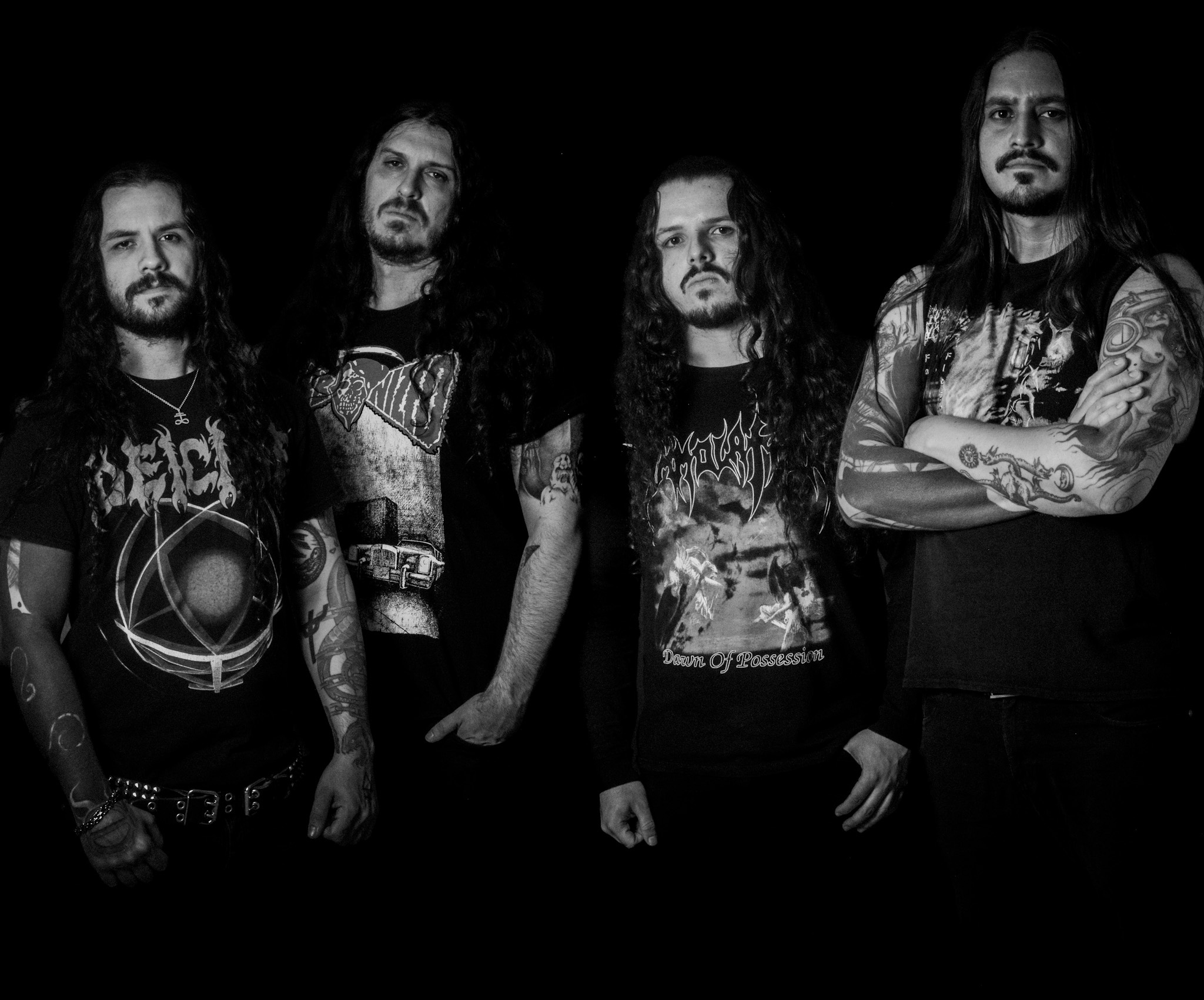
Astriferous are a death metal band from Costa Rica. They debuted in 2019 with a four-track demo, Raise High The Scepter Of Indulgence, following that up with the 2020 EP The Lower Levels Of Sentience and finally making their full-length debut on 2023’s Pulsations From The Black Orb. Their core sound was in place from the beginning; the demo kicked off with an eerie synth intro straight out of late ’80s/early ’90s death metal, and the riffs were a mix of downtuned chugging and dissonant squeals. The vocals were Rottweiler-esque, guttural to the point of incomprehensibility, and slathered in reverb.
On their first couple of formal releases, all of which have come via the London-based Me Saco Un Ojo label, they’ve cleaned up their music slightly, getting a little more punishing each time out. The mix on Pulsations From The Black Orb was loud and clear, allowing José Pablo Phillips’ bass to break through Federico Gutiérrez and Felipe Tencio’s storm of guitars and keeping the drums thunderous instead of typewriter-y. José María Arrea is not a subtle drummer, but his big rolls and almost hostile approach to the cymbals give the music a lot of energy. A weak drummer can make a death metal band sound like it’s hovering in place; Arrea keeps the train speeding down the tracks. And the vocals — from Tencio and Phillips — developed a flames-belched-in-your-face feel in the vein of Deicide or Ringworm (whose vocalist is literally named James “Human Furnace” Bullock).
The second Astriferous full-length, Atavistic Unraveling, came out last month. On first listen, it feels like a retreat from the occasionally almost prog-death creativity of Pulsations. The songs are a little more straightforward and pummeling, and the mix is thick and constricting. But as it goes on, subtleties reveal themselves, like the keyboards nestled within “The Floating Catacombs” and the repeated tempo changes in “Proto Embryo (The Third Tribulation).” They’ve got a new guitarist — Estaban Sancho has replaced Gutiérrez — and I’m gonna assume he’s the one throwing down all the shreddy solos. I’d be lying if I said I don’t miss the arty flourishes (and prominent bass breaks) of Pulsations, but Atavistic Unraveling is a powerful and confident statement from a band that’s continuing to grow and evolve. And the album’s eight-minute closer, “Resonance Cascade,” is a doomy epic that makes me think of a cross between Immolation’s Diabolical Conquest and Godflesh’s Pure. Astriferous are a band to catch up with, and keep an eye on.
This year is the 30th anniversary of DJ Shadow’s immortal debut album, Endtroducing….., and DJ/producer Akhavelli offers fantastic new work in the Shadow-y spirit on his own debut, Moorthodox Psyence. Where Shadow’s album was a dreamlike voyage through a late-night landscape lit by aurora borealis-esque swirls, Akhavelli’s is harder and heavier. Although it’s technically instrumental, there are voices on every track, drawn from records by screwface MCs and monologuing conspiracy theorists (as in the track above). The drums are huge, and Akhavelli samples psychedelic rock guitars and music from around the globe, giving every track an epic sweep. But there’s a darkness to this music, too. Lyrics are slowed down to a sepulchral crawl, singers groan wordlessly, the beats roll like tanks through the streets. It sounds like an alternate-universe version of Endtroducing….. that was released on WordSound instead of Mo’Wax. And if you’re an aging hip-hop head, it’ll push your nostalgia buttons like someone mashing keys on a sampler.
Michael Cloud Duguay is a Canadian composer, producer and sound artist. Kingdom Come, Kingdom Go is a collection of pieces performed on seven church organs, some of them quite decrepit, in communities around Newfoundland. The album was made using a solar-powered mobile studio and incorporates field recordings from the areas where the organs were located, including spoken monologues from some of the church/organ keepers talking about the old days in thick Newfoundland accents. If you’re expecting something like Áine O’Dwyer’s Music For Church Cleaners or Kali Malone’s The Sacrificial Code here, think again. Duguay is joined in this project by more than a half dozen collaborators, some playing flute, saxophone, or violin and others singing wordlessly. And the recordings are not presented “purely”; there’s plenty of overdubbing. Indeed, the track “Damnable Island” features all seven organs striking the same note, but because of their varying degrees of decrepitude and detuned-ness, it’s not the same note at all. The effect is like a huge wavering chord, with over- and undertones swirling and mingling together until you start staring at your palm, waiting for ants to come crawling out.
Greg Kelley is a trumpet player of the “extended technique”/hiss-and-whistle school; Yoona Kim plays the ajaeng, a zither-like Korean instrument that sounds something like a cello. Distractions For Trumpet & Ajaeng is a collection of five duo pieces on the Relative Pitch label. This is an album that requires headphones. Not because it’s quiet — it’s often very loud — but because the way the stereo field is laid out (Kim on the left, Kelley on the right) is a clue toward deciphering the music. If you were listening to this in mono, through speakers, there would be a great many moments where you would be unsure who was making what noise.
The 15-minute long “Dispute” is the album in microcosm; working very close to the microphone, Kelley creates an extraordinary array of sounds, from relatively clean squiggly passages to thick hisses and pops to a kind of metallic roar that I thought must surely be an overdubbed passage from Kim; it genuinely sounded bowed. Kim’s ajaeng is bowed, and somewhat heavier/lower than the gayageum, another Korean instrument recently brought to avant-garde listeners’ attention by DoYeon Kim (no relation). She creates a range of scrapes and drones, wavering in the air like a mirage, or the sounds a possessed house makes shortly before tearing itself apart.
The Phoenix Trio is a new group featuring saxophonist Mark Turner, bassist Joe Martin, and drummer Marcus Gilmore. Tomorrow Is Today is their debut album, released with funding from Giant Step Arts. Turner has made quite a few albums under Giant Step’s auspices, including 2023’s Live At The Village Vanguard (a counterpart to his ECM studio date Return To The Stars) and 2025’s Reflections On: The Autobiography Of An Ex-Colored Man. He has also appeared on four Giant Step-funded releases by trumpeter Jason Palmer (the two have developed a strong creative bond over the last decade-plus, appearing on almost all of each other’s albums) and Live In Brooklyn, the debut of another collective ensemble, The Fury, with guitarist Lage Lund, bassist Matt Brewer, and drummer Tyshawn Sorey. And he, Martin and Gilmore have creative relationships going back decades. The saxophonist and bassist worked with guitarist Kurt Rosenwinkel in the early 2000s, and all three of them played on guitarist Gilad Hekselman’s Hearts Wide Open and This Just In, and on Turner’s 2014 album Lathe Of Heaven.
Tomorrow Is Today offers six new compositions, four by Martin and one each by Turner and Gilmore. They’re straightforward tunes, meditative and gentle, beautifully recorded onstage at Ornithology, a club in Brooklyn. Turner’s always been a somewhat restrained player, but that’s even more true here than ever before. This album reminds me of late-period Joe Henderson; in the late ’80s and 1990s, the saxophonist toured often with trios (I saw him with George Mraz on bass and Al Foster on drums) that allowed him to explore standards and his own well-known tunes in a mellow, dry style, and that’s what the Phoenix Trio are doing here, except they’re not playing “Beatrice” or “Isotope.”
Comments
Nothing yet. Say the first thing.
Sign in to join the conversation.