
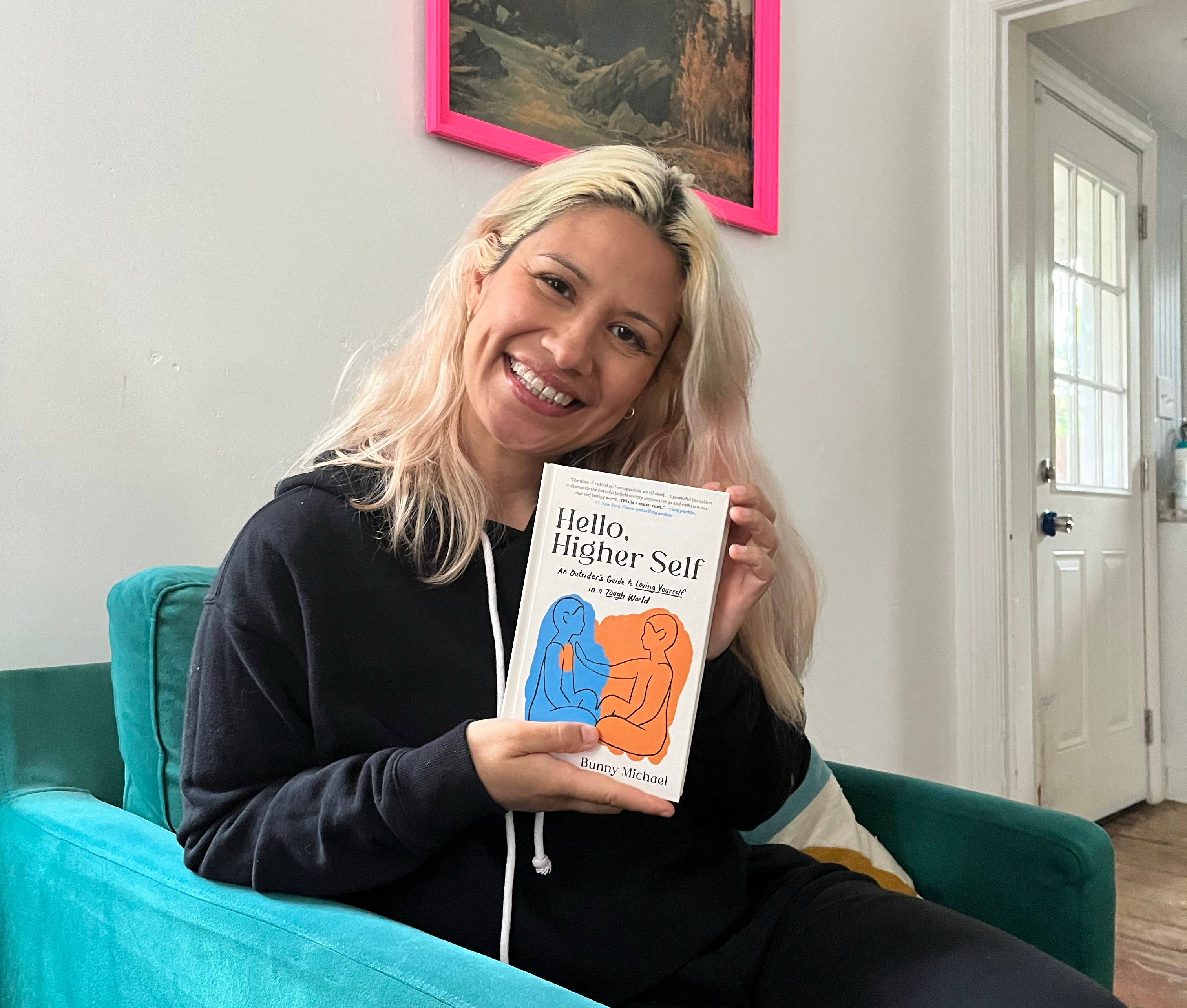
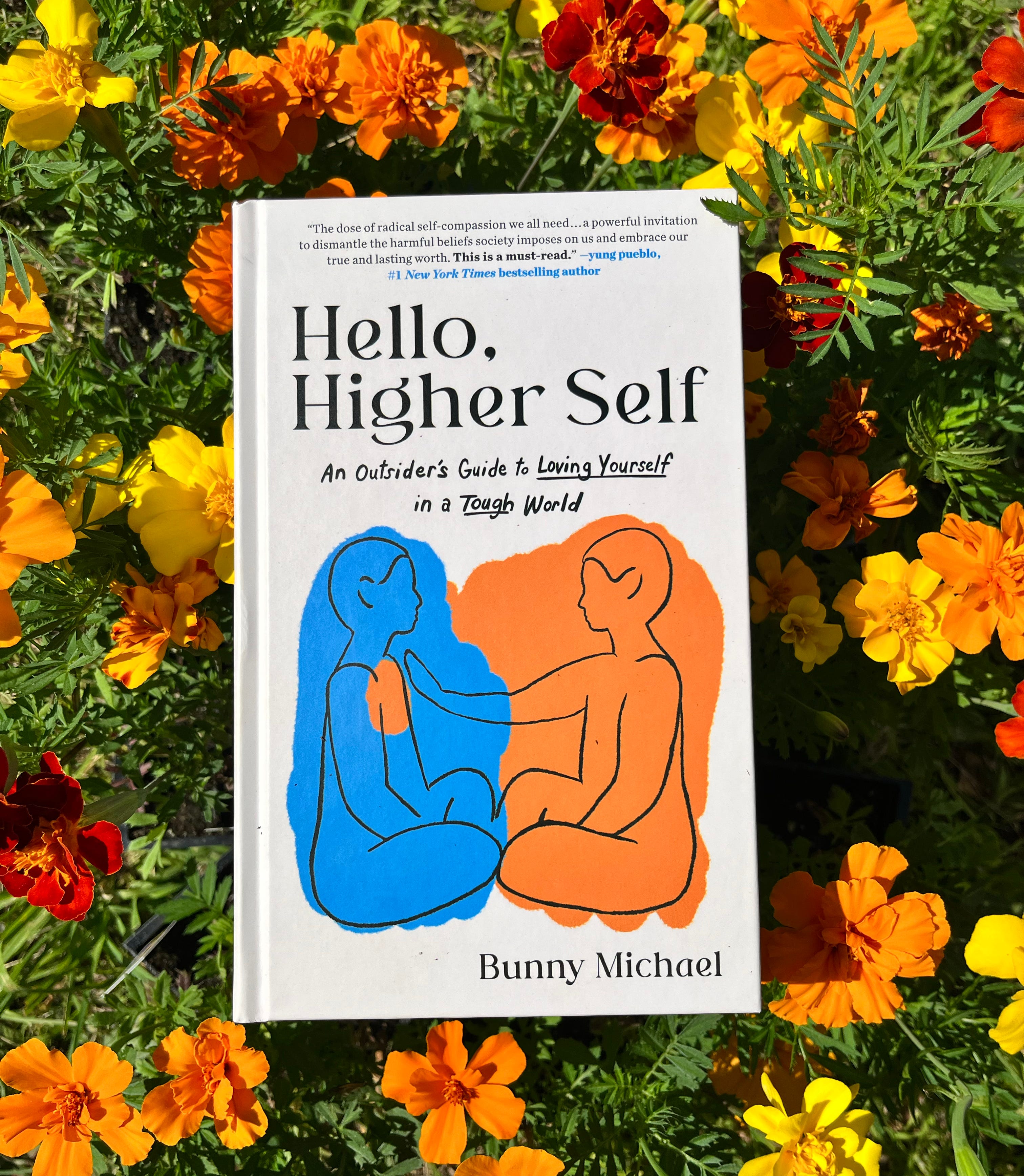
My debut book, Hello, Higher Self, turns 2 today, and to celebrate, I wanted to share the complicated feelings I had leading up to its publication (specifically, how my mom would respond to details I shared in the book about my childhood). This essay is for anyone who is unpacking the impact of their past and seeking to free themselves. ❤︎
On a bitterly cold Tuesday evening after my nightly skin care routine, I slipped into the warm pocket under my down comforter when I saw a notification on my phone. An email from my mom. All sense of relaxation left my body.
Two days prior, my mom received an early copy of my book in the mail from my publisher. I knew the email was her reaction to reading it—a moment I had feared for two years.
My book is about healing through the power of your Higher Self and it’s full of personal stories from my life and childhood. I wrote about my trauma. I wrote about witnessing my mother’s unhappiness. I wrote about my dad’s financial stress. I wrote about the homophobic things my parents said when I came out in high school. I didn’t do it for revenge. I did it for love. And healing. I did it for myself and for my readers.
Is she angry? Does she feel humiliated? Betrayed? Would she try to invalidate my experience? My heart started pounding. My stomach turned. My nervous system was time-traveling. I was a child again. Oh no, I am in big trouble.
It’s no secret that the hurt our parental figures put us through as children (intentionally or not) can unconsciously seep its way into our adult lives- from our romantic relationships to the pressure we put on ourselves to “make it” in the world.
The first time I started unpacking my own childhood wounds was nearly a decade ago, when on the heels of a long-term failed relationship, I went to therapy to figure out why I was apparently not good enough for someone to want to marry. It didn’t take long for my therapist to ask about my childhood, eventually drawing parallels between my fears of being incapable of being loved by romantic partners to the trauma in my past when I felt unloved by my parents. After the first several sessions, I’d walk out of my therapist’s office, head straight to the pub on the corner and down two shots of whiskey.
What is this ghostlike power my parents hold over me? I thought. This power to infiltrate my life from thousands of miles away without my consent? To show up unannounced and wreak havoc on my relationships and my confidence like some kind of psychological haunting? I should be over this. My parents had come around to accepting my queerness after I left for college. We get along fine now! So why are these memories still so painful?
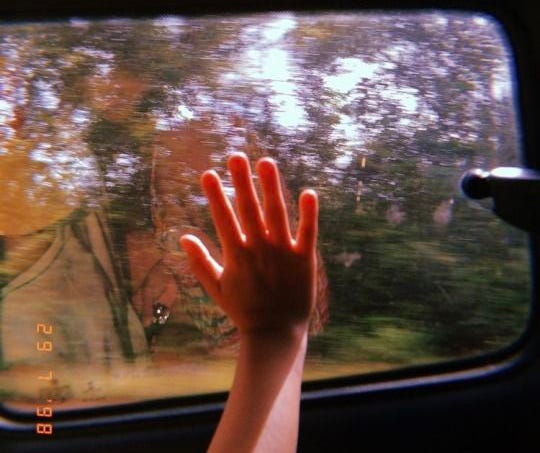
Learning about attachment theory provided insight: our earliest experiences of being cared for are like a blueprint for our relationship style as adults. I’d also heard in spiritual circles that our souls choose our parents before we are born, like a karmic lesson plan to put us in the most optimal circumstance for enlightenment.
Ok, sure, but what I didn’t get an answer for in spiritual gatherings or in my weekly (did I mention expensive?) therapy sessions, unpacking the narrative of my childhood like a not-so-fun game of show and tell, was now what do I do? Just being aware that this stuff happened didn’t make me better. In fact, I felt worse. Now I was “this person with wounds and trauma.” Oh, great.
Then one day in a moment of desperation or perhaps divine intervention, I got my answer.
I was at home picturing my younger teenage self, sitting in my bedroom sad and confused, Tori Amos playing on repeat, shortly after my parents told me that being gay was something they would never accept about me. They claimed their intolerance came from love; that they knew what was best for me. But they were actually withholding their love. It hurt so much. And yet, underneath all that pain, I instinctively knew my parents were in the wrong. How did I know that?
This was the late ‘90s in suburban Texas, where I was taught that being gay meant there was something wrong with you. Still, there was something inside me that knew it was ok to love who I wanted to love, and to be my authentic self. There was a different kind of wisdom and acceptance within me beyond the acceptance and validation I had depended on from my parents for so long. My understanding of love was more expansive and inclusive than my parents' at the time, even though I was the child and they were the adults. Wow. I had been remembering my younger self as this victim, defined by my trauma, but I was so much more than that.
Now what do I do? I had asked myself about my childhood wounds. I began to realize there is nothing to do but love and accept myself for who I am. Just like I had before. I needed to stop identifying as this “person with wounds and trauma that needs to be fixed” and start identifying with the part of me that loves myself despite the suffering caused by my experiences.
My love is strong and courageous. I have always been whole. I’ve always been enough. And there has always been a part of me that knew that, despite what I was being told by society and by my parents. This inner love has always been with me. And always will be.
In all of us is a love and wisdom that exceeds outside validation; an inner awareness of our inherent value. It is our nature to love ourselves. But we have been taught that we need to prove we are lovable. So we began questioning our worth. Painful experiences where we were treated lovelessly put a narrative in our heads that was what we deserved. We were deceived.
You are not unlovable because someone didn’t know how to love you. That was their shortcoming, not yours.
Our parental figures are human beings, like us, who have struggled with their own self-acceptance and have wounds and trauma of their own; who were brought up in a culture that often told them in order to belong, you needed to fit in. And they unfortunately projected a lot of their own fears of inadequacy onto us.
Yes, it sucks to feel the pain of people’s unloving choices, but that could never change how worthy of love we all are. And when that pain comes up, we can love ourselves through it by reminding ourselves that nothing could ever diminish our value.
I used to think that healing meant letting go of the past. But now I see that the past is an experience. I don’t have to let it go, I just have to let go of the belief that those experiences define me.
Back in my bedroom, I took a deep breath and reminded myself that whatever this email from my mom said about my book was a reflection of where she was in her own journey of healing. I thought of her Higher Self, the love inside her, her wholeness, her worth. I reminded myself that my value was not determined by her perspective, just like her value was not determined by mine. She was a human with valid feelings just like me. My anxiety dissipated. My heart opened.
Her response to my book was a few paragraphs long. But it can be summarized in three short sentences.
“I’m sorry.” “I love you” and “I absolutely love this book.”
No matter what your childhood looked like, whether you still have a relationship with your parental figures or not—healing isn’t about needing to fix yourself, it’s about acknowledging that you have always been whole. Your Higher Self lives in your heart and is always speaking to you, reminding you of how worthy you have always been. The past is not your prison. You are free.
sending you so much love,
Bunny
P.S. If you haven’t gotten a copy of my book, please do! Book sales matter so much to any future publication endeavors (probably more than they should), so if you want to support me as an author, this is the best way to show your love. Get a copy for a friend, too! Or for a family member who might really need some Higher Self perspective.
Hello, Higher Self is currently 45% off on Amazon ! For other booksellers go here
No posts
Comments
Nothing yet. Say the first thing.
Sign in to join the conversation.