
We all have emotional scars.

Suck it up buttercup, we are literally wired for it. It’s just part of being human.
And more specifically, those emotional scars are a crucial part of our socialization training. I’ve never met anyone who doesn’t have them, but if I were to find a mythical unscarred human, I expect they might be pretty insufferable.
To address these scars, many self-help gurus and “schools” will tell you that you need to find your inner peace and joy to improve. That’s not wrong; meditation and other mindfulness and self-awareness exercises can dramatically help to reduce the churn of emotions that can make us slaves to our emotional scars.
But calm and peaceful introspection is woefully insufficient to actually eliminate the scars that stir up all the negative emotions in the first place.
It might be helpful to think of those deep scars not as just scars, but as shrapnel. And the only way to remove the shrapnel is to cut deeper than the hunk of jagged metal - deep enough to get a pair of tweezers in there (or salad tongs, if appropriate) to pull it out.
In other words, actual self-improvement requires not just taking some pain killers, but removing the shrapnel that’s causing the pain. You can’t excise a deep wound with a surface-level cut.

This is why real self-improvement requires a lot of time, and a tremendous amount of stubbornness commitment. Yes, you want to get rid of that old pain. But are you really willing to suffer even more pain than you did the first time to get rid of it?
If you’re not, then you’re going to fail. Because it will hurt more to take the shrapnel out than it hurt going in.
And oh yeah, this is very unlike surgery in one important way: there’s no anesthetic. This is because the pain is the cut.
Put another way, that shrapnel is a biological memory of old pain. And the only thing that will actually remove the that old pain is new pain - we need a new biological memory to replace the old. So, if the pain of the removal isn’t as deep as the pain of the original wound, the cut won’t go deep enough.
The only thing to mitigate the pain is that we get to decide we want to endure the pain before it happens this time. That won’t make it any less painful; but it may give us a chance to bite down on something solid before the cut.
(Side note: The reason the new pain doesn’t leave shrapnel is because it’s something we choose to do, rather than something that’s inflicted on us. This process of choosing it is what avoids leaving shrapnel, and actually builds our confidence and self-worth, as we realize that we’re emotional-tough Rambo sons-of-bitches who can sew our own wounds shut with a fishhook and bailing wire).
Now, if all this sounds great to you, then that’s awesome! I would love for far, far more people on the planet to be willing to feel the freedom of letting this kind of shit go.
But your enthusiasm is a clear sign that you’ve never actually done it before. Keep it, because you’ll need it.
Although this all sounds great, the truth is, the vast majority of us aren’t actually willing to stick a knife into ourselves unless the alternative is to actually (physically) die. (And sometimes not even then). Opening up your own skin is not for the faint of heart.
So, the only way most of us will ever undergo this painful process is if we find someone else who can help us make the cut. This is the role of a traditional wise man or woman, or an Asian master.

The only good teacher is one whose done the same painful work and come out the other side; traditional gurus were always rare because the work isn’t easy. So, I recommend you look for a teacher who’s been through a lot of shit (the more the better), but still radiates warmth and optimism.
Part of this teacher’s job is to help you admit you’re wounded. No, not those skin-deep boo-boos you pat yourself on the back for already acknowledging, but the gaping bone-deep pus wounds that you desperately fight to pretend don’t exist.
The other part of the teacher’s job is help you make the cut that will take the shrapnel out.
To be clear, the teacher can’t actually make the cut for you; you have to hold the knife, and apply the pressure all the way in. But they can give you training on how to use the knife, and help motivate you to do it.
Now, let me be clear what I mean about motivation. If you consider motivation to be a Navy Seal drill sergeant who works candidates until they drop and pushes 90% of them to ring the bell, then we’re on the same page. If you consider motivation to be getting a sweet treat when you say the right thing, then this might not be for you.
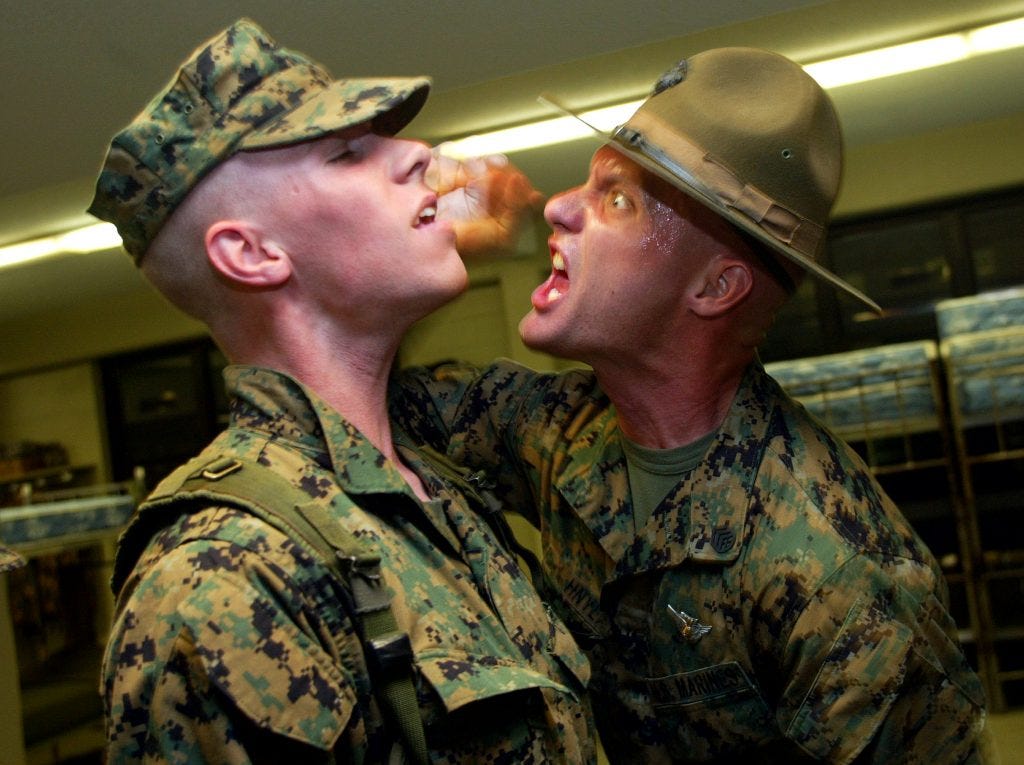
This process of motivation isn’t easy - for you or the teacher. It takes one hell of a commitment for the teacher to take on the risk of helping you.
What is that risk, you ask? Simple. Most people who find a teacher willing to guide them through this difficult process eventually end up turning on the teacher.
It goes like this.
You go to the teacher, and ask them to teach you. They say no.
Most people walk away at that point. But let’s suppose you’re really pig-headed committed. You ask again. Another no. Again. This time the teacher warns you that you don’t really want what you’re asking for. But ignorance is bliss, so you forge ahead. Finally, eventually, you’re either so clueless or so persistent that the teacher agrees to teach you.
CONGRATULATIONS!!!!! (This really is worth celebrating; true teachers are rare).
Now you undergo the process of learning how to perform surgery on yourself. The teacher starts small; she knows you’re really a wimp at heart, and there’s no way you’ll be able to handle the deep wounds right away.
You wince and turn away at first, but eventually you set your mind and make some good surface level cuts. Then another. Then a few more.
With these small outpatient surgeries, you start to have small wins. Over time, you learn to endure the pain, and learn to relish the joy that comes from not walking with as much of an ass-limp as before.
The teacher keeps telling you you’ve had enough, but you keep asking for more. She tells you you’re not cut out for it, but pride ego will have none of it. So, you keep asking. And eventually, over all her objections, you convince her to help you perform major surgery.
This is another cause for celebration. But if you really understand what you just committed to do, you might find it a little harder to party this time.
So, you prepare. Maybe you do yoga to make sure you’re physically healthy. Maybe you keep a journal to learn deeply about your emotions. Maybe you meditate to generate your drive and motivation.
Finally, the time comes. You take the knife, you hold it in your own hand. The teacher steps back and gives you guidance, just like she did the last hundred times. And you cut.
But after you have the knife in just a little deeper than the last time, you stop. And this time, the teacher will have none of it; she says you need to cut deeper. You steel yourself and another quarter inch. No, the teacher says, deeper. So, finally realizing you’re not going to get off with just a show, you gird your loins and take the plunge all the way in.
And you scream. You cry. You gnash your teeth and sob. You fall apart.
And then the time finally comes that the teacher has been anticipating this whole time.
You turn to your teacher and scream, “WHY DID YOU DO THIS TO ME?”
This is the risk that every teacher of true self-improvement is wary of - when the student blames the teacher for… well, for just about every ill the student has ever experienced in their lives.
Why are teachers wary of it? Why are they expecting it to happen? Because they’ve experienced it tens or hundreds of times before.
Of course, when you turn and scream at the teacher, the knife is still sticking out of you, and the shrapnel hasn’t been removed. And if you don’t get your shit together and finish what you started, then you’ll walk away a wreck, bleeding profusely and with more metal (emotional wounds) in you than before.
So, the whole point of this is to be clear that true self-improvement, like actual physical surgery, is painful. But unlike physical surgery, there are no anesthetics available.
So, if you want to truly improve, you need to do more than take meditation retreats at exotic resorts. You’re going to have to work for it, and shed emotional blood, sweat and tears.
Anything else you do to improve yourself will ultimately fail. Because the ability of our minds and spirits to remember anything is directly proportional to the depth of the cut.
Stay on the surface, and you’ll only ever improve skin deep. But find someone who’s willing to help you make the deepest cuts, and you will - after alot of effort and pain - be calmer and freer than any number of hours of meditation will ever make you.
Comments
Nothing yet. Say the first thing.
Sign in to join the conversation.