
Good Morning.
The thread running through this issue is memory: AI’s insatiable appetite for RAM is repricing every device on the planet, punishing Apple shareholders, minting Micron into one of America’s most profitable companies, and quietly sorting the electronics industry into survivors and casualties.
Meanwhile, the infrastructure required to power all those data centers is booked out to 2031, and SpaceX is about to get a passive-fund tailwind from Nasdaq-100 inclusion.
Let’s get into it.
1. The Lead · Memory Crisis
Apple Takes Its Worst Single-Day Hit in Over a Year as AI Memory Crunch Forces the First Real Price Hikes
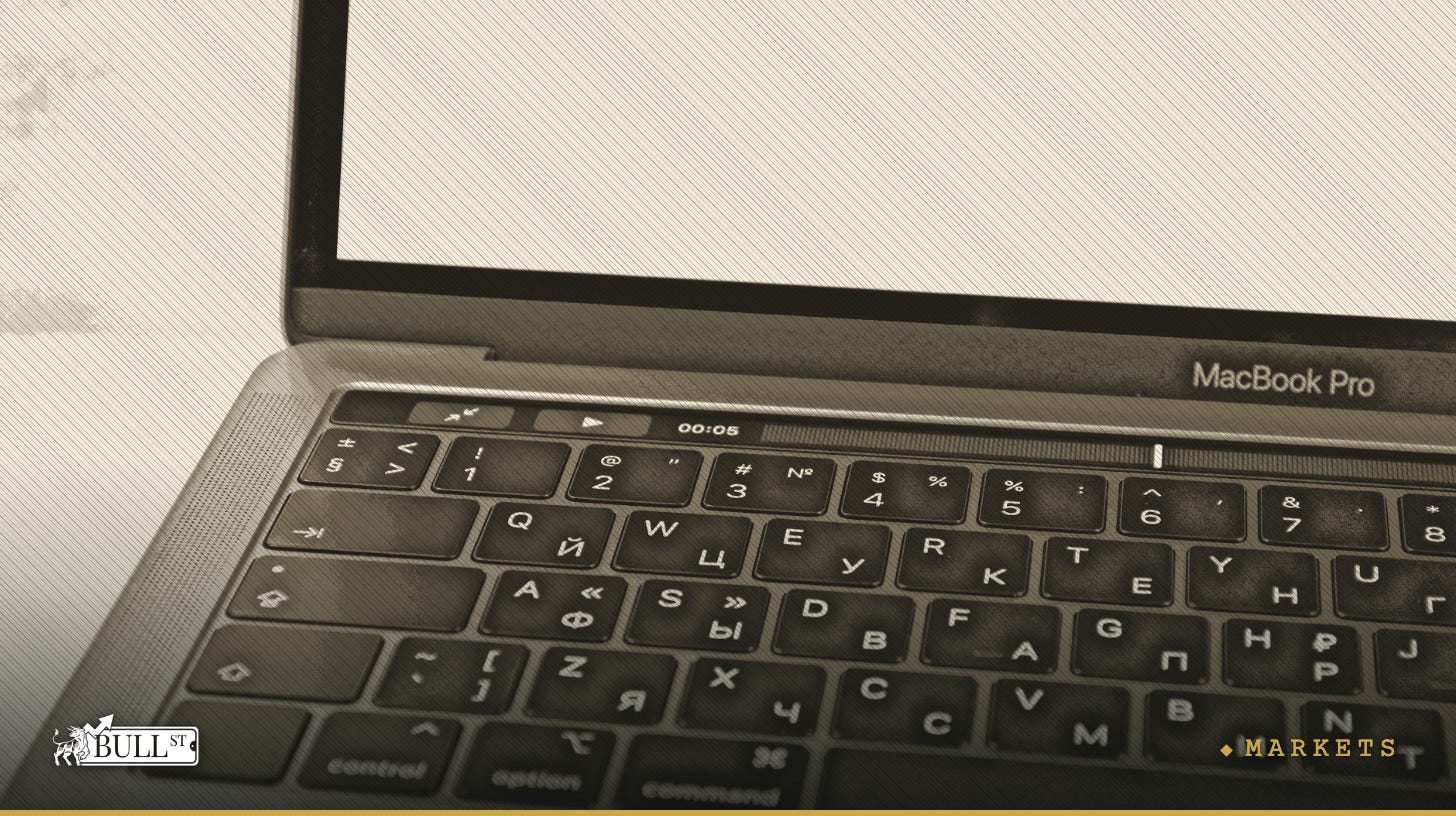
Apple (AAPL) closed more than 6% lower on Thursday, its worst session since April 2025, after raising prices across its Mac and iPad lineup. The MacBook Air 512GB jumped from $1,099 to $1,299, the MacBook Pro 1TB from $1,699 to $1,999, and the iPad Pro Wi-Fi 256GB from $999 to $1,199, according to CNBC. The culprit is a memory market that has been effectively commandeered by AI infrastructure: memory and storage prices have quadrupled in the past three quarters as suppliers divert production toward high-bandwidth memory for AI servers, according to Counterpoint Research. CEO Tim Cook called it a ‘hundred-year flood.’ IDC projects Apple’s average selling price rising 12% this year. Counterpoint estimates the higher component cost could add roughly $200 per iPhone, with price increases of $150 to $200 expected across the iPhone lineup. Microsoft simultaneously raised the Xbox Series S price by $100, and the pain is existential for smaller players like GoPro.
4x: Memory and storage prices have quadrupled in the past three quarters, according to Counterpoint Research, as suppliers redirect production to serve AI data centers.
The Bull & The Bear
▲ Bull: Apple has navigated component cycles before, and its pricing power is real. The AI push gives it a credible narrative to steer buyers toward higher-memory configurations, and IDC estimates that roughly 54% of iPhones shipped since 2022 won’t support the full new Siri experience, which is a powerful upgrade catalyst. A richer product mix and a foldable iPhone on the horizon support the ASP expansion thesis.
▼ Bear: A 6% single-day drop on a $3 trillion company is not noise. Memory costs are projected to remain elevated through at least end of 2027, according to Gartner, and Gartner forecasts global PC shipments falling 10.4% and smartphone shipments falling 8.4% in 2026. Higher prices that compress unit volumes are not a formula for near-term earnings growth.
The Bull Street Take
I don’t think this is the beginning of the end for Apple, but I do think the market is correctly marking down its near-term earnings power. The memory crisis is real and structural, not a transient blip. What I find more interesting is who wins in this environment: Micron’s gross margin just hit 84.9%, surpassing Nvidia and Meta. Capital is being redistributed from the device-makers to the component suppliers at a pace I have not seen in this industry. If you allocate to tech, you should know which side of that ledger you are on.
Markets in Review · The Tape
Apple’s Ugly Thursday Puts a Face on the Memory Crisis
Markets in Review
Apple (AAPL) closed more than 6% lower on Thursday, its worst single session since April 2025, after announcing sweeping price hikes on MacBooks and iPads tied to the AI-driven memory crunch. Micron (MU) shares surged 16% on blowout earnings and are up approximately 800% over the past year.
The session’s central story was the redistribution of value up the semiconductor supply chain. Apple’s drop put a concrete price tag on what it costs to be a device-maker in an era when component suppliers hold all the cards. Micron’s 84.9% gross margin, up from 39% a year ago, tells you exactly where the money went.
GE Vernova (GEV) shares are up nearly 60% over the past six months as the power-generation angle of the AI buildout continues to attract capital. Gas turbine prices are up 300% in three years according to Melius analysts, and the order book is full through 2029.
SpaceX’s coming Nasdaq-100 inclusion, effective July 7, sets up a mechanical buying event from funds tracking the more than $800 billion benchmarked to the index, including QQQ. With a small publicly traded float, even a sub-1% weighting could move the stock.
Go deeper
Apple (AAPL) dropped more than 6%, worst session since April 2025, on MacBook and iPad price hikes of up to $300 per device as the company acknowledged memory costs have become unavoidable.
Micron (MU) jumped 16% after reporting revenue that more than quadrupled and a gross margin of 84.9%, surpassing Nvidia and Meta, with DRAM average selling prices up more than 260% year-over-year.
Microsoft (MSFT) also fell during the week after raising Xbox Series S prices by $100, with the company warning that console storage and memory prices have risen more than 2.5x and could double again by fall 2027.
What they’re saying
“This is a hundred-year flood. I’ve never seen anything like it in any area in over 40 years.” -- Apple CEO Tim Cook, to The Wall Street Journal
2. Earnings · Semiconductors
Micron Is Now More Profitable Than Nearly Every U.S. Company, With Gross Margins That Beat Nvidia
Micron (MU) reported that revenue more than quadrupled in its latest quarter and gross margin surged to 84.9% from 39% a year ago, surpassing both Nvidia and Meta, according to CNBC. The average selling price of its DRAM rose more than 260% year-over-year. Shares jumped 16% on the results and are up roughly 800% over the past year, rallying alongside SK Hynix and Samsung. The company has struck long-term supply agreements with major smartphone and PC makers, positioning it to harvest the memory crunch it is simultaneously helping create.
800%: Micron shares have risen approximately 800% over the past year, according to CNBC, as AI demand turns a commodity chip business into a high-margin franchise.
3. The Tape · Energy & AI Infrastructure
GE Vernova’s Order Book Is Full Through 2029 as Hyperscalers Race to Lock Up Gas Turbines
GE Vernova (GEV) is hiring 500 workers at its Greenville, South Carolina turbine plant this year alone, and its order book is full through 2029, with bookings now extending into 2031, according to CNBC. One gas turbine can power roughly half a million homes and costs more than $250 million, a price that has risen 300% in the last three years according to analysts at Melius. About 20% of GE Vernova’s gas power order book is now tied to AI data center applications. Shares are up nearly 60% in the past six months. Microsoft just purchased seven turbines to power a Texas data center capable of powering roughly 3 million homes.
—> Get the read on GE Vernova, click here
4. Deals · Markets
SpaceX Joins the Nasdaq-100 in One of the Fastest Index Additions Ever, Triggering Mandatory ETF Buying
SpaceX (SPCE) will officially join the Nasdaq-100 before trading opens on July 7, one of the quickest additions in the index’s history under Nasdaq’s newly adopted fast-track framework that allows large IPOs to qualify after just 15 trading days, according to CNBC. More than $800 billion tracks the Nasdaq-100, including the Invesco QQQ Trust (QQQ), meaning index funds will be required to buy shares to match the benchmark’s new composition. SpaceX’s publicly tradable float remains small relative to its total market cap, so even a weighting below 1% could require meaningful purchases from passive vehicles. The S&P 500 remains off-limits for now, as S&P Dow Jones Indices declined to create a similar fast-track process.
5. The Tape · Autos
Bain Warns the U.S. Auto Market Could Shed 2 Million Units by 2040 as Demographics Turn Against Automakers
Analysts at Bain & Company project U.S. new vehicle sales could fall by more than 2 million units from current levels by 2040, driven by declining birth rates, a U.S. fertility rate of just 1.6 births per woman in 2025, high prices, and a generational shift away from car ownership, according to CNBC. New vehicle monthly payments are up 30% over four years, and nearly one in five new vehicles now carries a payment over $1,000 a month. The share of new vehicle registrations among 18-to-34-year-olds has already fallen from 12% to under 10% since 2021, per S&P Global Mobility. Bain’s conclusion is blunt: too many automakers, too many brands, and not enough buyers.
+ Also on the Tape
Consumer: Best Buy CEO Jason Bonfig said the company expects its computing division to be the most affected by memory price hikes but noted nine consecutive quarters of positive comparable sales in computing so far.
Retail: Gartner projects global PC prices will rise 17% and smartphone prices will rise 13% in 2026 versus 2025 levels, with memory costs expected to stay elevated through at least end of 2027.
Consumer Staples: U.S. whey protein isolate prices have hit $14 per pound and some suppliers are sold out through year-end, as America’s protein obsession and GLP-1 drug adoption push dairy processing capacity to its limits, according to CNBC.
Small Business: GoPro warned it may go out of business after memory costs rose 80% to 115% in a single quarter, while Sonos shares are down 23% this year as the memory crisis sorts electronics winners from casualties.
The Last Word
In a commodity shortage, the company that makes the scarce thing always wins more than the company that needs it.
Bull Street is for informational purposes only. Nothing here is financial advice. Always do your own research.
Comments
Nothing yet. Say the first thing.
Sign in to join the conversation.