
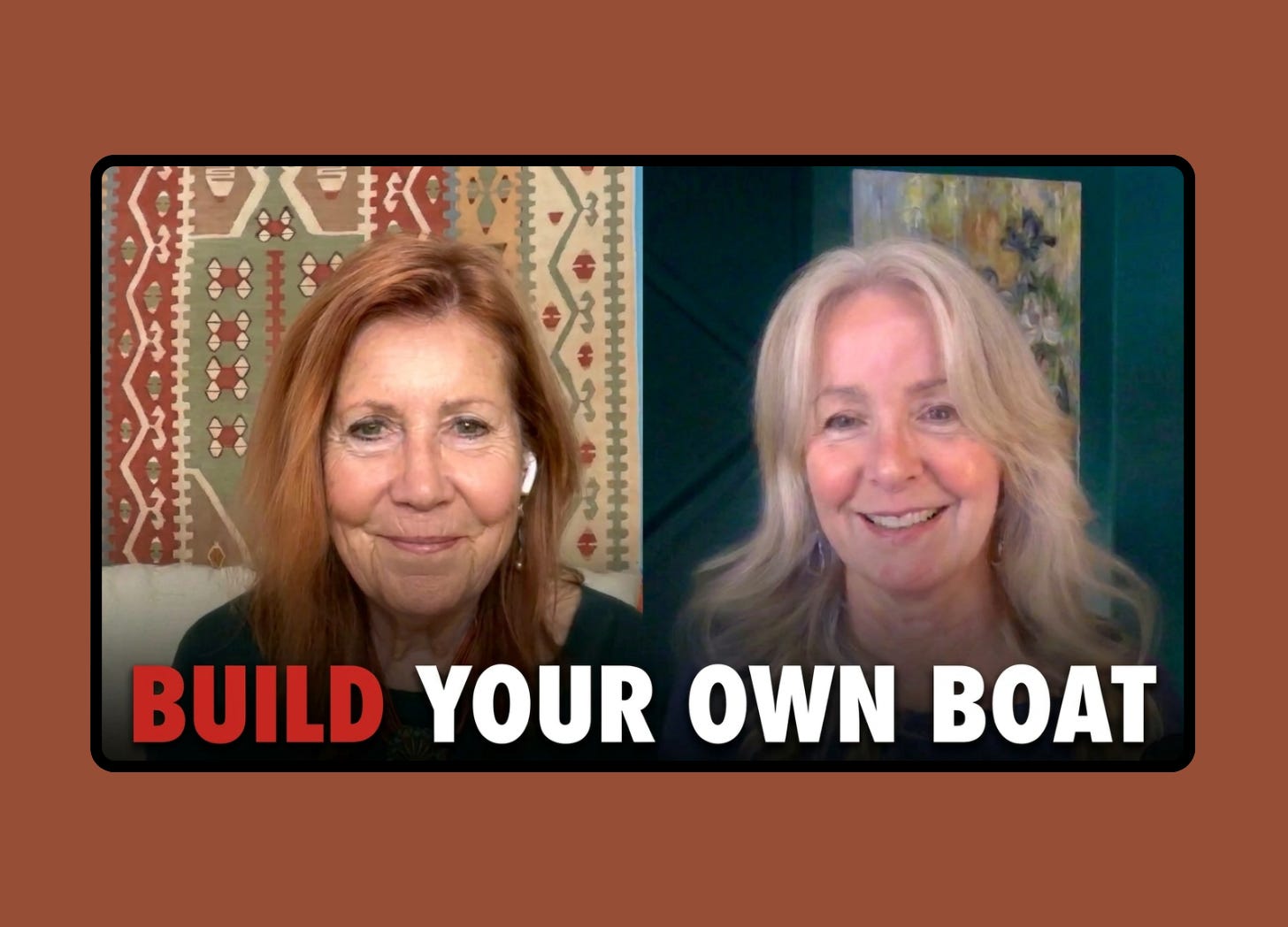
Dr. Sam Graber didn’t have a plan.
She’d love to tell you she did—that she mapped it out, built a runway, lined up the next thing before she closed the door. But that’s not what happened. What happened is that a chiropractor who had spent decades and a small fortune building a solo practice woke up one day and realized the work was literally sucking the life and the energy and the light out of her soul.
So she closed it. The brick and mortar, the staff, the marketing, the patients she’d known for years. All of it.
To understand why she left, it’s helpful to understand what wore her down. And it wasn’t the people—she adored the people. “Sometimes I was a counselor, sometimes I was just a confidant, sometimes I was a sounding board,” she told me. That part she still misses.
What she was done with were the systems around the healing. In conventional and alternative medicine alike, care requires a diagnosis code. A code means a condition, a disease, or something on its way to becoming one. And if a patient just wanted to eat better, sleep better, move better—to not get sick in the first place—there was no box to check and no way to get paid. Sam told me:
We focus on disease. And when we don’t have disease, we don’t really know what to do in conventional medicine.
She’s blunt about the deeper problem, too—it’s us. We’ve been trained to outsource our own health decisions. “If my insurance doesn’t cover it, I can’t afford it,” she’d hear, again and again. “People have outsourced their decision-making, the responsibility, all of that. And when you do that, you have to take what you get.”
For someone who got into healing to actually help people get well, running a business that only paid her to manage sickness became untenable. So she made the leap.
Here’s what makes Sam’s story worth your time: she doesn’t dress up the leap as brave. She calls it what it was—messy, lonely, and harder than she expected.
The first year, she’ll tell you, was “a lot of turmoil.” She didn’t know what to call herself. She didn’t know what to charge, so she undercharged.
Undercharging. Does this sound familiar, friends?
She worked one-to-one with anyone who walked through the door, inventing the offer as she went. And because she was, in her words, “fiercely independent,” she tried to do all of it alone.
I wish I had had a few people, at least, that I could wave to and go, hey, I might be drowning here, help me out.
And there was one more thing running underneath all of it, invisible at the time. “Now looking back, I know I was probably starting my perimenopause, menopausal transition. Had no clue, of course.” The career reckoning and the body’s reckoning arrived together—something I’ve heard from many women I’ve interviewed for this project.
Know yourself before you build.“Do a little self-exploration before just jumping right into a new business.” When you’re busy running a company and raising a family, you rarely stop to ask what actually lights you up—and what drains you. Skip that step and you risk building a brand-new box and closing the lid on yourself.
Don’t build yourself a new box.“You left whatever box behind, but don’t build yourself a new box.” Design the business around what energizes you, not around what you think you’re supposed to offer.
Be careful in hiring business advice. If a coach won’t interview you for fit, if they push for a yes on the spot when you need to sit with a decision, those are warning signs. Find someone who has actually walked a path like yours.
Start one-to-one, then refine constantly. Most people who make this transition successfully begin working one-to-one, getting “super clear on the person you want to help while you’re getting super clear on the person you want to be as the helper.” Then evolve. “There’s no such thing” as perfect—especially when your product is a relationship with another human being.
Stop lying to yourself about the freedom.“People say there’s so much freedom. There’s not a lot of freedom, especially at first. Let’s not lie to ourselves.” The autonomy is real, but it comes later, and only through deliberate design.
My note: You CAN achieve more freedom and flexibility, but you do need to design it into your business model.
As I was chatting with Sam, one thing really stood out to me as critical for any women entrepreneur in midlife and beyond:
Your body is your business infrastructure.
Not a nice-to-have. The engine. How you eat, move, sleep, and manage your hormones is what makes everything else run. Think about it: How many of us have worked to the point of burnout? One of my worst points: Going to the ER to get an antibiotic shot so that I could finish a project that was due the next day.
This approach runs against the whole hustle gospel—the “bro in a hoodie” who tells you the business comes first and you should do anything for it. Sam’s counter is quieter and far more radical. Women, she argues, tend to build entire identities out of caretaking—the PTA board, the church board, the business, everyone but themselves.
Eventually our bodies go, hey, yo, I need a little something. And we’re like, yeah, yeah, yeah, I’ll get to you. And then eventually it can result in a crisis.
Her tough-love version:
Some of that is because we allow it. We allow everything else to just suck the life out of us.
The fix isn’t a product with the word menopause slapped on it at double the price—she’s scathing about that whole market. The fix is knowing your own body well enough to build its care in as a non-negotiable foundation. “No one’s going to tell you, Janine, go take care of yourself. You have to do it.”
That’s why her newest work is a program she’s calling Strong Over Skinny—a deliberate rejection of the shrink-yourself culture in favor of building a stronger body, a stronger brain, and a more metabolically sound life. Because the women who thrive in their 80s and 90s, she notes, are the strong ones.
There’s a reason a story like Sam’s rarely makes the business press. The entrepreneurship narrative is still built for the young guy in the hoodie launching his first tech platform—not for a woman in her fifties leaving a licensed practice, navigating a menopausal transition, and rebuilding an expertise-based business from her own hard-won wisdom. Add the culture that trains women to caretake everyone but themselves, and the barriers stack up fast.
But notice what she’s building now: a membership community, master classes, a board seat at a youth nonprofit she believes in, and the freedom to chase the things that light her up. That freedom—to “pursue things you’re really passionate about” instead of living inside someone else’s agenda—is exactly what a boat of your own can buy.
So here’s Sam’s question for the woman reading this at her kitchen table, wondering if she could do it too:
What lights you up, and what extinguishes your light? Get honest about both before you build. And if it’s only about the money—stay where you are. But if something is calling you, don’t build yourself another box. Build a boat that floats.
👉 Check out the podcast of this interview, and those of the other amazing women that I’ve interviewed to be inspired and to glean ideas and tips from the playbooks they share.
Connect with Dr. Sam Graber
Find her on on this platform at Dr. Sam Graber, where she’s building her presence and welcomes inquiries, questions, and ponderings. Ask about her Strong Over Skinny program and her ongoing membership community for women continuing these shifts together.
If this one landed, do two things. Subscribe to Build Your Own Boat so the next woman’s story finds you. And send it to someone who’s been quietly wondering whether she could leave her own box behind—you know exactly who she is.
No posts
Comments
Nothing yet. Say the first thing.
Sign in to join the conversation.