
This was a question posed in our Build Up Dietitians CLINICAL group
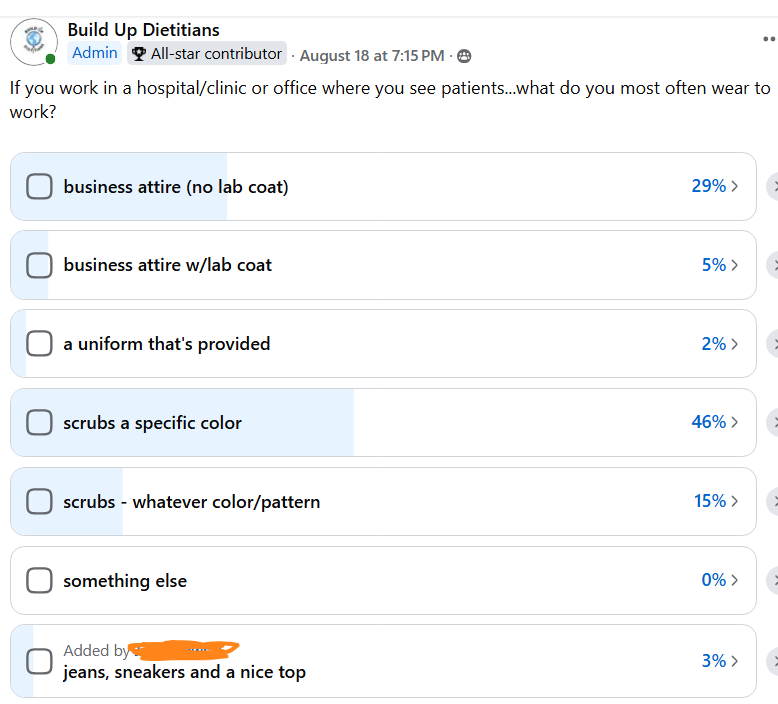

How about you? Are you a clinical RD that works in a hospital/clinic or office where you see patients? What do you normally wear to work?
Have you ever had a patient/client present you with or tell you they have a long list of food intolerances or sensitivities? Maybe they have a printout featuring red light/yellow light/green light foods they aren’t supposed to eat thanks to a DIY mail-in test, MRT (bogus Mediator Response Testing) a test by a chiropractor or some other non-board-certified allergist provider?
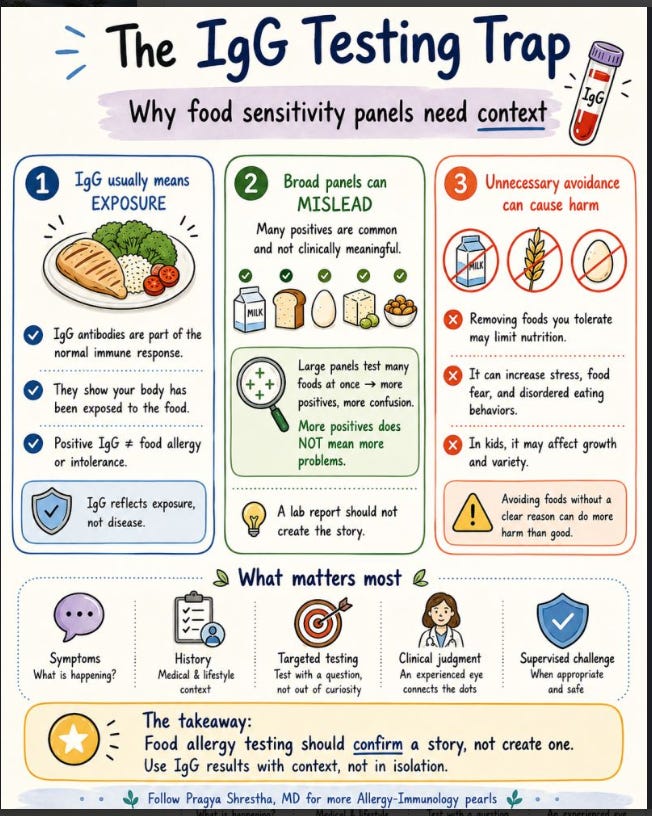
Here’s a LinkedIn post from allergist-immunologist Pragya Shrestha
“…major allergy organizations recommend against using food IgG or IgG4 panels to diagnose food allergy or food intolerance. And there is a real downside to these tests. A report may label 20, 30, or even 50 foods as problematic. Then someone starts removing:
Milk.
Wheat.
Egg.
Soy.
Nuts.
Fruit.
Vegetables.
Suddenly the diet becomes extremely limited, even though many of those foods were being eaten without any problem. For children, unnecessary restriction can be especially concerning because they need enough calories, protein, vitamins, and minerals for normal growth.
So, if a test tells you that you are “sensitive” to a long list of foods, ask an important question:
What exactly is this test measuring?
A positive antibody result is not automatically a diagnosis.
Your symptoms, the timing of the reaction, the food involved, and the right type of testing all matter.
Sometimes the best answer after an IgG panel is not to remove more foods.
It is to put foods back.”
😨☑️Substack: “From Seed Oils to “Chemicals”: The Politics of Food Fear”
by dietitian Ginny Messina
“…Some plant-based advocates have an inordinate and unwarranted fear of fat-rich foods, particularly added fats like oils – even olive oil. The carnivore and keto folks have their own set of rigid restrictions; they want you to fear carbs, including foods with demonstrated health benefits like beans and whole grains. In placing some foods completely off-limits, wellness gurus and influencers create anxious perspectives about diet. A popular (and appalling) meme that shows up in some discussions about plant-based diets warns that “every bite you take is either fighting disease or feeding it.” Rather than being helpful, this kind of language fosters anxiety around every single food choice….”
🎙️Podcast: This Podcast Will Kill You (TPWKY)
A conversation with Dr. Deborah Cohen about her book, “Bad Influence: How the Internet Hijacked Our Health”
🎙️Podcast: Sounds Like a Cult: “The Cult of MAHA” - featuring Dr. Mike
🆓#Sponsored: 2.25 FREE CEUs
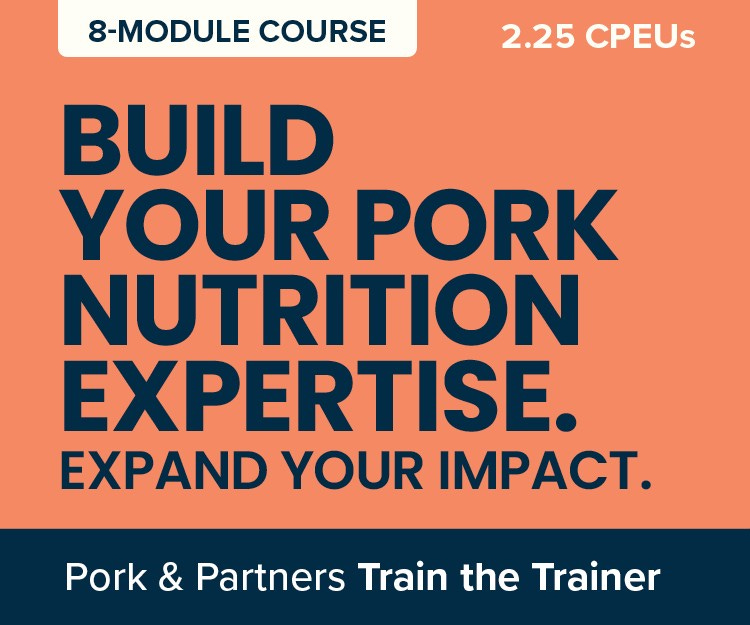
“Confident patient counsel begins with maintaining knowledge. This course is your self-paced, deep dive into everything pork from farm-to-fork. In 8 modules (about 2 hours total), you’ll gain evidence-based insights on nutrition, sustainability, culinary applications, and consumer trends – and unlock 2.25 Free CPEUs in the process!” Click HERE to register and begin!
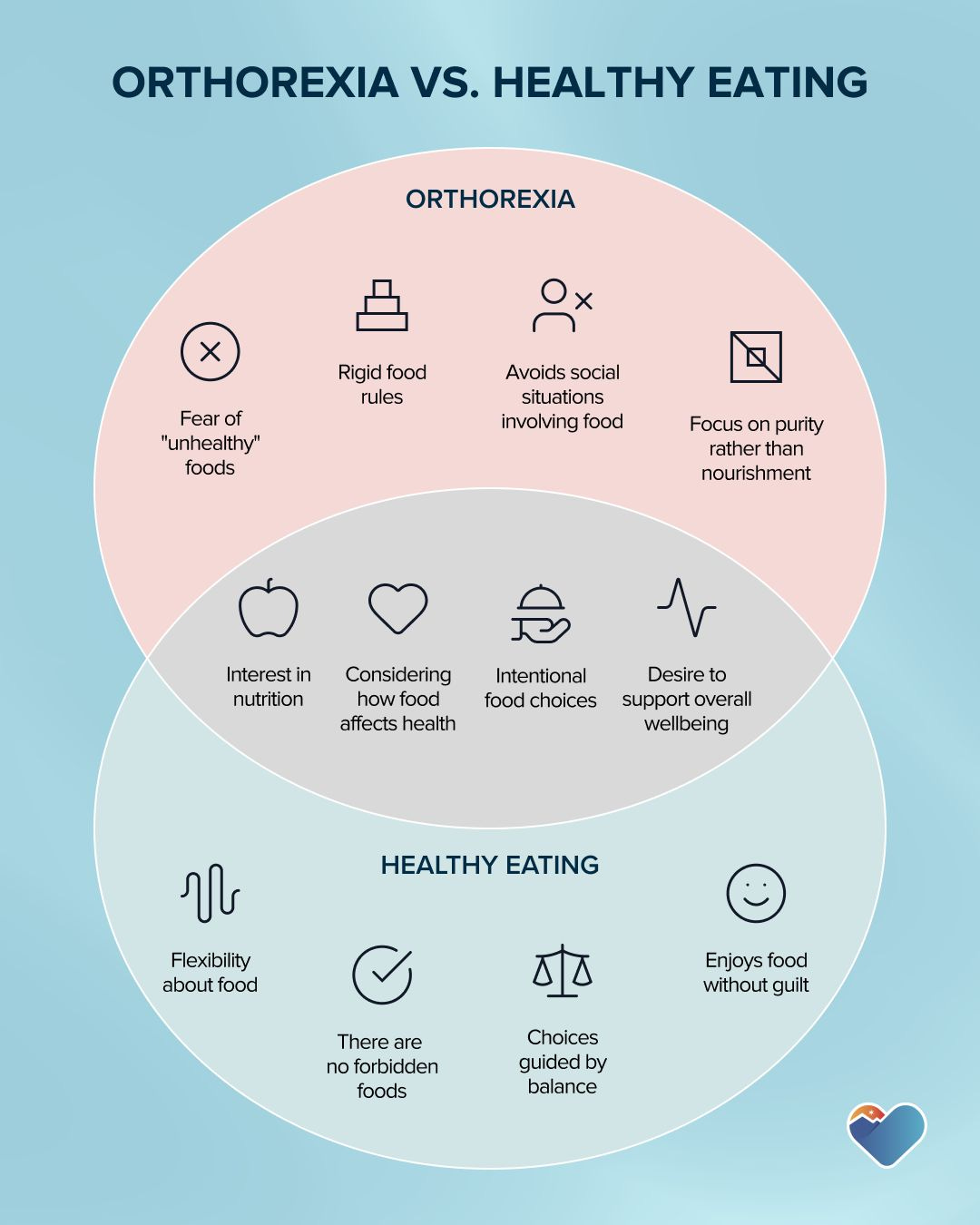
“Sometimes an eating disorder can start as a genuine desire to improve one’s health, but morph into disordered eating over time.Orthorexia and healthy eating can look the same on the surface, but there are major differences that tip “clean eating” into disordered eating, like:
🔴 Fear of “unhealthy” foods
🔴 Rigid food rules
🔴 Avoids social situations involving food
🔴 Focus on purity rather than nourishment”
🔴 Fear of “unhealthy” foods
🔴 Rigid food rules
🔴 Avoids social situations involving food
🔴 Focus on purity rather than nourishment”
More on this: Orthorexia Nervosa: “Clean Eating” or an Eating Disorder?
Comments
Nothing yet. Say the first thing.
Sign in to join the conversation.