

☑️🤔The Terms “Ultra-Processed” and “Synthetic” Are Flawed for the Same Reason ACSH
“…The body responds to what it’s given—molecules or nutrients—not to how they were made. Processing steps don’t determine biological effects; ingredients do….
Processing itself is not a nutrient. A food does not become unhealthy simply because it passes through industrial machinery. In fact, the label often tells us very little about nutritional quality.
Which leads to a simple point:
The fact that something is ultra-processed doesn’t make it healthier or unhealthier. It does neither. It just tells you how the food was made.”
☑️👦🏽Posted in Build Up Dietitians PEDIATRICS Group
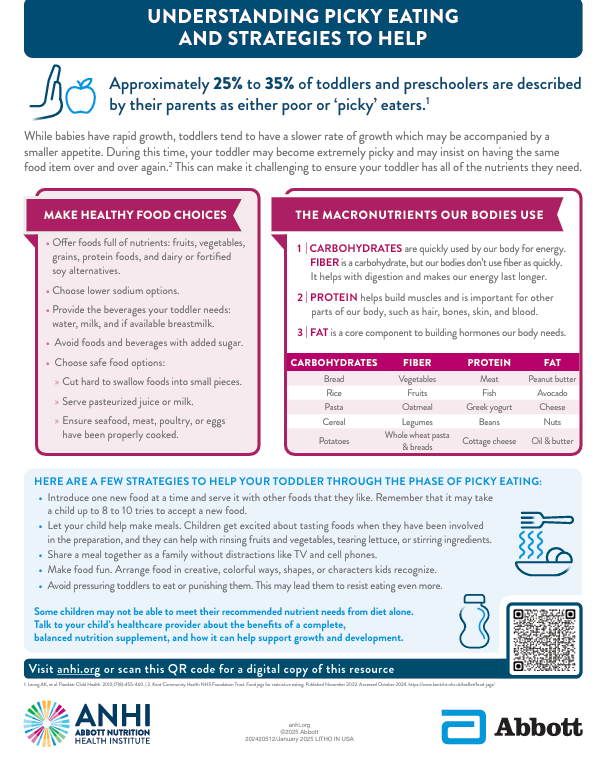
☑️🎙️Podcast - This Podcast Will Kill You: The High Stakes of Cholesterol
☑️📝FREE CEUs
Faces of Food Allergy Prevention: Stories and Solutions
For more FREE CEUs, be sure to subscribe to Bec’s Weekly CEU Roundup. Bec McDorman is one of our moderators. Here’s what a dietitian said about Bec’s emailed newsletter: “I love your emails!! I signed up when I passed the RD exam and they are super helpful!”
❓In our JUNE PAID issue we featured dietitian responses to this question:

We’ve removed the paywall so you can see those answers…what do you think?
1. Registered Dietitian Salary, Compensation & Career Growth Insight
“… telehealth companies, digital health organizations, and specialty care providers are introducing new compensation structures that can look very different from what many dietitians have encountered before.
For example, some contract-based telehealth roles compensate dietitians only when patients attend scheduled appointments. While these positions may advertise attractive hourly rates, those rates don’t always account for appointment no-shows, gaps in scheduling, taxes, healthcare costs, or unpaid time off. As a result, comparing opportunities based solely on a posted rate can be misleading.
At the same time, pay transparency has become more common. Many states now require salary ranges in job postings, and newer generations of professionals are generally more willing to discuss compensation openly. Together, these changes have made compensation conversations more visible and more important than ever before.”
*In case you were wondering what states require salary transparency:
Pay transparency laws: A state-by-state guide
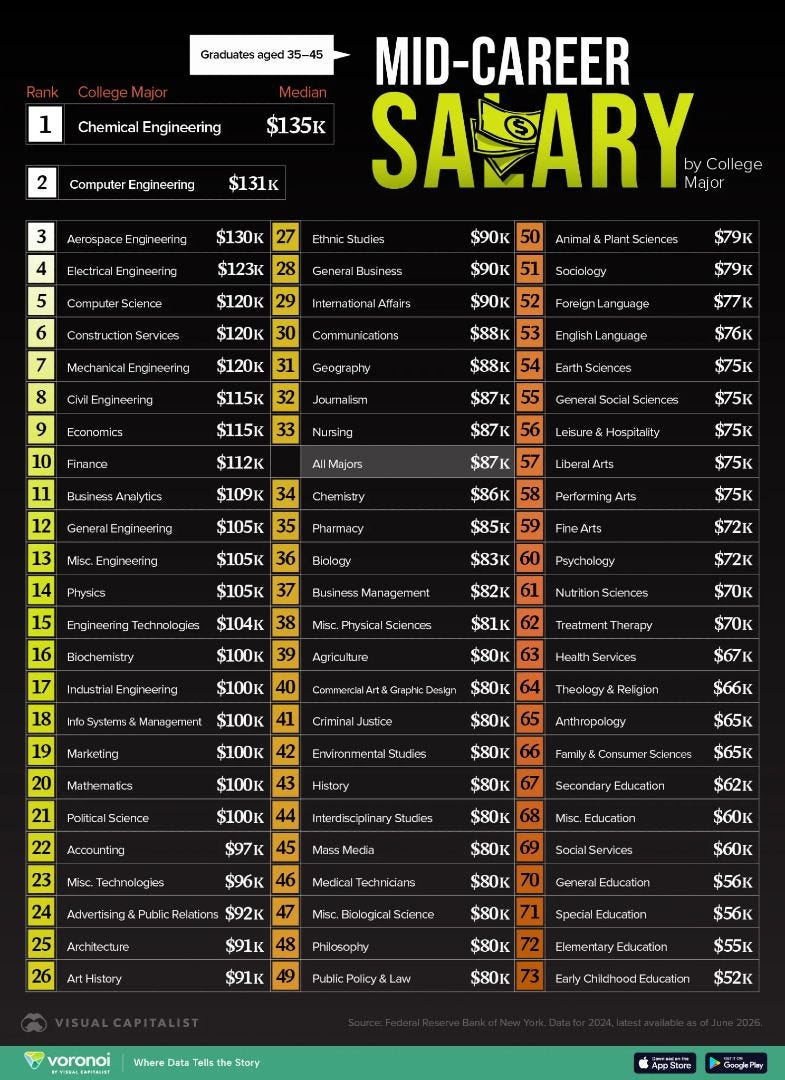
Where do nutrition professionals stand right now in terms of our mid-career salaries? Not great…$70K — $10K less than Medical Technicians; $15K less than Pharmacy; and $17K less than Nursing.
2. LinkedIn: Mid-Career Salaries
3.What about telehealth?
The Middleman Will See You Now - by Jason Fee - Vitae Arete
“…In April 2025, the nutrition telehealth company Nourish raised a 70 million dollar Series B led by J.P. Morgan's growth equity arm, bringing its total funding to 115 million dollars at a valuation above one billion dollars. Its competitors Fay and Berry Street have each banked 50 million dollar rounds of their own. Between them, these companies now route thousands of registered dietitians to patients across all fifty states….
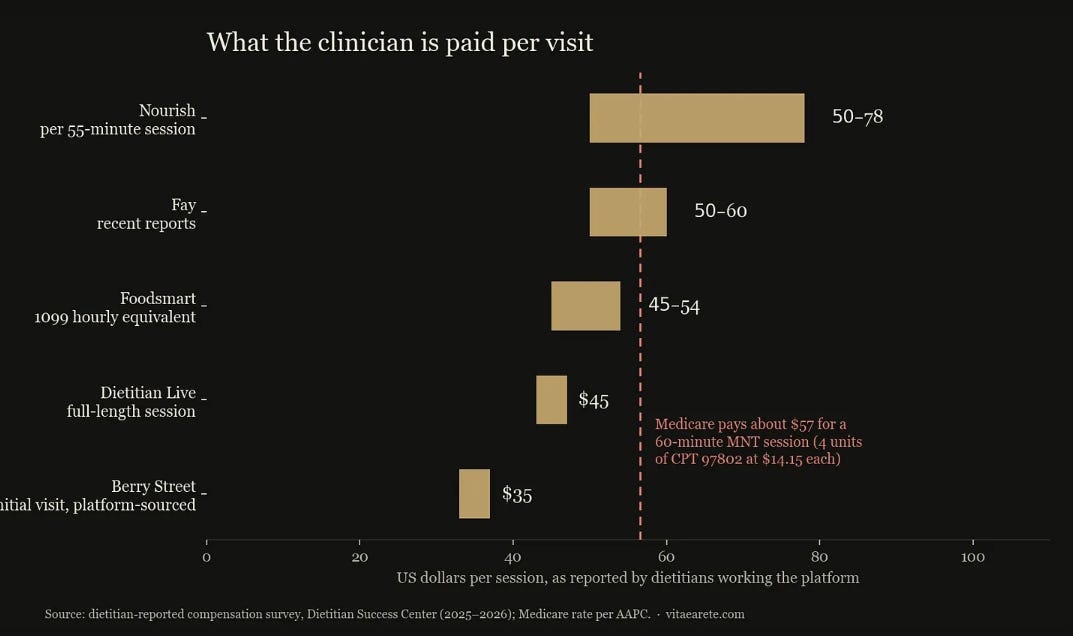
Almost none of them are paid for charting. Documentation, the legally required clinical record of every visit, is done on the dietitian’s own time. For Medicaid visits, dietitians report that unpaid documentation can approach a second unpaid hour per session.
For scale: Medicare, the payer every clinician complains about, reimburses medical nutrition therapy at about 14 dollars per 15-minute unit, which is roughly 57 dollars for an hour. Several of these platforms pay their clinicians less per hour than the federal government’s famously conservative rate, while billing commercial insurers whose contracted rates are typically higher than Medicare’s. The difference between those two numbers is what J.P. Morgan bought….”.
Meanwhile, we’ve all seen the posts by dietitians working for Nourish using affiliate links to get recruitment bonuses, right?

Comments
Nothing yet. Say the first thing.
Sign in to join the conversation.