

🗣️Advice for New RDNs
Lauren F. “Often, the best education/counseling sessions involve listening more than speaking. People need to be heard.:
Karen J. “Negotiate your pay. Don't just settle for a low-ball offer.”
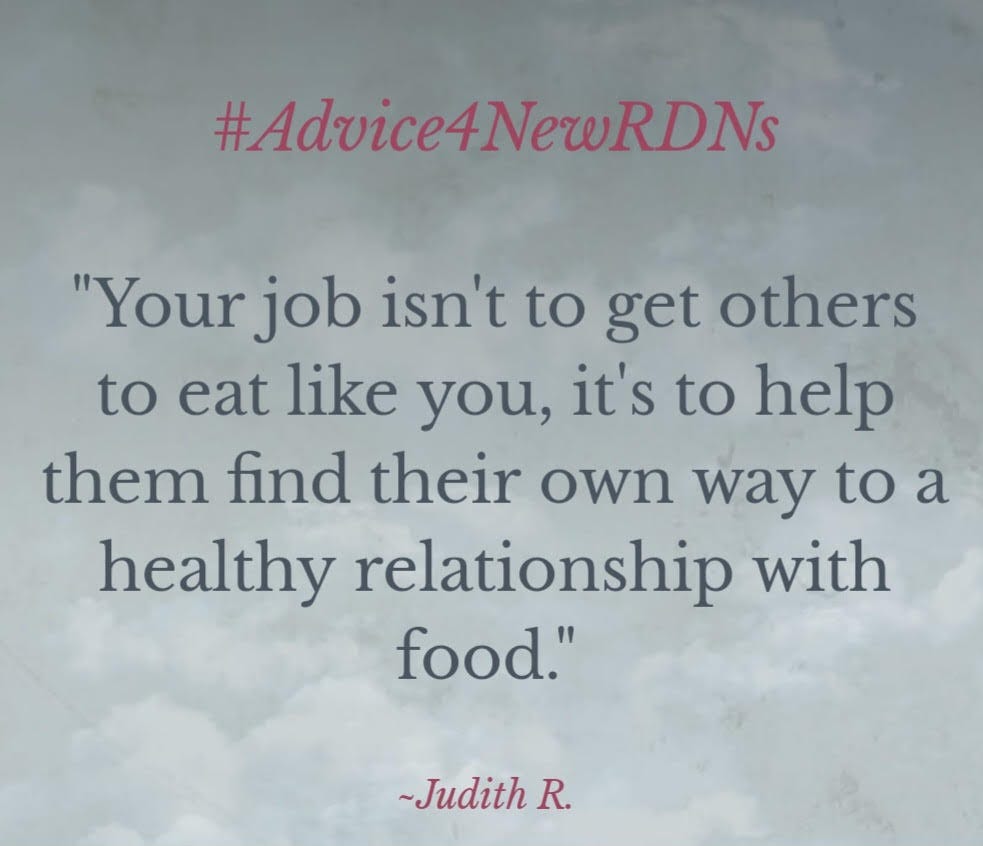
Laura S. “Meet them where they are, don’t try to change everything at one go, don’t judge their current eating patterns, use patient first language, learn motivational interviewing. And finally, remember you DON’T know everything and it’s okay to admit that to your patient. The imposter syndrome is real when you first start out. You need other RDs to support you and help you figure things out.”
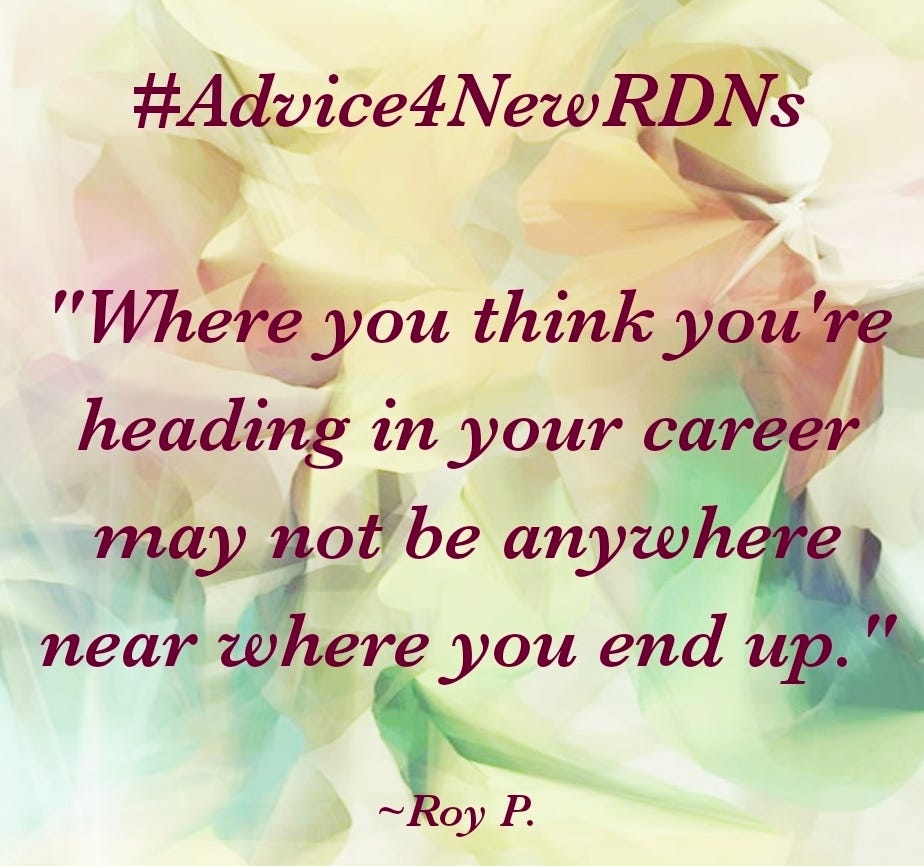
Colleen D. “Keep an open mind regarding all the potential roles/positions you can play as an RD.”
Janet S. “Always check to see who’s sponsoring the conference, webinar, podcast, etc. before sharing what you’ve gleaned.”
Sherri J. “Volunteer in professional organizations and build your network of colleagues.”
Andrea S. “Listen to your patient/client. You will learn beyond what your education could provide.”
Alex W. “Stay open minded. You may not think you like clinical, food service, etc. but you don’t know until you get experience.”
Karen K. “Remember that YOU went to school for nutrition. Doctors do not. So don’t be afraid to correct the information/advice that their doctor gave them when it comes to nutrition. I have so many patients that get terrible nutrition advice from their doctor.”
Alexis T. “Clean up the garbage in your own backyard, meaning make sure to unpack your own relationship with food/bodies/exercise so you aren’t projecting onto the vulnerable people you are trying to help.”
Michelle W. “Live within your means, pay attention to benefits, not just pay and start a Roth IRA now.”
Marty Y. “Your advice should always be based on evidence ... not on your personal preferences nor the latest fad.”
Cindy F. “Be flexible…the first job may not be your DREAM job, but it is a steppingstone to your end goal…”
What advice would YOU have for new RDNs?
📝#PartnerOffer
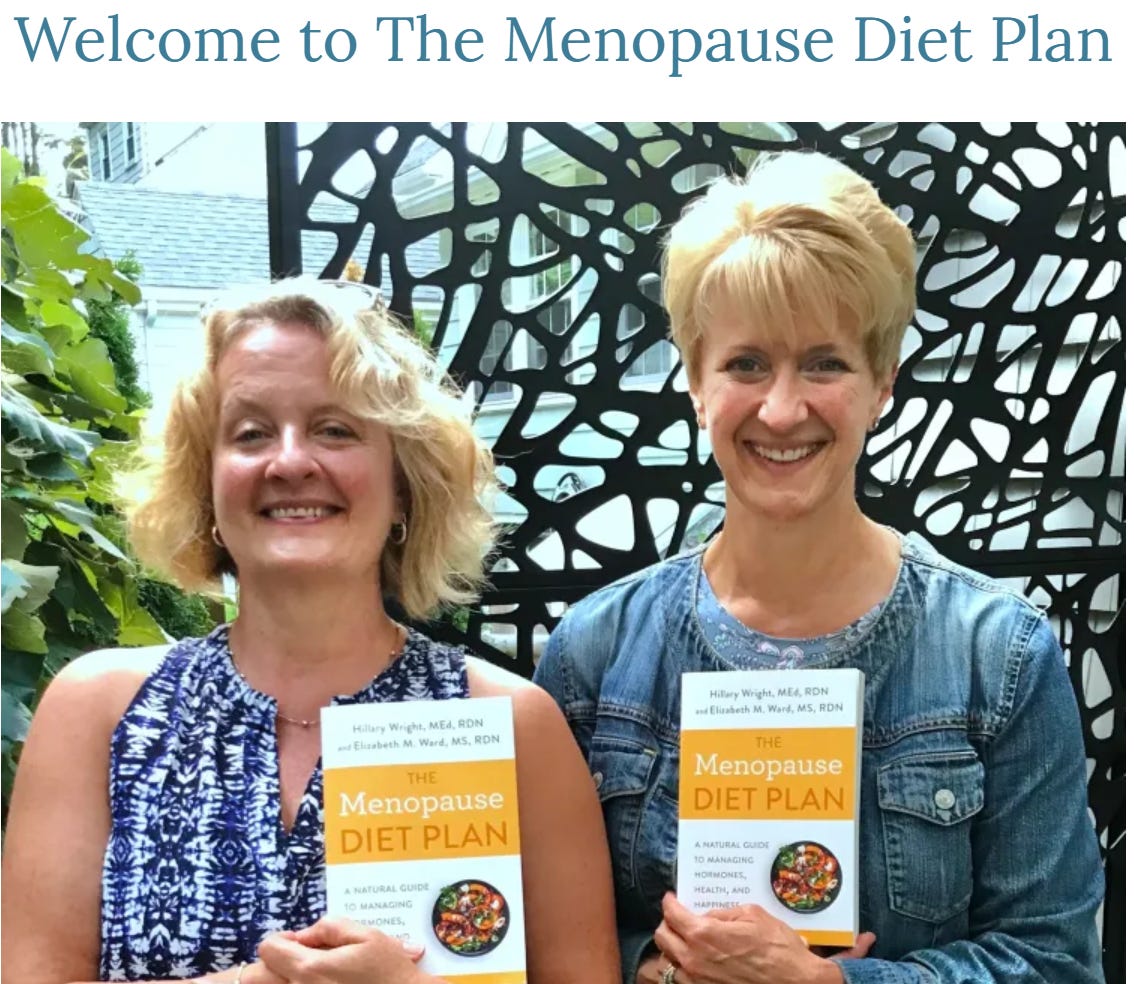
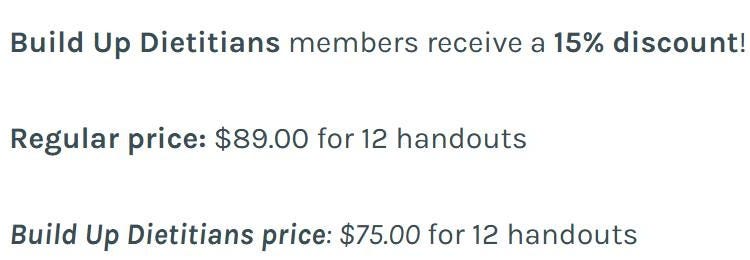
Looking for up-to-date, evidence-based educational materials for your patients and clients in perimenopause and beyond?
Hillary Wright, M.Ed, RDN and Elizabeth Ward, MS, RDN, authors of The Menopause Diet Plan, A Natural Guide to Managing Hormones, Health, and Happiness, have developed a set of 12, two-sided handouts that tackle timely topics concerning midlife women, including eating to support brain, bone, and health, weight management, protein, carbohydrate, and fiber intake, dietary supplements, and much more!
From now until June 30th, Build Up Dietitians members receive 15% off the price of the 12 handouts. Don’t miss out on this chance to purchase these easy-to-understand, consumer-friendly materials that are ready to print or share digitally with patients and clients!
Get more information and order here: A Special Offer for Build Up Dietitians! – Menopause Diet Plan
✅Worth Checking Out
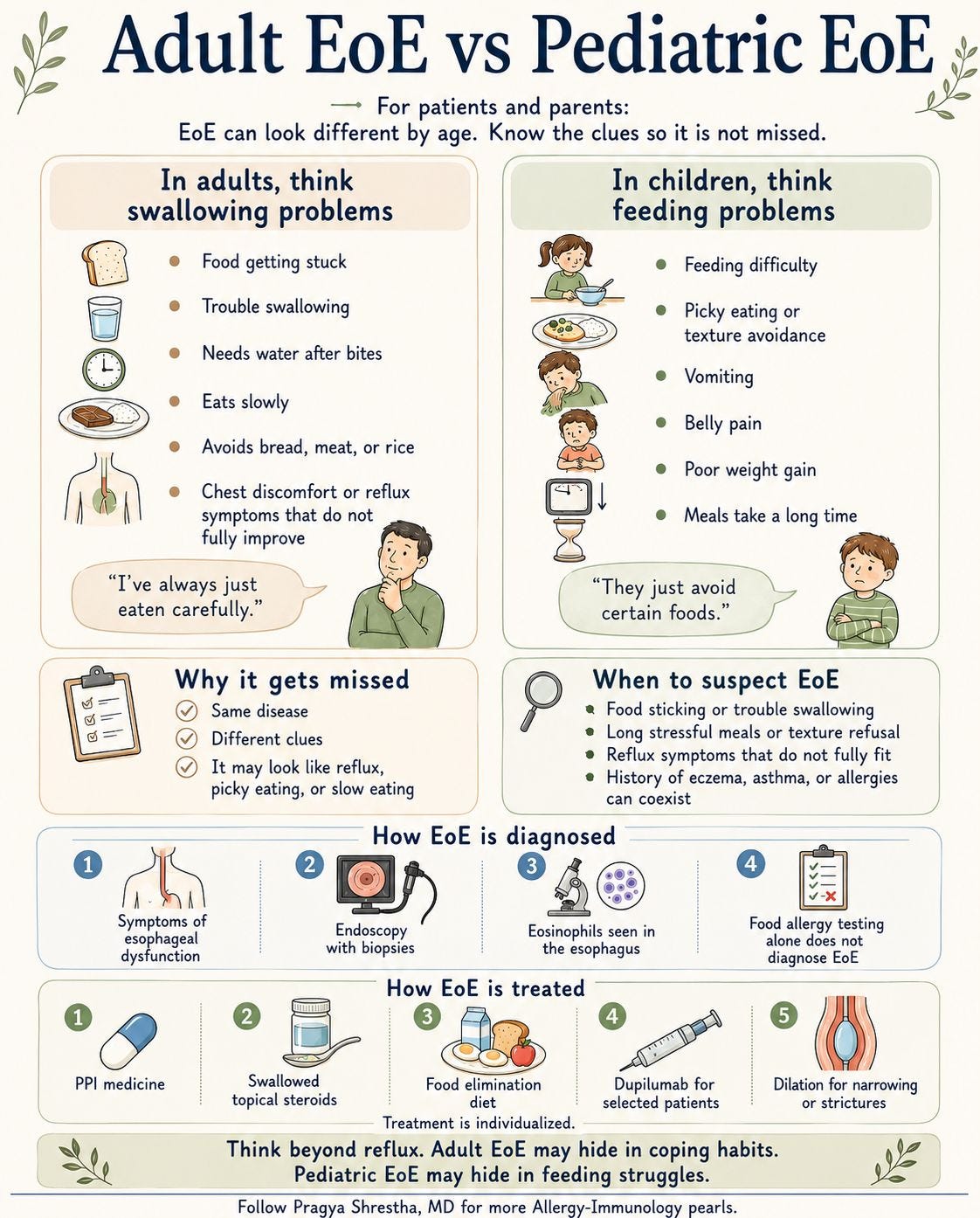
☑️Info on Alpha-Gal Syndrome (AGS) from Oklahoma State University HERE
Foods to Avoid If You Have AGS
1. Most healthcare providers recommend people with alpha-gal syndrome not eat mammalian meats.
2. Depending on symptom sensitivity and severity, healthcare providers may also recommend avoiding other foods and products that may contain alpha-gal. For example, cow’s milk, goat-milk, cow or goat milk-products, gelatin made mammalian sources, meat broth, and gravy.
Non-Food Products That May Contain Alpha-gal
1. Although very rare, some people who have severe reactions to alpha-gal may also react to ingredients in certain vaccines or medications. a. Some medications and vaccines may have additives, stabilizers or coatings that contain alpha gal. b. Gelatin, glycerin, magnesium stearate, and bovine extract are some examples of ingredients that may contain alpha-gal. i. For example, gelatin capsules (“gel-caps”).
2. Some other medical products that may contain alpha-gal include heart valves from cows or pigs, heparin, monoclonal antibodies, and some antivenoms.
☑️From LinkedIn: Pragya Shrestha, MD - Allergy-Immunologist
Click HERE for entire post.
☑️Substack: A Profile In Grifting: The Organic Gut-Health Nutritionist
by Katie Rae

“…The wellness industry runs on a regulatory vacuum—no licensing body, no enforcement mechanism, no standardized definition of “expert.” A weekend certification course and a ring light are sufficient. The women profiled above aren’t outliers; they’re the logical product of a system that was never designed to stop them…”
We wish we could say that dietitians aren’t grifters and don’t engage in grifting behavior…but sadly, that’s not the case.
☑️Substack: Why Evidence Alone Rarely Changes Practice
Dietitian Ashley DePriest - Clinical Nutrition Expert is writing a Substack geared to dietitians who work in the clinical space.
“…I used to think my job was to know the evidence and make the right recommendation. I’ve learned that the recommendation is maybe 20% of the work. The other 80% is navigating relationships, understanding the unwritten rules of a specific ICU, showing up to rounds even when I’m not explicitly invited*, and finding the right moment to advocate without being dismissed.
The uncomfortable reality is that evidence-based nutrition in the ICU is as much a social and organizational challenge as it is a scientific one. We can design the perfect RCT, publish in the best journal, and update the guidelines, but if we don’t also invest in the messy, human work of implementation, nothing changes….”.
This Substack is reader-supported. To receive new posts and support this work, could you consider becoming a paid subscriber?
Comments
Nothing yet. Say the first thing.
Sign in to join the conversation.