
Either you bring the water to LA, or you bring LA to the water. - Chinatown (1974)
Los Angeles was set on the path to boomtown with the arrival of a Southern Pacific station in 1876 that connected the city to San Francisco and the national rail network for the first time. But by 1904, this desert town was already running out of water to supply its growing population.
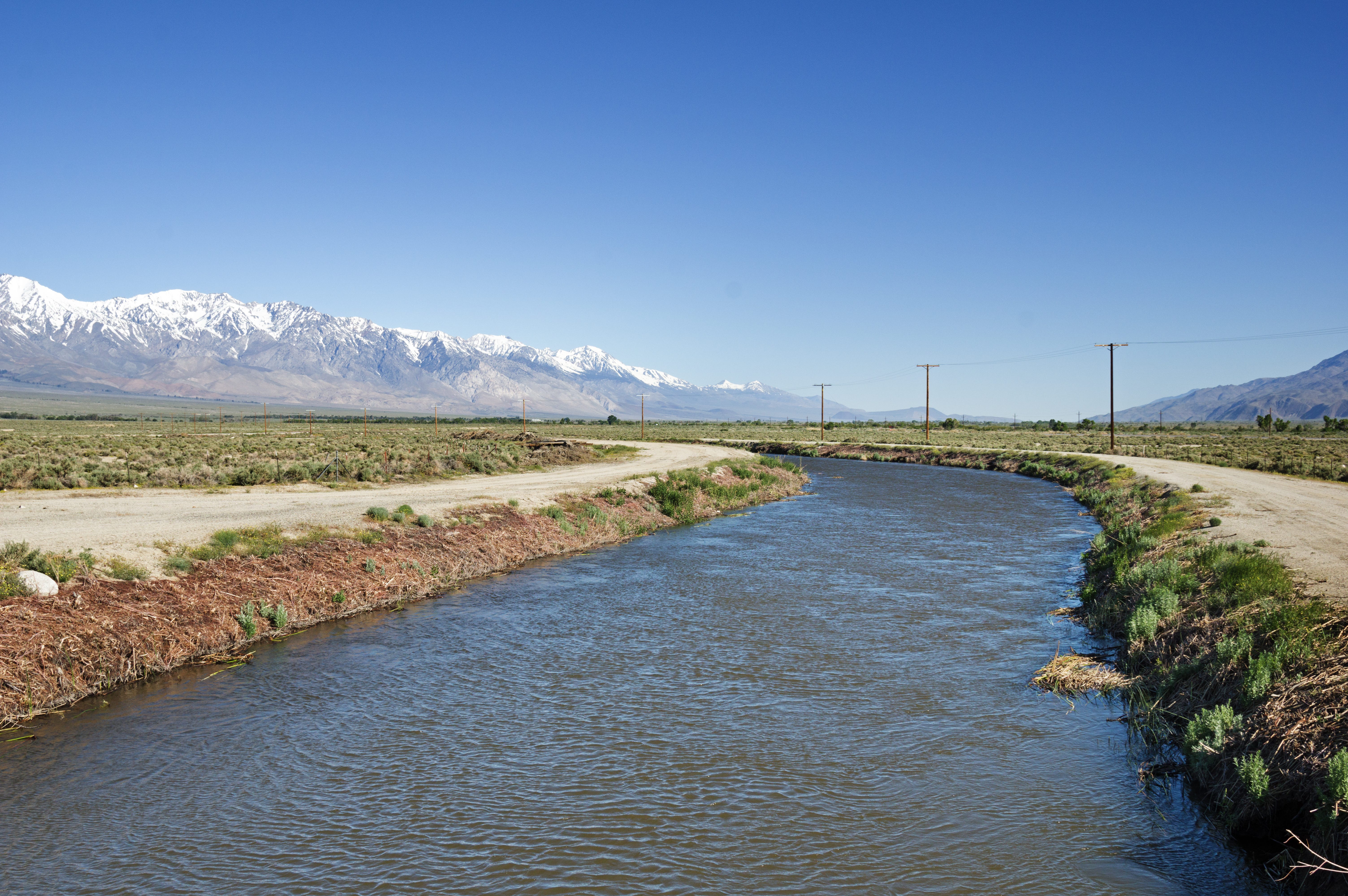
Cue two now infamous figures, William Mulholland, the chief engineer and general manager of the Los Angeles Bureau of Water Works and Supply (LADWP), and Fred Eaton, a former city mayor and private water developer. They looked to the Owens Valley, nestled in the Sierra Nevadas over two hundred miles away from Los Angeles, to provide fresh water for their growing city. What followed was a story of monumental engineering works, political maneuvering, conflict, and sabotage.
If this was a typical solution to water scarcity in an earlier world of relative water plenty, then we have cause for worry. A recent UN report warned that the world is entering a new period of global water bankruptcy. They argue that nearly three quarters of the world’s population is subject to some level of water insecurity and that around 35% of natural wetlands have been lost since 1970.
But what if we’re chasing water in all the wrong places?
Los Angeles solved its water problem by extending itself outward through conquest, drama, and political asymmetry. The next chapter of water in 21st century cities will look very different. It will not be a story of chasing water at all, but of creating it where we stand.
Let me explain why.
Unlike Los Angeles, Israel solved for water scarcity by turning inward — to water engineering itself. This story begins in 1998, when a drought started in the eastern Mediterranean Levant region that was later assessed as the worst in the last nine hundred years. For Israel, it launched a national reckoning.
Israel is no stranger to massive water projects of national importance. The National Water Carrier, a 130-kilometer system of pipes and canals that pumps fresh water from the Sea of Galilee (Lake Kinneret) down to the Southern regions and Negev, was planned for as early as the founding of the new country and completed in 1964. Israel had also experimented with desalination for decades, notably in the 1960s. But what they did next was nothing short of astounding. In 2000, they made a strategic decision to approve a large-scale desalination program that would effectively make the Mediterranean, instead of Lake Kinneret, their primary water source. Only five years later, their first large-scale reverse osmosis desalination plant, Ashkalon, came online. Within a decade, Israel had built a network of massive desalination plants along the Mediterranean at a speed most Western democracies would struggle to permit.
Their success in transitioning to seawater speaks through the numbers. Between the six plants (including Sorek B that became fully operational this January), 60-80% of the country’s potable water needs are met in a year. And the overall endeavor has been so successful that, in 2023, the Reverse Carrier project was brought online. This is a massive engineering endeavor to — for the very first time anywhere — use desalinated water to replenish a natural resource, the Sea of Galilee. Today, this helps to strengthen national reserves while protecting a site, and ecosystem, of literally biblical proportion.
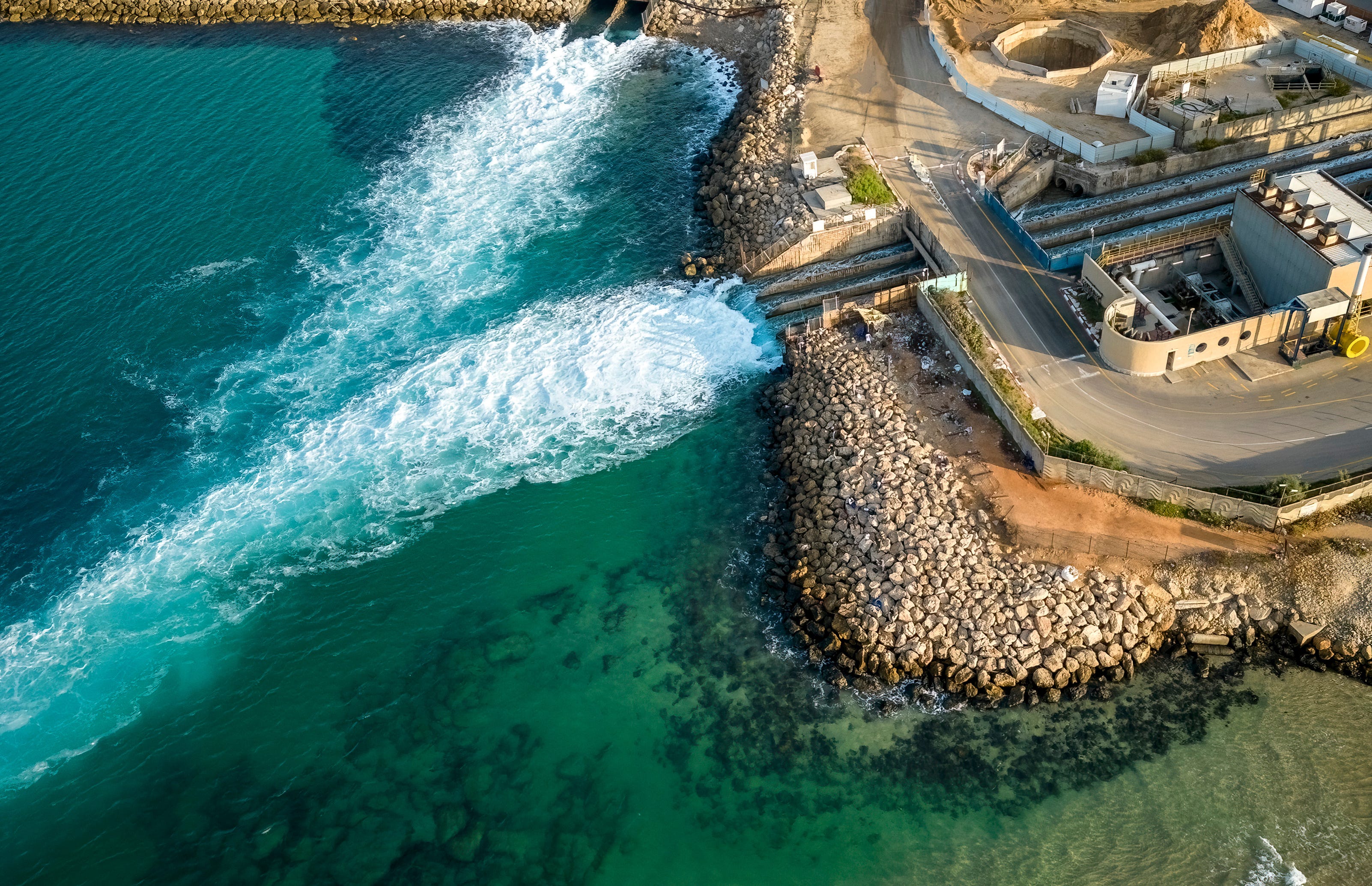
Israel is far from the only country in the region to meet their water needs through a focus on desalination. Other countries in the Middle East like Saudi Arabia and in the Caribbean take a similar approach. Desalination also has drawbacks worth mentioning. Some of the less obvious ones to the desalination initiate are the creation of localized dead (hypoxic) zones from brine discharge into the ocean, (sea life) intake mortality, and the need to supplement desalinated water with minerals to avoid public health and soil concerns in the long-term. A commonly known drawback is a hot topic today: its high energy intensity.
But Israel has demonstrated something extraordinary: that water scarcity is no longer strictly a function of geography, but of engineering choice.
While Israel was busy solving its water scarcity problem by moving the sea inland, five thousand miles to the southeast, Singapore was solving this same problem by closing the loop entirely.
Singapore has no large rivers or significant groundwater sources and, given its size — it is approximately the size of New York City — has minimal land territory for reservoirs. Historically it has depended on water import from Malaysia, with whom it has a relationship not without fraught moments. These include the 1964 race riots that culminated in Singapore’s 1965 expulsion from Malaysia, the 1965 MacDonald House bombing, and the occasional territorial dispute and threatened renegotiation of water rights since. Design for water scarcity in Singapore was primarily prompted by geopolitical imperative, not regional resource constraint.
In the late 1990s, Singapore formally committed to pursuing recycled water as a core pillar of its water strategy. In 2003, they launched NEWater, the third in their Four National Taps water diversification strategy, a strategy that includes local catchment, imported water from Malaysia, and desalination. NEWater is a system engineered to produce ultra-pure water suitable for direct potable reuse, though it is operated with controlled reservoir blending. What this means is that the water purification system is rigorous enough to allow for immediate municipal reuse based on engineering treatment alone.
Today, recycled water supports roughly 40% of Singapore’s demand with a goal of reaching up to 55% by 2060. They are not alone in this. Israel recycles roughly 85-95% of its wastewater, the highest rate in the world. Orange County, California produces more potable recycled water in absolute volume than any other jurisdiction worldwide. Cities in Texas already practice direct potable reuse out of necessity. El Paso’s Pure Water Center will soon supply nearly 10% of the city’s municipal needs.
What makes Singapore different is not technology. It is the coherence of its water strategy. Singapore has reorganized its entire national water system around eventual independence from natural freshwater geography. If they achieve their objectives then one day water will no longer be a resource that simply flows into the city, but one that circulates and renews within it. Singapore’s long-term goal is to achieve water self-sufficiency by 2061, when its final water import agreement with Malaysia expires.
While Israel was busy solving its water scarcity problem by moving the sea inland, five thousand miles to the southeast, Singapore was solving this same problem by closing the loop entirely.
What if the paradigm of capturing rainfall to solve water need is just an old one, and it’s insufficient now? Then a contrarian might argue that water scarcity is a problem diagnosed by the wrong measure. And that the drum line of alarmist headlines concerning the gradual erosion of natural freshwater sources and ecosystems in part reflect our reluctance to transition to a new paradigm, and to embrace the tools we already have at our disposal.
I won’t pretend that this does not come with its own challenges. Primary of which is that not every country, city, or rural area can afford or should reasonably undertake the expense of a water intervention at the scale of an Israel or Singapore. Undesirable tradeoffs will certainly occur including the likely hardening of global inequality over a resource of the most critical importance. Debate over environmental effects and who should pay for interventions will, and should, rage and inform efforts. And it goes without saying that we often lack the political will to implement major works before crisis forces action.
But absent from this list is engineering feasibility.
The know-how to solve water scarcity already exists and it improves day by day. Israel and Singapore point to an emerging paradigm for the 21st century. We are entering a period where success will be determined by how well we design synthetic, not natural, water abundance for ourselves, our environment, and our cities. And this will (and must) happen whether we would like it to or not.
At the end of Chinatown, Jake Gittes, played by the incomparable Jack Nicholson, has just one last question for our villain, something that he still can’t square away. He asks Noah Cross why he should go through all this trouble with the water just to make another unneeded dime. His answer is existential — that for Los Angeles, what is at stake is no less than the future itself.
If the last water paradigm was defined by conquest, the new one will be defined by something far less narratively satisfying: systems that simply work.
The tragedy will be that it makes for terrible cinema.
This essay grew out of a Build Order conversation. If you haven’t caught it yet, you can watch all our episodes on all your favorite platforms: Substack, YouTube, Spotify, Apple Podcasts, Pocket Casts, iHeartRadio, and Overcast.
Comments
Nothing yet. Say the first thing.
Sign in to join the conversation.