
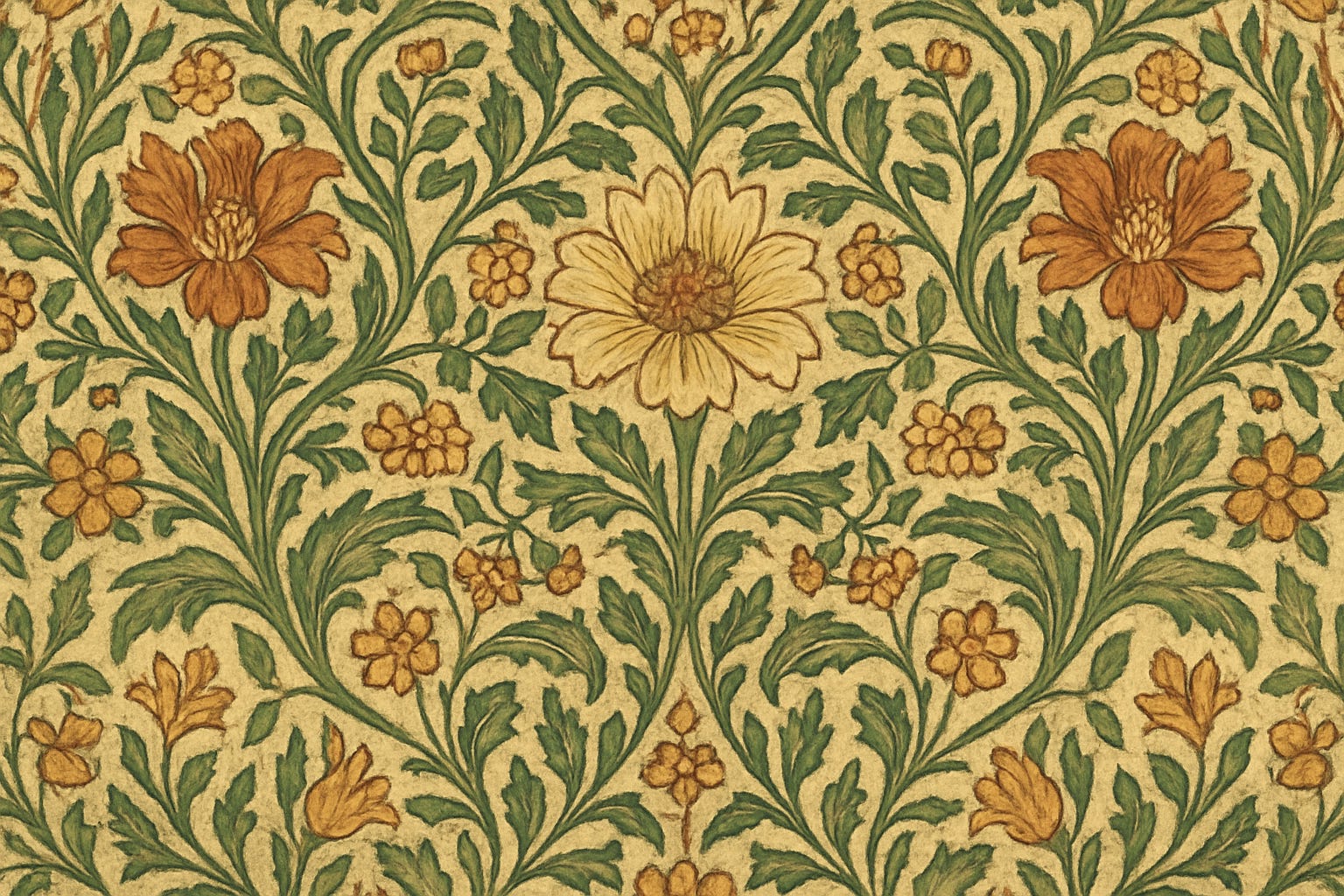
In the 1880s, Willian Morris watched factories pump out cheap furniture while craftsmen lost their livelihoods. His response? The Arts and Crafts Movement.
His bet: In a world of mass production, handmade becomes more important, not less.
He was right. 140 years later, we still pay extra for "artisanal" everything.
Now we're facing the same shift, but with AI instead of factories.
I'm noticing "No AI" badges on Etsy.
Musicians bragging about being "100% human-created."
Writers putting disclaimers that their newsletters are written by actual humans.
The pattern is clear: When everything becomes abundant and cheap, scarcity becomes valuable.
1. "Human-Made" becomes the new luxury. Just like we pay extra for handcrafted furniture today, we'll see "Certified Human-Made" labels commanding premium prices. Think about it, when anyone can generate a logo in 30 seconds, the designer who spends weeks perfecting every curve suddenly becomes invaluable. Books, art, and music will carry authenticity certificates the same way organic food does now.
2. Slow creativity wins. While AI optimizes for speed, humans will optimize for depth and meaning. The counter-movement will celebrate labor-intensive processes: handwritten letters, analog photography, paintings that take months to complete. People will pay more not just for the end product, but for the story of how it was made. The process becomes part of the product.
3. Imperfection becomes proof of authenticity. That typo? That shaky brushstroke? That slightly off-key note? In a world where AI outputs are polished to perfection, these "flaws" become your signature, proof that a real human created this. We're already seeing this with the resurgence of film photography and vinyl records. The grain and the crackle aren't bugs; they're features.
4. Local beats global. AI centralizes creation on massive platforms, but human creativity will re-root itself in physical spaces. Expect "AI-free zones" to popup: workshops, maker spaces, and creative guilds where people gather to create with their hands. These become sanctuaries for unmediated human expression, and they'll thrive because they offer something no algorithm can: genuine human connection.
5. Ethics become a selling point Just like Morris linked machine production to social decline, today's creators will position human-made work as more ethical and resistant to dehumanization. "Made by humans, for humans" isn't just marketing, it's a values statement about supporting real people and preserving human dignity in creative work.
Clearly I have a foot in the AI camp. But this isn't about choosing sides in some AI vs. human war.
It's about understanding that AI creates new opportunities for authenticity, not fewer.
Here's what I mean:
Use AI to handle the grunt work, then double down on the uniquely human stuff. Let AI write your first draft, then inject your personality, experiences, and perspective. Let AI generate ideas, then filter them through your unique lens.
The magic happens when you combine AI's efficiency with human authenticity.
The real opportunity? Most people will either go full AI (and become forgettable) or reject AI entirely (and fall behind).
You can do both, and that's your edge.
Use AI as your creative partner, not your replacement. Then be radically transparent about your process. Show how you work with AI while staying authentically you.
Because here's the truth: In a world where everyone has access to the same AI tools, your unique perspective, taste, and human judgment become more valuable than ever.
The Arts & Crafts movement didn't stop industrialization. It just carved out premium spaces where human craft mattered.
Same thing here. AI won't go away, but there will always be room for the human touch.
What do you think? Are you seeing this shift in your industry too?
Hit reply and let me know.
No posts
Comments
Nothing yet. Say the first thing.
Sign in to join the conversation.