
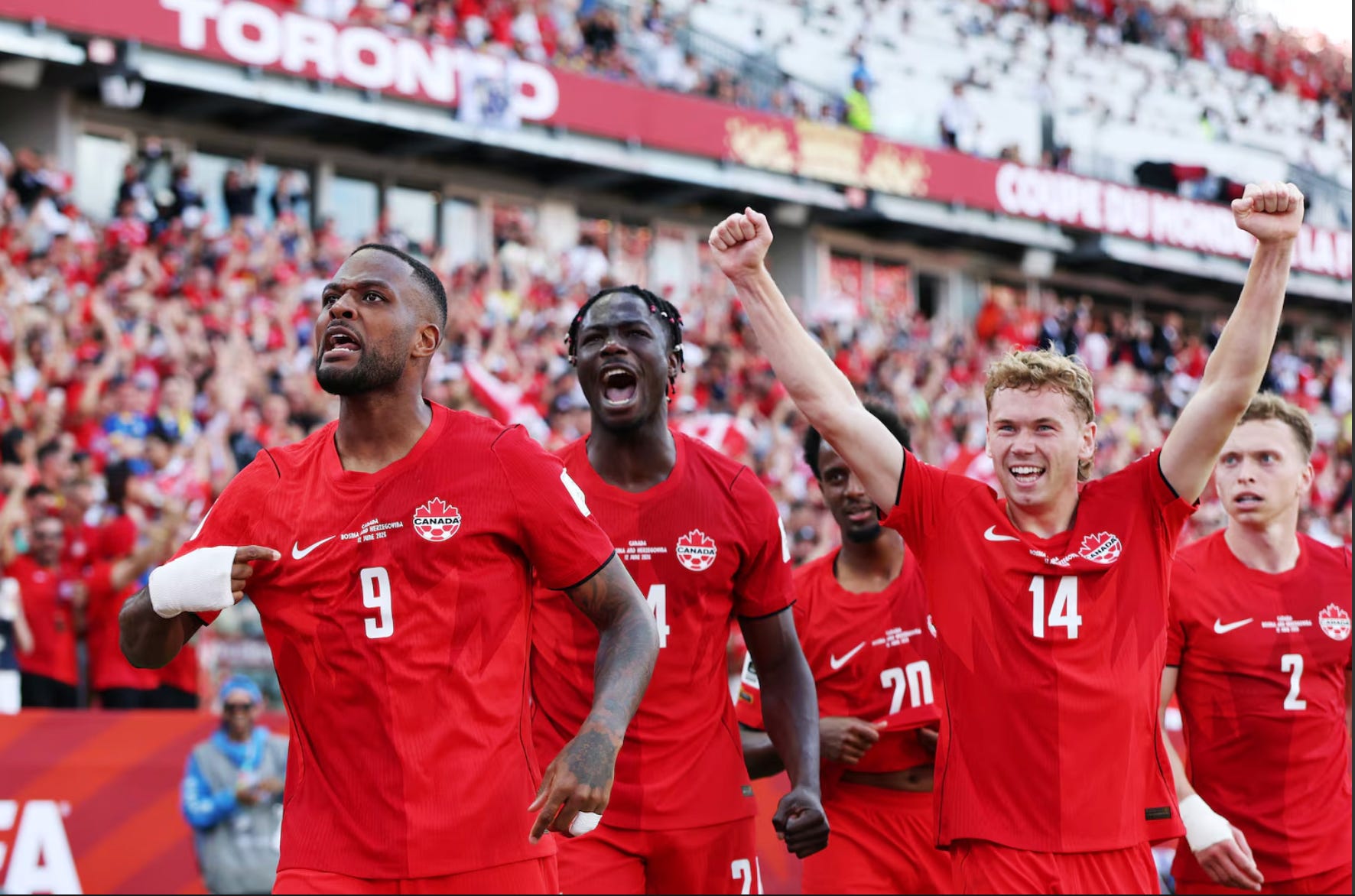
On Friday afternoon at BMO Field in Toronto, Canada earned its first ever result at the FIFA World Cup, drawing Bosnia and Herzegovina 1-1 in its tournament opener. The country has been waiting forty years for something to celebrate at the world’s biggest sporting event. A point will have to do for now.
The first time Canada appeared at a World Cup it was Mexico 1986, and the team was a patchwork. The Boston Globe fairly, if ungenerously, described it as “filled with amateurs, indoor soccer players and NASL refugees,” a collection of players who had scraped through CONCACAF qualification and drawn a group of death with France, Hungary, and the Soviet Union for their trouble. They scored zero goals, took three losses, and came home.
What is less often noted is where those players came from. Of the 22 men on the 1986 roster, fifteen had roots in British Columbia. The team was not so much a national side as a West Coast club sent to represent the whole country. Soccer in Canada, to the extent it had any developmental infrastructure at all, was concentrated in Vancouver, through the Whitecaps of the old NASL, the community clubs, the habits that flowed from the immigrant communities that had settled there. Tony Waiters, the head coach, was a transplanted Englishman.
The current Canadian squad is a different kind of team. It is much more talented obviously, but differently constituted as well. The talent pipelines that built it run through the GTA and Montreal now, as well as Vancouver. The sport has migrated east and its demographics have changed, tracking immigration patterns, suburban club growth, and the academy systems built by the country’s three MLS franchises.
Consider the Quebec dimension. Six Quebec-raised players are on Canada’s 26-man World Cup roster, including goalkeeper Maxime Crépeau, midfielder Ismaël Koné, and midfielder Nathan Saliba, whose father played soccer in Haiti. That is a striking number when set against another data point from earlier this year: when Hockey Canada assembled its men’s team for the Milan-Cortina Olympics, not a single Quebecer was selected. The province that gave the world Maurice Richard, Guy Lafleur, and Patrick Roy, and which spent most of the twentieth century treating hockey as a form of cultural patrimony, went unrepresented, to the deep dismay of commentators in the province.
Soccer, meanwhile, is becoming Quebec’s sport, yet Montreal itself is on the outside looking in. When Canada’s major cities were invited to bid for World Cup matches, Montreal declined. Given the subsequent reports of cost overruns and municipal disruption in Toronto and Vancouver, Montrealers have spent the better part of two years feeling smugly vindicated about that decision.
Then Friday happened. More than 43,000 people packed BMO Field, a stadium that had been expanded from its usual 28,000 seats specifically for the World Cup. The cottage by the lake was transformed into a fortress of red. The crowd was loud, proud, and unmistakably Canadian, and when Cyle Larin equalized in the 78th minute the roar was audible from the waterfront. The team now moves west for its next two matches, and Vancouver is expected to match Toronto’s fervour. Montrealers might be forgiven for experiencing a bit of FOMO.
The old demographic story of Canadian soccer was that it existed mostly on the margins of Canada’s national identity — in immigrant communities whose loyalties ran elsewhere, in suburban rec leagues that produced players who, if they were good enough, would end up representing someone else’s country. The new story is different. The players on the current roster are, in significant numbers, the children of those immigrant communities, born in Canada, trained in Canadian clubs, representing Canada by choice and with genuine enthusiasm.
None of this is separate from the larger political context in which this World Cup is unfolding. Canada enters the tournament at one of the more uncomfortable moments in recent national life. There are separatist movements active in both Quebec and Alberta, and we have spent the better part of the last two years being economically threatened by our closest ally and neighbour.
But there’s soccer. Forty years ago, fifteen players from BC showed up and did their best against some of the best teams in the world. Friday afternoon in Toronto, a much different team, representing a much changed Canada, played its first game on home soil, and took its first World Cup points.
In a summer when Canada is deeply divided about what it is, what it wants to be, and whether it even holds together, soccer is helping answer part of the question.

TSN@TSN_Sports
The World Lives Here. Canada is all together different. Truly unique. And so is our relationship to the beautiful game. This is our opening to the 2026 World Cup. Narrated by Kiefer Sutherland. #FIFAWorldCup
2:18 PM · Jun 11, 2026 · 1.43M Views
173 Replies · 1.59K Reposts · 7.82K Likes

Jacob Pacheco@JacobPacheco6
THE SCENES IN TORONTO RIGHT NOW!!!🍁⚽️🇨🇦🍁⚽️🇨🇦🍁⚽️🇨🇦🍁⚽️🇨🇦🍁⚽️🇨🇦🍁⚽️🇨🇦🍁⚽️🇨🇦🍁⚽️🇨🇦 #FIFAWorldCup #CANMNT
3:27 PM · Jun 12, 2026 · 520K Views
165 Replies · 1.01K Reposts · 11.4K Likes

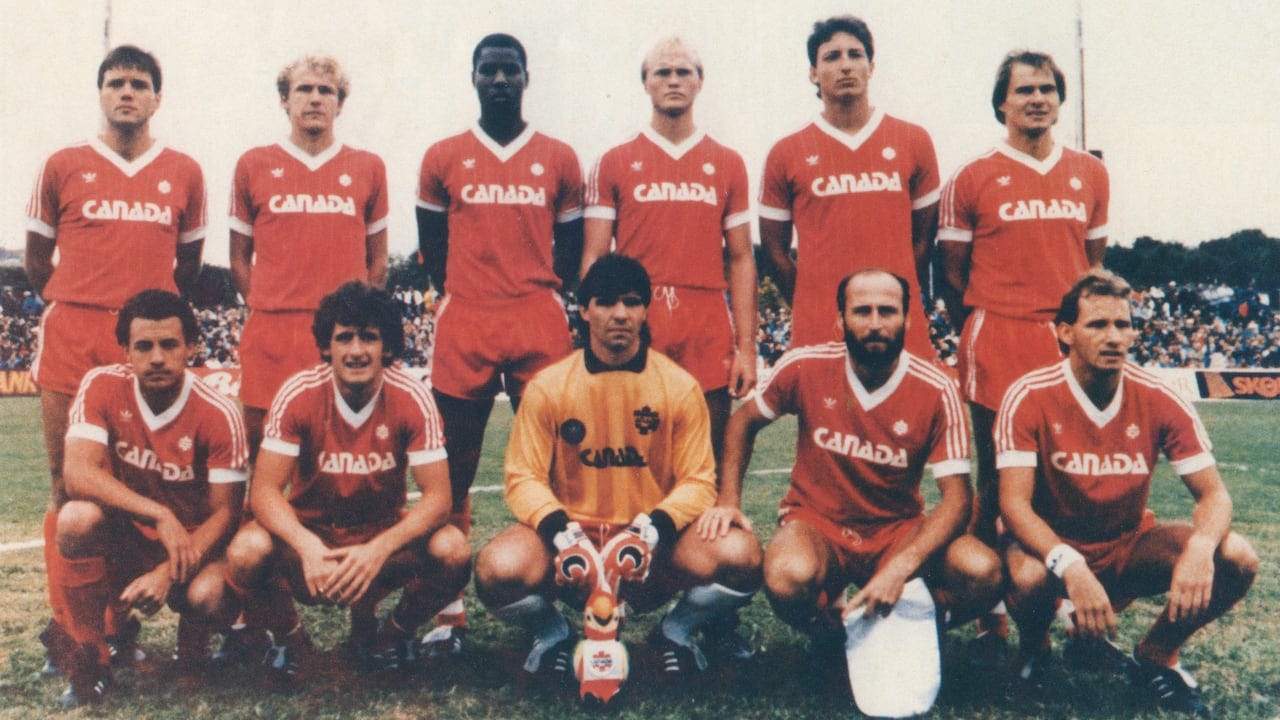
On September 14, 1985, Canada played what was at that point the most important soccer game in its history at King George V Park in St. John's, Newfoundland. It was a modest outdoor pitch on the banks of Quidi Vidi Lake. If the Hondurans were baffled, so were the Canadians. Captain Bruce Wilson later recalled his bewilderment: “What the heck is the Canadian Soccer Association doing putting this biggest game Canada's ever played — in Newfoundland?”
No matter. Some 13,000 people packed the ground. Canada won 2-1 with goals coming from George Pakos and Igor Vrablic, and qualified for the next year’s World Cup in Mexico. The first game ball went into the reeds of a nearby river and had to be retrieved by a fan, and it eventually found its way into the Canada Soccer Hall of Fame.

Jeff Adamson@jeffcanadamson
In Canada, a retired couple earning $182,000 a year still collects more than $18,000 from Old Age Security. Meanwhile 400,000 seniors live in poverty. Millennials pay 28% more in income taxes toward seniors' retirements than boomers did at the same age. Chrétien tried to fix

3:22 PM · Jun 9, 2026 · 18.1K Views
87 Replies · 33 Reposts · 188 Likes
OAS costs $86 billion a year (more than any other federal program) and it’s growing faster than the deficit. Yet 400,000 seniors still live in poverty, while a retired couple earning $185,000 continues to collect over $18,000 in benefits.
Jeff Adamson’s latest Build Canada memo lays out a path forward: shift the OAS clawback to household income, phase out outdated tax credits worth $7 billion a year, end seniors’ poverty, and free up more than $13 billion annually for deficit reduction.

Canada Spends@canada_spends
We have fiscal transfers and tax credits targeted to eliminate poverty. They are the federal government's biggest spending priority. Are they effective? Can we do better? We built FISCAL PLINKO to find out! Change the policy and see how Canadians drop through the system!
5:51 PM · Jun 11, 2026 · 5.42K Views
2 Replies · 4 Reposts · 33 Likes
We have fiscal transfers and tax credits targeted to eliminate poverty. They are the federal government's biggest spending priority.
Are they effective? Can we do better? In the name of having a bit of fun with it, check out FISCAL PLINKO. Change your own policy and see how Canadians drop through the system.
On the night of June 12-13, 1944, Pilot Officer Andrew Mynarski of Winnipeg was flying as mid-upper gunner in an Avro Lancaster bomber during a bombing mission against railway yards in Cambrai, France. A German fighter attacked the plane, knocking out two engines and setting the aircraft on fire. The crew were forced to bail out, and Mynarski had nearly made it to the escape hatch when he saw his crewmate Pat Brophy trapped in the rear turret. Mynarski crawled back and fought to free Brophy, but was pushed back by smoke and flames. He gave Brophy a final salute and bailed out, with his clothes and parachute on fire.
Mynarski was alive when he landed, but he died of his burns later that day. His actions were the first for which a member of the Royal Canadian Air Force received the Victoria Cross, the highest possible war honour. The VC was awarded posthumously in 1946, after Brophy — who miraculously survived the crash of the bomber — was liberated from a POW camp and could tell the full story
“Everything all at once”: Michael Geist has concerns that Bill C-34 is biting off more than the government can chew.
This past week saw three stories in major news outlets citing anonymous Liberals who say Mark Carney yells. Jen Gerson says good for Carney. And Jennifer Robson offers advice for caucus management.
The Montreal Gazette has a look at three Quebec electric battery champions that went bust. And former premier Legault tries to explain what went wrong.
On Tuesday, Louise Arbour was sworn in as Canada’s 31st Governor General. In her speech, she challenged Canada to aim high: “To help Canada reach our full potential, we must adopt a new perspective, one that is ambitious and confident in ourselves and on our place in the world.”
Scientific American takes a look at how Angine de Poitrine, the Quebec music duo, “play with neurobiology and physics to make viral music”
Get weekly, no-fluff insights on building a more prosperous Canada. Tap “Subscribe” now and be first in line for next week’s brief. Then forward this email to one friend who cares as much as you do—let’s build together.
No posts
Comments
Nothing yet. Say the first thing.
Sign in to join the conversation.