
Hello everyone,
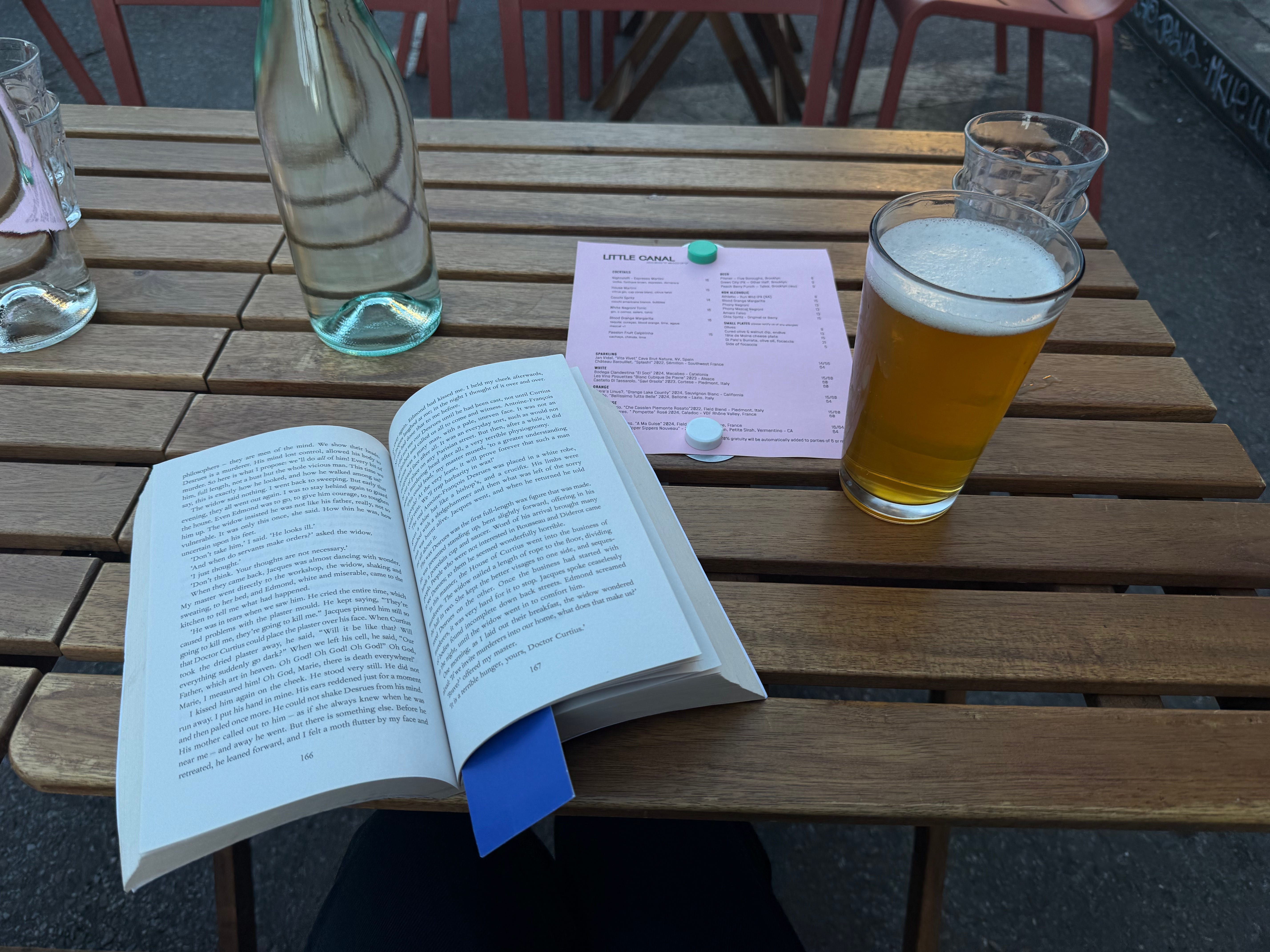
I’m writing to you from a perfectly autumnal New York - this is my favourite season in general, but particularly in New York (there are songs written about it!). I spent the majority of summer in London, with a brief trip to Sicily which was gorgeous and far too short, plus Buffy’s first ever non-London or NYC meeting in Edinburgh for the book festival. I’m looking forward to hibernating a little bit as the weather grows colder and cosier, and of course reading a lot. Seichō Matsumato’s Inspector Imanishi Investigates, Buffy’s book of the month, has naturally been the focus, and last night we hosted our in-person discussion of it.
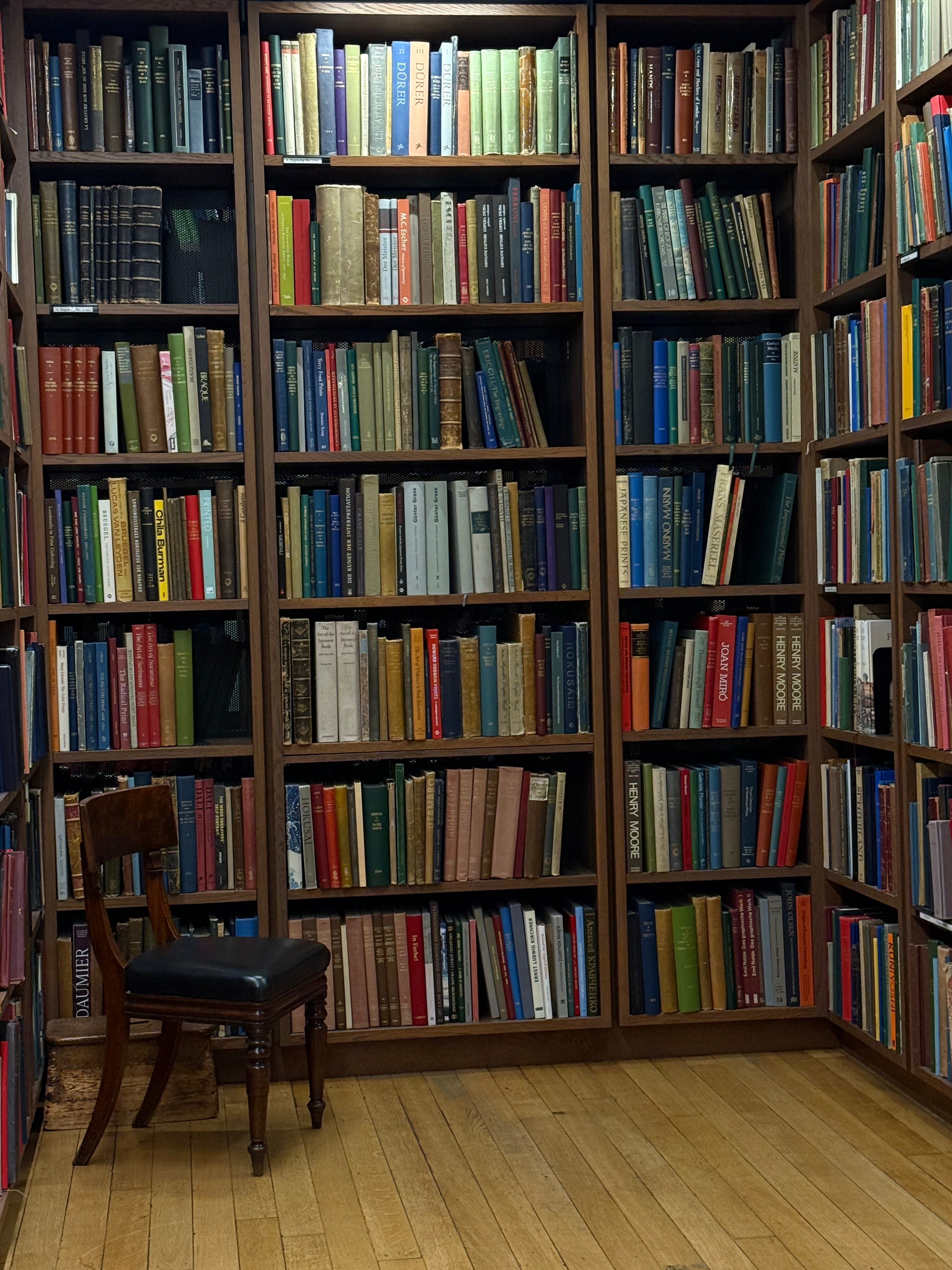
The book club was hosted on Thursday night at Margot, in Fort Greene Brooklyn. Margot is such a beautiful restaurant, with wooden banquettes and huge windows, as well as a really striking, perfect cobalt blue exterior. We had the private space upstairs, I was thinking I would be writing about how cosy it felt but in fact need to write about how it was mercifully air conditioned as it was SO HUMID yesterday!! Thank you to everyone who came and battled through that.
I did not dress appropriately for the weather and wore suede trousers (it was raining too, I must stress how inappropriate this outfit choice was), a COS linen shirt and pony hair shoes. An absolutely ridiculous outfit considering the unseasonal warmth, but I felt great!

Margot has an amazing wine list, and also offered cocktails for the evening - as I am writing this I realise I didn’t try either of the cocktails which is a SIN, and I must do better next time. We ate olives, bread, and cheese, which sustained us for a hearty discussion of Matsumoto’s book.
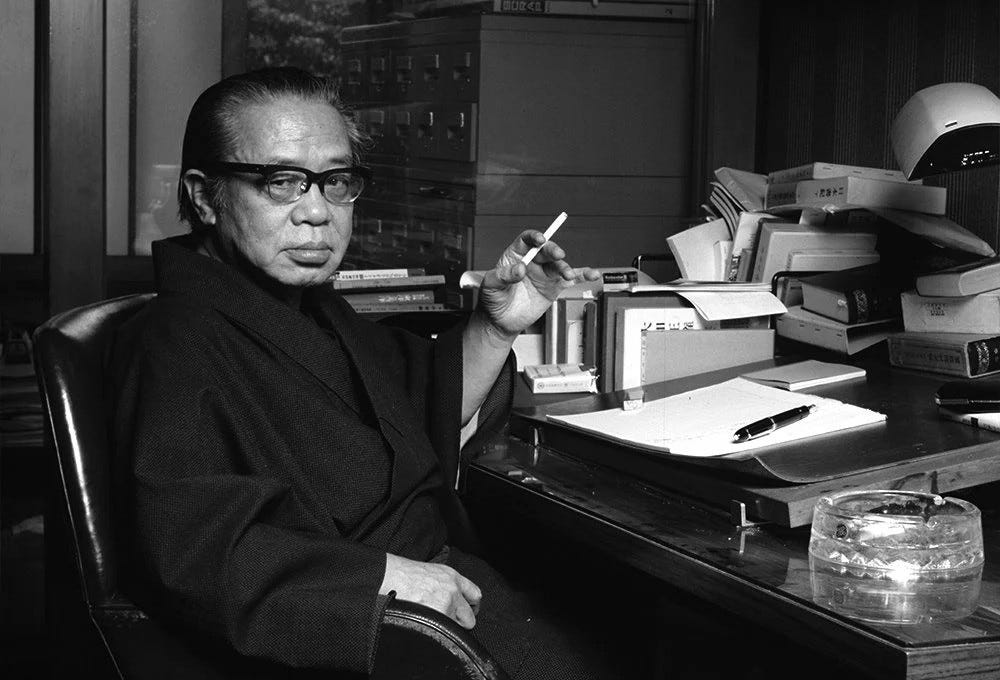
I found it really interesting researching Matsumoto, who I’d never read before and has recently become very popular due to Penguin Modern Classics reissuing and translating his works. Credited with the popularisation of detective fiction in Japan and sometimes referred to as the “Japanese Agatha Christie”, Matsumoto, born in Japan in 1909, was self-educated, having not attended secondary school or university, and didn’t publish his first book until he was in his 40s, then going on to write 450 (!!) works over the next four decades. There are some great photos of him smoking cigs at his desk, which I love, and can assume he never actually left his desk if he managed to write that many books.
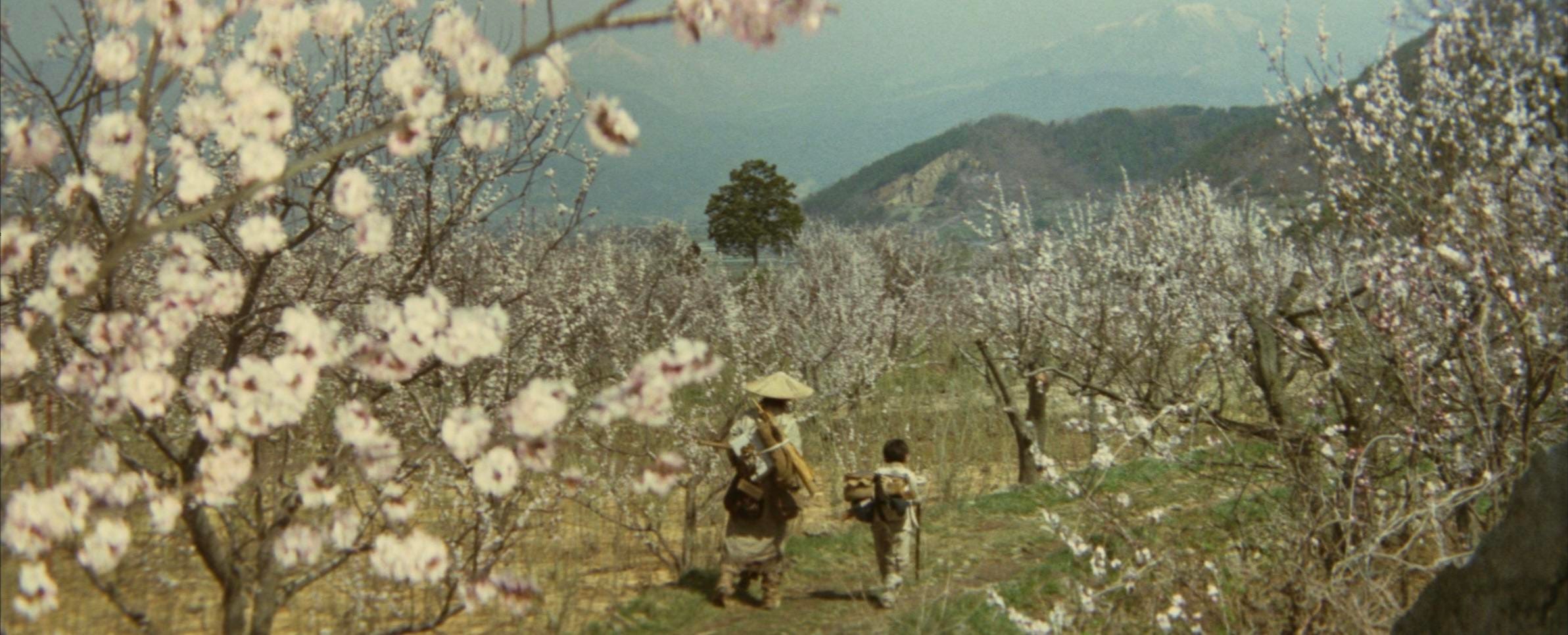
Eight of Matsumoto’s novels were adapted into films by the Japanese director Yoshitarō Nomura, including Inspector Imanishi Investigates which was adapted into the 1974 film Castle of Sand. A translation of the novel’s original Japanese title Suna no Utsuwa, this film won multiple awards in Japan including the 1975 Kinema Junpo Award, the Readers’ Choice Award, and the 1975 Mainichi Film Concours. I really recommend the film (it’s on Criterion Channel), it was beautifully shot and really helped me grasp the numerous characters and places Imanihsi visits.
The book is set in the 1960s, and follows Inspector Imanishi Eitaro who is solving the mystery of a man’s body found on train tracks in Tokyo. Inspector Imanishi traverses Japan to find answers, alongside the junior detective Yoshimura, and the book provides a fascinating image of Japanese society in the mid-20th century.
The more time I spent with this book, the more impressed I became with what Matsumoto achieves. There is a simplicity in its prose which made it easy to read despite its ever changing plot, littered with clues and red herrings. It is really rooted in the procedure of the investigation, and Matsumoto lets you in on every twist and turn. There are maybe one too many coincidental moments that keep moving the case along, and a huge amount of names of people and places, but I think Matsumoto is deliberately presenting the reader with a lot of different things to see which ones stand out to you the most. None of us at the book club successfully guessed who the killer was, so the red herrings definitely worked!
Written just 15 years after the end of WW2 and the atomic bombs in Hiroshima and Nagasaki, I was surprised how little the war featured in the novel. But we reflected last night how much this was really written to a Japanese audience reading in the 60s, a time of great political turmoil for Japan, and that therefore Japanese reader didn’t need an account of what they had just lived through. The conflicts of the time exist in a far more subtle way…the push and pull between traditional Japan and a more progressive Japan, personified by the Nouveau Group. The presence of Tadokoro, the cabinet member being used by the Nouveau Group (specifically Waga) felt like another demonstration of the tension between conservative right and the liberal left at the time (for an understanding of the 1960s social landscape I found this YouTube video interesting!).
Overall, we loved the book. There was a general consensus that it didn’t make us feel much towards any of the characters, but it felt like Matsumoto was focusing on the plot more than the character development, and he took the plot in so many different directions that the lack of connection to the character didn’t feel too detrimental. I for one would read more Matsumoto, but I wouldn’t prioritise it in the coming months, I think crime fiction is ultimately not my genre of choice so despite how much I enjoyed this one, I am still going to gravitate towards other novels!
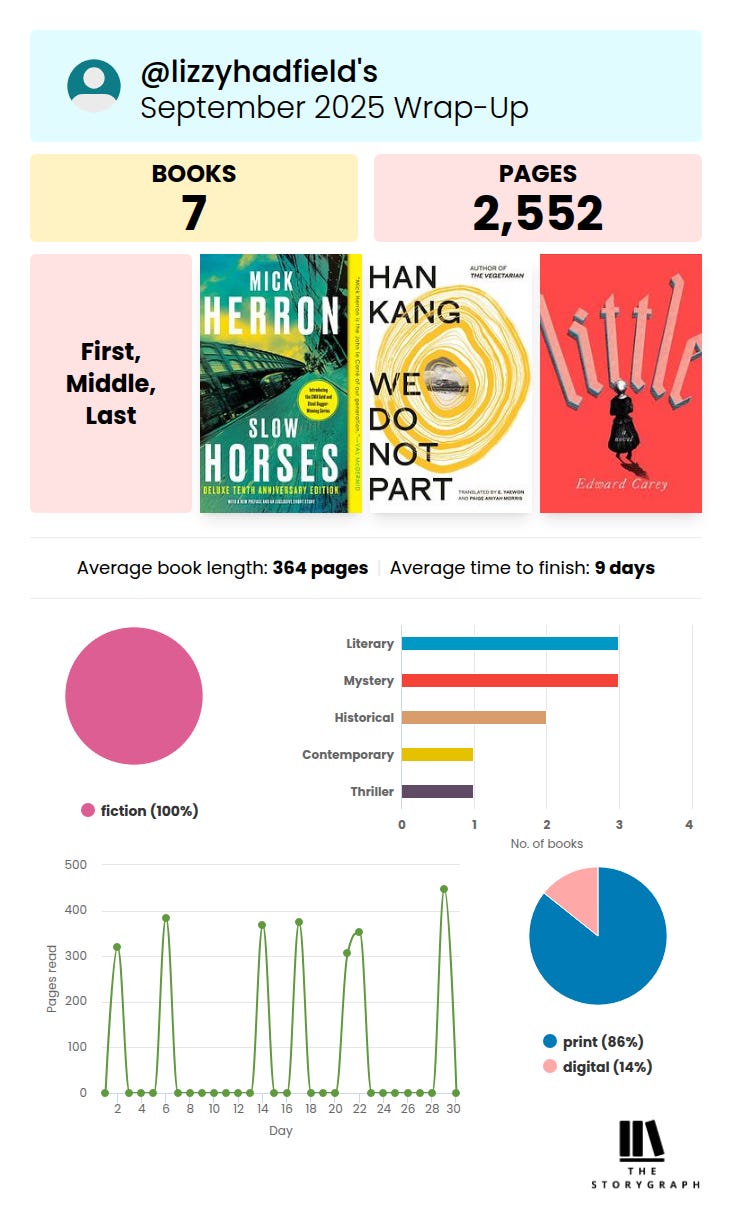
Speaking of other books, I had a brilliant reading month in September. This graphic is taken from Storygraph, please leave your username in the comments so I can add more people on there! It is infinitely better than GoodReads, and I like the fact you can make a reading goal based on number of pages, not just the number of books.
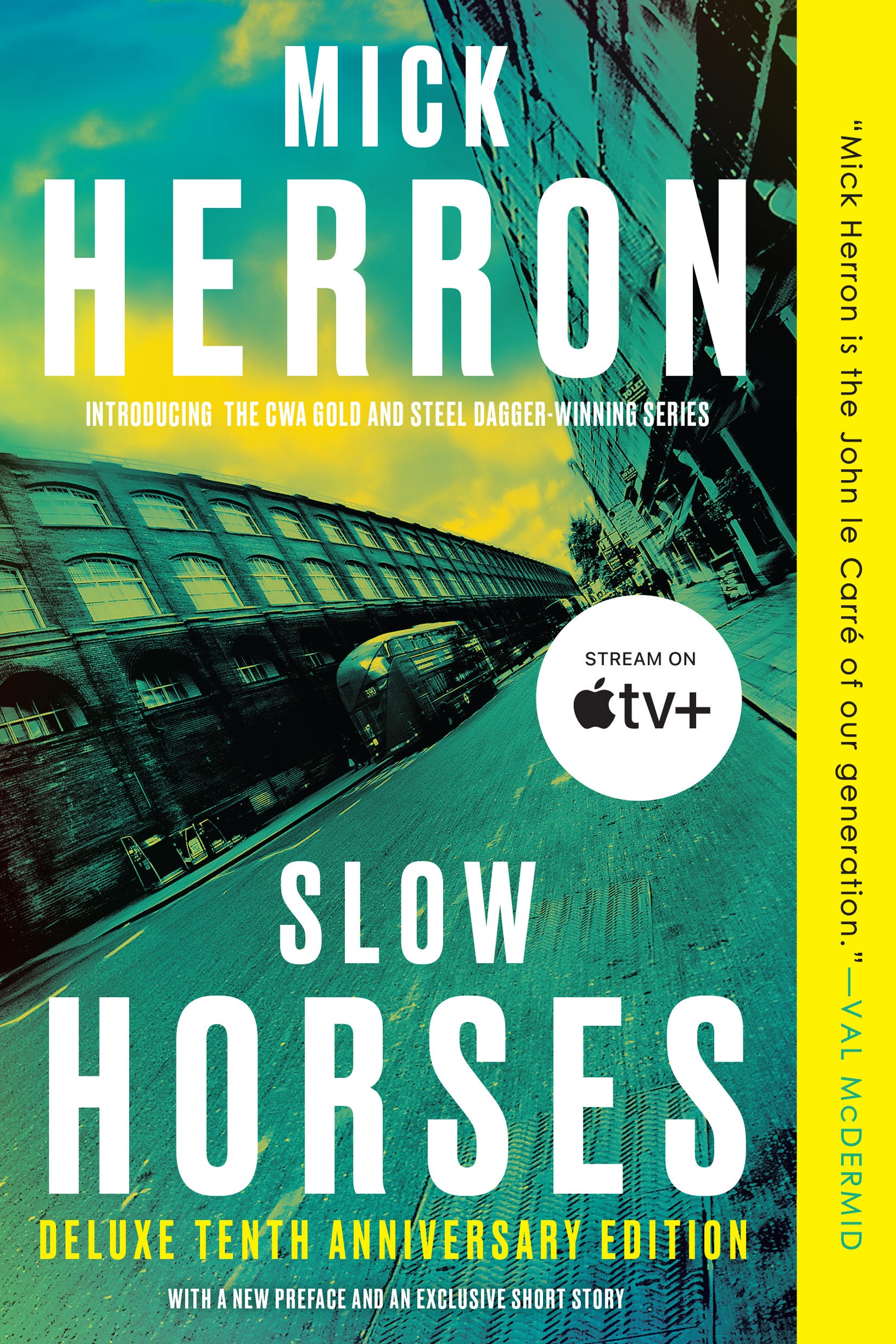
Slow Horses by Mick Herron
I listened to his on audiobook, and loved the narrator. My cousin’s (both big audiobook listeners) recommended the series to me, and it’s really enjoyable. I know it’s a really popular TV show too so I am imagining a lot of you will be familiar with it, but it follows Jackson Lamb who is heading up Slough House, an arm of MI5 where they send agents who have had some catastrophic incident in their career, leaving them disgraced and sidelined. I think I am still honing in on my skill of really paying attention when I am listening to a book, and with a fast paced one like this, I really noticed it if my mind wandered for a little bit. I will 100% be continuing through these on audiobook, I just need a break from this narrator because…
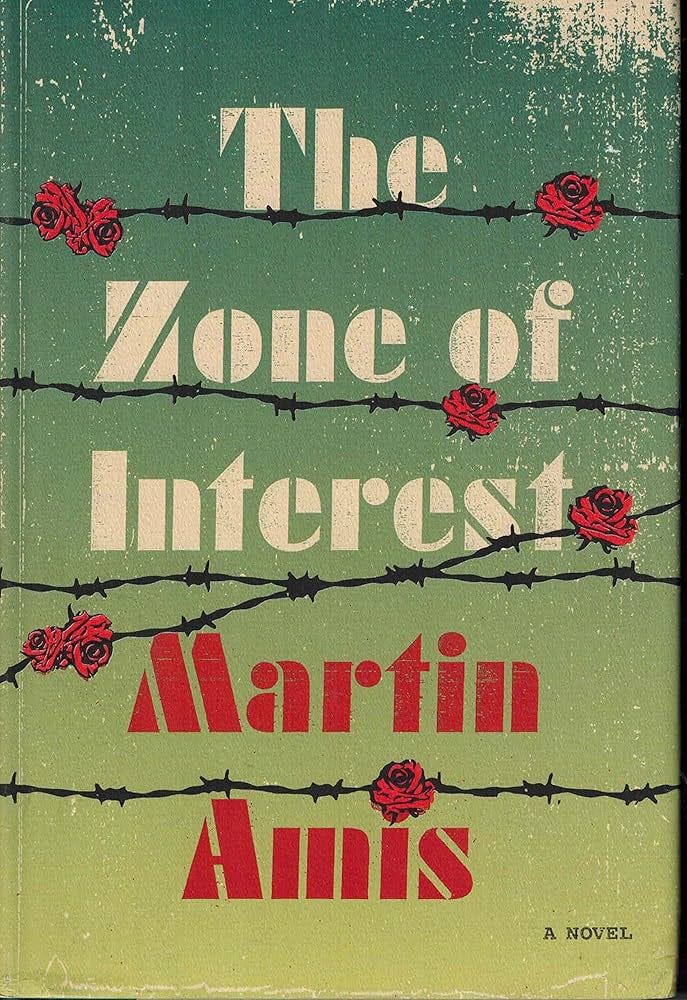
The Zone of Interest by Martin Amis
… I ended up listening to another book straight afterwards, narrated by the same man! Which was a complete coincidence!! The same voice taking me from a group of disgraced detectives in London in a high paced thriller, to the family of the commandant of Auschwitz, was very disorientating. I am going to make an effort to read the physical copy of this, as it really felt like a book that needed to be looked at on the page rather than listened to. There are three main narrators of the book, Angelus Thomsen, Paul Doll and Szmul Zacharias. Thomsen falls in love with Doll’s wife, while Zacharias, a jew imprisoned at Auschwitz, is forced to work on the camp. Each chapter covers the perspective of the three characters, and while listening, I was really losing my way. It’s relatively slow paced for a novel recounting such a harrowing topic, and so I think the nuance of what Amis was trying to achieve really was in the characters, and that crucial part was lost on me.
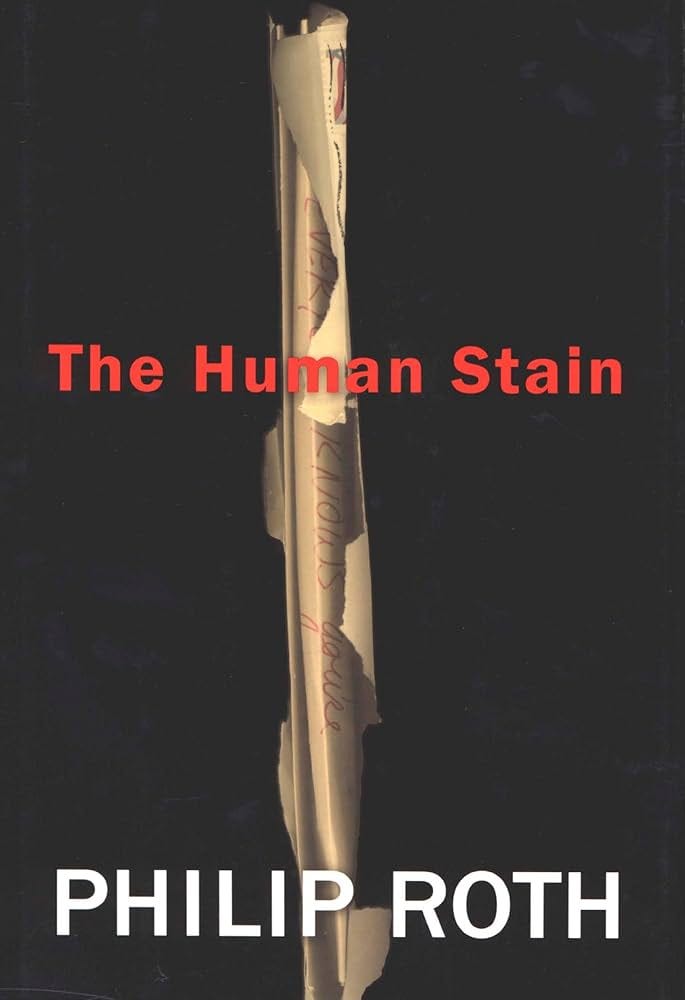
The Human Stain by Philip Roth
My first time reading Roth! And it was quite an undertaking, but a very rewarding one. The narrator is telling the story of his ex co-worker, Coleman Silk, who resigns from his long tenure as dean and professor at a college in Massachusetts after accusations of racism towards two students. Through the narrator, Nathan Zuckerman, we then delve into Silk’s life story, leading up to current day where he is having a love affair with a much younger woman. The novel being written from Zuckerman’s point of view is downright confusing at points and adds a layer of unreliability in there that I don’t think it needed. Roth’s tendencies towards long sentences made it hard enough to keep up with, but he really does write incredibly. There were so many moments when I had to stop and take a breath after reading a single (sometimes paragraph long) sentence, just to really appreciate the masterful way he conveys so much to the reader. I will definitely be reading more from Roth, but I know I need to tackle it when I have a lot of time to really dedicate to reading it.
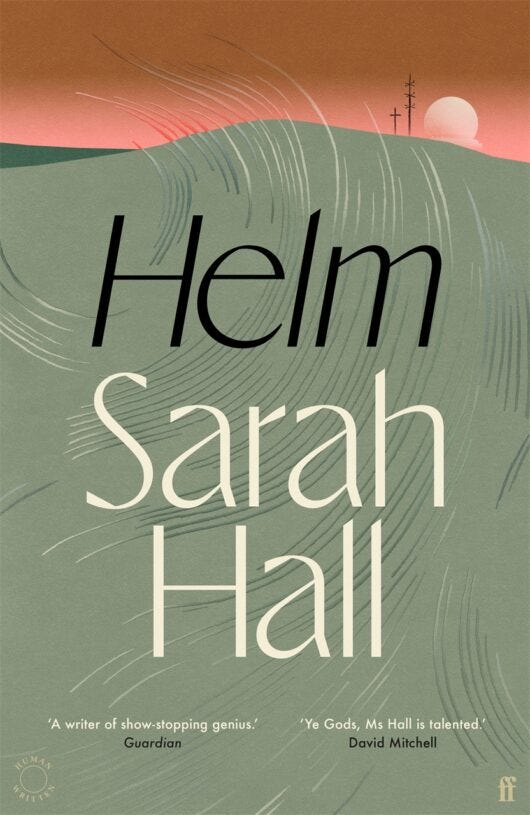
Helm by Sarah Hall
I wanted to love this so much more than I did! Helm is a micro climate, a wind, over Eden Fell in the North of England, and we read about Helm’s influence over thousands of years. From an environmentalist taking readings from the clouds to study the rise of microplastics in the air we breathe, to a neolithic tribe, and every era in between. Helm apparently took 20 years to write, and I can really see the labour of love that went into this, the characters are numerous (too many! I am sorry to say!) and the way Hall situates us in each time period feels well executed and well researched. Helm itself has a narrative too, and these chapters were the ones that really let the book down for me. I am not sure how I thought a wind would ‘speak’, but it just wasn’t this. Helm says things like ‘ick’, and is quite witty and naughty, and it was so at odds to the impact Helm was having on each character that it left me feeling disconnected to the novel.
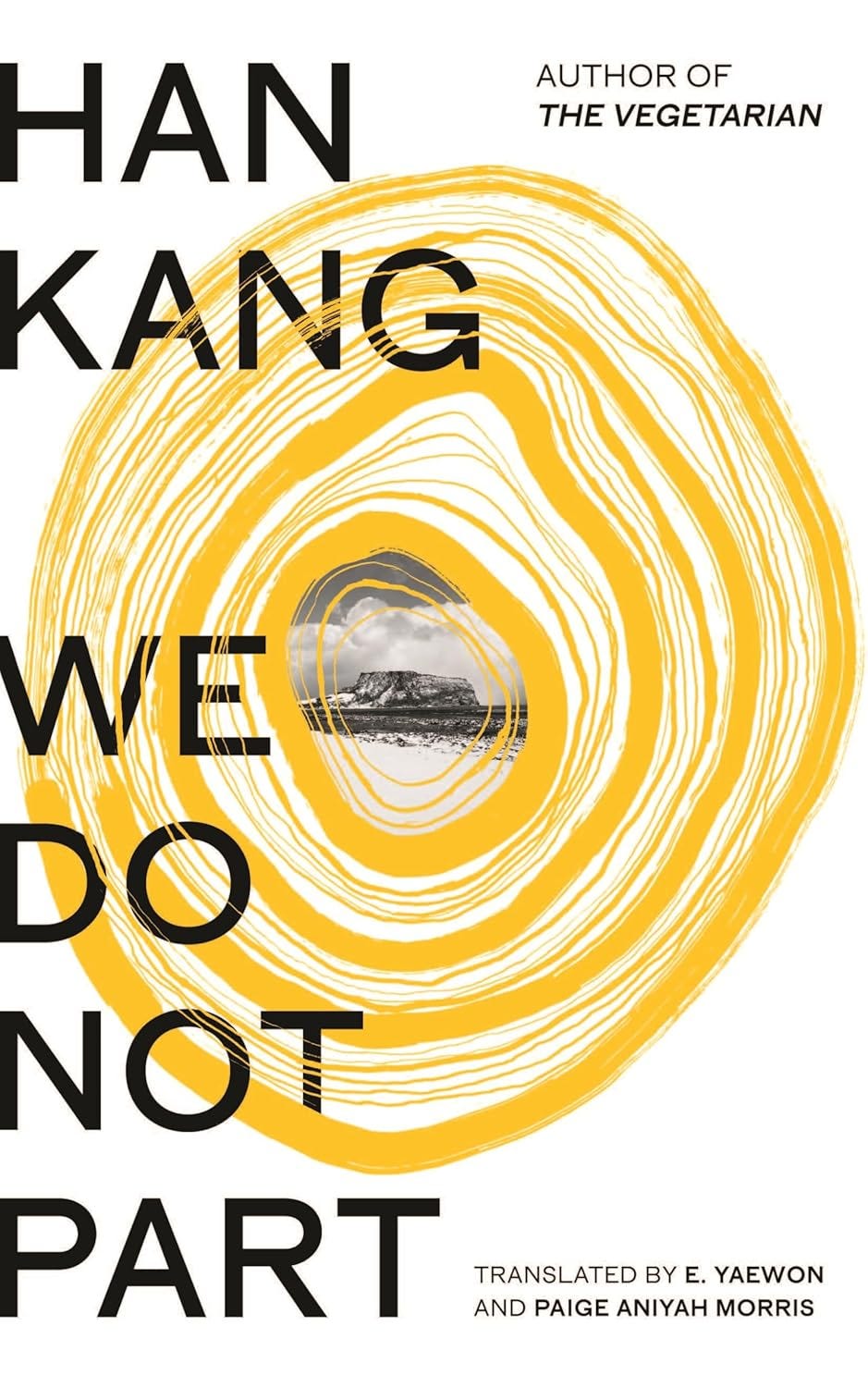
We Do Not Part by Han Kang
I loved this book! I think Kang is such a brilliant writer, I really liked The Vegetarian but I thought this one was even better. Two friends, Kyungha and Inseson living solitary lives in Korea are reunited when Ineson finds herself in hospital after an accident. Inseson asks Kyungha to travel back to her home to feed her bird before it starves. Kyungha embarks on the journey, amidst a huge snowstorm, and in doing so embarks on a reflection of the history of the area and specifically the massacres that took place in the late 1940s. Kang captures so much in this relatively short novel, and I think she is brilliant at creating a constant sense of unease in how she describes the landscape… I have never felt so tense about a snowstorm! The Jeji Uprising is something I knew very little (nothing!) about, and learning about it through the conversation between two friends in the midst of a visceral storm, really made me feel like I was in the room with them. It’s one of those books that keeps coming back to me in the weeks after finishing it, I think it takes a while to digest but it’s so memorable it will keep working away at you long after you have finished it.
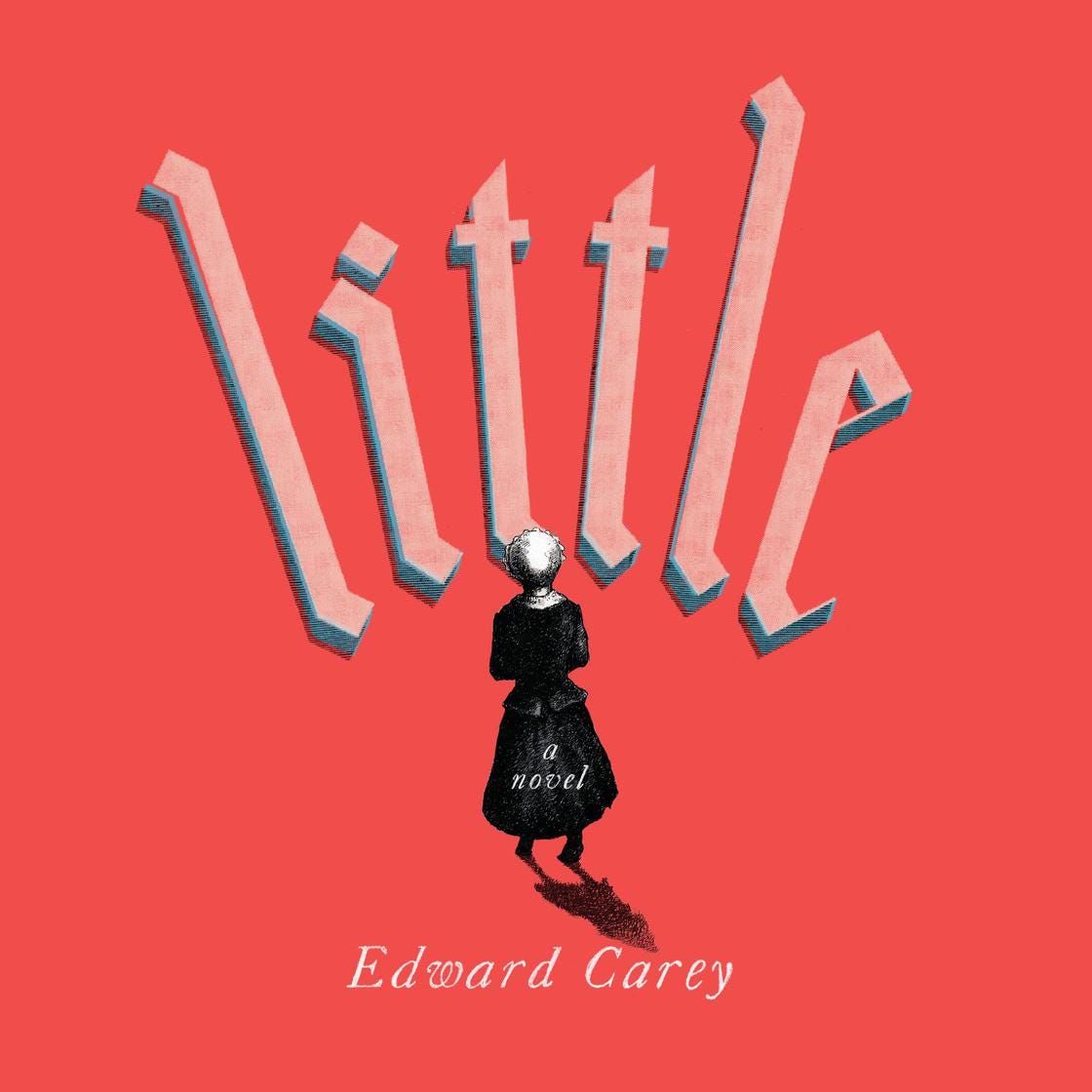
Little by Edward Carey
This one was underwhelming for me, and I had high hopes! Little, the novel’s title and name of the protagonist, starts her life in Switzerland before travelling to Paris with Curtius, a wax sculptor, who works and lives in Paris throughout the revolution. Little (so named because she is small) trains in wax sculpting alongside Curtius, and ends up living a very adventurous life in Paris.. from watching Marie Antoinette give birth, to living in a house that was once home to monkeys. The novel is filled with drawings, which I did enjoy, but overall it felt quite flat for me. There were some brilliant characters, and the scenes in The Monkey House were very vivid to me, but it ultimately went on to do too much which diluted the novel overall.
Other Buffy’s events:
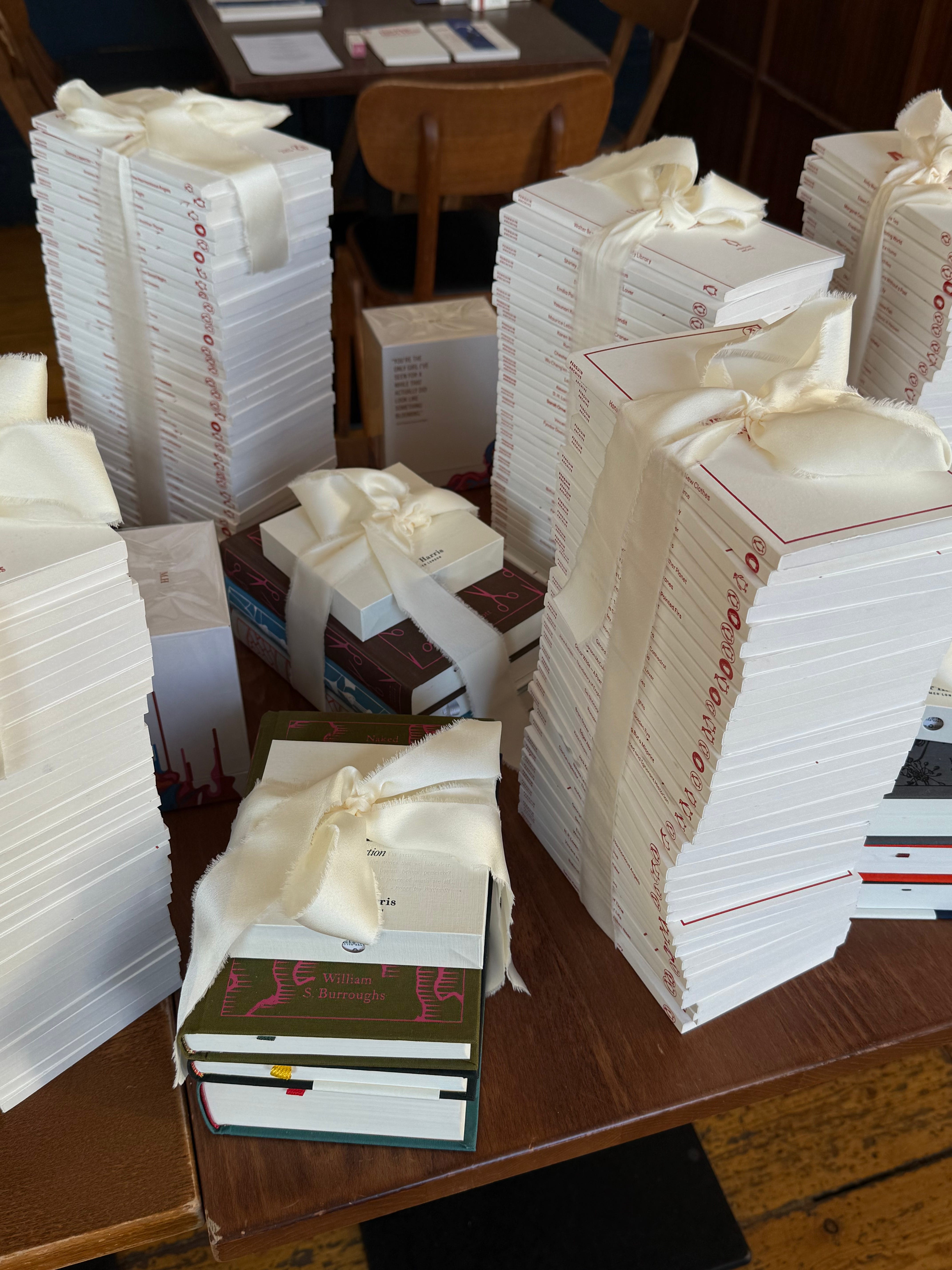
In early September, we hosted our second annual Buffy’s x Penguin Classics pub quiz! This time we held it at South London’s Camberwell Arms in their gorgeous private dining room upstairs. There were delicious wines, the perfect Estrella pint, and great martinis, as well as a really wonderful menu of small plates. Every guest got three Penguin Classics books, plus samples of Miller Harris fragrances, who were our kind sponsors for the evening. Our winners went home with amazing prizes courtesy of Penguin Classics and Miller Harris - 36 of the white Penguin Archive books, and a full size of Miller Harris’s newest perfume Scherzo. We also debuted some exclusive Buffy’s bookmarks for this event, designed by Ben Smalley. I’m excited to experiment with bits and pieces of merch, and would love to know what you’d all be interested in seeing.
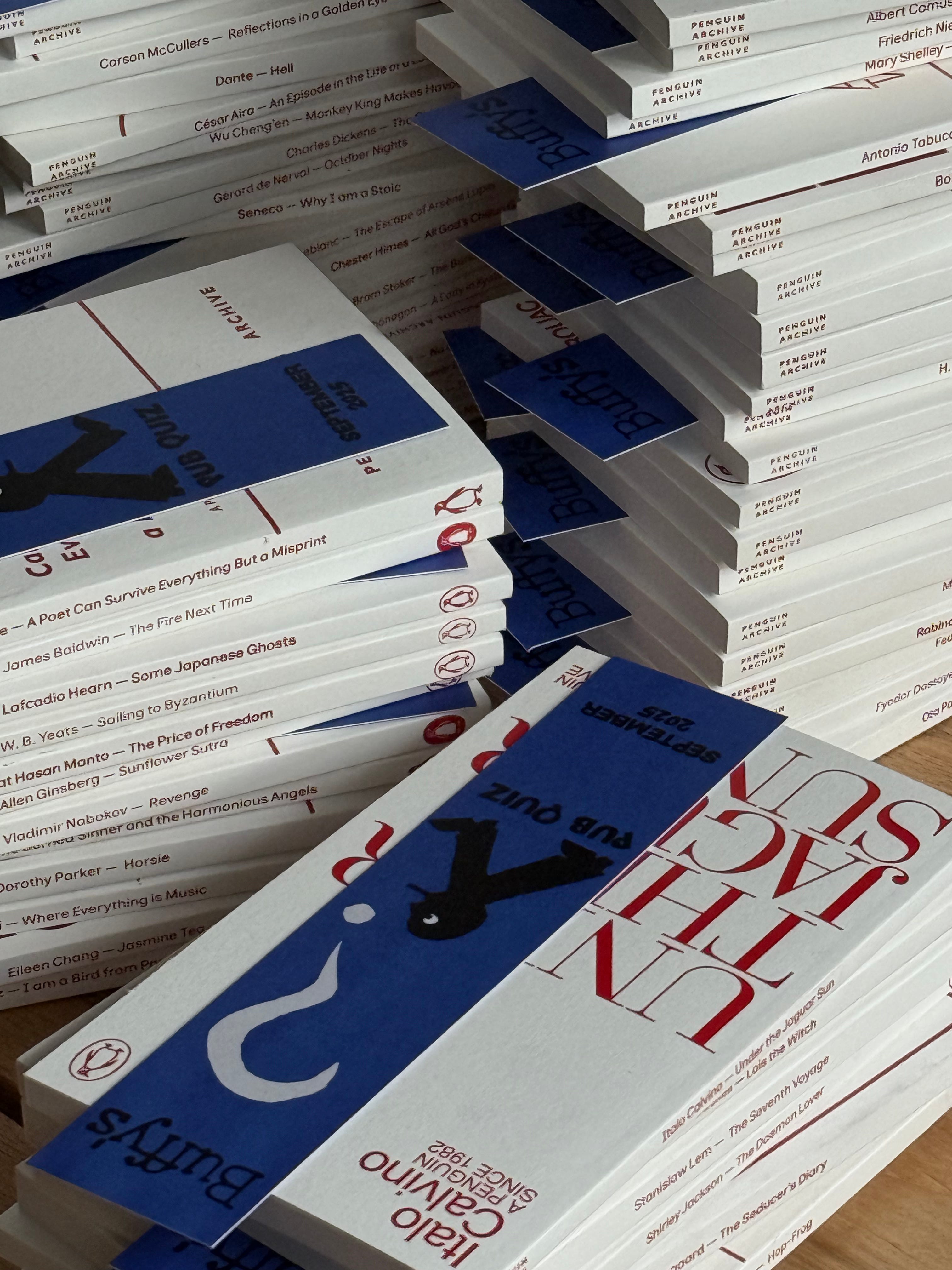
Drop me a DM on Substack if you want to receive the quiz questions and play along at home - I always love coming up with these questions and trying to strike the right balance of challenging and fun (as well as including not just books I love!). I can’t wait to do it all over again next year!
Upcoming events:
I am so excited to be hosting an event in collaboration with the lighting brand Louis Poulsen on October 16th. We have a beautiful location house in Brooklyn that we are going to transform into an amazing book swap space, with Louis Poulsen lighting illuminating the evening. The wonderful Pinch Food Design are catering, which will be so special, and Louis Poulsen have kindly made the event free for all (although it sold out in under a minute!).
I will be announcing the venue for our October book club in London next week, and we will vote for October’s book Sunday, and announce it on Tuesday the 30th of September. As always, please send photos of yourselves reading October’s book, wherever you are in the world! Tickets go on sale for the London book club Sunday 5th October, which will be on Tuesday the 28th of October.
I’m really excited to do more of these larger, community events - I know the book clubs sell out really quickly, so I’m keen to do what I can to unite the Buffy’s community outside of solely the monthly club…watch this space!
Please subscribe to our Substack, which is free for all, and follow us on Instagram for the latest.
Please, as always, share your thoughts on this month’s book below/via the usual channels.
Until next time!
Lizzy x
Photography by Lizzy Hadfield
Additional research by Agnes Perotto-Wills
Thanks for reading Buffy's ! This post is public so feel free to share it.
No posts
Comments
Nothing yet. Say the first thing.
Sign in to join the conversation.