
Periodically I’ll get a note from someone who wants me to talk more about aviation. I try to satisfy them even though Thinking Out Loud’s subtitle is “There’s more to life than airplanes, but not a helluva lot more”. However, asking someone to talk about “aviation” is like asking them to talk about “sports.” Which sport? Local or national? Professional or amateur, yada, yada, yada. Sports, as a category is terrifically complex. Aviation is exactly the same. Only more so.
“Hey, Budd, talk about aviation”. I’ll be happy to. Which part? What type of airplanes? What use? What age? Are you learning or doing? Do you know the language?
Truth is, if someone wants to talk about aviation, it is so big and diverse, even though I have a lifetime involved in it I haven’t a clue where to start. I need some specifics. Making the subject even more complex is that I’m absolutely positive a lot of folks reading Thinking Out Loud aren’t as spun-up over aviation as the rest of us. Or, more likely, when they think of “aviation” in the amateur sense, they immediately think, “Cessna” and that’s it. To most “aviation” is the herd of bug smashers circling around every training airport. There’s no way they can begin to realize how expansive the variations can be. The reverse of that is how those deeply involved in a specific part of aviation, whether it be antiques, classics, homebuilts or whatever, assume their universe is much wider than it really is.
Few of us realize how tiny our interest area is. If you can believe Google, homebuilt aircraft, for instance, represent 17% of all active single-engine piston aircraft flying. In fact, 30-35% of light, piston engine aircraft produced each year are built in someone’s garage or shop. That’s pretty damn impressive, right? If that’s the case and homebuilding aircraft is so big, ask the people standing in line at the grocery store with you if they know someone who is building an airplane in their garage? They never do and are usually amazed to hear the government even allows people to build your own airplane. Those of us in the field don’t actually realize how tiny we are when judged against the big picture. There are less than 700, 000 pilots in the US, which makes us .3% of the population that is over 20 years old (approx 195 million). That’s a ratio of roughly 300 to 1.
The above, being the case, just for the helluvit, let me try to compress “aviation” into a bunch of different tribes and illustrate it with photos. The comments for each tribe will be heavily impacted by the fact that, like so many, I don’t pay much attention to “normal”modern Light Aircraft. No reason why. My interests are just elsewhere. Also, and I’m not sure how I’m going to do this but I’ll try to work in brief comments on the use/purpose of the av-tribe being pictured.
Long time pilots reading this can go do whatever else you have to do today, as you already know all this stuff. I’m talking to student pilots, those with a fresh license just getting into the av-game, and the general population. Hopefully, all will come away with a better idea how big aviation really is. Most important, I want those who are learning to fly and those with fresh licenses to know how many different, wildly-interesting aviation worlds are out there waiting to be explored.
BTW-those who don’t reach out past Cessna/Piper/Cirrus type trainer aircraft will eventually get bored. Those who look past those and explore the aviation universe will spend the rest of their lives just trying to get into each new field. The aircraft categories and types stretch to the horizon and getting into them is limited only by your willingness to try new things and your pocket book (that’s usually the limiting factor for most of us).
The verbiage from this point on is going to be very terse and to the point because I’m running out of space. Also, I’m going to have to skip over some important areas, simply because Substack says I’m way over length. For that reason, some readers may not get the entire e-mail. If the last section of that this e-mail isn’t Warbirds, it has been truncated.
In the beginning: The Trainers
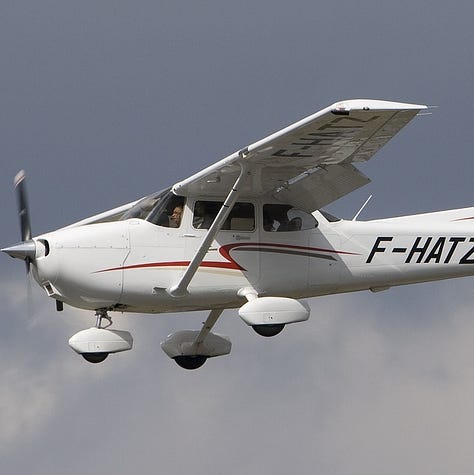


Today’s trainers are specifically designed to be as safe and as easy to fly as possible so students miss some of the basic skills.

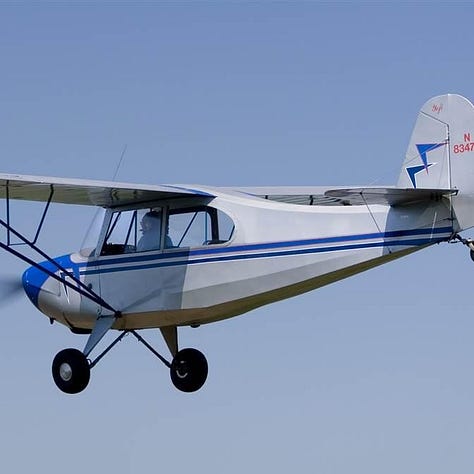
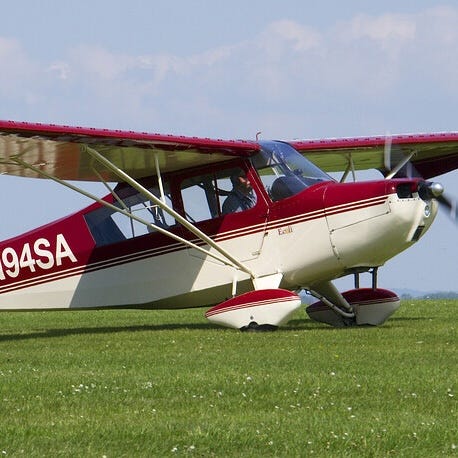
Cub, Champ, Citabrias, etc. are older trainer designs that still have adverse yaw, etc. and produce better pilots usually at lower per-hour dollar rates. Schools that use them, however, are harder to find. They are the first thing a new pilot should learn to fly after getting their license.
Even Aviation had a Beginning: The Antiques
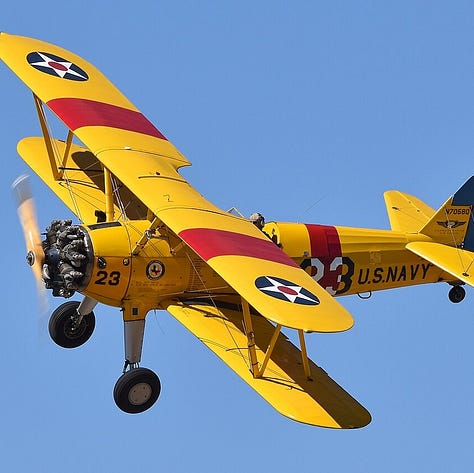
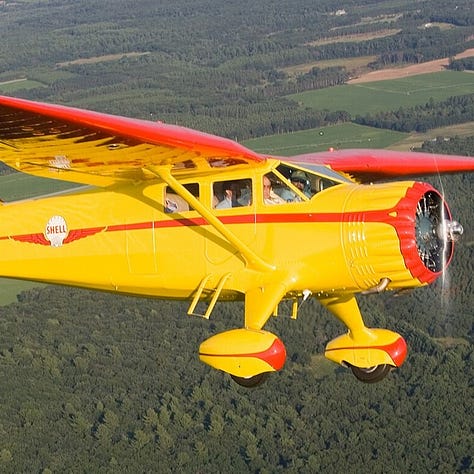
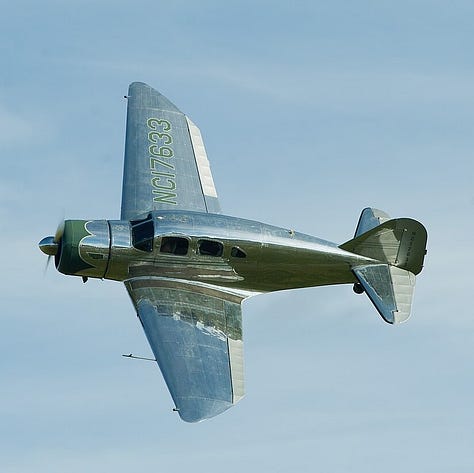
The current definition of “antique” in aircraft is anything built prior to December of 1945. There is a very strong restoration community keeping aircraft of especially the 1930s flying. Left to right a Stearman, Gull Wing Stinson and Spartan Executive. The ‘30s started out with true antiques but designs got more and more sophisticated at the end.
After the War Came the Classics and There were a Lot of Them. Officially that was 1945-1955.
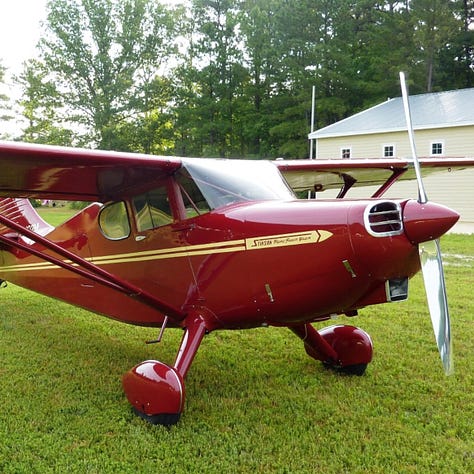
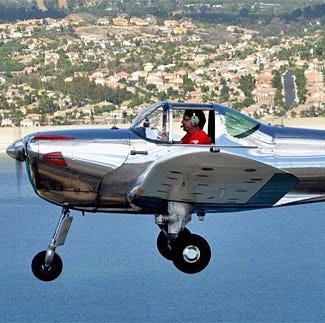
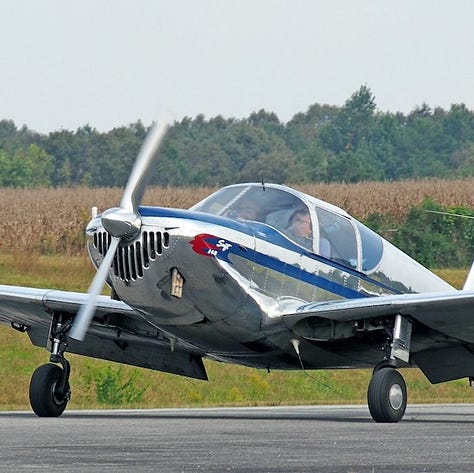
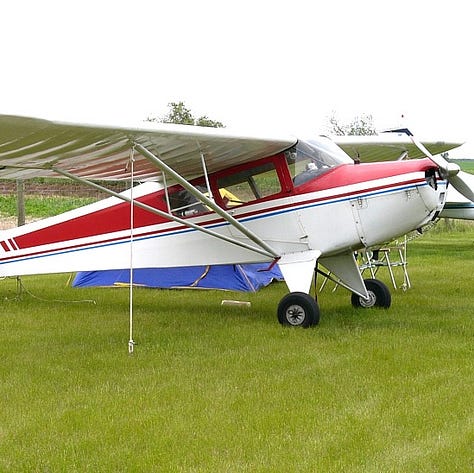

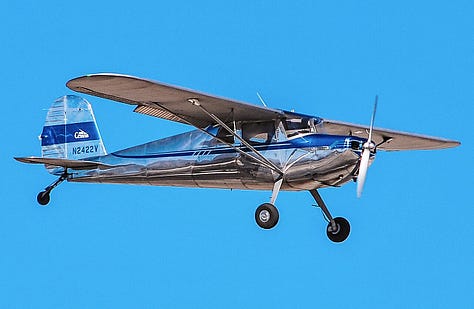
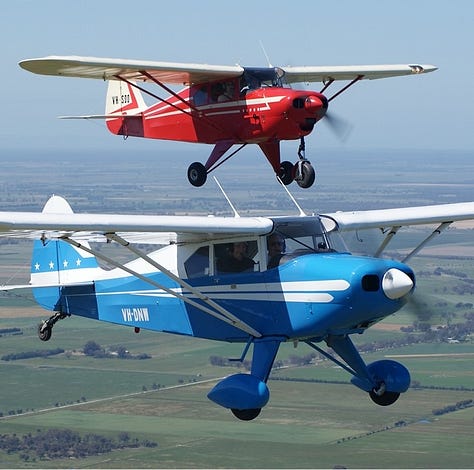
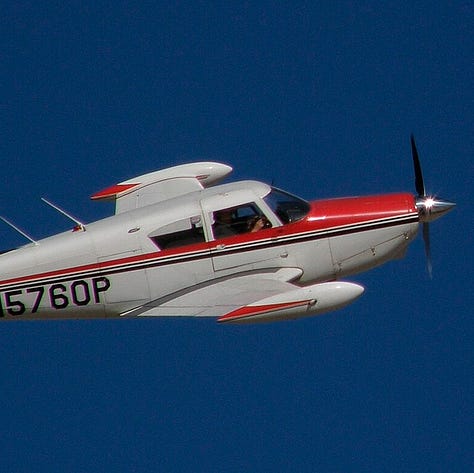
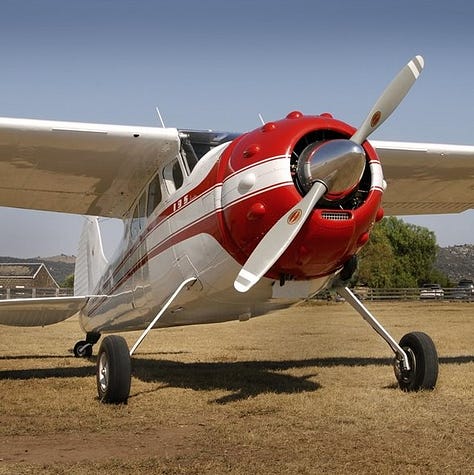
Classics are often the first owned by pilots because they are so plentiful and less expensive. The first half decade after WWII saw a gross over production of light aircraft that returning pilots did not buy, as expected. Pre-war designs were produced, new ones like the Bonanza surfaced, and subsequently companies scrambled to survive.A dozen or more factories produced over 50,000 aircraft with new designs surfacing as the 1950s arrived and sales increased.
The Contemporaries, 1956- 1970: I don’t know we’ve progressed much past this period except for the composite (plastic to us common folk) designs

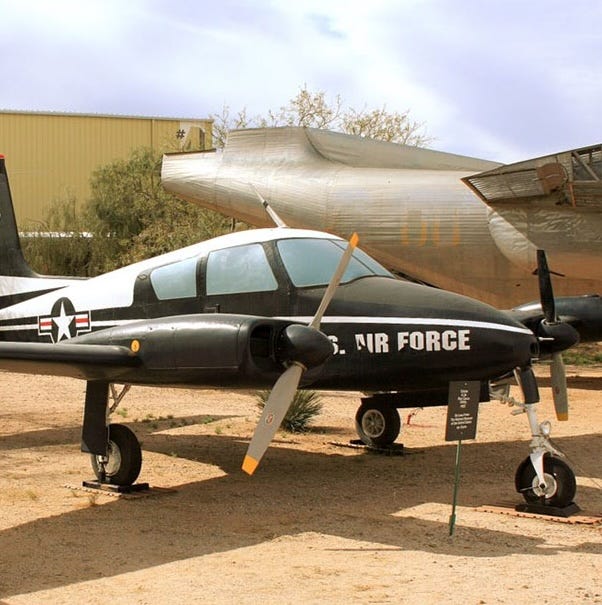
Cessna just keeps on keeping on: 210 from the 1950s and the last 310 twin was built in 1980.
LSA (Light Sport Aircraft) and MOZAIC
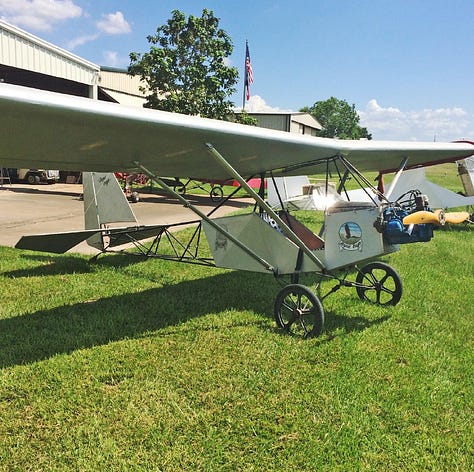
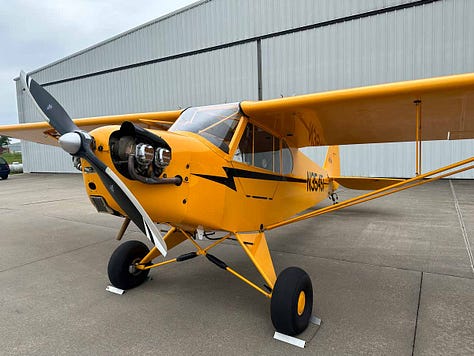
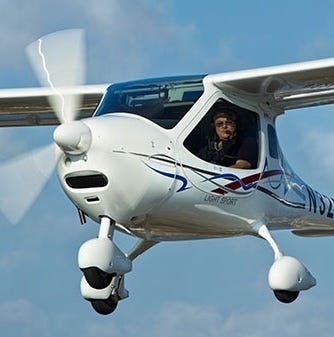
The new Light Sport Aircraft rules combined with the new certification and eased pilot requirements of MOZAIC have seen new production of dozens of different designs with some old ones brought back. They range from hyper-basic near-ultralights to hyper-modern. It’s important you Google MOZAIC’s new flight rules. They greatly simplified aerial life.
Amateur Builds (EAA)…the Home Builders - This is the area of aviation’s biggest and most diverse activities.
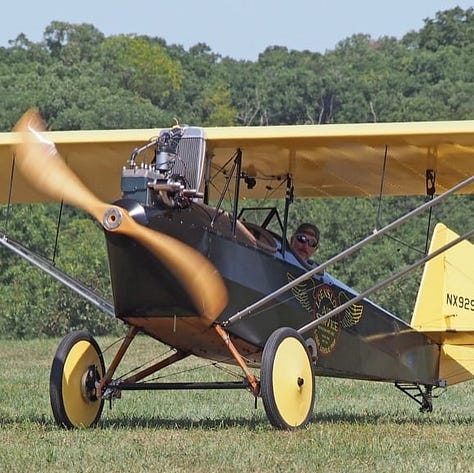


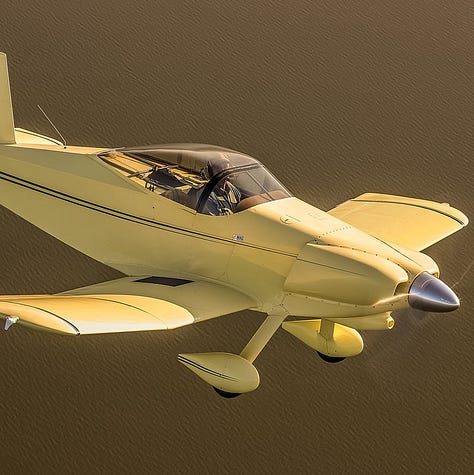
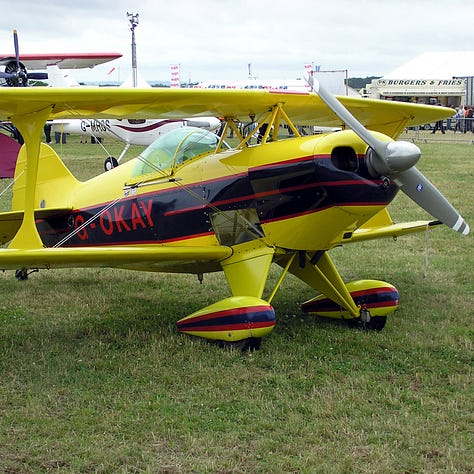

The Pietenpol was one of the first homebuilt designs in 1928 and is still wildly popular. The different types of homebuilts cruise from 65 mph to 250+ mph. The EAA includes a membership of 330,000 that is wildly active in homebuilding, restoration, certified aircraft work, and virtually every area of aviation including the areas mentioned above. If you don’t belong, you should, as this is the central point for most light aircraft activity. The Aircraft Pilots Association does something similar primarily for the certified aircraft population.
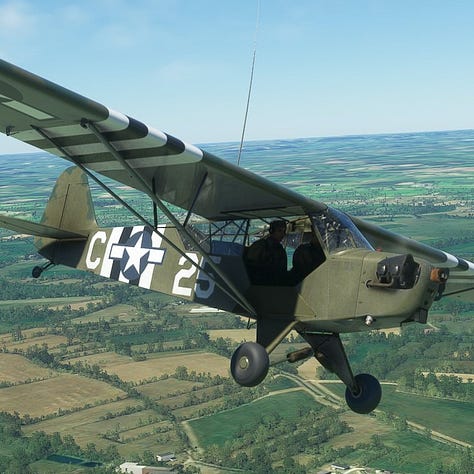
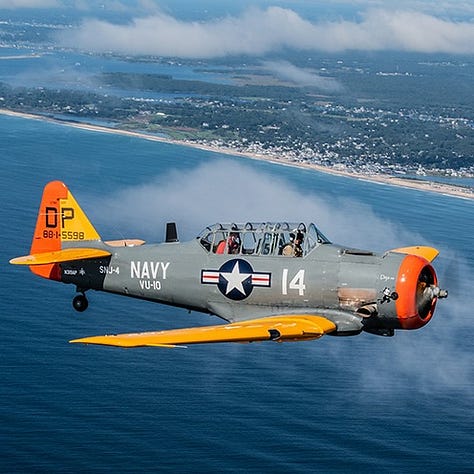
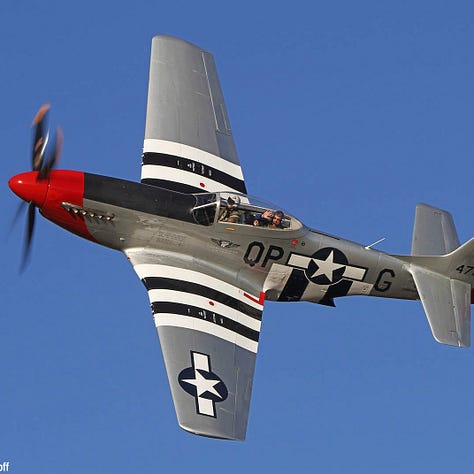
Warbirds - it’s hard to believe how active this has become
Comments
Nothing yet. Say the first thing.
Sign in to join the conversation.