
First, it’s curious that you’ll hear the F-word being used on popular late-night shows but they bleep the S-word. Why? Who decides S is worse than F? In fact, who decides a given word or combination of words is too dirty for prime time? And who decides the limits and application of “too dirty”? Why is swearing fully acceptable in some parts of society, some situations but verboten in others?
Then a question popped into my head: Why is it I don’t remember hearing the F-word until I was in college? In high school was I hanging out with uptight pussies? No, I wasn’t. In fact, most of my buddies were hotrodders, farmers or both. In fact, I don’t remember, much swearing at all. Is that possible? Is swearing a recent invention? Hardly!!
My family was linguistically typical for the period and I know for a fact I didn’t hear my dad say anything more serious than “damn” and I only heard that three times. Once when horsing around and I knocked my brother into the glass window in the kitchen door, another one the night I rolled back into the driveway in dad’s new ’58 tri-power Pontiac Bonneville and he and a highway patrolman were waiting for me. I forget what the third damn was for. Might not have been directed at me.
When was the F-word invented? Trusty old AI says, “The F-word is a deeply rooted Germanic profanity with early written records appearing in the late 15th and early 16th centuries. The earliest clear literary use appears around 1500 in a satirical poem targeting friars with the line “they” are not in heaven because they f***d wives of Ely”. Ely must have been a bad dude with good taste in wives!
What about the S word? Again, AI says, The word “s**t” comes from Old English before the year 1150. It grew from older Germanic and Proto-Germanic roots. The 14 October 1999 episode of Chicago Hope is the first show (excluding documentaries) on U.S. network television to contain the word s**t in uncensored form
And the C word that even I won’t use? AI lists 160 words that can be substituted for it. Apparently even AI finds it disgusting.
What we’re talking about here are just words. Not actions. Usually short words. However, it’s a firm fact that segments of society flat don’t want them around. When asked why, it is said they are “smut” and out of place. AI says, The Word “smut” means obscene, indecent, or sexually explicit explicit language, writing, or pictures. It originally referred to a speck of soot or dirt, but by the 17th century, it evolved to mean “dirty” or corrupt speech and pornography.”
Nowhere are there firm rules that say it is right or wrong. It just “is”. Unfortunately, some groups judge other groups and individuals based on their use of these words. Again, it just “is” and it’s nothing any group does on purpose to offend. However, it appears some groups will look down on them because they’re offensive.
In terms of where it’s permitted, the whole concept of both the C and F word has changed radically, and their use is restricted by semi-obscure federal laws which most of us know little about. George Carlin‘s famous 1972 routine which highlighted seven prohibited words (I won’t list them, AI has them) brought everything to a head. This performance resulted in his arrest and eventually a landmark Supreme Court case regarding broadcast decency standards
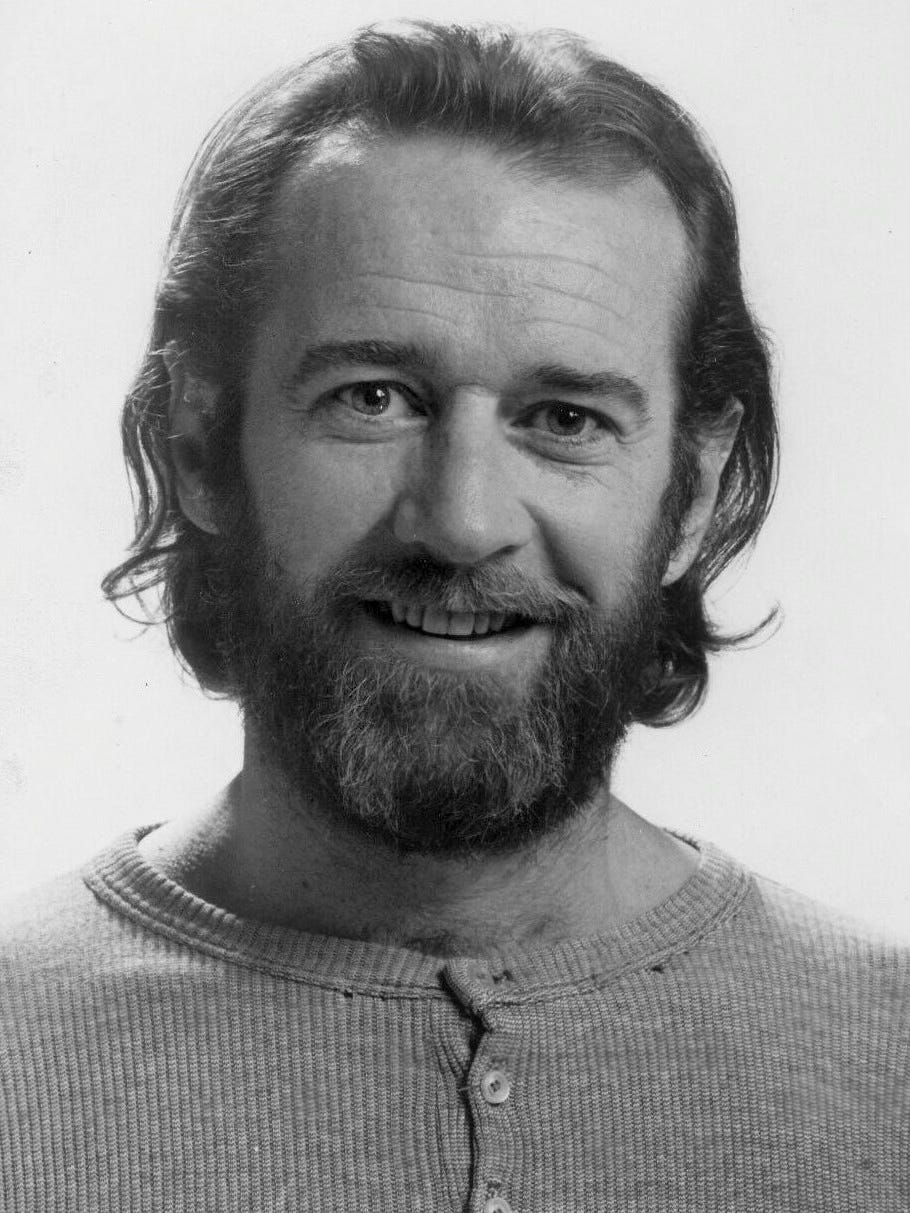
George Carlin was one of the funniest, dirtiest (if those words count), most intellectually wide-reaching comedians of our generation. Go to Goodreads.com and sample some of his quotes. Dirty words included they are worth reading for the thoughts they contain. You won’t hate them all. Here’s a couple:
“Don’t just teach your children to read …Teach them to question what they read...Teach them to question everything.” and “Everyone smiles in the same language.”
These are direct copies of those laws as found in AI.
The FCC Rules: No indecent or profane material on broadcast Radio TV stations (like ABC, CBS, NBC, and Fox Broadcast) during daytime and early evening hours when children are likely to be watching. (I didn’t know Fox was both broadcast and cable depending on which one is being discussed. It is mentioned specifically in the rules)
Safe Harbor: Broadcasters can air stronger language during “safe harbor” hours, which run from 10:00 PM to 6:00 AM local time. That doesn’t take time zone differences into account.
Fines, Not Jail: Saying these words on regulated broadcast TV does not lead to criminal arrest. Instead, the FCC can penalize television and radio stations with large fines or threats to their broadcast licenses.
Where the Rules Do Not Apply
Cable and Streaming: Cable channels, streaming services (like Netflix), and subscription platforms are not bound by these specific FCC public airwave rules. These networks often set their own standards.
The Supreme Court Case: The legal basis for this regulation comes from a landmark 1978 Supreme Court ruling, which upheld the government’s power to curb indecent language on public broadcast media
It’s apparent that the individual acceptance or repulsion of these words is driven by individuals or groups and sometimes it’s hard to tell where some words work and others are frowned upon. Looking around at familiar groups, truckers, hotrodders, shooters, builders etc. the F word is there but not in every sentence. A few military types seem to have made it a sentence-required adjective, expletive, noun or verb. The S-word, however, is everywhere because, as Carlin said, it, along with the F-word, can be used in so many utilitarian ways. It says bad, good, poor, rich, a description of individuals, both good and bad, a way of describing a day, a trip, a project and so many other things depending on the sentence it’s inserted into. S is a four-letter, do-all word. Increasingly it seems as if sentences can be constructed into which only it will fit properly. At the same time, stuck into some sentences the S-word just doesn’t work, which isn’t often. The only place it isn’t used is in prayers and blessings, although it might be seen in some social groups. “Dear God, this Son-of-a-B** was a no-S**good guy. Take care of him for us!” Actually, that seems to work!
An odd, almost universally profound reaction to profanity is when an aging person lays into someone using a multitude of these words. That’s seldom seen. It’s as if dirty words disappear with age. It’s as if granddads aren’t allowed to use dirty words. So, when streaming out of an old woman in a vitriolic fashion, these words almost always bring every proceeding to an abrupt halt. When a grandmotherly type says something like, “Keep your mother F-ing, God D--n, hands off my F-ing granddaughter!” you’d better hope she’s not holding a revolver. Her language says she’ll use it. Plus, a life sentence, being so short in those situations, isn’t much of a deterrent. Back off, partner or lose it!
I have to stop talking about this topic now. It’s early Sunday morning and even I think that’s the wrong day to be discussing this sh*t! bd
Comments
Nothing yet. Say the first thing.
Sign in to join the conversation.