
Gimme a break! It’s hard to get into the history of the Messerschmitt 262 “Schwalbe” Stormbird, without getting just a little ribald.
On this subject, it’s worth pointing out this month’s EAA’s Warbird’s cover story on a Me 262 reproduction. It really is worth tracking down. It does a terrific job of covering the 262’s history, the background of the reproduction and, better yet, Mike Spalding (chief pilot at Jerry Yagen’s Military Aviation Museum in Virginia Beach, VA) goes deeply into how the airplane flies. He made a lot of us really jealous. However, from a purely personal point of view, I feel the way this whole project got started needs to be told. Generally, that has been overlooked.
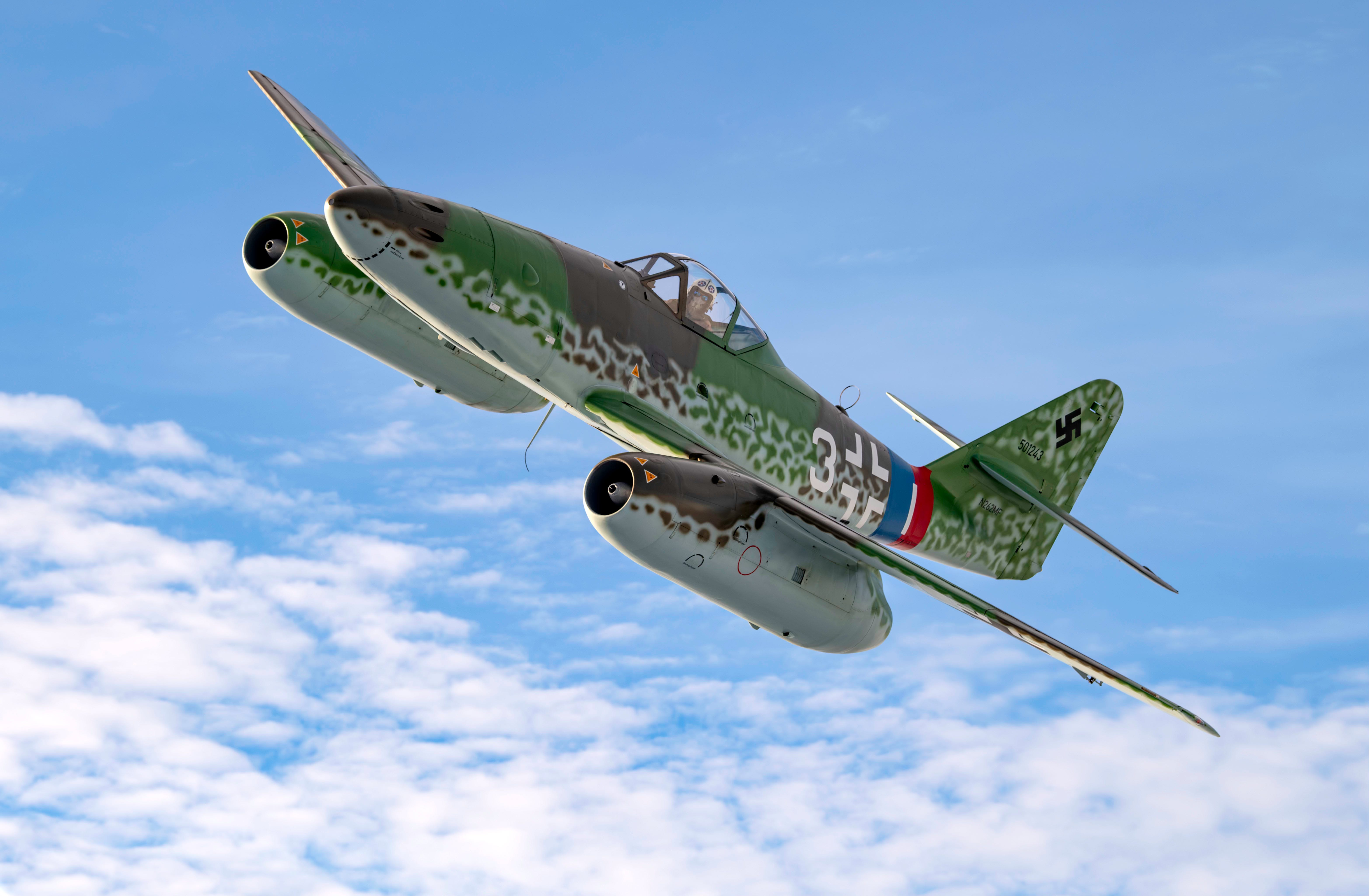
Technically, this is a homebuilt. It’s a beautiful machine, isn’t it! Foto by Scott Slocum. He’s one of the very best!
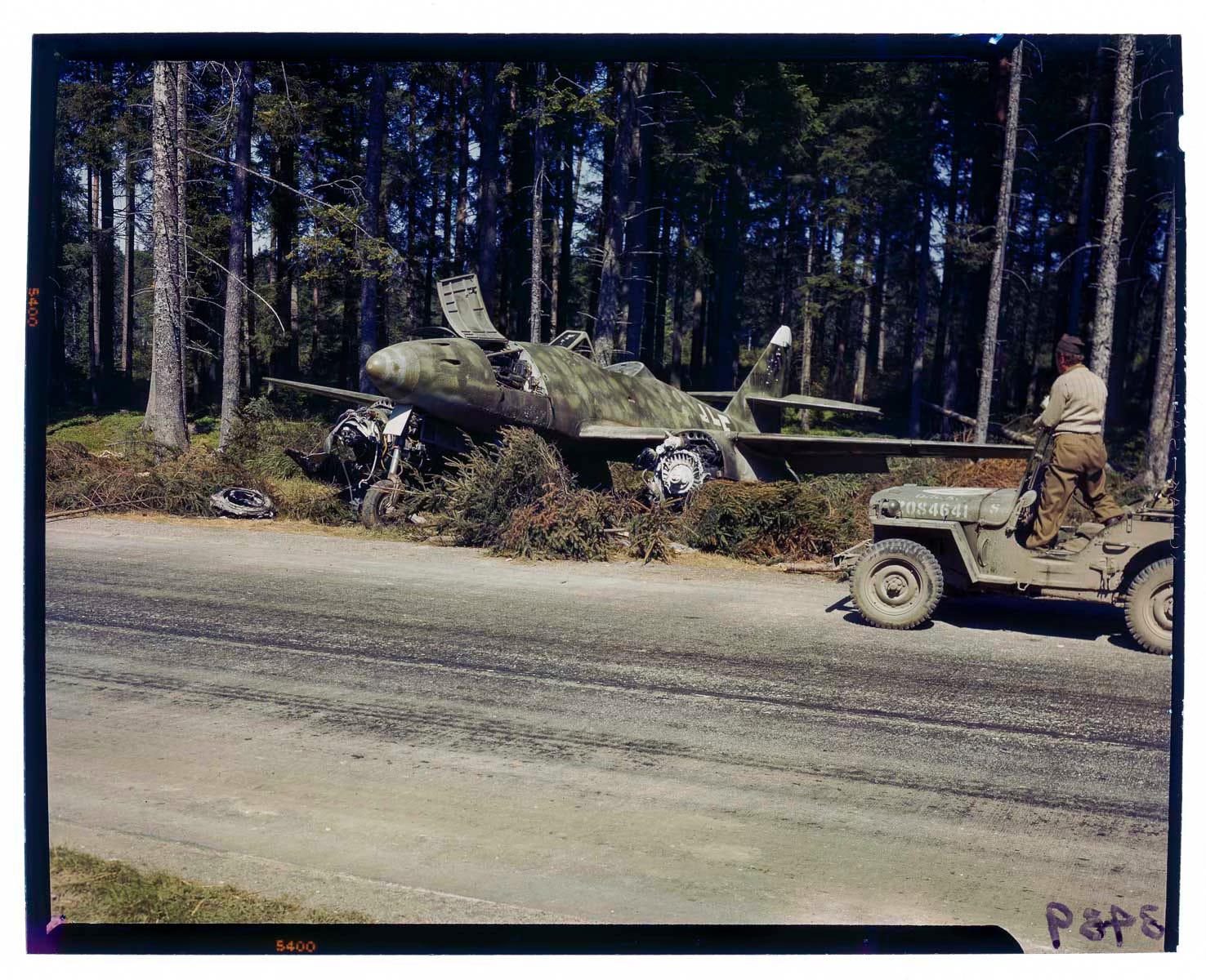
262s were prized trophies of war. A special unit, Watson’s Whizzers, was formed to find and basically steal as much German advanced technology as possible before the Soviets got to them. This included dozens of airplanes, drawings, scientists and all brainiacs. No matter what it was, if it worked for the other guy, we wanted it.
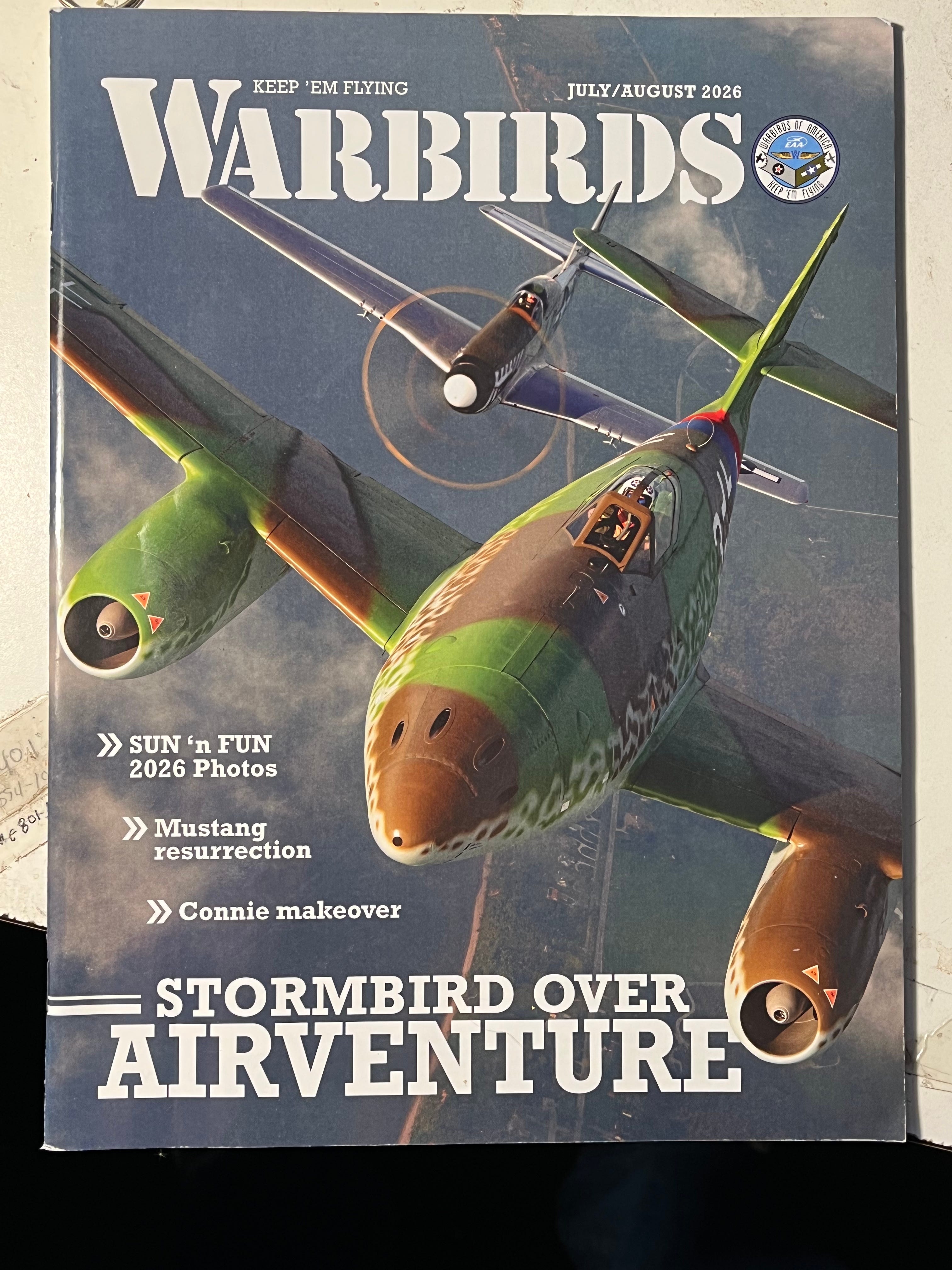
Another Scott Slocum shot.
Think about it: Putting any full size, military airplane back into production is a massive project. Someone is going to invest an immense about of time and money into coming up with the design and manufacturing details of a very complicated machine. Then they have to find someone capable of making it all happen. Steve Snyder was the guy who put all that together. He had several businesses in several places in south NJ. However, it’s necessary we be specific, when we say “businesses.” He wasn’t selling celery to locals,or trying to push a newly built two-bedroom house on a couple of newlyweds . Nope, he was building stuff that would let you step out of an airplane, start falling and then make your parachute (assuming you have one) take you where you wanted to go. Everything he had ever done in his life showed he had a different way of looking at life and accepted everything as a challenge. Including making a living.
Steve was an aerospace engineer that learned to fly at 16 and started sky diving when in college. But he didn’t just sky dive. He competed in the sport at the very highest levels. He and Charlie Hillard, for instance, were good friends and were the first two Americans to pass a baton while in free fall. He was a designer and inventor and soon held patents on a lot of sport parachuting gear including the Altimaster II, a free fall standard. His Para Plane canopy design set the standard for ram air, square parachutes.
I first met Steve, when I went down to his place fly his Temco Super Pinto. That’s an airplane that put the word “wild” in the phrase, wild performance. An unreal airplane!!
Then one night, after dinner with he and his wife, and we wound up at his house. The most notable feature of his house and the one of which he was most proud was a model of an Me 262 sitting on the floor of the living room. However, it wasn’t just a model. The wing span was probably ten feet, the detail was almost suffocating, and the airplane was surrounded by a blizzard of drawings, papers and note cards. He turned and grinned. Then started throwing manufacturing drawings out on the table describing each as they were unrolled. Very casually, he said, “I’m going to reproduce this airplane. Not as a model but as the real thing.” It’s difficult to describe how much he loved the Stormbird.
For whatever reason, it didn’t even surprise me when he said that. I’d already seen his museum, his business building, some aircraft he had restored and his attitude was one of assumed success. You just knew that one way or another, he was going to make what was obviously an absurd idea happen.
One of the first subjects we discussed was engines, which I happened to know a little about. While in college (aerospace engineering, Oklahoma U.), I walked past a Junkers Jumo 004 engine, an original 262 power plant, a half dozen times a day. It sat in the main hallway and had been sectioned so every detail could be seen. Some were amazing. Especially, the turbine blades. They were thin sheet metal, probably some kind of stainless steel or Inconel. They were bent into a very precise airfoil shape and torch welded down the trailing edges. Beautiful work but certainly not what we’re used to see in jet engines. It was easy to see why even though their official TBO was 50 hours, they seldom made more than 10-25 hours in operation before failing. Many of the black 262 kill markings on Mustangs were earned when a pilot laid in wait and caught the 262 in the pattern, often with one engine flamed out.
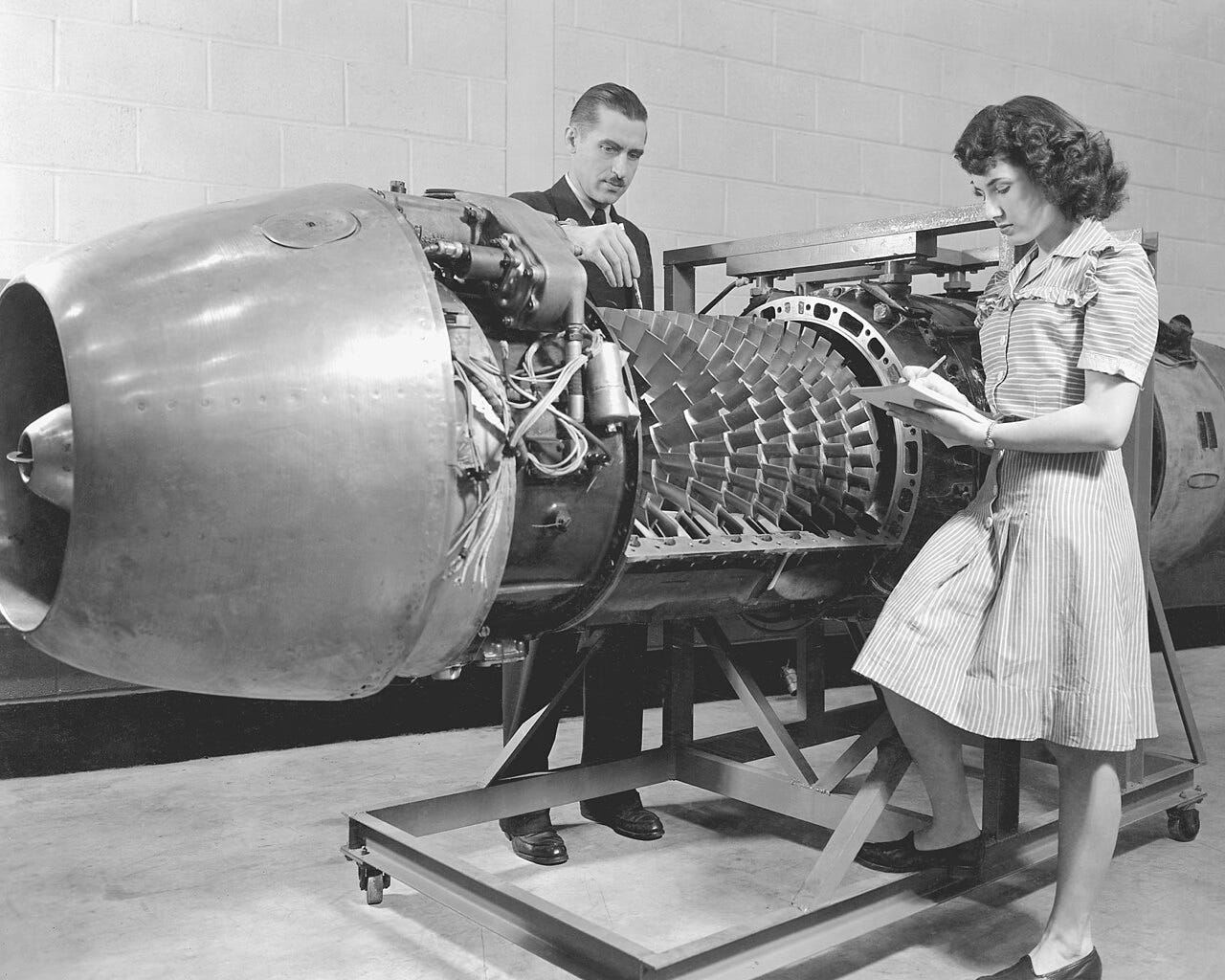
The Junkers Jumo engine was the first truly operational jet and was centrifugal flow, rather than axial as are newer engines. Spool up time was incredibly slow but the power output was so low, pilots just kept a lot of power in right to touchdown.
One of the items on the original engine I really wanted to own was the little Reidel starting motor in the nose cone. It was a tiny two-cylinder, two-stroke gasolene engine that had an electric starter but also a pull handle like a lawn mower. 10 hp at 6,000 rpm, it spun the Jumo up until it lit off. The Reidel on the OU engine is the only one I’ve ever seen. But, I keep looking.
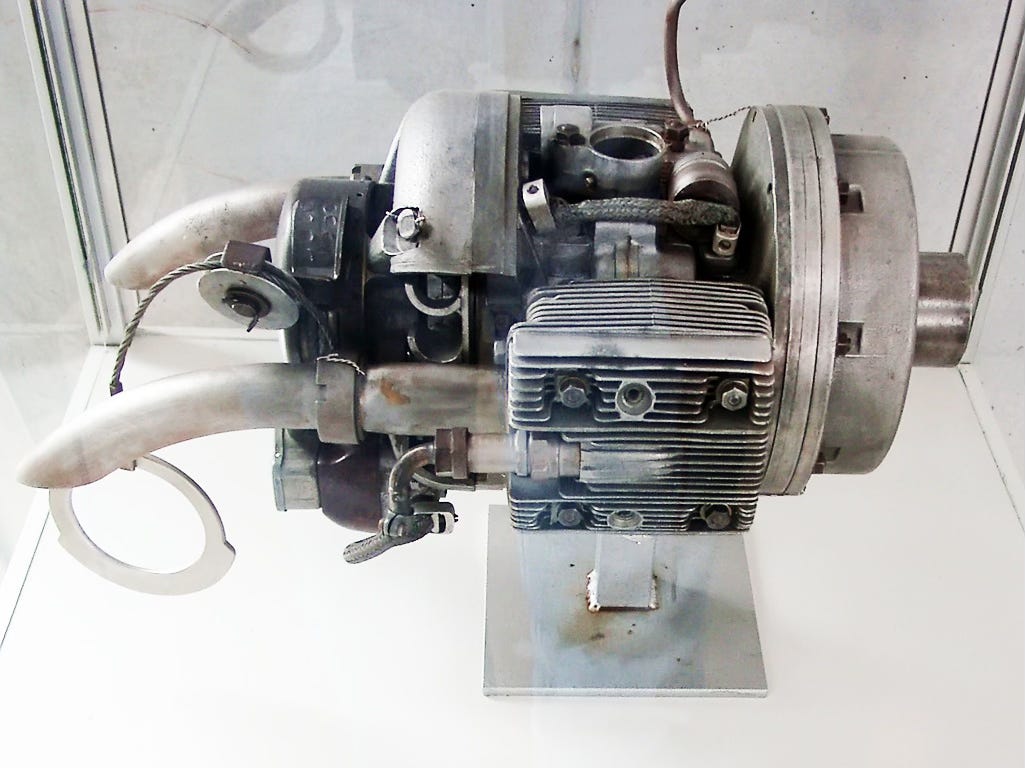
Cute little sucker isn’t it? If the electric starter isn’t working, the circular handle on left, a lawn mower type pull starter was brought into play. This was crowded into the bullet shaped center body at front of engine.
As for a better motor, Steve and I had both had occasion to experience CJ-610 engines on Learjets and in his Pinto. It was smaller than the Jumo with many, many times the thrust and was wildly reliable.
I was soon contracted with him to produce drawings, photos, and consult in other areas. Early on, I found myself standing on the edge of Highwy 610 (Easton Rd) next to NAS Willow Grove, helping remove fencing to drag the little outdoor USN museum’s original Me 262 two-seat trainer up on a trailer. Steve had worked his usual magic and struck a deal with the USN where they would loan him the airplane to reverse engineer new versions from it. In exchange, he agreed to restore their airplane to museum condition for them. He had tons of factory drawings but far too many details would only be available by performing an autopsy on an original 262.
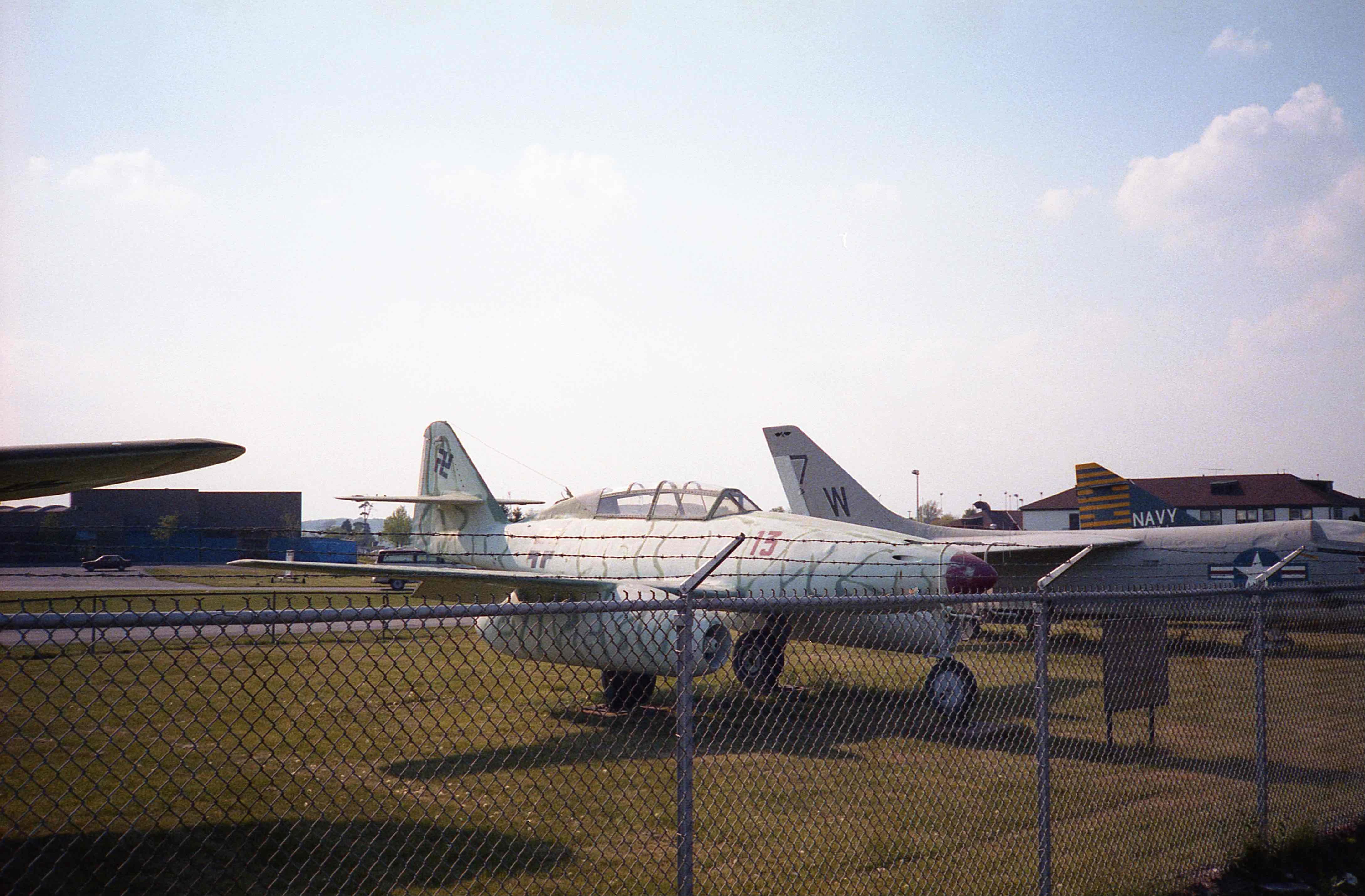
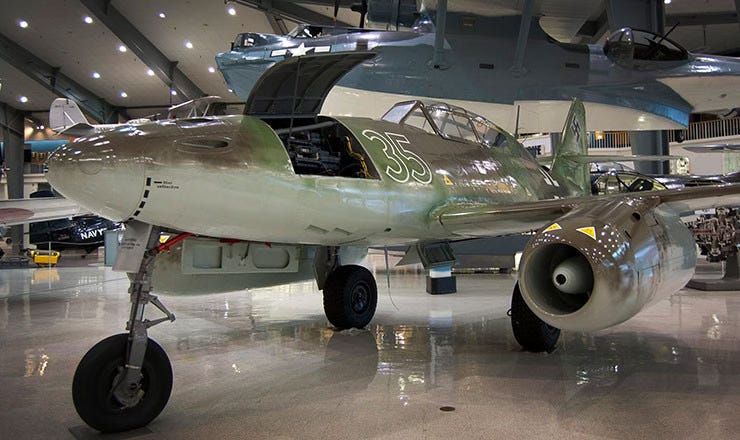
Was on Highway 610 inside NAS Willow Grove’s fence for decades. Now is in USN’s museum in Pensacola.
I’m laughing as I’m typing the next sentences. The nose gears of 262s were notable weak so they were always collapsing. That’s why the Willow Grove airplane had an almost comically crude plywood nose. The reason I’m laughing is because when we pried the plywood off we found a pair of Mk 108 30mm cannons were still installed. It took us less than two hours to lubricate and free them up to operating condition. And for something like 35 years, they had been less than 75 feet off the highway pointing at traffic. It’s highly doubtful the USN knew the guns were there. It took me a couple a months, but I found some original ammunition for the cannons so they could be displayed together.
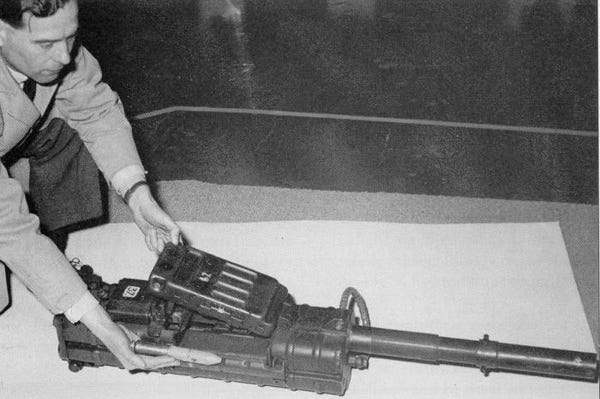
Folks commuting to work didn’t know there were a pair of these pointing at them. Note the cartridge in his hand. It’s 30 mm, which is big but see how short the case was? The bullet wasn’t designed to penetrate. Its skin was quite thin and it housed super powerful explosive so it could explode on contact. Its velocity was quite slow so range was short.
Steve started working with Herb Tischler at Texas Aircraft Factory in Ft. Worth to do the manufacturing. Herb’s company had reproduced a sizeable number of both Grumman F3F biplanes and Oscar fighters for another friend, Doug Champlin in Phoenix. I visited the 262 projects fairly often and, being a builder and an engineer, loved looking at the details, one of which is very cool: The entire cockpit area was built into a large open top tube, like a bathtub. Everything, seats, panels, controls, etc. were built into that tub while it was separate from the airframe. Then it was slid up into the fuselage from the bottom and fastened in place. That was totally unexpected. Those Germans know how to do stuff! In the original design the tub was to be a pressure vessel so the airplane had a pressurized cockpit. That was never put into production because it would slow production down too much and needed materials that were hard to find.
Steve died in an F-86 accident before any of the airplanes were completed. Also, the project had been mired down by contract and personality disputes. By that time, the airframes were actually airframes and were well on their way. When he died, I lost track of the project which was moved from group to group before the five that had been planned were completed. The project officially started in 1993 and the first one flew in 2022.
It was an real kick to see Walt Spalding smoking down the runway at Air Venture 2025 in Military Aviation Museum’s 262. I really wish Steve could have seen it.
Comments
Nothing yet. Say the first thing.
Sign in to join the conversation.