
This week’s bird is the: Golden-cheeked Warbler
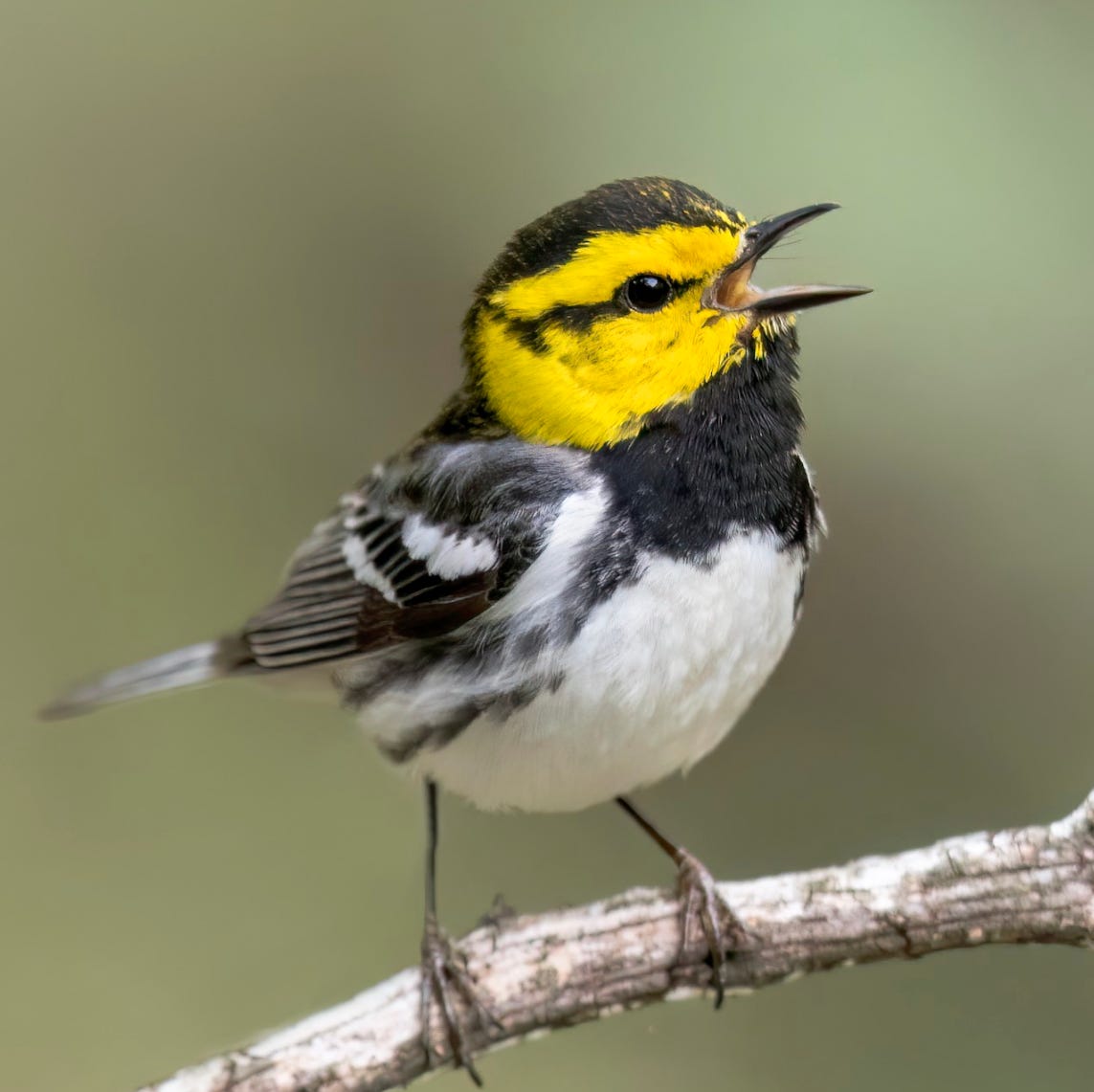
The Golden-cheeked Warbler has an extremely limited range. During the breeding season, it is only found in a narrow band of juniper woodlands in Texas. During the non-breeding season, it lives in high-elevation pine forests from Southern Mexico to Nicaragua.
This species is strongly associated with the Ashe juniper, a tree with a similarly limited range mostly within Texas. The Golden-cheeked Warbler uses all different parts of this tree to make its nest (e.g. bark, leaves twigs) secured with cobwebs. This whole process of construction takes about 4-6 days.
Because of this species limited range and the destruction of much of its habitat due to conversion of land to farmland, ranches and urban sprawl, this species is on the IUCN and U.S. endangered species list.
At the moment, the U.S. Fish and Wildlife Service is considering delisting the species (changing its classification from endangered to threatened), despite the fact that its habitat is still in steep decline (down 29% from 2000 to 2010). A switch from endangered to threatened would remove many automatic and sweeping protections for the species.
Golden-cheeked Warblers are a charismatic species that have drawn a lot of public interest and support in the past, and it is likely that the species will remain on the endangered list as a result. Greater protection of this species means a broader protection of an extremely unique ecosystem in which it lives. Meaning, even if you don’t like birds (and I think you probably do), protecting this bird means protecting the similarly rare and unique species that it cohabitates with.
BONUS! In case you were wondering, there will eventually be a public comment period during the delisting process. So stay tuned…
Have a great week!
No posts
Comments
Nothing yet. Say the first thing.
Sign in to join the conversation.