
In a world flooded with AI-generated images, the true value of photography may no longer be in what can be reproduced, but in what can be witnessed, experienced, and curated.
Years ago I read an essay by Mike Johnston of The Online Photographer in which he wrote that the power of photography lies partly in the repeatable print. Until his blog archives are back online, I haven’t been able to find the essay. I reached out to him, but he couldn’t remember it specifically. It likely referenced Walter Benjamin’s 1935 essay, The Work of Art in the Age of Mechanical Reproduction.
Lately, I’ve been considering the implications of Benjamin’s essay in light of AI-generated imagery and how AI imagery may make photography more culturally relevant than ever.
It’s hard to summarize Benjamin’s essay, but I’ll try. He begins with the idea that photography’s ability to reproduce itself perfectly as a print fundamentally changed art. For the first time, art could spread widely. Reproductions had existed before, but they lacked the uniqueness of the time and place in which the original work was created and displayed. Benjamin argued that photography shattered what he called the “aura” of traditional artwork and changed the relationship between the viewer and the art itself.
That relationship became democratized. Instead of being walled off in private or religious collections, art could be shared widely. This led, he argued, to the expectation that art should be widely seen. Photography and film also gained the power to guide interpretation through captions and context. They revealed things the eye couldn’t normally see (macro details, stopped action, and other visually hidden aspects of reality) expanding our understanding of the world.
Because images could now circulate widely, art through photography and film could also become political and even manipulative.
Even with all he argued, Benjamin missed that photography never fully destroyed the aura of traditional art because there was still an original negative (or now a digital file). Whether the original was a physical negative stored in archival sleeves or an original digital file that is seldom shared with viewers, the original remains protected and all the reproductions descend from it.
AI changes that.
With AI-generated imagery, there is no original art at all. Statistical models trained on millions of images generate new images through probability. Instead of producing a single unique original, they can create infinite variations.
If the reproducible print removed the scarcity of art in culture, AI explodes it. A great photographer might produce a hundred, or perhaps a thousand, images in a lifetime that could be considered their best work. AI can generate that many in a second.
Benjamin saw a shift from a ritual value of art to an exhibition value (art created to be widely seen). Now we have a generation value. Endless imagery has become the defining characteristic in an AI age. Choosing a single image now becomes more important than making one.
AI goes even further and raises a new question: who is the author at all?
In his essay, Benjamin suggests that modern media often blurred the line between the author and audience. With AI, anyone can generate an image on demand, so now those who were previously viewers of art can become a generator of imagery.
If art through photography could now become political and even manipulative, AI imagery raises the stakes. Endless convincingly fake images make it easier for political actors to manufacture propaganda and flood our media with false visual evidence.
Instead of revealing hidden details of the world that our eyes cannot see, AI generates hallucinations of the human culture’s memory. Where reproduction detached art through photography from the original, AI generation detaches images from reality itself. Images are no longer representations of the world. They have become outputs based on humanity’s visual past.

What I find interesting about the shift from traditional art to reproduceable art to AI imagery is that photography may gain back what it once helped to destroy.
In a tsunami of unlimited realistic imagery, photography develops a new kind of aura.
It shifts from unique styles or reproducibility towards evidence and its ability to prove where it was taken, when it was taken, that a real person witnessed the scene, and real light produced the photo.
As AI imagery becomes harder to detect the question becomes: can we verify that a photo is real? That will become harder with time, making the question increasingly unanswerable. But, that’s beside the point. It’s the desire to verify, the hunger for the real, that is worth noting. As certainty decreases, that hunger only grows. The new kind of aura depends less upon the ability to prove reality and more on the human need to experience it.
This, I think, will shift interest to the real-world experiences involved in making a photo. Viewers will want to know the story behind photo. They’ll want to know the location, the journey, the exploration and discovery, the weather, timing, and the human effort involved. Photos that required more effort may gain a higher value (evidenced by the increasing interest in film).
As someone who has spent twenty years leading photography workshops, I’ve already seen this shift. For many, the value of photography has moved from simply producing unique images towards the experience of making them.
When AI imagery is so easy to produce, photography will move even closer to the experience itself.
And, in the world of unlimited, convincing AI imagery that floods our media daily, curation also becomes more valuable. Choosing good photos, editing them well, presenting them consistently, and telling the stories behind them becomes as important of a creative act as taking the photo.
Navigating the swell becomes part of the art.
In this tsunami of imagery, photography gains a new type of aura. One based not on the rarity of the artwork, but in the scarcity of reality itself.
I hope you enjoyed this essay. I recently spoke briefly about AI-generated imagery on WTIP’s Boundary Waters Podcast. While it isn’t the majority of the podcast, if you want to listen you can listen to it here: Boundary Waters Podcast. I’ll see you again in two weeks.
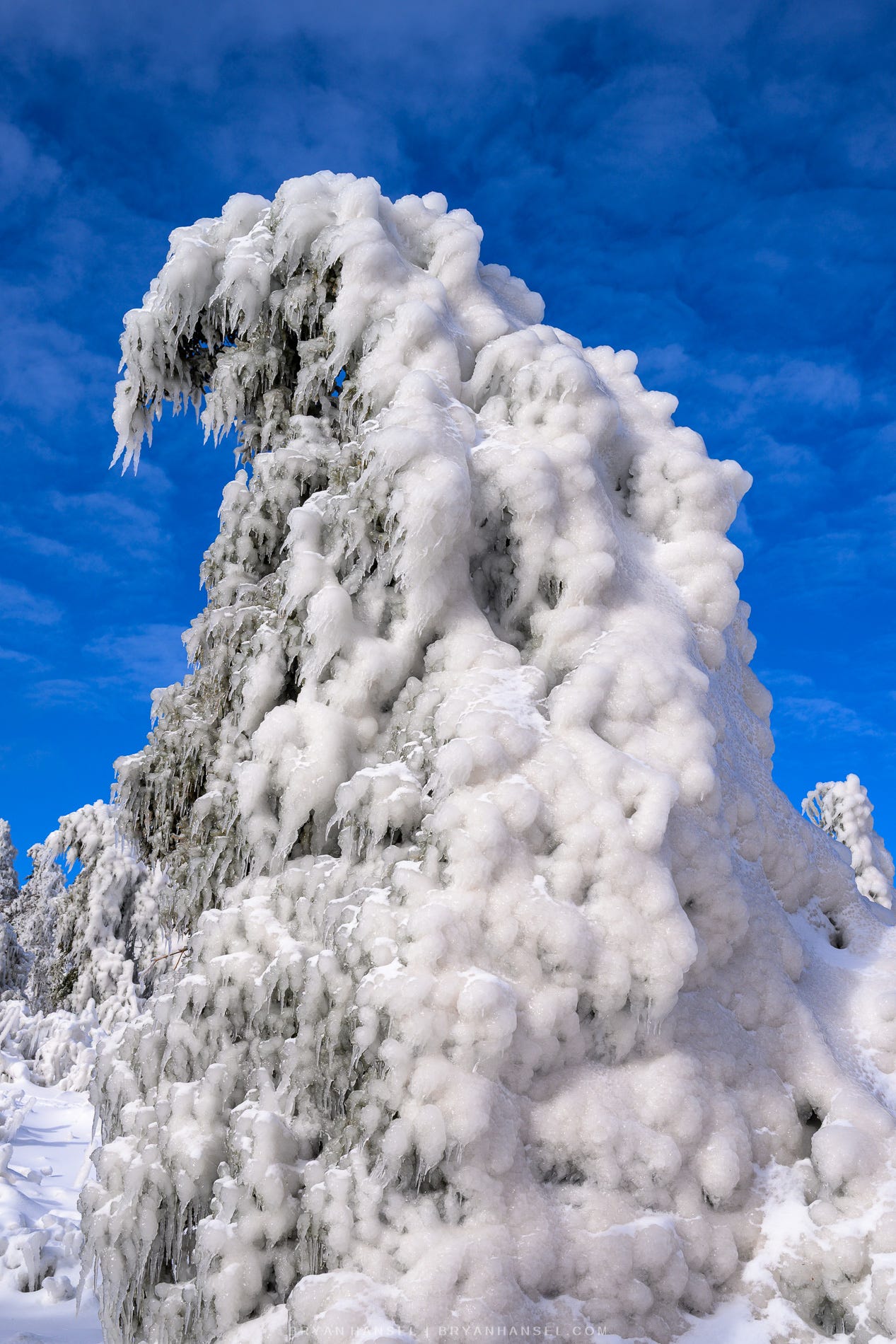
Here’s the parting photo.
Comments
Nothing yet. Say the first thing.
Sign in to join the conversation.