
A plume from a rocket dumping fuel was visible across the Midwest on late Wednesday night.
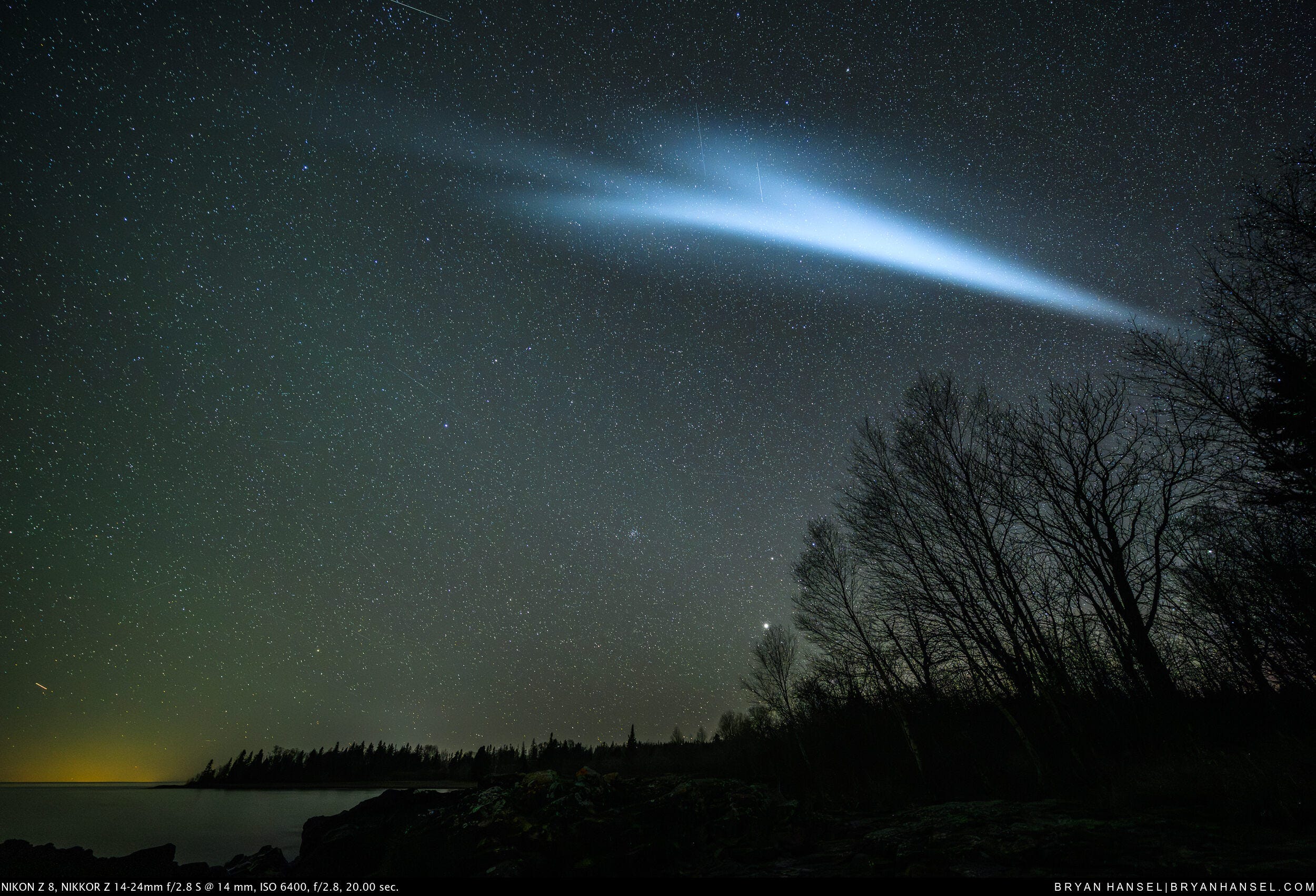
On Wednesday, May 13, 2026, China launched a Zhuque-2E Y5 rocket to put a payload of an “experimental test mass” into polar orbit. About an hour later, the rocket dumped its excess methalox fuel, which is a mixture of liquid oxygen and liquid methane, over the central United States. Sightings were reported all over, and I happened to be outside teaching a Milky Way photography workshop.
I was in the middle of taking a demo image to demo editing techniques and had my camera tied up with a 480-second exposure and was making my way back to the participants.
“What’s that over your head?” one asked.
I thought for a second she might have been seeing the battery bar on my headlamp even though the headlamp was off. She pointed out that it was above my head in the sky. I turned and saw a strange white glowing cloud-like thing in the sky. At first I thought it was a northern lights blob, but it wasn’t shaped right and then started to move in a line towards the north. I thought that maybe it was STEVE (Strong Thermal Emission Velocity Enhancement), but it didn’t look like any STEVE I had ever seen.
From when we first saw it until it disappeared over the horizon was around 10 minutes.
To get my first shot, I had to get back to my camera, turn it off to end the exposure, and compose and shoot. I was doing a photo of my foreground for a Milky Way two-image blend technique that I teach and forgot that my focus was on the foreground and not the stars, so it was blurry. But I refocused from my second shot.
Unfortunately by then, the fuel dump had started to move behind the trees. I tried to take advantage of that by using the trees as a compositional device.
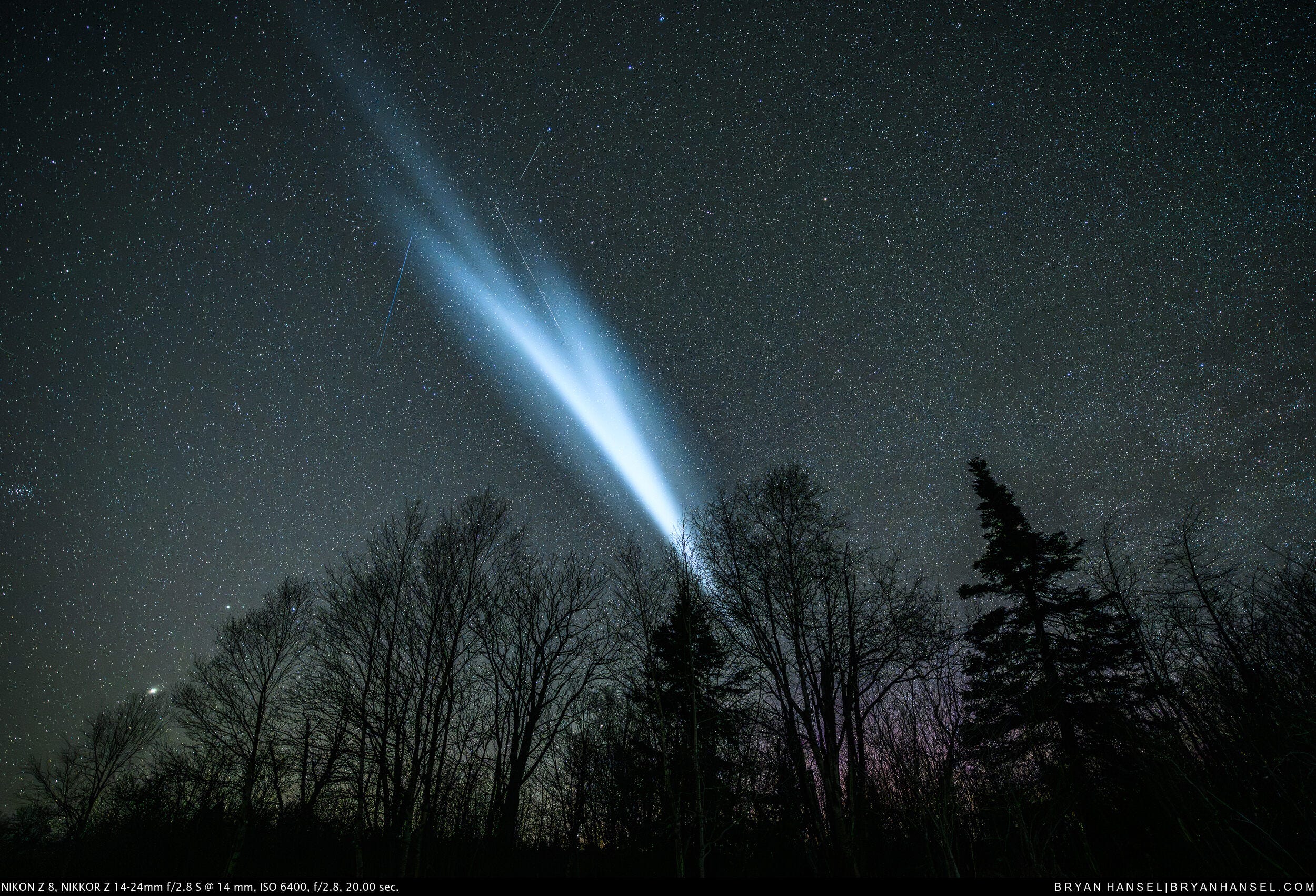
I think I like the vertical version better, but it was already behind the trees by this point.
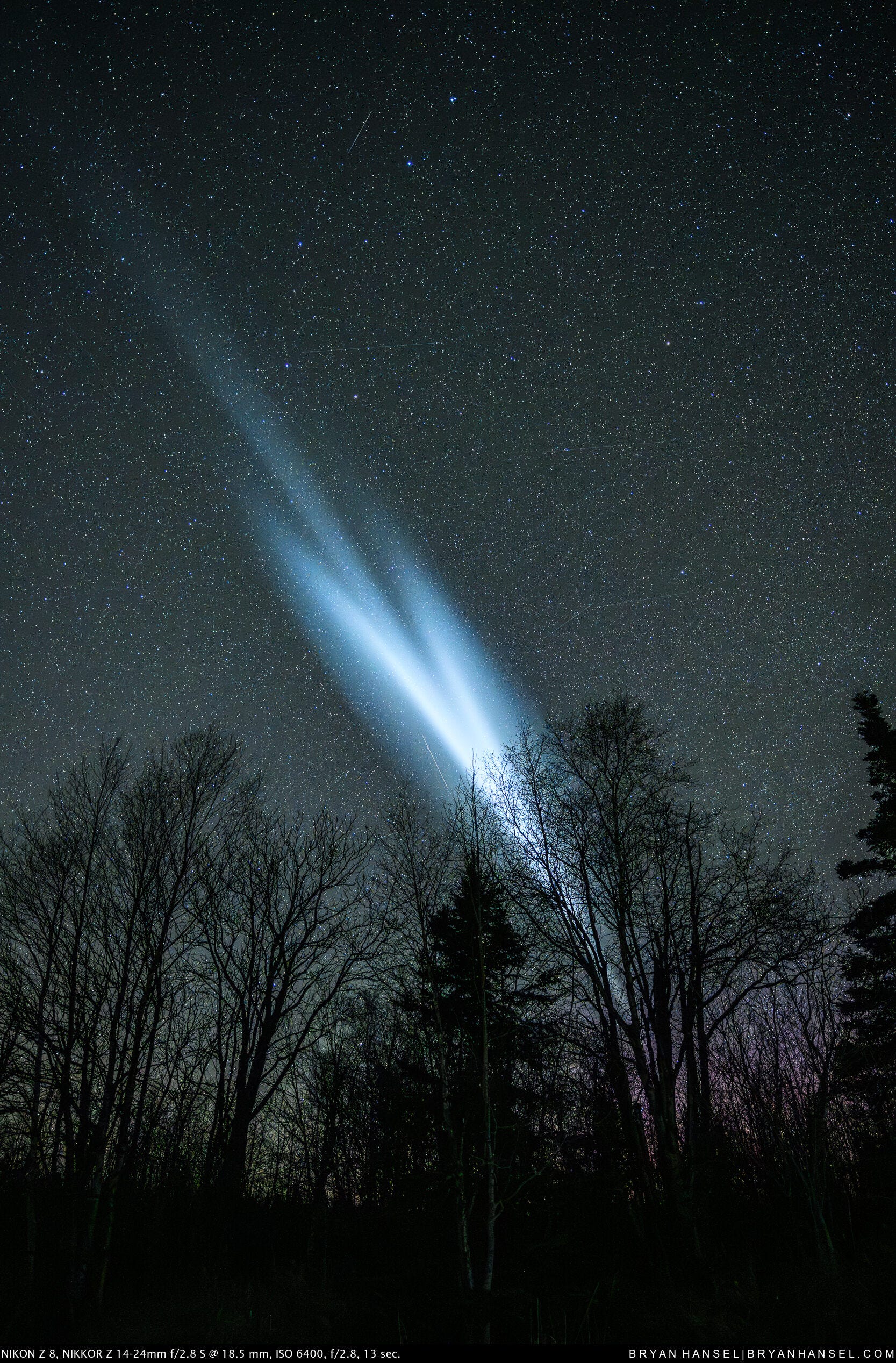
The group I was teaching was slightly separated from each other with a rocky area in between, and I had been walking back and forth to the two parties to check in. The other group had a better view of the north, so I grabbed my tripod and camera and stumbled across the jagged rocks. By the time I got there it was to the northern horizon from where they were. There was a slight glow of the northern lights in the view.
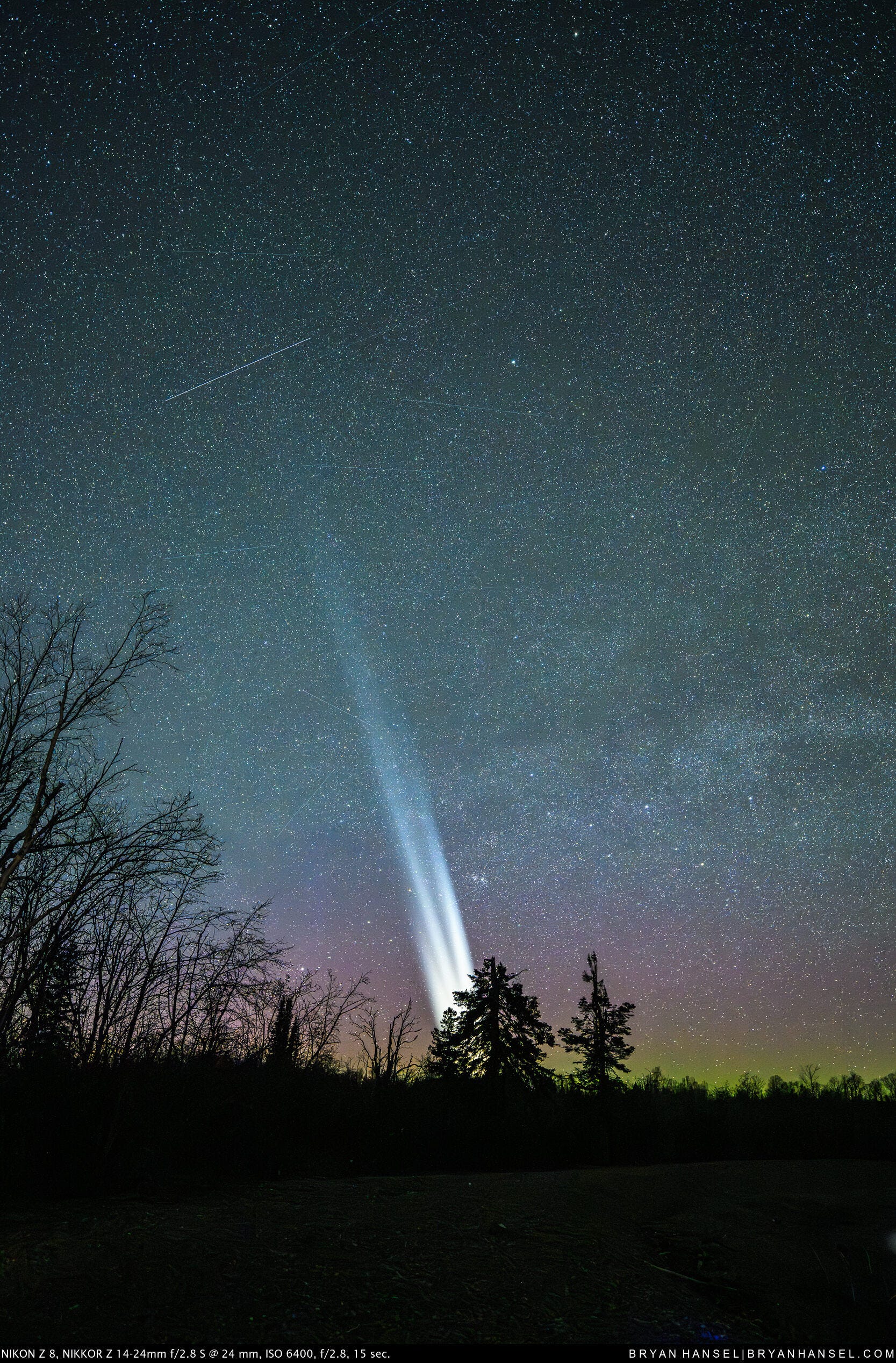
At the time, it was incredibly cool to see. I thought for sure that we were seeing natural phenomenon, and felt my heart fall when I learned it was just a manmade phenomenon from a Chinese rocket dumping fuel over the United States. Spaceweather.com reported that Dan Bush who has photographed these before said, “This one was much larger than previous dumps I have seen.”
There are a number of reasons that a rocket may dump fuel, but the main one is after they don't need the fuel, such as when the main burn is done, they dump the excess to prevent the rocket from exploding while it remains in orbit or as it plunges back to earth.
The Zhuque-2 rocket or in space terms “orbital launch vehicle” was the first rocket to use methalox fuel to reach orbit. That happened on July 12, 2023. The version of the rocket that dumped fuel over the US was the newer Zhuque-2E. The fuel is becoming more popular with many government agencies and private space companies, and as reported by Ars Technica, NASA is building launch pads for methalox rockets on their properties and testing how big the explosions are when a launch goes wrong. It currently sounds like it is the fuel of the future.
When dumped, methalox freezes into clouds and those clouds can get illuminated by the sunlight. When that happens, there’s a display like the one that I witnessed and photographed. If you want to see one of these, watching the Chinese launch schedule might be helpful. But as this fuel becomes more popular, we will like see many more of these displays in space, especially if SpaceX switches completely to methalox. They are currently launching 1-3 rockets a week to put Starlink satellites into space, and the owner wants to have 10,000 AI satellites in space.
The over 10,300 Starlink satellites currently in orbit have already made it nearly impossible to take photo without a satellite. Before Starlink, there were only about 2,000 satellites in orbit. In Yale’s E360 newsletter, Jonathan MacDowell, scientist at Harvard and the Smithsonian, estimated that by 2040, there could be more than 100,000 satellites. That’s a lot of rocket launches to get that many up there.
The night sky is getting busy. I’m glad that I got to live during a time when it was rare to see a satellite passing overhead.
While I liked seeing this, I do wonder about what all these launches are going to do to our atmosphere. I found a good article from YaleEnvironment360 that covers this. I posted these photos on Facebook and I had to turn off the comments after it went viral to over 2,000,000 views. The comments got pretty bad.
I’ll see you again in two weeks.
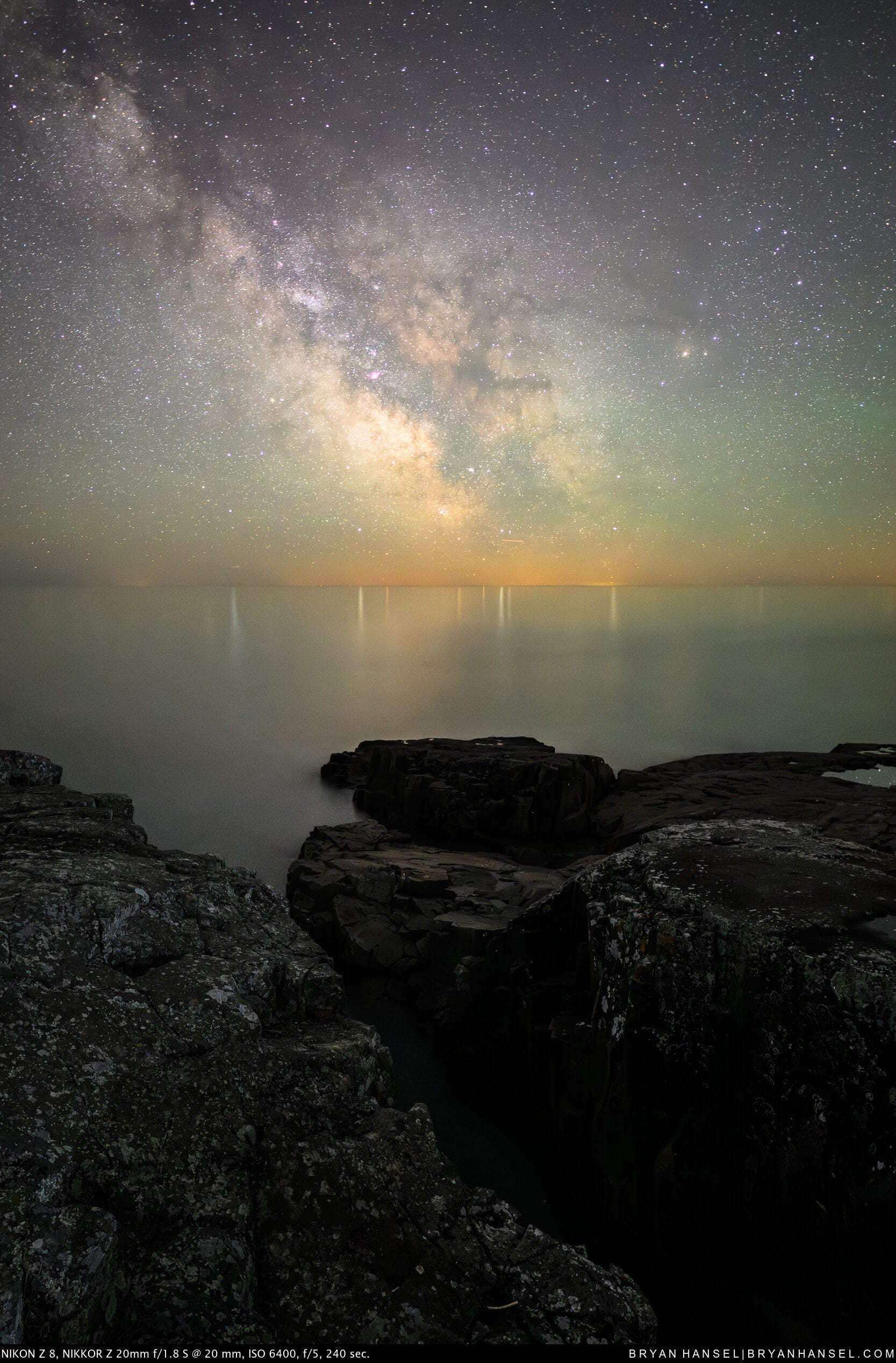
The parting shot is one of the photos I took as a demo for a two image blend.
Comments
Nothing yet. Say the first thing.
Sign in to join the conversation.