
I recently started reading a book on Egyptian mythology. I expected stories about gods with animal heads, elaborate temples, and strange rituals from a civilization that disappeared thousands of years ago.
Instead, I found myself pausing at a single concept.
After death, the ancient Egyptians believed that every person would stand before a scale. On one side lay their heart. On the other, a single feather—the feather of Ma’at, representing truth, justice, and harmony.
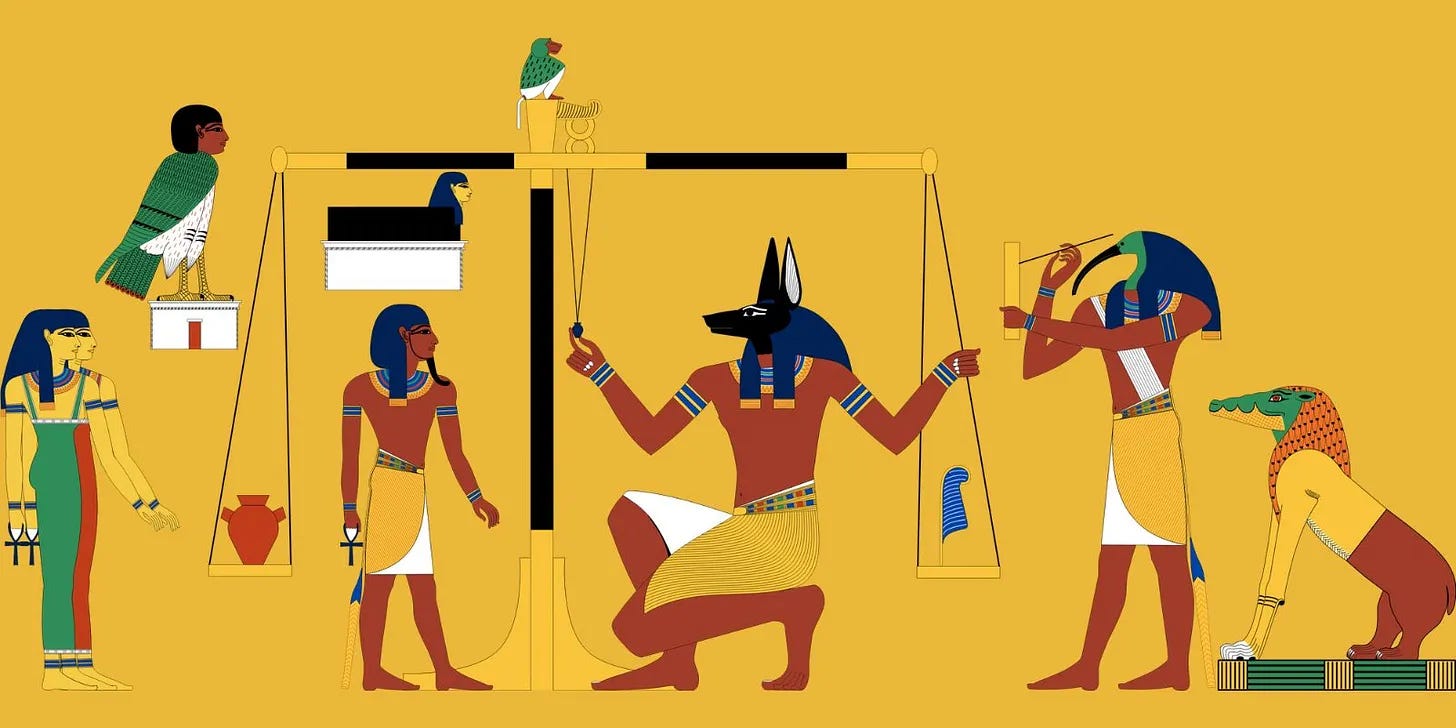
The image stayed with me for days.
Not because I wondered whether the ritual was a real thing, but because I couldn’t stop thinking about why they chose the heart.
Why not a list of good deeds? Why not wealth, status, or achievements? Why not the brain, which is used for our logic and decision-making?
Perhaps they weren’t trying to explain what happens after we die.
Perhaps they were asking a more interesting question about how we live.
If your heart were weighed tonight, what would make it heavier than a feather?
To the ancient Egyptians, the heart was far more than an organ. It was the seat of memory, intention, character, and identity. Everything that made you you was believed to reside there.
After death, the god Anubis would guide the deceased into the Hall of Two Truths, where their heart would be placed on a scale opposite the feather of Ma'at. If the heart remained balanced with the feather, the soul could continue its journey. If it proved too heavy, it would be devoured by Ammit, a creature part lion, part hippopotamus, and part crocodile.
There was no eternal punishment. There was simply no continuation.
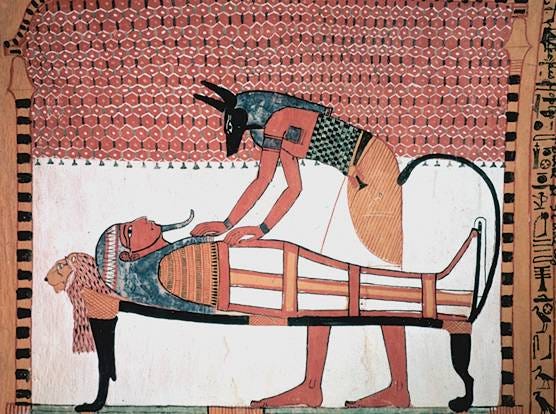
At first look, it sounds like another ancient religious story, a civilization trying to make sense of death.
But the more I thought about it, the less interested I became in what the Egyptians believed happened after death. Instead, I became fascinated by the question hidden inside the ritual itself.
My first thought was to answer with obvious things:
Guilt.
Resentment.
Jealousy.
Regret.
And those certainly weigh on us. They go on for years, quietly shaping the way we think, feel, and relate to others.
But then I realised something that made the image even worse.
A heart can become really heavy without becoming bad.
Many of us carry something that appears honest on the surface: the constant belief that we should be better than we are today.
We chase a better career. A healthier body. More discipline. Better habits. Greater productivity. We spend years convinced that peace will arrive only after the next improvement.
Perhaps that, too, adds weight.
Not because growth is wrong, but because we postpone accepting the person carrying the heart in the first place.
Maybe the Egyptians weren’t asking whether we had lived perfect lives.
Maybe they were asking something quieter.
What have you been carrying that no longer belongs in your heart?
Today, we measure almost everything.
Our watches tell us how well we slept. Our phones count our steps. Annual reviews measure our performance. Social media measures our popularity. Bank accounts measure our financial success. Even our hobbies have become things to optimise.
We’re surrounded by numbers telling us how we’re doing.
Yet almost not one of them answers a much older question: “How heavy is your heart?”
It might feel like a strange question to ask.
The ancient Egyptians imagined this question would be asked once, after death.
I wonder what would happen if we asked it every evening instead.
Before reaching for your phone.
Before tomorrow’s to-do list.
Before thinking about everything you still need to become.
Just one question.
“What made my heart heavier today?”
No posts
Comments
Nothing yet. Say the first thing.
Sign in to join the conversation.