
O curso “O Western: formas e convenções” continua até o dia 20 de janeiro de 2026.
Ontem foi a segunda aula do curso. A próxima será no dia 06 de janeiro de 2026.
Se você tem interesse pelo tema, ainda há tempo para SE INSCREVER (para as aulas em português)/SUBSCRIBE (for the English speaking classes).
--------------------
Do texto de Michel Delahaye, “La sagesse de Vidor” (Cahiers du cinéma n° 136, outubro de 1962):
Em Man Without a Star, um tema menor, mas caro a Vidor, encontra a sua mais bela resolução: a do banjo (o homem de The Crowd levava o seu para a praia, o de Our Daily Bread vendeu-o em um momento de miséria), que representa aquela parte do homem que, por menor que seja, precisa de “outra linguagem” para expressar “outra coisa”.
No momento em que sua raiva está prestes a explodir, Kirk Douglas, a quem a mulher repentinamente coloca um banjo nos braços, encontra uma válvula de escape para sua agressividade, que ele então canaliza em gestos, voz e música. O banjo é a força motriz por trás de um daqueles momentos privilegiados em que, numa rendição a forças incontroláveis que participa, ainda que vagamente, do anseio primordial pelo sagrado, o homem encontra uma realização provisória. Não há nenhuma obra de Vidor que não remeta, ainda que minimamente, ao grande tema de Hallelujah.
Em Man Without a Star, a oposição entre território livre e território cercado revela um novo aspecto da dialética Natureza-Cultura (até então latente ou secundária na obra de Vidor), definida pelo par passado-futuro, reação-progresso.
O trem, que em Duel in the Sun representava o avanço irresistível da civilização, é visto, no início de Man Without a Star, levando para o território livre aqueles que fogem da civilização, essencialmente representada, para Kirk Douglas, pela cerca de arame farpado.
Mas Douglas logo compreende os fins que podem ser usados para justificar seu belo ideal de liberdade anárquica. Pois o plano da proprietária da fazenda é justamente tirar o máximo proveito da ausência de regras e barreiras, praticar a agricultura intensiva nos pastos, o que corre o risco de transformar a terra em um deserto, mas a enriquecerá o suficiente para permitir que ela retorne à cidade, onde poderá levar a vida refinada que já experimentou em sua terra natal.
Para evitar a ruína, para manter o frágil equilíbrio ecológico que eles alcançaram entre os animais e os pastos, os pequenos agricultores têm apenas um recurso: o arame farpado.
Douglas, preso em uma engrenagem que o torna cúmplice dos exploradores, dos opressores e, em breve, dos assassinos, coloca a busca por justiça acima de sua nostalgia. Em uma súbita reviravolta, ele se torna um cortador de arame farpado ao lado dos agricultores.
Mas quando, para recompensá-lo por seus serviços, os agricultores lhe oferecem terras e vacas, ele responde: “Não, eu odeio arame farpado”.
Contudo, embora compreenda que a perpetuação excessiva da velha ordem só pode levar ao caos, ele não se resignou à ordem excessivamente restritiva exigida pela nova era. Recusando-se a deixar-se guiar pelas estrelas do progressismo ou do passado, que ele viu conduzir a uma negação da liberdade, ele recusa a escolha entre os extremos e opta por uma atitude de cavaleiro errante, dedicado ao papel ingrato de árbitro entre duas formas opostas, mas igualmente odiosas, de caos.
O tema de Man Without a Star é o inverso do de Wild River, de Kazan. O homem do progresso tomava consciência da grandeza, da beleza do apego ao passado, sem renegar suas convicções; aqui, o homem do passado percebe a necessidade do progresso, sem no entanto questionar sua escolha fundamental.
O fio condutor entre os dois filmes é este: “O Novo era um mar, o elemento da unidade e da comunicação monótonas, mas cercava o velho como ilhotas; a ruptura atravessava a alma de cada um.” (E.J.)
Jo van Fleet, Kirk Douglas: duas ilhas, uma enraizada, a outra à deriva. A primeira sucumbiu à divisão que dilacerou sua alma, o segundo sobreviveu — com o peito coberto de cicatrizes — por ter sabido, quando necessário, desenraizar-se, aceitar a justa e cruel medida das contradições do tempo, optar por uma atitude ao mesmo tempo altiva e solícita de mediador, que representa sem dúvida a forma mais moderada da desmesura.
Do texto de Bernard Cohn sobre King Vidor, do livro Le western: approches, mythologies, auteurs, acteurs, filmographies (org. Raymond Bellour, Union Générale D’éditions, 1969, pp. 295-298):
Embora renegado pelo seu diretor, que reconhece apenas a cinematografia e as paisagens (o roteiro lhe foi imposto), Man Without a Star atinge a tragédia mais pura através da beleza dos seus símbolos e da simplicidade da sua trama, que alterna entre cenas de crueldade quase sádica (o homem preso no arame farpado) e momentos de alívio e humor (a partida de Kirk Douglas no final do filme, seus encontros com a sedutora e perversa Jeanne Crain e certas interações com Claire Trevor). Dividido entre o seu ideal pessoal, a sua autossuficiência, para usar o termo de Emerson, e o apelo da comunidade vitimada pela injustiça, o cavaleiro solitário com um passado amaldiçoado (evidenciado pelas marcas de arame farpado no peito) encontra a sua liberdade ao defender os agricultores, mas tem de voltar ao exílio para evitar trair a si mesmo. Assim, paradoxalmente, dadas as reservas do autor quanto à paternidade da obra, ele é de fato um herói vidoriano, pelos problemas que se lhe colocam (relações indivíduo-sociedade, sobrevivência em um mundo de expansão territorial e econômica), pela sua crença em si mesmo, pelo seu idealismo e pela “busca constante da sua verdade”.
E, para finalizar, o texto de Bertrand Tavernier (Cahiers du cinéma n° 136, outubro de 1962) sobre o filme, visto na ocasião da retrospectiva Vidor realizada pela Cinemateca Francesa em julho de 1962:
Não há nada a dizer sobre o roteiro de Borden Chase, tamanha é sua riqueza, sua construção hábil e suas reviravoltas abundantes. Ou seria necessário dispor, como para Vera Cruz, cuja exuberância e descontração ele possui, de várias páginas dos Cahiers. Contentemo-nos, portanto, em esboçar o início de uma crítica logaritmo-geométrica, afirmando que Man Without a Star, assim como Shadow of a Doubt, é construído a partir do número “dois” ou, se alguém se inclinar para o pensamento melvillo-hawksiano, a partir da dualidade própria de uma moeda não falsificada, cujo lado cara seria o inverso do lado coroa. Essa oscilação temática, baseada na conhecida atração dos opostos, confere uma densidade ainda maior às relações entre William Campbell e Kirk Douglas.
Pois este western concentracionário, assim como Apache, desenvolve um tema romântico, caro a Vidor (embora ele afirme ter considerado esta obra como uma encomenda), que eleva o conflito ao trágico em estado puro: um homem luta pela sua liberdade, pela sua integridade moral e tenta escapar a arame farpado simbólico. A essa admirável ideia obsessiva, somam-se muitos outros temas, tipicamente westernianos, transformando este filme numa síntese do gênero, uma síntese que realça o brilho da visão pessoal do realizador.
A educação de um jovem rapaz que acabará por se rebelar contra o seu mestre foi abordada inúmeras vezes em Hollywood; mas só Mann soube evocar com tanta felicidade a súbita tensão de um homem dominado pelo desejo de matar, o desencadeamento de uma violência calculada e metódica (a surra em Douglas), a integração da reflexão e da ação. Da mesma forma, raramente se viu na tela tamanha explosão de vitalidade, de humor tão devastador, sensíveis sobretudo nas sequências saudavelmente imorais que opõem a muito vidoriana Jeanne Crain a Kirk Douglas – este último destruindo, aliás, até mesmo o sentido da palavra cabotinagem.
A obra-prima de K.V.? Sem dúvida; em todo caso, uma de suas realizações mais brilhantes, ao lado de Ruby Gentry, War and Peace e The Big Parade, onde a mise en scène, pondo em prática o título de sua autobiografia (A Tree is a Tree), sabe reencontrar as virtudes do óbvio e, a partir de gestos concretos, precisos e imediatos, reencontrar a noção de eternidade.
The course “The Western: Forms and Conventions” continues until January 22nd, 2026.
Today will be the second class of the course. The next one will be on January 8th, 2026.
If you are interested in the subject, there is still time to SUBSCRIBE (for the English speaking classes)/SE INSCREVER (para as aulas em português).
--------------------
From Michel Delahaye’s text, “La sagesse de Vidor” (Cahiers du cinéma No. 136, October 1962):
In Man Without a Star, a minor theme, but one dear to Vidor, finds its most beautiful resolution: that of the banjo (the man in The Crowd took his to the beach, the man in Our Daily Bread sold his in times of hardship), which represents that part of man, however small, that needs “another language” to express “something else.”
Just as his anger is about to explode, Kirk Douglas, to whom the woman suddenly hands a banjo, finds in it an outlet for his aggression, which he transposes into gestures, voice, and music. The banjo is the driving force behind one of those privileged moments when, in a surrender to uncontrollable forces that partakes, however faintly, of the primal impulse toward the sacred, man finds temporary fulfillment. There is no work by Vidor that does not echo, however faintly, the great theme of Hallelujah.
In Man Without a Star, the opposition between free territory and restricted territory reflects a new aspect of the Nature-Culture dialectic (hitherto latent or secondary in Vidor’s work), (hitherto latent or secondary in Vidor’s work), defined by the pair past-future, reaction-progress.
The train, which in Duel in the Sun represented the irresistible advance of civilization, is seen at the beginning of Man Without a Star bringing those who flee civilization—primarily represented, for Kirk Douglas, by the barbed-wire fence—into free territory.
But Douglas soon understands the ends that can be used to justify his beautiful ideal of anarchic freedom. For the ranch owner’s plan is precisely to take full advantage of the absence of rules and barriers, to practice intensive farming of the pastures, which risks turning the land into a desert but will have enriched her enough to allow her to return to the city, where she can lead the refined life of which she has already introduced a taste in her home.
To avoid ruin and maintain the fragile ecological balance they have achieved between animals and grasslands, small farmers have only one option: barbed wire.
Douglas, caught up in a spiral that makes him an accomplice to the exploiters, the oppressors, and soon the killers, puts his concern for justice above his nostalgia and, in a sudden reversal, becomes a barbed wire installer alongside the farmers.
But when the farmers offer him land and cows as a reward for his services, he says, “No, I hate barbed wire.”
However, although he understands that the excessive continuation of the old order can only lead to disorder, he is not resigned to the overly restrictive order demanded by the new times. Refusing to be guided by the stars of progressivism or traditionalism, both of which he saw as leading to a denial of freedom, he rejects the choice between extremes and opts for the attitude of a knight-errant, dedicated to the thankless role of arbiter between two opposing, but equally hateful, forms of chaos.
The theme of Man Without a Star is the inverse of that of Kazan’s Wild River. The man of progress became aware of the greatness and beauty of attachment to the past, without renouncing any of his convictions; here, the man of the past realizes the necessity of progress, without, however, backtracking on his fundamental choice.
The common theme in both films is this: “The New was a sea, the element of monotonous unity and communication, but it enclosed the old like islands, the divide cutting through the soul of each.” (E.J.)
Jo van Fleet and Kirk Douglas: two islands, one rooted, the other adrift. The first succumbed to the divide that tore her soul apart, the second survived—his chest stitched with scars—because he knew, when necessary, how to uproot himself, accept the just and cruel measure of the contradictions of the time, and opt for an attitude that was both haughty and helpful, that of a mediator, which is undoubtedly the most measured form of excess.
From Bernard Cohn’s text on King Vidor, from the book Le western: approches, mythologies, auteurs, acteurs, filmographies (ed. Raymond Bellour, Union Générale D’éditions, 1969, pp. 295-298):
Man Without a Star, though disowned by its author, who only acknowledges the photography and landscapes (the screenplay was imposed on him), achieves the purest tragedy through the beauty of its symbols and the simplicity of its plot, which alternates between scenes of almost sadistic cruelty (the man caught in barbed wire) and moments of respite and humor (Kirk Douglas’s departure at the end of the film, his encounters with the seductive and perverse Jeanne Crain, and certain interactions with Claire Trevor). Torn between his personal ideal, his self-reliance, to use Emerson’s term, and the call of the community victimized by injustice, the lone rider with a cursed past (as evidenced by the barbed wire marks on his chest) finds his freedom in defending the farmers, but must once again go into exile so as not to betray himself. As such, paradoxically, given the author’s reservations about the authorship of the work, he is indeed a Vidorian hero, due to the problems he faces (individual-society relations, survival in a world of territorial and economic expansion), his belief in himself, his idealism, and “the constant search for his truth.”
And finally, Bertrand Tavernier’s text (Cahiers du cinéma No. 136, October 1962) on the film, seen at the time of the Vidor retrospective held by La Cinémathèque française in July 1962:
Nothing can be said about Borden Chase’s screenplay, so rich it is, so skillfully constructed, and so full of twists and turns. Or we would need, as with Vera Cruz, which shares its exuberance and nonchalance, several pages of Cahiers. Let’s content ourselves, then, with sketching a preliminary logarithmic-geometric critique, stating that Man Without a Star, like Shadow of a Doubt, is constructed around the number “two” or, if one is at all Melville-Hawksian, around the duality inherent in an untricked coin, whose heads side is the inverse of its tails side. This thematic swing, based on the well-known attraction of opposites, lends increased density to the relationship between William Campbell and Kirk Douglas.
For this concentration camp Western, like Apache, develops a romantic theme dear to Vidor (even though he claims to have considered this work a commissioned piece), which elevates the conflict to pure tragedy: a man fights for his freedom, for his moral integrity, and tries to escape from symbolic barbed wire. To this admirable, obsessive idea are grafted numerous other themes, typically Western, transforming this film into a synthesis of the genre, a synthesis enhanced by the director’s personal vision.
The education of a young boy who ultimately wants to rebel against his master has been dealt with time and time again in Hollywood, but only Mann had so brilliantly evoked the sudden tension of a man consumed by the desire to kill, the unleashing of calculated, methodical violence (the beating of Douglas), and the integration of reflection and action. Similarly, rarely has the screen seen such an outpouring of vitality and devastating humor, been seen on screen, particularly evident in the healthily immoral sequences pitting the very Vidorian Jeanne Crain against Kirk Douglas, the latter, moreover, obliterating even the meaning of the expression “hamming it up.”
K.V.’s masterpiece? Undoubtedly; in any case, one of his most brilliant achievements, along with Ruby Gentry, War and Peace, and The Big Parade, where the mise en scène, putting into practice the title of his autobiography (A Tree is a Tree), knows how to rediscover the virtues of the obvious and, starting from concrete, precise, and immediate gestures, recapture the notion of eternity.
--------------------
O material acima é um complemento da aula de ontem/The above material is a supplement to today’s class.
--------------------
Conforme prometido, e para todos, uma lista com alguns faroestes importantes dos anos 1930/As promised, and for everyone, here is a list of some important Westerns from the 1930s.
Por ordem cronológica/In chronological order:
1930: The Light of Western Stars
1930: The Big Trail
1930: Billy the Kid
1931: Cimarron
1931: Fair Warning
1931: Fighting Caravans
1931: The Squaw Man
1931: Freighters of Destiny
1931: The Cisco Kid
1931: Branded Men
1932: Law and Order
1932: Texas Gun Fighter
1932: Tangled Fortunes
1932: Whistlin’ Dan
1932: Dynamite Ranch
1932: La bête errante
1932: Heritage of the Desert
1932: Wild Girl
1932: The Conquerors
1933: The Thundering Herd
1933: Man of the Forest
1933: To the Last Man
1933: Fargo Express
1934: West of the Divide
1934: Viva Villa!
1934: Operator 13
1934: Rocky Rhodes
1934: Thunder Over Texas
1934: In Old Santa Fe
1934: When a Man Sees Red
1934: Gunfire
1935: The Crimson Trail
1935: The Hawk
1935: Border Brigands
1935: The Arizonian
1935: Outlawed Guns
1935: The Call of the Wild
1935: Tumbling Tumbleweeds
1935: Powdersmoke Range
1935: Barbary Coast
1935: Nevada
1935: Lawless Riders
1935: Bulldog Courage
1936: The Lawless Nineties
1936: Sutter’s Gold
1936: Red River Valley
1936: King of the Pecos
1936: Robin Hood of El Dorado
1936: Desert Gold
1936: Heroes of the Range
1936: Avenging Waters
1936: Secret Patrol
1936: The Last Outlaw
1936: Winds of the Wasteland
1936: Der Kaiser von Kalifornien
1936: The Texas Rangers
1936: Ramona
1936: Cavalry
1936: End of the Trail
1936: Daniel Boone
1936: The Plainsman
1936: The Cowboy Star
1936: Ranger Courage
1937: Land Beyond the Law
1937: Two Gun Law
1937: The Cherokee Strip
1937: Yodelin’ Kid from Pine Ridge
1937: Range Defenders
1937: Riders of the Dawn
1937: Heroes of the Alamo
1937: The Rangers Step In
1937: The Devil’s Saddle Legion
1937: Western Gold
1937: Heart of the Rockies
1937: Wells Fargo
1938: The Purple Vigilantes
1938: The Overland Express
1938: Outlaws of Sonora
1938: Valley of the Giants
1938: In Early Arizona
1938: Heart of the North
1939: Jesse James
1939: Frontiers of ‘49
1939: Stagecoach
1939: Rollin’ Westward
1939: The Oklahoma Kid
1939: Dodge City
1939: Union Pacific
1939: Down the Wyoming Trail
1939: Frontier Marshal
1939: Drums Along the Mohawk
1939: Destry Rides Again
1939: Westbound Stage
--------------------
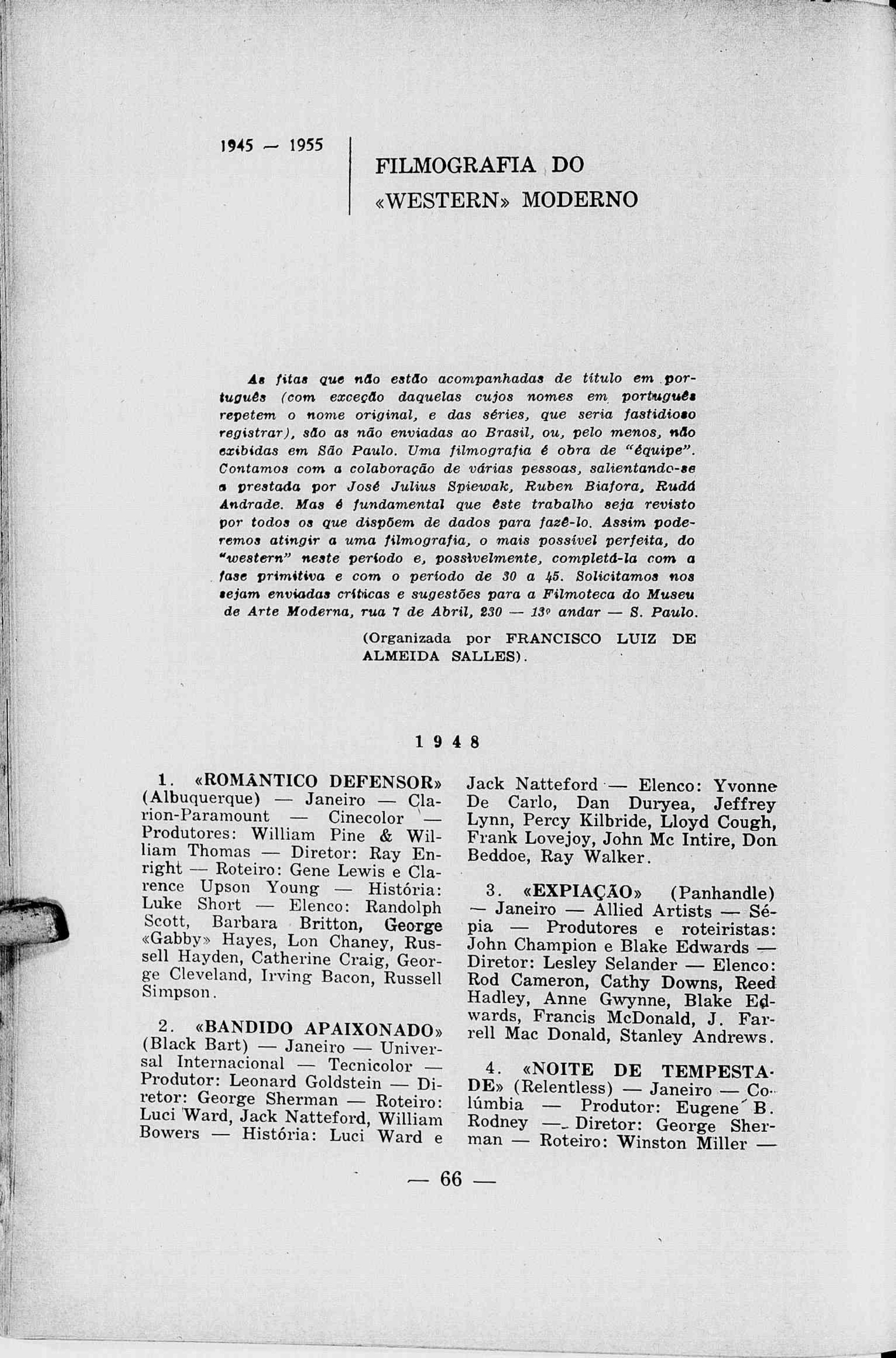
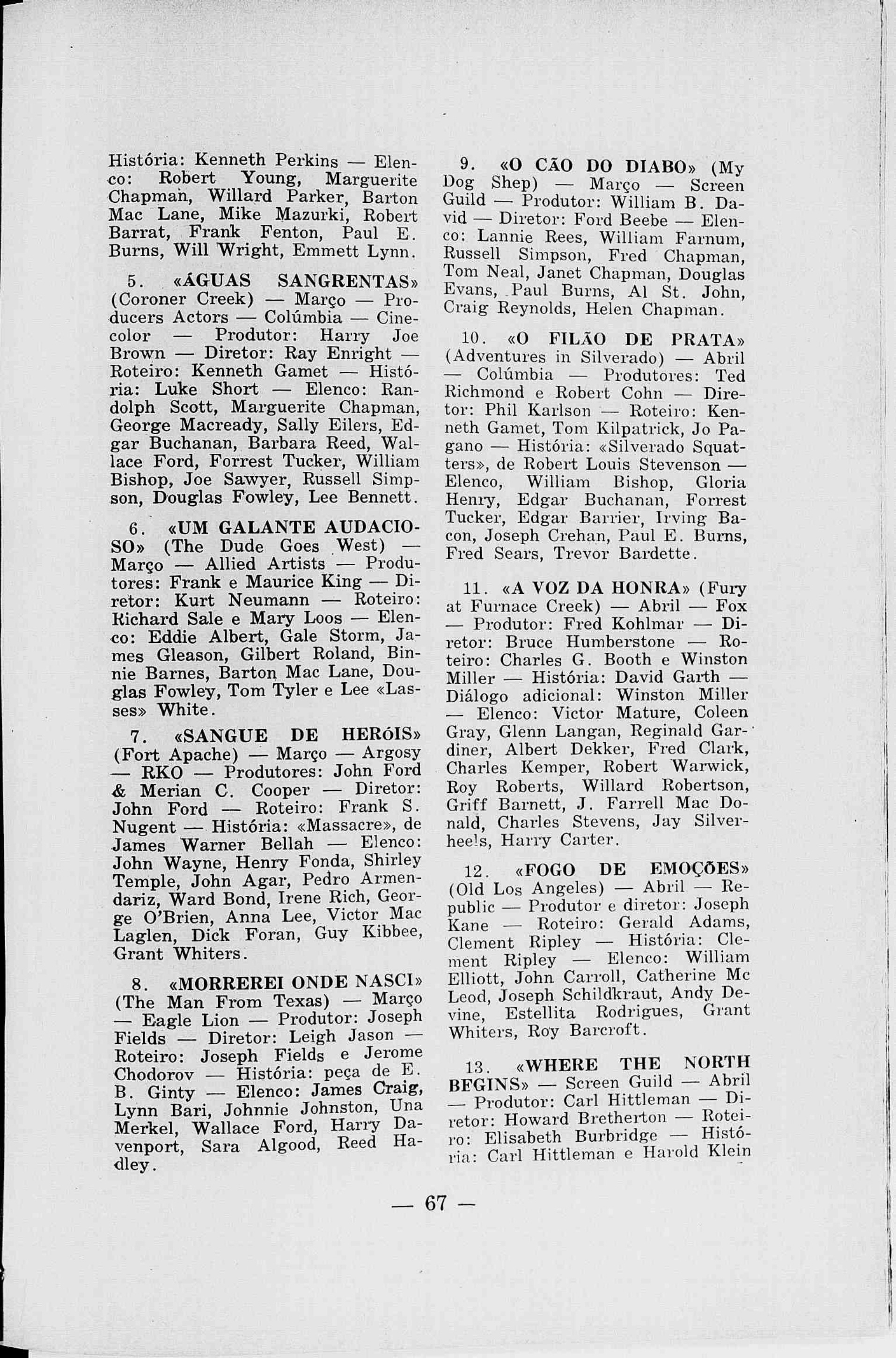
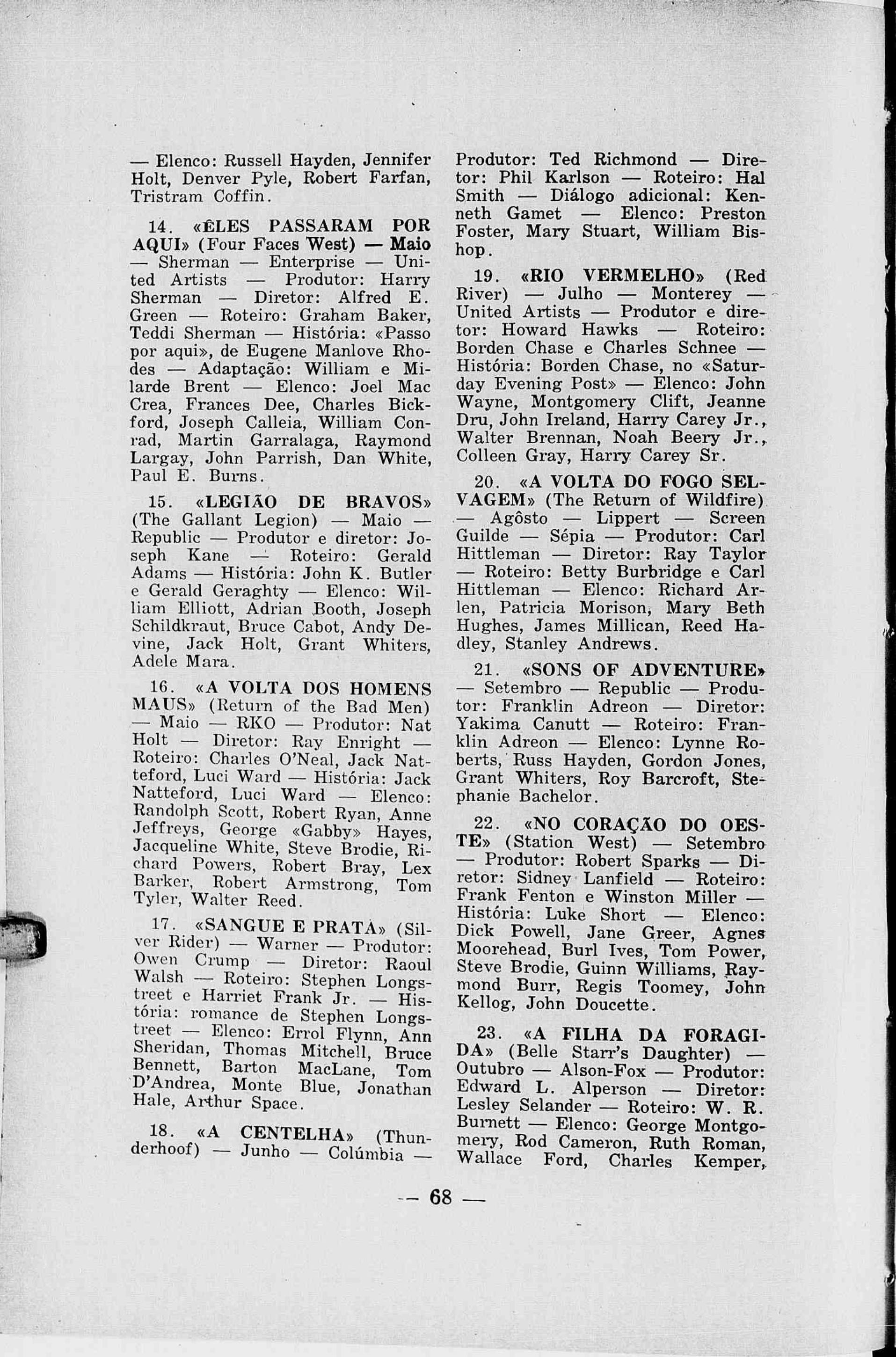
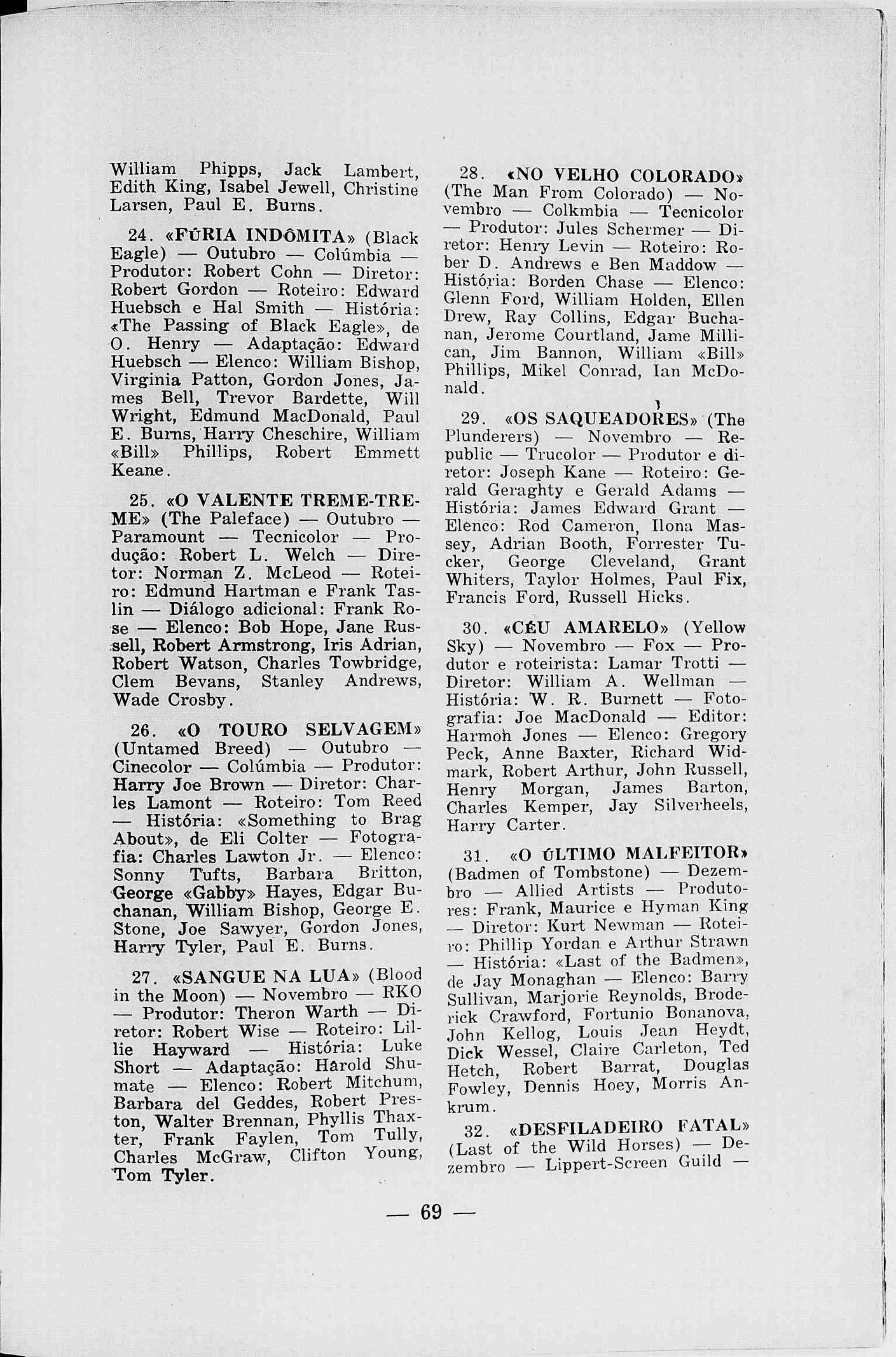
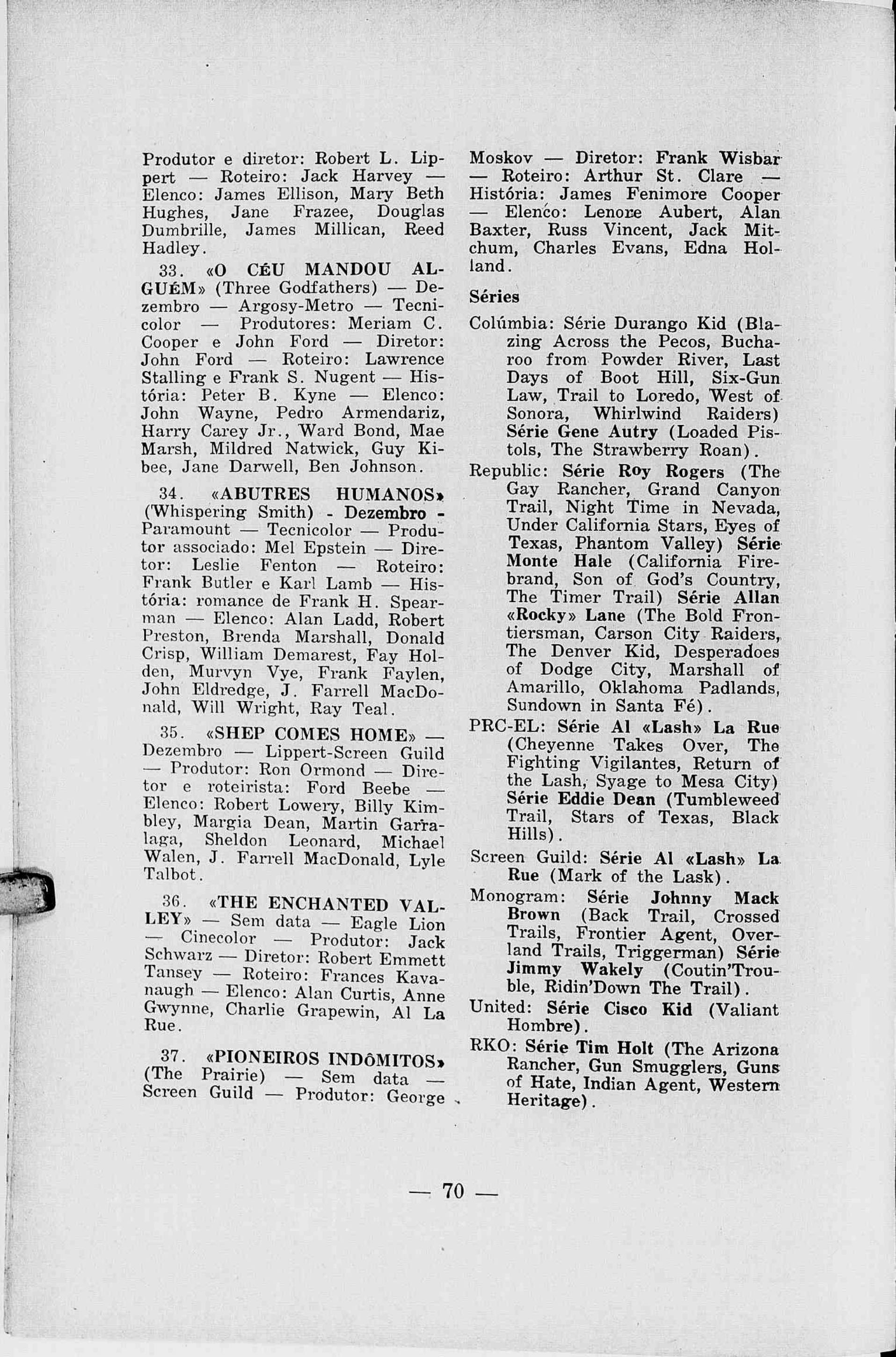
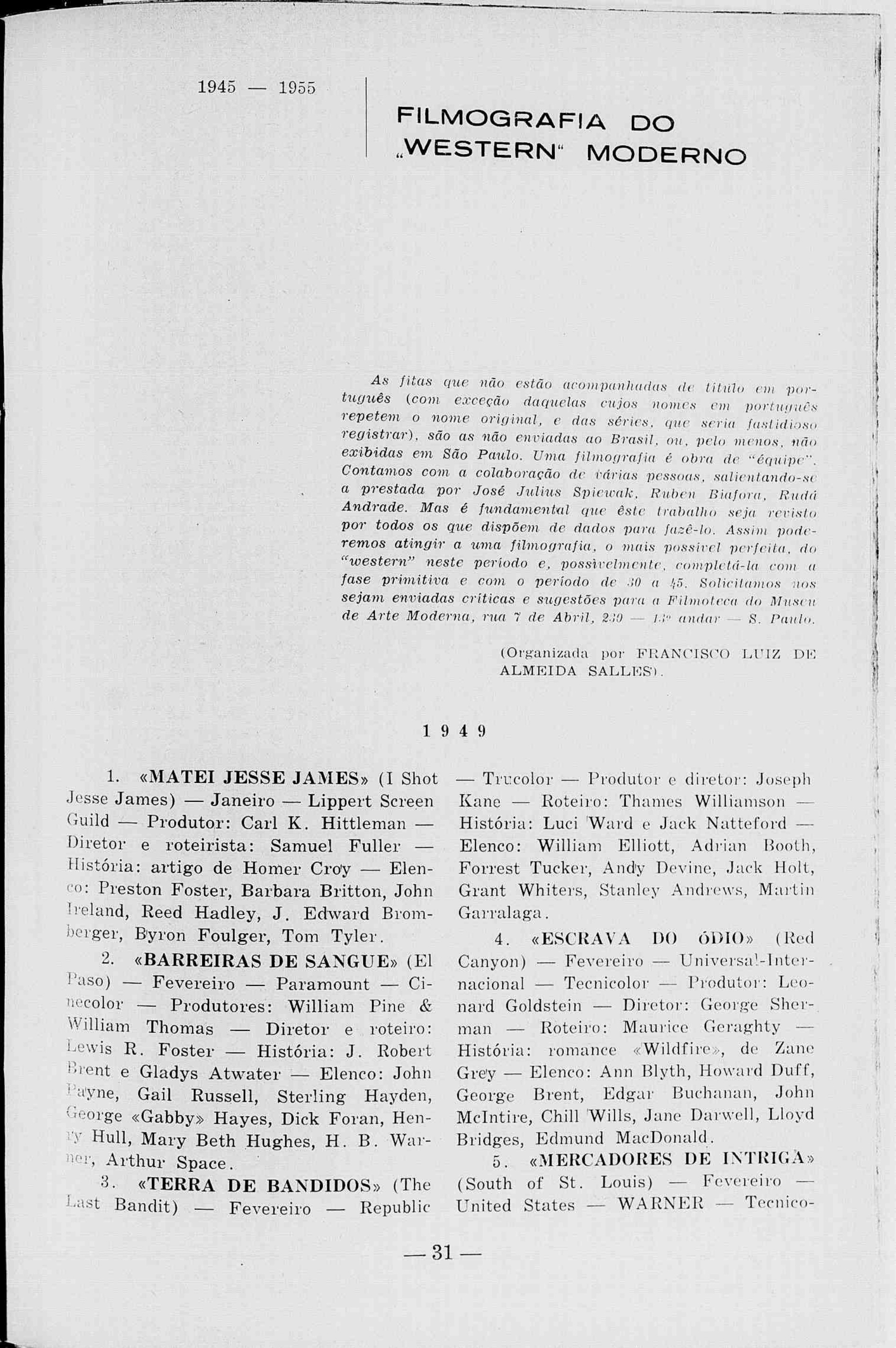
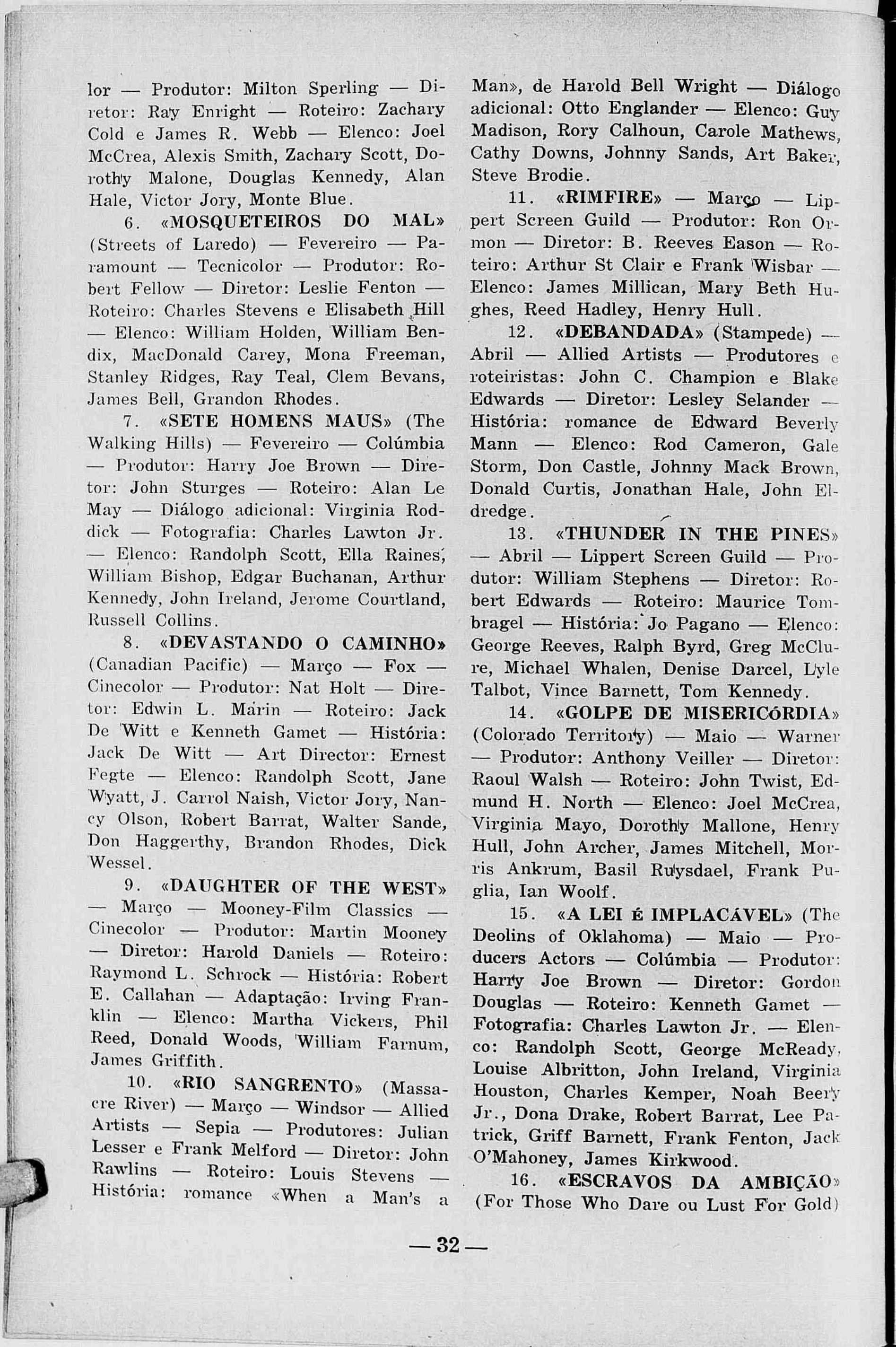
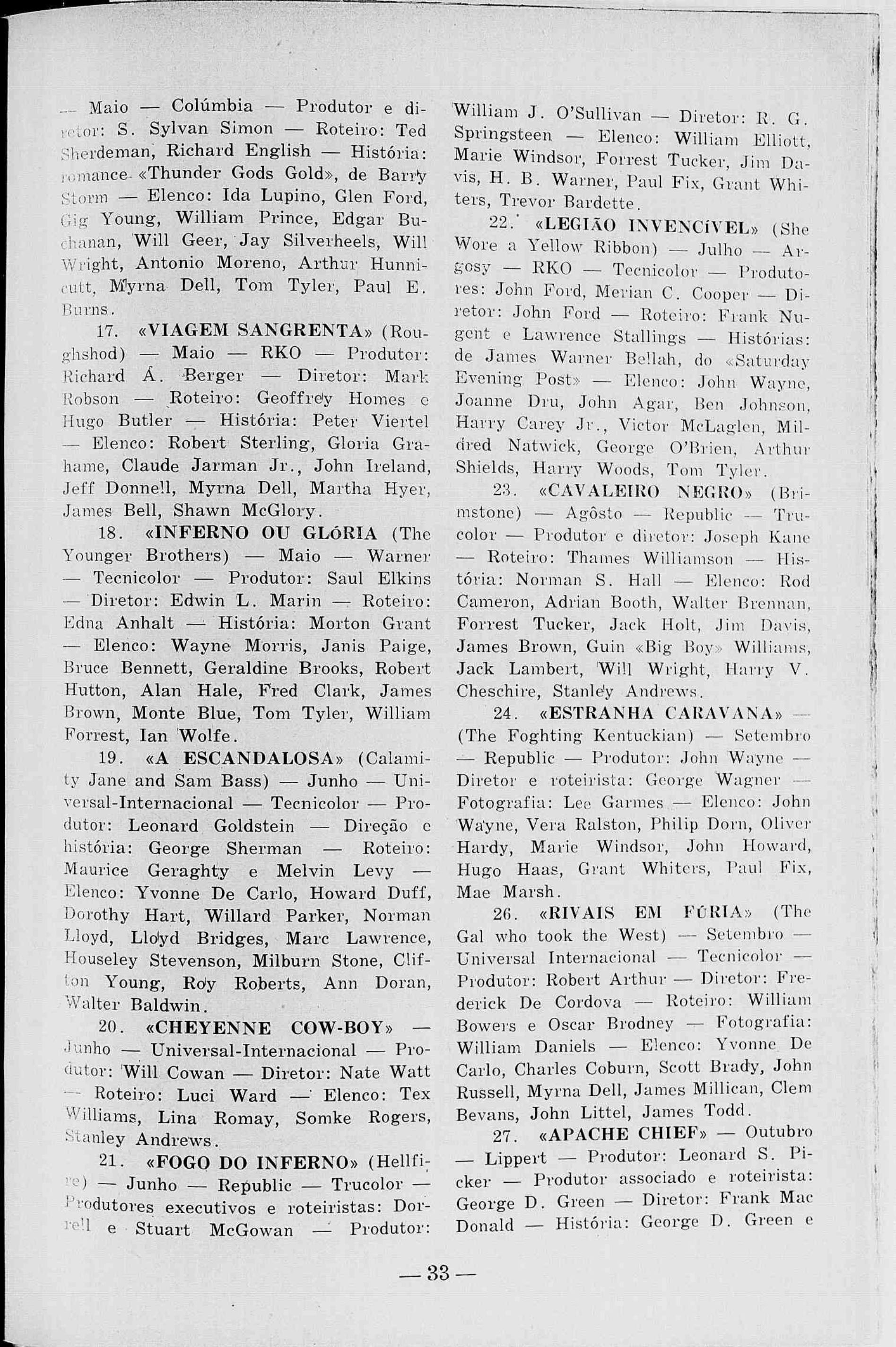
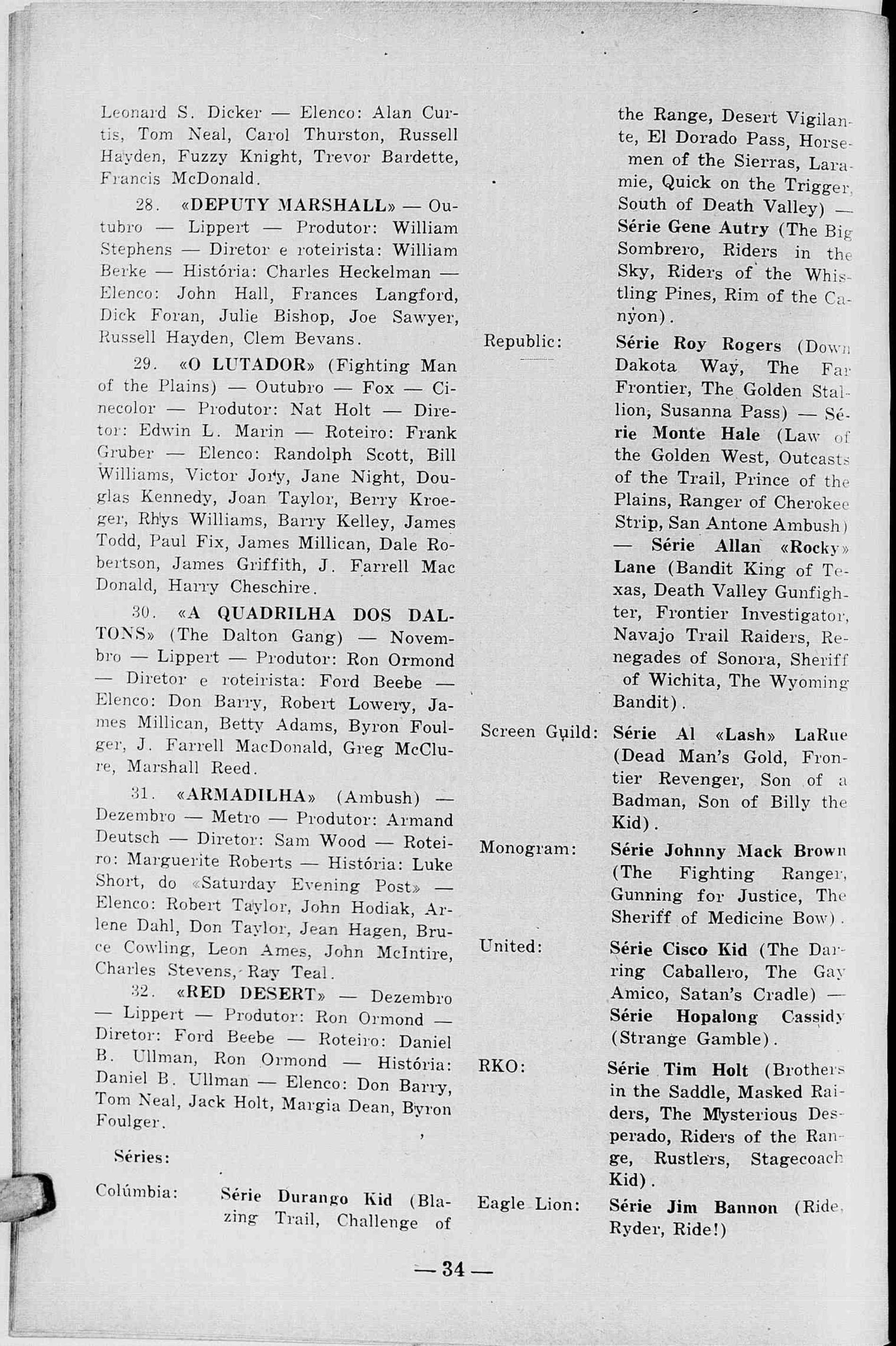
E, também, este material incrível que me foi enviado pelo Daniel Moreno: uma “Filmografia do ‘Western’ moderno” organizada por Francisco Luiz de Almeida Salles e publicada na Revista de Cinema, do vol. 21 ao 24/And also, this incredible material that Daniel Moreno sent me: a “Filmography of the Modern Western” compiled by Francisco Luiz de Almeida Salles and published in Revista de Cinema, volumes 21 to 24:
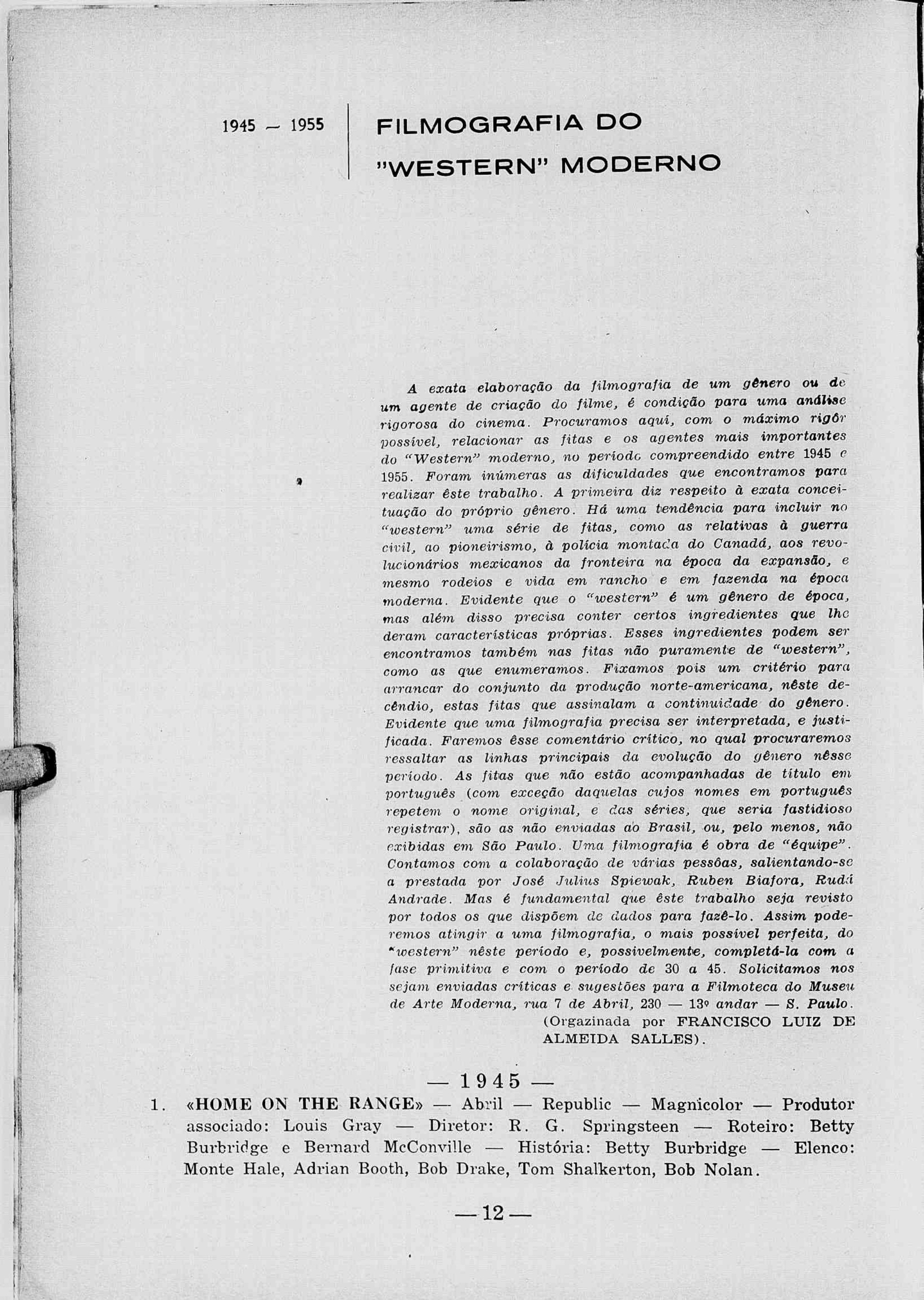
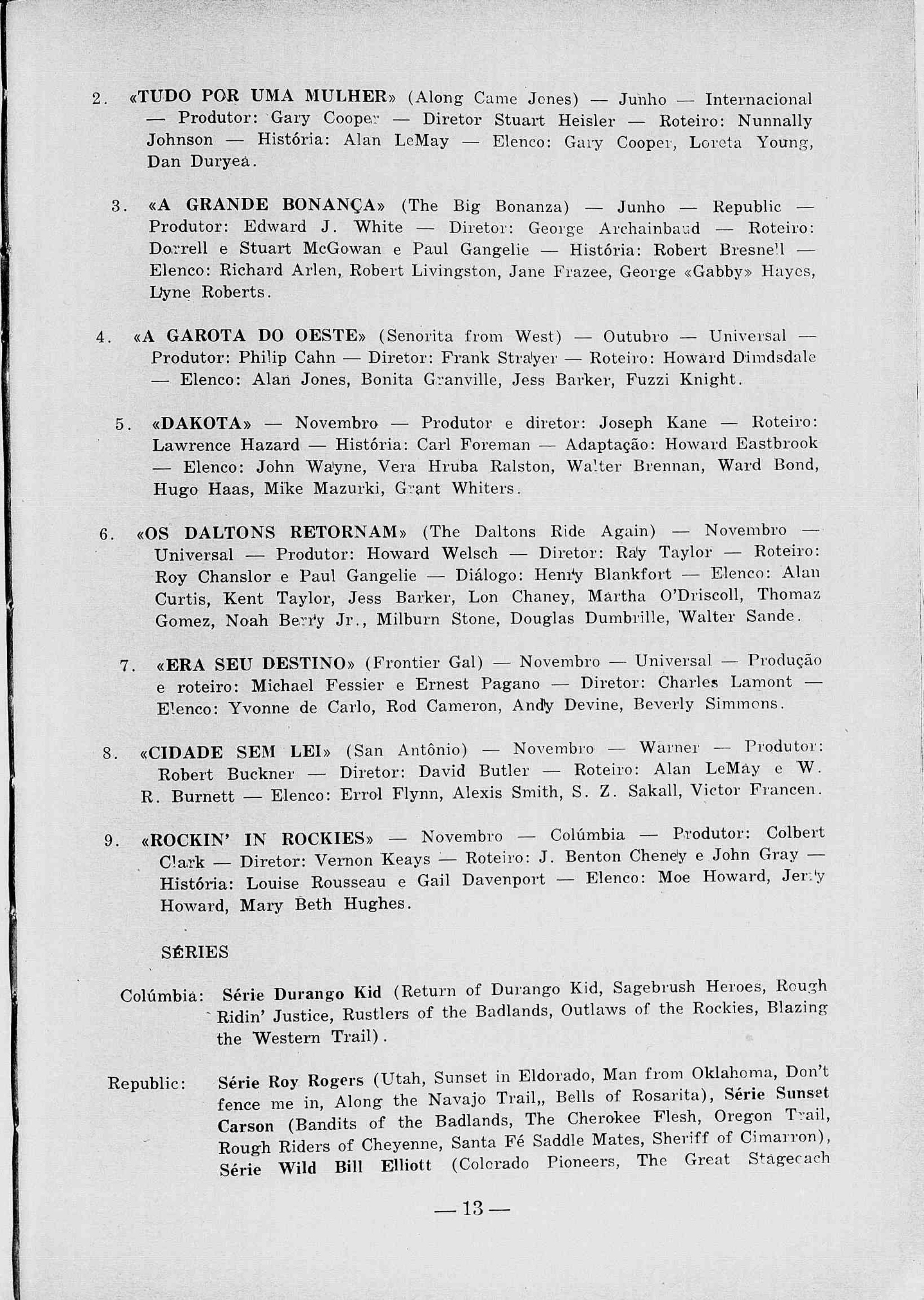
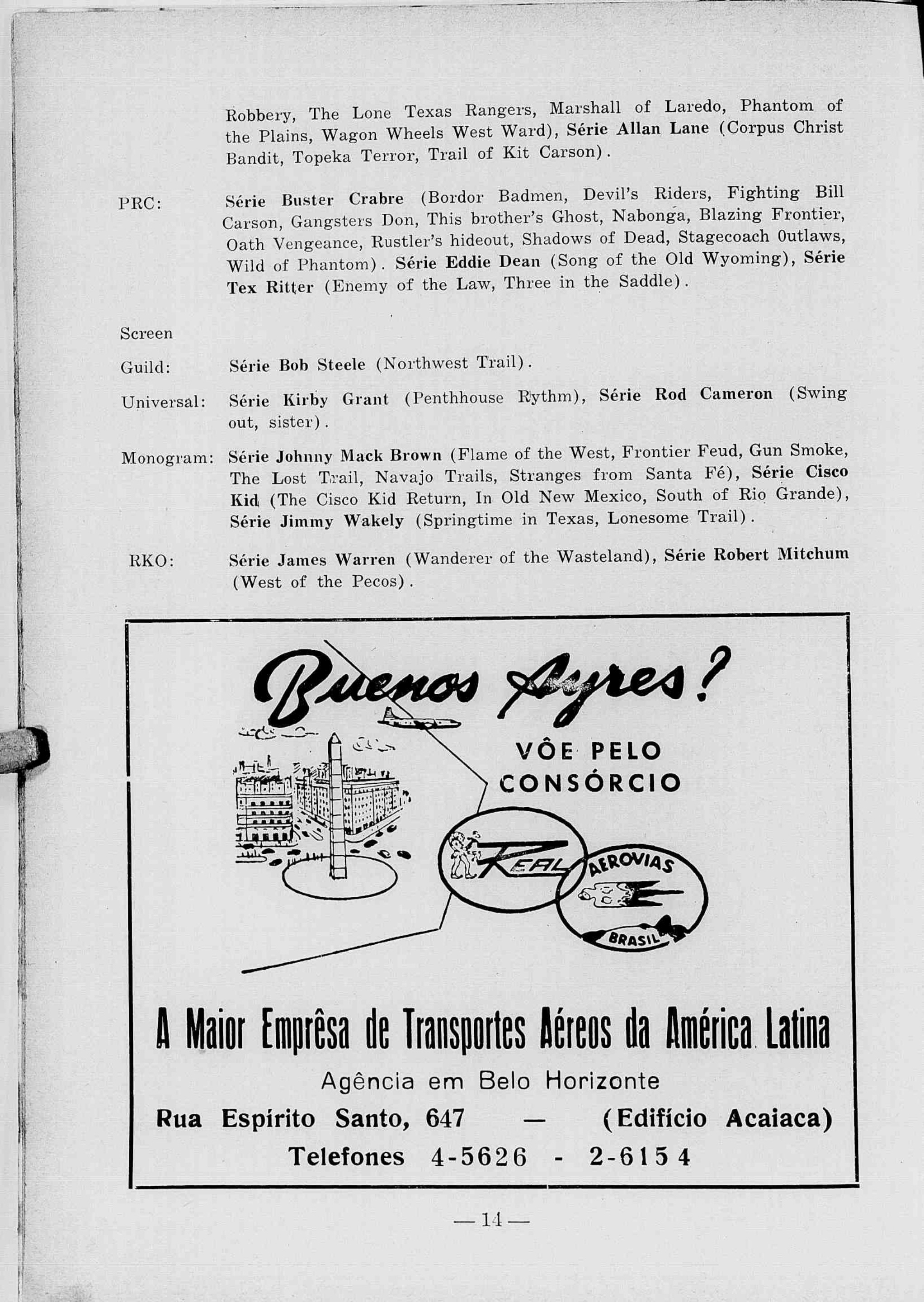
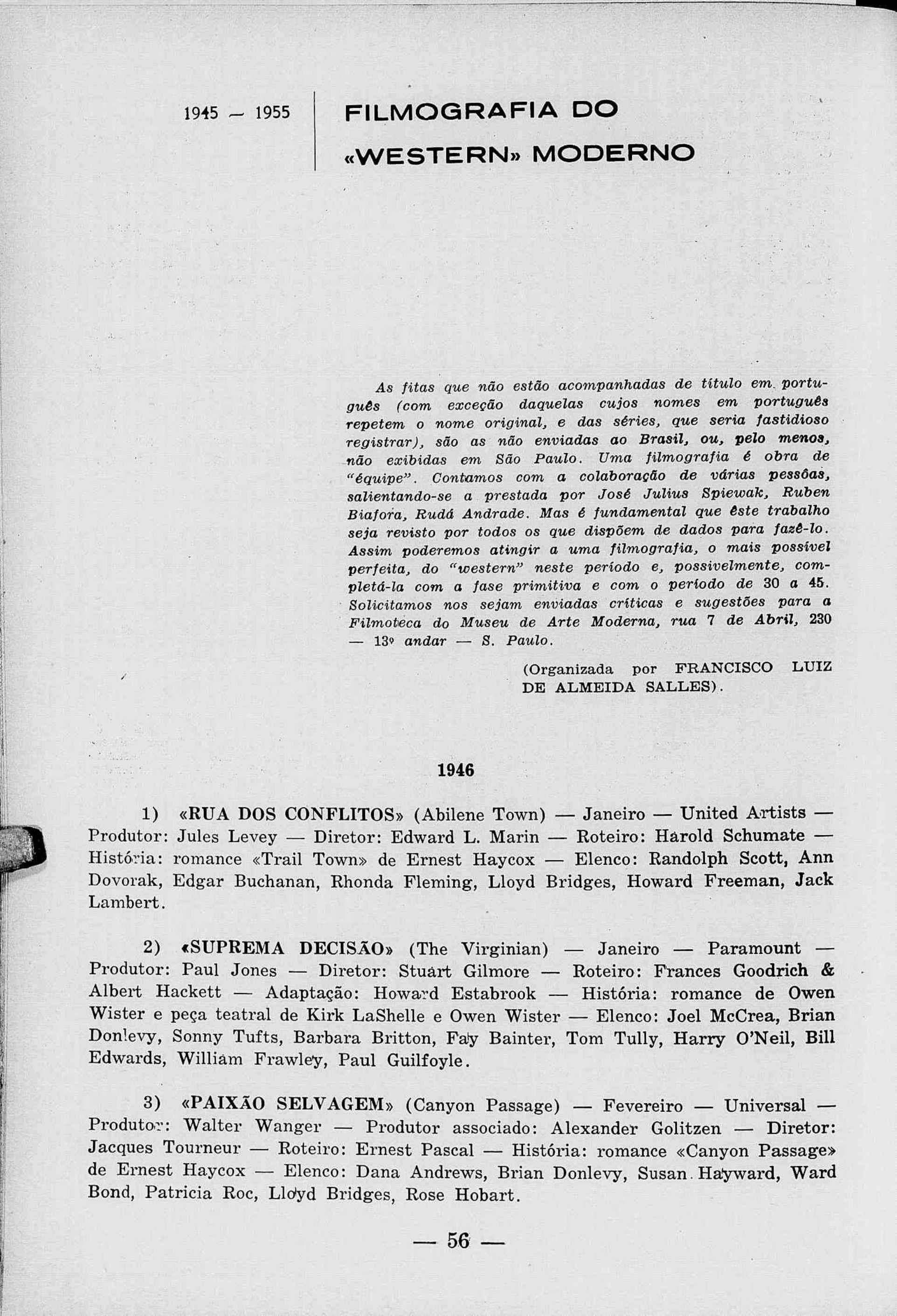
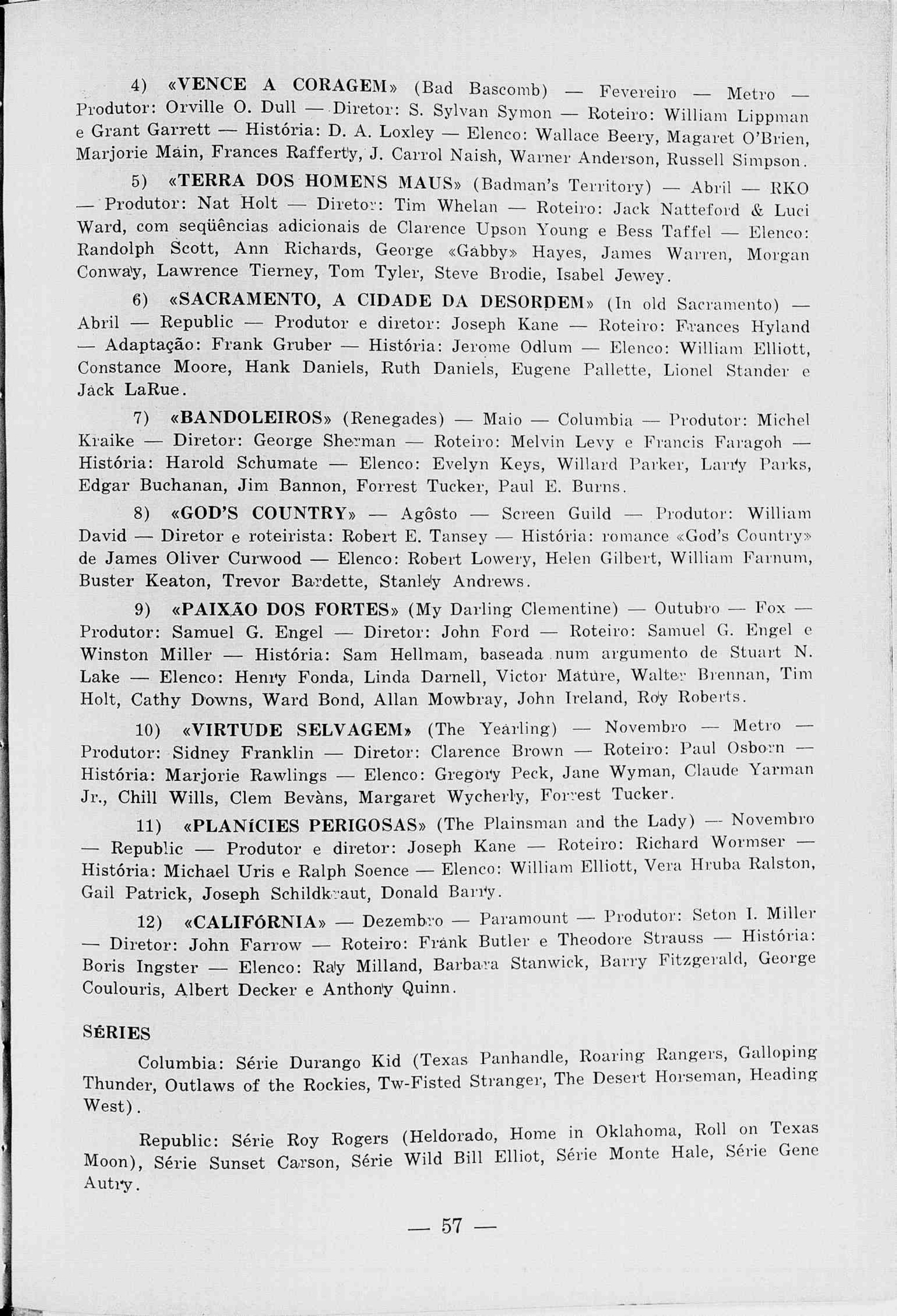
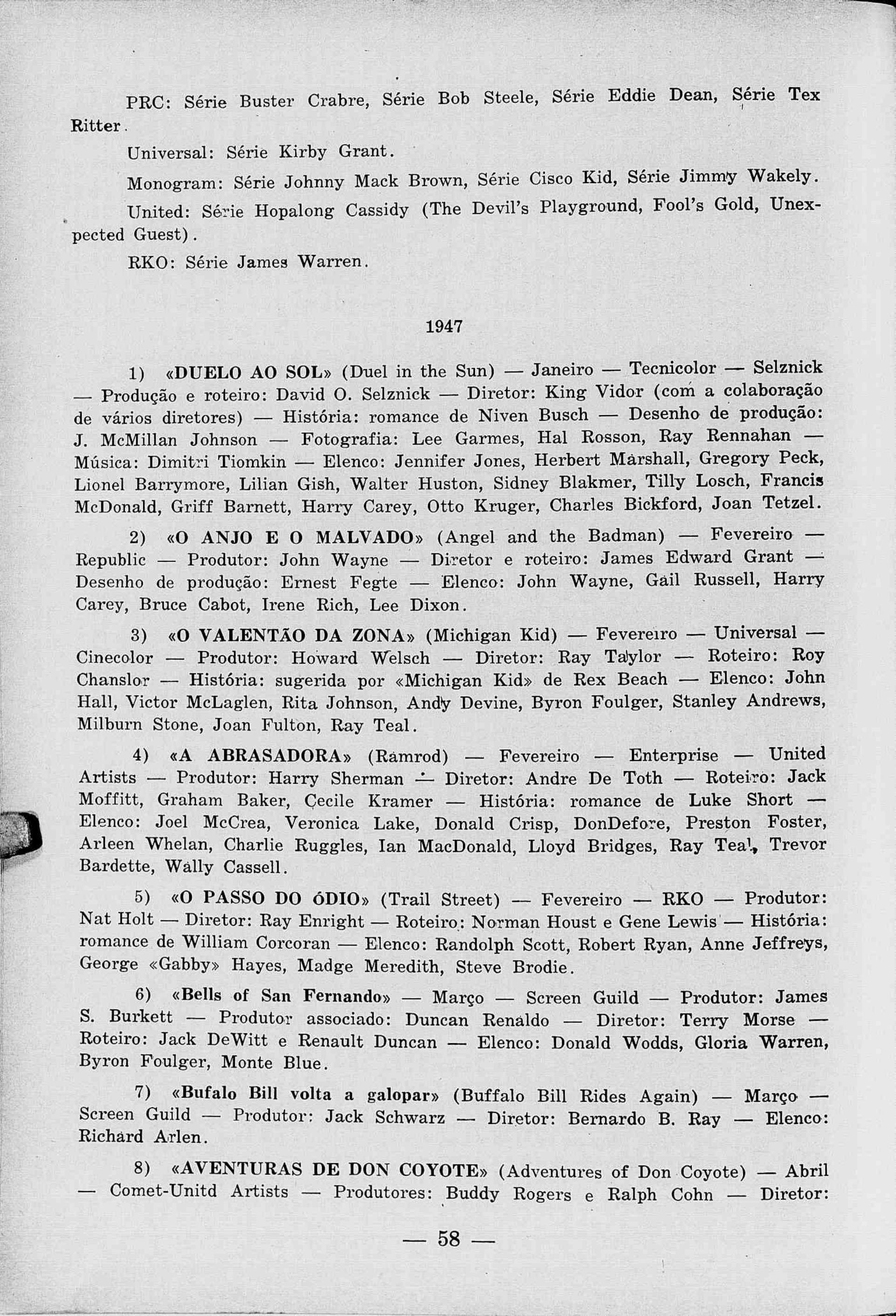
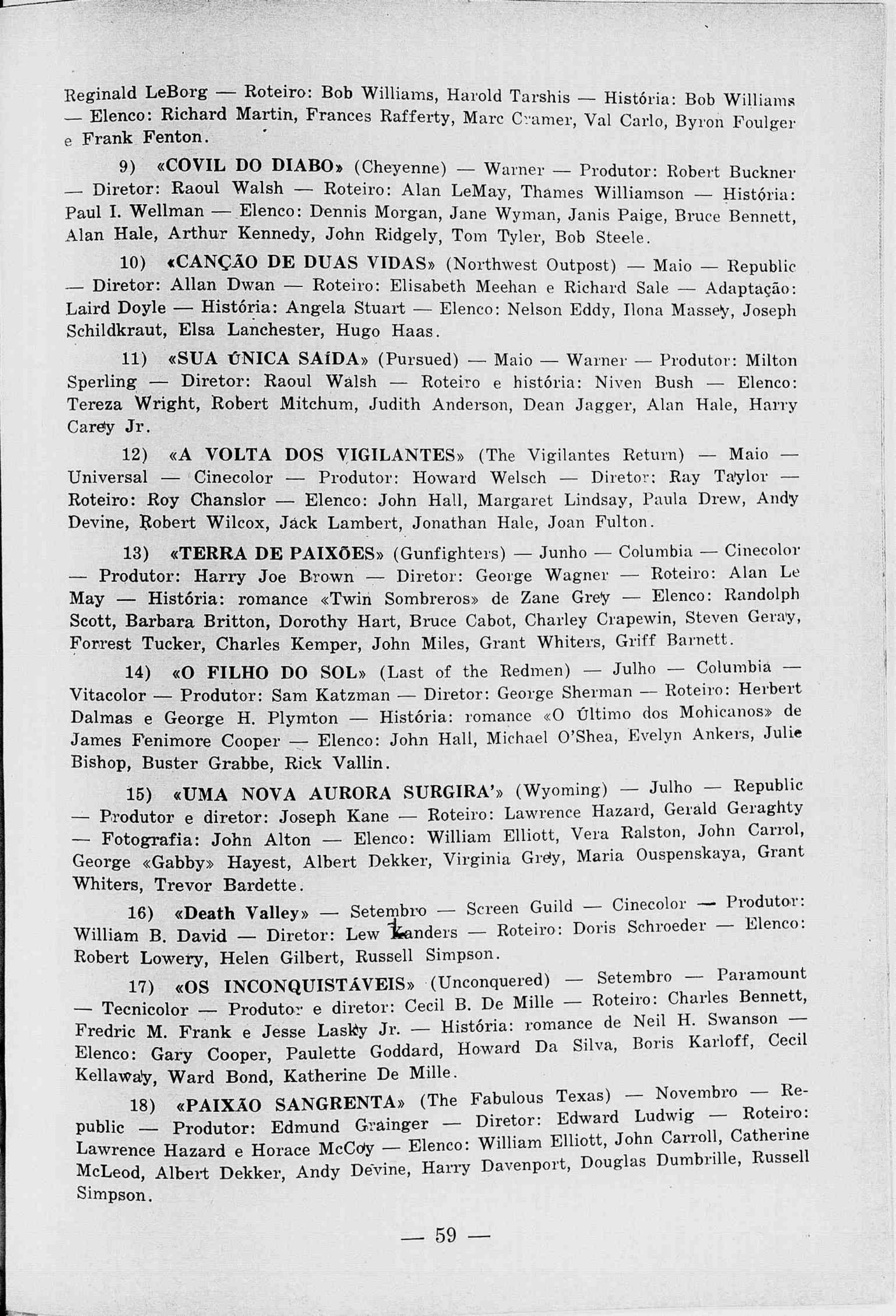
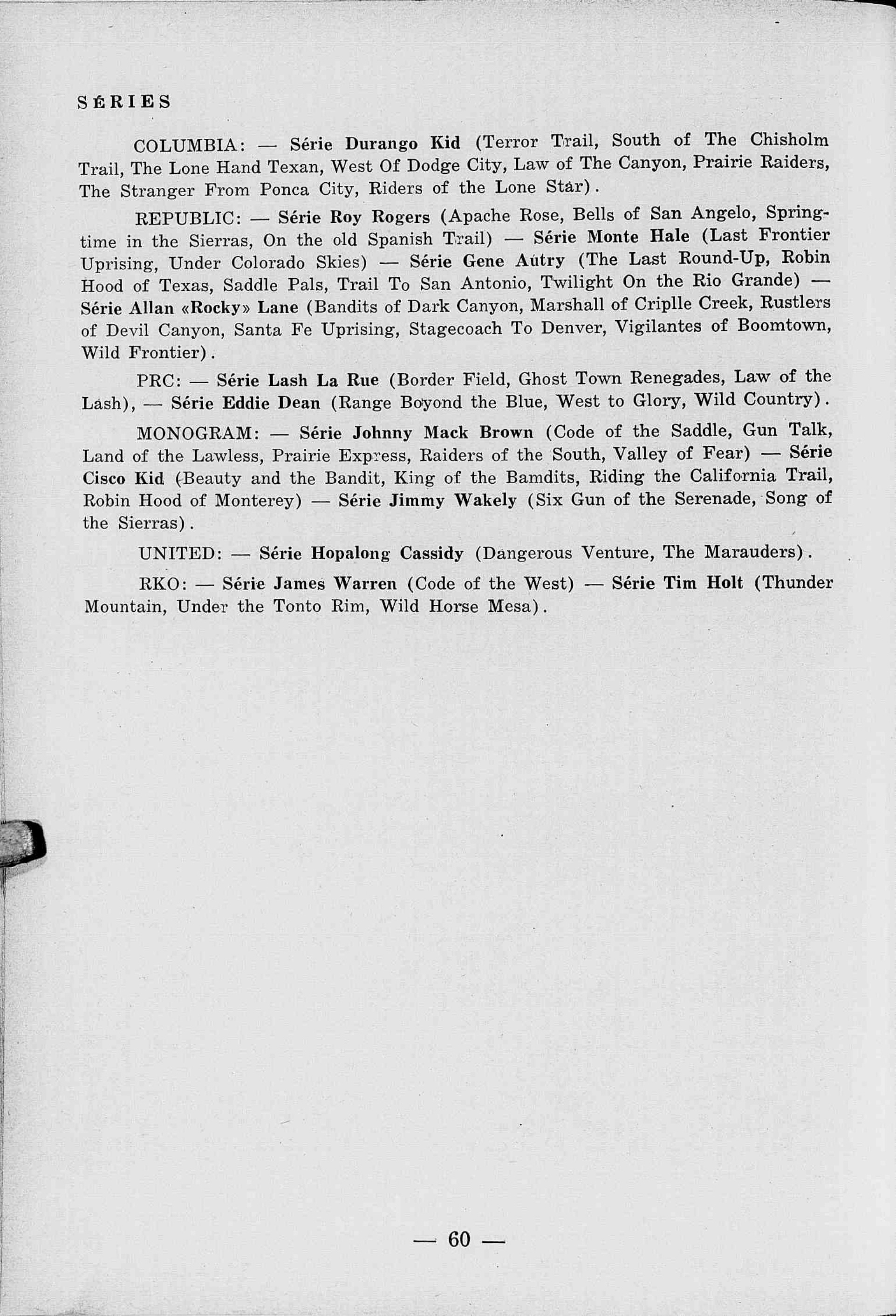
--------------------
E, para concluir, alguns faroestes importantes da segunda metade dos anos 1960/And finally, some important Westerns from the second half of the 1960s:
1965: Major Dundee
1965: The Sons of Katie Elder
1965: The Glory Guys
1965: Arizona Raiders
1965: Il ritorno di Ringo
1965: Per qualche dollaro in più
1966: Incident at Phantom Hill
1966: 7 pistole per i MacGregor
1966: Django
1966: Savage Pampas
1966: The Texican
1966: Nevada Smith
1966: The Shooting
1966: Le colt cantarono la morte e fu... tempo di massacro
1966: Tiempo de morir
1966: The Appaloosa
1966: Ride in the Whirlwind
1966: The Professionals
1966: El precio de un hombre: The Bounty Killer
1966: El Dorado
1966: Il buono, il brutto, il cattivo
1967: Quién sabe?
1967: I crudeli
1967: Gunfight in Abilene
1967: Se sei vivo spara
1967: La resa dei conti
1967: Hombre
1967: 40 Guns to Apache Pass
1967: Chuka
1967: The Last Challenge
1967: A Time for Killing
1967: Stranger on the Run
1967: Hour of the Gun
1967: Custer of the West
1967: Faccia a faccia
1967: Will Penny
1967: I giorni dell’ira
1968: Day of the Evil Gun
1968: Journey to Shiloh
1968: Corri uomo corri
1968: Joe... cercati un posto per morire!
1968: Il grande silenzio
1968: C’era una volta il West
1968: Lonesome Cowboys
1968: Il mercenario
1968: The Stalking Moon
1969: 100 Rifles
1969: O Dragão da Maldade contra o Santo Guerreiro
1969: True Grit
1969: The Wild Bunch
1969: Guns of the Magnificent Seven
1969: Meu Nome é Tonho
1969: A Time for Dying
1969: Ehi amico... c’è Sabata. Hai chiuso!
1969: Paint Your Wagon
1969: Tell Them Willie Boy Is Here
1969: Gli specialisti
--------------------
As aulas seguem até o dia 20 de janeiro de 2026/Classes continue until January 22nd, 2026.
INSCREVA-SE (para as aulas em português)/SUBSCRIBE (for the English speaking classes).
No posts
Comments
Nothing yet. Say the first thing.
Sign in to join the conversation.