
The Founder’s Own Words, Finally Available
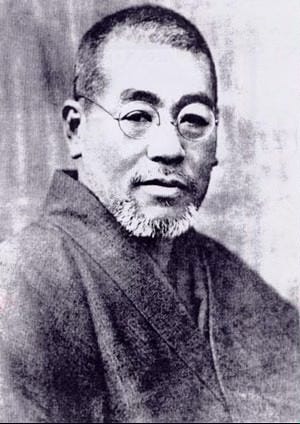
For much of Reiki’s history outside Japan, practitioners relied on lineage memory, partial translations, and teaching stories to understand what Mikao Usui actually taught. That situation has changed in recent years.
With the publication of Reiki – A Journey to Oneness with the Universe: Early Documents and Practices of Usui Mikao Sensei’s Reiki Therapy, Olaf Böhm made high-quality photographic facsimiles of the earliest known Reiki documents widely available. These are not interpretations or summaries. They are the original printed materials used by the Usui Reiki Ryoho Gakkai in the 1920s and 1930s, some of them printed when Usui was still alive.
For the first time, practitioners can read what Usui’s organization actually published, rather than relying on paraphrase or institutional memory. This matters because one of these documents speaks directly and unmistakably about how Reiki should circulate in the world, and why restricting it creates harm.
That booklet is called the Kōkai Denju Setsumei, usually translated as Explanation of the Public Transmission.
Where the Public Transmission Fits
The Kōkai Denju Setsumei did not circulate on its own. It was one of a small collection of writings, called the Hikkei, that supported early Reiki training. These included the Reiki Precepts, a public explanation of the method, a treatment outline, and a collection of Meiji poems. They were never meant to replace practice or teaching. They functioned as reference texts within a living training environment.
The Public Transmission booklet plays a specific role within this collection. It does not teach technique. Instead, it explains why Reiki was meant to be taught openly and how Usui understood its responsibility within society.
What Usui says here is clear, and often surprising to modern readers.
Usui’s Rejection of Monopoly and Insularity
In the Kōkai Denju Setsumei, Usui directly criticizes the custom of keeping effective methods within a single family or passing them down only to insiders. He writes: “In the past, many healing methods were kept secret and passed down only within families. But in today’s society, this way of thinking is no longer appropriate.” He then explains why this is no longer acceptable:
“Anything that is useful to human life should be shared openly.”
Usui is not speaking only about secrecy in the narrow sense of hidden teachings. He is addressing a broader pattern, where methods that genuinely help people become confined within closed circles. Whether through secrecy, restricted access, or insider control, the effect is the same. What benefits human life is prevented from circulating freely.
Usui rejects this outright. Public transmission is not generosity. It is responsibility.
Direct Experience Without Imposed Authority
Usui emphasizes that Reiki does not require belief, endorsement, or acceptance of explanation in order to function. Again and again, he returns the reader to direct experience as the ground of understanding.
He explains that most people who come for treatment do not initially believe in the method. Only after receiving treatment and directly feeling the effect do they begin to trust it. Verification comes through experience, not through doctrine or explanation.
This matters because it removes the basis for imposed authority. If Reiki does not depend on belief, then no one needs to control belief. If it does not rely on explanation, then no one holds power by defining what others must accept as true. Authority cannot be claimed through interpretation, rank, or access to special knowledge.
In Usui’s system, authority rests in practice, conduct, and what consistently shows itself through experience. Reiki meets people directly, without intermediaries who claim exclusive understanding.
This is not accidental. It is part of Usui’s deliberate rejection of authority structures that depend on control, restriction, or personal prestige.
Ordinary People Can Practice
Usui is equally clear that Reiki is not reserved for a gifted few. He writes: “Reiki is not limited to people with special ability. Anyone can learn it.” Men and women, young and old, educated and uneducated are all capable. What distinguishes practitioners is not who they are at the beginning, but how they practice. This is structural equality. Reiki does not depend on status, titles, or insider identity. It was designed to be usable by ordinary people living ordinary lives.
Why This Still Matters
Usui understood a tendency that continues to appear in spiritual communities. Over time, practices can become insular. Access narrows. Interpretations harden. Authority concentrates in the hands of a few.
Reiki was meant to stand publicly, without monopoly or superiority. When it does, pressure drops. Persuasion becomes unnecessary. The practitioner returns to the simplicity of the hands. Experience speaks for itself.
Usui trusted ordinary people to grow through practice. He trusted direct experience more than explanation. He trusted that what genuinely helps human life should not be confined within closed circles.
That trust is the heart of public transmission.
An Open Conversation.
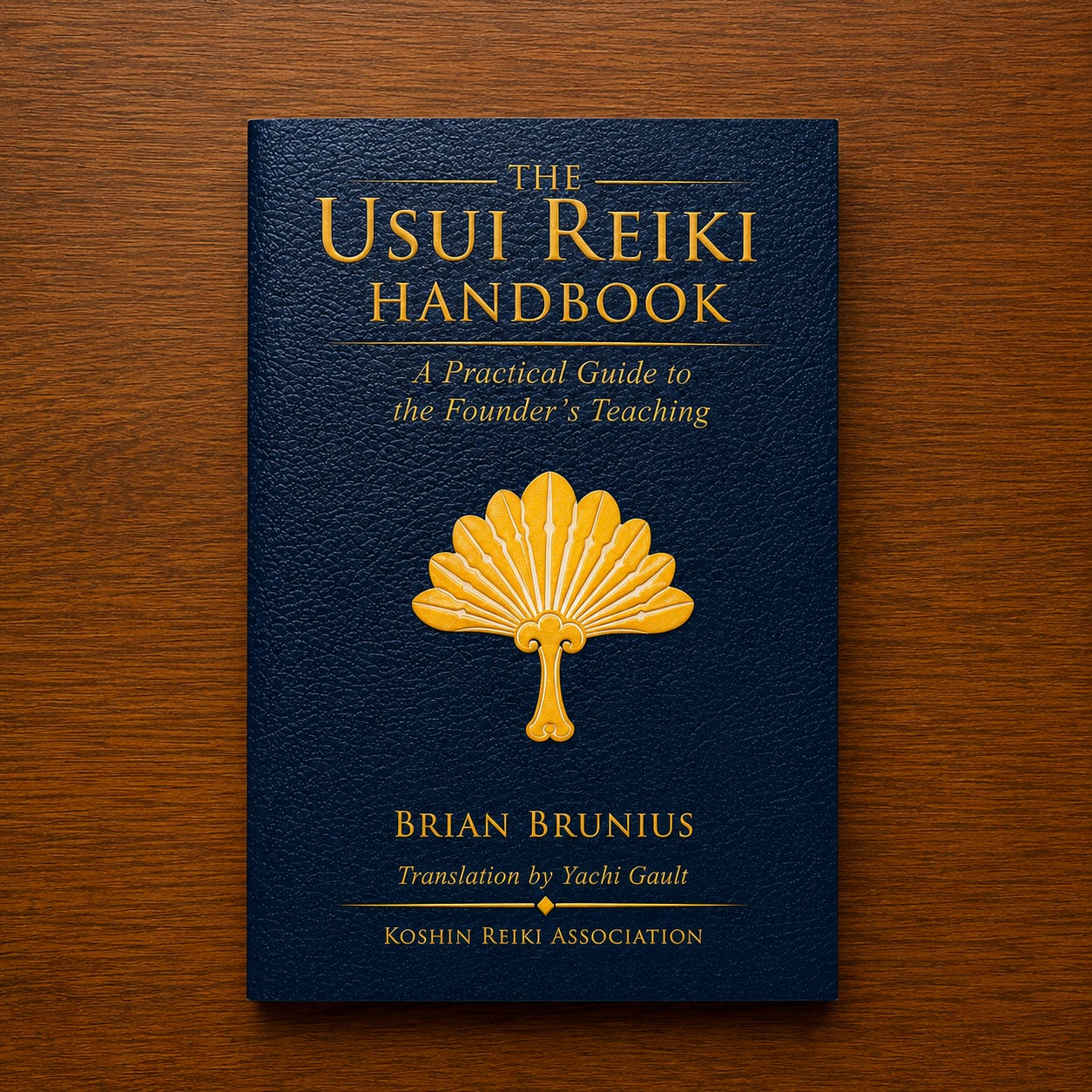
Today, Usui’s own words are becoming widely accessible. Texts once held privately can now be read carefully by anyone. This is an equalizing moment. It invites practitioners into direct relationship with the source of the practice, without intermediaries.
What this means for contemporary Reiki communities is a conversation worth having publicly and responsibly. How open is our transmission? How narrow are our circles? Where has access become restricted, not only through secrecy, but through habit, authority, or fear of dilution?
I believe practitioners should be able to study Usui’s teachings directly, not only through interpretation or lineage memory. That is one of the reasons I created The Usui Reiki Handbook, a carefully structured English presentation of Usui’s teachings, historical materials, and early Reiki practices designed for modern practitioners who want to engage the source material seriously and responsibly.
If this article speaks to you, you can find The Usui Reiki Handbook on Amazon.
Featured Source
Reiki – A Journey to Oneness with the Universe: Early Documents and Practices of Usui Mikao Sensei’s Reiki Therapy
by Olaf Böhm
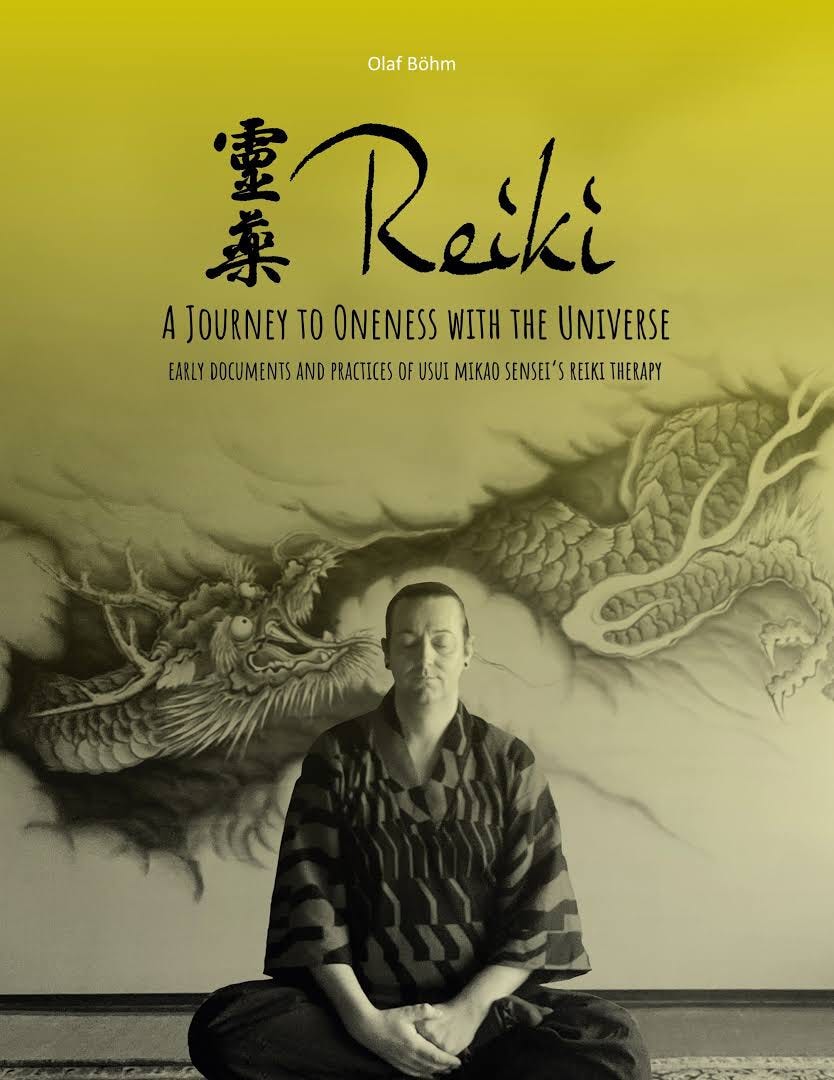
Olaf Böhm’s book is groundbreaking because it presents photographic facsimiles of the original Japanese Reiki documents, including the complete Usui Reiki Ryoho Hikkei. Rather than relying on paraphrase or lineage lore, Böhm makes the primary sources themselves available to modern readers, preserving original layout, calligraphy, and language.
For the first time, practitioners can study Usui’s words directly and see how Reiki was articulated at its source. This transparency fundamentally changes how authority, history, and practice can be understood.
For anyone serious about understanding Reiki at its source, Böhm’s work is an essential reference.
If you're interested in living with these questions, you're welcome to stay.
Comments
Nothing yet. Say the first thing.
Sign in to join the conversation.