
OK, fine… Globalization is not dead. Global trade remained ~58% of GDP in 2025, only modestly off its peak of 60.1% in 2008. But the political consensus in support of globalization is shattered, especially in developed economies. The world is rapidly shifting from efficiency-first integration to resilience-first fragmentation. Who or what is responsible, and what will it mean? Here are six “suspects.”
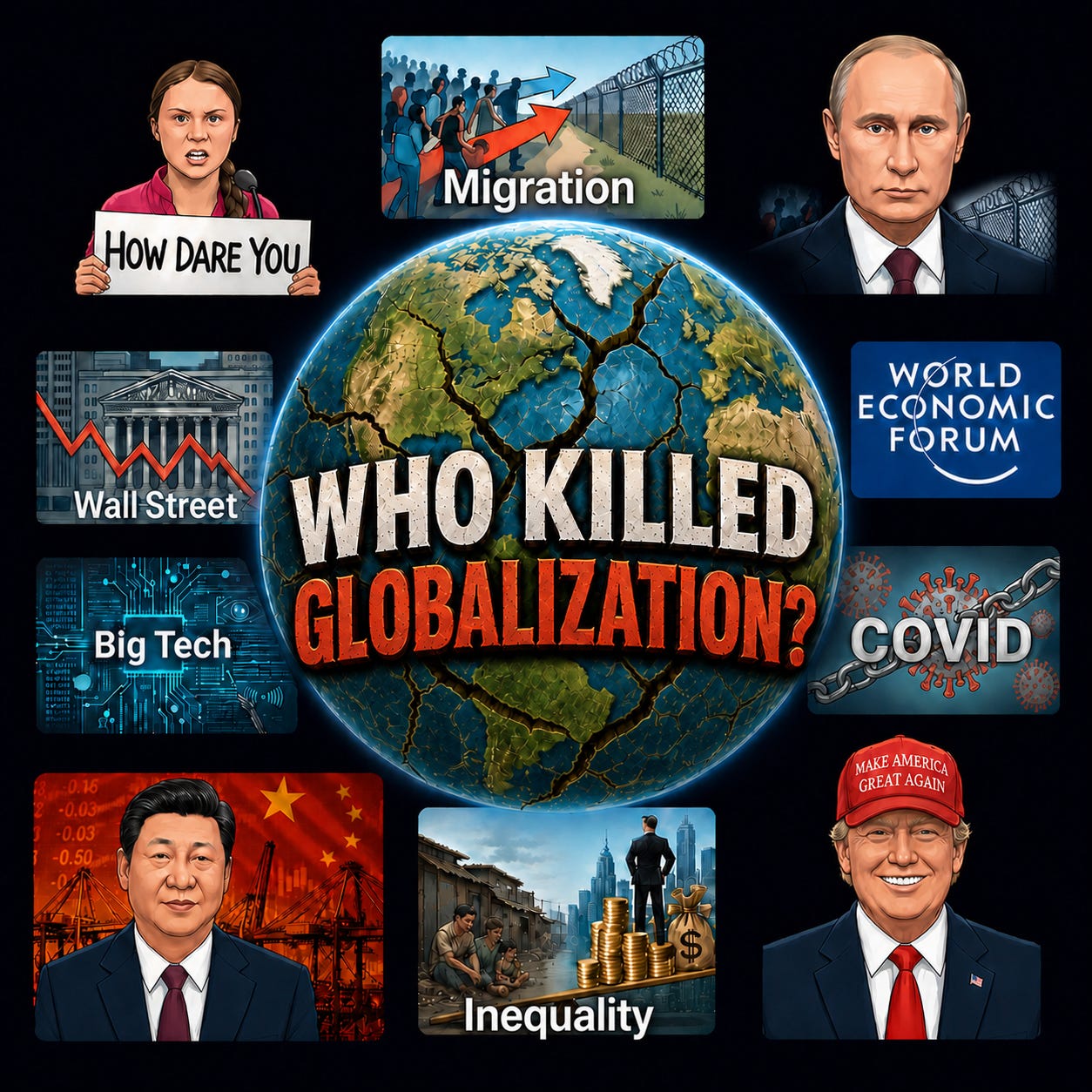
For many, China’s meteoric rise to dominate global manufacturing is the result of unfairness — playing by different rules. State subsidies, SOEs, forced tech transfer, stolen IP and currency manipulation are not what WTO architects envisioned in 2001. Many see China’s record $1.2 trillion surplus in goods trade in 2025 coming at the expense of their own manufacturers and workers, threatening to render the world ever-more dependent on Beijing and necessitating ever-greater protection & response.
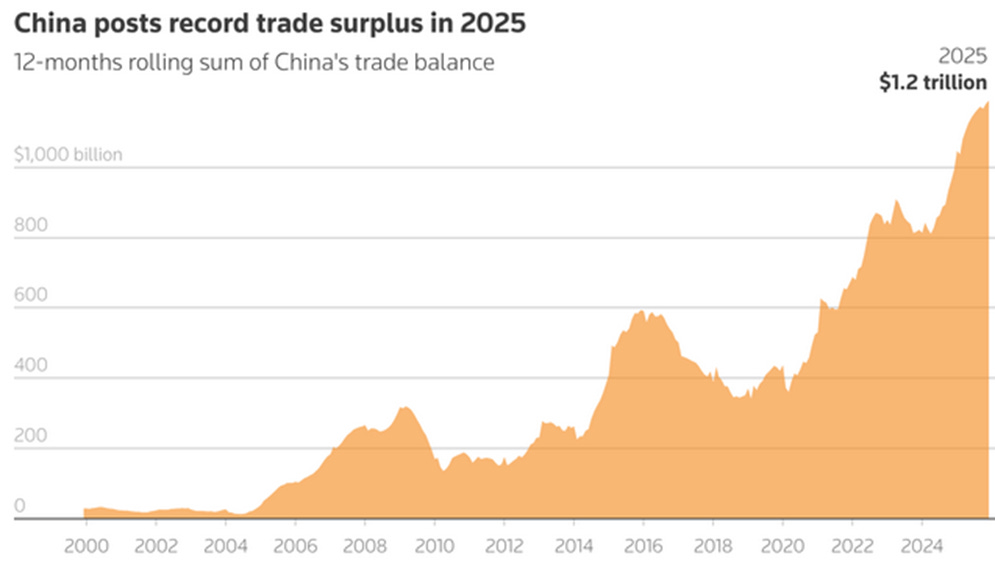
The architects of the global order designed a system that maximized aggregate welfare but often ignored distributional externalities. The elites who championed open borders for capital, goods and people pocketed the benefits (efficiency-driven profits, tax minimization, cheap labor, dynamic talent pools), while working-class communities absorbed the wage pressure, housing competition & cultural disruption without compensating investment or transition assistance. Western middle class voters increasingly perceive a system where the very rich (in the developed world) and very poor (in developing nations and immigrants) get richer while they get screwed. Populism anyone?
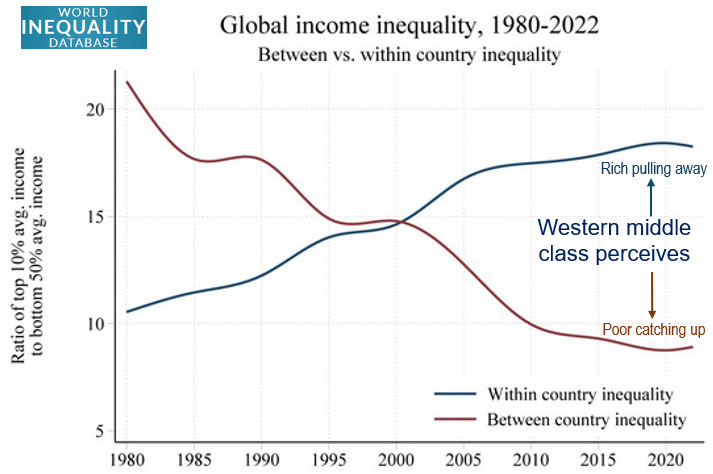
President Trump is a more of a symptom than a cause of anti-globalization backlash. Import protectionism had already grown 650% from 2008-2016, before Trump arrived on the scene, and it continued expanding after he first left office in 2020. Trump is certainly accelerating deglobalization in his second term — or at least decoupling from the U.S. “Liberation Day”+ tariffs, and now the ongoing stalemate in the Strait of Hormuz, are forcing companies and countries to reassess their global supply chains, critical infrastructure resilience and alliances.
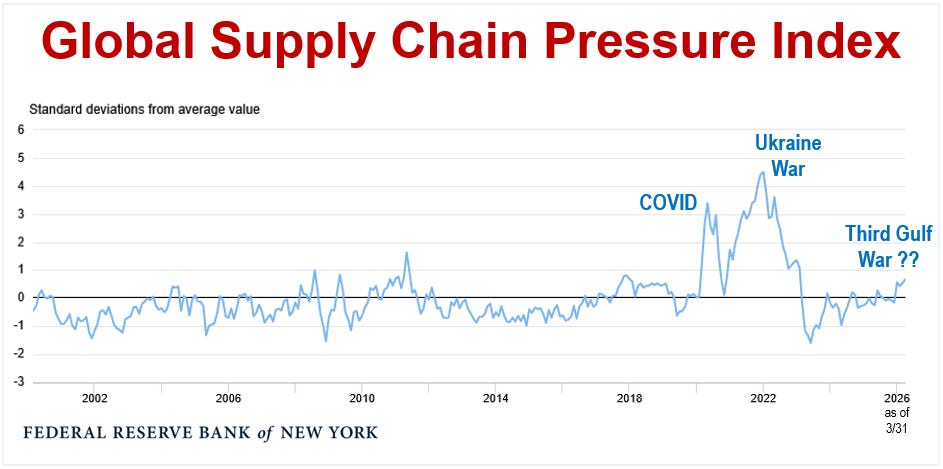
COVID exposed that just-in-time supply chains were just-in-time until they weren’t (PPE, baby formula, semiconductors). Putin’s invasion of Ukraine demonstrated how economic integration can create vulnerabilities as much as strengths (e.g. EU energy). Both systemic shocks exposed companies’ and countries’ dangerous dependencies and reignited levels of inflation not seen in decades, energizing nationalists and powering populism. The impact of the Third Gulf War remains to be seen, but the World Bank’s latest Commodity Markets Outlook (out this week) predicts a 24% surge in energy prices and 16% rise in overall commodity costs this year, the most significant spikes since Russia’s invasion of Ukraine in 2022.
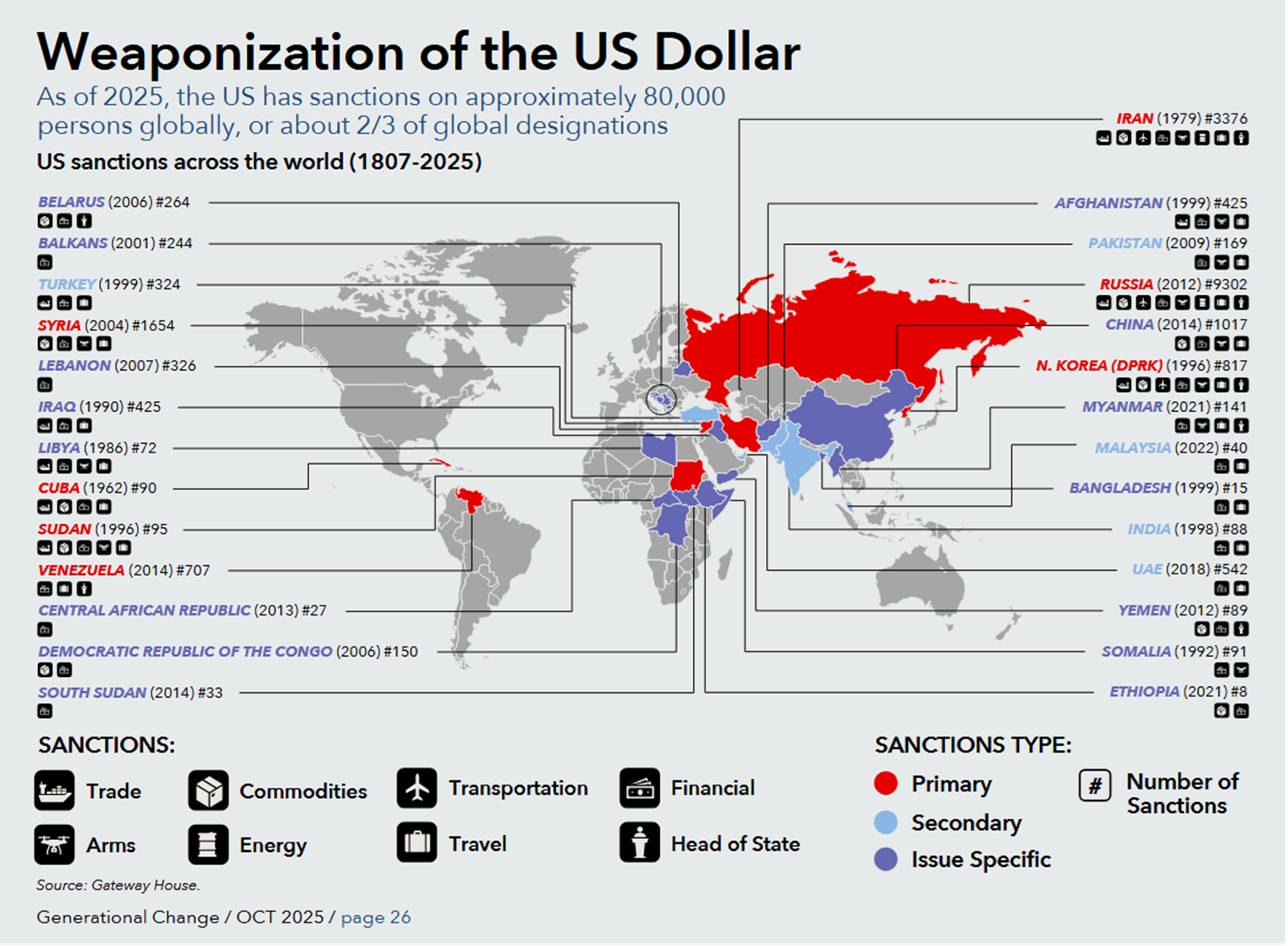
Globalization also weakened when major powers started treating trade as a tool for coercion, deterrence, and social change. Sanctions, export controls and investment screening pursued for foreign policy or societal goals, rather than economic advantage, nevertheless undermined global interdependence. After the 2022 freeze of Russia’s central bank reserves, for example, governments from Beijing to Riyadh to Delhi started hedging Western (dollar) exposure with record central bank gold buying, parallel payment systems, “dual circulation” strategies.
At the same time, the climate transition gave governments a “principled” reason to intervene in markets in ways that subverted globalization. Green subsidies, local-content rules, export restrictions on critical inputs and carbon-border measures made market access increasingly contingent on political alignment & regulatory compatibility.
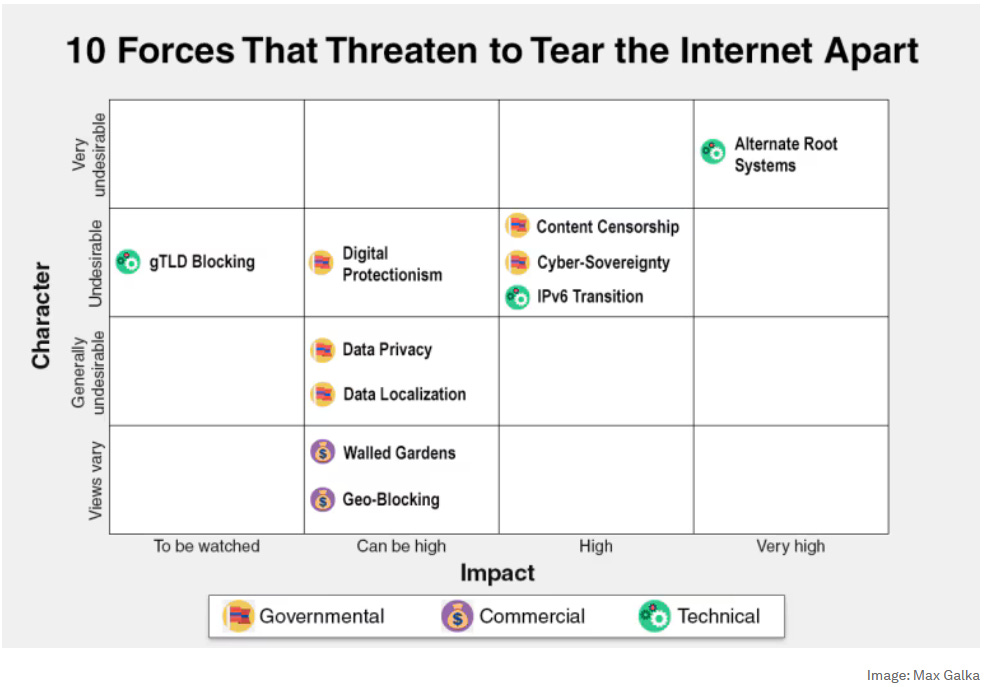
21st century technologies are both accelerating and undermining globalization. They accelerate cross-border integration by making more services tradable at distance, reducing the importance of geography, and increasing the role of software, data, and remote delivery in world commerce. At the same time new technologies undermine the old pro-globalization coalition in three ways: (a) social media weaponizes economic anxiety, giving grievance a megaphone and amplifying populist politicians; (b) automation accelerates the same labor-market dislocations caused by trade; and (c) platforms themselves became geopolitical objects — TikTok divestiture, Huawei bans, Starlink support for militaries, AI tech stack competition.
The ever-growing economic power, social centrality and security implications of Big Tech all-but-guarantee increasing government regulation, market intervention and nationalization of underlying technologies.
If globalization dies it’s more likely a suicide than homicide, undone by its own distributional, governance and security failures. It is more likely trade continues expanding but on regional lines, with policymakers aiming to reduce vulnerabilities, hedge dependencies and reassess priorities (e.g. more defense spending; build new ports; fund food and energy alternatives). Geopolitics for the foreseeable future is the race for resilience and leverage, with just-in-case nationalism replacing just-in-time globalism as the prime directive. Businesses and nations need to adjust and adapt… quickly.
The great Amy Walter — editor-in-chief & publisher of the Cook Political Report (subscribe) — joined me this week to discuss the midterm elections, speaking to our largest audience ever just four hours after the Supreme Court’s redistricting decision and 45 minutes after the Florida legislature voted for a more GOP-friendly map.
Thanks for reading! Please share Bruce Mehlman's Age of Disruption with friends and family who might enjoy it. It’s free!
No posts
Comments
Nothing yet. Say the first thing.
Sign in to join the conversation.