
It’s a commonplace now, and not just on the right, that the American entertainment industry is dead, unable to produce anything original, nothing but crap. Hollywood can only produce movies or TV shows that started as video games (Halo, The Last of Us, Super Mario Bros) or that are remakes of previous movies. Sometimes it does both, as when the 1990’s Super Mario Bros , made from a video game, was remade as another movie in 2023. Hollywood revenues have fallen to a 27 year low (excepting the Covid lockdown years).
Again, not only on the right, many of the remakes deliberately recast classic characters as people of another race, and when done just for the sake of DEI these are usually flops. Good Fortune, the new, third, version of 1978’s Heaven Can Wait (itself a remake of the 1941 Here Comes Mr. Jordan, a friend older than me has pointed out to me) is a mediocre B (B- ?) movie, maybe worth seeing if you get a senior discount or go to the afternoon matinee, and I suppose it counts as a DEI remake, with Azis Ansari in the Warren Beatty role of a man who is moved by celestial forces into the life of his wealthy boss (Seth Rogen). It’s a multicultural cast, with Keanu Reeves as the klutzy angel who messes up this assignment and Sandra Oh as the higher level angel who tries to guide him to clean up the mess. Seth Rogan plays the person of good fortune whose life Azis gets to take over. The movie had a $30 million budget and seems to have pulled in about $12 million in the first week, despite good (80%) ratings on Rotten Tomatoes from both critics and movie goers. It’s just not very good - except when compared to everything else on screen this year.

None of the three main actors - Rogen, Azis, or Reeves - is particularly interesting to watch here. Rogen is a boring dough boy (physically and financially), with the movie incompetent to explain how he became wealthy as a “tech bro,” leaving us to believe it is just luck (“good fortune”). Azis is a whiny little shit who can’t figure out how to achieve anything or find a career he would at least enjoy, an envious little homunculus with whom we are supposed to identify. Reeves character is ripe for comedy but Reeves doesn’t know how to deliver it - an angel who’s a moron, assigned to nudge people to look up from their phones when they are about to crash their cars, who decides to switch the lives of Rogen and Ansari, in his angelic belief that when Ansari sees all the difficulties of Rogen’s life in a luxurious glass house atop a Hollywood hill, he will begin to appreciate his own precious life.
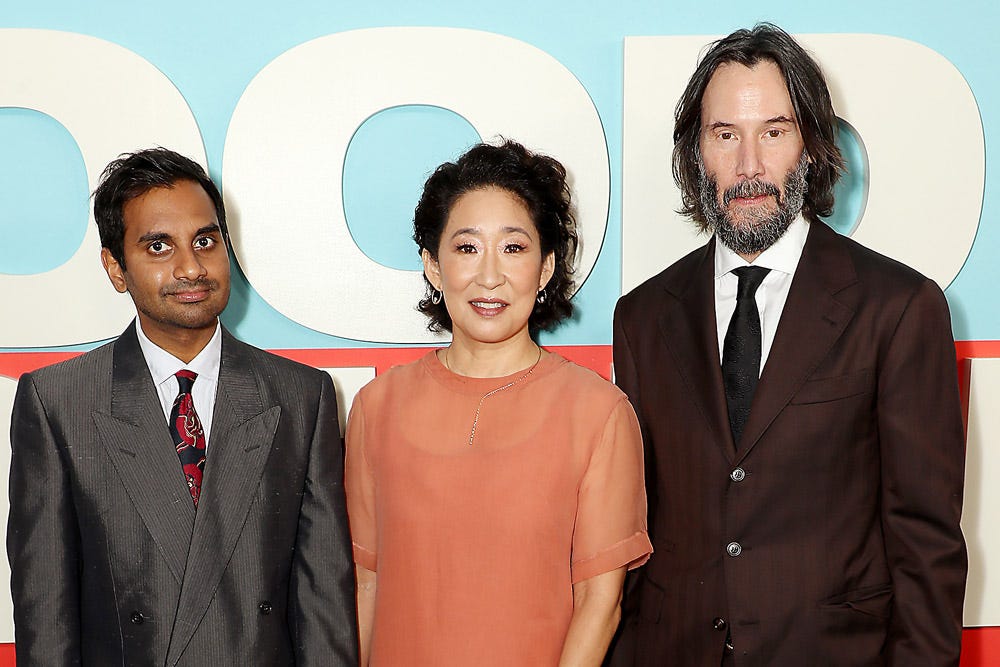
It doesn’t work of course. Reeves is stripped of his wings and powers by his angelic manager, Sandra Oh (the only actor who does anything with her part in this film). While human, Reeves, unskilled and homeless, is taken in by the now wealthy Ansari (who also takes in Rogen, now employed as his personal assistant). All the women - not particularly attractive actresses (I guess the budget was too low for that) - want to sleep with Keanu Reeve’s character, which given how haggard he looks, requires a suspension of disbelief that isn’t humanly possible. This is not the Keanu of The Matrix or The Day the Earth Stood Still.
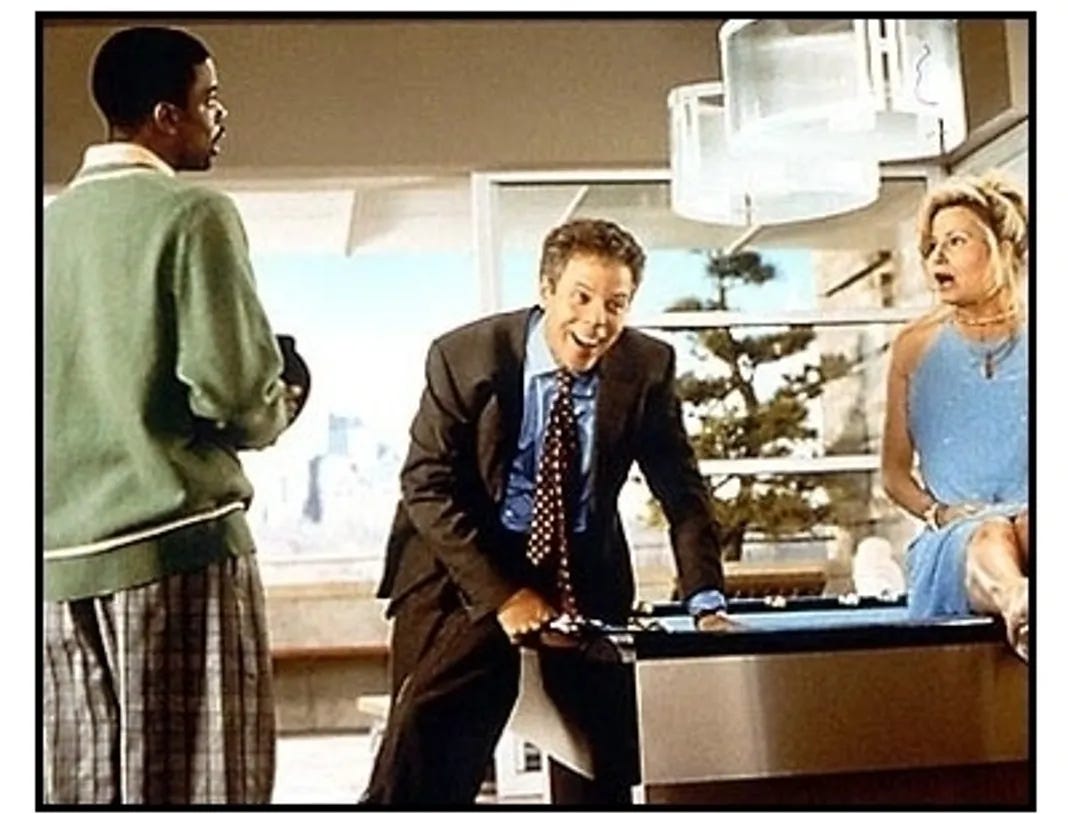
It’s interesting that this mediocre flop is the second remake of Heaven Can Wait. Chris Rock’s Down to Earth (2001) was far superior. Rock’s mainly black cast remake of the black comedy Death at a Funeral was also at least as good as the British original. Some creatives have realized that you can have all the characters you want who aren’t straight or white or male AS LONG AS YOU ARE FUNNY. Max Mutchnik, the co-creator of Will and Grace, drew a distinction between his show and the previous gay sitcom, Ellen, by saying that one difference was that his show was funny, telling the LA Times: “Ellen’s problem was not its gay quotient but its political agenda. And Kohan and Mutchnick plan to steer clear of an agenda, saying the show’s primary raison d’etre is to entertain.” Good Fortune is written by, directed by, and stars Aziz Ansari, who has never been that funny. Heaven Can Wait was written by Elaine May, directed by Buck Henry, and starred Warren Beatty. This is plagiarism, a cheap copy sold out of the trunk of a car.
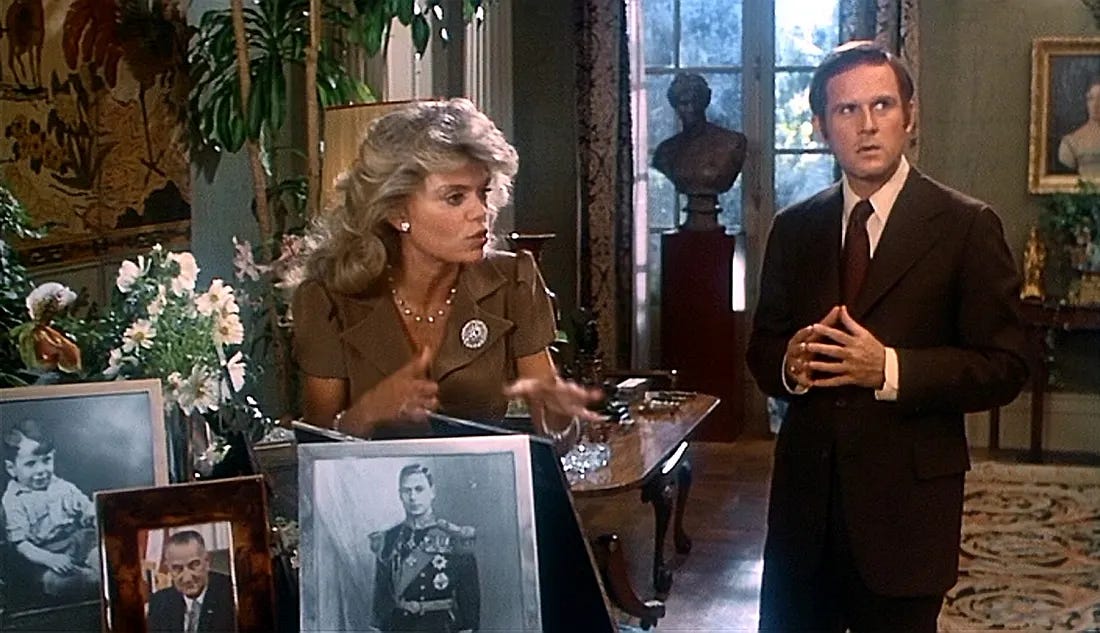
Good Fortune’s bad fortune is that it grinds a political ax, with particularly ignorant politics, at least as much as it tries to be funny. In the Rock and Beatty versions of this tale the poor but virtuous soul dies too early because heaven makes a mistake (Eugene Levi is the far funnier incompetent angel in the Rock version) and that soul is transplanted into the body of an old wealthy white man after the latter is murdered by a wife or paramour (Dyan Cannon for Beatty and Jennifer Coolidge for Rock) looking to inherit an estate. Rogen is still alive when he switches places with Ansari (eliminating one role for an actress, as there is no murderess). So instead of the protagonist seeking to do good with his new found money, perhaps find a new host body, and get the girl he was interested in before he died, Good Fortune devolves into a debate about who deserves the “good fortune” of the wealth, with an envy-based plea that the wealthy get their money by exploiting Amazon and Door Dash style workers. There is one scene where newly-human Angel Reeves gets his first paycheck, sees all the deductions for state and federal taxes and FICA, and complains that he can’t live on this. But at various points Rogen, Ansari and Reeves end up in Latino discos and musing on how the simple things like tacos are the best things in life. At no point in the rant does anyone have the thought that unlimited immigration of unskilled laborers might be depressing the wages of low skilled Americans, or might generate conditions where a Bezos could have Amazon drivers pissing in bottles as they drive in order to make deliveries on time.
An industry that gives a mediocre midwit comic $30 million to make an uninformed political rant deserves to die.
A shorter version of this review was published earlier this week at SpliceToday.
Comments
Nothing yet. Say the first thing.
Sign in to join the conversation.