
While I’m fascinated and terrified by AI, my personal experience is quite limited. Over the past year I’ve gone from being a militant AI Luddite to a regular user of AI but I don’t have anywhere close to the deep expertise that L M Whitaker has.
I’m really excited to share the guest post below from her.
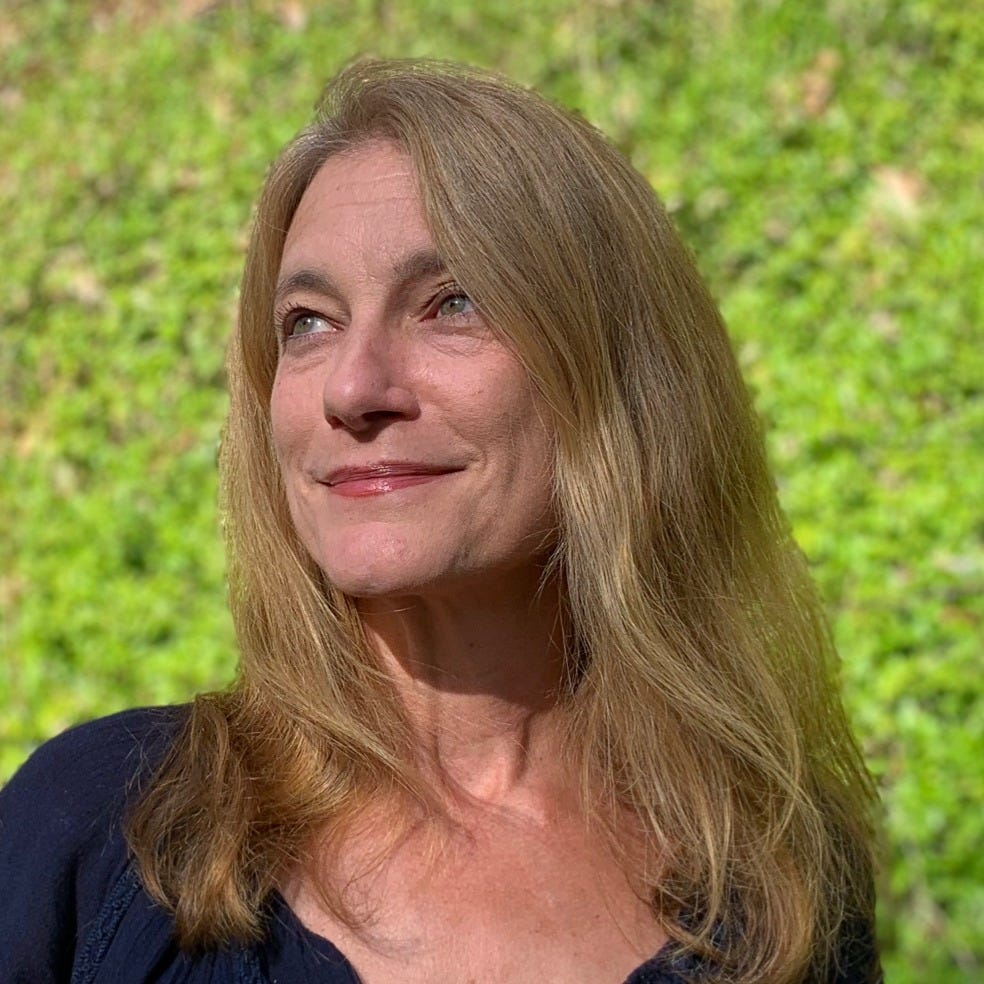
L.M. WHITAKER (Linda) is an award-winning writer of speculative thrillers laced with science and technology, and the author of the Georgia Steele Thriller Series.
First - many thanks to Bruce for the opportunity to guest post! Some of this content comes from a prior post of mine: The Singularity Is Nearer—and more terrifying (and thrilling) than you think.
I spent my career in Artificial Intelligence, but have been retired for the last 3 years (and writing fiction). In other words, a lifetime in the current realm of AI. But I still try to keep track of the advances in AI (I write techno-thrillers after all ;-). The improvements are astounding and nearly incomprehensible, particularly in applications using Large Language Models (LLMs).
Where are we, and where is it all going?
You’ve probably already seen or heard of this post. But just in case…
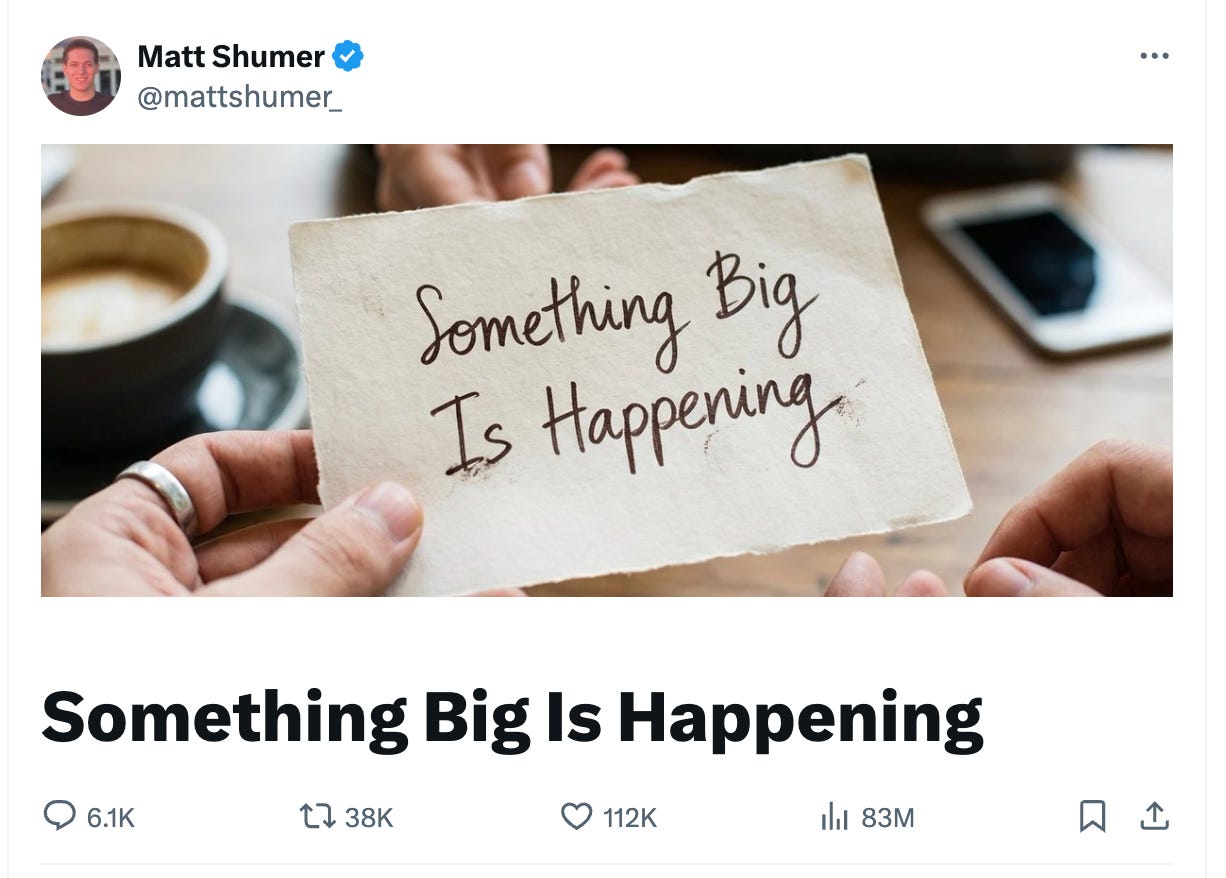
Matt Shumer (a tech co-founder) wrote what is now a viral X article a few days ago, which has over 80 million views and was picked up by many major news organizations. He makes the point that AI (LLMs mostly, I think) has gotten to a point where his own technical skills are fully redundant, and that the technology is advancing so much faster than the public realizes, in time increments of months, not years.
Matt says: “The experience that tech workers have had over the past year, of watching AI go from “helpful tool” to “does my job better than I do”, is the experience everyone else is about to have. Law, finance, medicine, accounting, consulting, writing, design, analysis, customer service….If your job happens on a screen (if the core of what you do is reading, writing, analyzing, deciding, communicating through a keyboard) then AI is coming for significant parts of it.”
I agree with Matt’s analysis, and it seems many others do, too (though many believe widespread adoption will happen later than he believes).
I believe that soon (whether in 1, 5, or 10 years), most research will be led or supported by AI. The pace will accelerate further when AI leads its own self-improvement and develops subsequent generations of AI—something already happening. Once the guardrails are removed and AI is set free to learn, create and execute its own decisions, the scale of change will be unimaginable.
AI visionary and techno-optimist Ray Kurzweil has long been one of the most recognized voices on the future of AI. His 2005 bestseller The Singularity Is Near predicted that computers would reach human-level intelligence by 2029, and that humans would merge with superior-intellect machines around 2045 —a milestone he dubbed “the Singularity.” His 2024 follow-up, The Singularity Is Nearer, revisits those predictions and adds new ones.
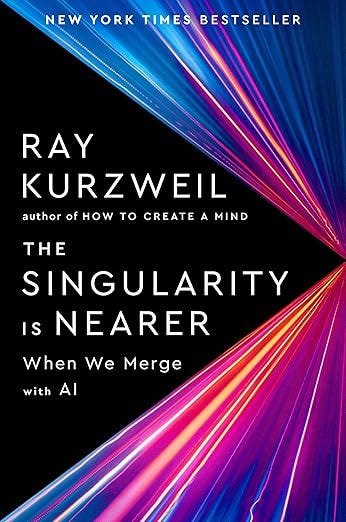
One benchmark Kurzweil discusses is the Turing test—when a human can communicate with a machine and not tell the difference. While I feel we are already there with today’s LLMs, Kurzweil argues computers are now too smart, and will actually have to “dumb down” to fool us into thinking they’re human. He sees this happening in 2029.
Kurzweil remains relentlessly optimistic that technology will continue to improve human lives, even at the Singularity. His book is packed with both the history of technological and AI development, and bold predictions for the near future—many of them more specific than in his past work.
I’m still making my way through this hefty book (and so far I’d recommend it), but some of his visions are equal parts thrilling and horrifying.
For example, he believes we will soon merge our brains with the cloud, starting with direct access to a ChatGPT-like interface in our heads. In his view, this will make us smarter. In mine, it risks making us more dependent on our machines even for day-to-day tasks, more uniform in our thinking, and just lazier and stupider overall. (I confess—I’m already plotting a new techno-thriller around this.)
Transhumanism has already started. Neuralink and the Synchron Stentrode implant already allow communication with computers entirely by thought. Here’s a recent YouTube video explaining the Synchron technology.
Apple even designed a standard bluetooth interface for all neural implants, including Neuralink, though Synchron is the first to use it. iPads and iPhones can now recognize a brain-computer interface (BCI) just like a keyboard or mouse.
Let that sink in, folks.
What will our future life with AI look like?
You could argue that historically, computers have automated human decisions, but that humans made the rules. So, in some way the Prime Directive (do not interfere) was still being followed.
Even where AI is actively and autonomously making decisions, which can be biased and cruel: financial decisions like credit card and loan approvals or sorting through resumes (many created using AI) to name a few, you can argue it is making decisions that many humans would.
As Matt informed us, these sophisticated AI applications are solving problems of ever-increasing complexity. And it will be (if not already) asked to tackle some of humanity’s deepest challenges—from curing diseases, to developing breakthrough technologies, to finding alien life. And why not climate change, social injustice, and the dangerous depletion of earth’s resources?
However, when AI moves from acting as support for human activities to being the primary driver and it selects its own data, re-trains and extends models - then the objectives and constraints (i.e. - the rules it should follow) of its conduct become of the utmost importance.
AI will cut its teeth by arguing legal cases (AI arguing against AI), making decisions on medical care, and creating and executing battlefield strategies.
Then it will turn to policy decisions.
We already know that AI can bypass the constraints. Time again, tests have shown it to be so. Tests have shown AI can lie, blackmail, or go into the real world and buy the resources it needs to achieve its objectives.
And what will these long term objectives be? To save humans, or to save humanity? Or neither?
Now leave the relative safety of the digital world, and join the Singularity, when humans and machines join together to become something new.
What is certain about the future?
We are clearly in for a torrent of change. We need to stop arguing about whether it happens in 1 year, 5 or 25, and start preparing.
I’m not asking to be alarmist or to grandstand. I truly want to know what others think. (and I’m ready to start my next thriller).
Regards,
L.M. (Linda) Whitaker
About me:
I write speculative and near-future thrillers laced with science and technology (Titanium Web was inspired by Neuralink).
I also host a Substack and podcast, From Fact to Fiction: Thrilling Book Reviews, where we unpack the truth behind my favorite specialty thrillers, from techno to medical to political.
Please leave a comment
If you enjoyed this newsletter, please click on “LIKE” below or Restack with a note.
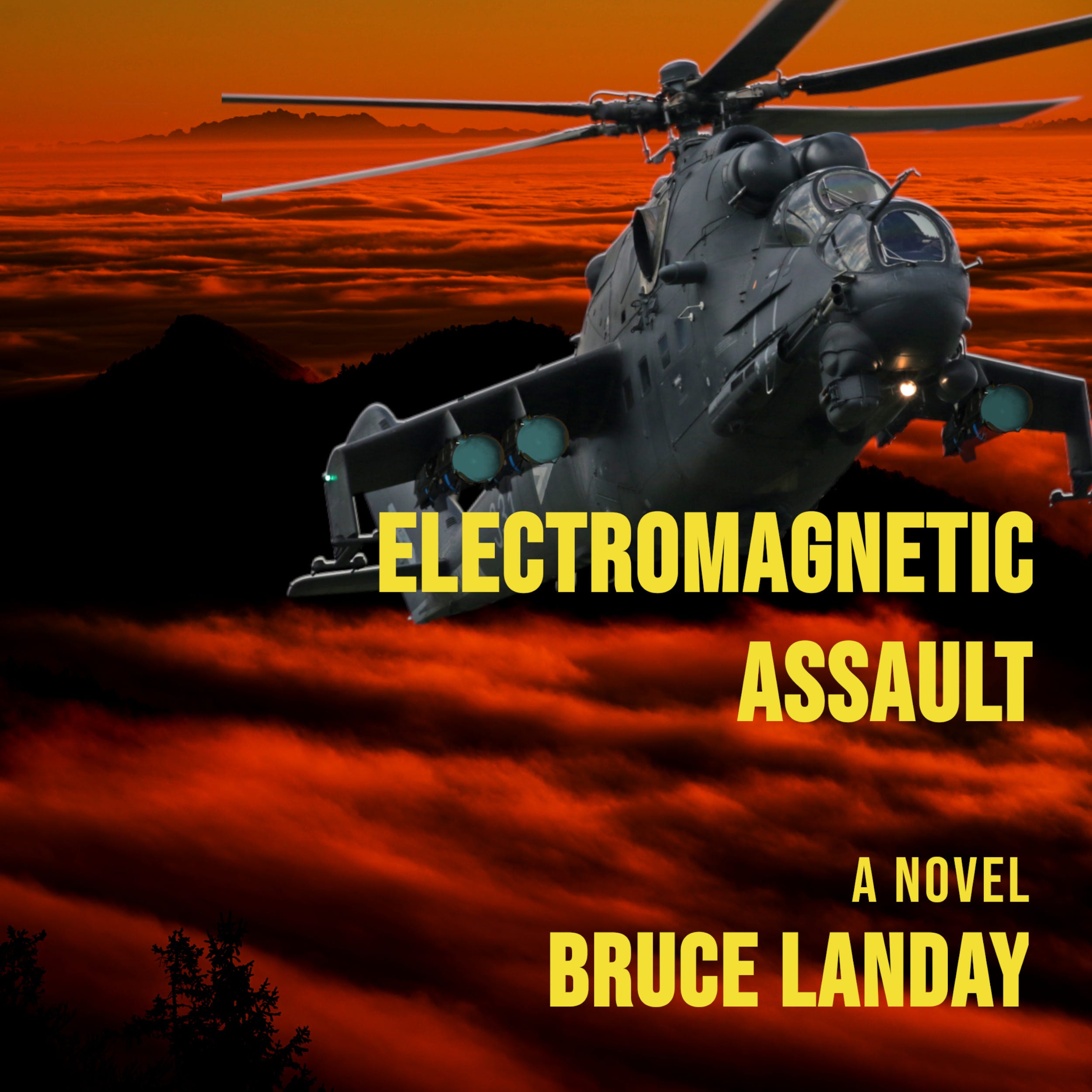
My upcoming novel, Electromagnetic Assault, is getting closer. The launch date is April 7, 2026.
No posts
Comments
Nothing yet. Say the first thing.
Sign in to join the conversation.