
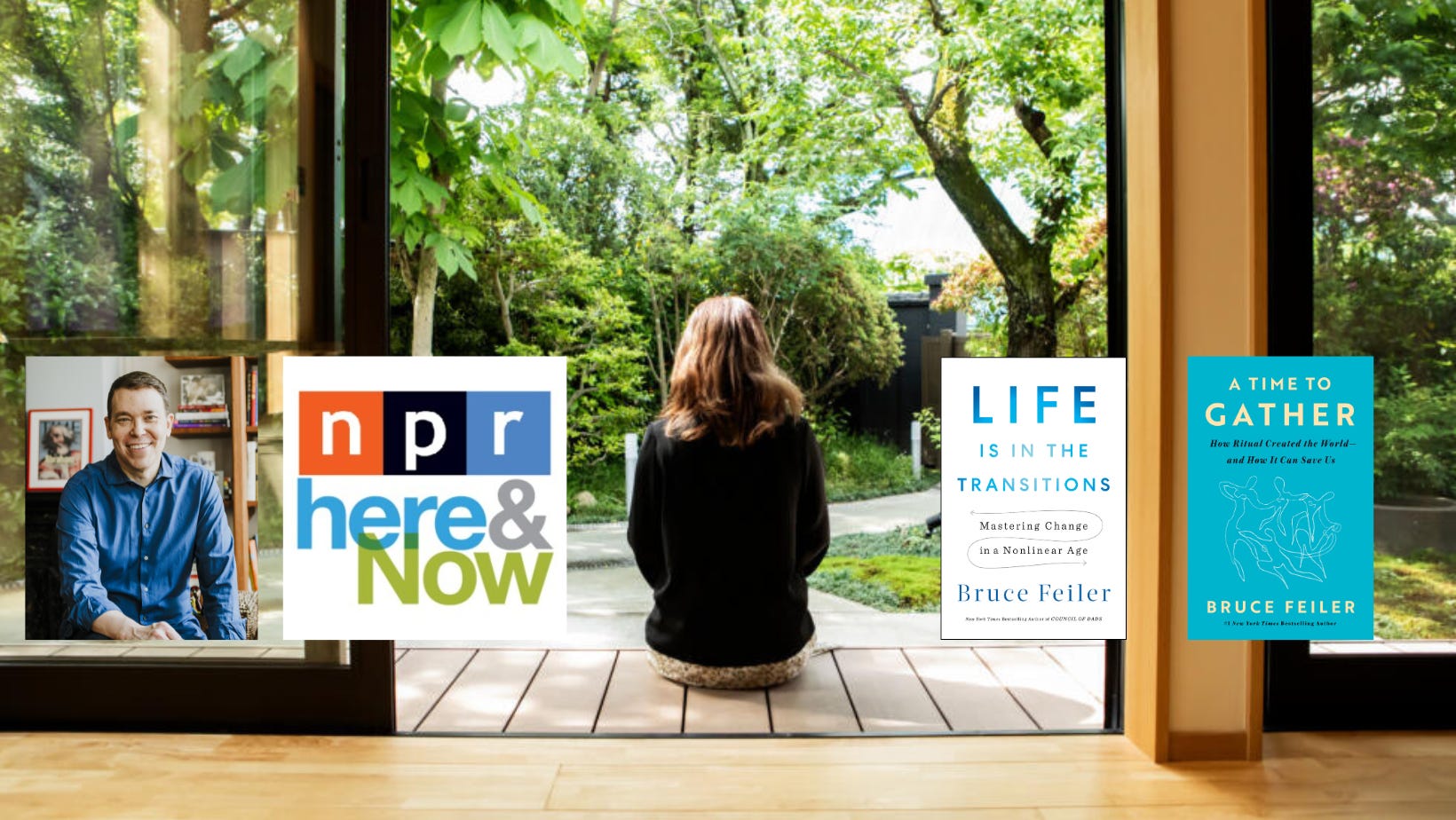
Sometimes life throws you a curveball. Maybe it’s a breakup or divorce, a serious health diagnosis or job loss.
Whatever it is, life transitions can be painful and hard to navigate.
This week, NPR invited me to discuss the proprietary research in my book, “LIFE IS IN THE TRANSITIONS: Mastering Change at Any Age,” in which I discuss what a lifequake is, why the number of disruptions we’re all experiencing is increasing, and how to turn moments of confusion and dislocation into periods of growth and renewal.
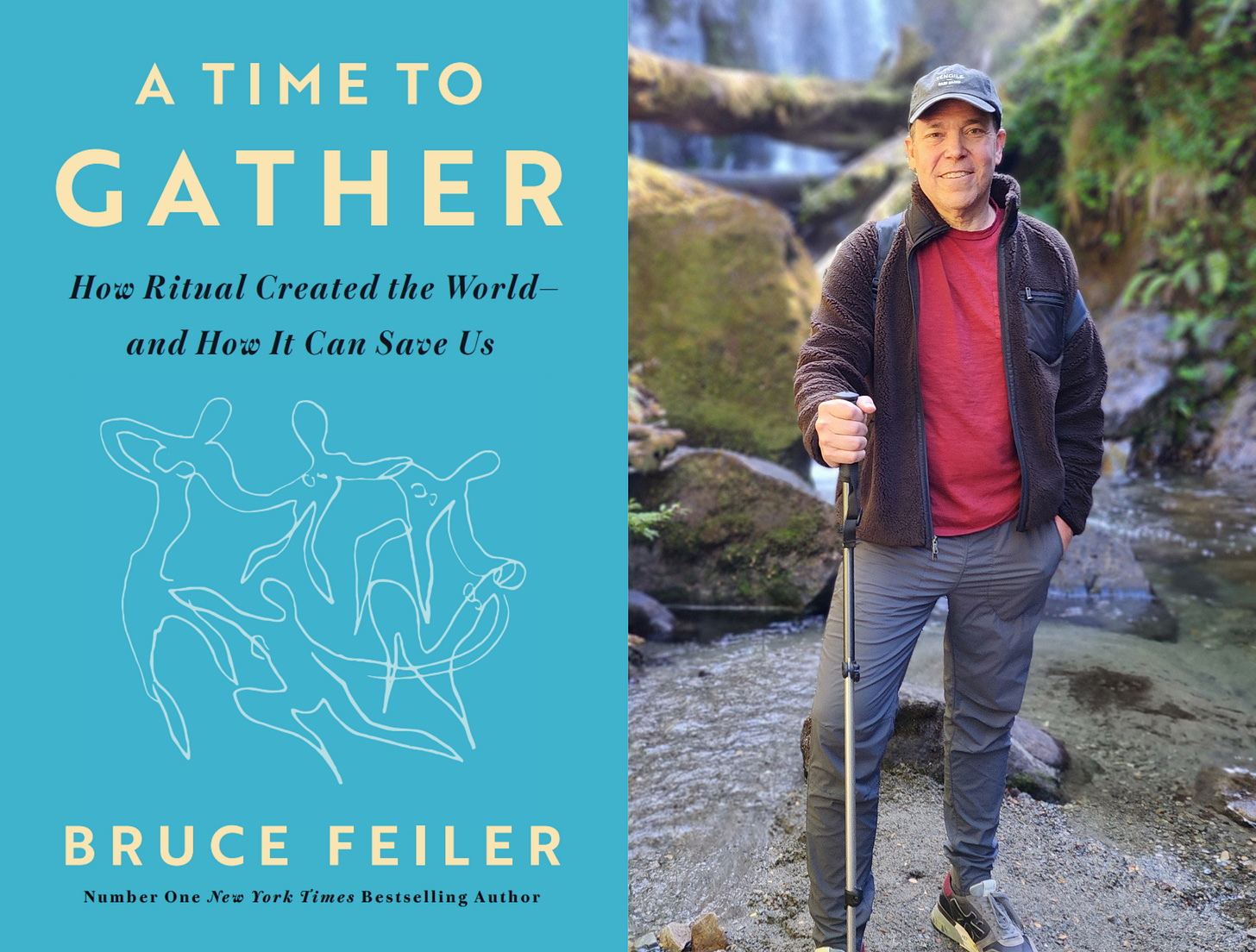
They also asked me to preview my new book about how to navigate change with the help of our families, friends, and other communities. See below, for how to order signed copies “A TIME TO GATHER: How Ritual Created the World — and How It Can Save Us”—or a 25% discounted bundle with the book that changed my life, WALKING THE BIBLE, which turns 25 this month!
Both are available now for a limited time.
In the meantime, you can listen to my NPR interview here—or read this edited transcript of highlights.
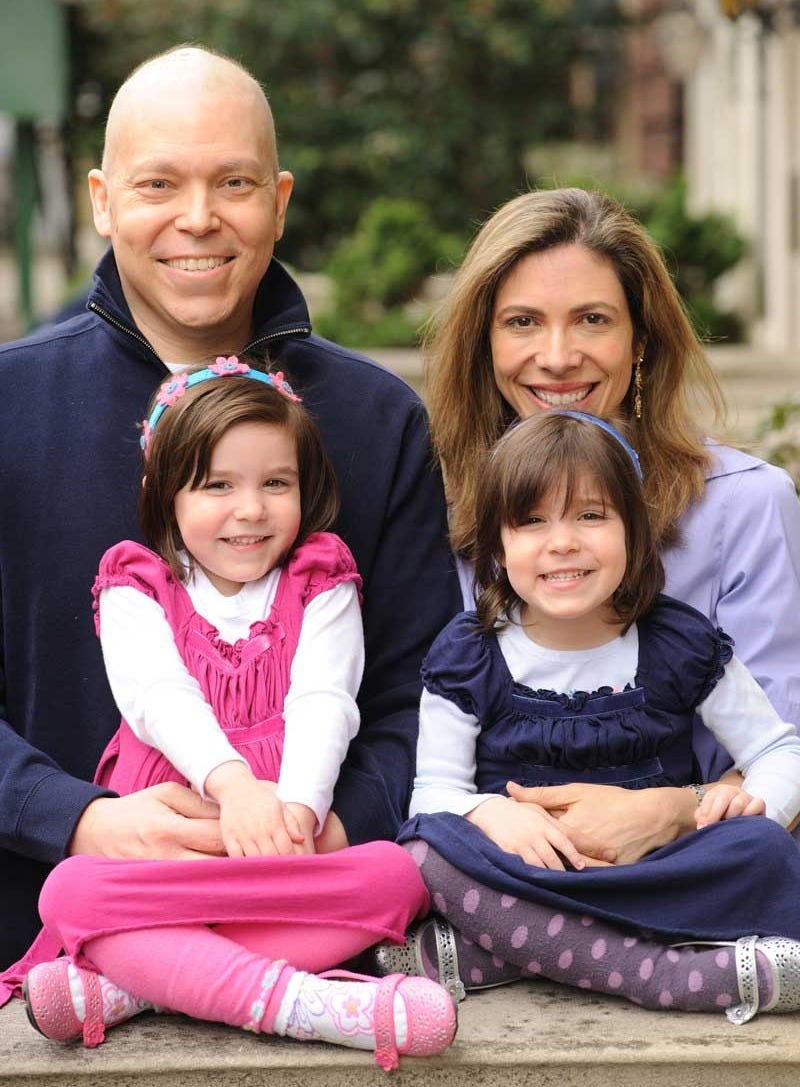
“First, I had cancer as a 43-year-old dad of 3-year-old identical twin daughters. I had some financial troubles. Then my dad, who was never depressed a minute in his life, got Parkinson’s, became deeply depressed, and tried to take his own life 6 times in 12 weeks. I’ve been a professional storyteller my entire adult life, but this was a story that I couldn’t tell. I felt shame and fear.
“When I did tell the story, I discovered out that everybody has moments when they lose the plot of their life story. We go through three dozen of what I call ‘disrupters’ in the course of our lives, that’s once every 12 to 18 months. These events could be as small as a fender bender or as big as losing your home.
“One in 10 of those disruptors becomes what I call a ‘lifequake,’ a massive burst of change that leads to pain and confusion, but which ultimately holds the possibility for transition and renewal.”
“An involuntary lifequake is the one that we often think of first: a diagnosis, a downsizing, a pandemic. I talked to people who lost legs, lost homes, lost limbs. About 57% of lifequakes are involuntary.
“But 43% of lifequakes, interestingly enough, are voluntary. I mentioned that I have identical twin daughters. Their birth was joyful. But we had two children in 32 minutes. It was a lifequake in every way because it was so destabilizing. The point is: It’s not just a crisis or a catastrophe that upends our lives. It could be something that you want.
“I started collecting life stories back in 2017. Five hundred in the last decade. In the first couple of years, 88% of lifequakes people told me about were personal and only 12% were collective.
“But think about what’s happened in the intervening time. We had the pandemic. We had a mini financial crisis. We know that a lot of people moved during the pandemic. Now we’ve got war. And then what’s coming at us? As we are reminded every day, artificial intelligence will completely upend all of our lives.
“I think that the reason people feel even more acutely anxious and uneasy now is that we still have the regular pace of the personal lifequakes, but we now have more and more collective ones coming at us every hour of every day.”
“That’s a very perceptive insight, because the core problem that we face today is that we have linear expectations but nonlinear lives.
“So, what do I mean by linear? In the ancient world, they thought life was a cycle. There was no linear time. That idea gets introduced much later.
“Our understanding of time begins to change in the Industrial Revolution. In the 19th century they have factories; they have conveyor belts and assembly lines. All through the 20th century, most of the way we understood life reflected these linear constructs.
“Freud discussed psychosexual stages. Erikson, the eight stages of moral development; the five stages of grief. All of these theories are linear.
“This idea reaches its peak in the 1970s, when the journalist Gail Sheehy writes a book called Passages. Twenty million people read that book. It locks in the idea that everyone does the same thing in their 20s, the same thing in their 30s, then has a midlife crisis — and this is how precise it was — between 39 and 44 and a half.
It’s complete bunk. Just think of the pandemic. At any age or any point in your life, you were in a crisis. We have to give up the idea that we have this linear progression.”
“Look at enough life transitions, and you see a very clear pattern. They have three phases. One is the long goodbye, where we identify the emotions we’re struggling with and mourn the past.
“There’s the messy middle, where we shed certain habits and experiment with new lives, new personas, and new ways of spending our time.
“Finally there’s the new beginning, where we unveil our reimagined selves.
“The way that I’ve come to understand these phases from having all these conversations is that everybody has a transition superpower and a transition kryptonite. You’re good at one of those phases and you struggle with another.
“Pick the phase you’re good at and start there. If you excel at exploring your emotions and marking change with rituals, then start at the long goodbye. If you’re good at making to-do lists and experimenting with selves, start at the messy middle.
“Transitions are difficult. Start with whatever phase you’re confident with, but remember you can’t avoid the others. If you’re good at making to-do lists, you probably don’t want to confront the sadness or the fear or the shame of accepting your emotions.
“The most successful people go through all three phases—but in their own bespoke order.”

For the first time ever, I’m offering SIGNED PERSONALIZED COPIES of A TIME TO GATHER from a wonderful independent bookstore in Brooklyn. Support local booksellers and give yourself or a loved one a special treat. You’re welcome to share your own thoughts for the personalization!
Click on the image above to order.
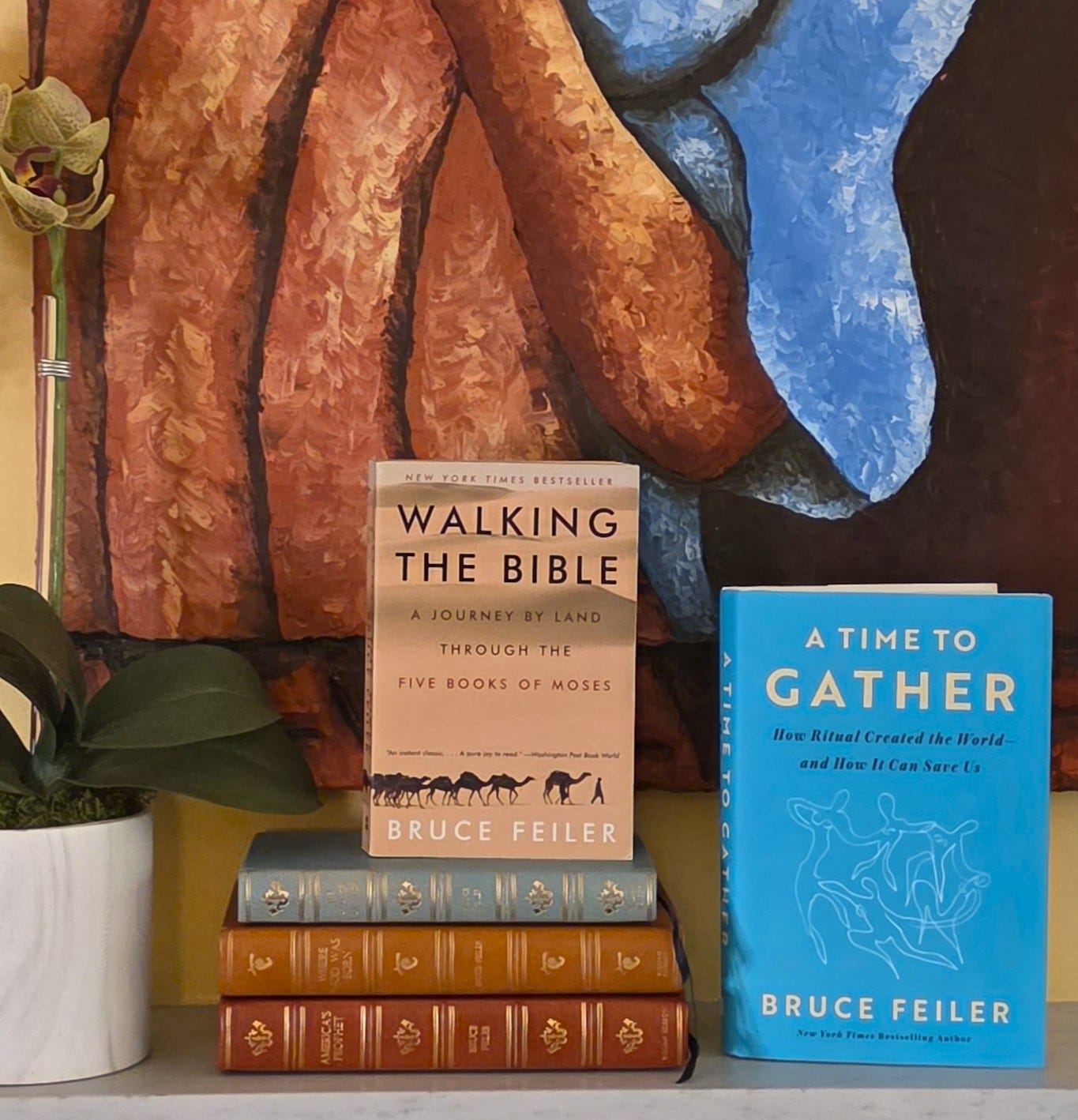
WALKING THE BIBLE, the book that changed everything, turns 25 this month! A TIME TO GATHER is the book I’ve written that most reminds me of that book. They’re bookends of a time and way of thinking in my life.
For an extremely limited time, we’re offering a bundle of BOTH BOOKS for 25% off!
WALKING THE BIBLE describes my 10,000-mile journey retracing the Five Books of Moses through 3 countries, 5 continents, and 4 war zones. From crossing the Red Sea to climbing Mt. Sinai, this epic odyssey — by foot, jeep, rowboat, and camel — became an international phenomenon, a PBS series, and spent over 18 months on the New York Times bestseller list.
A TIME TO GATHER chronicles my 50,000-mile journey across 16 sixteen countries on 6 continents, exploring the astonishing rise of new life rituals. From a mass baptism in the Vatican to a tooth-filing ceremony in Bali to Taylor Swift-themed divorce parties, the book explores the renaissance of belonging that’s pushing back against loneliness and digital saturation — and offers a practical roadmap for creating gatherings you’ll love.
Please take advantage of this rare opportunity to get two journeys for the price of one! And find new ways to make everyone around you feel happier and more connected.
🌞
Thank you for reading The Nonlinear Life. This is a reader-supported newsletter. You can support my work by pre-ordering a copy of A Time to Gather or any of my other books. Click on the photo below to learn more.
Meanwhile, help us grow our community by subscribing, sharing, and commenting below. And you might enjoy reading these posts:
How Rituals Can Save Your Family — and the First Review of A TIME TO GATHER!
The Stories That Bind Us: My Most Popular Piece Ever
A Sudden Loss, A Missed Goodbye, A Lesson on How to Gather in Crisis
Or, you can contact me directly.
Comments
Nothing yet. Say the first thing.
Sign in to join the conversation.