
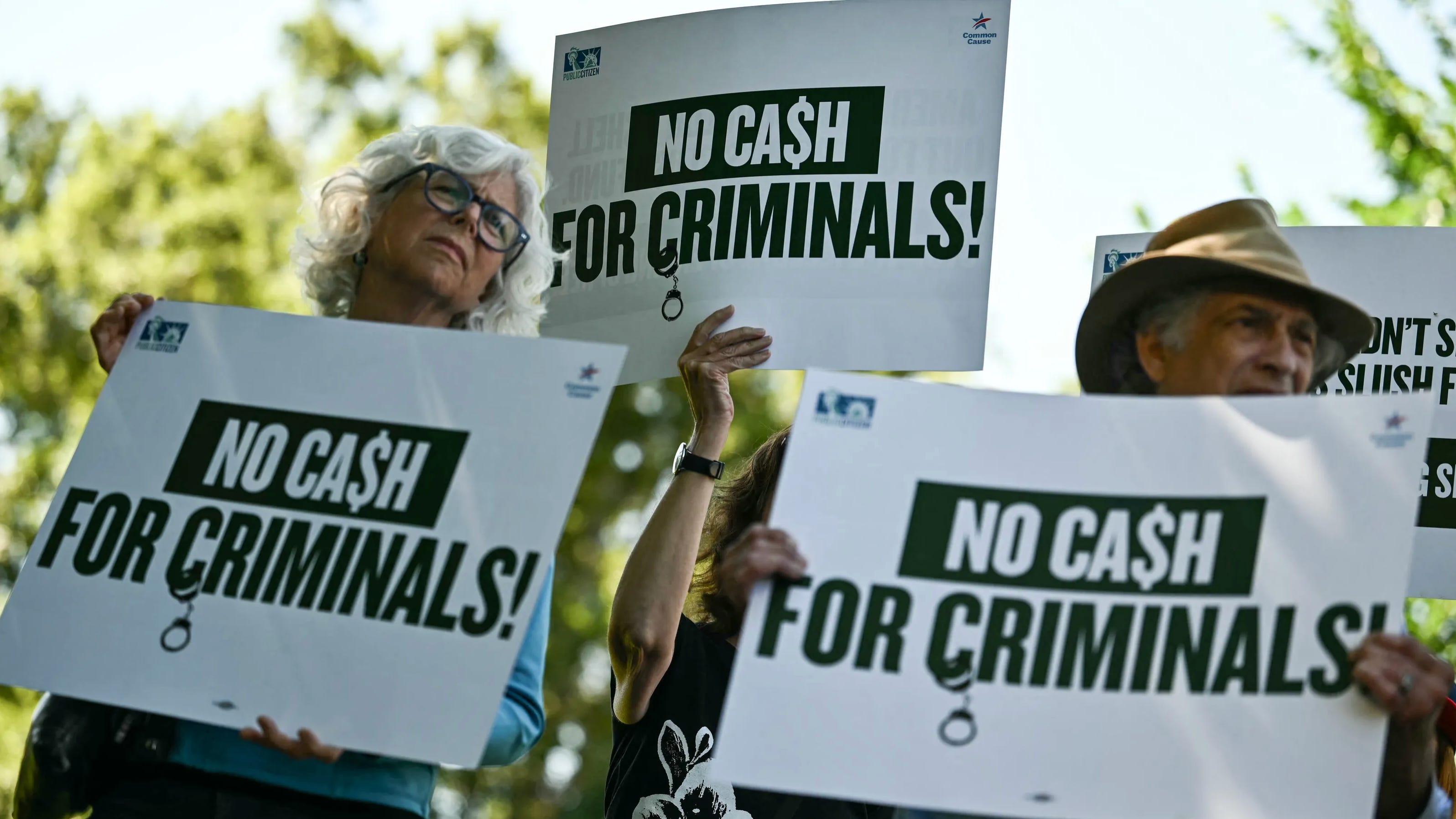
A presidential pardon is an act of constitutional clemency. It can forgive a federal offense, terminate punishment, or restore certain civil rights. It does not, however, transform criminal conduct into lawful conduct, erase the evidence presented in court, or establish that a prosecution was politically motivated. Most importantly, a pardon does not entitle its recipient to taxpayer-funded compensation.
That distinction is central to the controversy surrounding the Trump administration’s proposed “Anti-Weaponization Fund.” The Department of Justice announced the fund in May 2026 as part of a “settlement” of President Donald Trump’s own lawsuit against the Internal Revenue Service. The proposed fund was to receive $1.776 billion from the federal Judgment Fund and compensate people claiming to have suffered “weaponization and lawfare.” Its administrators could award apologies and money, while its five decision-makers would be appointed by the attorney general and remain removable by the president. The Justice Department’s own announcement provided no objective definition of “weaponization” comparable to the legal standards governing wrongful-conviction claims, malicious-prosecution suits, or awards for abusive prosecutions. The Justice Department’s announcement described only a broadly discretionary process.
The fund’s present status is unsettled in practice, although Acting Attorney General Todd Blanche has repeatedly said (only orally, not in writing) it will not proceed. It is essential to understand the original written order issued by Todd Blanche is an enforceable legal contract, by his own admission in Congressional testimony. Courts have ruled to block its operation, Justice Department officials described it as “dead,” and President Trump subsequently has made conflicting statements defending compensation for people prosecuted in connection with January 6.
As of August 2026, the controversy therefore remains important even if the original fund never distributes a dollar. It raises a lasting question: Should a president be able to pardon political supporters and then use public money to compensate them under standards created and administered by his own appointees?
The answer should be no. Convicted January 6 defendants should not receive money from such a fund merely because Trump pardoned them or characterized their prosecutions as political. Anyone who can prove an unlawful prosecution should remain free to pursue the ordinary remedies available to every American. What should be rejected is a special pathway that substitutes presidential favor for evidence, judicial findings, and neutral law.
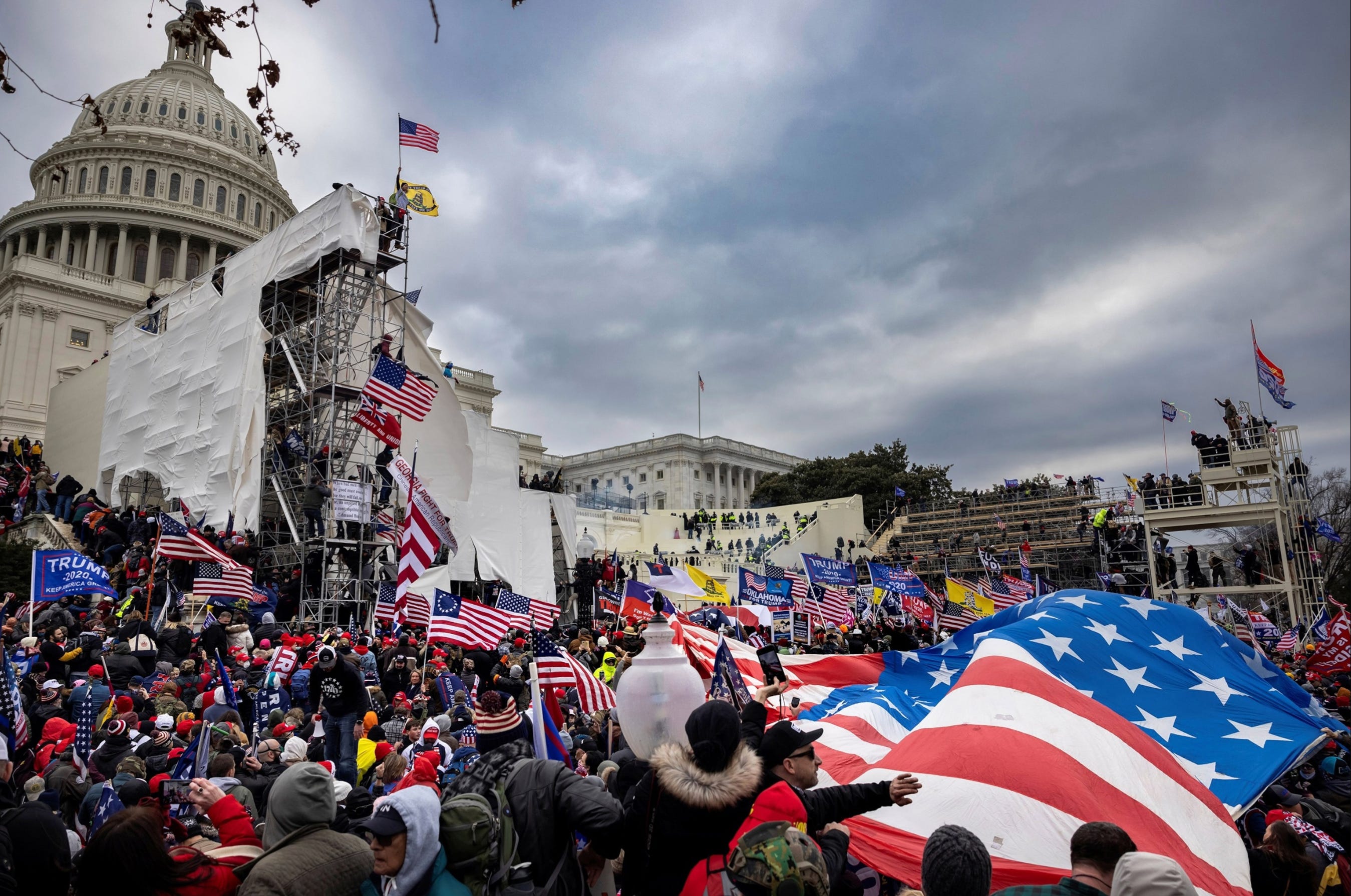
The January 6 prosecutions did not arise simply because people held unpopular beliefs, supported Trump, questioned an election, or attended a political rally. Peaceful advocacy—even advocacy based on false claims—is ordinarily protected by the First Amendment. Criminal cases instead arose from particular conduct prohibited by law: unlawfully entering restricted grounds, interfering with police, assaulting officers, destroying or stealing property, possessing dangerous weapons, obstructing law enforcement, and participating in conspiracies intended to disrupt the transfer of presidential power.
The severity of the conduct varied considerably. Some defendants committed misdemeanors by entering restricted areas or remaining inside the Capitol. Others committed serious acts of violence or helped organize coordinated efforts to prevent Congress from completing the electoral count. That variation called for individualized charging, trial, sentencing, appellate review, and, where appropriate, individualized clemency. It did not justify pretending that everyone prosecuted was equally culpable. But neither does it justify declaring the entire group innocent.
The attack forced members of Congress to evacuate and delayed the certification of the presidential election. The Government Accountability Office reported that approximately 140 officers were assaulted and that the attack caused about $1.5 million in physical damage. GAO’s official account also recognized the broader deaths and human consequences associated with the day. Those facts matter because compensation for convicted participants would not occur in a moral vacuum. It would require taxpayers—including injured officers, congressional employees, and citizens whose votes were being certified—to finance payments to people convicted of participating in the disruption.
The convictions themselves came through the ordinary federal judicial process. Many defendants pleaded guilty under oath. Others were convicted after trials in which the government bore the burden of proving guilt beyond a reasonable doubt. Defendants could challenge evidence, confront witnesses, contest the application of statutes, appeal adverse judgments, and seek Supreme Court review. A political label applied years later does not nullify those proceedings.
On January 20, 2025, Trump issued a proclamation granting “full, complete and unconditional” pardons to nearly all individuals convicted of offenses related to January 6. He commuted the sentences of fourteen named defendants and directed the attorney general to seek dismissal of all remaining January 6 indictments. The proclamation called the prosecutions a “grave national injustice,” but it did not make individualized findings that the convicted defendants had not committed the acts charged.
That omission is decisive. Clemency may reflect mercy, political judgment, a desire for reconciliation, disagreement with a sentence, or simple favoritism. It is not equivalent to an acquittal, the reversal of a conviction for insufficient evidence, or a judicial certificate of innocence.
Federal compensation law makes this distinction explicit. Under 28 U.S.C. §§ 1495 and 2513, the United States Court of Federal Claims may award damages to a person unjustly convicted and imprisoned. But eligibility requires much more than possession of a pardon. The conviction must have been reversed or set aside on the ground that the person was not guilty, the person must have been acquitted in a new proceeding, or the pardon must expressly state that it was granted on the ground of innocence and unjust conviction. The claimant must also establish that he did not commit the charged acts—or that those acts constituted no crime—and that his own misconduct or neglect did not bring about the prosecution. Section 2513 requires these facts to appear in a judicial certificate or qualifying pardon.
Trump’s categorical proclamation does not satisfy that innocence standard. Nor could most convicted January 6 participants plausibly show that they did not engage in the conduct that caused their prosecutions when their guilt was established through pleas, video evidence, testimony, electronic communications, or trial verdicts. A pardon removed or reduced punishment; it did not manufacture the factual predicates required for compensation.
The strongest argument against a special “weaponization” fund is not that government abuse never occurs. It does. Wrongful arrests, malicious prosecutions, fabricated evidence, unconstitutional searches, and unjust imprisonment are grave wrongs. Precisely because they are grave, allegations of such misconduct should be tested through fair and established procedures.
Federal law already supplies several possible remedies. Sections 1495 and 2513 authorize compensation for people who can prove unjust federal conviction and imprisonment. Awards may reach as much as $50,000 for each year of unjust incarceration, or $100,000 per year for someone unjustly sentenced to death. These provisions are demanding because public compensation should follow demonstrated innocence, not a change in political control.
The Hyde Amendment separately permits a prevailing federal criminal defendant to recover reasonable legal fees and litigation expenses when a court finds that the government’s position was “vexatious, frivolous, or in bad faith.” The Justice Department’s summary of the Hyde standard confirms that the burden rests on the claimant and that the remedy is reserved for exceptional cases rather than every unsuccessful prosecution.
The Federal Tort Claims Act can also permit claims arising from certain acts of federal investigative or law-enforcement officers, including false arrest, false imprisonment, abuse of process, and malicious prosecution, subject to the statute’s requirements and exceptions. Title 28’s law-enforcement proviso expressly identifies those categories. Constitutional violations may sometimes support other forms of judicial relief, although damages actions against federal officials are limited and highly dependent on the circumstances.
These remedies are imperfect and may be too narrow in some cases. Congress may reasonably debate whether compensation caps should increase or whether access to relief should be improved. But reform should apply neutrally to everyone. It should not create a favored class defined by political allegiance, presidential sympathy, or participation in one politically significant event.
The difference is fundamental: existing remedies ask a claimant to prove a legal wrong before an independent tribunal. A “weaponization” fund risks beginning with the political conclusion that a wrong occurred and then asking presidential appointees how large the payment should be.
Supporters of compensation may point to Fischer v. United States, in which the Supreme Court narrowed the scope of the federal obstruction statute used in some January 6 cases. The Court held that 18 U.S.C. § 1512(c)(2) requires proof involving the availability or integrity of records, documents, objects, or other things used in an official proceeding. The Court’s opinion rejected the government’s broader interpretation.
That decision demonstrates why courts—not partisan compensation commissions—are the proper institutions for resolving claims of overcharging. Defendants affected by Fischer could seek dismissal of an unsupported count, resentencing, or reversal through normal judicial procedures. The ruling did not declare the Capitol breach lawful, find that January 6 defendants were political prisoners, or invalidate every other offense arising from the attack. The Justice Department reported that more than 82 percent of the cases then charged did not involve a conviction under the statute at issue, and every potentially affected defendant faced at least one additional charge. DOJ’s Fischer fact sheet documented that limited reach.
A legal error concerning one statutory provision should be corrected precisely. It should not become a pretext for paying everyone convicted in a much larger body of cases. Judicial correction preserves the rule of law because it identifies an error, applies a legal standard, and grants relief to those actually affected. Political revisionism erases distinctions and converts a limited ruling into a blanket narrative of persecution.
The term “weaponization” has no settled legal meaning. It can describe genuine abuse, but it can also function as a political accusation applied whenever law enforcement reaches a president’s allies. A billion-dollar fund based on such an elastic term invites decisions driven by loyalty, publicity, and ideology rather than consistent proof.
The structure announced by the Justice Department magnified that danger. The attorney general was to appoint all five members of the fund, the president could remove them, reports would go to the attorney general, and audits would occur only at the attorney general’s direction. This is an inadequate arrangement for evaluating claims made by the president’s supporters—particularly when the fund itself arose from the settlement of litigation brought by the president and his family against agencies within his own executive branch.
The origin of the money is equally troubling. The Judgment Fund is a permanent appropriation used to pay qualifying judgments and settlements against the United States. Using it to create a discretionary program for people who were not parties to the underlying IRS lawsuit risks evading Congress’s constitutional responsibility over public spending. Even if lawyers could construct an argument for such a settlement, legality would not resolve its wisdom. A president should not be able to turn litigation against his own administration into a pool of money potentially available to his political allies.
A special fund would also reverse the moral direction of restitution. Compensation is properly directed toward people injured by unlawful government conduct. It should not reimburse offenders for fines, restitution, lost earnings, or legal expenses resulting from their own proven crimes. Paying such expenses would make the public absorb the private costs of criminal conduct.
Finally, the fund would create a dangerous incentive. Future political movements could conclude that violence, unlawful entry, or interference with constitutional proceedings carries only temporary risk: if their preferred candidate later gains power, convictions might be pardoned and the offenders financially rewarded. Democracy cannot safely attach a possible loyalty bonus to political violence.
The Constitution unquestionably gives the president broad power to pardon federal offenses. The criticism is therefore not that Trump lacked clemency authority, but that he exercised it irresponsibly.
First, the pardons were indiscriminate. They did not separate peaceful but unlawful trespass from brutal assaults, opportunistic vandalism, organized conspiracy, or efforts to obstruct the transfer of power. Mercy is most defensible when it considers individual conduct, punishment already served, acceptance of responsibility, remorse, rehabilitation, and proportionality. The proclamation largely replaced those considerations with membership in a politically favored category.
Second, the pardons extended relief to people convicted of attacking officers and to leaders of extremist organizations convicted of serious conspiratorial offenses. Commuting or pardoning such conduct sent the message that violence may be excused when committed in service of the president who later controls the pardon power.
Third, directing dismissal of pending indictments prevented unresolved cases from being tested in court. Some untried defendants might have been acquitted, while others might have been convicted. A blanket dismissal sacrificed both accountability and the opportunity for genuine vindication.
Fourth, the proclamation injured the officers, employees, and other victims who relied on the legal system to recognize the wrong done to them. Clemency need not disregard victims, but these pardons offered no visible balancing of their interests against the interests of offenders.
Finally, the pardons undermined equal justice. A defendant without political connections ordinarily must appeal a conviction, demonstrate legal error, prove innocence, or present an individualized petition for clemency. January 6 defendants instead received categorical relief because their cause had become part of the president’s political identity. That is not reconciliation grounded in law; it is preferential treatment grounded in allegiance.
None of this means that every January 6 sentence was necessarily ideal. If a nonviolent defendant received a disproportionate punishment, individualized commutation could have been considered. If a conviction rested on an invalid legal theory, the courts could correct it. If prosecutors acted in bad faith in a particular case, existing law could provide relief. The wrong lay in abandoning those distinctions.
A democratic government should acknowledge and compensate genuine injustice. But the standard must be the same whether the claimant is a Trump supporter, a racial-justice protester, an environmental activist, a police officer, an immigrant, or a person with no political constituency at all.
A legitimate compensation system should require a claimant to identify specific misconduct, prove causation and actual loss, permit the government and affected victims to respond, and obtain a decision from an independent adjudicator. Decisions and payment amounts should be public except where privacy law requires redaction. Administrators should be insulated from presidential removal and partisan pressure. Congress—not the beneficiary of an executive-branch settlement—should authorize and appropriate the money.
Under such a system, a pardon would be relevant only if it contained an individualized finding of innocence or if the claimant independently established unlawful government conduct. It would never serve as a winning lottery ticket.
The United States should compensate people whom its government has genuinely and demonstrably wronged. That principle is not served by a vaguely defined “weaponization” fund controlled by the same administration that pardoned its likely applicants. It is weakened by it.
The convicted January 6 defendants pardoned by Trump do not deserve compensation from such a fund. Their pardons granted clemency; they did not prove innocence. Their prosecutions arose from conduct adjudicated under ordinary criminal procedures, and any genuine errors can be addressed through appeals, wrongful-conviction law, the Hyde Amendment, the Federal Tort Claims Act, and other neutral legal mechanisms. Creating a separate political fund would bypass those safeguards, disregard victims, distort the Judgment Fund, and risk rewarding interference with the peaceful transfer of power.
Congress should therefore prevent any administration from using the Judgment Fund or another executive-controlled account to compensate people merely because they received politically favored pardons. At the same time, legislation should preserve the right of every person—including a January 6 defendant—to recover under ordinary law after proving innocence or unlawful government conduct before an independent court. Congress should also protect court-ordered restitution, require public disclosure of proposed settlements involving presidential interests, and strengthen oversight of executive-branch conflicts of interest.
Citizens should demand that their representatives adopt those safeguards. They should reject both government abuse and politically manufactured victimhood, support officers and public servants injured on January 6, and insist that clemency remain an instrument of mercy rather than the first step toward a taxpayer-funded reward. The rule of law requires no less.
Thanks for reading Thinking Deeply. Subscribe for free to receive new posts via email and access the Thinking Deeply archive. If you find our discussions meaningful, please recommend Thinking Deeply to others. Remember, all subscriptions are free. Encouragement for civic responsibility should never be behind a paywall.
Comments
Nothing yet. Say the first thing.
Sign in to join the conversation.