
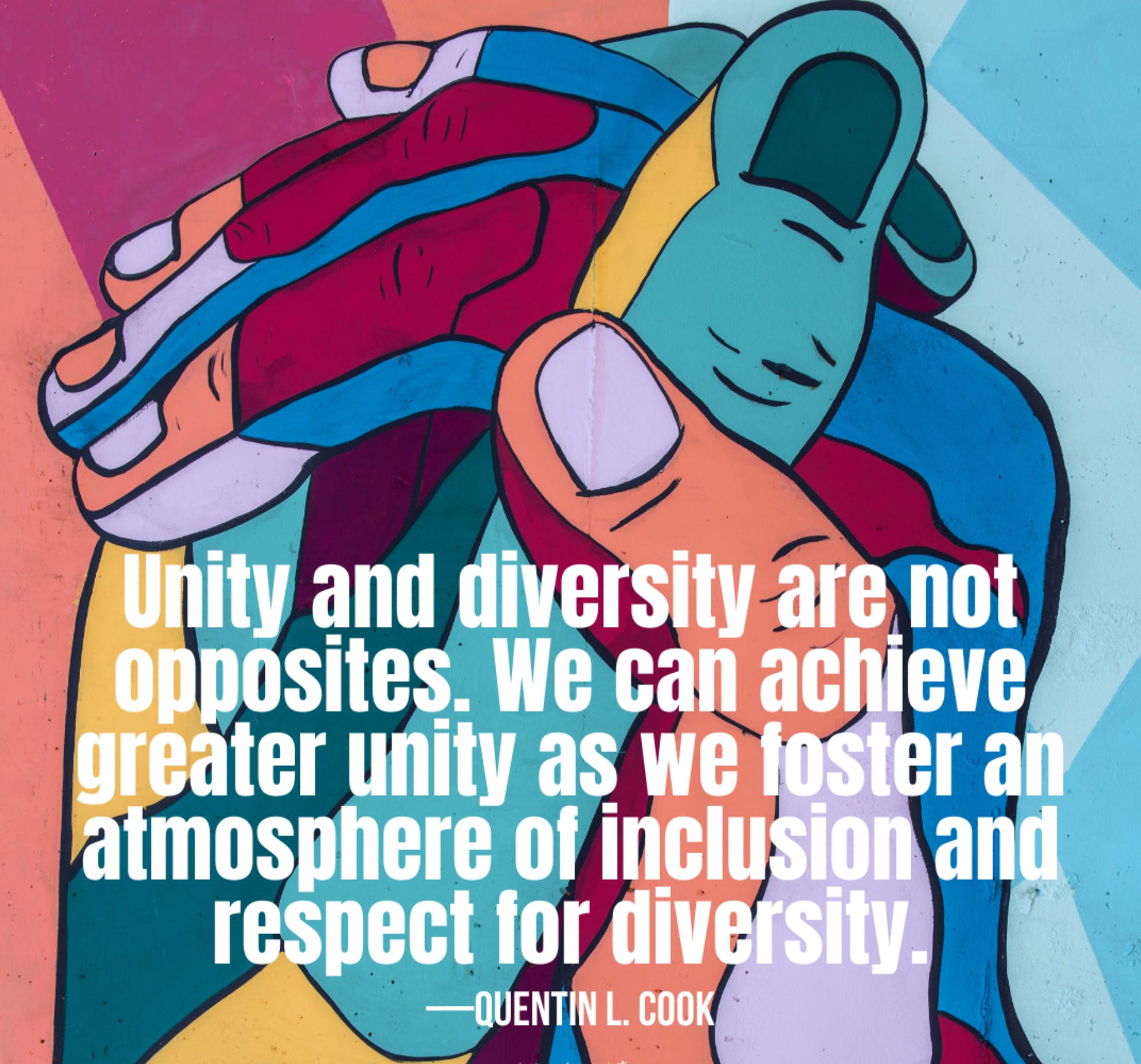
Political reporting often relies on the language of conflict. Disagreement becomes “division,” negotiation becomes “infighting,” and a public debate among members of the same political party is presented as evidence that the party is approaching a breaking point. In recent years, this pattern has been visible in coverage of the Democratic Party. Differences between progressives and moderates are frequently described as signs of profound disunity, a struggle between factions that cannot coexist.
Certainly, genuine divisions exist. Democrats disagree about policy, political strategy, the pace of change, and the proper role of government. These differences should not be minimized or concealed. Yet we should be cautious about mistaking diversity of thought for disunity. A political party composed of people from different regions, generations, racial and ethnic communities, economic circumstances, religious traditions, and ideological perspectives will naturally contain competing ideas. That variety is not necessarily a defect. It should rather be viewed as a source of strength. It is merely the competition of ideas, just as that competition is the strength of democracy itself.
The Democratic Party is not a narrow ideological organization. It is a broad coalition representing millions of Americans whose experiences and interests do not always align perfectly. The challenge is not to eliminate those differences but to turn them into constructive debate, practical compromise, and effective democratic action.
In his 1936 essay “The Crack-Up,” F. Scott Fitzgerald offered an observation that remains strikingly relevant to political life:
“The test of a first-rate intelligence is the ability to hold two opposed ideas in the mind at the same time, and still retain the ability to function.”
Fitzgerald continued by suggesting that one should be able to recognize that circumstances may appear hopeless while remaining determined to change them. This capacity, to acknowledge tension without becoming paralyzed by it, is essential to democratic citizenship.
Political questions rarely offer simple choices between an entirely correct position and an entirely mistaken one. Two competing ideas may each contain part of the truth. A society may need urgent change and careful implementation. It may need national standards and local flexibility. It may need both ambitious public investment and fiscal responsibility. It may need strong moral principles and pragmatic strategies for transforming those principles into law.
Holding such ideas simultaneously is not hypocrisy. It is intellectual maturity. The real test is whether people can recognize legitimate tensions, weigh competing priorities, and continue functioning together.
The same standard should be applied to political parties. A healthy party should be capable of containing disagreement without treating every dispute as an existential crisis. Its members should be able to argue intensely about means while remaining committed to shared democratic ends.
The Democratic coalition includes urban voters and rural voters, union households and entrepreneurs, young activists and older institutionalists, democratic socialists and market-oriented liberals. It includes people who want rapid structural transformation and people who favor incremental reform. It includes communities for whom the country’s institutions have provided opportunity and communities that have experienced those same institutions as sources of exclusion or injustice.
Such a coalition cannot be expected to speak with one voice on every issue.
A progressive legislator representing a heavily urban district may face different demands from those confronting a moderate elected in a competitive suburban or rural constituency. Neither necessarily misunderstands the country. Each may be responding accurately to a different part of it. Their perspectives can therefore be both politically necessary and mutually frustrating.
This is the unavoidable reality of coalition politics. A party capable of winning support across a large and varied nation must include people who differ not only in background but also in ideology, temperament, and strategy. If it excludes everyone who departs from a single approved position, it may gain philosophical uniformity while losing the ability to govern a diverse population effectively.
The breadth of the Democratic coalition is therefore not merely a campaign consideration. It is part of the party’s democratic character. Its internal debates mirror the diversity of the country it seeks to represent.
Progressives perform an indispensable role by insisting that familiar conditions should not be mistaken for acceptable ones. They draw attention to the scale and persistence of inequality, racial injustice, environmental danger, inadequate health care, unaffordable housing, educational disparities, and the concentration of economic and political power.
Their arguments often begin with moral urgency. If a policy is unjust, they ask, why should reform be endlessly postponed? If existing systems are failing millions of people, why should the boundaries of political possibility be determined by those systems?
This pressure expands public imagination. Many reforms now regarded as mainstream began as demands characterized as unrealistic, disruptive, or politically impossible. Progressives remind the party that prudence can become an excuse for passivity and that incremental change may be inadequate when the underlying problem is structural.
They also help sustain enthusiasm among citizens who believe politics must offer more than the management of existing conditions. A democracy needs people willing to envision possibilities that current institutions have not yet accommodated.
Without this progressive energy, a political party can become too cautious, too deferential to established power, and too willing to define success as avoiding controversy.
Moderates also perform an essential role. They emphasize that lasting change requires public consent, workable legislation, administrative competence, and durable political coalitions. They ask whether a proposal can pass, whether it can be implemented effectively, whether it will survive public scrutiny, and whether it may produce unintended consequences.
Such questions are not necessarily evidence of indifference or timidity. They reflect the reality that governing differs from declaring an aspiration. A policy must be translated into statutory language, financed, administered, explained to the public, and defended against political and legal opposition.
Moderates may also recognize electoral conditions that activists in safer districts can more easily overlook. A national party must compete in communities with different histories, priorities, and political vocabularies. Policies and messages that inspire one group of voters may alarm or alienate another.
This does not mean that moderates are always correct, any more than progressives are always correct. Caution can become complacency, and compromise can be carried so far that it empties reform of its purpose. But a concern for feasibility is not inherently hostile to progress. Properly understood, it asks how change can be made real, effective, and lasting.
Without this moderating influence, a party may confuse the popularity of an idea within its most committed circles with broad public agreement. It may also underestimate the difficult institutional work required to turn moral conviction into public policy.
The most constructive relationship between progressives and moderates is not one in which either faction defeats or silences the other. It is one in which each corrects the other’s characteristic weaknesses.
Progressives can push moderates to confront problems that gradualism has failed to solve. Moderates can push progressives to clarify priorities, build broader support, and create policies capable of enduring beyond a single election. Progressives can supply vision; moderates can test feasibility. Progressives can enlarge the range of possibilities; moderates can help convert possibility into practice.
These roles should not become rigid labels. A lawmaker may be progressive on economic policy and moderate on institutional reform. A voter may support sweeping action on climate change while preferring gradual change in another area. Political identity is often more complicated than the categories used in news coverage.
The goal should therefore be productive tension: vigorous argument directed toward action rather than permanent factional warfare. This requires good faith, mutual respect, and an understanding that no single part of a coalition owns the entirety of democratic truth.
The media’s emphasis on division is partly a consequence of how news is produced. Conflict creates an immediate narrative. A disagreement between two lawmakers can be summarized in a headline; the slow process of coalition-building is more difficult to dramatize. Responsible negotiations may appear uneventful, while one inflammatory statement can dominate coverage for days.
This tendency can create a distorted picture. The public sees the argument but not always the agreement that surrounds it. Members of a party may share broad commitments on voting rights, economic opportunity, civil liberties, environmental protection, and the defense of democratic institutions while disagreeing sharply about the design or timing of particular policies. Yet the disagreement becomes the story, and the underlying consensus disappears from view.
Coverage of ideological differences is both legitimate and necessary. Journalists should not conceal conflicts or manufacture an artificial image of harmony. But reporting should distinguish among healthy debate, strategic disagreement, personal hostility, and genuine institutional breakdown. These are not the same phenomenon.
Citizens should also become more thoughtful consumers of political news. A headline announcing that a party is “in disarray” should prompt questions: What is the actual disagreement? Is it about goals, methods, timing, or language? Are the participants still negotiating? Does the conflict reflect irreconcilable principles, or is it the normal difficulty of governing through a diverse coalition?
Calls for party unity can become dangerous when unity is defined as obedience. A political organization in which disagreement is punished, and leaders are never questioned, may appear disciplined, but it is not necessarily healthy. Uniformity can conceal mistakes, suppress legitimate grievances, and isolate decision-makers from the people they claim to represent.
Democratic unity should mean a shared commitment to constitutional government, free elections, equal citizenship, peaceful political participation, and the good-faith resolution of disagreement. It should not mean that every member must endorse the same policy, rhetoric, or timetable.
A useful coalition develops procedures for disagreement. It gives different constituencies a voice, encourages negotiation, and accepts that compromise is not betrayal when it advances common purposes without sacrificing fundamental principles.
This kind of unity is demanding. It requires patience from those who want immediate change and openness from those who fear moving too quickly. It requires people to criticize ideas without treating colleagues as enemies. It also requires accepting that no participant will prevail in every debate.
Unity, in other words, is not the absence of conflict. It is the capacity to remain in a constructive relationship through conflict.
Democracy is based on the belief that no person or faction possesses perfect knowledge. Policies should be questioned because leaders can be mistaken. Assumptions should be challenged because circumstances change. Competing groups should be heard because society looks different depending on where one stands within it.
Internal party debate can serve this democratic purpose. It allows proposals to be tested before they become policy. It exposes weaknesses, reveals overlooked consequences, and forces advocates to explain their reasoning. When conducted honestly, it can produce decisions stronger than those created by ideological conformity.
This does not mean that every argument is equally valuable. Debate can become performative, dishonest, or destructive. Participants may seek publicity rather than solutions. Personal attacks may replace substantive disagreement. Factions may become more invested in defeating one another than in serving the public.
The answer, however, is not to eliminate disagreement. It is to improve its quality. The Democratic Party should ask whether its debates illuminate choices, include affected communities, encourage negotiation, and lead toward action. When they do, internal differences are not signs of democratic failure. They are examples of democracy at work.
Diversity becomes a political strength only when it can be organized around common purposes. A coalition cannot survive indefinitely on disagreement alone. Its members must identify principles and objectives important enough to sustain cooperation.
For Democrats, those shared purposes can include protecting democratic institutions, expanding meaningful political participation, promoting economic security, defending civil rights, preserving individual liberty, and ensuring that government can address problems individuals cannot solve alone.
Within those commitments, there will be arguments about policy and strategy. That is appropriate. But the participants must remember that the purpose of debate is not simply to demonstrate the superiority of one faction. It is to improve public judgment and produce better outcomes.
Progressives should not automatically interpret every compromise as cowardice or betrayal. Moderates should not dismiss every ambitious proposal as naïve or politically impossible. Both should remain willing to revise their positions in response to evidence, experience, and the legitimate needs of other members of the coalition.
Compromise should not be worshiped for its own sake. Some compromises are unjust, incoherent, or inadequate. Nevertheless, democratic government requires the ability to distinguish between the surrender of a basic principle and the negotiation necessary to make progress. That distinction is difficult, but making it is part of the work of political maturity.
The Democratic Party’s diversity is not incidental to its identity. It reflects the complexity of the people it represents and the country it seeks to govern. Its arguments between progressives and moderates may sometimes be untidy, frustrating, and politically costly. Yet they are not, by themselves, evidence of fatal disunity.
A broad coalition should contain competing perspectives. The Democratic Party should permit disagreement. A serious political movement should be able to hold opposing ideas in mind, learn from the tension between them, and retain the ability to act.
The real danger is not diversity of thought. It is the loss of a common democratic purpose, the moment when disagreement becomes contempt, when negotiation becomes impossible, or when victory over an internal rival matters more than service to the public.
Democrats should therefore resist demands for artificial uniformity while cultivating the discipline necessary for genuine unity. Party leaders should create space for principled debate. Elected officials should criticize one another without denying one another’s legitimacy. Journalists should report disagreements accurately without automatically equating them with collapse. Citizens should look beyond sensational headlines and judge political debates by their substance.
Most importantly, voters should participate. Attend local meetings. Listen to people from different parts of the coalition. Support candidates who combine conviction with democratic humility. Demand ambitious ideas, serious analysis, responsible negotiation, and effective government. Refuse the false choice between principle and practicality.
Democracy does not grow stronger when everyone speaks with one voice. It grows stronger when many voices can disagree, deliberate, decide, and then work together. The Democratic Party should not apologize for its diversity. It should demonstrate what democracy can accomplish through it.
Comments
Nothing yet. Say the first thing.
Sign in to join the conversation.