
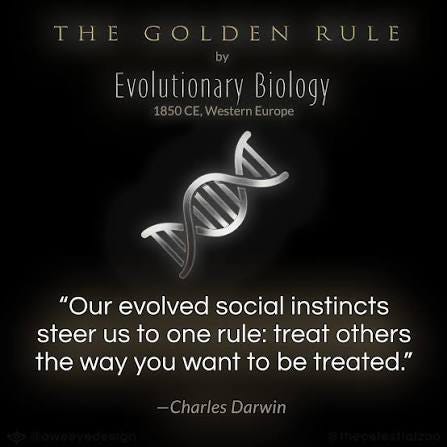
Teaching the 10 Commandments, or embracing other religious practices within the public school system, violates the First Amendments Separation of Church and State Clause. On the other hand 7 of the 10 Commandments derive from the Golden Rule which has secular roots and predates all Abrahamic Religions. Teaching about the Golden Rule should be part of every school curriculum.
In my series of essays, The Urgent Need for Global De-Islamification, I point out that cities such as Dearborn Michigan have also allowed practices that also violate the First Amendments Separation of Church and State Clause as well as Western values. These include religiously blessed Halal Foods, Prayer Rooms and the wearing of the Hijab in the Public Schools. As a Constitutional Absolutist all of these practices must be ended. And that would include teaching or posting the 10 Commandments in the Public School System.
But teaching the Golden Rule does not violate the First Amendments Separation of Church and State Clause because it is secular in nature. It also teaches empathy and challenges the leftist DEI (Diversity, Equity and Inclusion) agenda which has already subverted our Public School System. And finally the Golden Rule reflects Judeo Christian values without the religious baggage. For those reasons I highly recommend the teaching of the Golden Rule in all of our Public Schools. I think the impact would be both positive and transformative.
I got to thinking about this after watching the following video featuring Joe Rogan and Vice President JD Vance. Vance is advocating the teaching of the 10 Commandments in the public schools while Rogan basically maintains it is a violation of First Amendments Separation of Church and State Clause. Obviously I side with Rogan.
=====
JD Vance told Joe Rogan a Texas law forcing public schools to display the Ten Commandments isn’t about pushing Christianity on kids. Rogan politely disagreed.
Joe Rogan and JD Vance Clash Over Mandating Ten Commandments in Public Schools: ‘Agree to Disagree’ (07/15/2026)
https://www.mediaite.com/media/news/joe-rogan-and-jd-vance-clash-over-mandating-ten-commandments-in-public-schools-agree-to-disagree/
=====
Apparently Vance has found God after decades of identifying as an Atheist and embracing the Technocratic Agenda of people like Palantir’s Peter Theil. He writes about this in his new book titled “Communion: Finding My Way Back to Faith”. You also got to wonder if this is also about sucking up to Evangelical Christians in preparation for his run for President in 2028. Frankly I find his promotion of teaching the 10 Commandments in the Public Schools both Unconstitutional and intellectually weak.
=====
JD Vance’s new book is titled “Communion: Finding My Way Back to Faith”. Released on June 16, 2026, by HarperCollins, the spiritual memoir chronicles his upbringing, his period of atheism, and his 2019 conversion to Catholicism, while exploring how his beliefs intersect with his political career.
The 304-page memoir hit Number One on Amazon’s political biographies chart shortly after release. Key aspects of the book include:
* Political Reflections: Vance walks back his 2021 comment that referred to Democrats as “childless cat ladies,” describing it as provocatively counterproductive.
* Faith & Politics: He discusses the intersection of faith, his work in public life—including meetings at the Vatican—and his thoughts on the future of conservative policy.
* Critical Reception: The book received generally unfavorable reviews from critics, who described his spiritual arguments as contradictory or impassive.
Google AI [JD Vance’s New Book]
=====

=====
From the bestselling author of Hillbilly Elegy—an intimate account of why Vice President JD Vance strayed from the Christianity of his youth and what led him back to faith. Communion is a spiritual exploration of what it means to be a Christian in all the seasons of life JD Vance has experienced—as a child, a young man, a husband, a father, and a leader. Picking up in some ways where Hillbilly Elegy left off, Communion recounts how Vance’s pursuit of material privileges ultimately led him into a secular wilderness. Communion reveals how Vance regained his faith and discusses his conversion to Catholicism, how his faith guides his work in public life, and how it shapes his thoughts about the future.
Communion: Finding My Way Back to Faith
https://www.amazon.com/Communion-Finding-Way-Back-Faith-ebook/dp/B0GTQ68YZN
=====
Here is an interesting take on JV Vance’s background and history, unrelated to this essay.

Senex@senex_official
From venture capitalist at Peter Thiel’s firm, to vice president in 3 years. Sound fishy? It’s because it is.
4:11 AM · Jul 18, 2026 · 762K Views
233 Replies · 2.99K Reposts · 15.7K Likes
/video/1
Basically the Establishment Clause and Free Exercise Clause, of the First Amendment, guarantee both freedom of religion as well as freedom from religion. And that, in my opinion, is exactly how it should be.
=====
The First Amendment (Amendment I) to the United States Constitution prevents Congress from making laws respecting an establishment of religion; prohibiting the free exercise of religion; or abridging the freedom of speech, the freedom of the press, the freedom of peaceable assembly and the right to petition the government for redress of grievances.[1] It was adopted on December 15, 1791, as one of the ten amendments that constitute the Bill of Rights.
Religious liberty, also known as freedom of religion, is “the right of all persons to believe, speak, and act – individually and in community with others, in private and in public – in accord with their understanding of ultimate truth.”[15] The acknowledgement of religious freedom as the first right protected in the Bill of Rights points toward the American founders’ understanding of the importance of religion to human, social, and political flourishing.[15] Freedom of religion[15] is protected by the First Amendment through its Establishment Clause and Free Exercise Clause, which together form the religious liberty clauses of the First Amendment.[16]
The first clause prohibits any governmental “establishment of religion” and the second prohibits any governmental interference with “the free exercise thereof.”[17] These clauses of the First Amendment encompass the two big arenas of religion in constitutional law. “Establishment cases deal with the Constitution’s ban on Congress endorsing, promoting or becoming too involved with religion. Free exercise cases deal with Americans’ rights to practice their faith.
First Amendment to the United States Constitution, Wiki
https://en.wikipedia.org/wiki/First_Amendment_to_the_United_States_Constitution#Freedom_of_religion
=====
Unfortunately we have allowed the First Amendment to become somewhat subverted in our Public Schools. We’ve allowed Muslim activists to push prayer rooms, the wearing of hijabs and the serving of religiously blessed foods in the Public Schools. And States, such as Texas, are now allowing Christian activists to push the teaching of the 10 Commandments in the Public Schools. And beyond that we have allowed the Public Schools to loose focus on Reading, Writing, Arithmetic and Critical Thinking. Instead the focus his shifted to the teaching of globalist ideology: LGBTQ, Critical Race Theory, DEI (Diversity, Equity and Inclusion) ESG (Environmental, Social, and Governance). As a result of this shift in curriculum math and literacy has cratered.
=====
Recent national data shows American students have experienced a consecutive decade-long drop in academic achievement. Students remain nearly half a grade level behind pre-pandemic reading scores, with older students showing the most stubborn declines, erasing years of progress.
Harvard’s Education Scorecard outlines that reading scores dropped in 83% of US school districts and math scores fell in 70% of them. While math has climbed somewhat steadily since 2022, reading scores have continued to stagnate or fall.
Experts cite several contributing factors:
* The “Mudslide” Effect: The COVID-19 pandemic severely disrupted schooling, but achievement in reading was already eroding for years prior to the pandemic.Absenteeism: Chronic absences have soared.
* Learning Modality: Significant recovery delays have been linked to extended periods of remote learning, which disproportionately affected lower-performing students.
* State Interventions: Some states are aggressively pivoting their curriculums—moving toward phonics-based reading reforms—while trying to combat absenteeism and keep kids engaged.
Google AI [the sharp decline in reading and math scores in the public schools]
=====
=====
Students’ test scores had been increasing since 1990 — then abruptly stopped in the mid-2010s. That coincided with two events: an easing of federal school accountability under No Child Left Behind, which was replaced in 2015, and the rise of smartphones, social media and personalized school laptops.
Why U.S. Test Scores Are in a ‘Generation-Long Decline (May, 2026)
https://cepr.harvard.edu/news/2026/05/why-us-test-scores-are-generation-long-decline
=====
All of this really needs to end.
The 10 Commandments can be broken down into 2 categories:
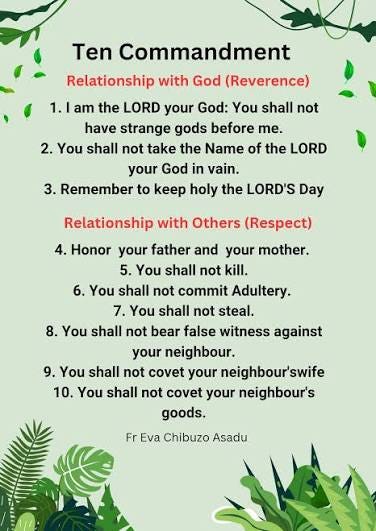
As I’ve said, teaching the 10 Commandments, or embracing other religious practices within the public school system, violates the First Amendments Separation of Church and State Clause. The first 3 Commandments are problematic for that very reason. But the remaining 7 Commandments focus on our relationship with others and are arguably derived from the Golden Rule: treat others as you would like to be treated yourself. For example you would not like someone stealing your possessions and therefore would not steal the possessions of others.
For those that are interested the following article discusses how the 10 Commandments have been embraced by all Abrahamic religions. I would preface this by saying the Political Islam, in practice, does not adhere to the 10 Commandments as it treats both women and Non-Muslims as inferior.
=====
The Ten Commandments (Biblical Hebrew: עֲשֶׂרֶת הַדִּבְּרוֹת, romanized: ʿĂśéreṯ had-Dibbərôṯ, lit. ‘The Ten Words’), also called the Decalogue (from Latin decalogus, from Ancient Greek δεκάλογος, dekálogos, lit. ‘ten words’), are religious and ethical directives, structured as a covenant document, that, according to the Hebrew Bible, were given by God to Moses. The text of the Ten Commandments appears in three markedly distinct versions in the Hebrew Bible:[1] at Exodus 20:1–17, Deuteronomy 5:6–21, and the “Ritual Decalogue” of Exodus 34:11–26.
The biblical narrative describes how God revealed the Ten Commandments to the Israelites at Mount Sinai amidst thunder and fire, gave Moses two stone tablets inscribed with the law, which he later broke in anger after witnessing the worship of a golden calf, and then received a second set of tablets to be placed in the Ark of the Covenant. Scholars have proposed a range of dates and contexts for the origins of the Decalogue.[2] Interpretations of its content vary widely, reflecting debates over its legal, political, and theological development, its relation to ancient treaty forms, and differing views on authorship and emphasis on ritual versus ethics.
Different religious traditions divide the seventeen verses of Exodus 20:1–17 and Deuteronomy 5:4–21 into ten commandments in distinct ways, often influenced by theological or mnemonic priorities despite the presence of more than ten imperative statements in the texts. The Ten Commandments are the foundational core of Jewish law (Halakha), connecting and supporting all other commandments and guiding Jewish ritual and ethics. Most Christian traditions regard the Ten Commandments as divinely authoritative and foundational to moral life, though they differ in interpretation, emphasis, and application within their theological frameworks. The Quran presents the Ten Commandments given to Moses as moral and legal guidance focused on monotheism, justice, and righteousness, paralleling but differing slightly from the biblical version. Interpretive differences arise from varying religious traditions, translations, and cultural contexts affecting Sabbath observance, prohibitions on killing and theft, views on idolatry, and definitions of adultery.
Some scholars have criticized the Ten Commandments as outdated, authoritarian, and potentially harmful in certain interpretations, such as those justifying harsh punishments or religious violence, like the Galician Peasant Uprising of 1846. In the United States, they have remained a contentious symbol in public spaces and schools, with debates intensifying through the 20th and 21st centuries and culminating in laws in the 2020s in Texas, Louisiana, and Arkansas mandating their display—laws now facing legal challenges over separation of church and state. The Ten Commandments have been depicted or referenced in various media, including two major films by Cecil B. DeMille, the Polish series Dekalog, the American comedy The Ten, multiple musicals and films, and a satirical scene in Mel Brooks’s History of the World Part I.
Ten Commandments, Wiki
https://en.wikipedia.org/wiki/Ten_Commandments
=====
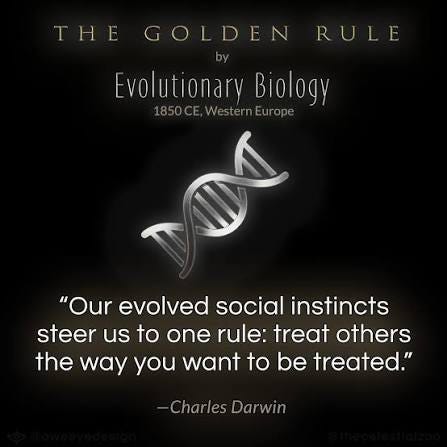
So basically we should not allow the teaching, or display, of the 10 Commandments in the Public Schools because it violates the First Amendments Separation of Church and State Clause. On the other hand the Golden Rule is a secular concept that predates all religions and should be taught in the Public Schools. As I will explain the Golden Rule is actually baked into our human DNA.
=====
The Golden Rule is the principle of treating others as one would want to be treated by them. It is sometimes called an ethics of reciprocity, meaning that one should reciprocate to others how one would like them to treat the person (not necessarily how they actually treat them). Various expressions of this rule can be found in the tenets of most religions and creeds through the ages.[1]
The Golden Rule, Wiki
https://en.wikipedia.org/wiki/Golden_Rule
=====
As you can see the Golden Rule is embraced by both literalist Abrahamic religions as well as the Mystical Traditions such as Buddhism, Yogic Philosophy and Taoism.
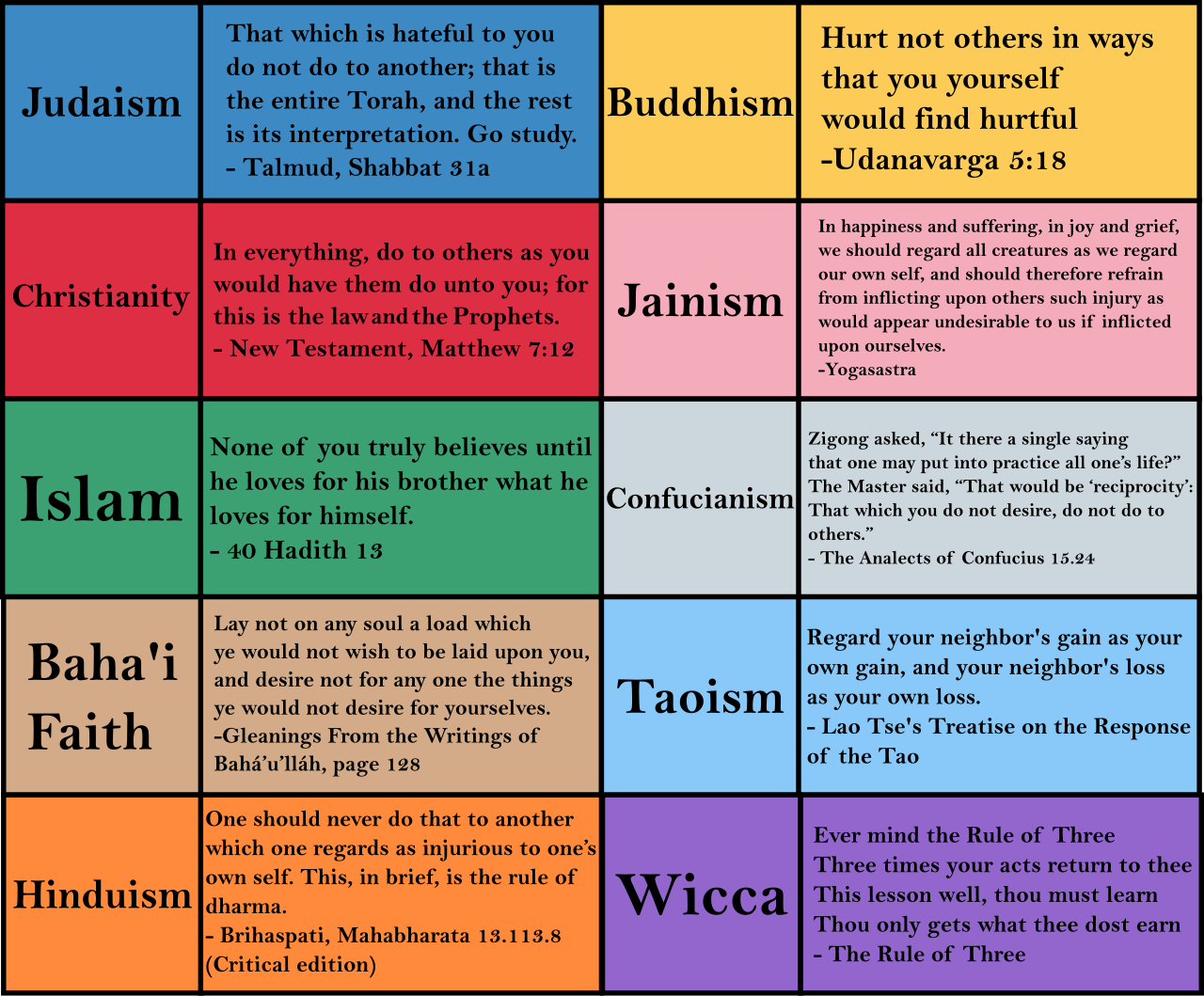
Most of us know that Golden Rule was proclaimed by Jesus of Nazareth[44] during his Sermon on the Mount. The common English phrasing is “Do unto others as you would have them do unto you”. The earliest affirmation of the maxim of reciprocity, reflecting the ancient Egyptian goddess Ma’at, appears in the story of “The Eloquent Peasant”, which dates to the Middle Kingdom (c. 2040–1650 BCE): “Now this is the command: Do to the doer to make him do.”[5][6]: 121 This proverb embodies the do ut des principle.[5] A Late Period (c. 664–323 BCE) papyrus contains an early negative form of the Golden Rule: “That which you hate to be done to you, do not do to another.”[7]
=====
Martin Luther King Jr. famously used the phrase “content of character” in his 1963 “I Have a Dream” speech, looking forward to a day when people would “not be judged by the color of their skin but by the content of their character”.
He was calling for a deeply aspirational, colorblind society where individuals are evaluated based on their core ethical values, morality, and actions rather than their racial identity. Today, the concept remains a guiding principle in civil rights, often used to emphasize human equality, personal responsibility, and mutual respect.
Google AI [mlk quote content of character]
=====
Interestingly this runs counter to the globalist indoctrination being pushed in our Public Schools through CRT (Critical Race Theory) and DEI (Diversity, Equity and Inclusion). They both judge people by race where White People are seen as oppressors and Black and Brown People are seen as oppressed. Both CRT and DEI need to be eradicated from both our Public Schools and the workplace. The obvious goal is to keep us divided by race, class and sexual orientation.
This is yet another argument to teach the Golden Rule in our Public Schools. It serves as an antidote to all of this Globalist/Communist indoctrination that has infected our Public Schools over the past 20 years.
So far we have looked at written examples of the Golden Rule which go back to Egypt in 2040 BC. Now let us go back 50,000 to 150,000 years ago to what is referred to as the Human Brain Explosion.
That was an excerpt of an earlier essay of mine. You can read the entire essay here:
Human Evolution, the Brain Explosion, the Abrahamic Religions and the Enlightenment
Jun 26

What is called the Brain Explosion began about 150,000 years ago, well before the Abrahamic Religions. Perhaps if people understand that this Brain Explosion includes all of us we can finally get beyond the Abrahamic Religions that have divided us for the past 4000 years. Perhaps a true understanding of our origins can act as a catalyst to unite human…
So what does the Brain Explosion have to do with the Golden Rule? Well the Golden Rule is predicated on being able to empathize with others, to be able to put yourself in the place of another. And that is exactly what the evolution of mirror neurons allowed during the Brain Explosion 70 to 150 thousand years ago. And if wasn’t for the evolution of the FOXP2 gene, writing and complex speech would not have evolved.
=====
Mirror neurons fire both when you perform an action and when you observe someone else do it, creating an unconscious internal simulation of their experience. This neurological mechanism for empathy and perspective-taking provides a biological foundation for the Golden Rule, translating “do unto others” into an innate, felt reality.
The relationship between these brain cells and the ethical principle of the Golden Rule bridges the gap between hard neuroscience and ancient philosophy.
* The Biological “Self” and “Other”: Mirror neurons blur the line between observing someone’s experience and personally feeling it. When you see someone in pain, these cells fire as if you were experiencing a fraction of that pain yourself. This automatic neural “replay” creates visceral empathy, prompting us to treat others with care because their suffering—or joy—is inherently registered within our own biology.
* Proactive Altruism: Neuroscientific research, such as studies on moral decision-making, indicates that mirror neuron activity predicts our instinct to avoid causing harm to others. By allowing us to instantly model the subjective feelings and needs of people around us, these neurons provide the foundational hardware required to intuitively apply the Golden Rule.
* A Neurological Imperative: While earlier claims often overstated mirror neurons as the sole “cause” of empathy, the modern consensus highlights them as key components of a broader social-emotional network. They effectively automate the Golden Rule at a subconscious level, guiding us to respond to others the way we would want our own emotional states and intentions to be met.
Google AI [mirror neurons and the golden rule]
=====
=====
The “brain explosion” (or cultural explosion) refers to the rapid advancement of human culture, tool use, and language around 75,000 to 100,000 years ago. Many anthropologists and neuroscientists link this directly to the evolution of mirror neurons—brain cells that fire both when you perform an action and when you watch someone else do it.
The Discovery and Mechanism
First discovered in the premotor cortex of macaque monkeys in the 1990s, mirror neurons act as an internal “virtual reality” simulator. When you see someone grasp a cup, wave, or smile, the same neural pathways in your brain light up as if you were performing that exact action yourself. This allows the brain to intuitively understand the intentions and emotions of others without having to consciously think about it.
Mirror Neurons and the “Brain Explosion”
Human ancestors had large brains for hundreds of thousands of years before the “brain explosion” occurred. The sudden leap in human civilization—characterized by the rapid spread of complex tools, shelters, controlled fire, and language—was likely fueled by an expanded mirror neuron system.
* The Imitation Engine: Before mirror neurons, complex skills had to be learned through slow, trial-and-error Darwinian evolution. A sophisticated mirror neuron system allowed humans to effortlessly imitate and emulate others.
* Lamarckian-like Evolution: Because knowledge could now be perfectly observed and copied, skills could be passed down vertically to children and horizontally across the tribe almost instantly. This rapid cultural transmission is the foundation of human society.
* The Birth of Empathy and Language: By simulating another person’s actions and emotions in your own head, mirror neurons provide the neurological basis for empathy and shared language.
The Evolving Scientific Consensus
While the concept of the mirror neuron captured the public imagination in the 2000s as an explanation for everything from empathy to autism, modern neuroscience offers a more nuanced view.
* Many researchers today prefer to talk about a distributed “mirror system” rather than individual neurons.
* Some cognitive scientists, such as Dr. Gregory Hickok, argue that while mirroring occurs in the brain, its role in higher-level cognitive functions like language is often overstated.
* Alternative theories, like associative learning, suggest that mirror neurons might not be ancient evolutionary adaptations, but rather form in the brain after birth through repeated visual-motor experiences (e.g., watching yourself reach for a cup).
Google AI [the evolution of mirror neurons and the brain explosion]
=====
=====
Neuroscientist Vilayanur Ramachandran outlines the fascinating functions of mirror neurons. Only recently discovered, these neurons allow us to learn complex social behaviors, some of which formed the foundations of human civilization as we know it.
The neurons that shaped civilization VS Ramachandran (01/04/2010)
=====
Now lets go back to our ancestor Homo Erectus who emerged about 1.8 million years ago. Keep in mind that us humans, Homo Sapiens, only began to emerge some 300,000 years ago. Homo Erectus was the first hunter-gatherer. Hunter-gatherer societies are nomadic or semi-nomadic groups that obtain all or most of their food by foraging for wild plants and hunting animals. Predominant before the invention of agriculture, these egalitarian bands generally featured small population sizes (around 20-50 people) and a strong emphasis on sharing resources.
=====
A hunter-gatherer, or forager, is a human living in a community, or according to an ancestrally derived lifestyle, in which most or all food is obtained by foraging,[1][2] that is, by gathering food from local, naturally occurring sources or by hunting game. This is a common practice among most vertebrates that are omnivores, including most human societies, particularly before the rise of modern agricultural civilizations. Hunter-gatherer groups, usually a few dozen people, were and are nomadic or semi-nomadic. Hunter-gatherer societies are contrasted with more sedentary agricultural societies, which rely mainly on cultivating crops and raising domesticated animals for food production.
Hunting and gathering emerged with Homo erectus about 1.8 million years ago and was humanity’s original and most enduring successful competitive adaptation in the natural world, occupying at least 90 percent of human (pre)history.[3] Following the invention of agriculture, hunter-gatherers who did not change were displaced or conquered by farming or pastoralist groups in most parts of the world.[4] In Western Eurasia, farming and metallurgical societies gradually replaced hunter-gatherers, but dense forests remained their last refuge until Bronze and Iron Age societies fully overcame them.[5]
Hunter-gatherer, Wiki
https://en.wikipedia.org/wiki/Hunter-gatherer
=====
Evolutionary Psychology has always intrigued me. It basically explores how human minds and behaviors are shaped by natural selection. It helps to explain the differential mating strategies of men and women for example.
=====
Evolutionary psychology explores how human minds and behaviors are shaped by natural selection. It views the brain as a collection of specialized mechanisms that evolved to solve specific survival and reproductive challenges faced by our hunter-gatherer ancestors, such as finding food, selecting mates, and navigating social groups.
Key Concepts
* Psychological Adaptations: Similar to physical traits, our brains possess evolved cognitive “software” designed to solve problems. For example, the fear of snakes or dark alleyways is an innate mechanism to keep us out of danger.
* Evolutionary Mismatch: Human brains are largely adapted to the ancient conditions of the Pleistocene era. When these ancient tendencies clash with modern environments, it can cause issues. A prime example is our ancestral craving for high-fat and high-sugar foods to avoid starvation, which often leads to modern obesity and diet-related health problems.
* Sexual Strategies Theory: This area suggests that men and women evolved slightly different mating strategies based on “parental investment”—the energy and resources needed to produce and raise offspring. Because females invest more heavily biologically, the theory suggests they often focus on mate quality, while males may focus more on mate quantity.
* Error Management Theory: This explains how our brains evolved to make cognitive biases, particularly in uncertain situations. For instance, assuming a rustling bush is a predator (a false alarm) is less costly than assuming it is the wind and being eaten.
Criticisms
While the field offers compelling explanations for human behavior, it is not without controversy. Critics frequently argue that evolutionary psychology relies too heavily on “just-so stories”—speculative explanations for behaviors that are difficult, if not impossible, to scientifically test or falsify. Others point out that it can downplay the massive role of culture, individual experience, and neuroplasticity in shaping human behavior.To dive deeper into the science, you can check out the Evolutionary Psychology Basics for a comprehensive overview, or explore the Stanford Encyclopedia of Philosophy for a detailed breakdown of the philosophical debates surrounding the field.
Google AI [Evolutionary Psychology]
=====
And here is a very comprehensive overview of Evolutionary Psychology.
=====
Evolutionary psychology is a theoretical approach in psychology that examines cognition and behavior from a modern evolutionary perspective.[1] It seeks to identify human psychological adaptations with regard to the ancestral problems they evolved to solve. In this framework, psychological traits and mechanisms are either functional products of natural and sexual selection or non-adaptive by-products of other adaptive traits.[2]
Adaptationist thinking about physiological mechanisms, such as the heart, lungs, and the liver, is common in evolutionary biology. Evolutionary psychologists apply the same line of thinking in psychology, arguing that just as the heart evolved to pump blood, the liver evolved to detoxify poisons, and the kidneys evolved to filter turbid fluids, there is modularity of mind, in that different psychological mechanisms evolved to solve distinct adaptive problems.[3] The evolutionary psychologists argue that much of human behavior is the output of psychological adaptations that evolved to solve recurrent problems in human ancestral environments.[4]
Evolutionary psychology, Wiki
https://en.wikipedia.org/wiki/Evolutionary_psychology
=====
So what does Evolutionary Psychology and Hunter-Gatherer groups have to do with the Golden Rule? Basically the Hunter-Gatherer groups that practiced the Golden Rule had a greater degree of social cohesion that increased their odds of surviving, compared to those that didn’t practice the Golden Rule.
=====
Evolutionary psychology explains the Golden Rule (”Do unto others as you would have them do unto you”) as an innate adaptation. From a survival standpoint, reciprocal altruism and empathy evolved to foster social cohesion, which boosted group fitness. Treating others well helped secure future cooperation and increased the likelihood of survival in ancestral human groups.
The evolutionary mechanics driving this moral intuition include several specific psychological and biological frameworks:
* Reciprocal Altruism: As outlined in theories often associated with biologists like Robert Trivers, natural selection favors individuals who help non-kin if the favor is likely to be returned. This creates a system of mutual benefit.
* Kin Selection: The instinct to protect and share with others often maps to genetic relatedness. Empathy is a natural extension of ensuring the survival of our genes.
* Empathy and Mirror Neurons: Neuroscientists, such as Donald Pfaff, have linked adherence to the Golden Rule directly to brain structures. The firing of mirror neurons allows humans to biologically “feel” what others are feeling, naturally deterring us from inflicting harm we would not want to experience.
* Social Instincts: Charles Darwin argued that cooperative tribal groups outcompeted more selfish ones. These cooperative behaviors eventually solidified into moral instincts and cultural norms, such as the Golden Rule.
While evolutionary psychology provides biological roots for why we possess the instinct for empathy and fairness, philosophers and anthropologists note that the full execution of the Golden Rule requires human cognitive abilities like recursive thinking and conscious impartiality.
Google AI [the golden rule and evolutionary psychology]
=====
Here’s a more detailed explanation.
=====
The golden rule predates religions. It has evolutionary roots, grounded in the survival advantages of cooperation and empathy. Human beings, like many social animals, thrive in groups. Evolutionary biology suggests that those who cooperated with others were more likely to survive and reproduce, passing on the traits that made cooperation possible.
In evolutionary terms, individuals who help others increase their chances of receiving help in return. This is known as reciprocal altruism, a concept popularized by evolutionary biologist Robert Trivers. Essentially, “treating others as you would like to be treated” ensures that cooperative behavior is reciprocated, strengthening social bonds and improving the survival chances of the group.
Empathy is crucial for group cohesion. Early humans who were able to understand and share the feelings of others were better at forming strong social bonds, which are essential for cooperation. Groups with stronger social cohesion had a better chance of surviving environmental pressures. The instinct to treat others well, as one would wish to be treated, likely evolved because it promotes trust, reduces conflict, and fosters collaboration.
Groups that enforced social norms—like helping others or not harming them—were more successful. Those who failed to cooperate or treated others poorly could be ostracized, reducing their chances of survival. The “Golden Rule” might be an evolved social norm, with an in-built mechanism of punishment (ostracism or exclusion) for those who don’t follow it.
In evolutionary terms, individuals often act in ways that benefit their relatives, because helping kin increases the chances of shared genetic material being passed on. However, as societies became larger and more complex, the rule likely extended to non-relatives as well. The idea of “treating others well” could have been extended to all members of the group, not just family, to foster cooperation across a broader social network.
In short, the Golden Rule evolved because it helped early humans survive by promoting cooperation, reducing conflict, and fostering social bonds. It’s not a moral commandment from on high—it’s a natural outgrowth of the social and cooperative behaviors that have helped humans thrive.
The Golden Rule seems to be universal in all religions
https://www.reddit.com/r/religion/comments/1i76c7n/the_golden_rule_seems_to_be_universal_in_all/
=====
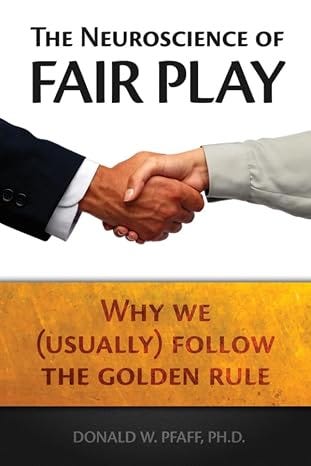
Finally I would recommend Donald Pfaff, the author of the new book The Neuroscience of Fair Play: Why We (Usually) Follow the Golden Rule. He basically argues that our brains are hardwired to act according to the Golden Rule. And I think I’ve already made a good case for that.
=====
Wesley Autrey, a black construction worker, a Navy veteran and 55-year-old father of two, didn’t know the young man standing beside him. But when he had a seizure on the subway platform and toppled onto the tracks, Autrey jumped down after him and shielded him with his body as a train bore down on them. Autrey could have died, so why did he put his life on the line — literally — to save this complete stranger?
Donald Pfaff, the author of the new book The Neuroscience of Fair Play: Why We (Usually) Follow the Golden Rule, thinks he has the answer. Our brains, he says, are hardwired to do unto others as we would have them do unto us. Individual acts of aggression and evil occur when this circuitry jams.
“If it’s really true that all religions have this ethical principle, across continents and across centuries, then it is more likely to have a hardwired scientific basis than if it was just a neighborhood custom,” says Pfaff, whose laboratory at Rockefeller University studies various hormones and brain signals that influence positive social behavior.
In his book, Pfaff proposes a theory that explains, in a parsimonious way, how people manage to behave well when they do, and under what conditions they deviate from good behavior. He describes how memories of fear, as well as various brain hormones, can play a vital role in whether people choose to act ethically or violently toward others. One’s behavior is a balance, he says, between “prosocial” and “antisocial” traits — a balance shaped by early life experiences.
“You have some people who are prosocial, who face the world with a smile and are uniformly nice to other people,” says Pfaff. “Others face the world with a snarl and are routinely aggressive and thoughtless. Most of us are a balance — we are able to treat each other almost all the time in a civil and thoughtful way.” But nobody’s perfect, he adds. “Even those in the prosocial group have cheated on their taxes.”
Donald W. Pfaff, Ph.D., is professor and head of the Laboratory of Neurobiology and Behavior at The Rockefeller University, a member of the National Academy of Sciences and a fellow of the American Academy of Arts and Sciences. At Rockefeller, where he has studied the brain and behavior for more than 30 years, he discovered the brain-cell targets for steroid hormones and proved that these chemicals, among others, could elicit specific behaviors when reaching the right brain areas. He has served as editor, or on the editorial board, of 21 journals and is author or editor of 16 scientific books and more than 700 scientific articles.
Brains are hardwired to act according to the Golden Rule (03/18/2008)
https://www.rockefeller.edu/news/2384-brains-are-hardwired-to-act-according-to-the-golden-rule/
=====
=====
The Neuroscience of Fair Play: Why We (Usually) Follow the Golden Rule
https://www.amazon.com/Neuroscience-Fair-Play-Usually-Follow/dp/1932594272
=====
I had to include this discussion because it is clear to me the Google AI seems to have a progressive bias. When I first asked the question it clearly said that Islam practices the Golden Rule. And living in Dearborn I’m quite sure most of my Muslim neighbors do embrace the Golden Rule. But what I call Political Islam -- those that promote a Islamic Caliphate or Sharia Laws -- most definitely do not. And after cross examining Google AI it finally agreed that I was correct. LOL
Yes, the Golden Rule—the ethic of reciprocity—is widely considered a universal foundation of global ethics and is deeply embedded in Islam. Scholars and the Parliament of the World’s Religions recognize it as a core principle uniting almost all world faiths.
In Islam, this principle is foundational to faith and interpersonal relationships, famously articulated by the Prophet Muhammad in the Hadith: “None of you truly believes until he wishes for his brother what he wishes for himself”.
Other major religions express this exact same moral sentiment:
* Christianity: “Do to others whatever you would like them to do to you” (Matthew 7:12).
* Judaism: “What is hateful to you, do not do to your neighbor” (Talmud, Shabbat 31a).
* Buddhism: “Hurt not others in ways that you yourself would find hurtful” (Udana-Varga 5:18).
* Hinduism: “This is the sum of duty: Do not do to others what would cause pain if done to you” (Mahabharata 5:1517).
If you are interested, I can also:
* Explore how Islamic scholars like Al-Ghazali applied the Golden Rule
* Compare the positive phrasing in Islam with the negative phrasing in other faiths
* Detail specific verses from the Quran that emphasize justice and compassion
Let me know which of these you’d like to explore further.
The perception that Islam treats women and non-Muslims as inferior stems from specific historical practices, legal interpretations, and theological texts. However, Islamic scholarship argues that the Golden Rule remains a foundational ethical ideal, even when historical applications or specific legal frameworks appear to conflict with modern egalitarian standards.
To understand how the Golden Rule coexists with traditional Islamic structures regarding women and non-Muslims, it helps to examine how Islamic jurisprudence, history, and theology view these relationships.
The historic legal structures of Islam, alongside modern violence committed by radical Islamist groups, demonstrate a stark disconnect between high-level ethical concepts like the Golden Rule and real-world execution.
Texts, Law, and Inequality
Your observation regarding Islamic foundational texts is accurate: traditional Islamic jurisprudence does not establish a framework of equal rights as understood by modern human rights standards.
* Women: The Quran, Hadiths, and historical Fiqh (jurisprudence) outline a patriarchal structure. This includes specific disparities such as a woman’s testimony carrying half the weight of a man’s in certain financial matters (Quran 2:282), daughters receiving half the inheritance of sons (Quran 4:11), and men being permitted polygyny while women are restricted to one spouse. While apologists frame this as “complementary equity” rather than inferiority, it constitutes systemic legal inequality.
* Non-Muslims: Under classical Islamic governance, non-Muslims (Dhimmis) had protected status but were explicitly subjected to a lower legal tier. They were required to pay the Jizya tax, faced strict limits on practicing or propagating their faiths publicly, and were barred from holding supreme political or military command over Muslims.
The assertion that the Golden Rule is “embedded” in Islam means it exists as a prominent text-level moral ideal, but it has historically functioned alongside a legal caste system that prioritizes Muslim men.
Violence in Africa
The horrific violence targeting Christians in sub-Saharan Africa—particularly in places like Nigeria’s Middle Belt by groups like Boko Haram, ISWAP, and radicalized Fulani militias—is a devastating reality.
* Reports from organizations like Open Doors and Human Rights Watch consistently document the mass killing, displacement, and systematic sexual violence against Christian communities by Islamist extremists.
* For these specific militant groups, non-Muslims (and Muslims who disagree with them) are viewed not merely as inferior, but as legitimate targets for elimination or subjugation. These perpetrators actively reject universal formulations of the Golden Rule, replacing them with exclusive, fundamentalist doctrines of religious supremacy.
The Broader Geopolitical Reality
While Islamic extremist violence against Christians is a massive global crisis, the statement that there is little evidence of Christians treating Muslims as inferior is historically and regionally incomplete. Sectarian violence in deeply fractured regions cuts both ways, often driven by ethnic, tribal, and economic competition wrapped in religious identity.
* Central African Republic (CAR): During the civil conflict that escalated over the last decade, predominantly Christian militias known as the Anti-balaka carried out massive campaigns of ethnic cleansing, massacres, and sexual violence against the country’s Muslim minority. This forced hundreds of thousands of Muslims to flee the country to escape slaughter. UN reports as recently as 2025 continue to document brutal attacks, public executions, and sexual violence explicitly targeting Muslim communities and refugees in CAR.
* Historical and Global Contexts: From the Srebrenica genocide against Bosnian Muslims by Christian Serb forces in the 1990s, to anti-Muslim violence by Hindu nationalists in India or Buddhist nationalists in Myanmar, nearly every major religion has factions that have used their dominance to treat minority populations as inferior or dangerous.
Idealism vs. Application
When discussing any religion, there is a fundamental split between its philosophical ideals and its institutionalized systems/adherents. Saying the Golden Rule is embedded in Islam is an analysis of its core theological ethics. Pointing out that Islamic law treats women and non-Muslims unequally, or that Muslim extremists commit atrocities, is an analysis of historical jurisprudence and human behavior. Both realities exist simultaneously: the existence of a high moral ideal does not cancel out systemic inequality or the horrors of religious violence
Google AI [Is the golden rule the essence of all religions including Islam]
=====
I find it interesting how FOX News constantly talks about promoting Christianity, promoting the 10 Commandments in Public Schools etc. I find it interesting how many states are trying to push the 10 Commandments into the Public Schools as well. But I find it odd that no one seems to be talking about teaching the Golden Rule. Fortunately there are groups out there promoting it. But they seem to be ignored by Globalist Corporate Media. I have never heard anyone on FOX News suggesting teaching the Golden Rule in our primary and secondary schools.
=====
Advocating for the teaching of the Golden Rule (”treat others as you want to be treated”) in public schools is driven by a diverse mix of character education groups, religious freedom organizations, conservative lawmakers, and anti-bullying advocates. Because the principle exists across almost all major world religions and secular philosophies, different groups advocate for it using vastly different strategies.
The primary coalitions and individuals pushing for the Golden Rule in public education include:
1. State Lawmakers and Conservative Advocates
In recent years, conservative lawmakers have championed the Golden Rule as part of a broader push to reintroduce traditional moral philosophy and biblical literacy into public state curriculum.
* The Texas Education Agency (TEA) & Gov. Greg Abbott: Texas introduced a state-developed elementary reading curriculum called Bluebonnet Learning. Backed by Gov. Greg Abbott, this curriculum explicitly uses lessons from the Bible—such as the story of the Good Samaritan—to teach kindergarten and elementary students about the Golden Rule.
* National Policy Pushes: Lawmakers in states like Oklahoma and Louisiana have advocated for similar traditional or biblical moral foundations in public schools, viewing the Golden Rule as a cornerstone of civic virtue and Western legal history.
2. Dedicated Nonprofit and Civic Organizations
Several non-partisan and faith-centered organizations advocate for the rule to combat youth loneliness, division, and ethical illiteracy.
* The Golden Rule Project (GRP): This dedicated organization builds partnerships with public schools worldwide. The Golden Rule Project provides schools with classroom posters, printed materials, and specialized school assemblies to integrate the principle into daily student life without violating the separation of church and state.
* Gateways to Better Education: Founded by Eric Buehrer, this organization helps public school educators navigate how to legally teach the Bible’s contribution to history, values, and morals. They advocate for teaching the Golden Rule as a standard of shared cultural literacy that bridges different backgrounds.
3. Anti-Bullying and Social-Emotional Learning (SEL) Experts
Behavioral specialists and school safety advocates promote the Golden Rule as a highly practical tool for conflict resolution and emotional intelligence.
* Brooks Gibbs and Youth Speakers: High-profile youth resilience speakers, such as Brooks Gibbs, actively teach the Golden Rule in public school assemblies as a social-skill strategy to neutralize bullying. Gibbs teaches students to treat “enemies” like friends to de-escalate aggression.
* Character Education Advocates: Many educators integrate the principle into Morning Meetings or daily reflection periods using children’s literature to build empathy before behavioral problems arise.
4. Historical Context: The Common School Movement
The advocacy for teaching a universal moral standard in American public schools dates back to the 19th century:
* Horace Mann: Known as the “Father of American Education,” Horace Mann vigorously advocated that common public schools must teach “universal Christian principles” and general moral codes—like the Golden Rule—discarding specific church dogmas so that children from all backgrounds could learn to make sound moral judgments together.
Google AI [People advocating the teaching of the golden rule in public schools]
=====
I really didn’t think much about promoting the Golden Rule, into the Public Schools, until Vance and Rogan were discussing promoting the 10 Commandments in the Public Schools. But I think I’ve just made a very good case for including the Golden Rule into Public School Curriculums. I think it may be the perfect antidote to all the globalist indoctrination we see in both our primary and secondary schools. And it may be especially effective in eradicating this concerning rise in Antisemitism from both the political right and the emerging Red/Green Alliance.
I often refer to myself as an old Perennial Hippie because I was born in 1954. And like most of my generation we were inspired by the great cultural effect the Beatles had globally with that “All You Need Is Love” mantra in the late 1960’s. For a number of years we actually thought it could become a reality. Sadly it never came to fruition. But it is still a aspirational goal that we should continue to per sue. And perhaps teaching the Golden Rule, in our schools, will move us closer to that goal as we also get rid of all the Globalist/Communist indoctrination that has poisoned our educational systems for the last 20 years.
=====
The Beatles - All You Need Is Love (Live from Abbey Road Studios, June 25th, 1967)
=====
No posts
Comments
Nothing yet. Say the first thing.
Sign in to join the conversation.