
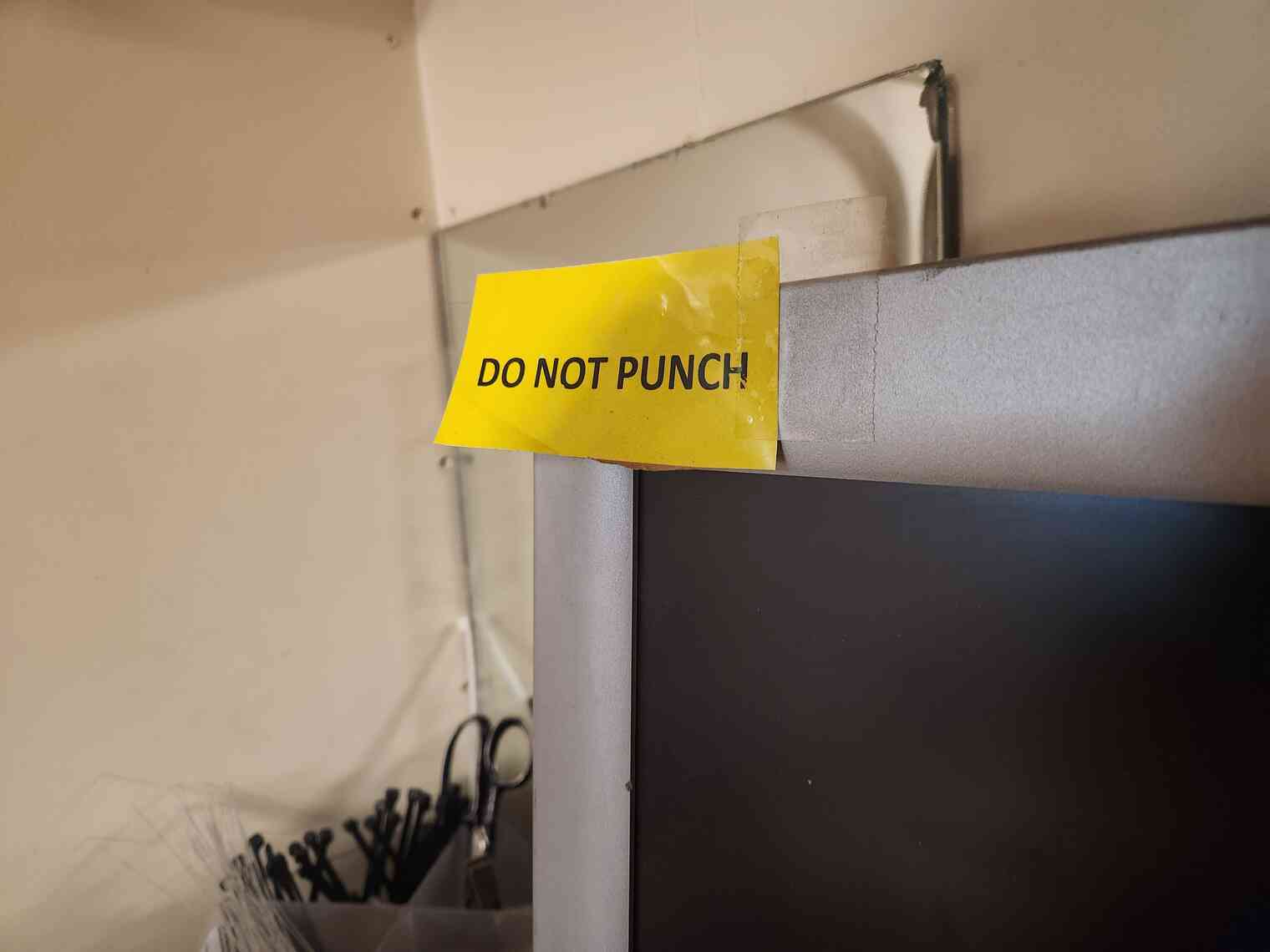
Please close doors quietly!

I’ve always been fascinated by routine, mundane activities and infrastructure in extraordinary contexts.
It’s why I’ve gleefully written about the everyday realities of life and how they play out in Antarctica – topics such as laundry, wastewater infrastructure, credit card fraud, voting, automated teller machines, mud, and doors.
In the seven months I’ve been at the South Pole so far, I’ve kept up my fascination with the day-to-day tasks involved in keeping the station going. Yes, we’re at the actual, real-life South Pole. Yes, it’s -100°F outside. Yes, we’re isolated for 8 months straight.
Yes, it’s a once-in-a-lifetime opportunity and an extraordinary, novel set of circumstances.
But also – We live here! And living in a place means that it will develop a certain rhythm. A certain set of norms, customs, fault lines, battle scars, inside jokes, remembrances. Day-to-day reminders of the folks who have left their mark on this place over the years.
We still fight over slammed doors. We still do routine custodial tasks. We still have fire alarms, plumbing leaks, coffee spills, movie nights. Spreadsheets. Labeling schemes. Workflows and processes, official and unofficial.
We have signs because Bad Things happened once, and now they’re immortalized forever with homegrown, earnest warnings. We have formal OSHA signage; we have earnest hand-scrawled pleas.
Signs that make you scratch your head. Signs that could exist in a suburban office park anywhere on earth. Signs that can only exist at the South Pole.
In my opinion, the signage here at the South Pole provides a fascinating glimpse into our day-to-day routines, without indulging in voyeuristic overreach or violating anyone’s privacy. People live here, and we deserve a quiet life.
But – this place is also fascinating, and I think signage is a fun, respectful, and quirky way to explore it.
I hope you enjoy viewing these photos as much as I enjoyed taking them.
Table of contents
- Warehousing, Operations, Industrial Safety
- Fire Safety
- Food and Drink
- Electrical
- Don’t Slam the Door
- Turn off the Lights
- Waste Management
- Utilities
- Workshops
- Laundry
- Uniquely South Pole
- Miscellaneous
Warehousing, Operations, Industrial Safety
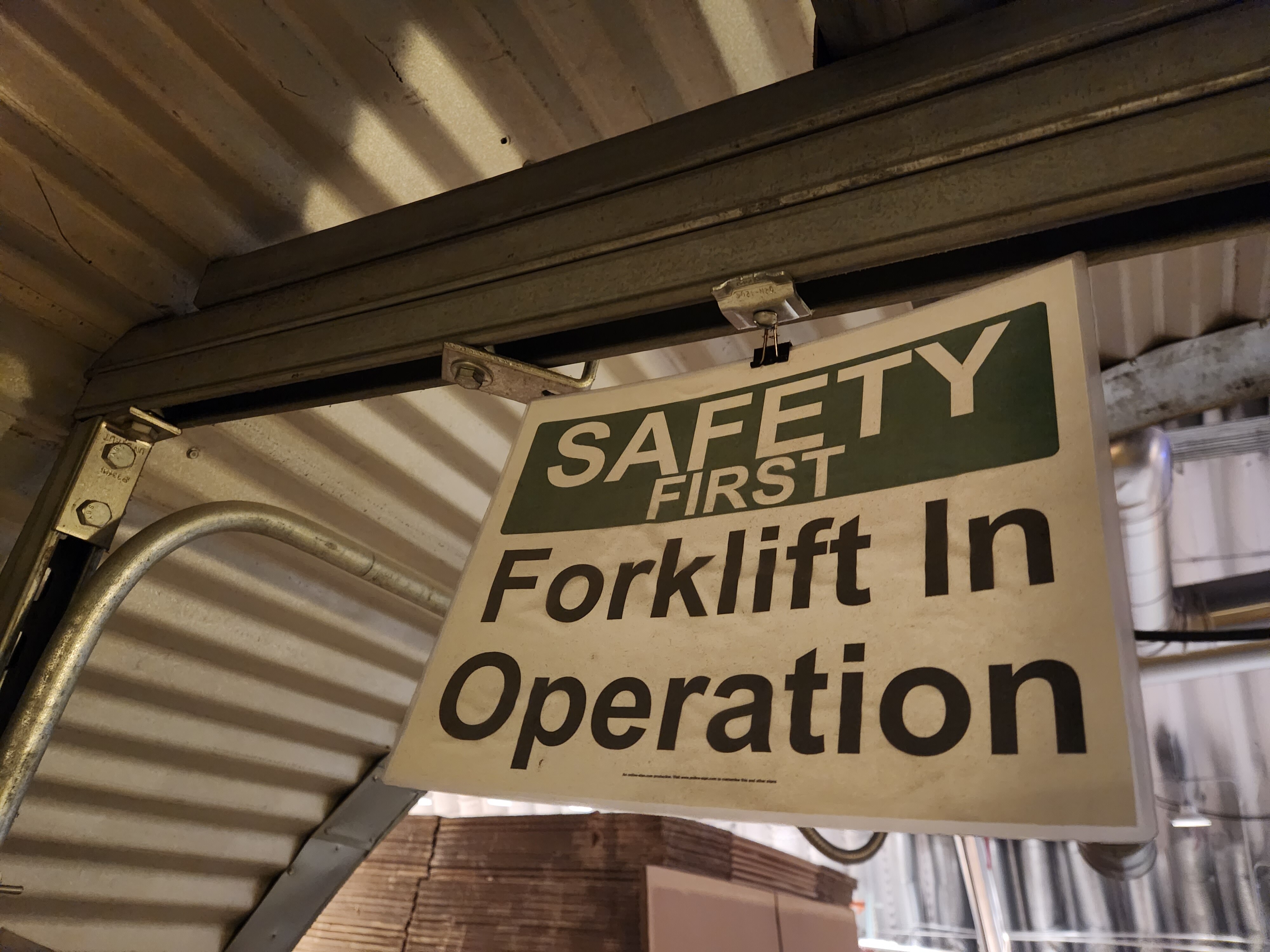 Obligatory forklift safety sign in the Logistics Arch.
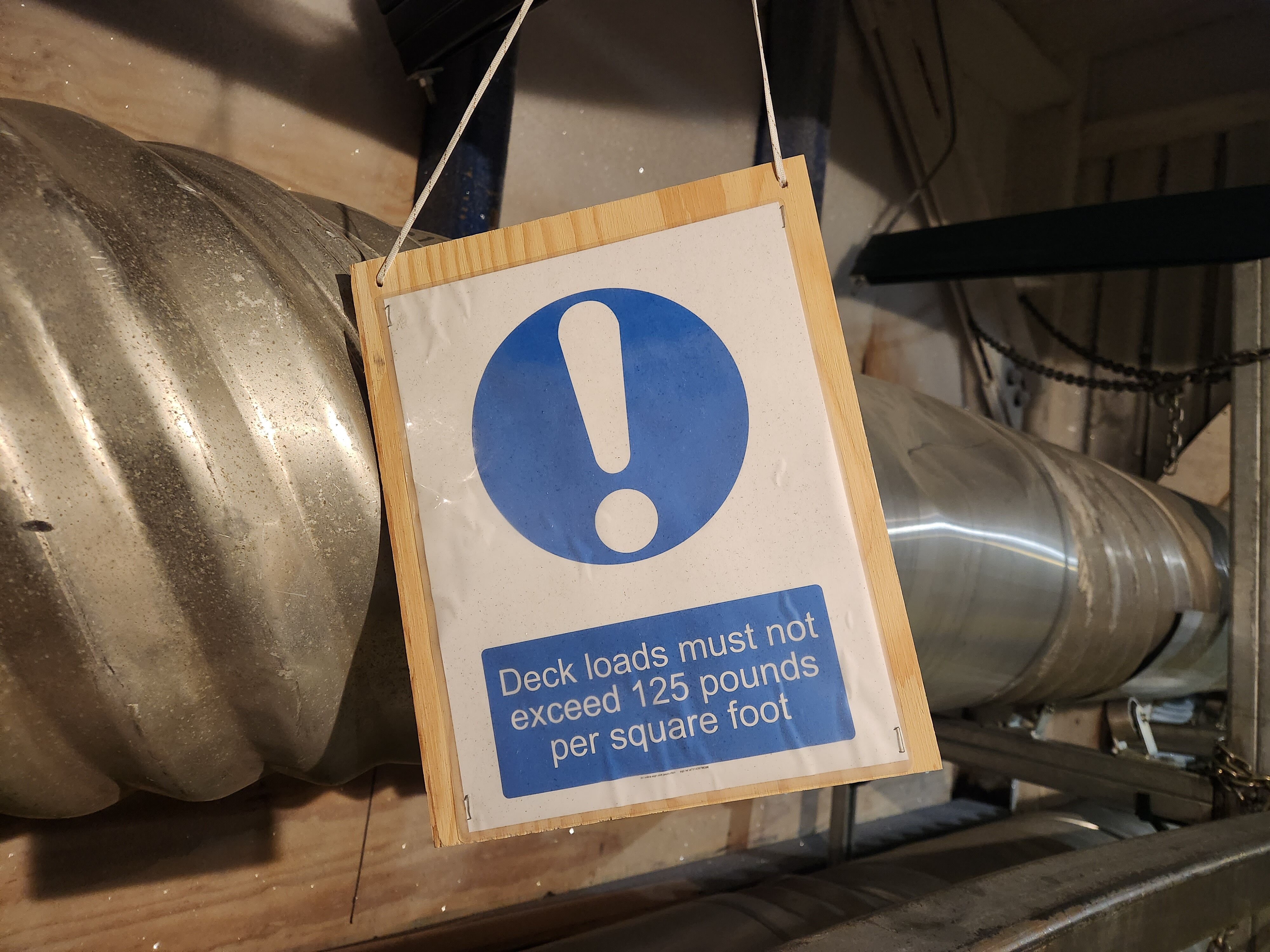 Signage on the decks down in the arches.
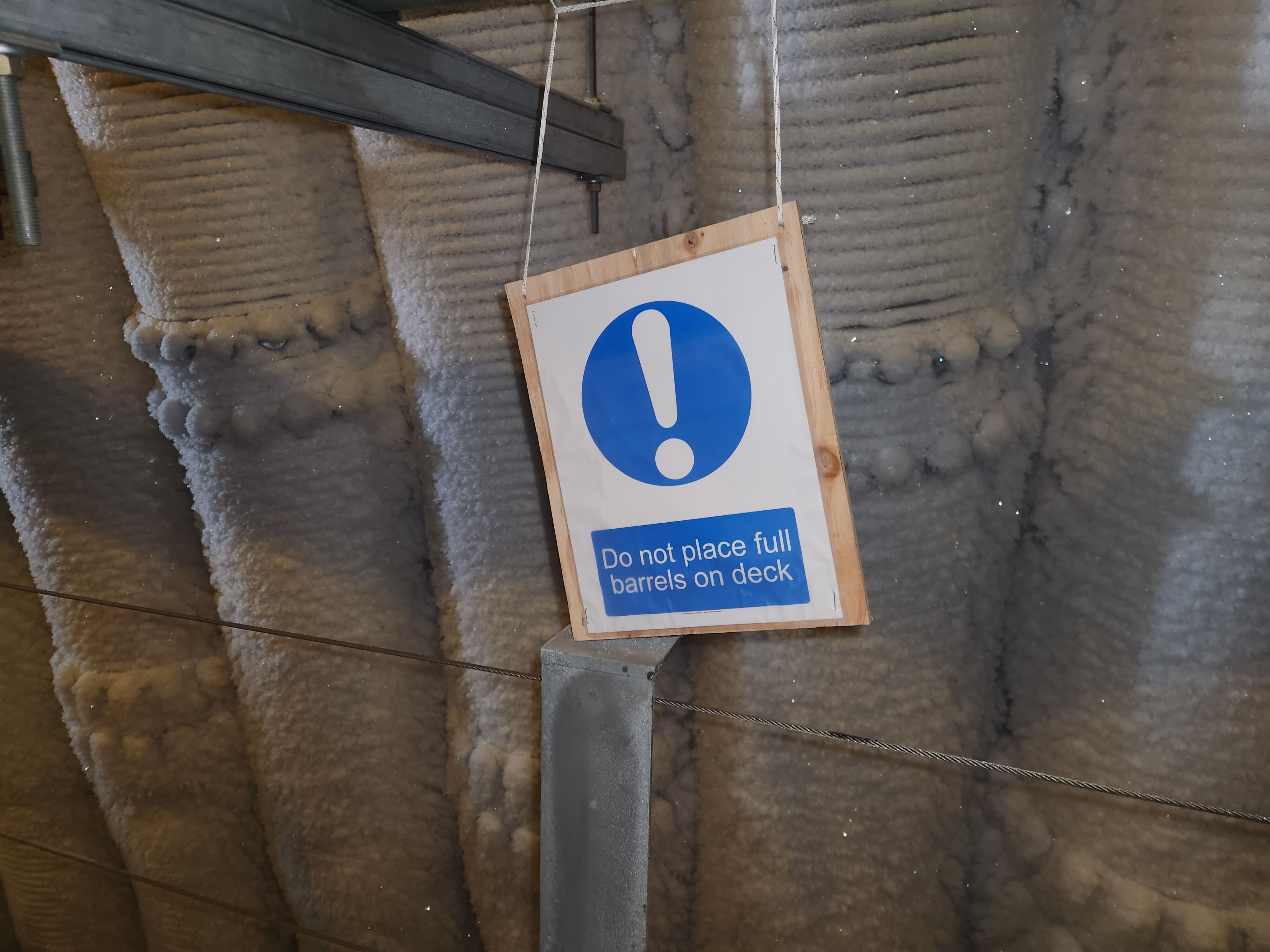 More signage on the decks down in the arches.
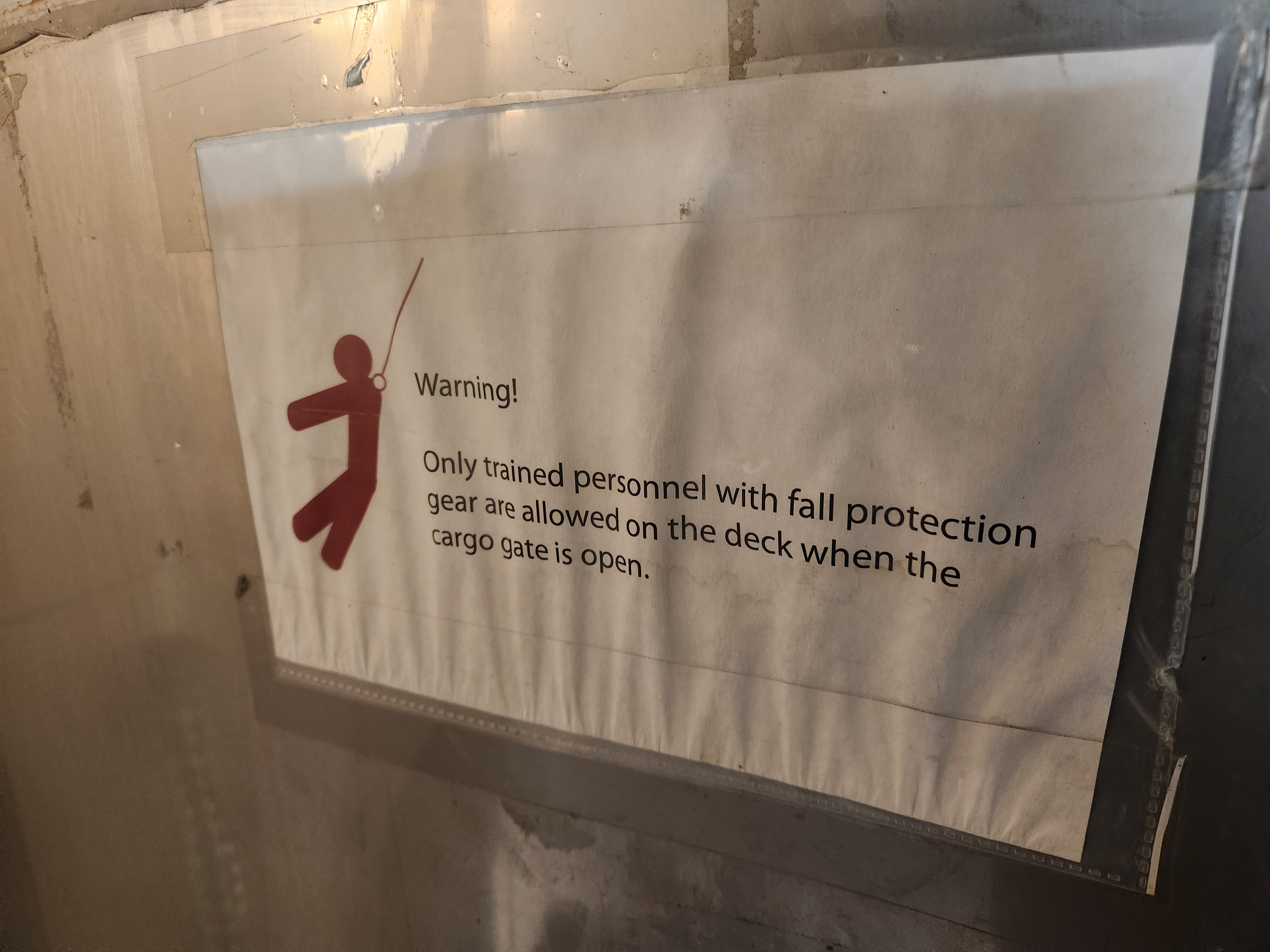 Door to one of our elevated station storage decks, which contains a hoist for bringing up supplies
from ground level.
Door to one of our elevated station storage decks, which contains a hoist for bringing up supplies
from ground level.
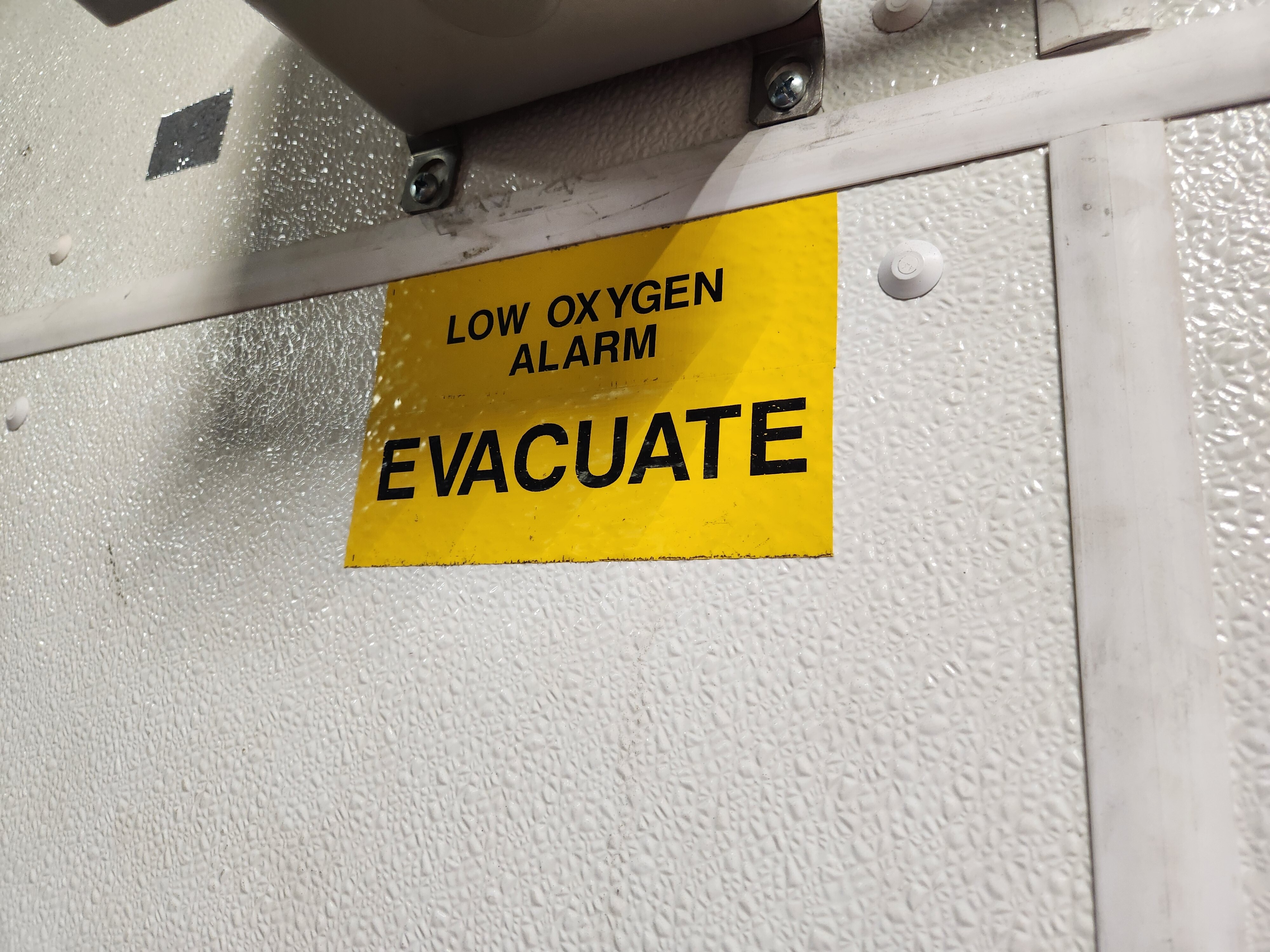 Out in our Cryo building, where we do lots of work with pressurized gases.
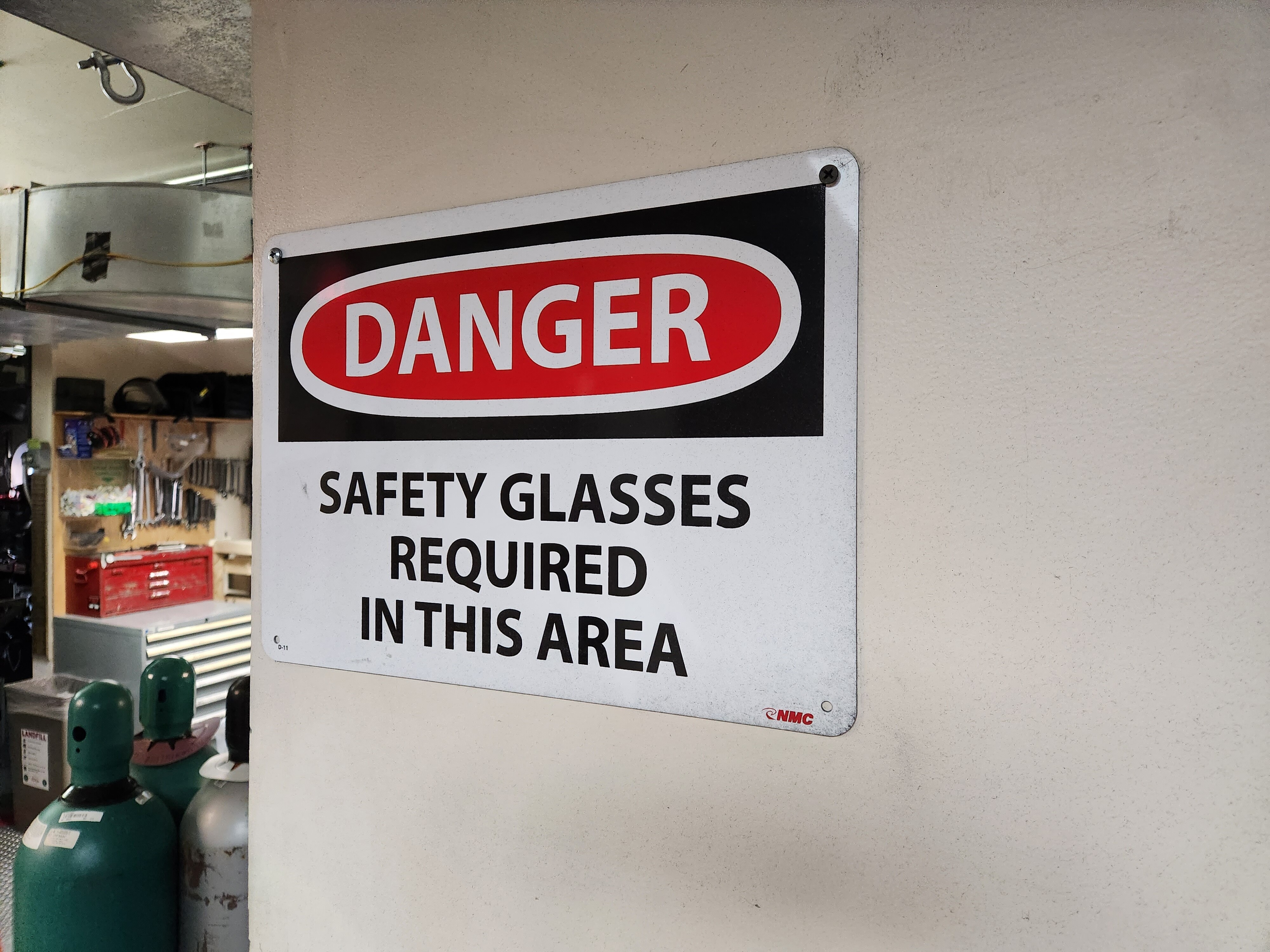 In the MAPO machine shop.
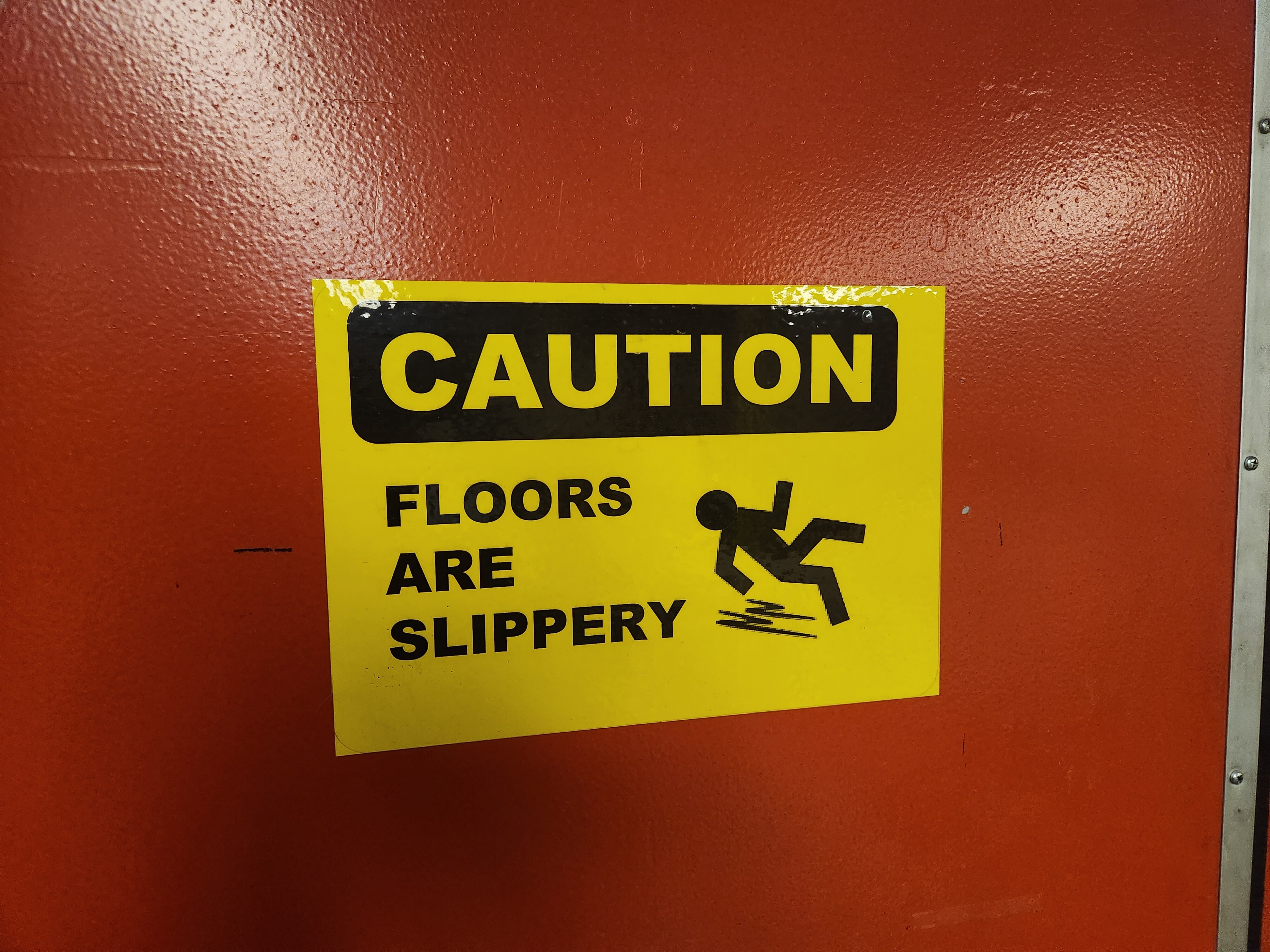 Fun fact: Floors are *especially* slippery when you walk in from outside, and the rubber
on the bottom of your boots is frozen solid.
Fun fact: Floors are *especially* slippery when you walk in from outside, and the rubber
on the bottom of your boots is frozen solid.
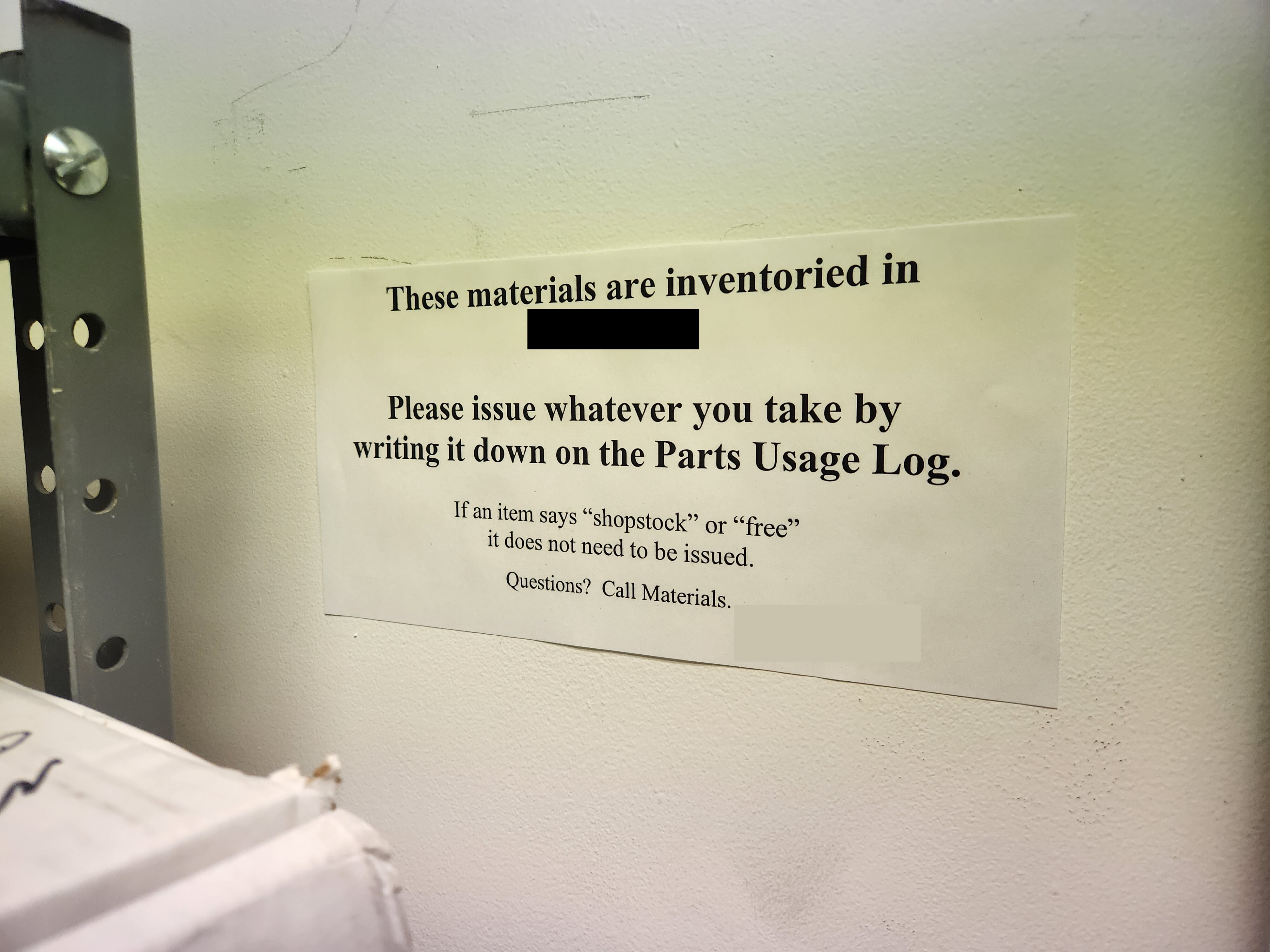 Inventory management is a major consideration here, given how long the supply chain can be.
I've found myself without a few nice-to-have IT parts, and it's tough to realize that the next potential
supply flight is still several months away.
Inventory management is a major consideration here, given how long the supply chain can be.
I've found myself without a few nice-to-have IT parts, and it's tough to realize that the next potential
supply flight is still several months away.
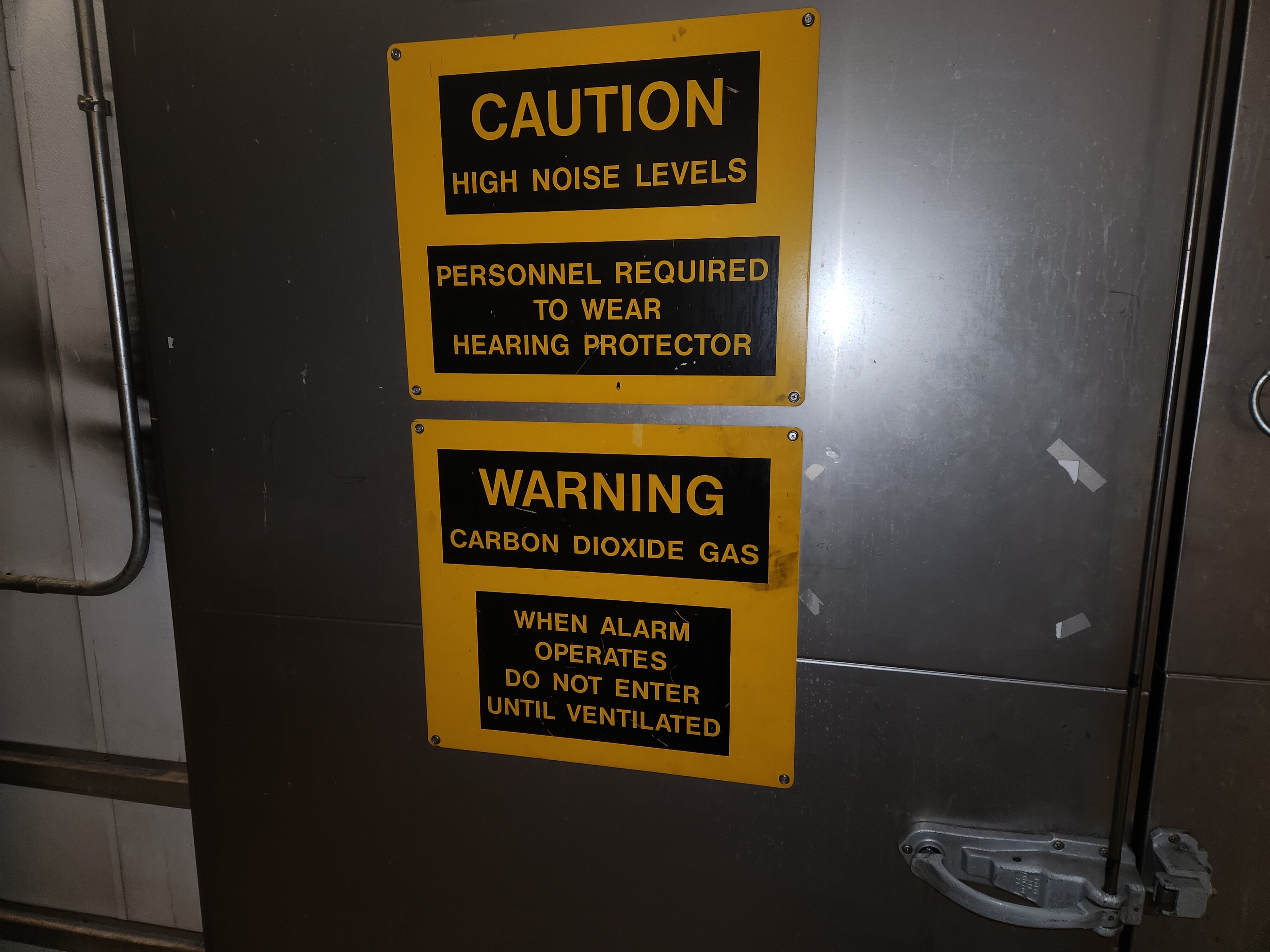 The back storage door behind our power plant. Inside here is a row of generators powered by CAT 3512B
engines, keeping the lights on and the station warm.
The back storage door behind our power plant. Inside here is a row of generators powered by CAT 3512B
engines, keeping the lights on and the station warm.
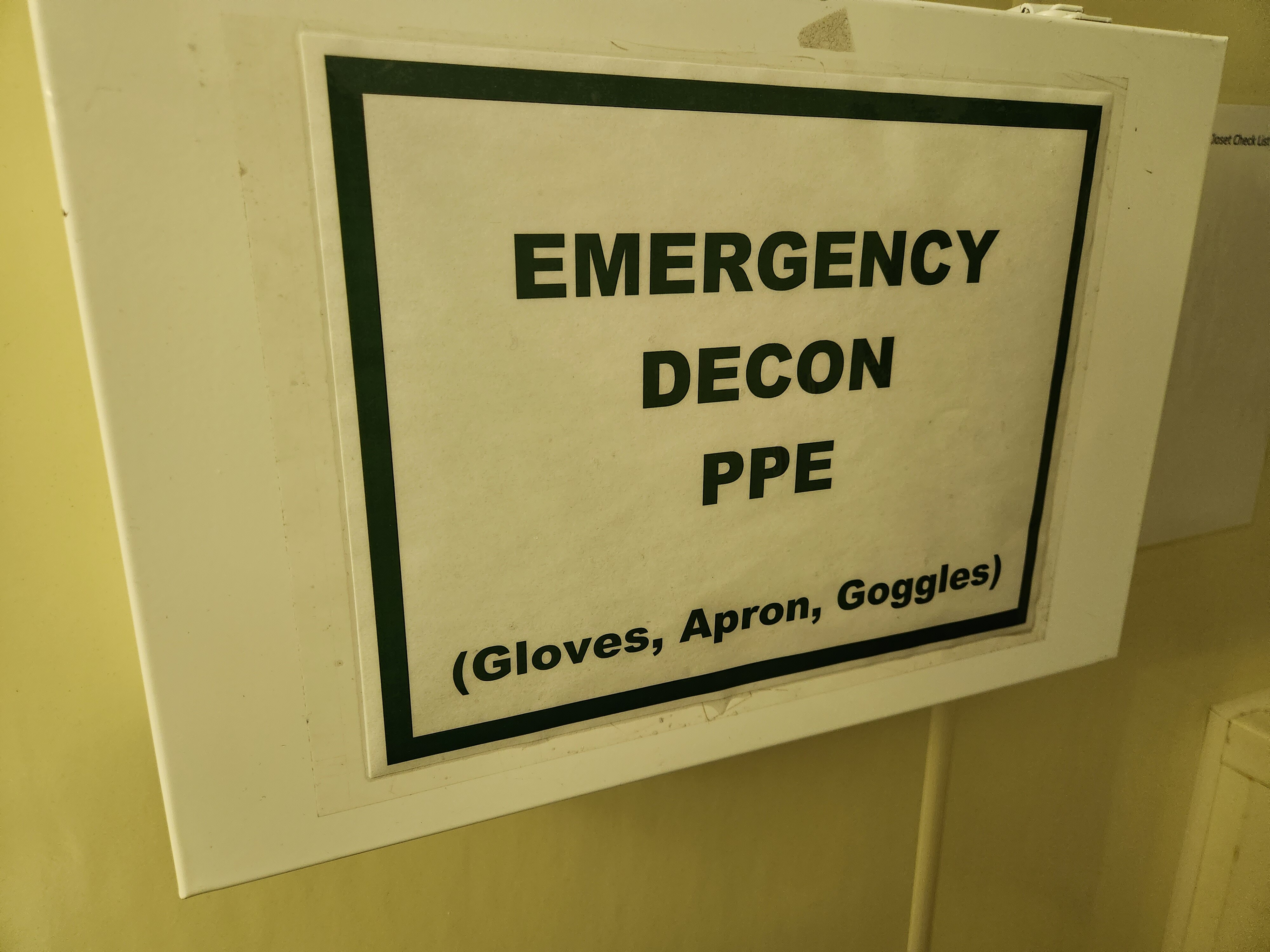 In a supply closet.
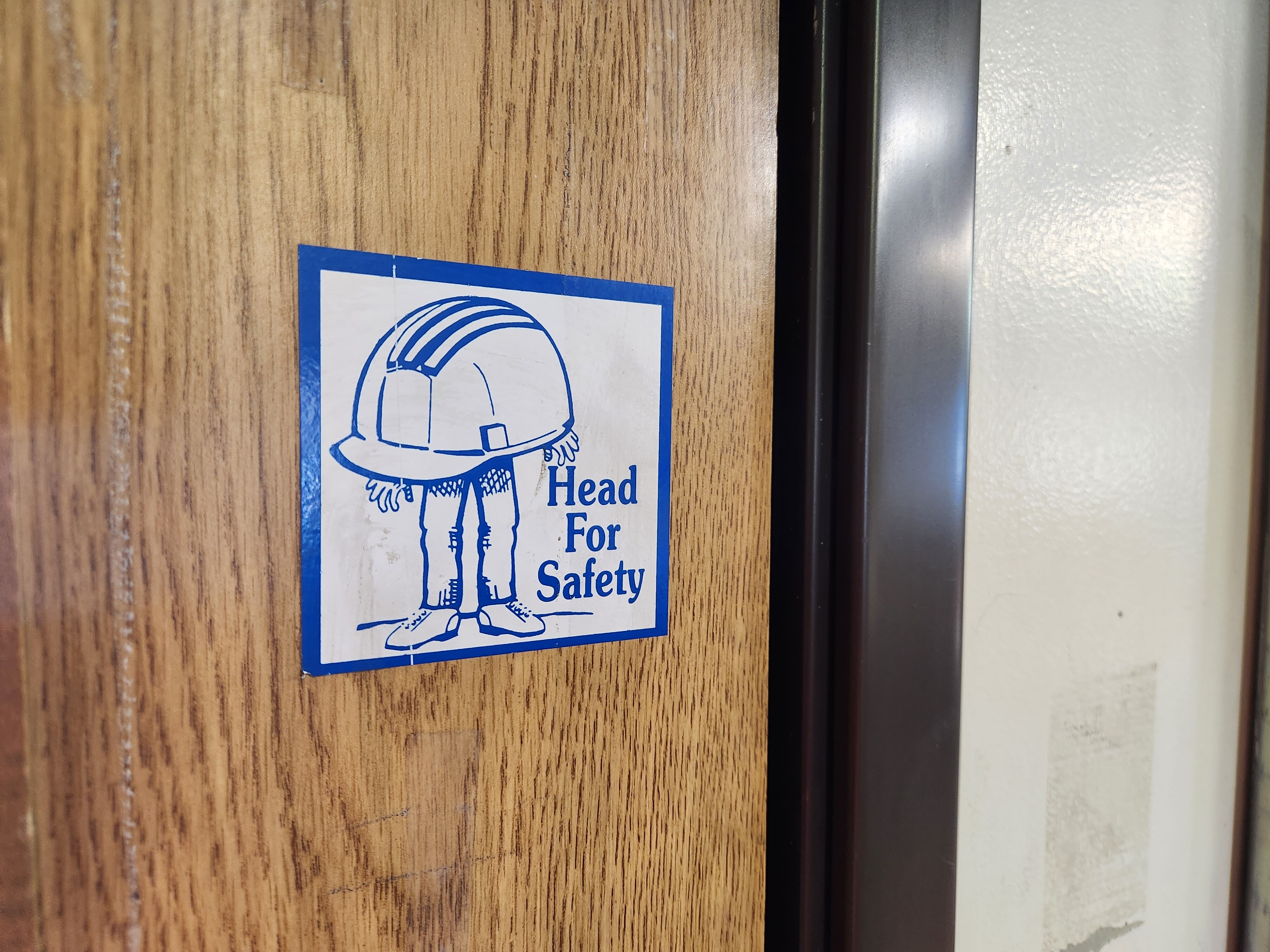 Found in the cargo building. Origins unknown. Truly baffling.
Fire Safety
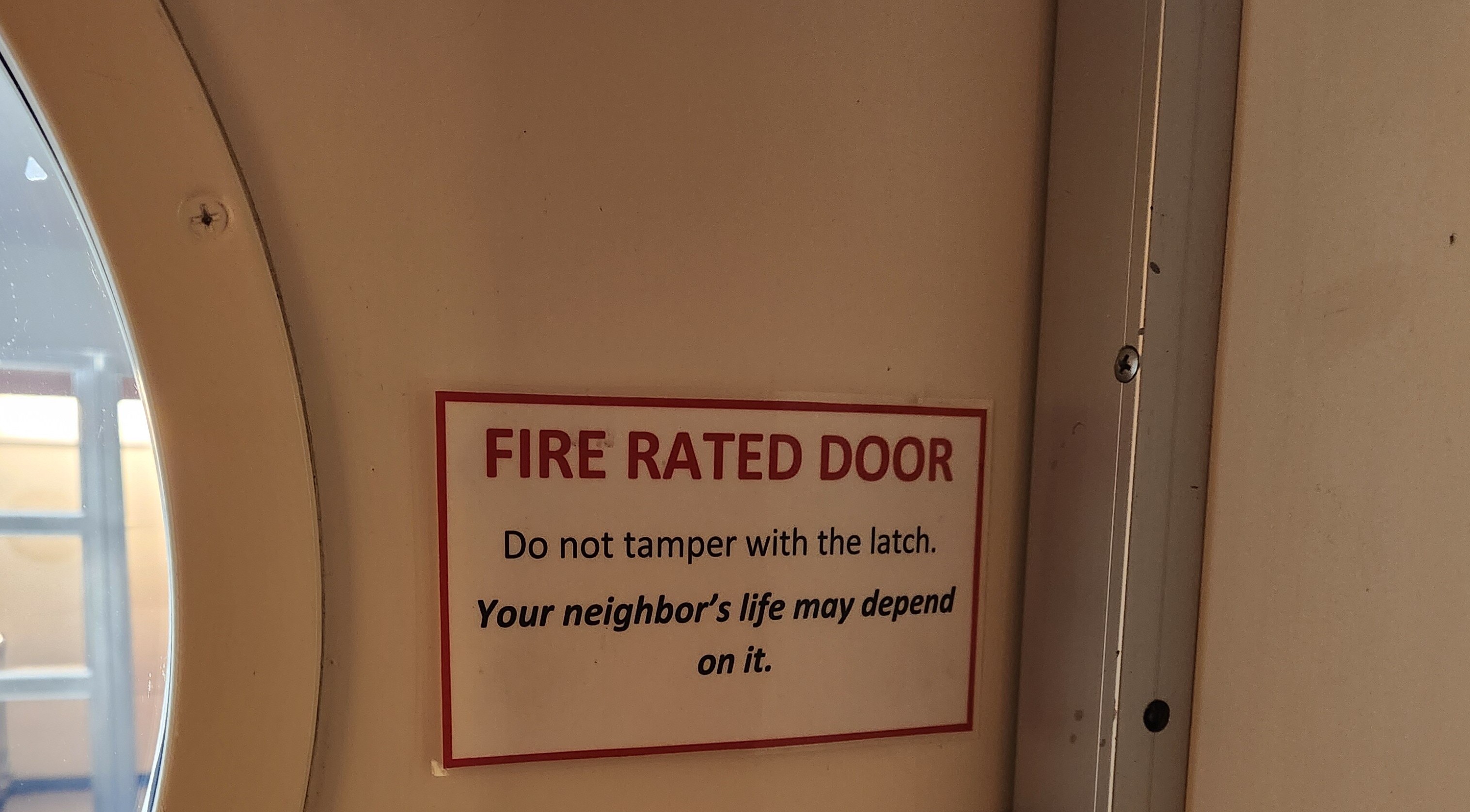 Fire safety is taken seriously here, given the catastrophic impact of a
fire in such a remote location.
Fire safety is taken seriously here, given the catastrophic impact of a
fire in such a remote location.
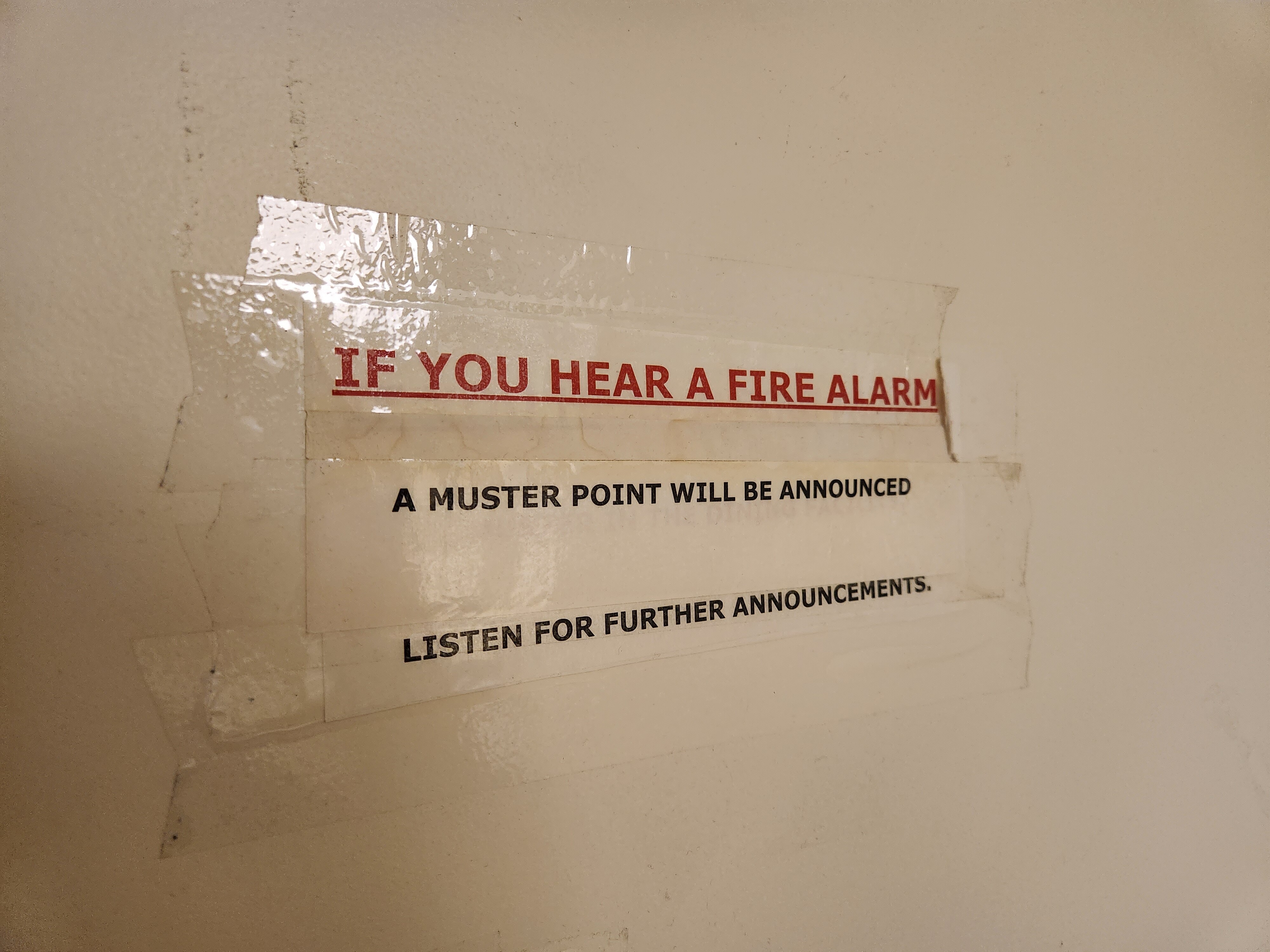 Muster: So everyone is accounted for after an emergency, and so we can coordinate
emergency response tasks.
Muster: So everyone is accounted for after an emergency, and so we can coordinate
emergency response tasks.
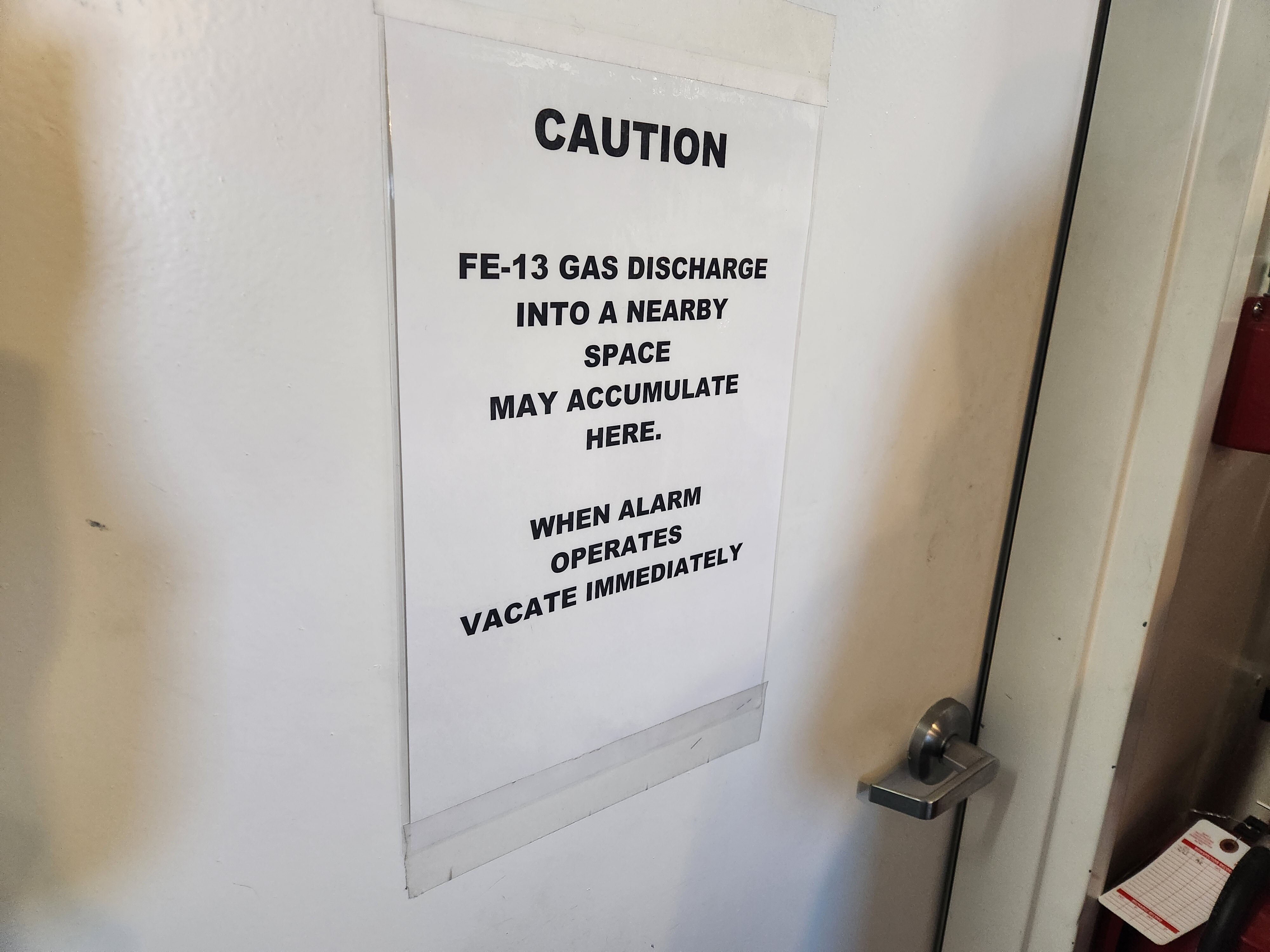 Fire suppression safety signage.
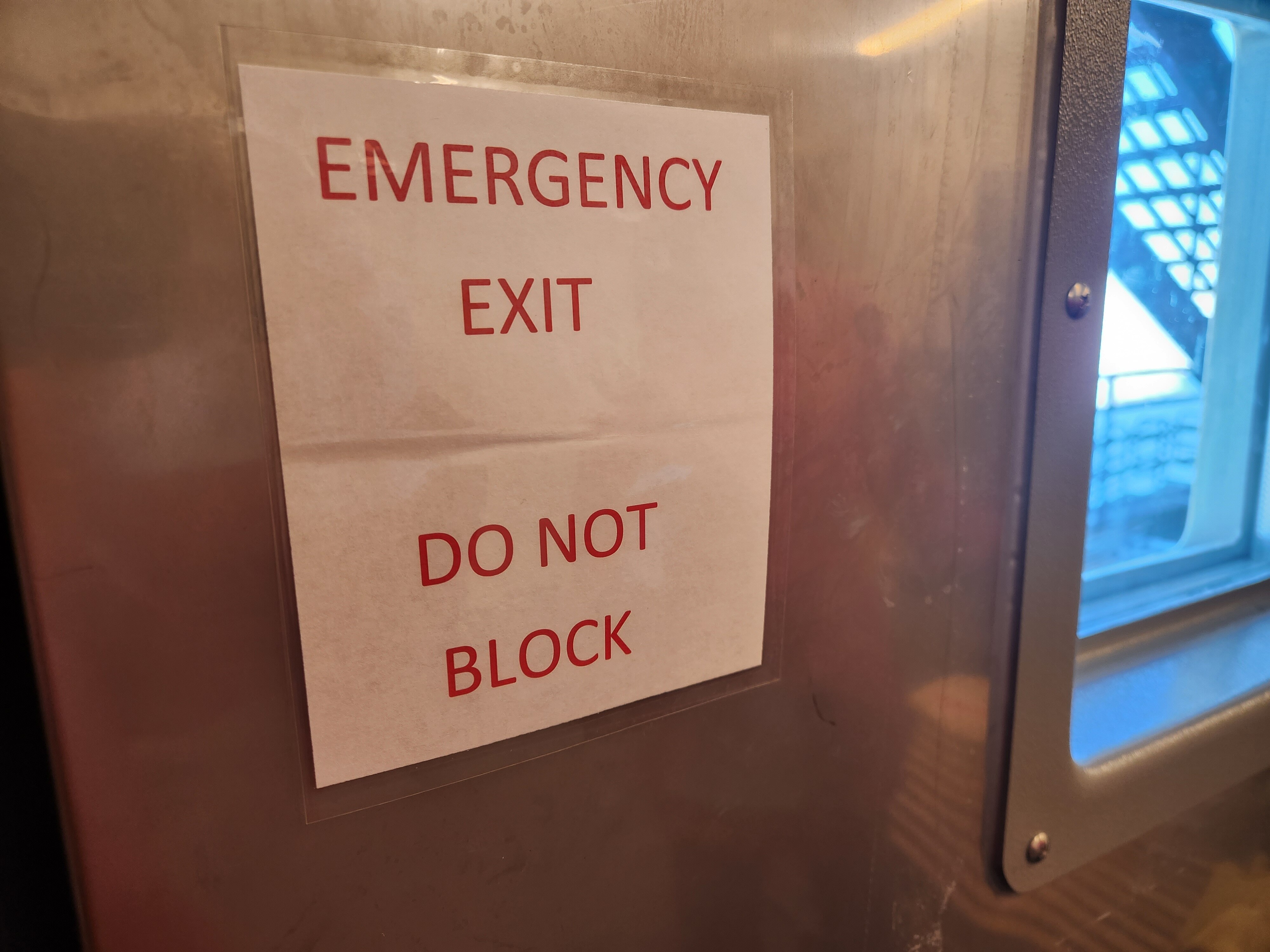 Emergency exit signage.
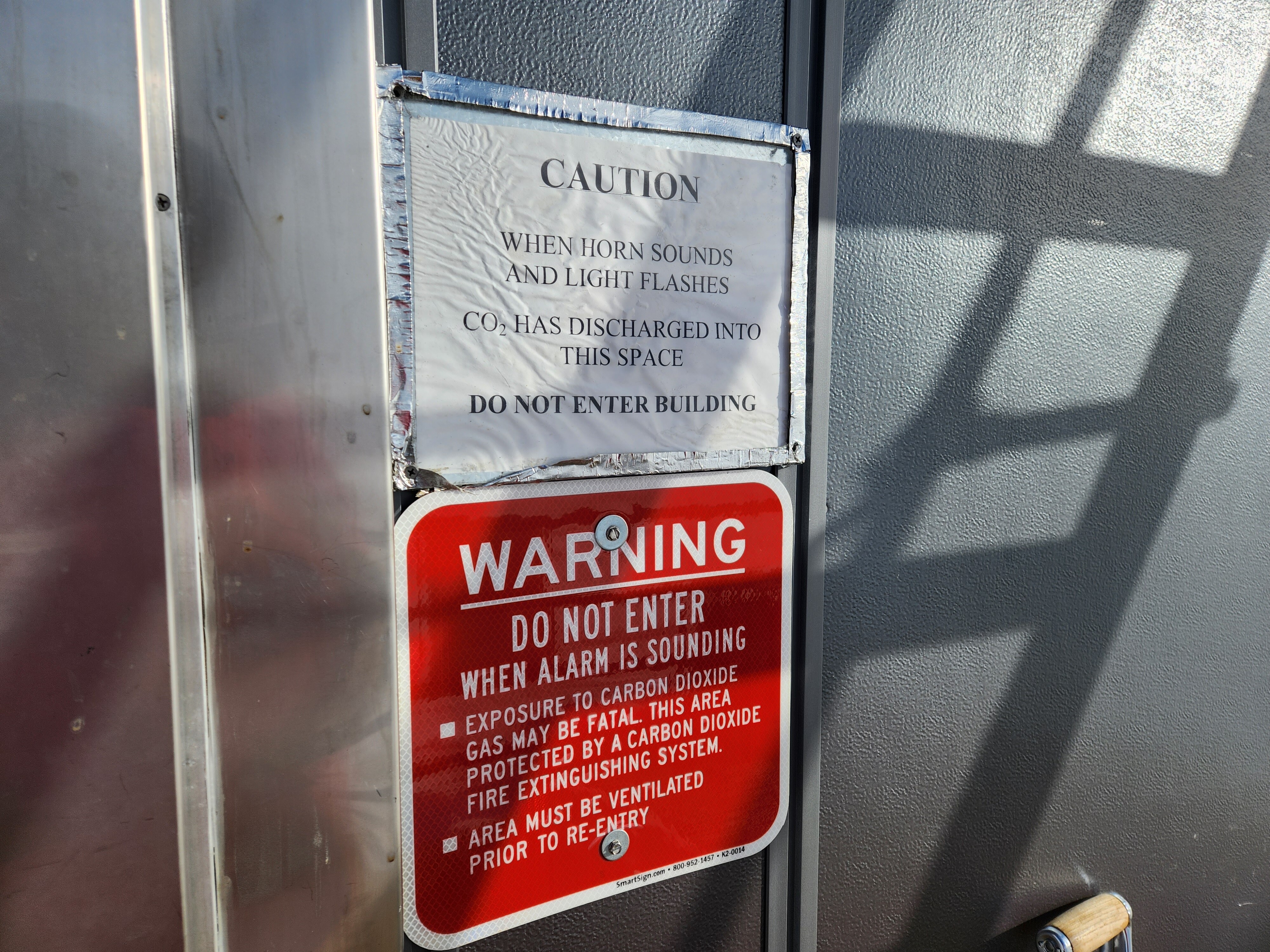 On the door to the RF building, far from station.
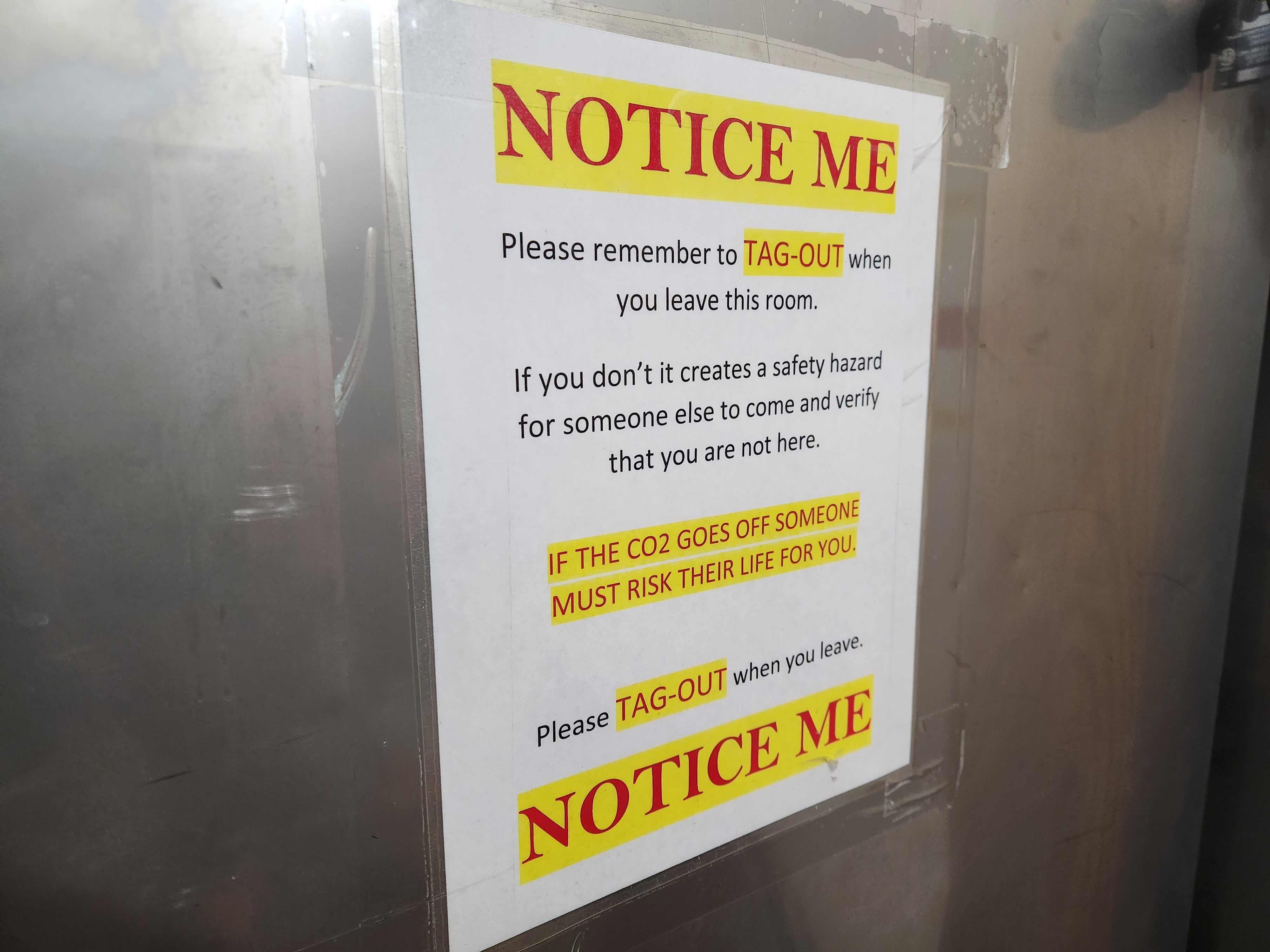 Again, fire safety is a big deal around here.
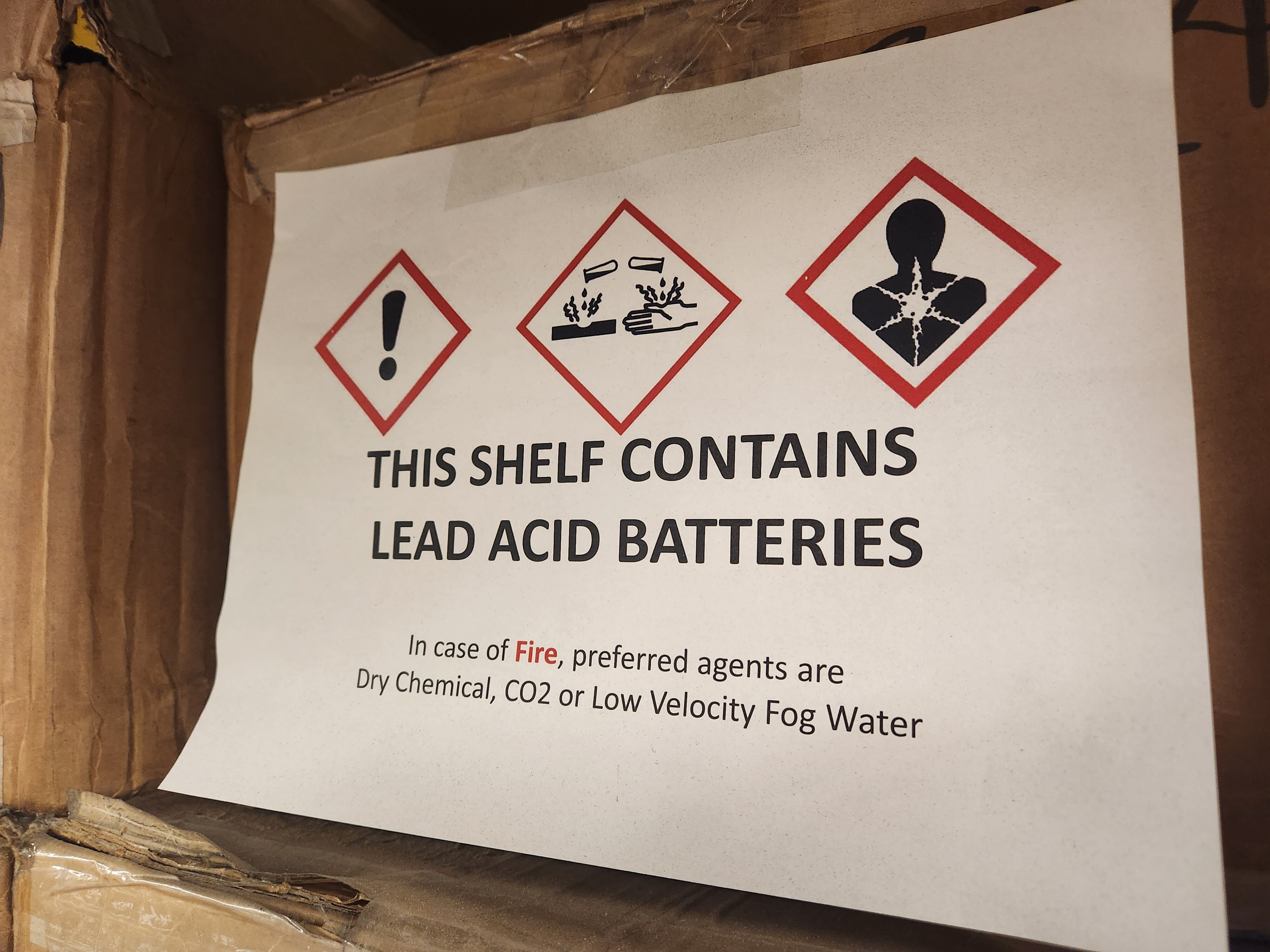 Labeled shelving in our Do Not Freeze (DNF) storage warehouse.
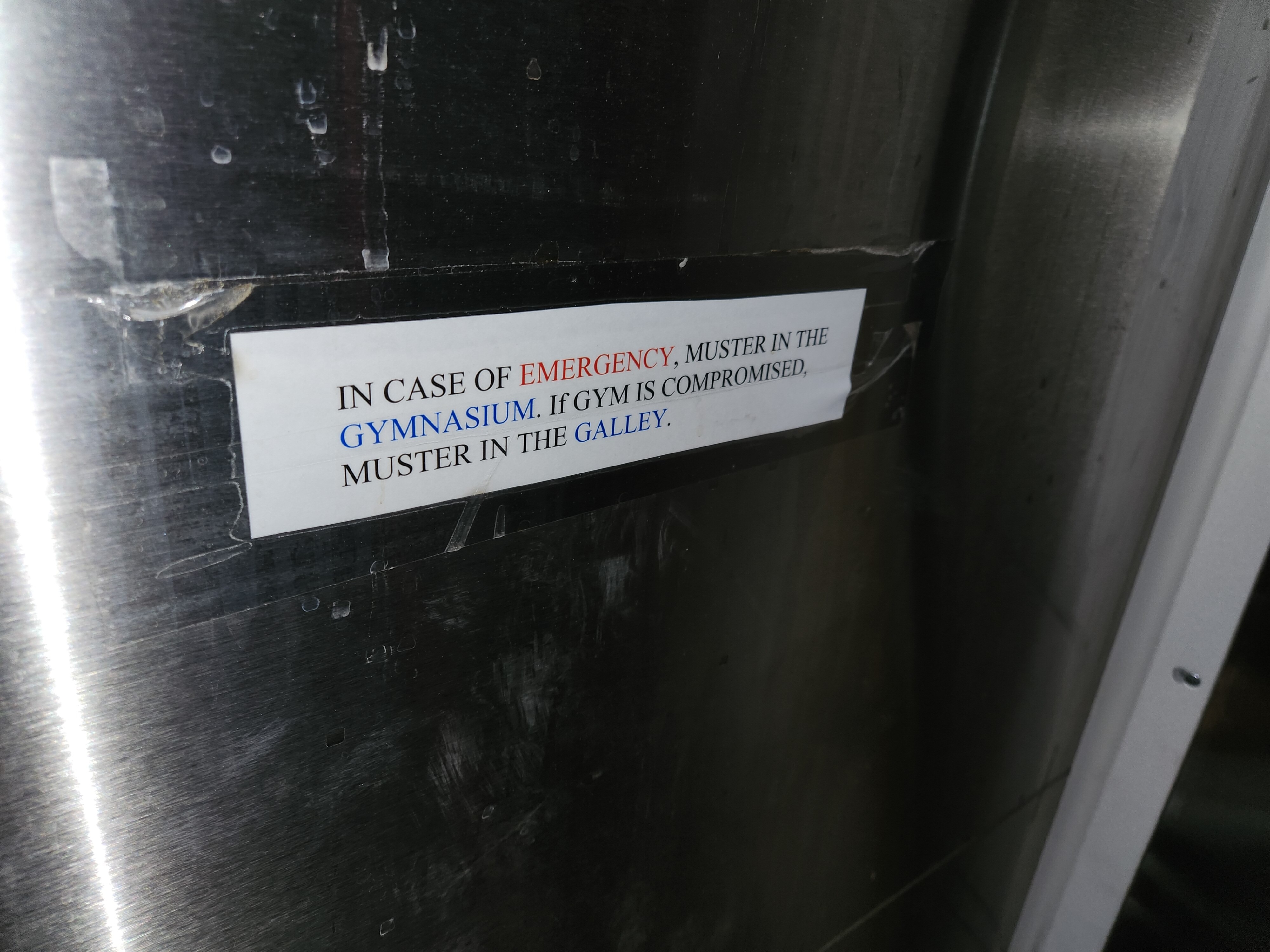 Another muster sign, from the Cryo building.
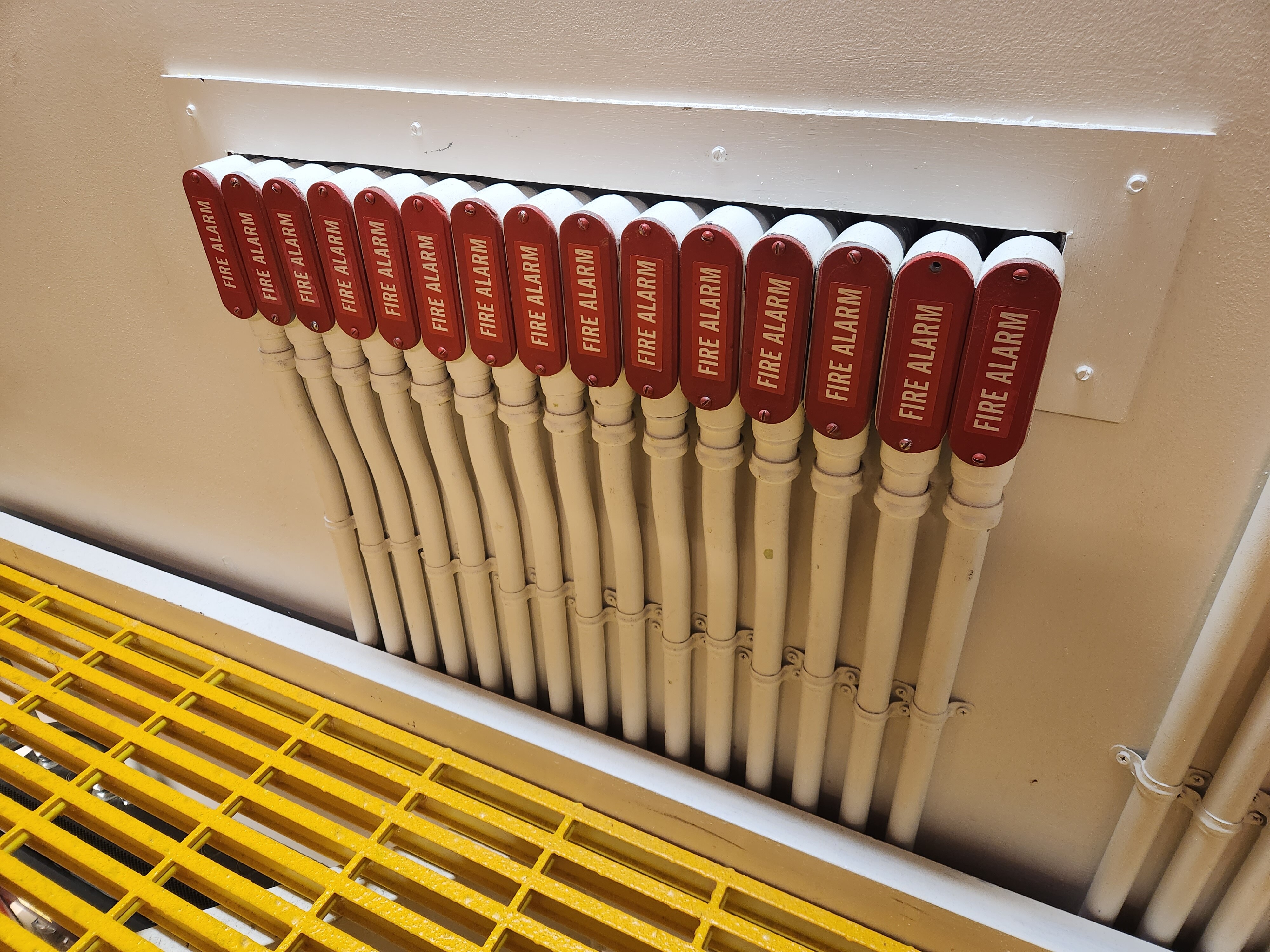 Conduit marking, above the fire alarm control panel in B Pod.
Food and Drink
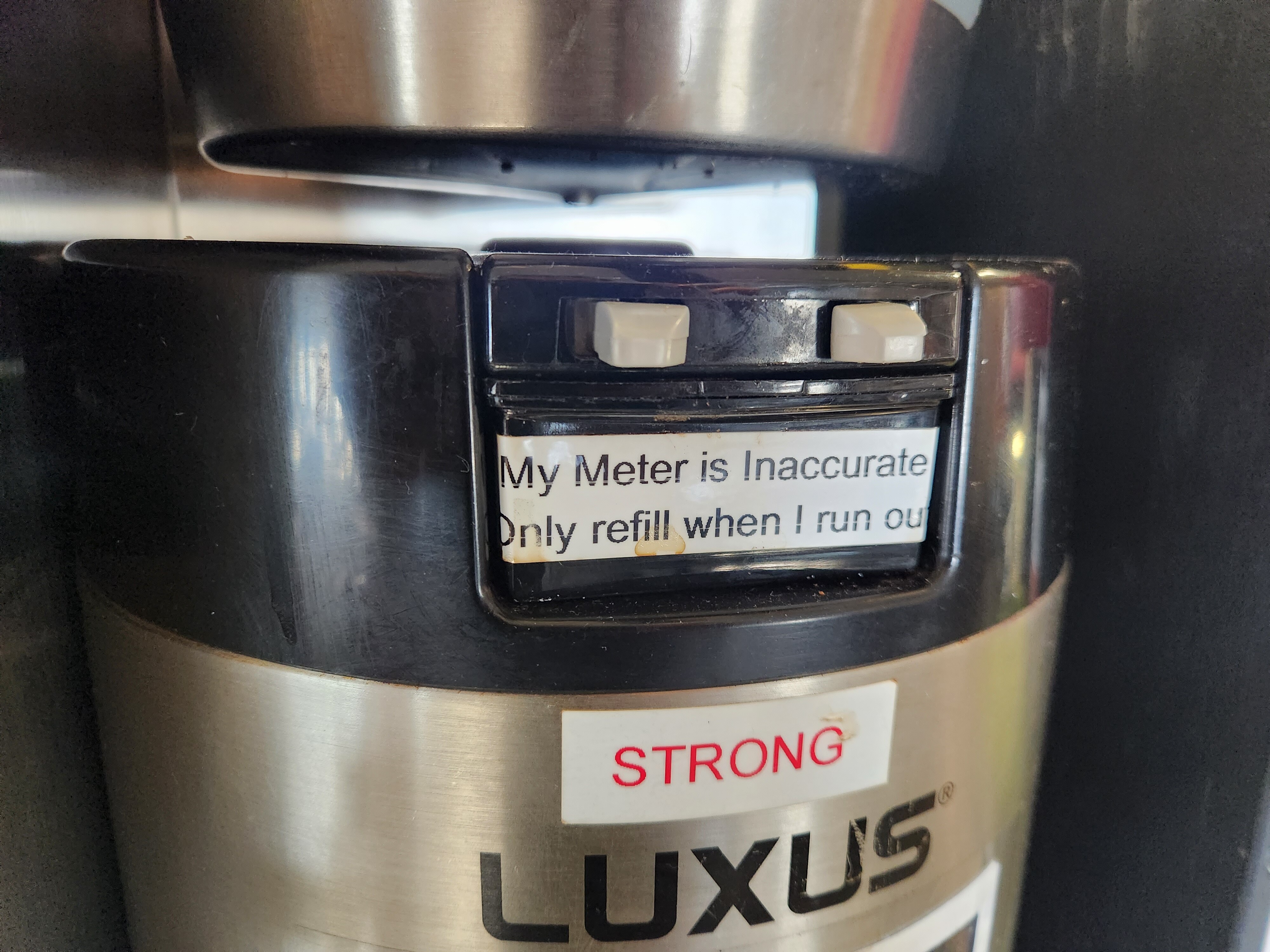 Emphatic plea for coffee drinkers, to avoid overflows.
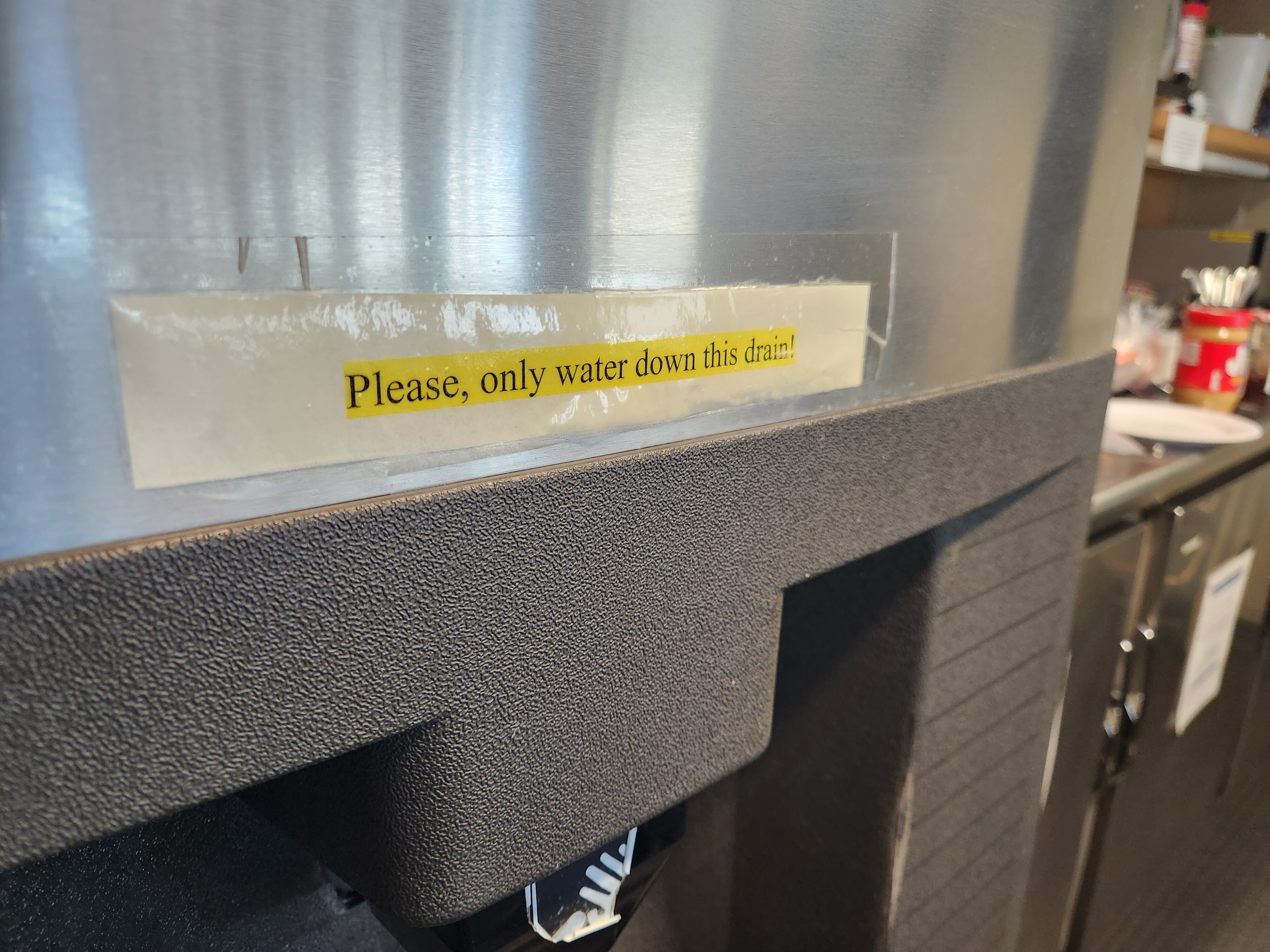 I'm assuming someone poured chunky soup down here at one point, necessitating a sign.
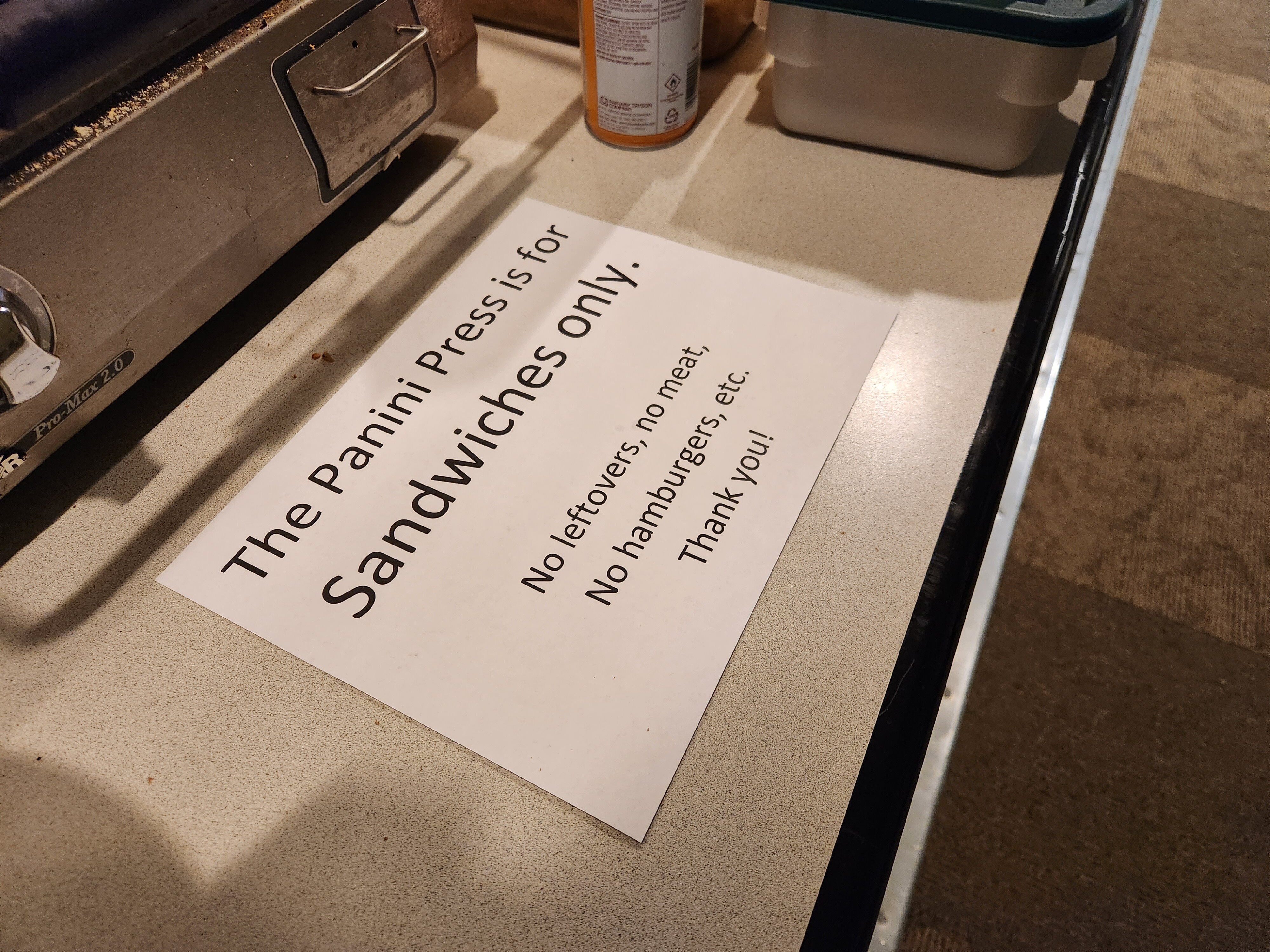 Emphatic plea in our galley, from someone tired of scraping gunk off of the panini press.
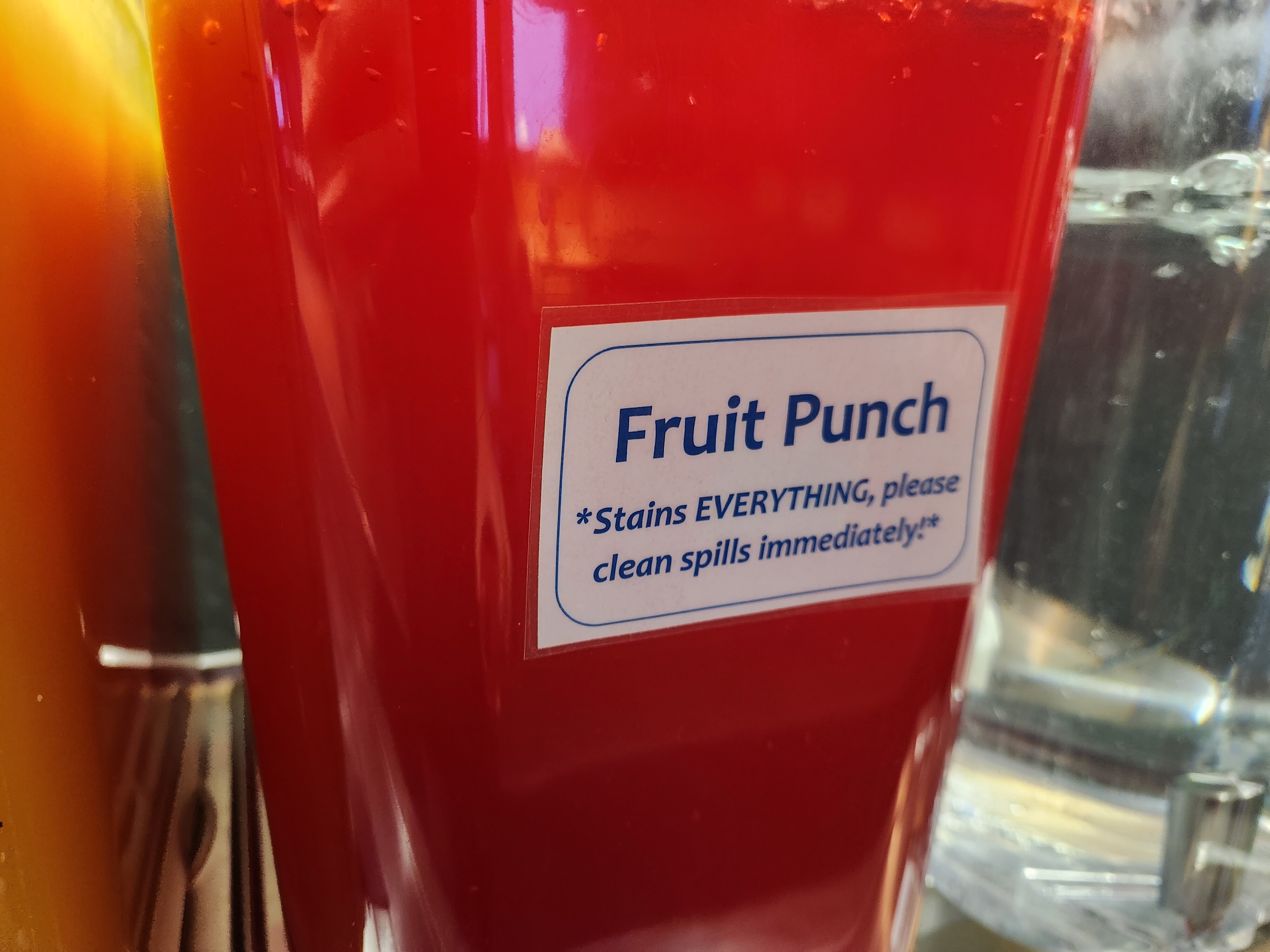 Self-explanatory. Luckily we don't have any white carpet to stain.
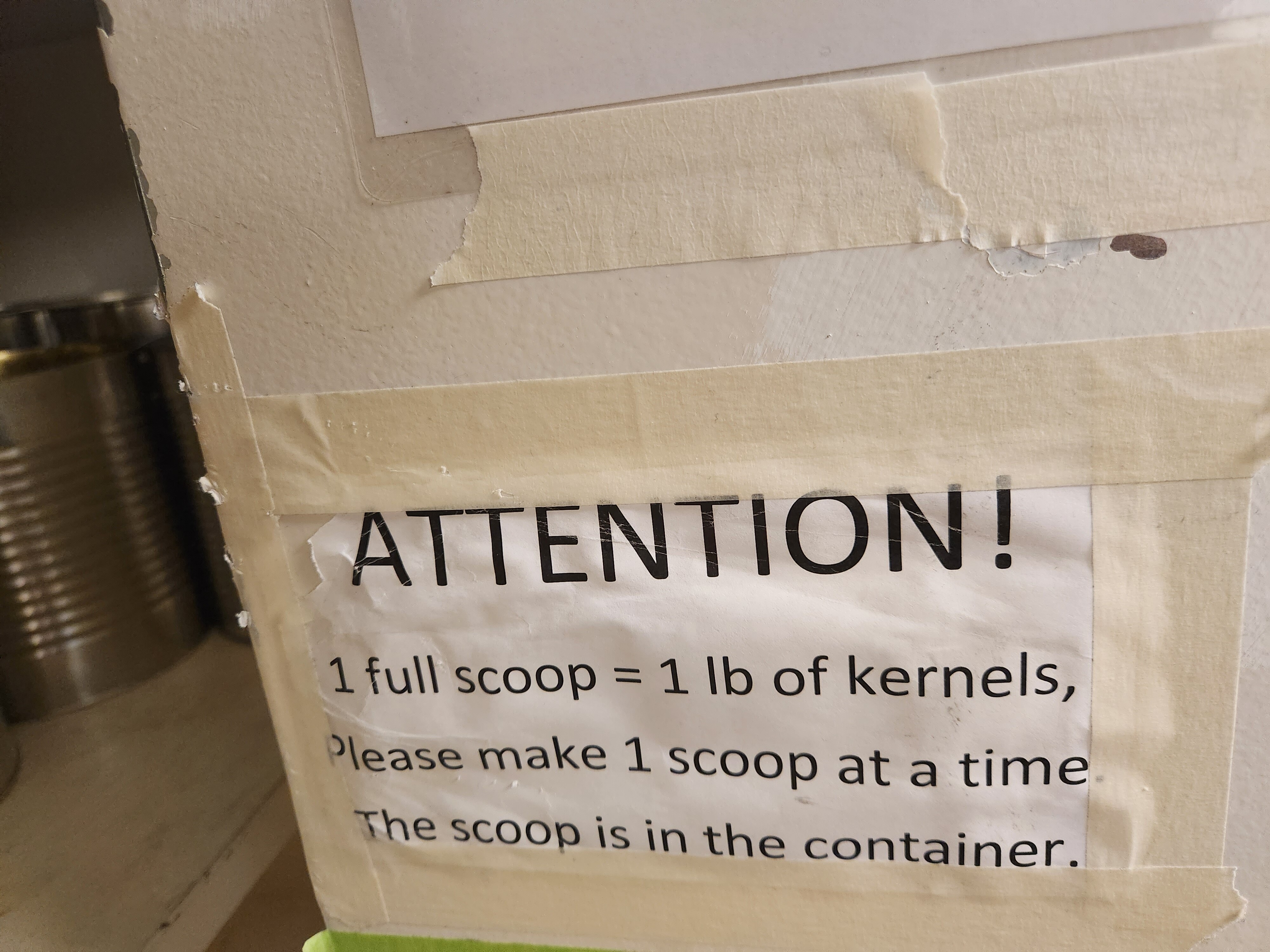 By our popcorn machine. We go through a LOT of popcorn -- it comes in 50lb bags.
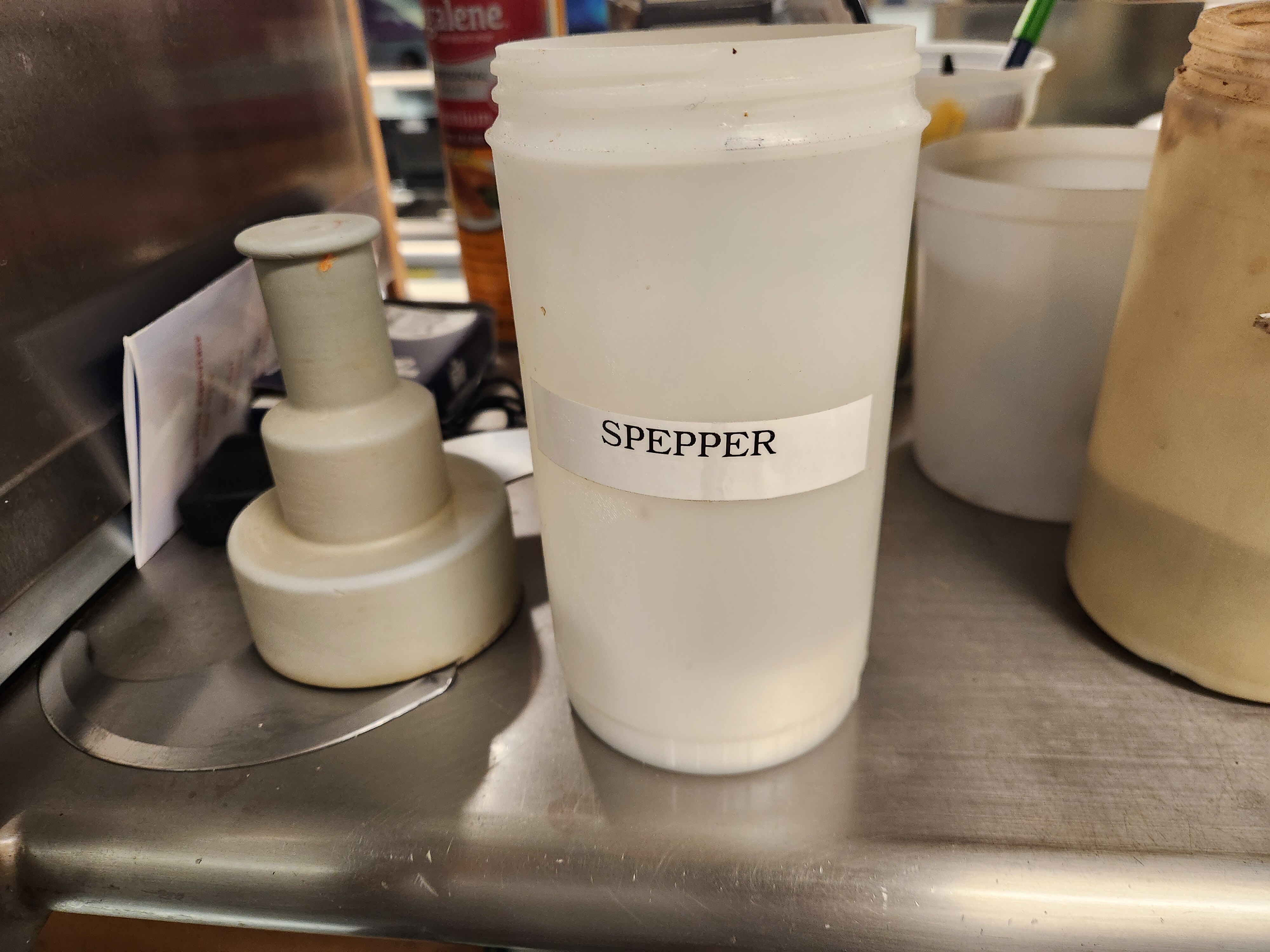 Spepper?
Electrical
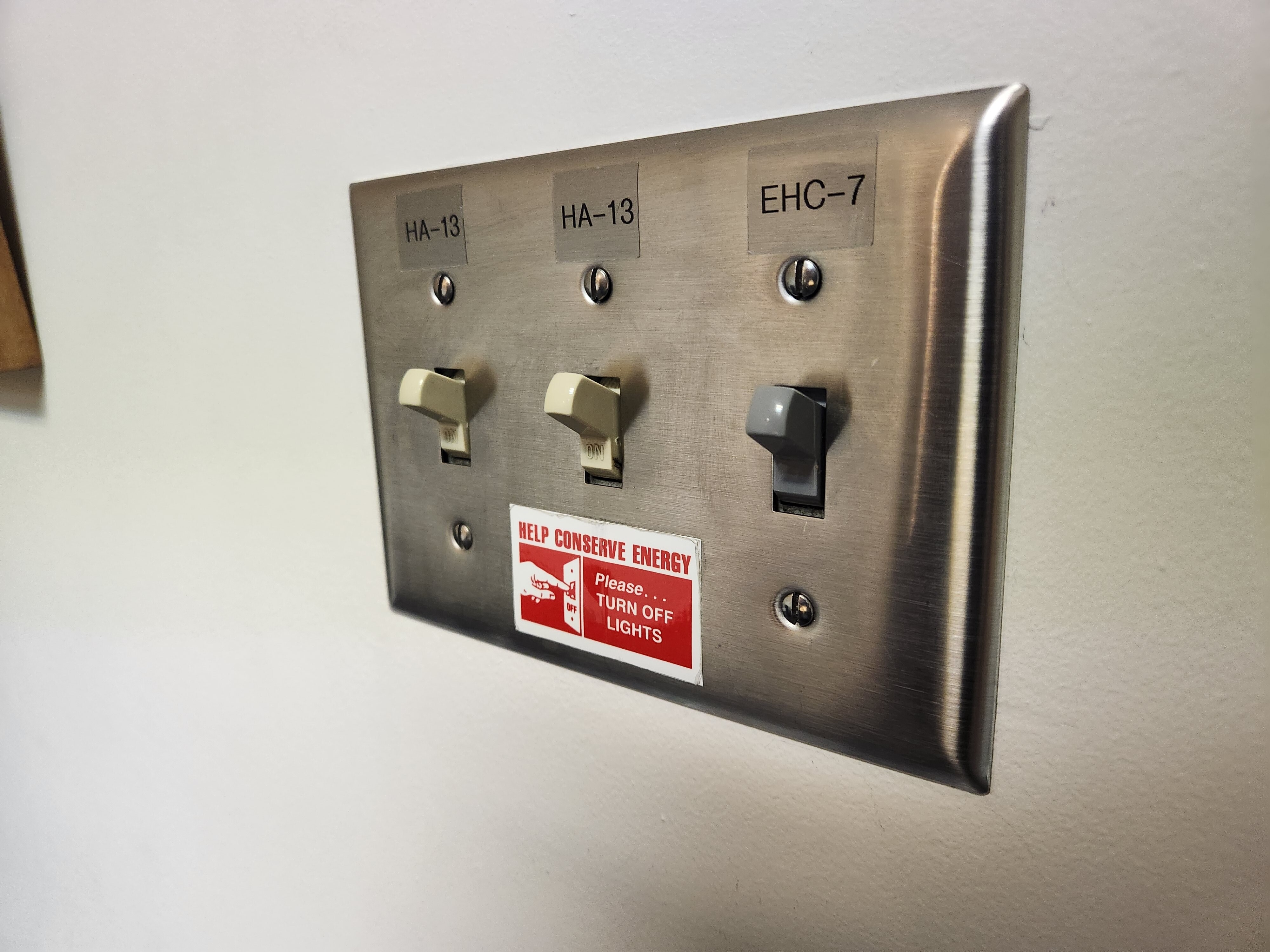 Some lights are on emergency lighting panels, for continuity in the event of a power outage.
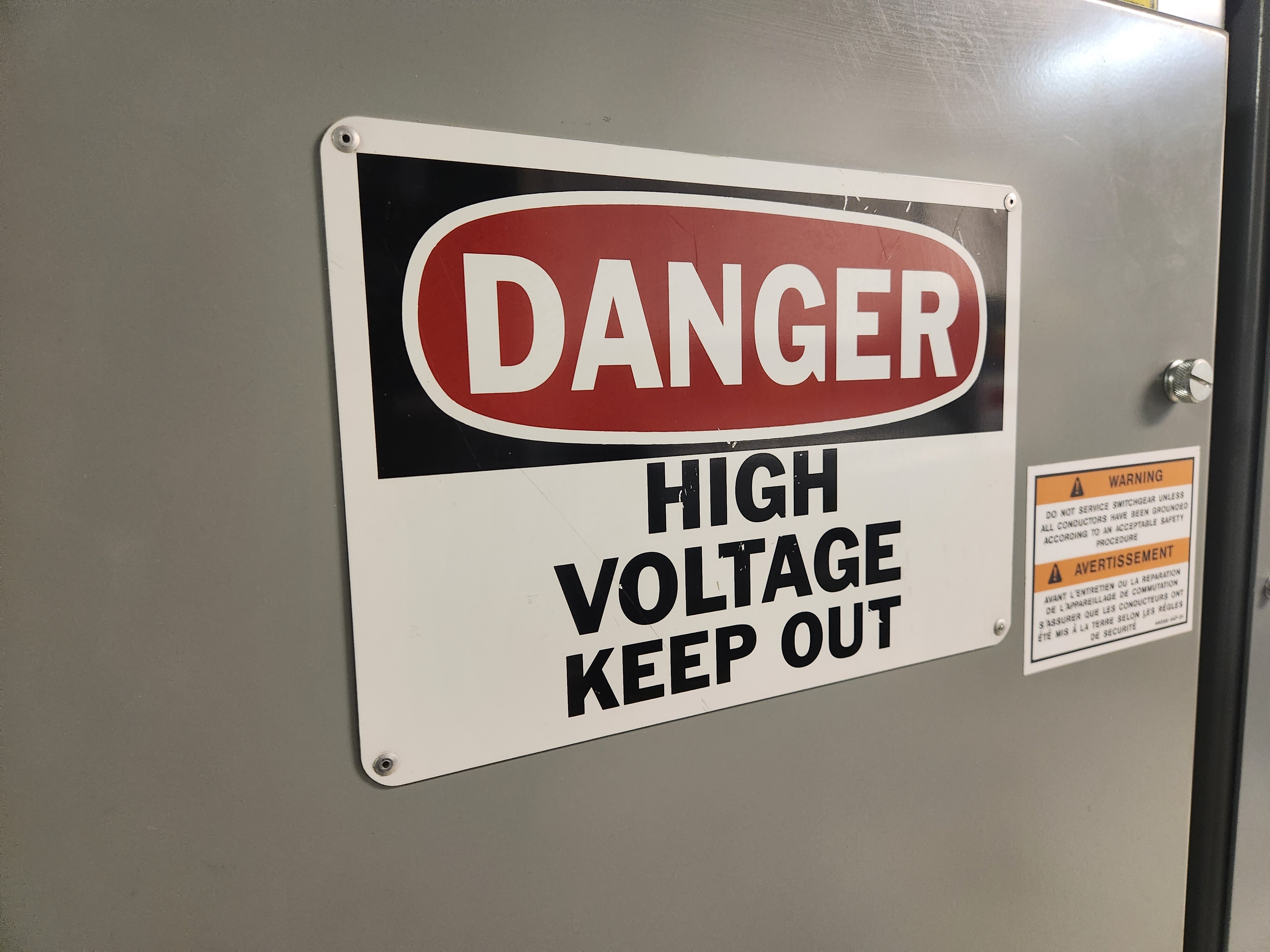 The majority of South Pole runs on standard 480/277 volt, 60 hertz, 3-phase AC power,
with step-down transformers to 208/120 volt as needed for plug loads.
But we do step up to higher voltages in a few places, for sending power to very distant
outbuildings. This is some of our 4160 volt switchgear.
The majority of South Pole runs on standard 480/277 volt, 60 hertz, 3-phase AC power,
with step-down transformers to 208/120 volt as needed for plug loads.
But we do step up to higher voltages in a few places, for sending power to very distant
outbuildings. This is some of our 4160 volt switchgear.
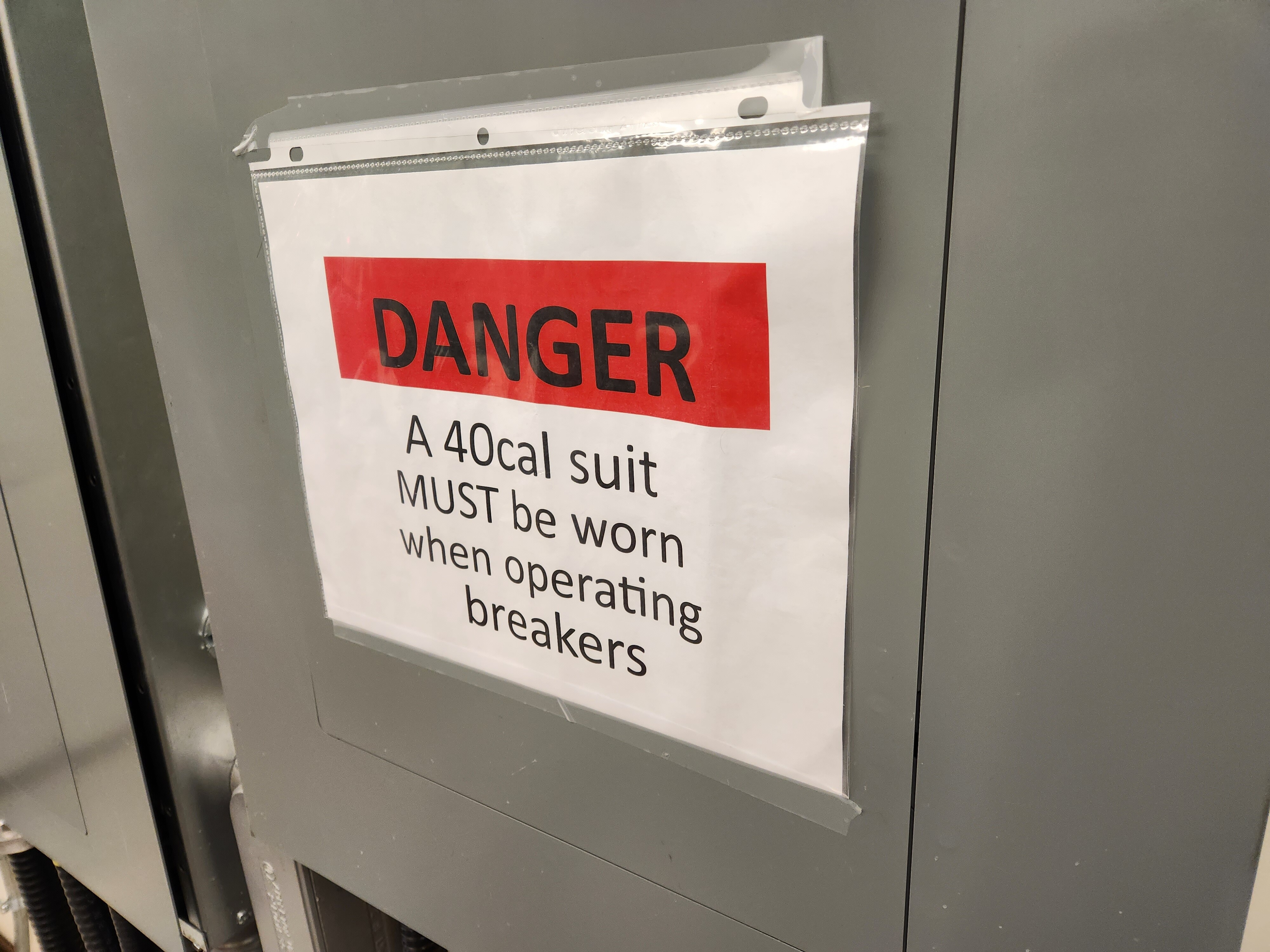 Arc flash personal protective equipment (PPE) signage on our 480/277 volt panels.
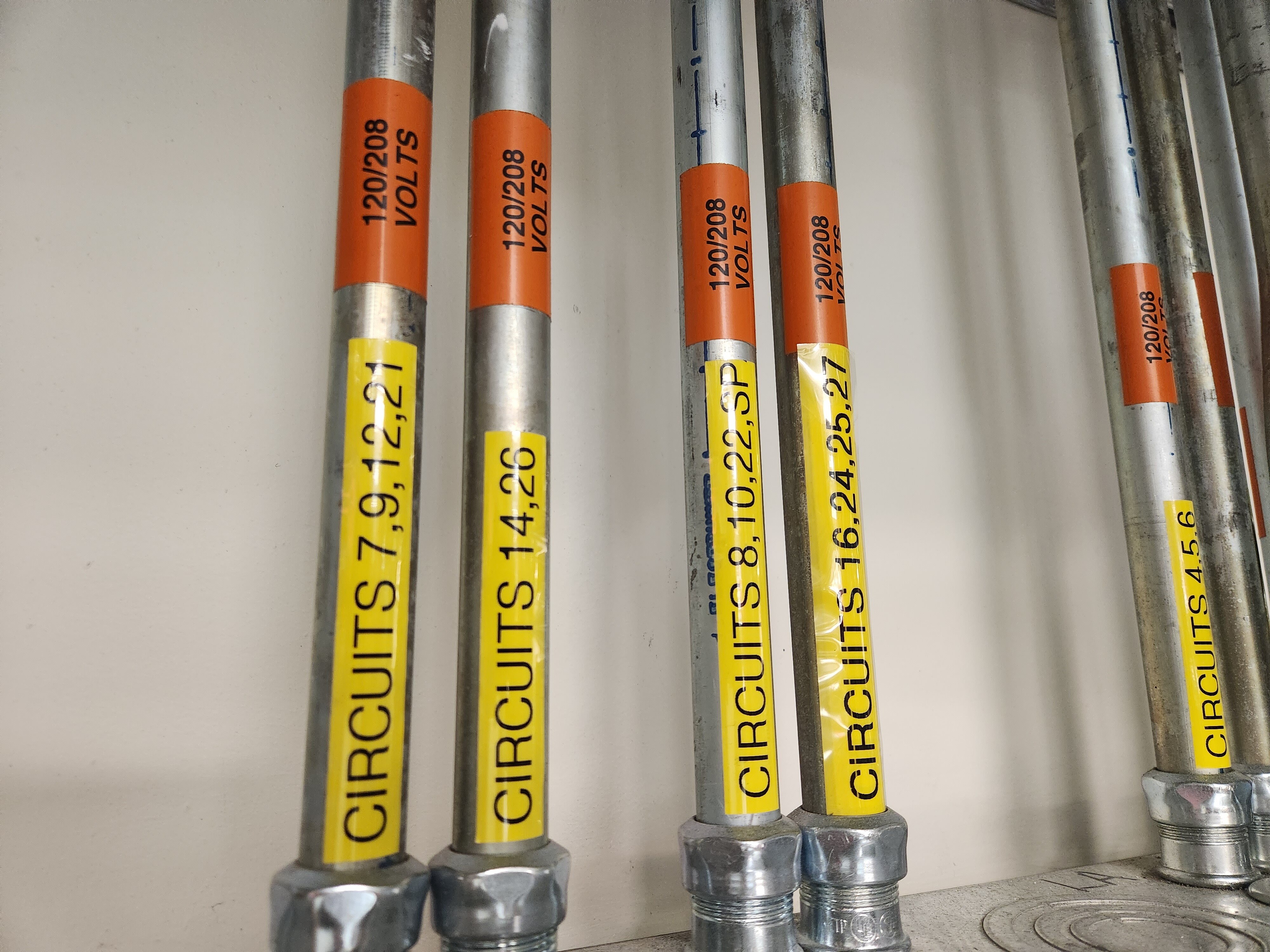 Meticulous circuit labeling.
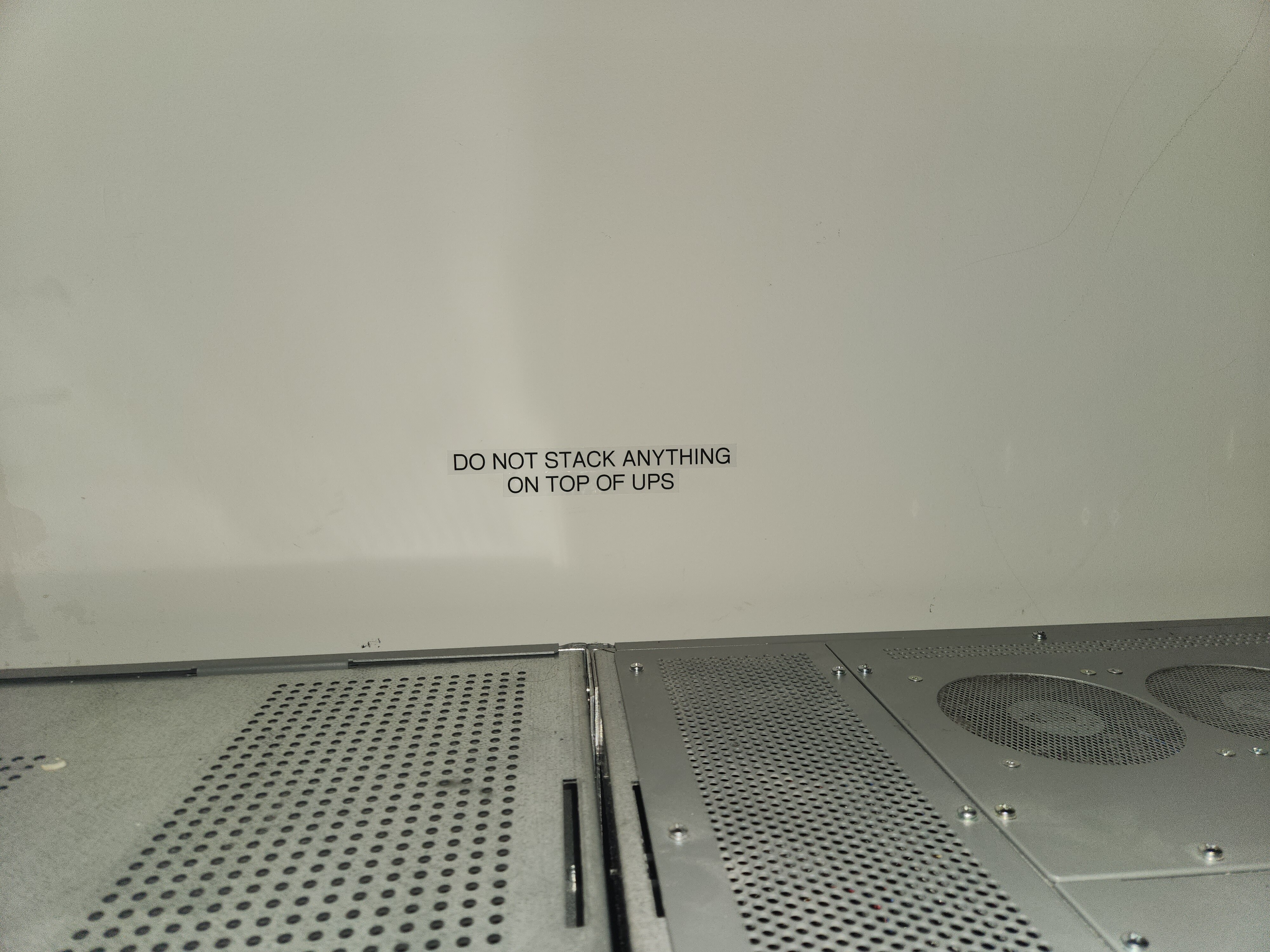 Critical services throughout the station (datacenter, science projects, etc)
are backed by large UPS units. Keep them cool!
Critical services throughout the station (datacenter, science projects, etc)
are backed by large UPS units. Keep them cool!
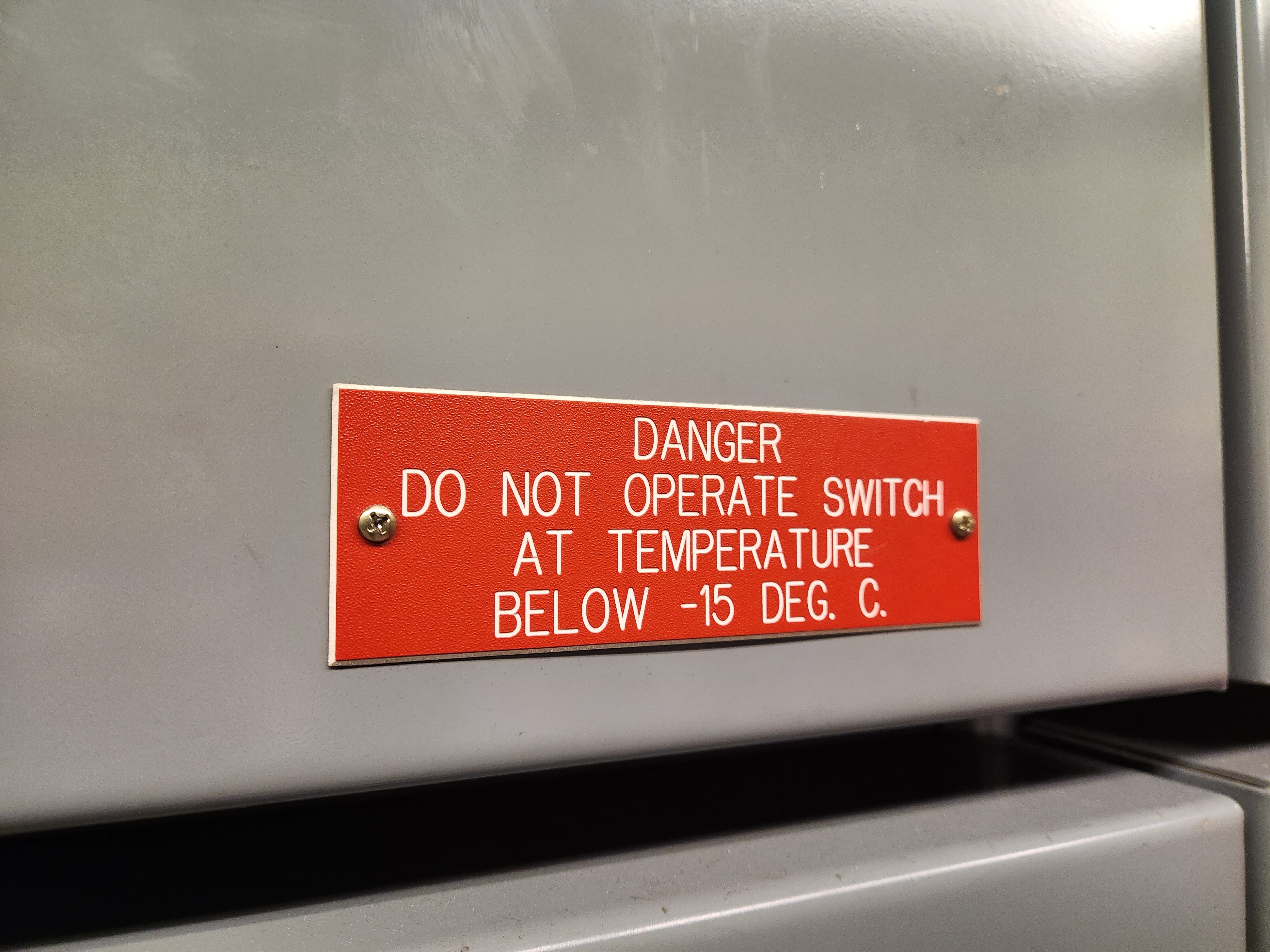 Warning on some of our 4160 volt switchgear.
Don’t Slam the Door
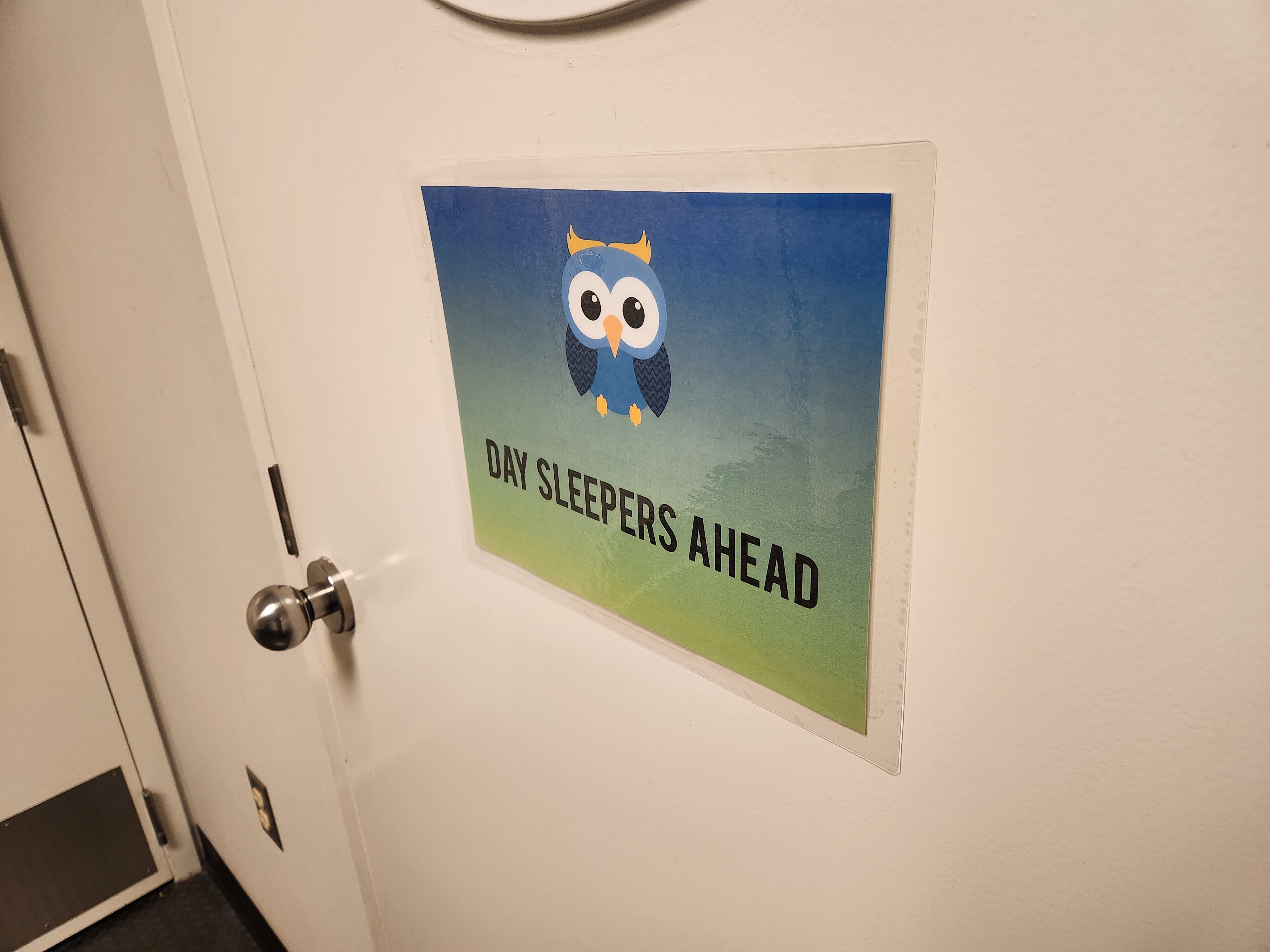 The endless struggle: keeping berthing noise down in a place with 24x7 operations.
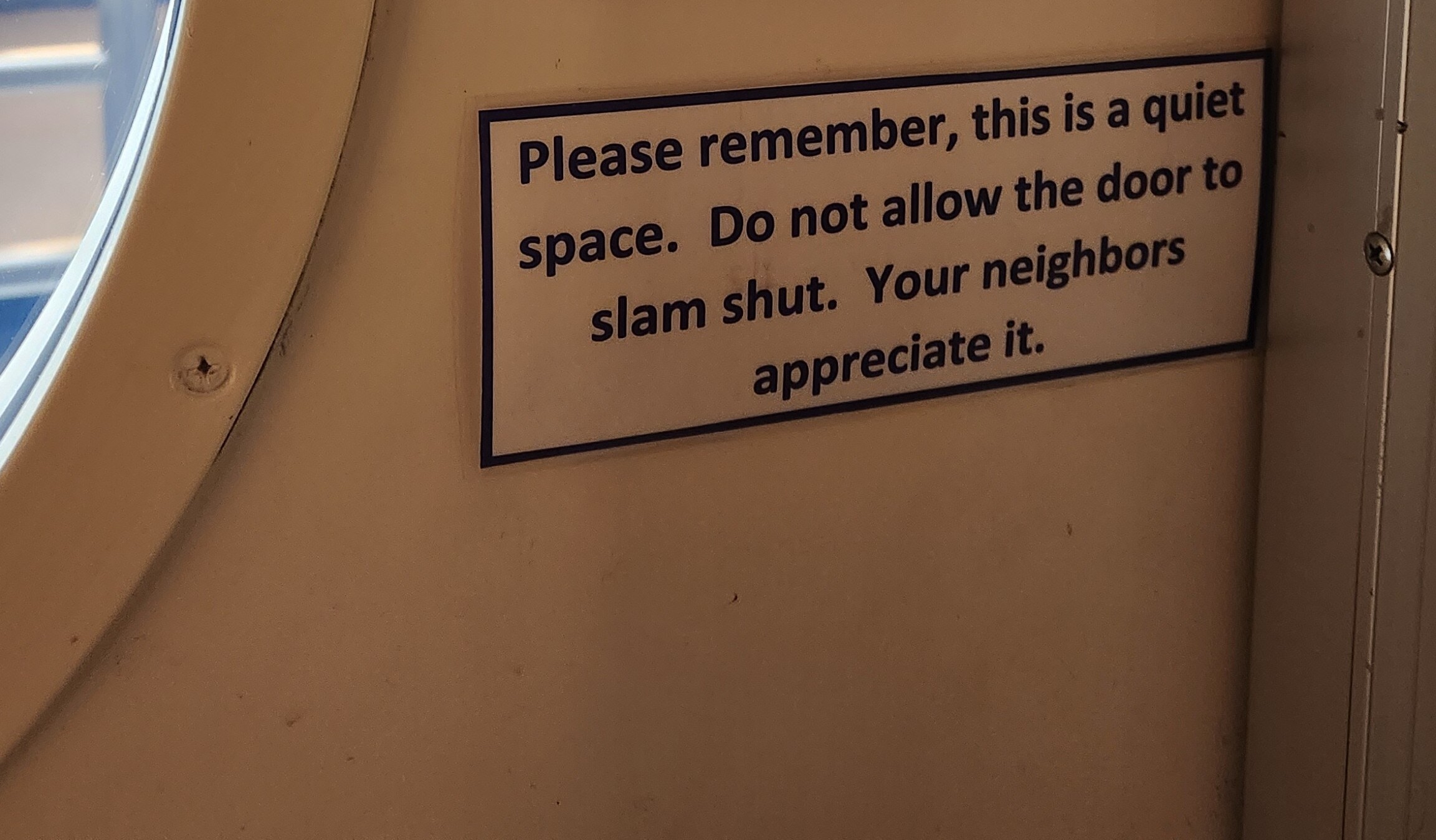 Door to one of our berthing wings.
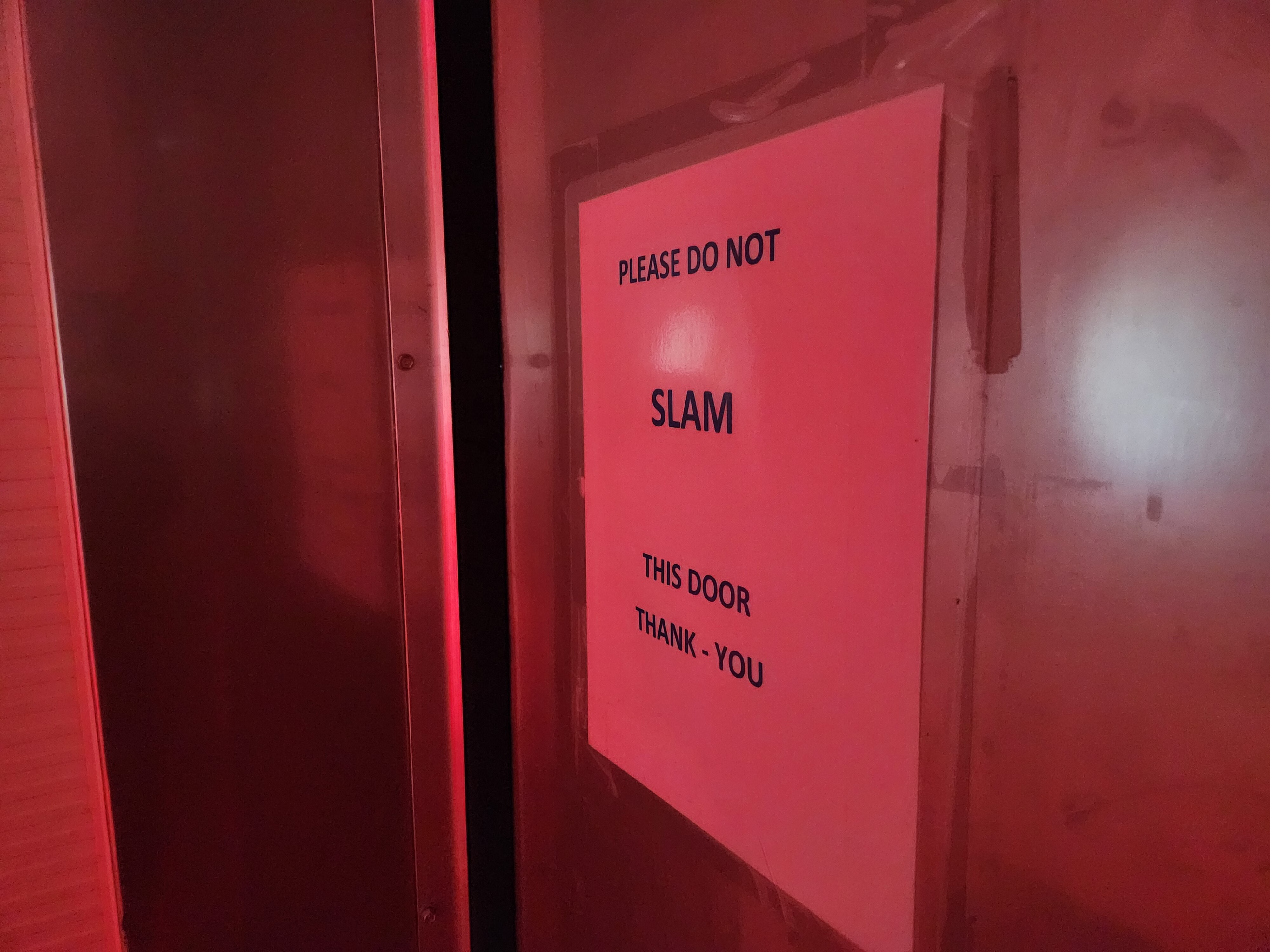 Please.
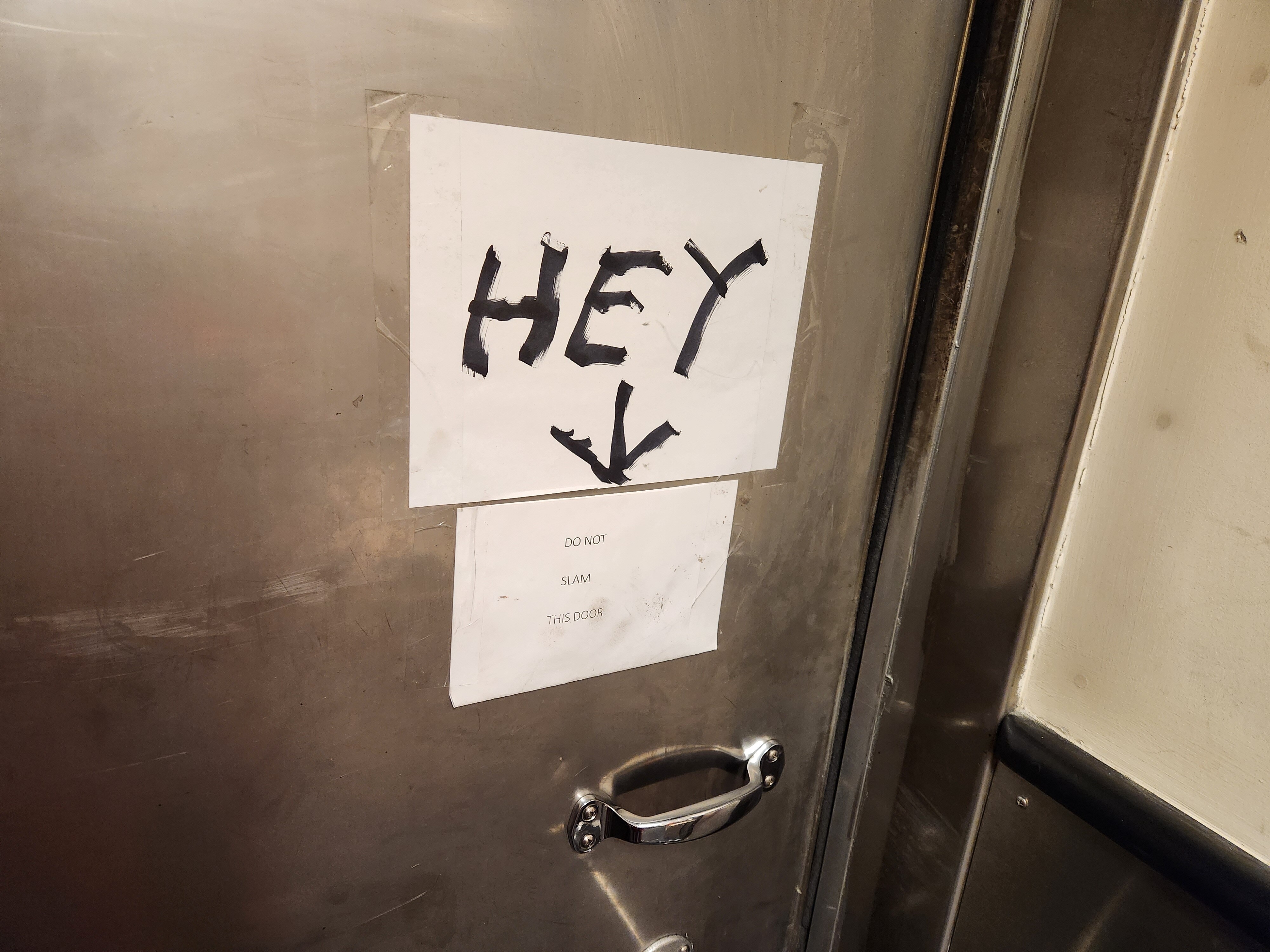 HEY
HEY
Turn off the Lights
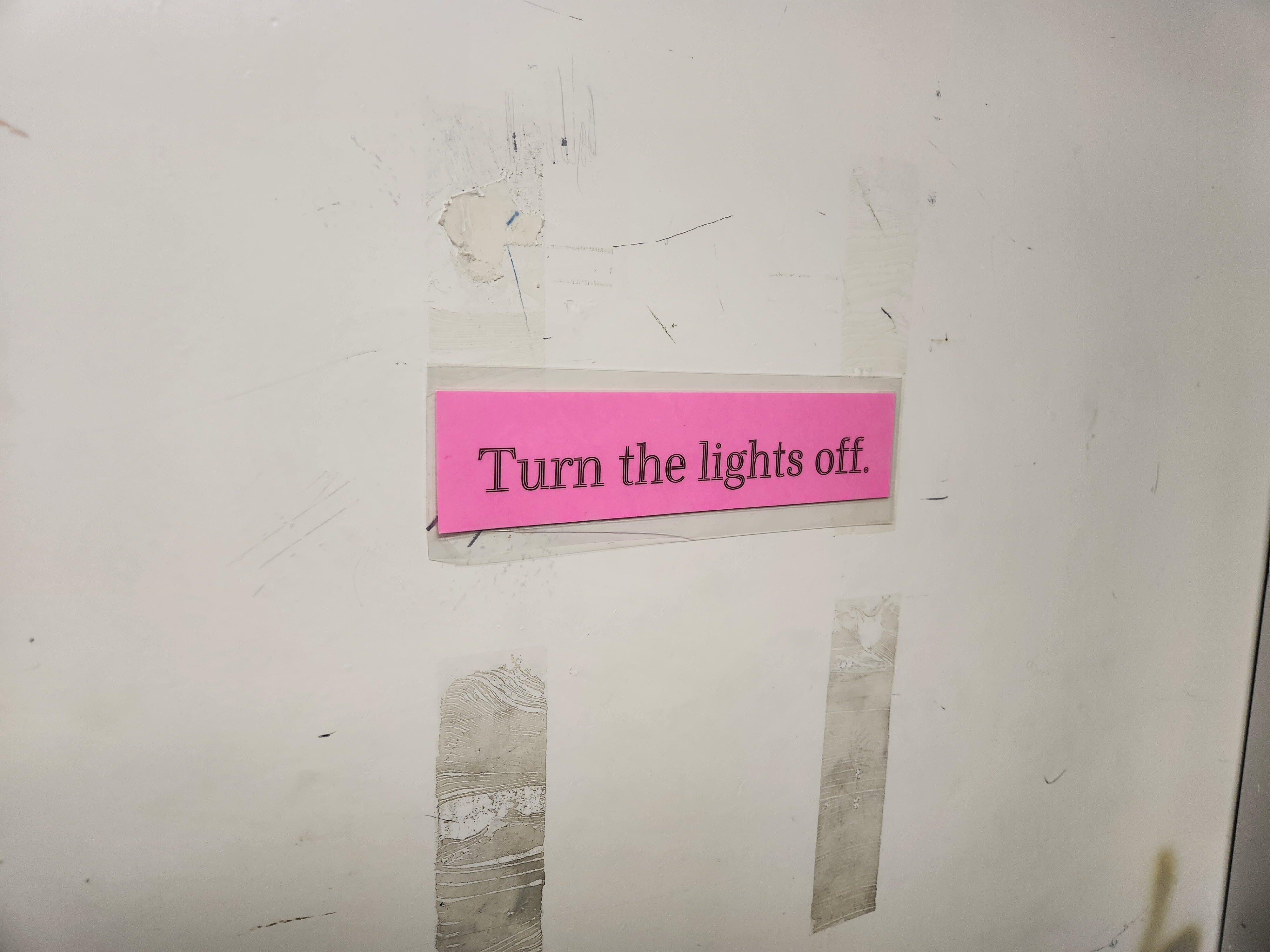 Direct and to the point.
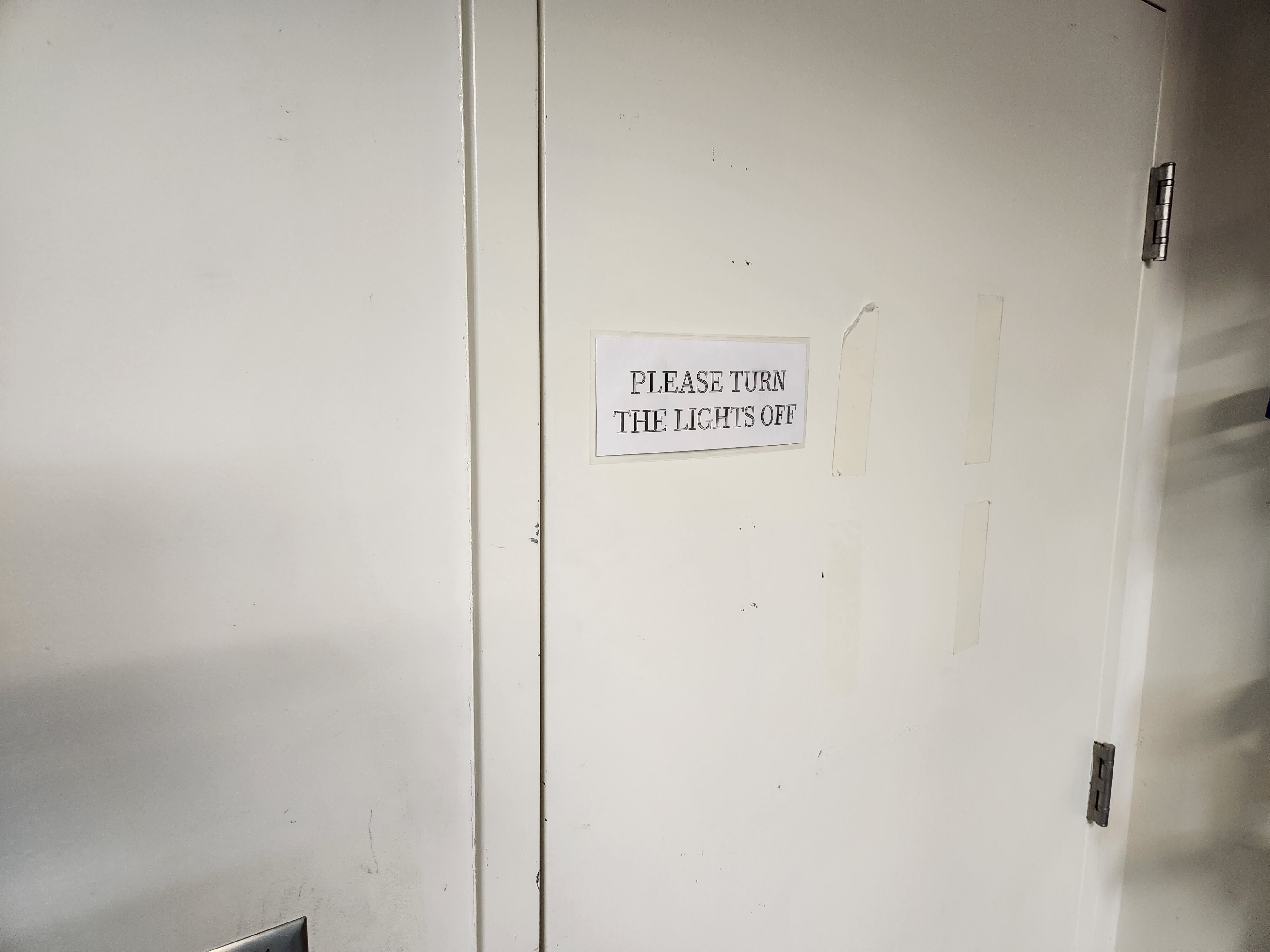 Polite, but not excessively so.
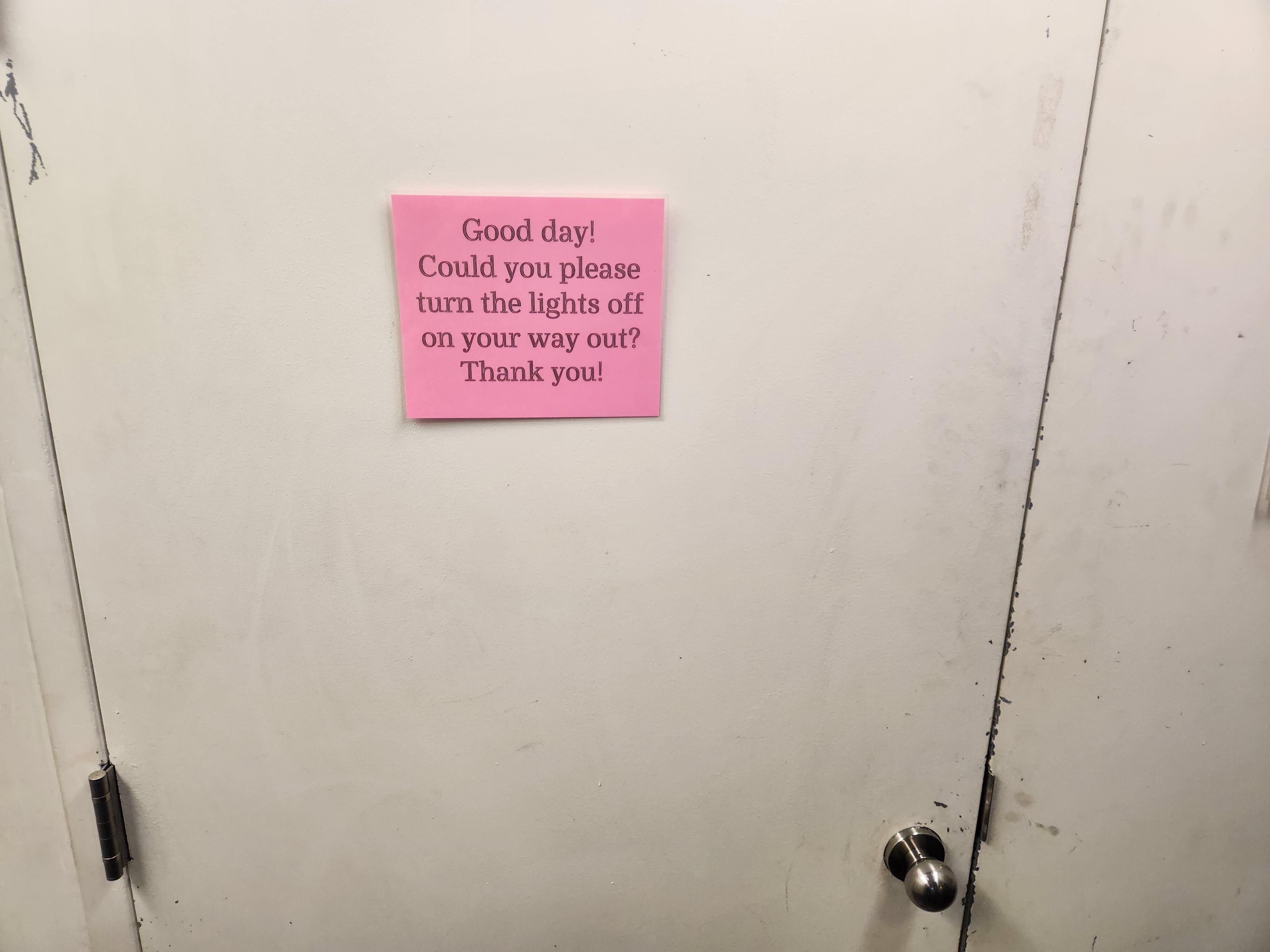 Exceedingly polite.
Waste Management
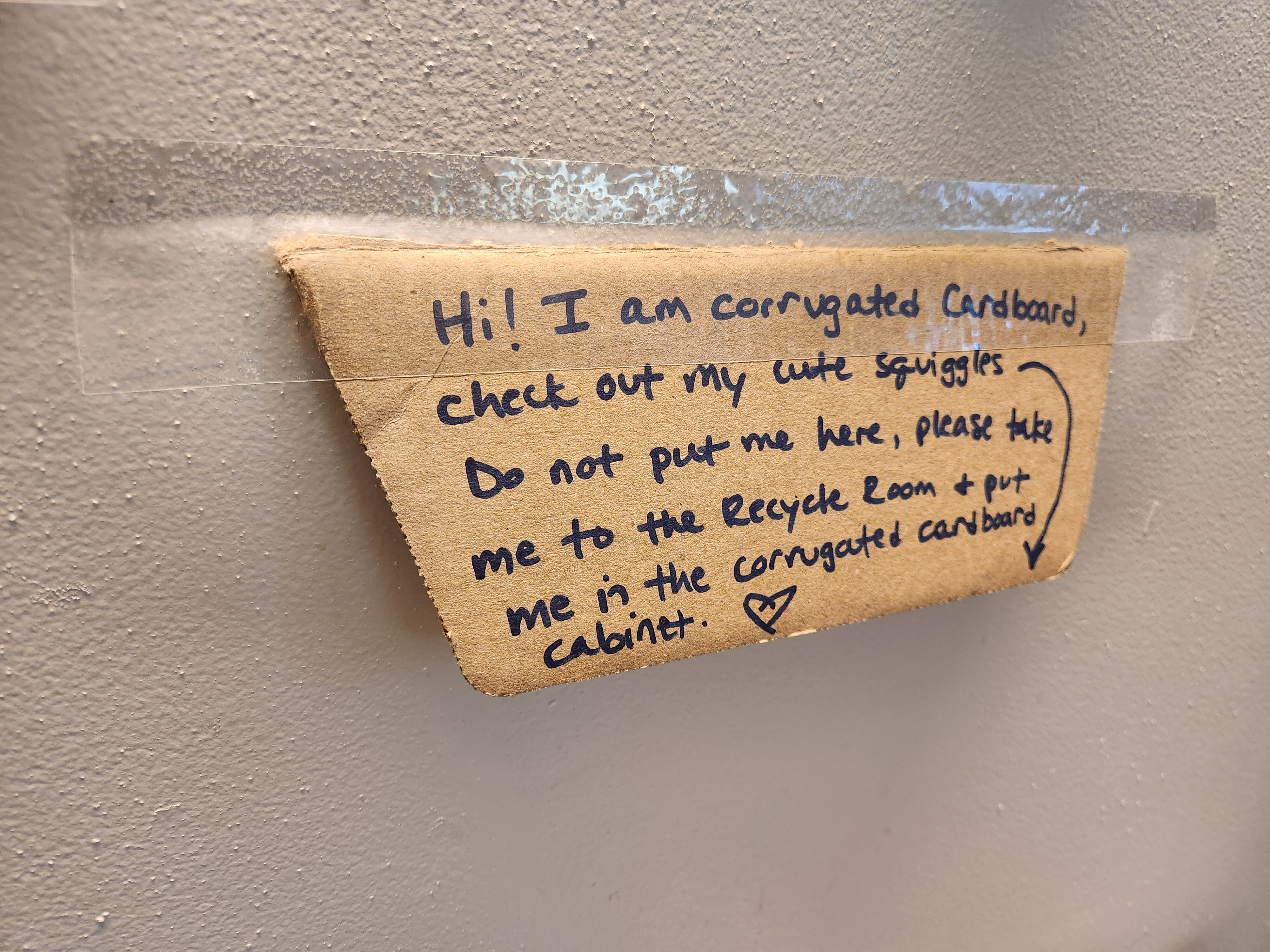 I do not know who wrote this, but I hope they stumble upon this blog and smile that their
handiwork is still alive and well at the South Pole.
I do not know who wrote this, but I hope they stumble upon this blog and smile that their
handiwork is still alive and well at the South Pole.
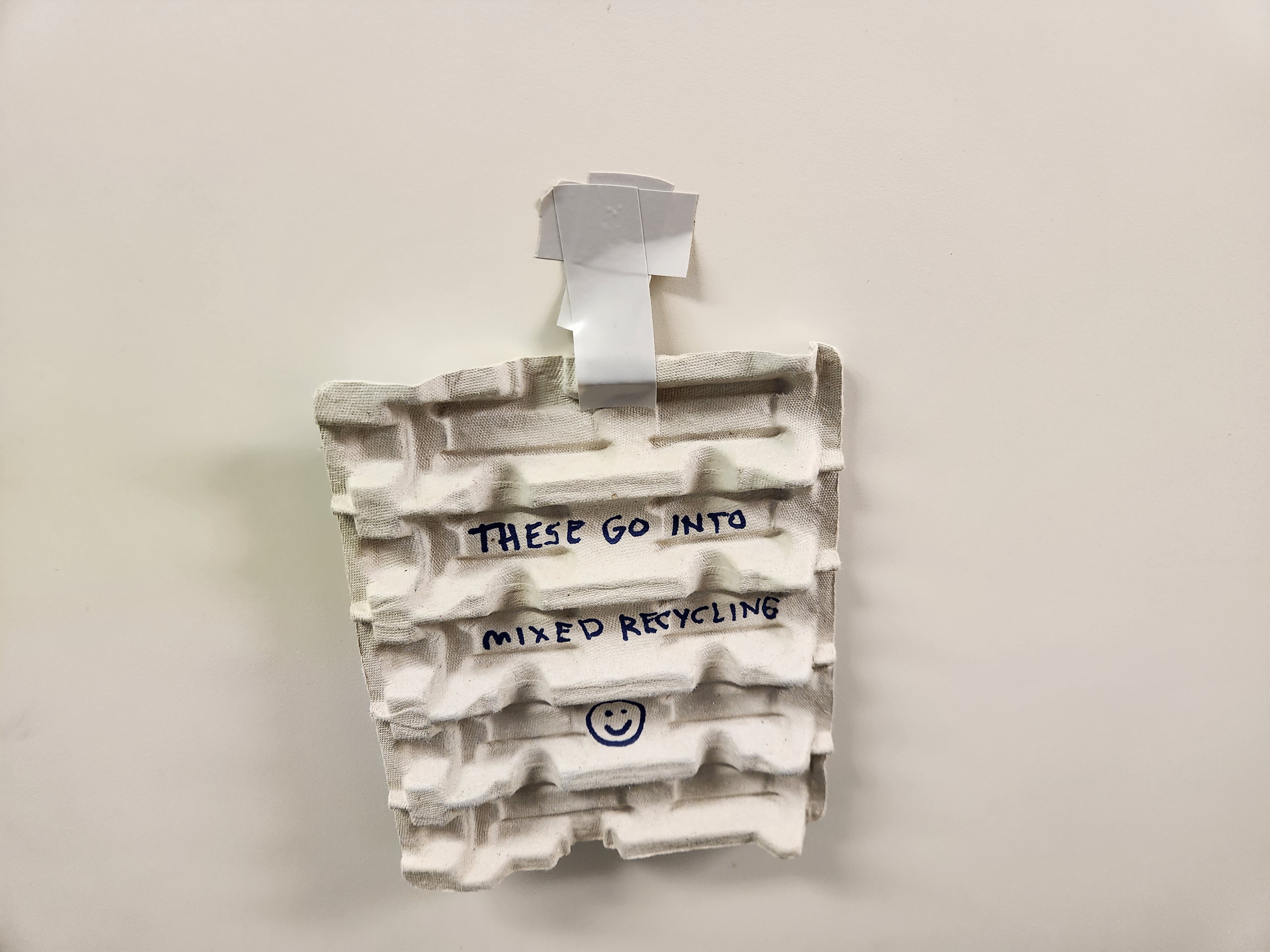 Another earnest plea for recycling.
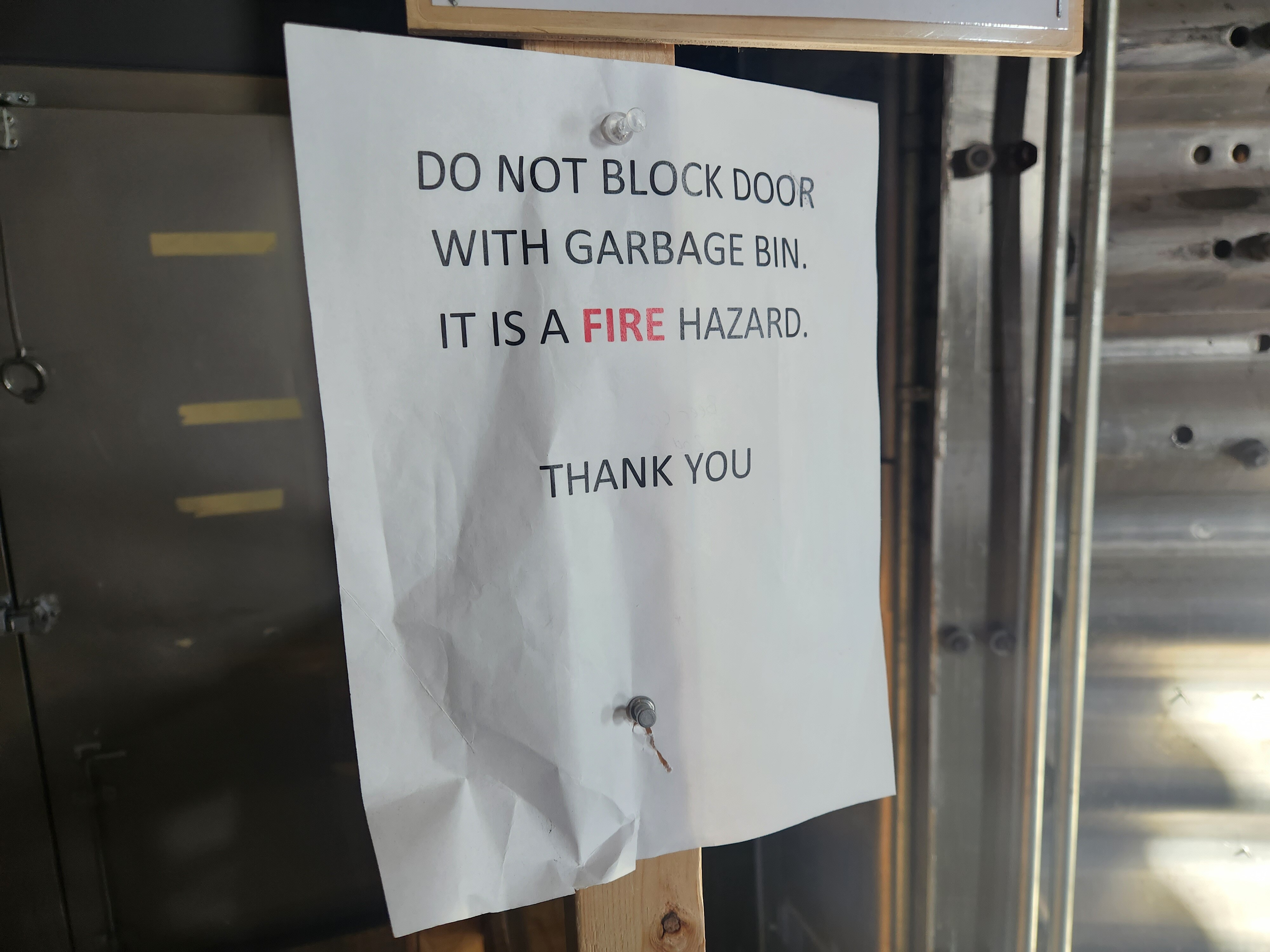 Earnest plea, just inside the door to the beer can, where we temporarily store our trash.
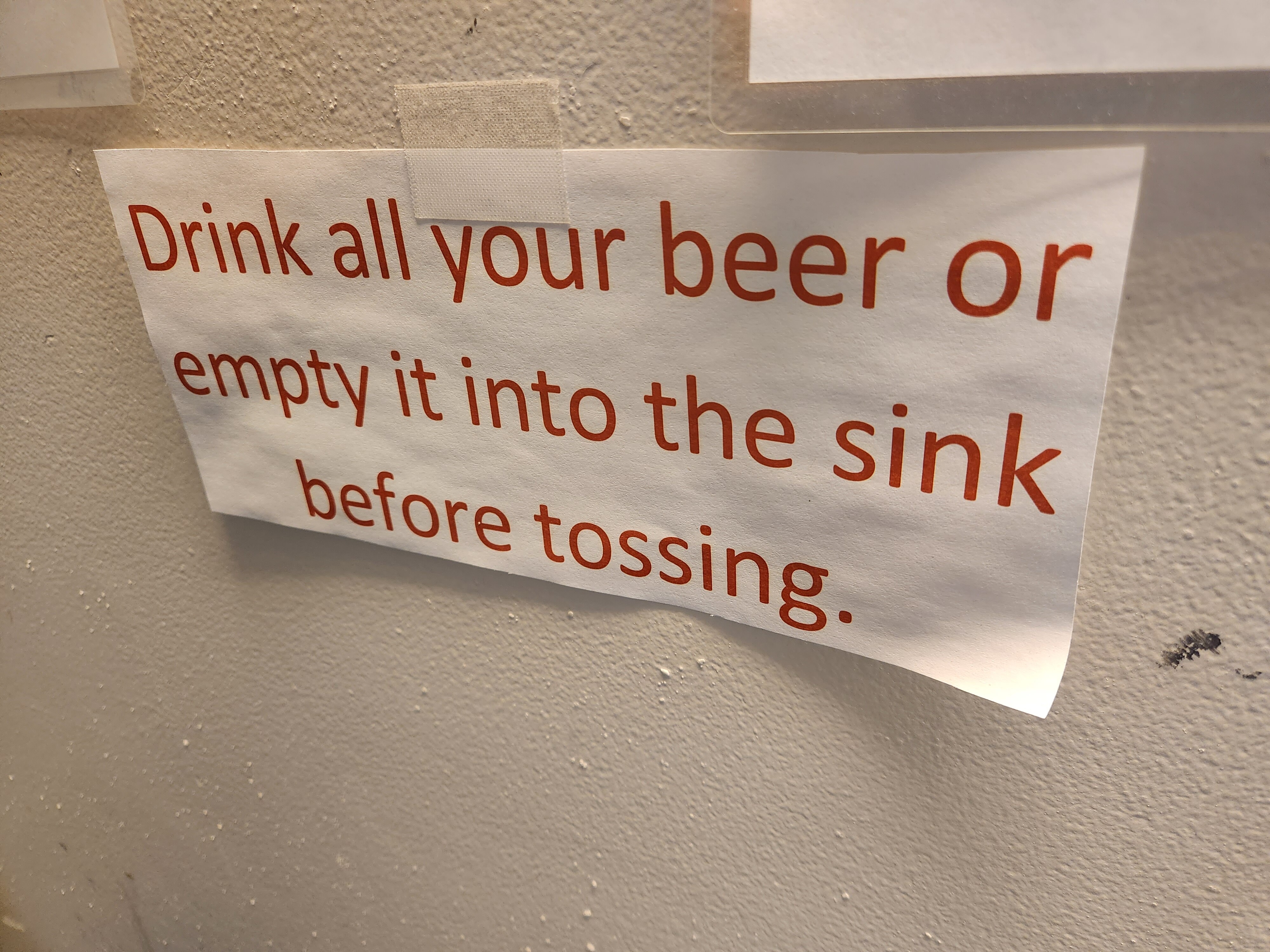 Nobody likes cleaning up sticky beer-soaked trash bags.
Utilities
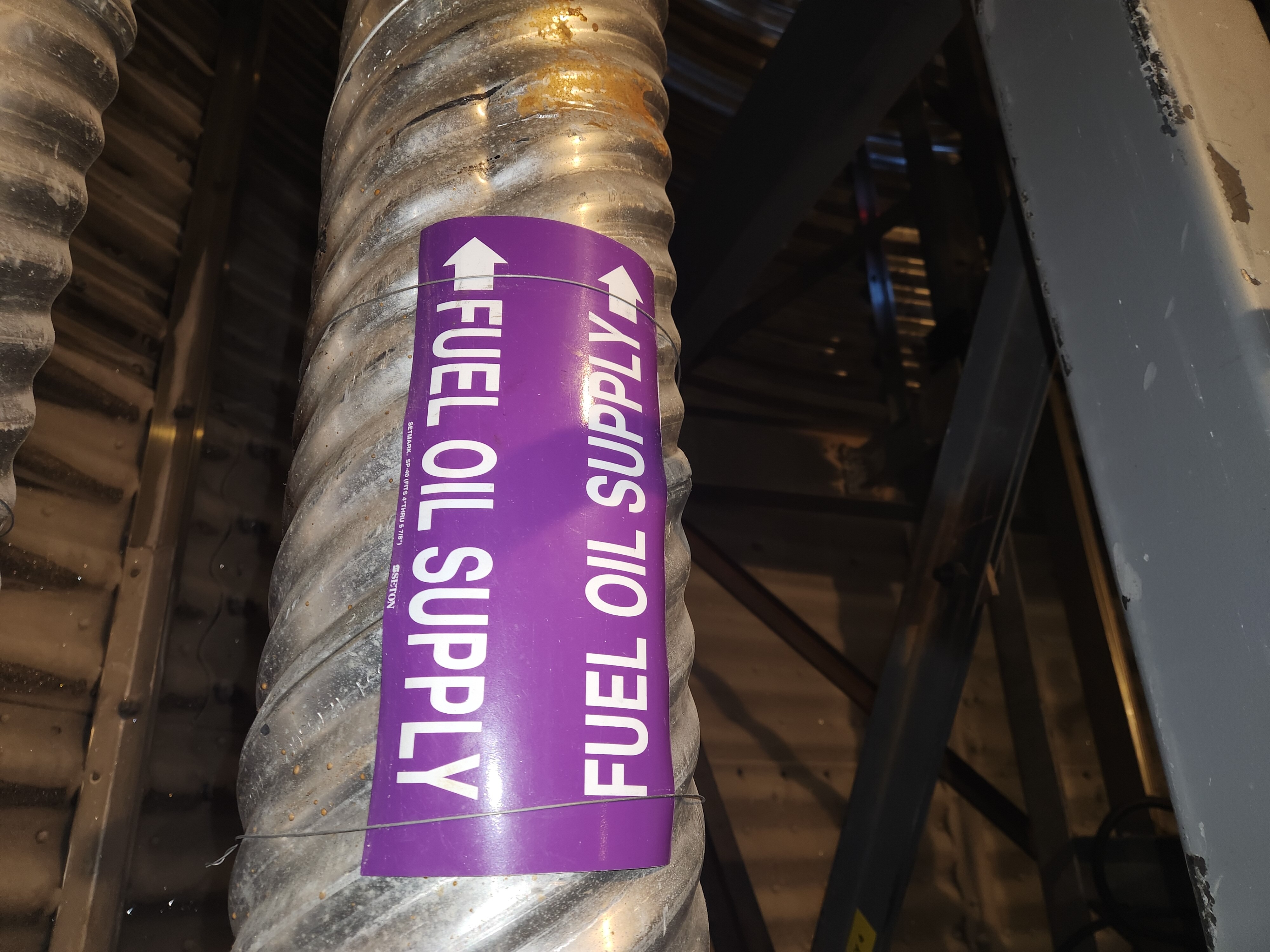 Insulated pipe, carrying AN-8 fuel up the beer can and into the elevated station, where we use it
in our supplemental boilers for station heating.
Insulated pipe, carrying AN-8 fuel up the beer can and into the elevated station, where we use it
in our supplemental boilers for station heating.
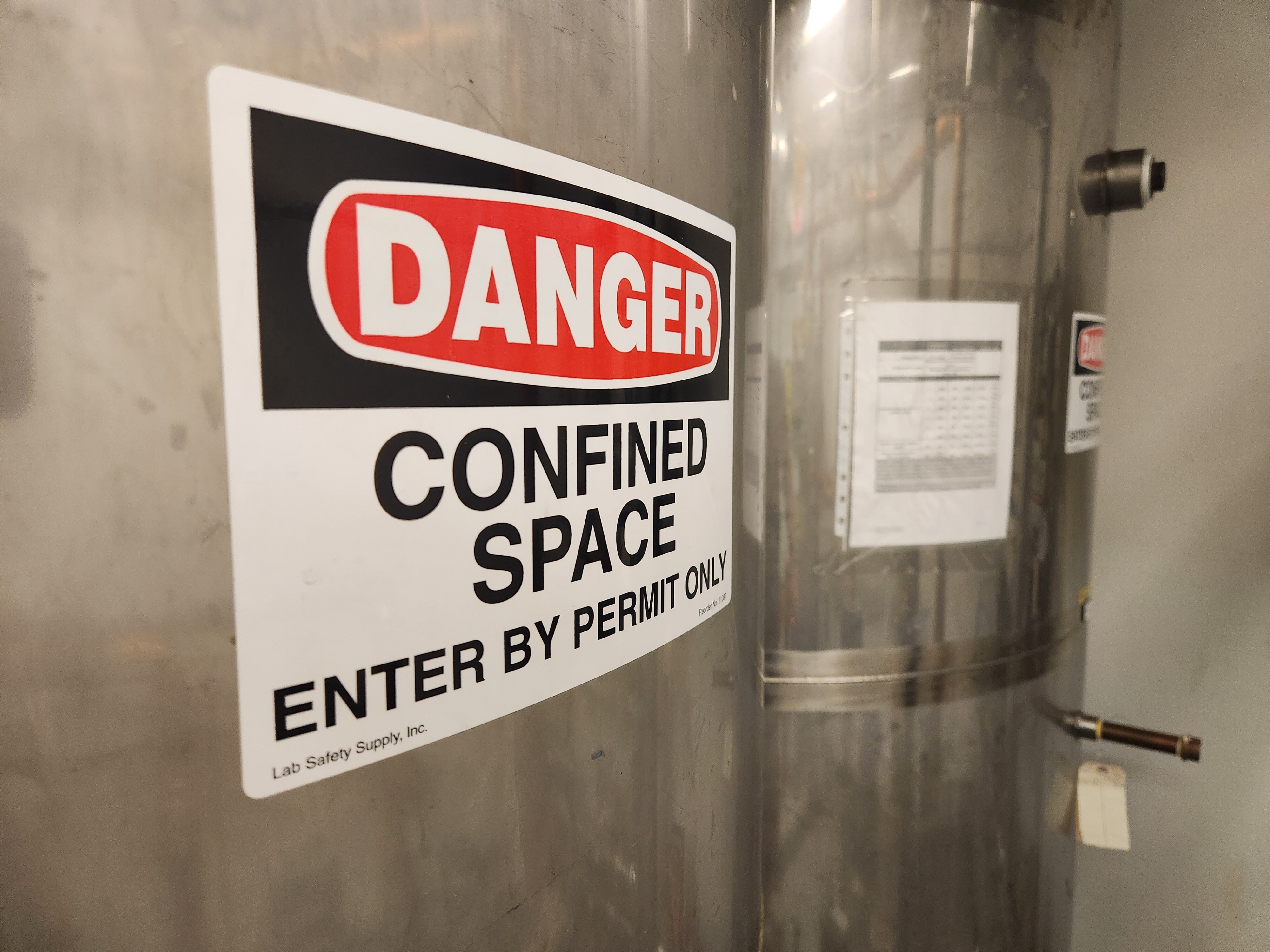 Day tanks for storing potable water in elevated station wing B1, our emergency "lifeboat".
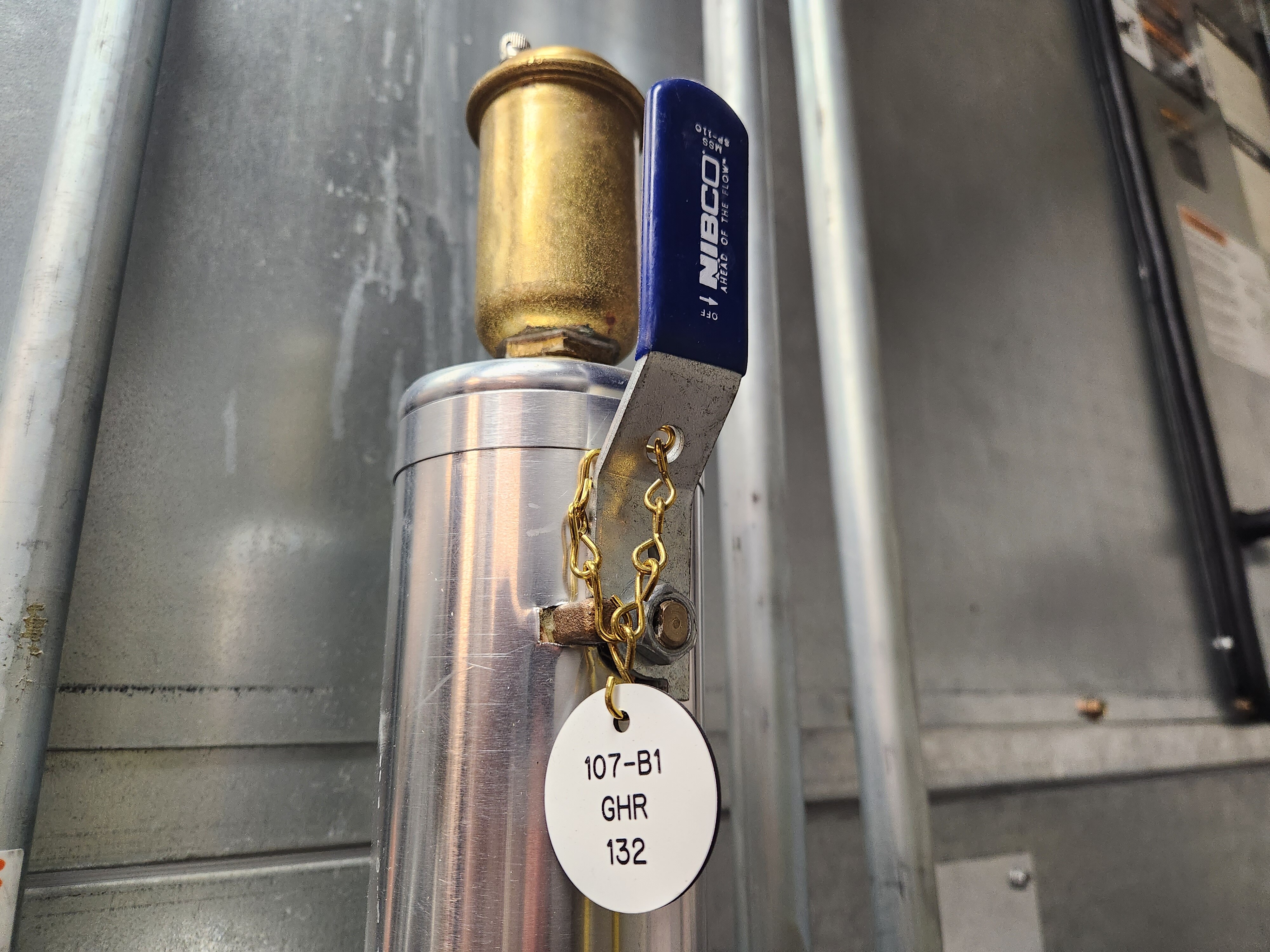 "GHR" stands for Glycol Heating Return.
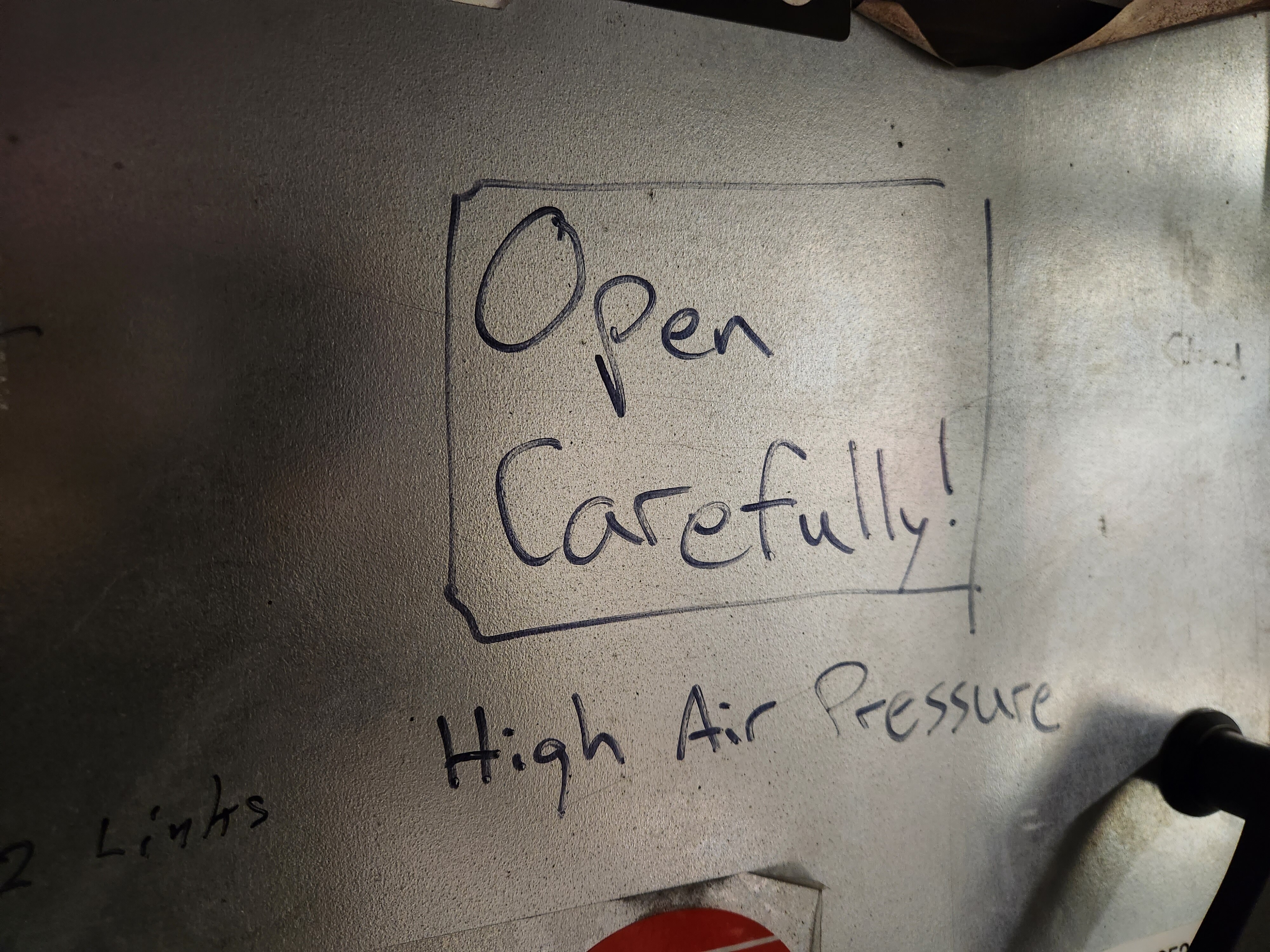 A good example of "Warnings that were Clearly the Result of a Mishap."
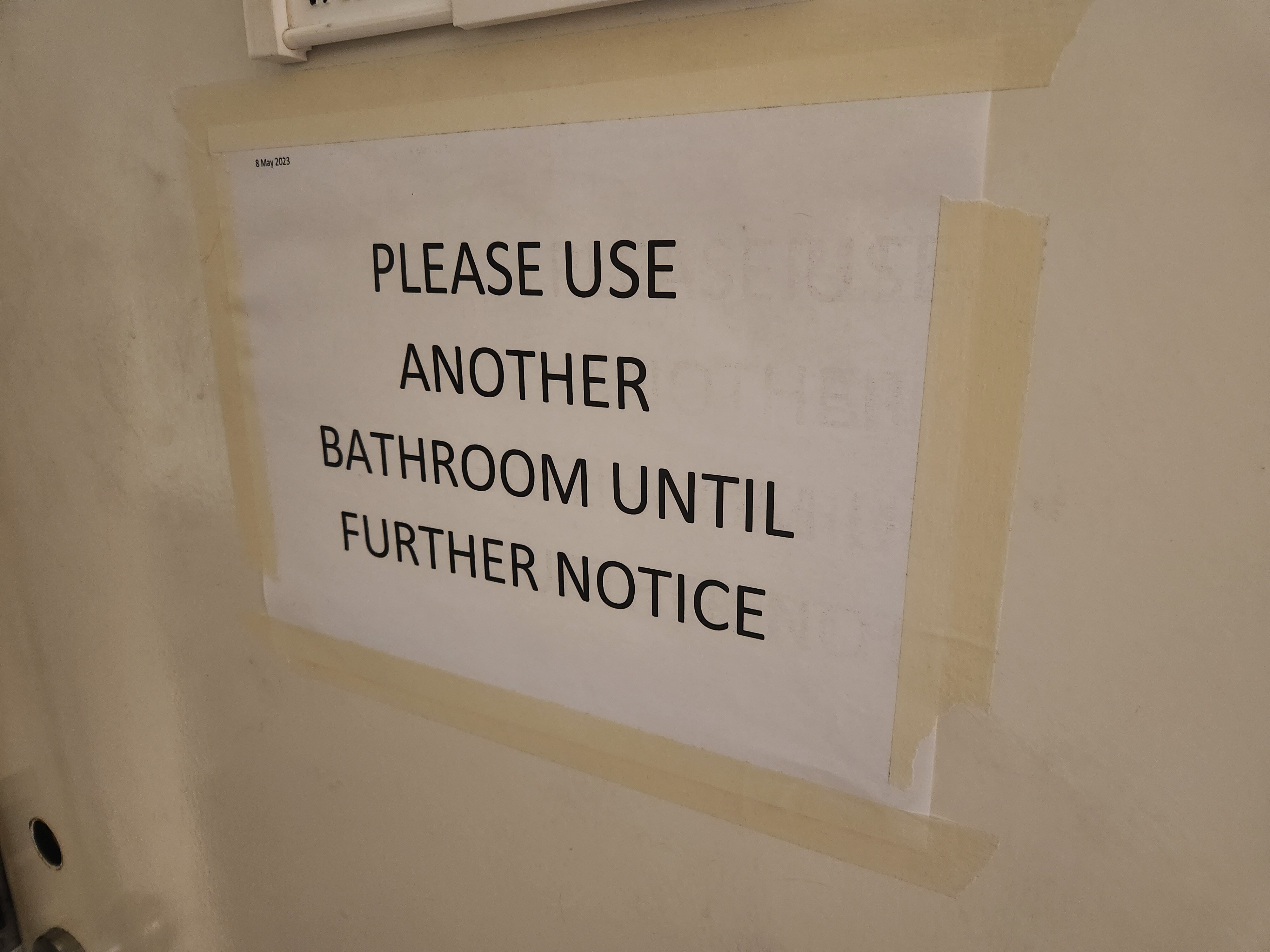 South Pole Station is not immune to routine plumbing issues. In this particular case, we had
to auger out a clogged drain line serving a portion of the elevated station.
South Pole Station is not immune to routine plumbing issues. In this particular case, we had
to auger out a clogged drain line serving a portion of the elevated station.
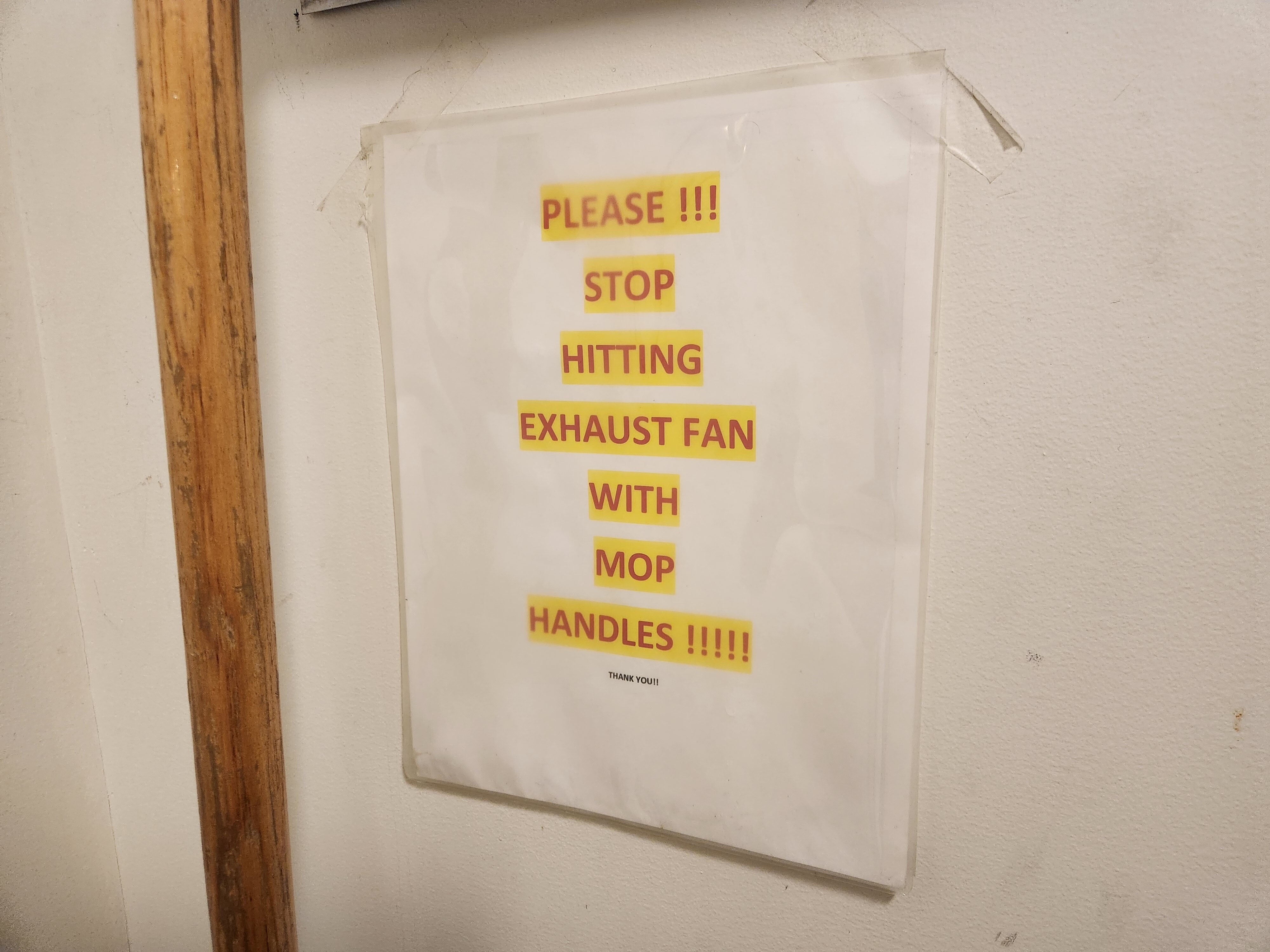 Some exasperated carpenter was sick of constantly fixing the fan mounts.
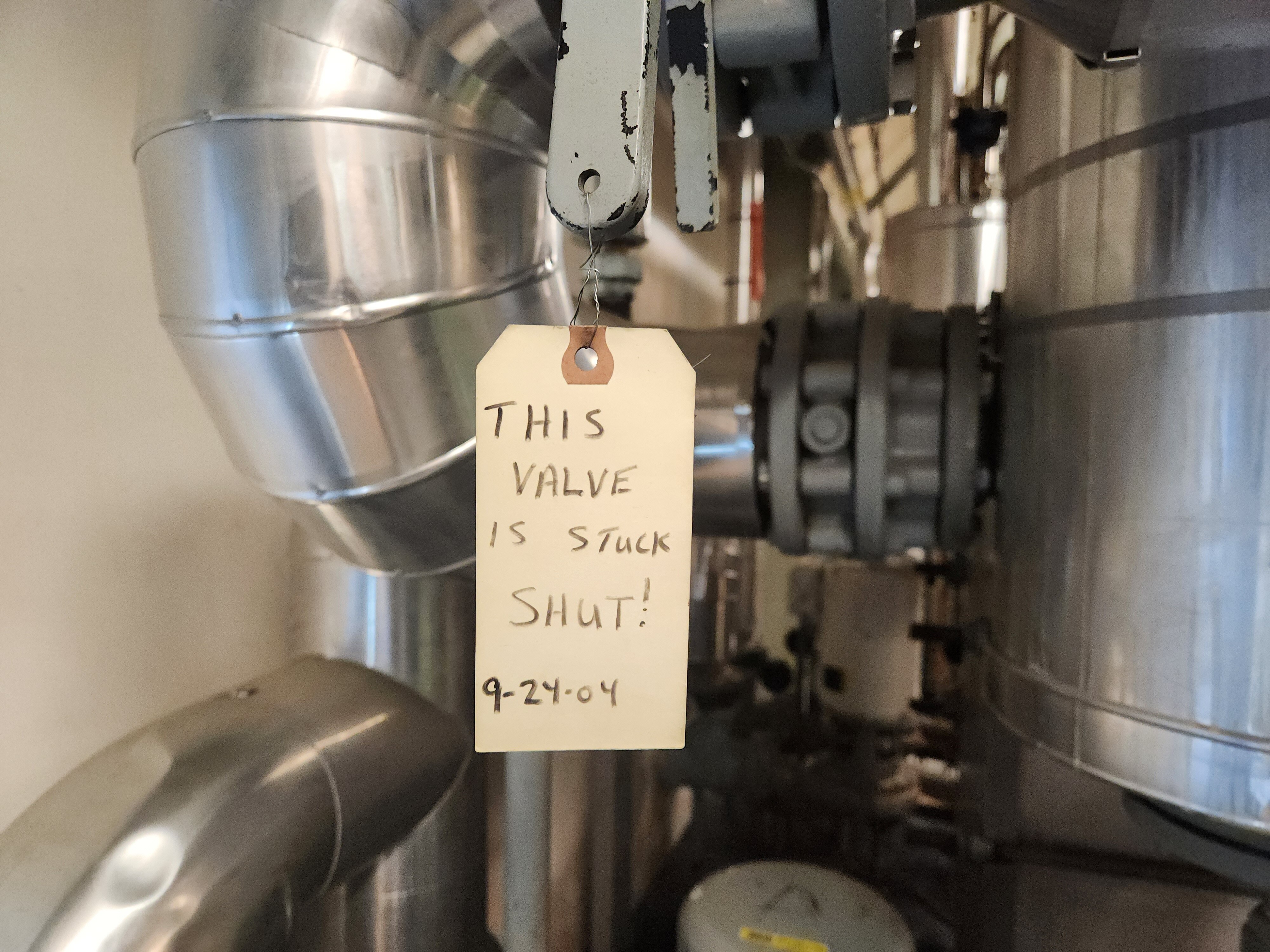 Found in the elevated station. For context: On Sept 24, 2004, the
elevated station still had over 3 years of major construction to go.
Found in the elevated station. For context: On Sept 24, 2004, the
elevated station still had over 3 years of major construction to go.
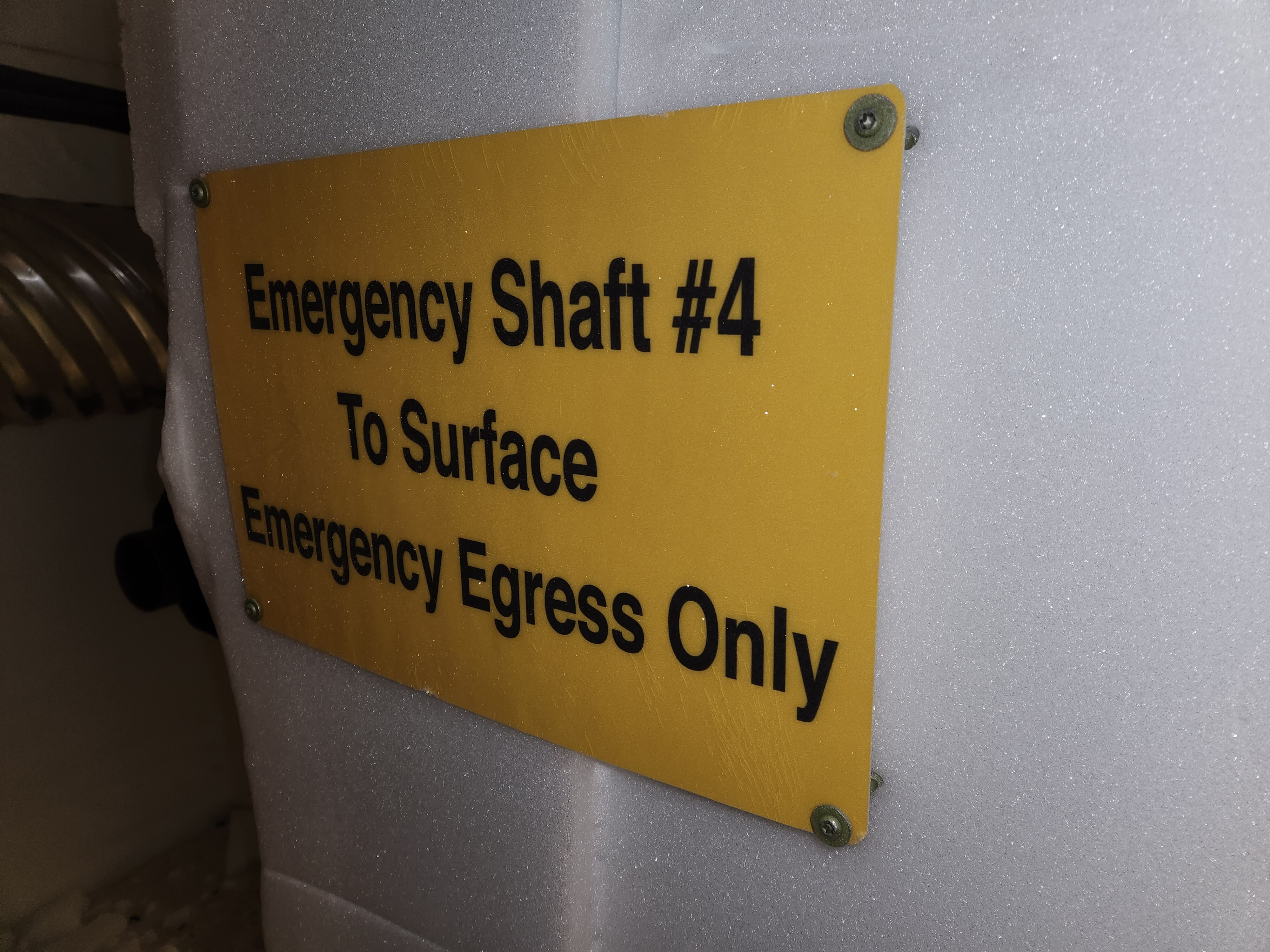 Deep underground, in one of the ice tunnels used for utilities.
Yes -- the sign is screwed directly into an ice wall.
Deep underground, in one of the ice tunnels used for utilities.
Yes -- the sign is screwed directly into an ice wall.
Workshops
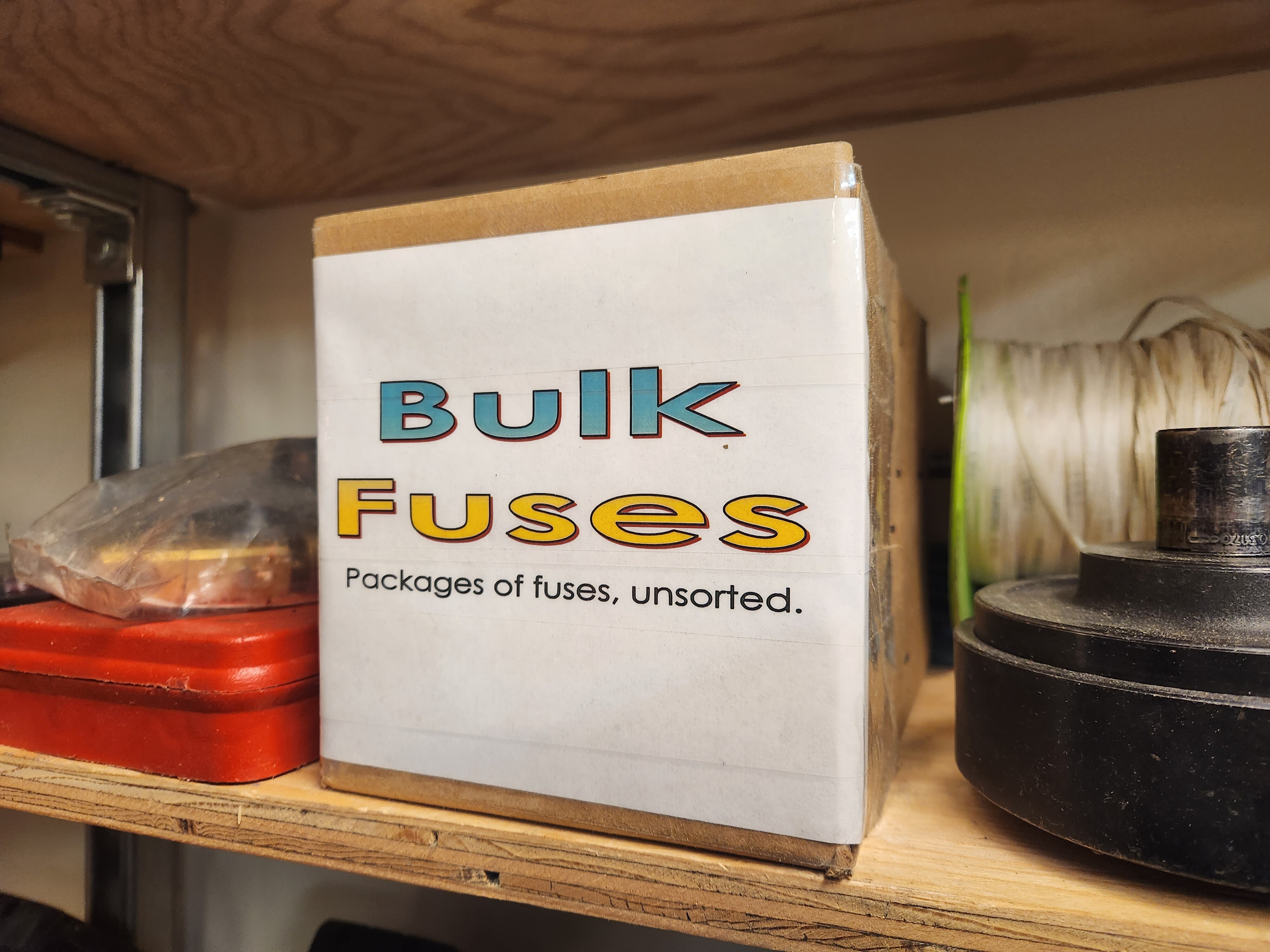 I love this one, because someone took the time to create this in what looks to be Word Art, print it
out, and tape it on here.
I love this one, because someone took the time to create this in what looks to be Word Art, print it
out, and tape it on here.
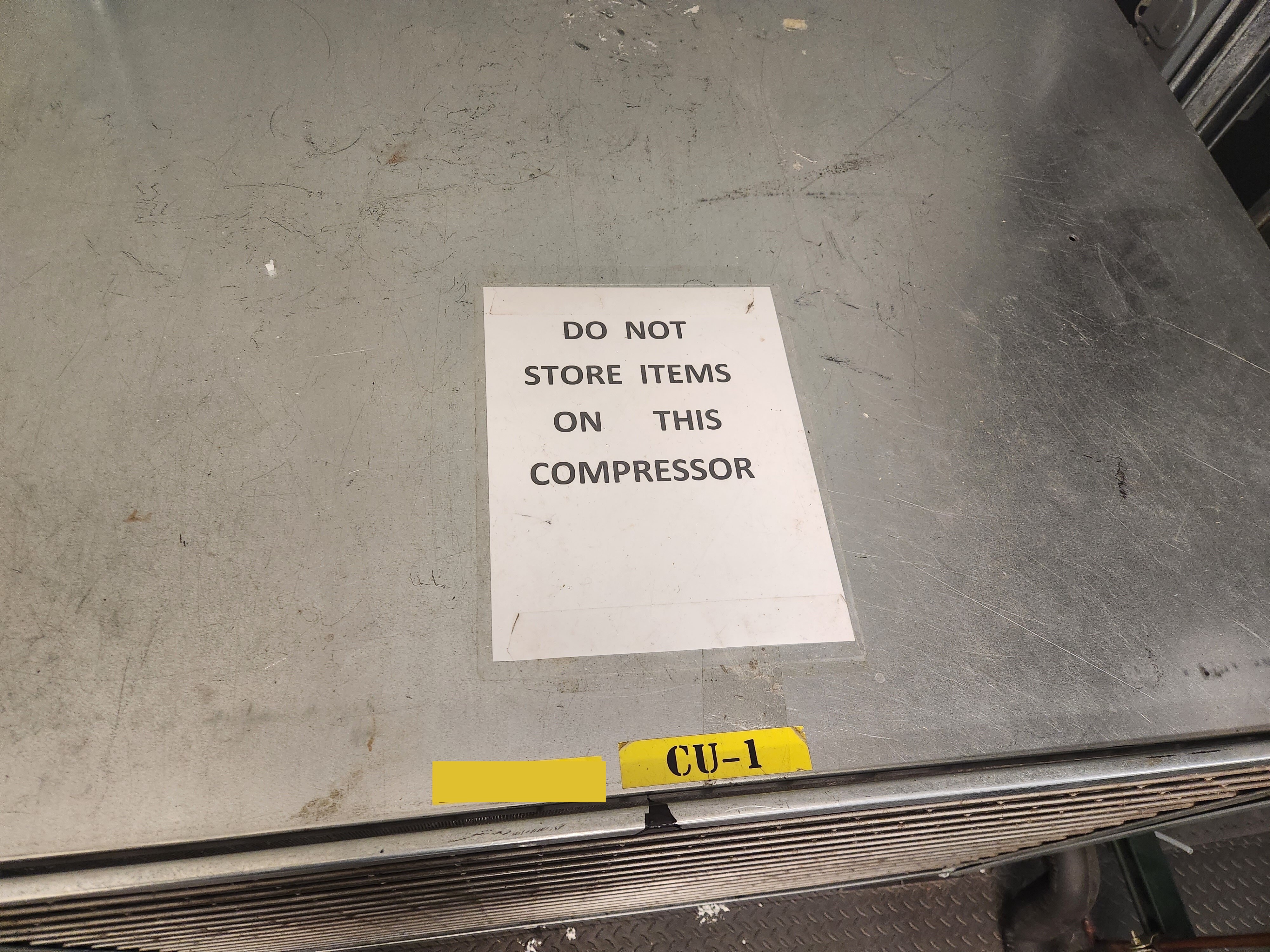 As in every workshop, horizontal space for putting Things on is at a premium.
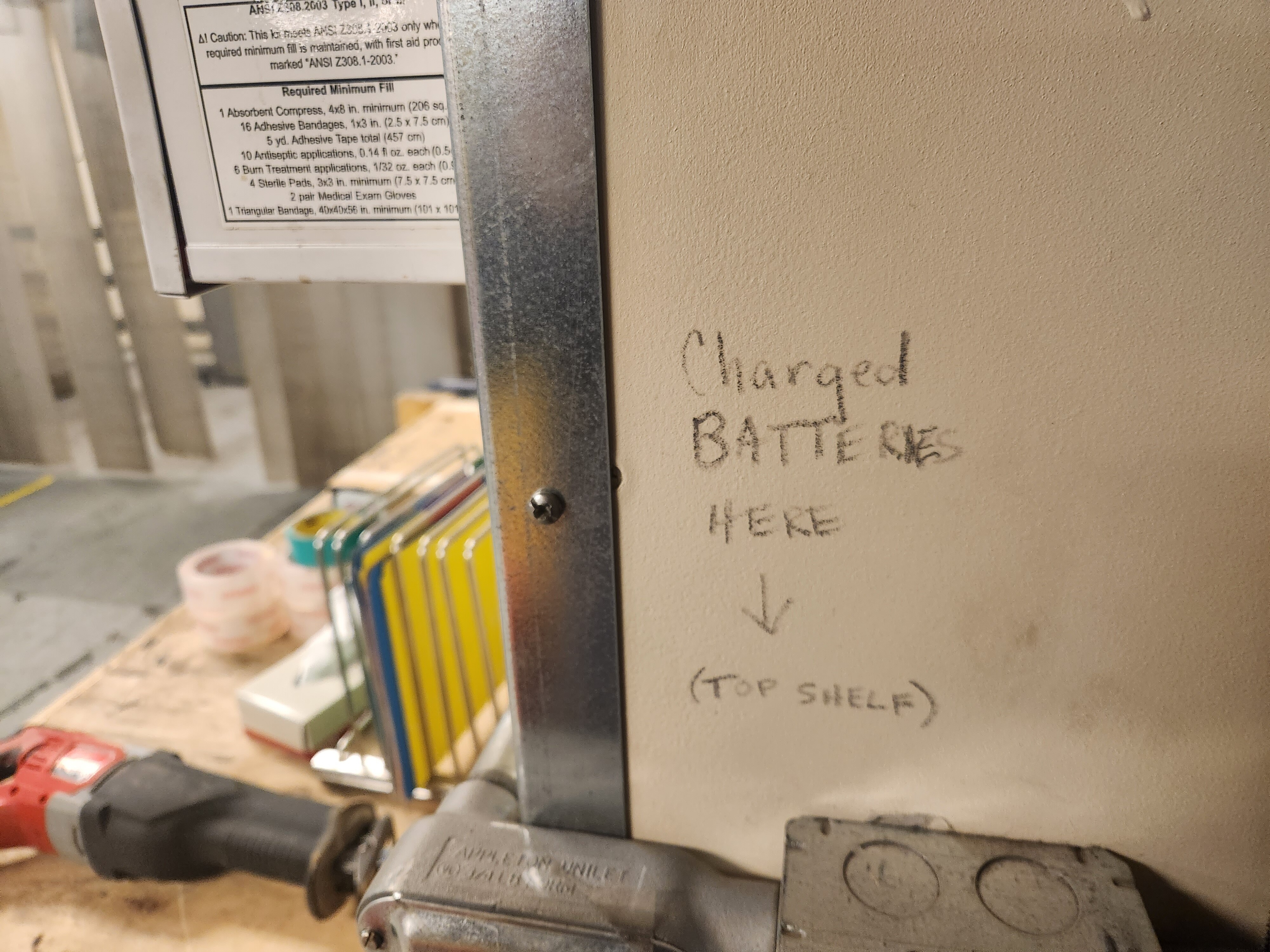 South Pole Station is home to several earnest, unofficial workflows
for dealing with dead / charging / charged batteries.
South Pole Station is home to several earnest, unofficial workflows
for dealing with dead / charging / charged batteries.
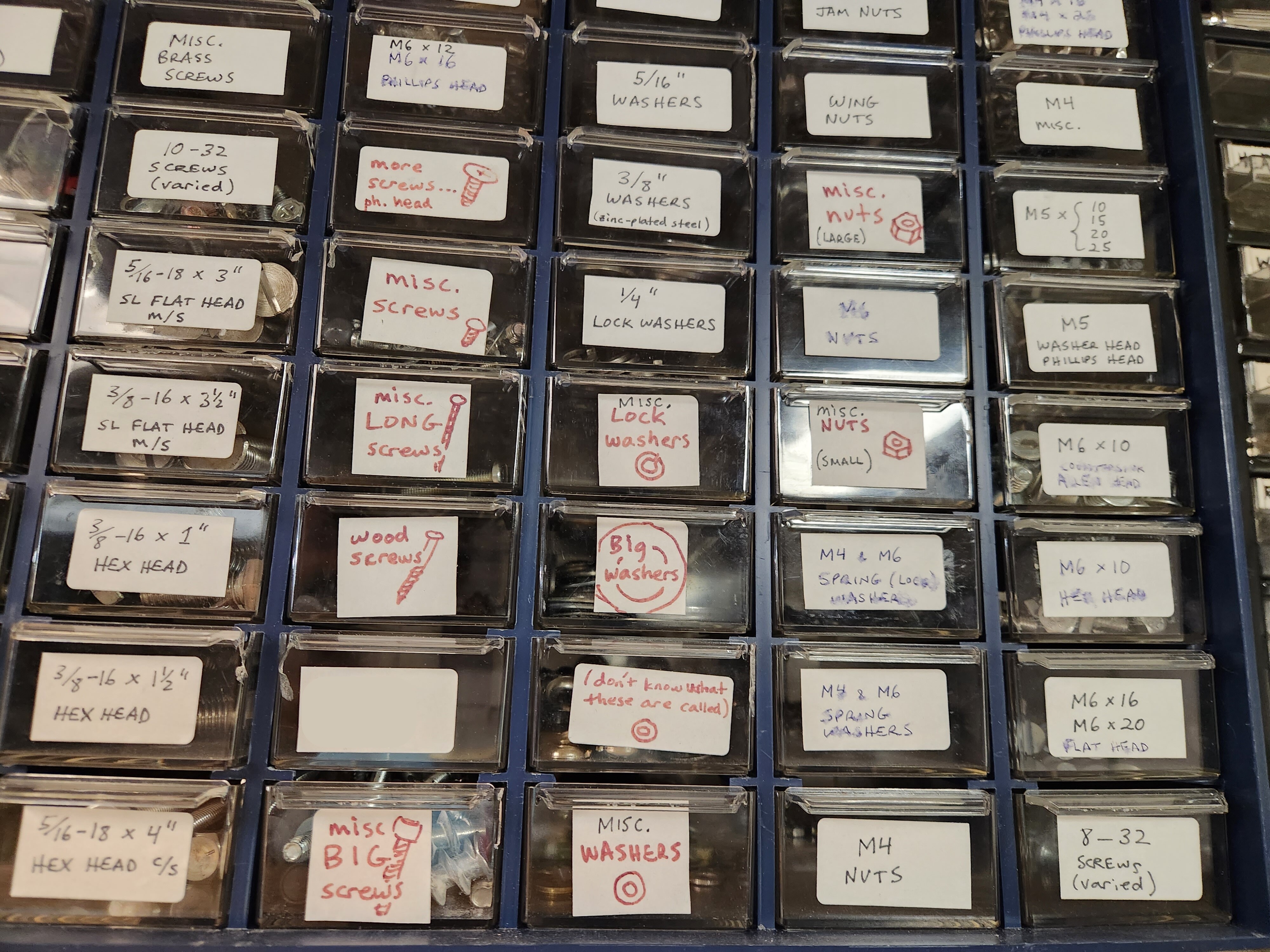 Another earnest, homegrown organization scheme for workshop consumables.
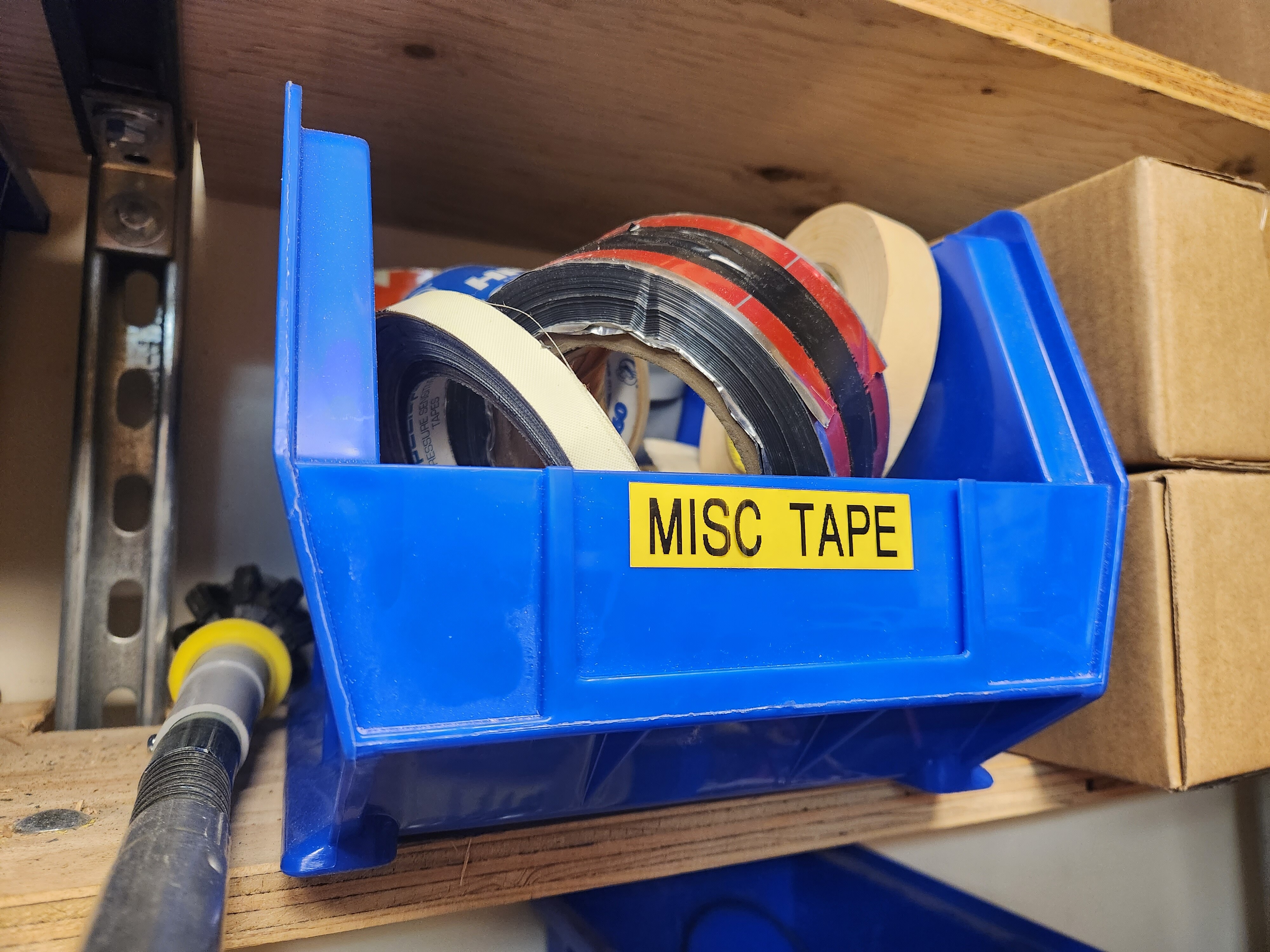 There are a bunch of "misc tape" boxes and drawers all over station.
Stuff just piles up in them.
There are a bunch of "misc tape" boxes and drawers all over station.
Stuff just piles up in them.
Laundry
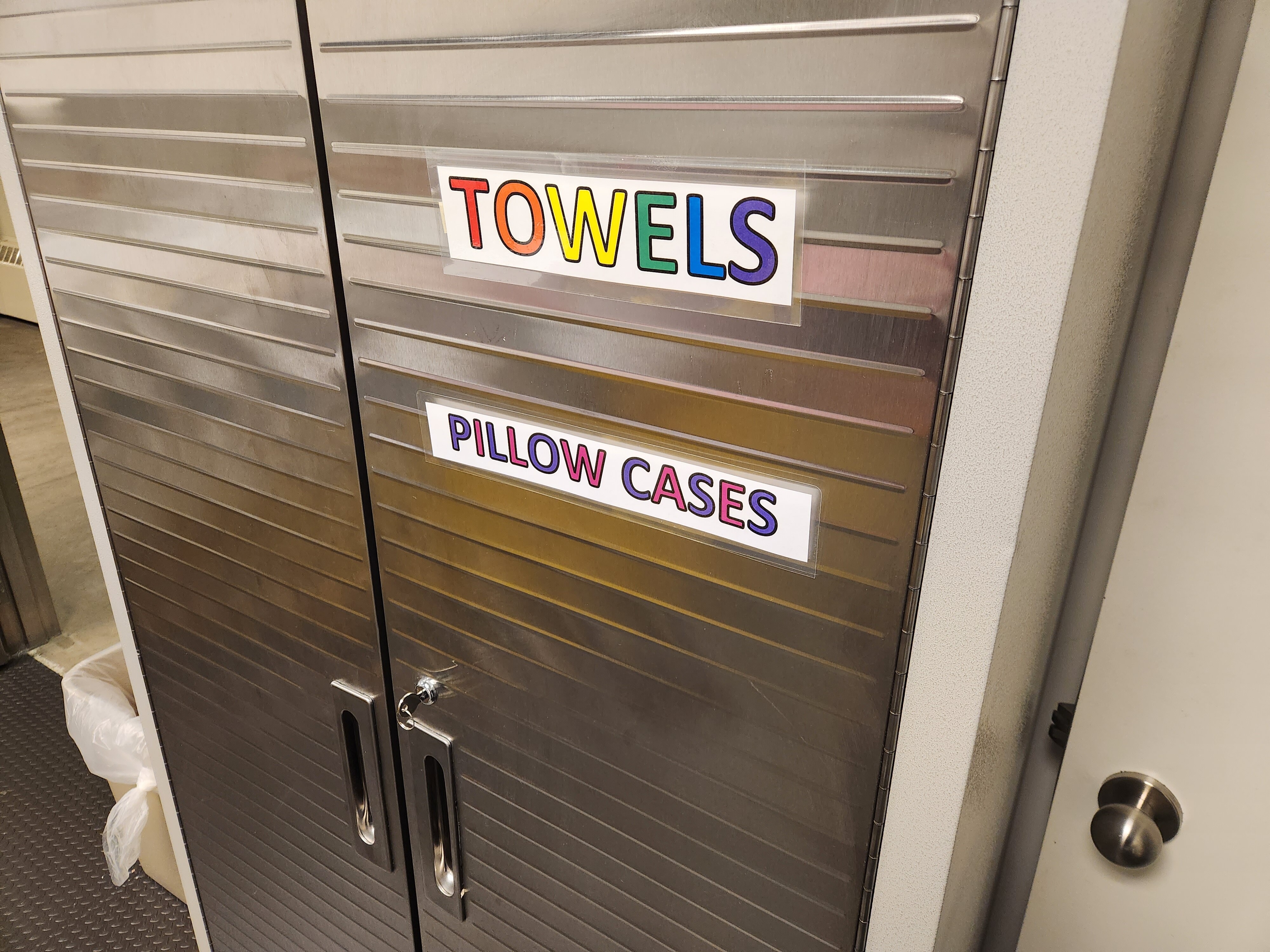 Linen storage in our laundry room.
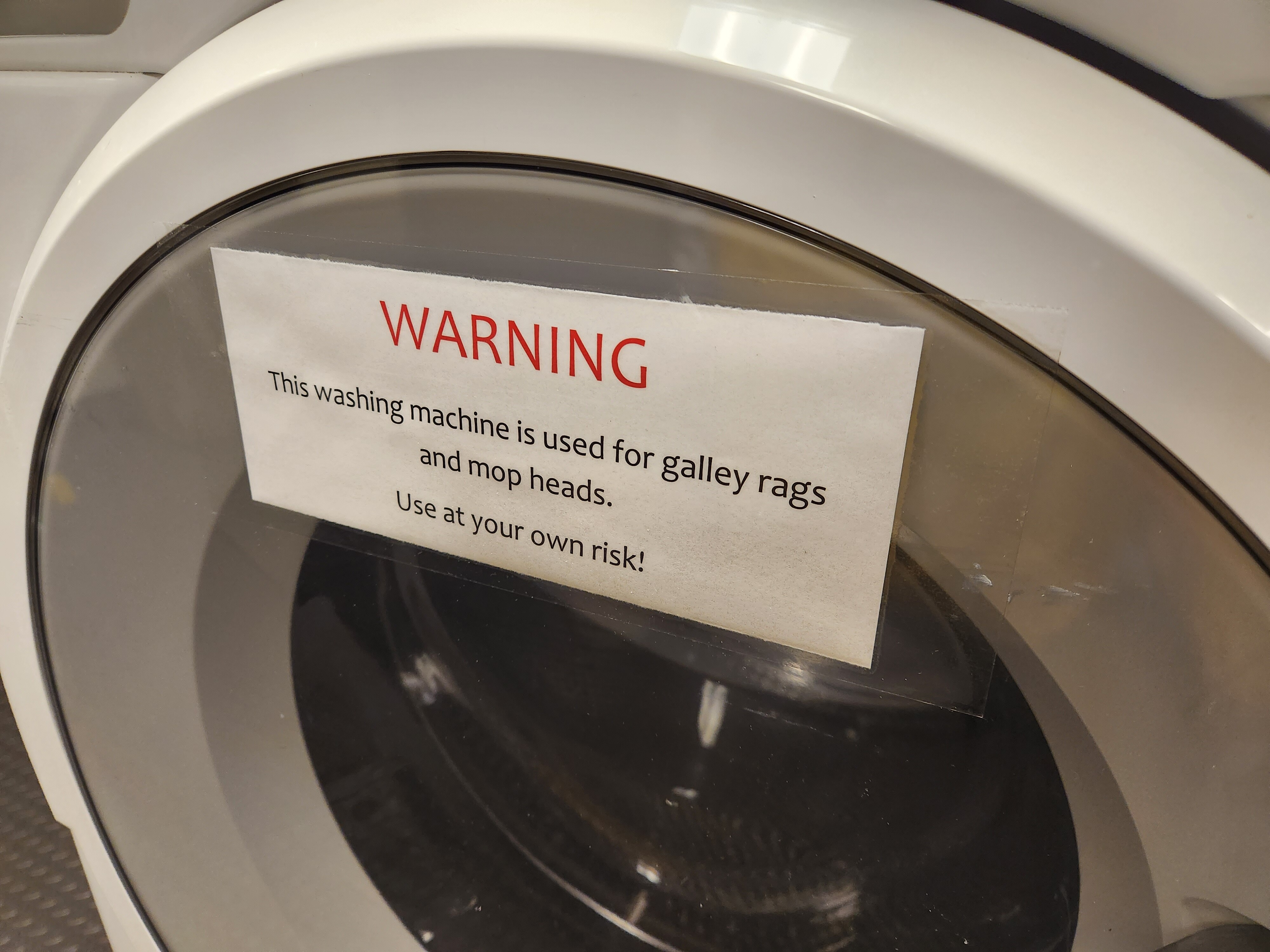 Use at your own risk!
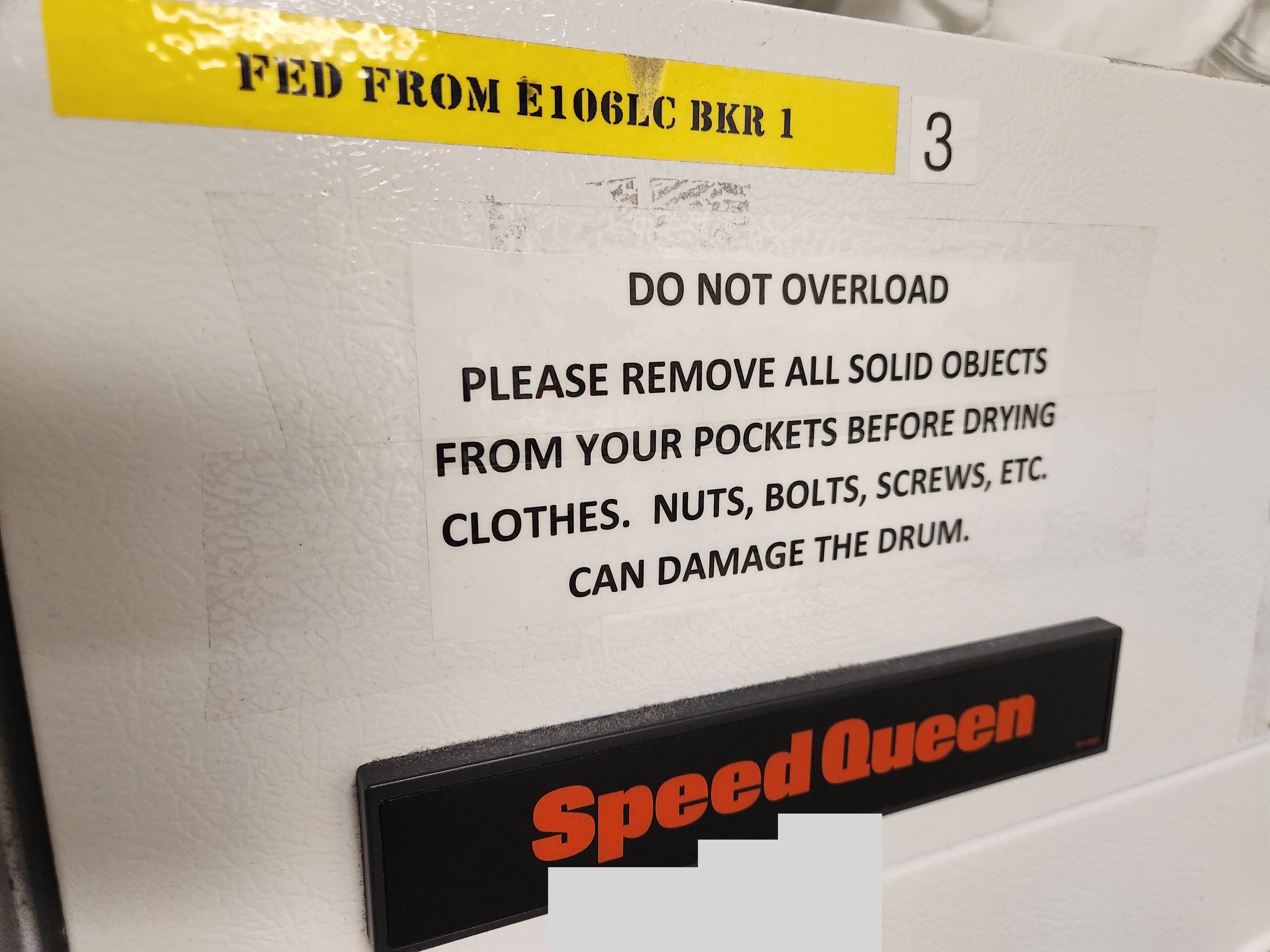 Another one from our laundry room.
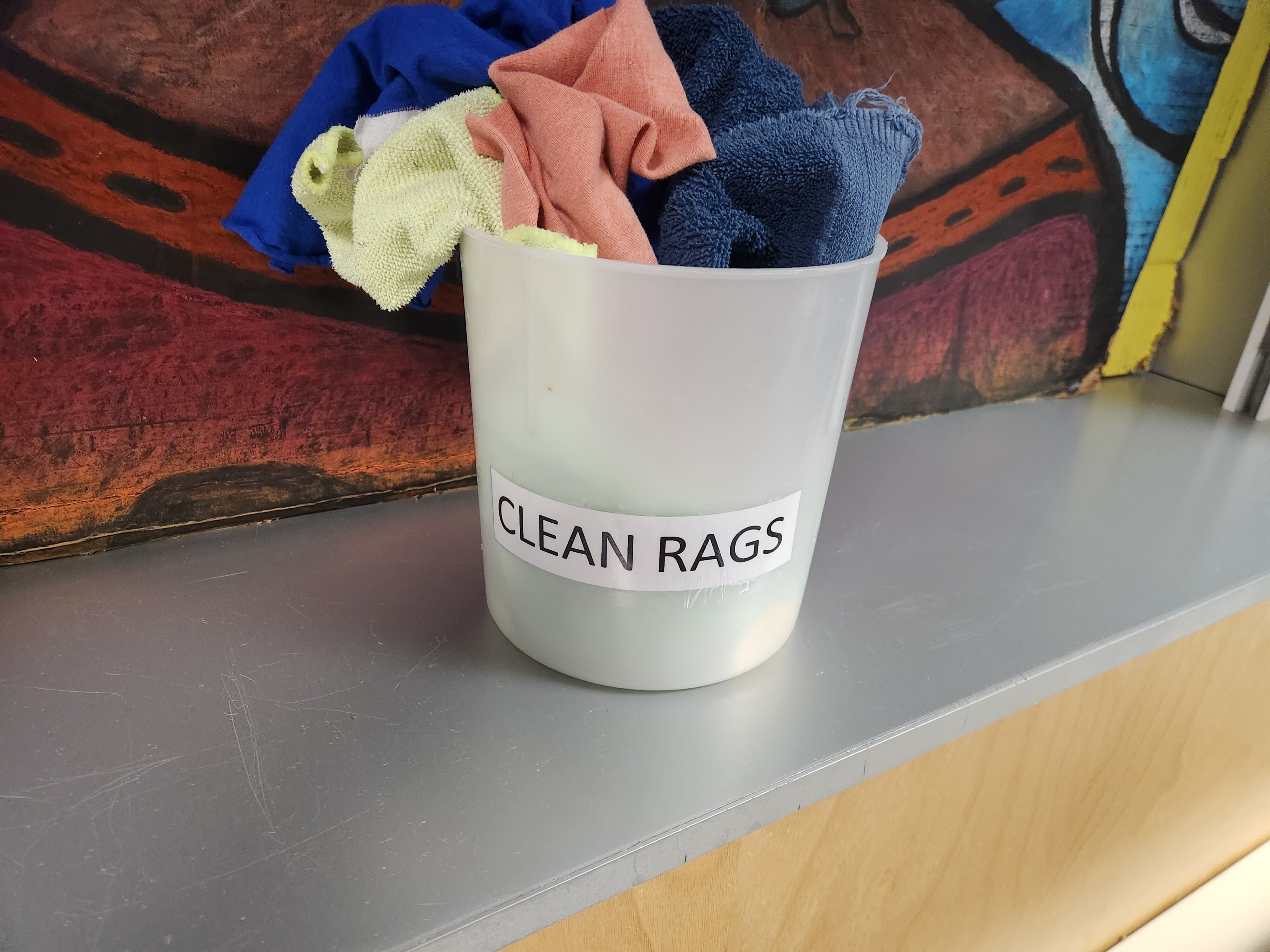 There are rags and cleaning supplies stocked all over station, and we take turns
cleaning common areas.
There are rags and cleaning supplies stocked all over station, and we take turns
cleaning common areas.
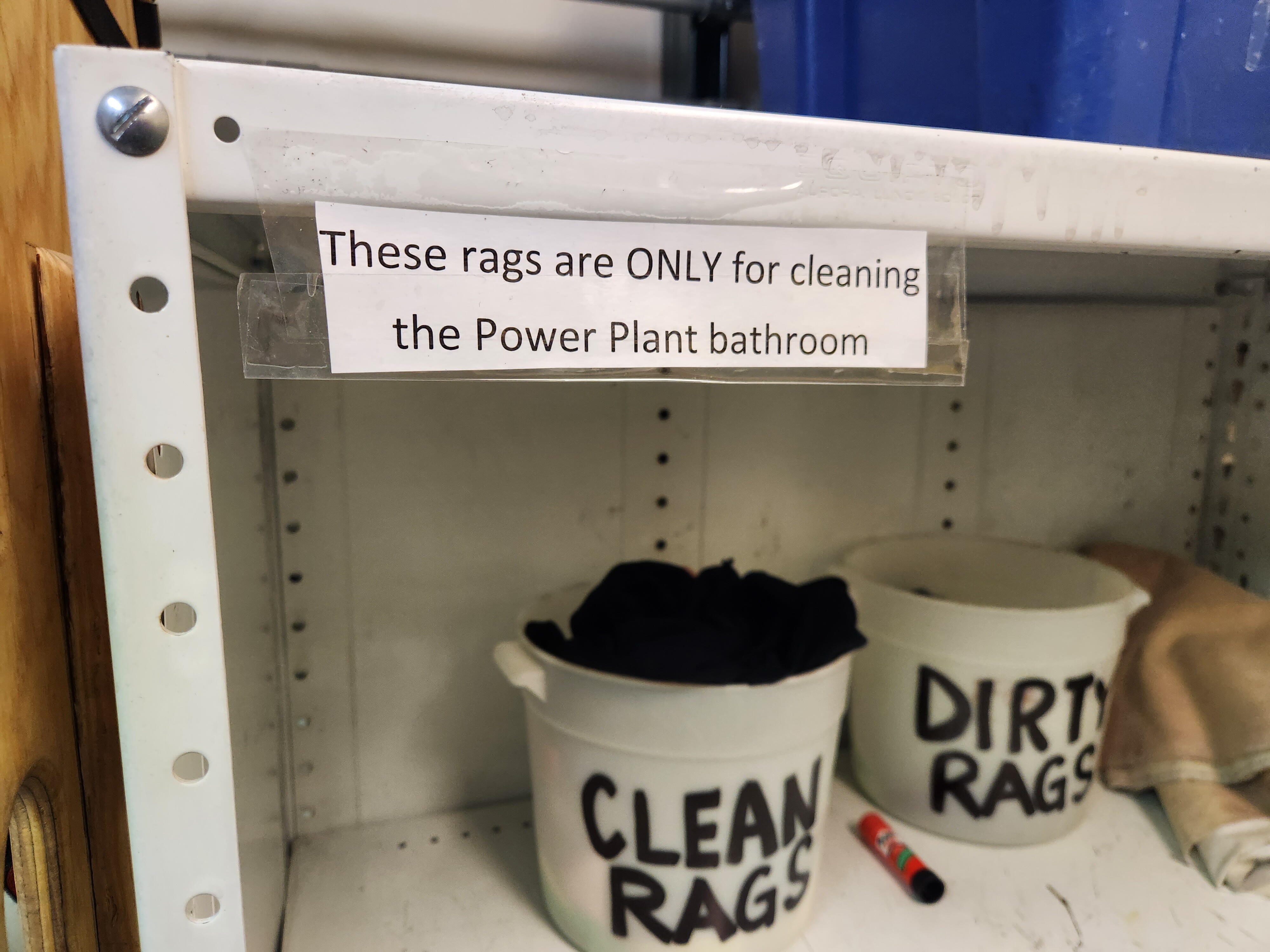 Warning sign, to avoid cross-contaminating rags.
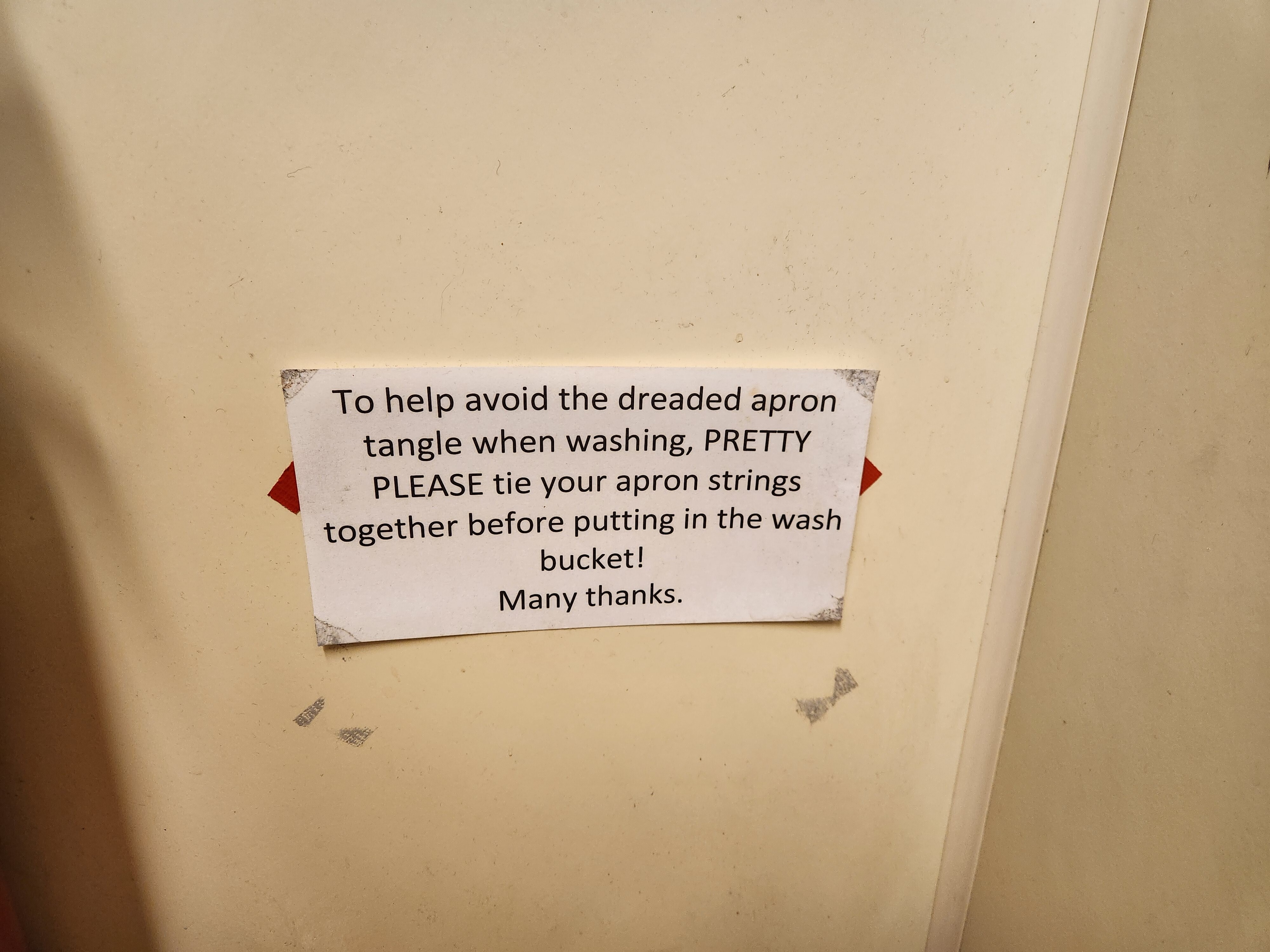 Station laundry (rags, aprons, mop heads, etc) is centrally-collected and washed as needed.
Uniquely South Pole
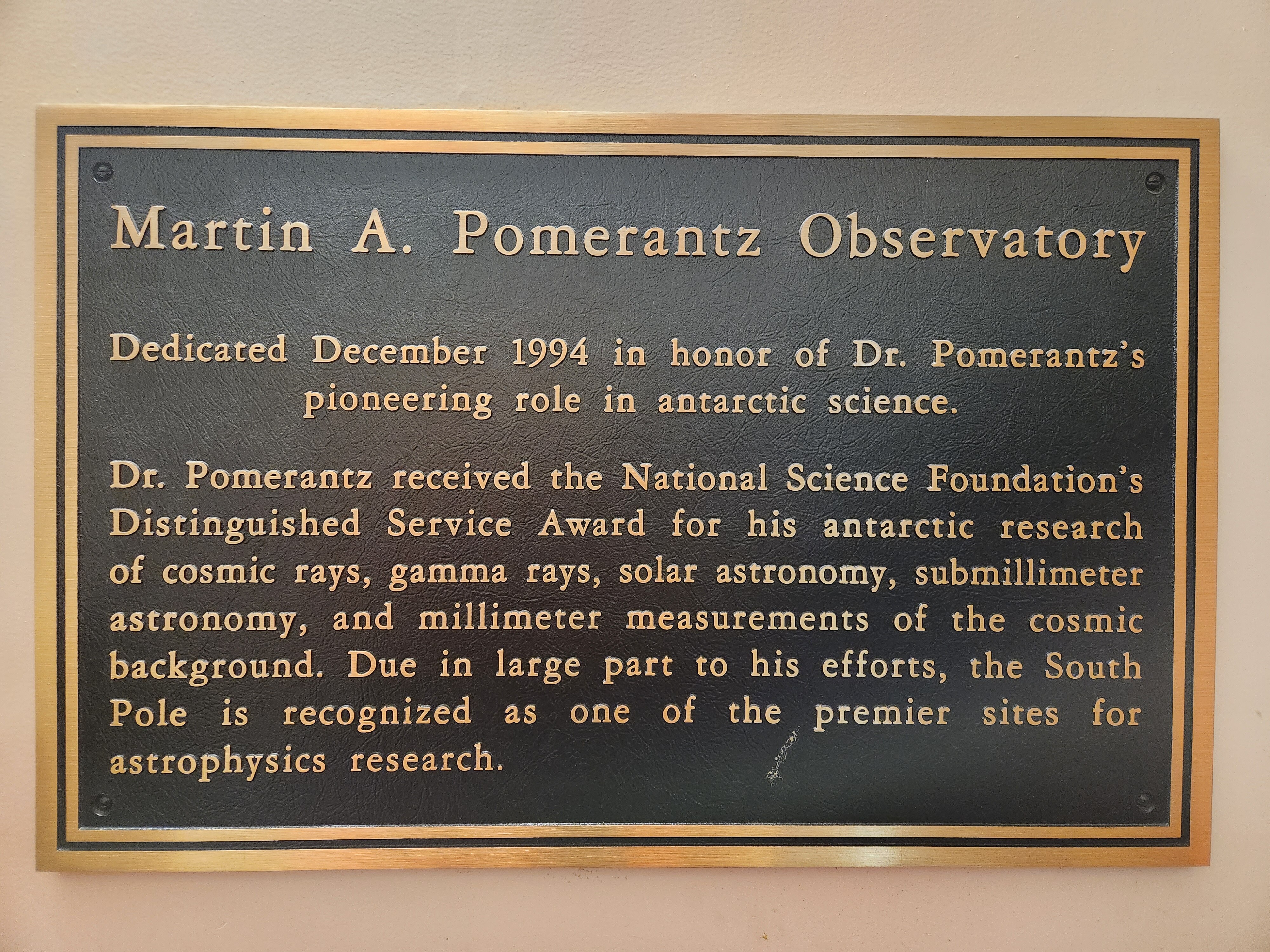 Formal sign just inside the door to the Martin A. Pomerantz Observatory (MAPO).
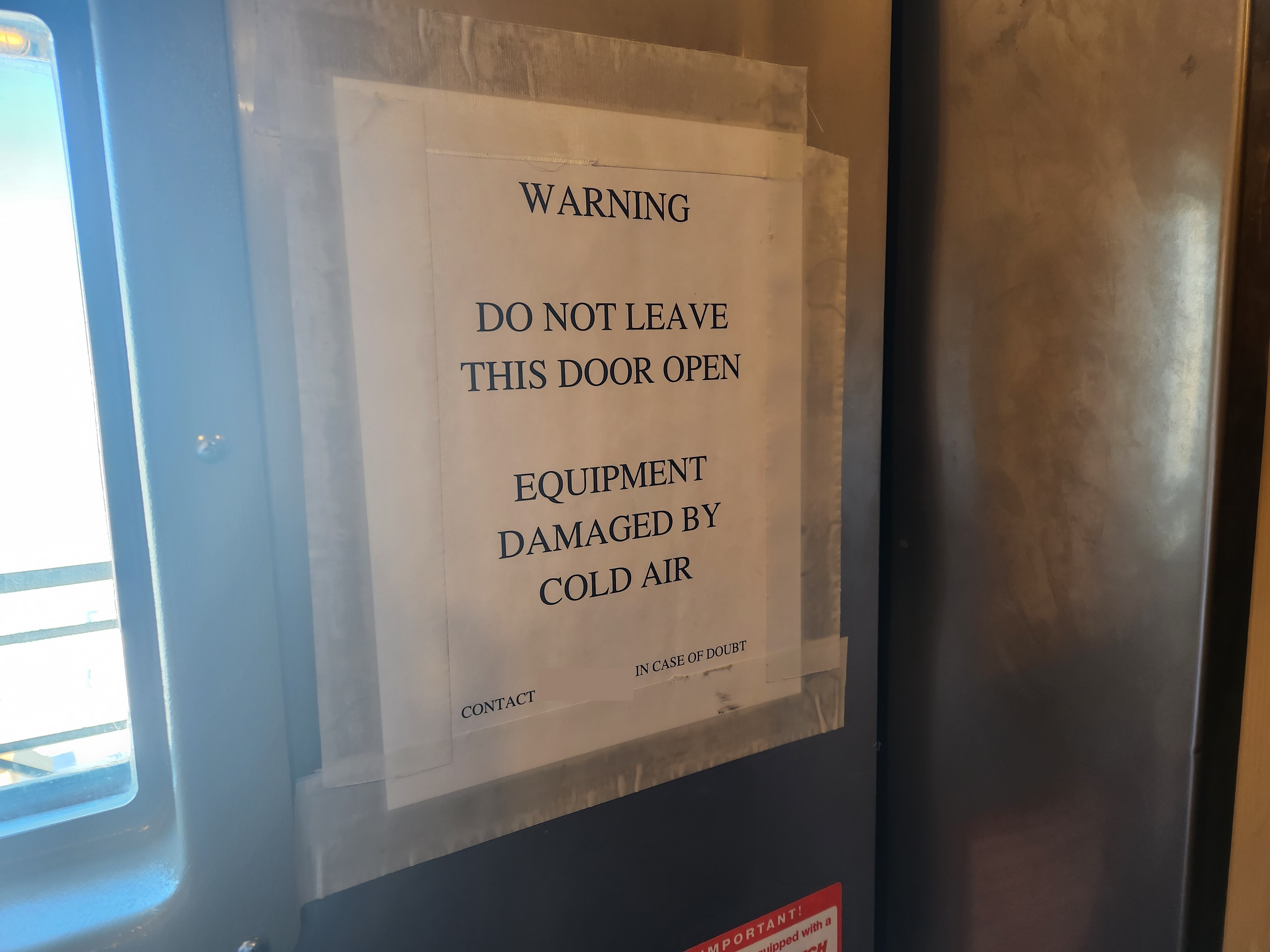 In an outbuilding far from station.
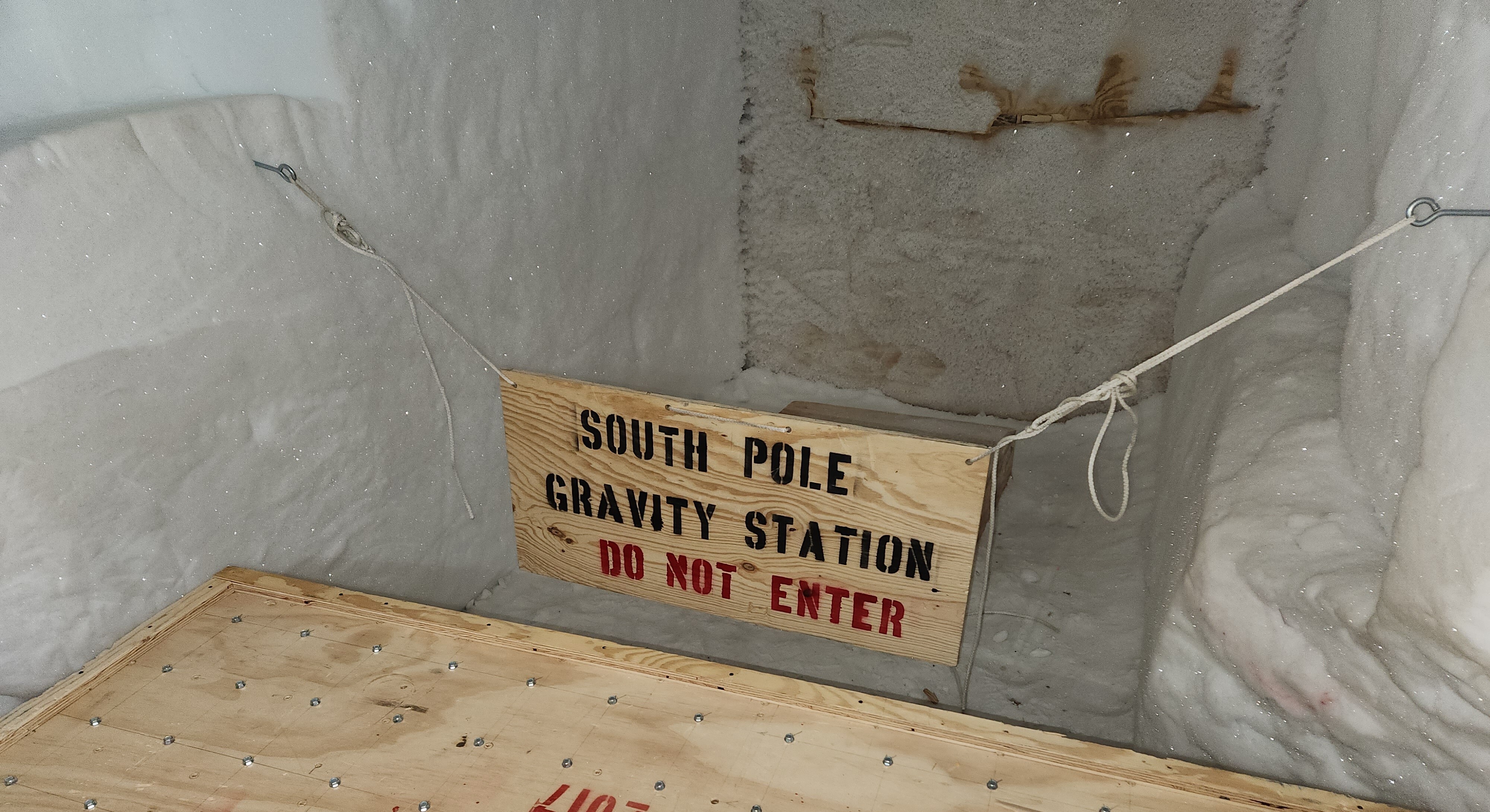 ?? idk, ask the scientists.
Edit: Ok, the real answer is that this ^^ is the South Pole Gravity Vault.
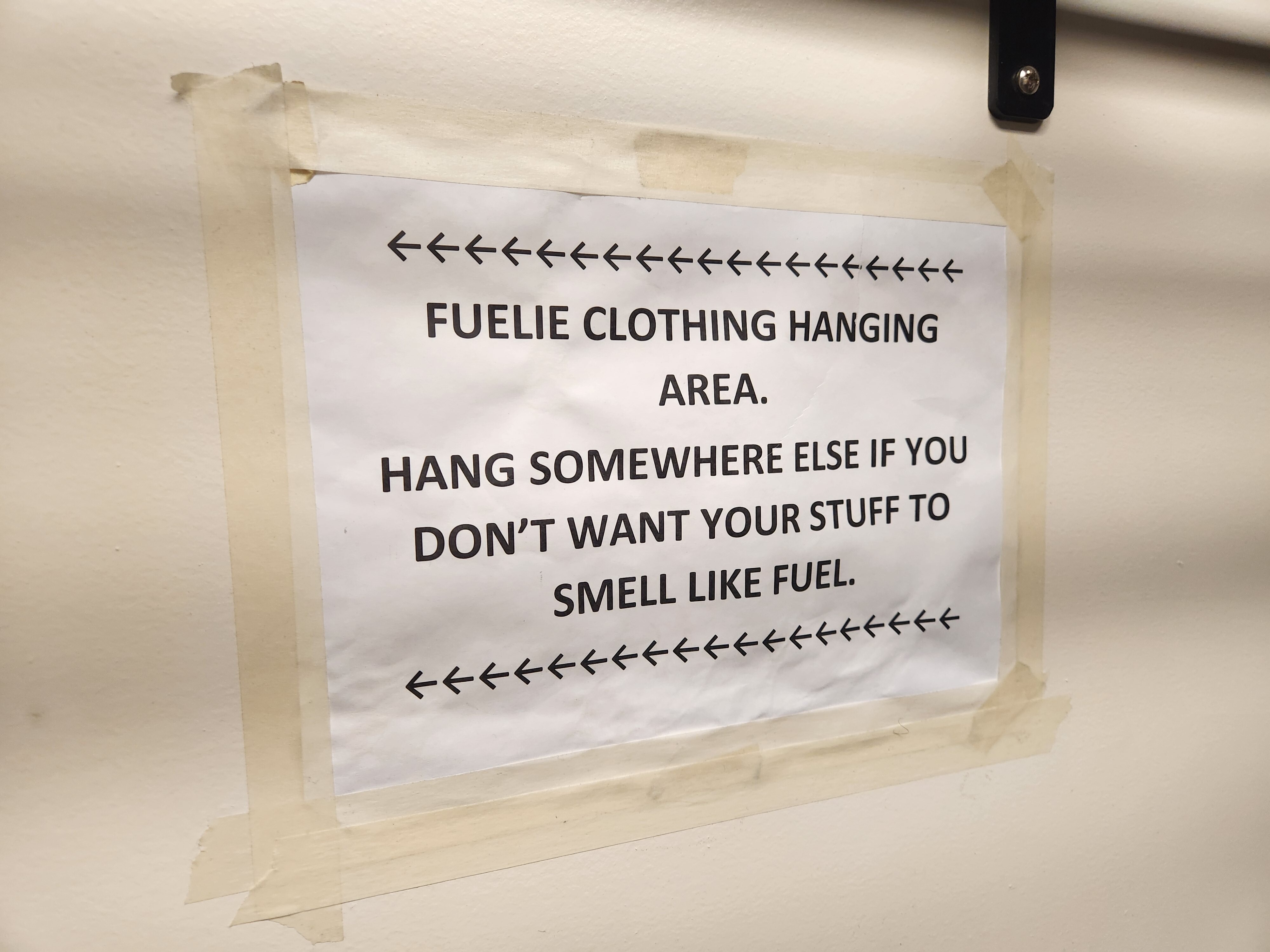 The smell of AN-8 soaks into everything, and it lingers for days.
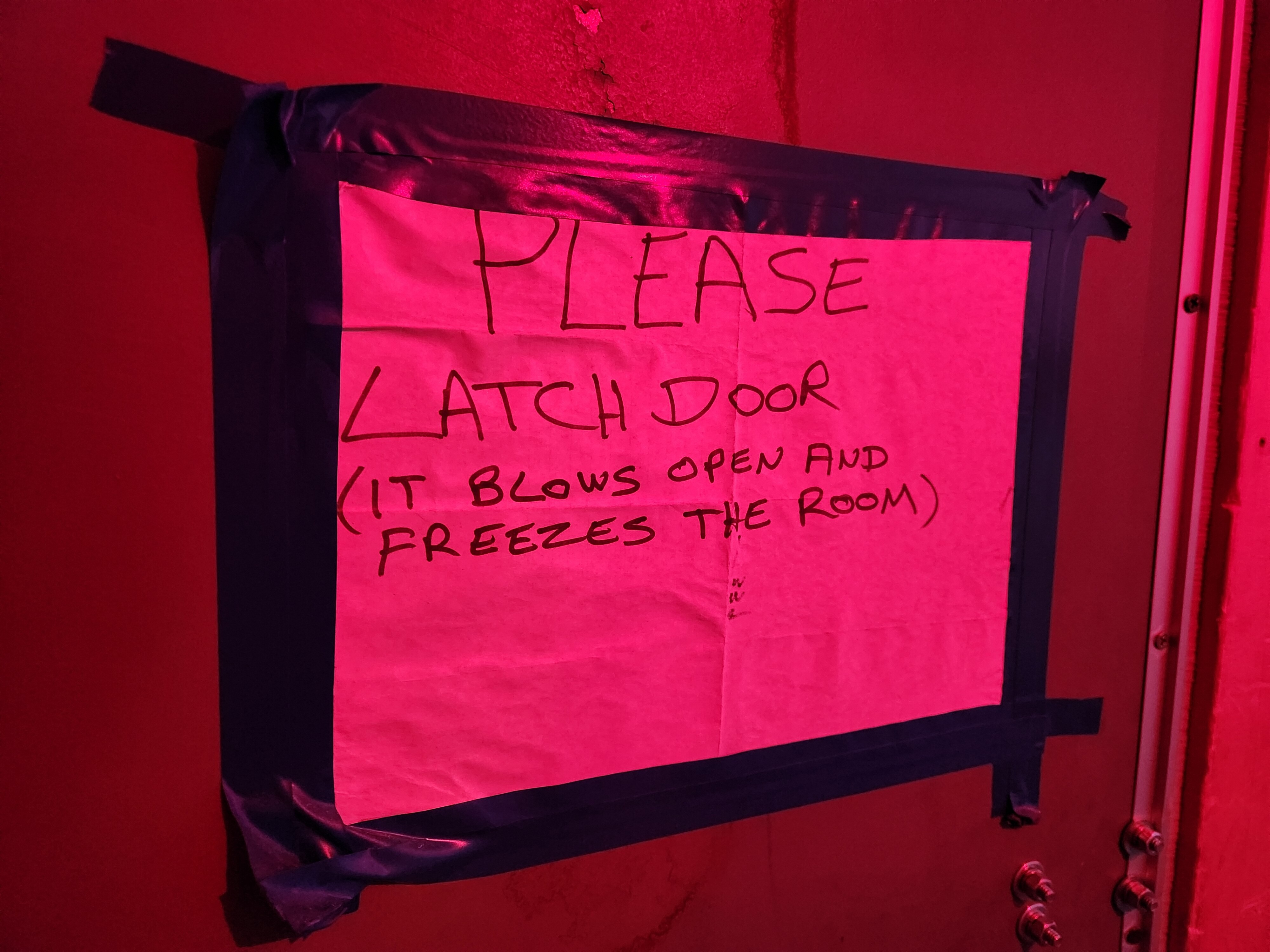 This is "Altie Meadows", a utility distribution point for several of our smaller outbuildings
in the backyard.
This is "Altie Meadows", a utility distribution point for several of our smaller outbuildings
in the backyard.
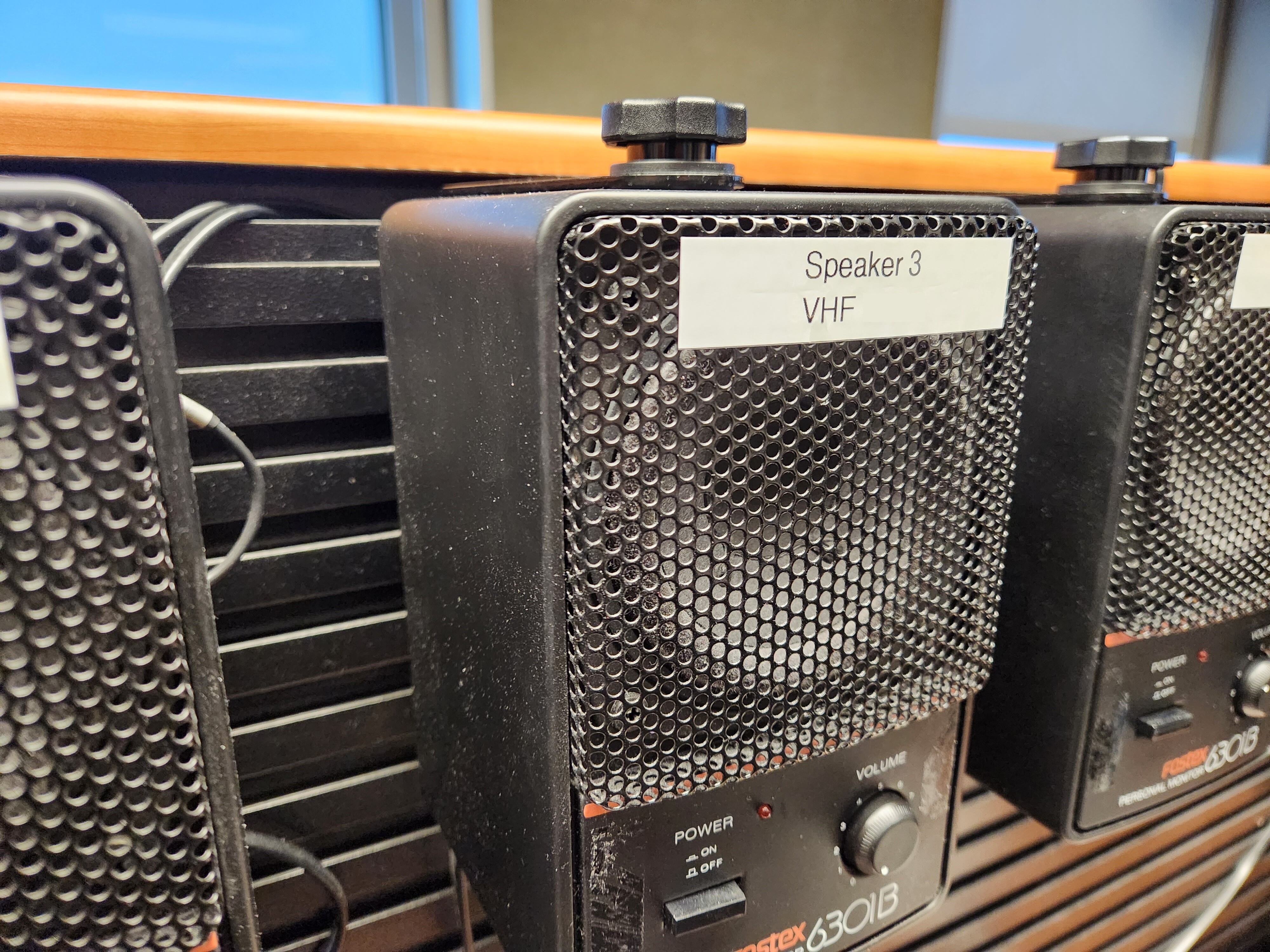 A speaker in the Station Operations Center (SOC), also known as "Comms". Each is tuned to a different
frequency. We have an assortment of radio equipment, for communicating with inbound/outbound flights, as well
as for communicating with other locations across Antarctica.
A speaker in the Station Operations Center (SOC), also known as "Comms". Each is tuned to a different
frequency. We have an assortment of radio equipment, for communicating with inbound/outbound flights, as well
as for communicating with other locations across Antarctica.
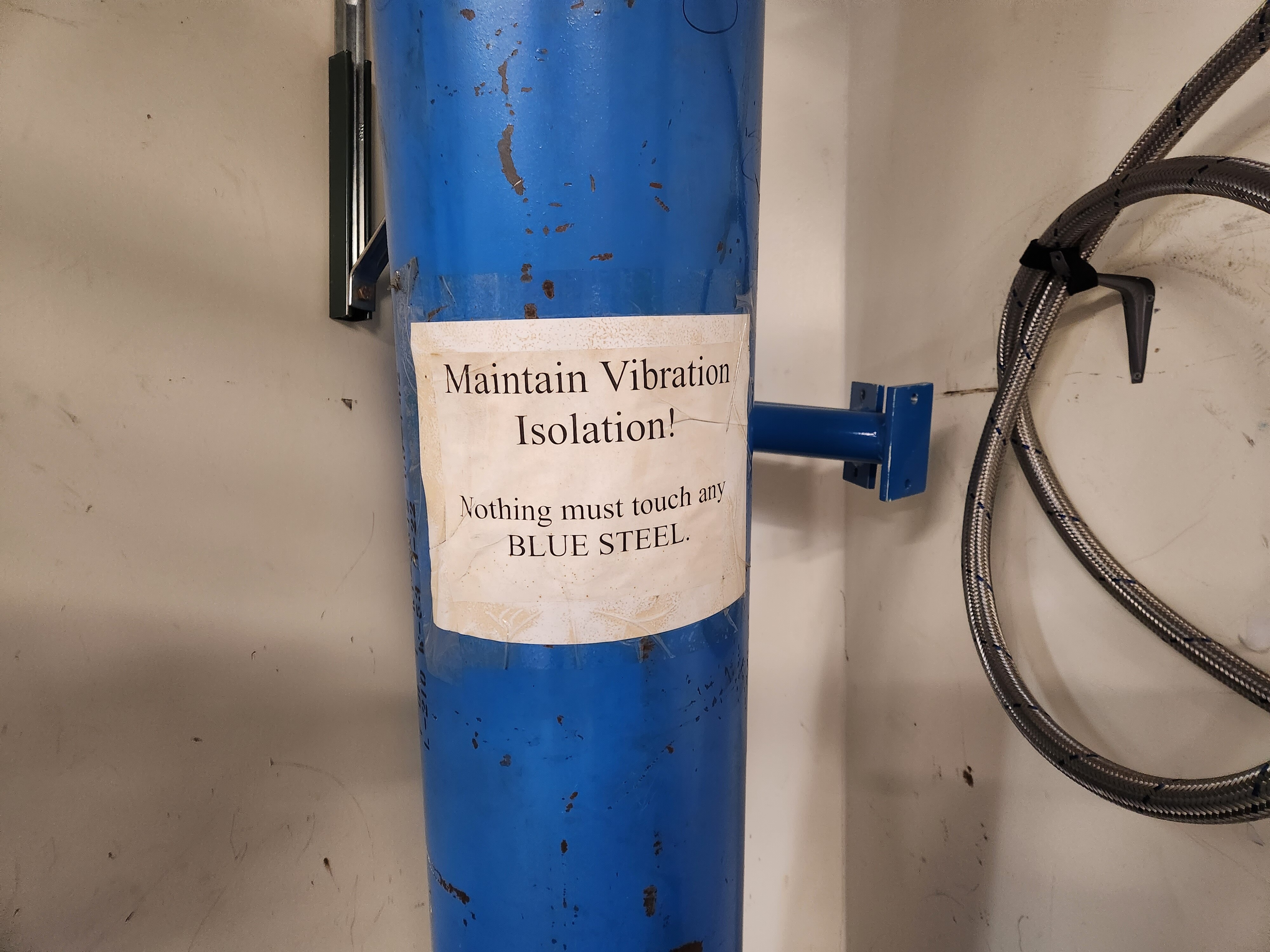 ??? Another one for the scientists.
Miscellaneous
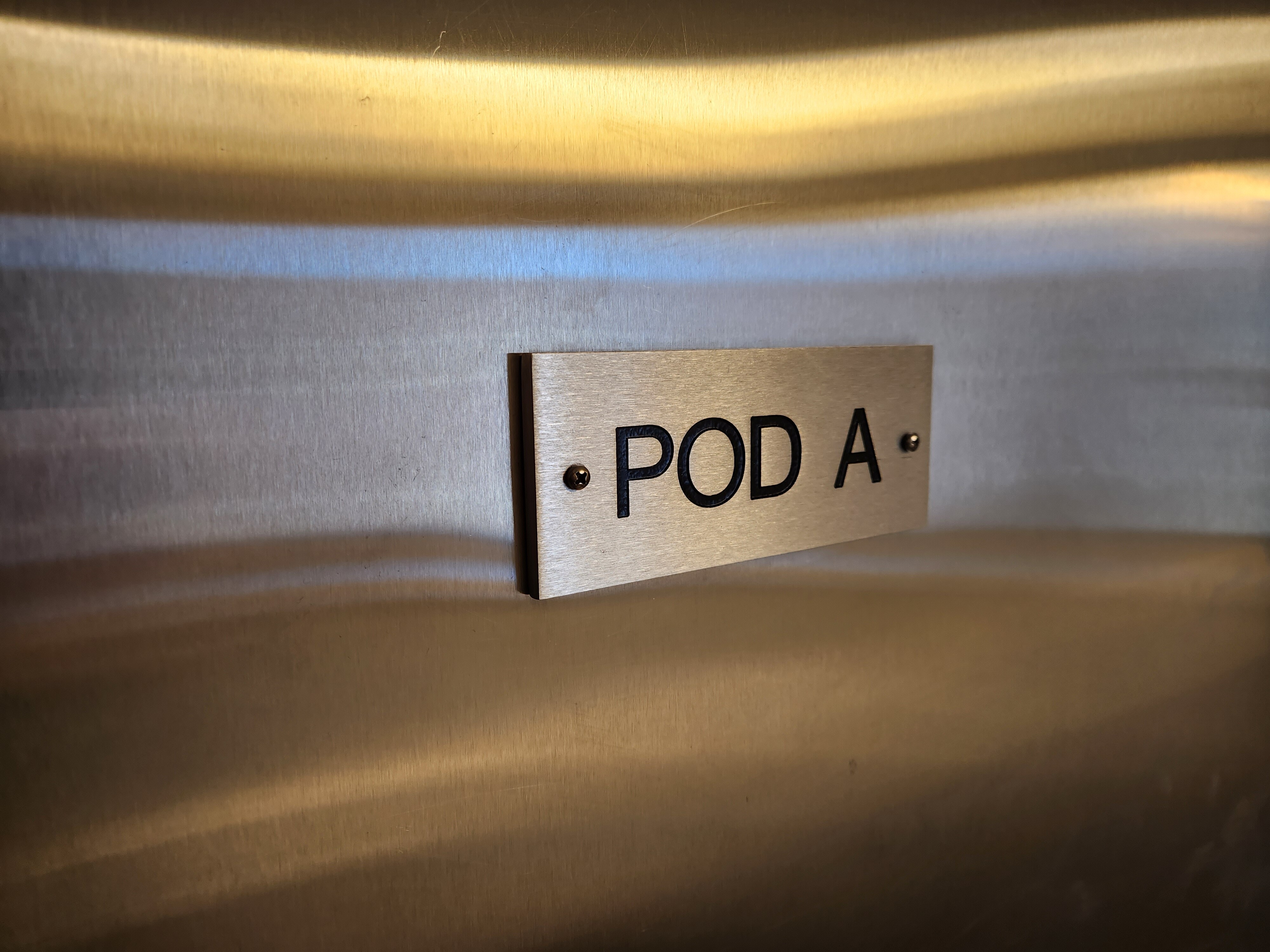 The elevated station is divided into the A Pod and the B Pod, and we get fancy brushed
metal signs to ensure we don't get lost (?).
The elevated station is divided into the A Pod and the B Pod, and we get fancy brushed
metal signs to ensure we don't get lost (?).
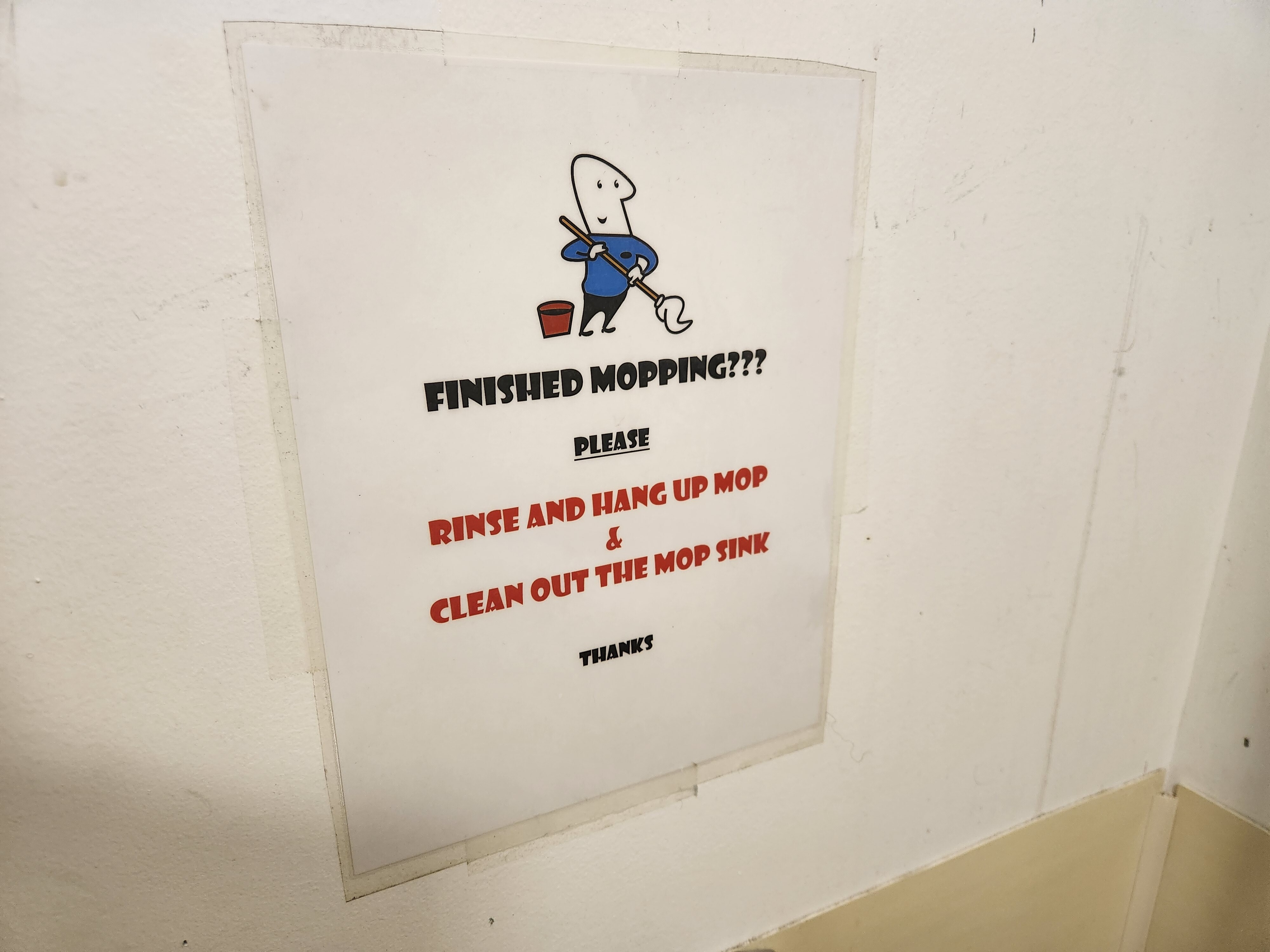 Mop hygiene.
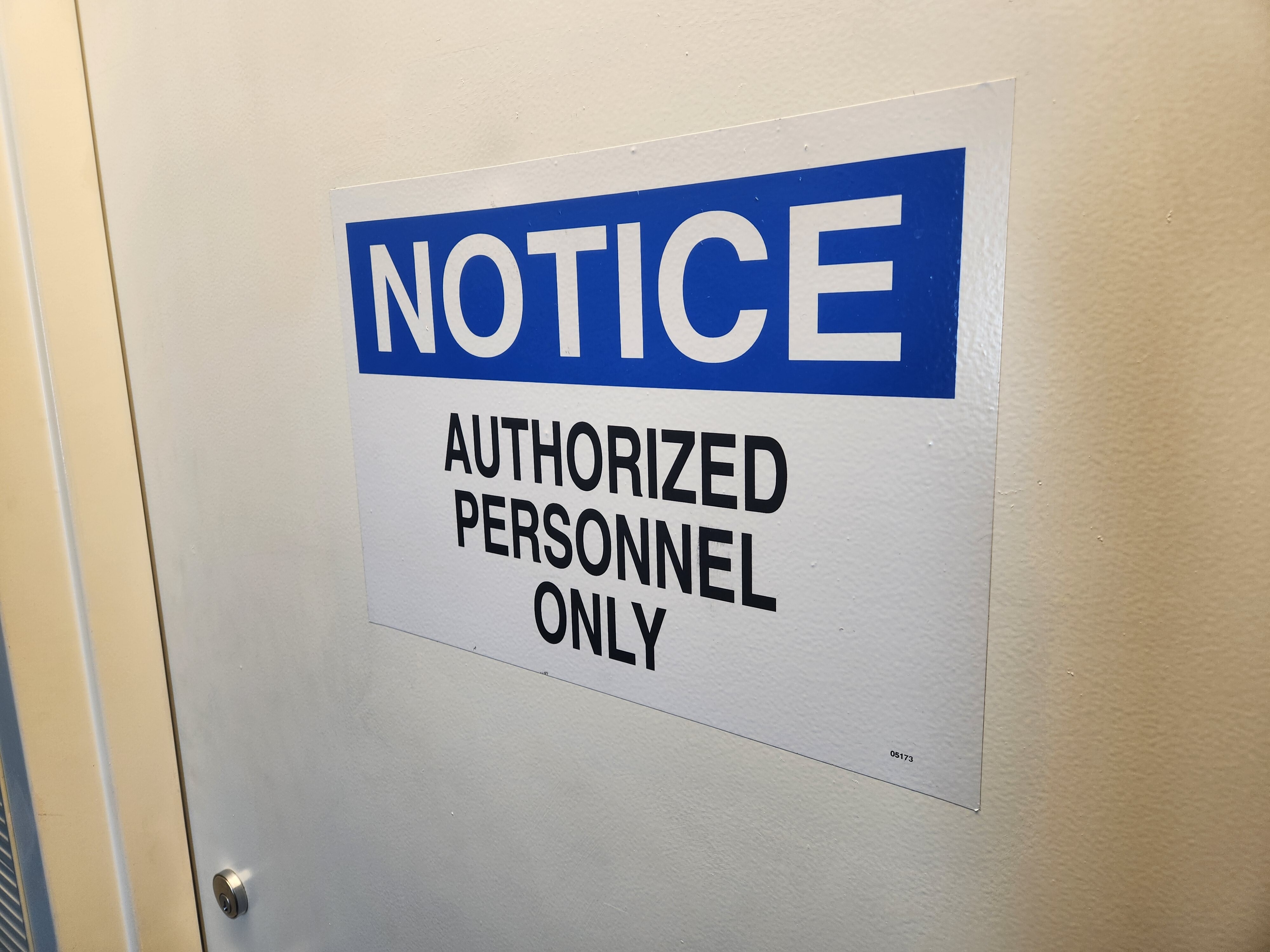 A communication closet, containing IT equipment.
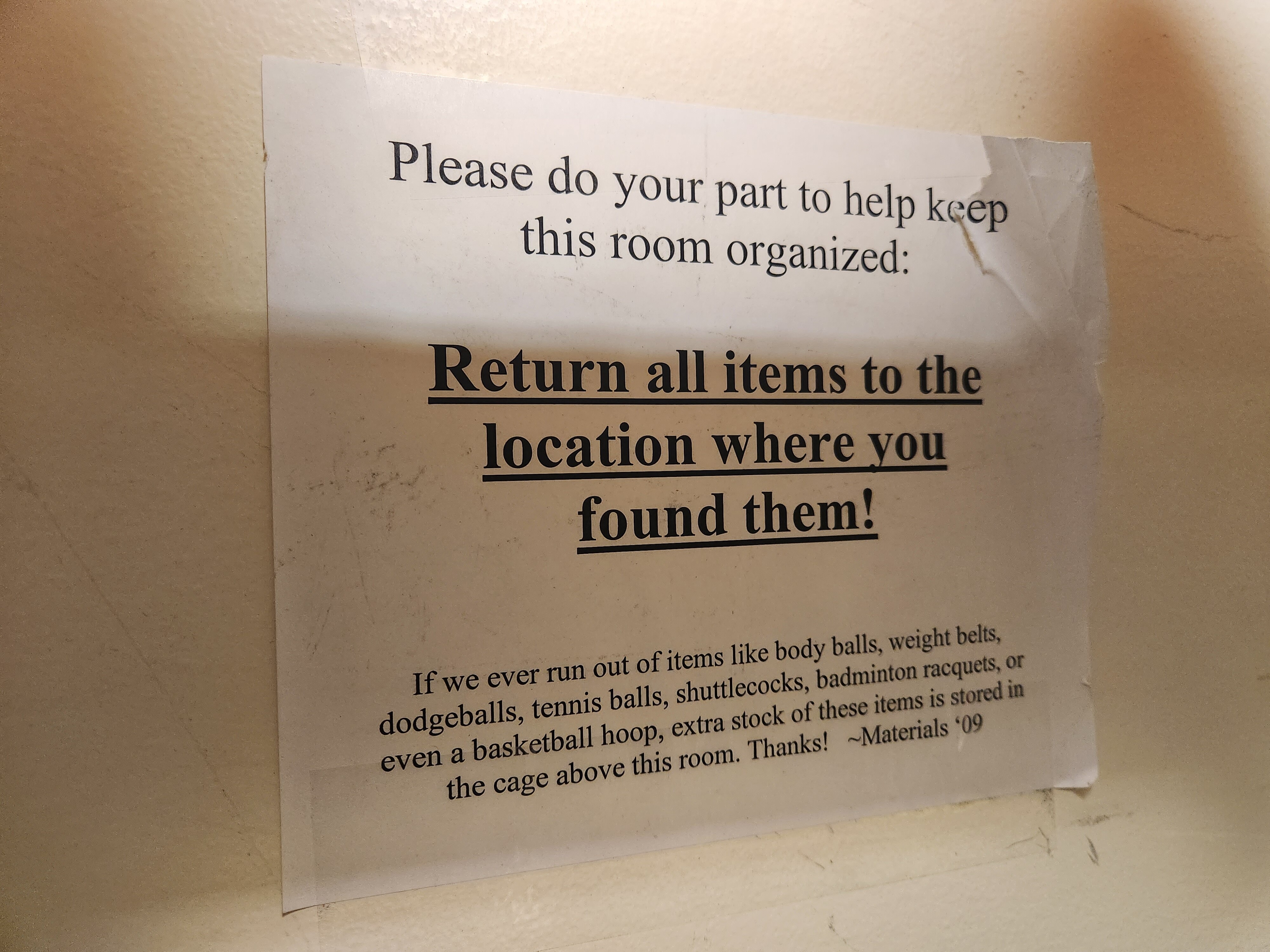 Fun to walk around and see signs that were put up 14 years ago. Thank you Materials '09!
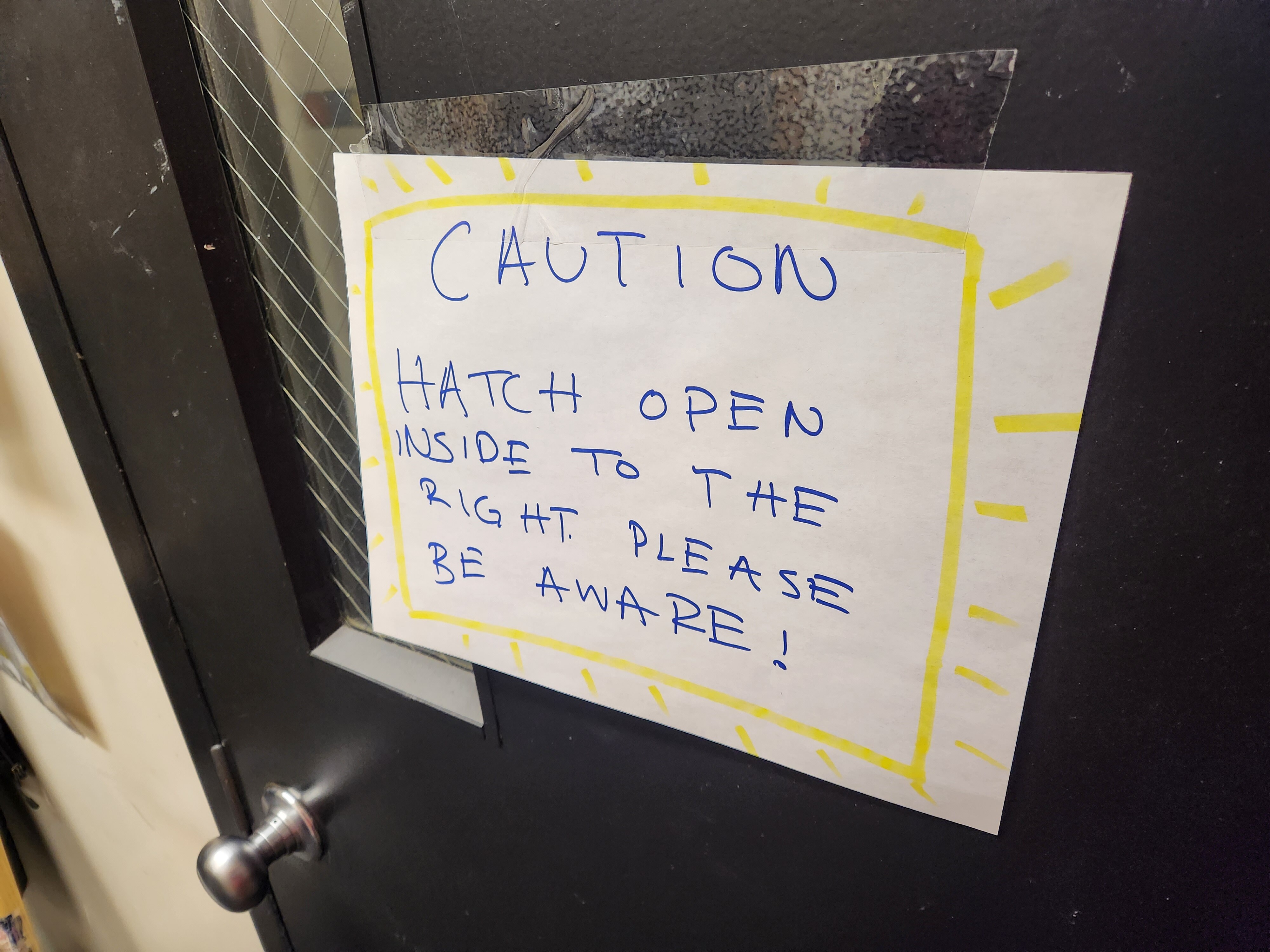 A temporary sign marking a work area.
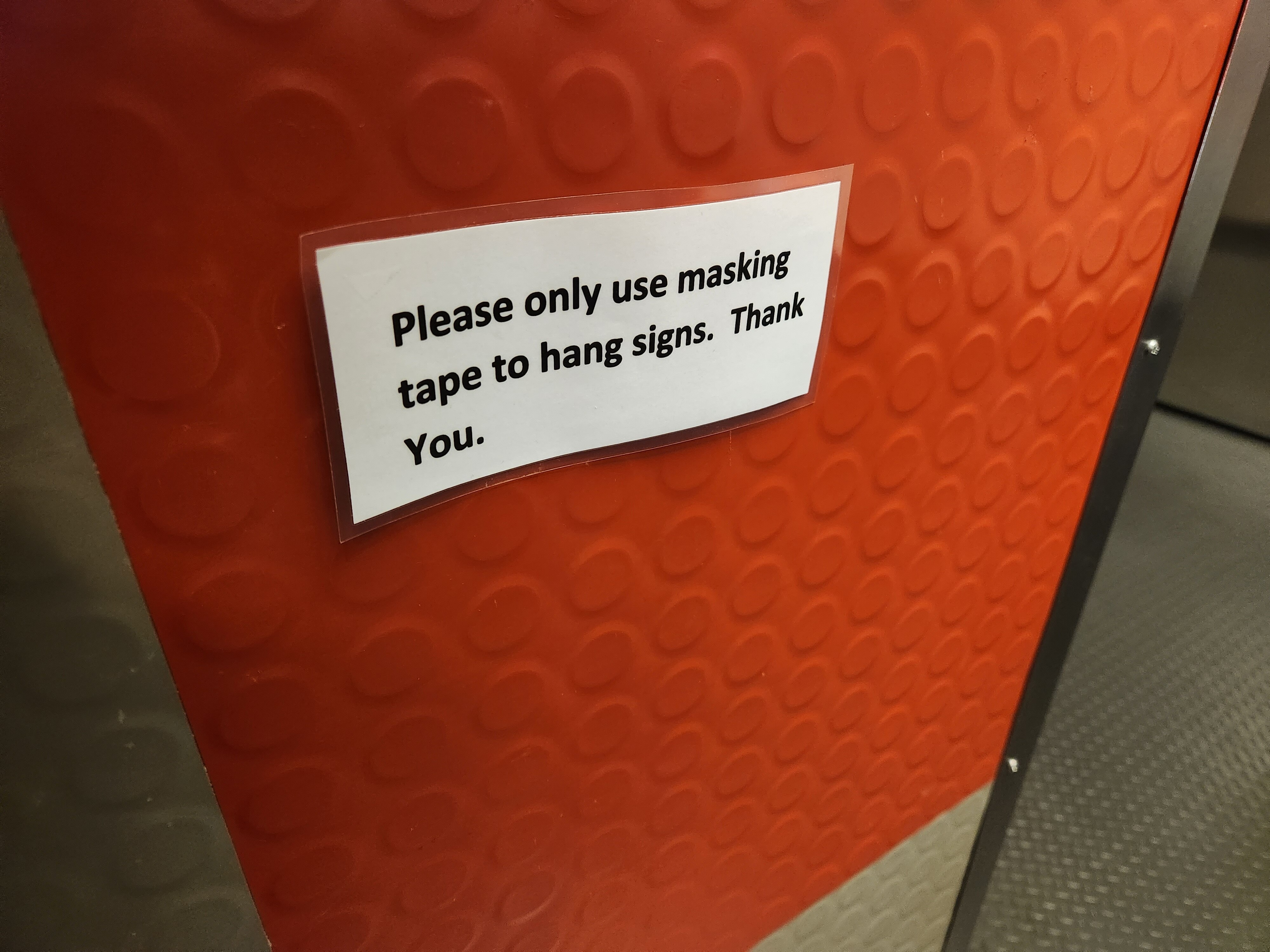 We hate scraping duct tape residue off of walls here, just like back home.
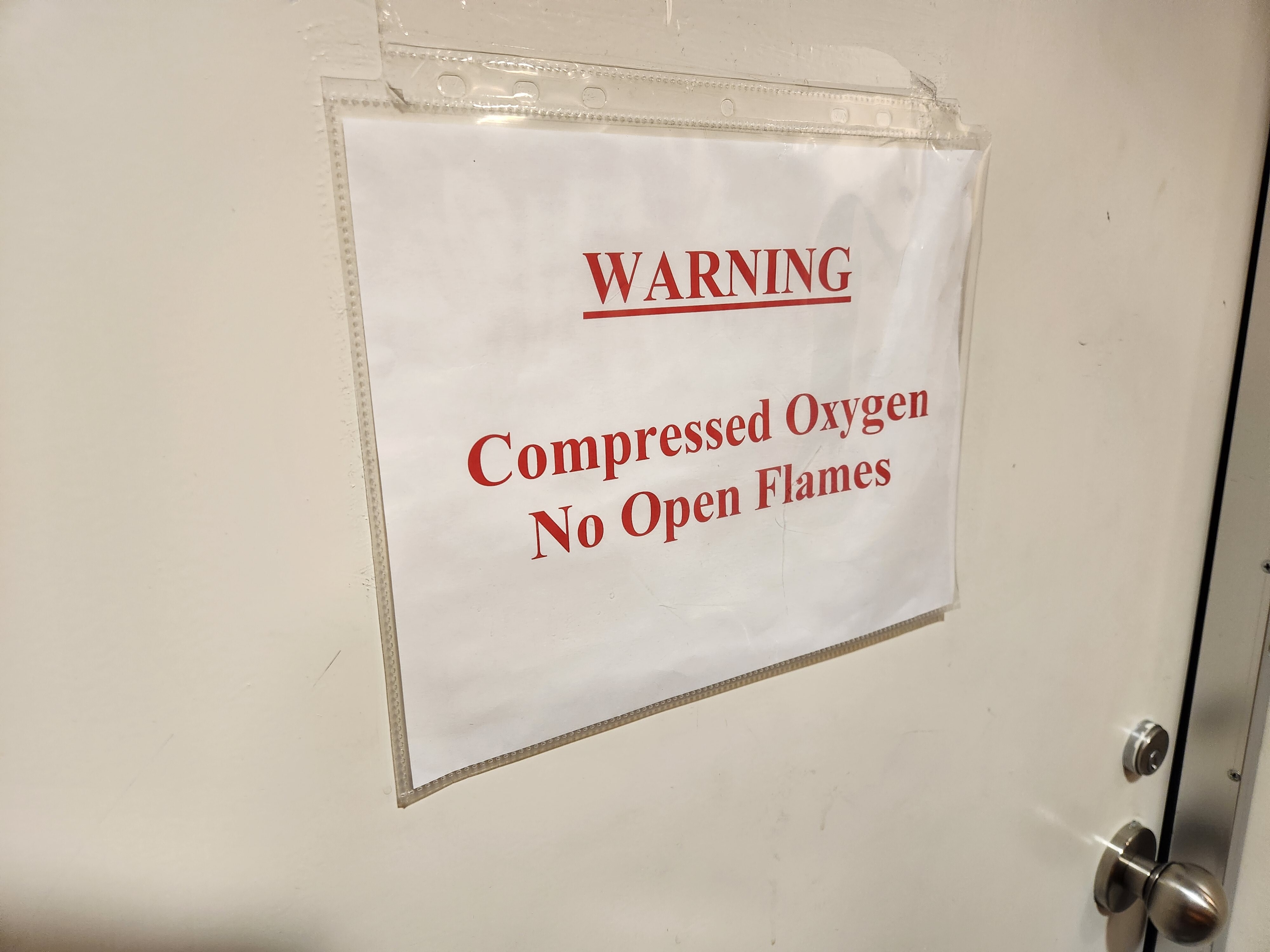 Medical supply cache in a storage room.
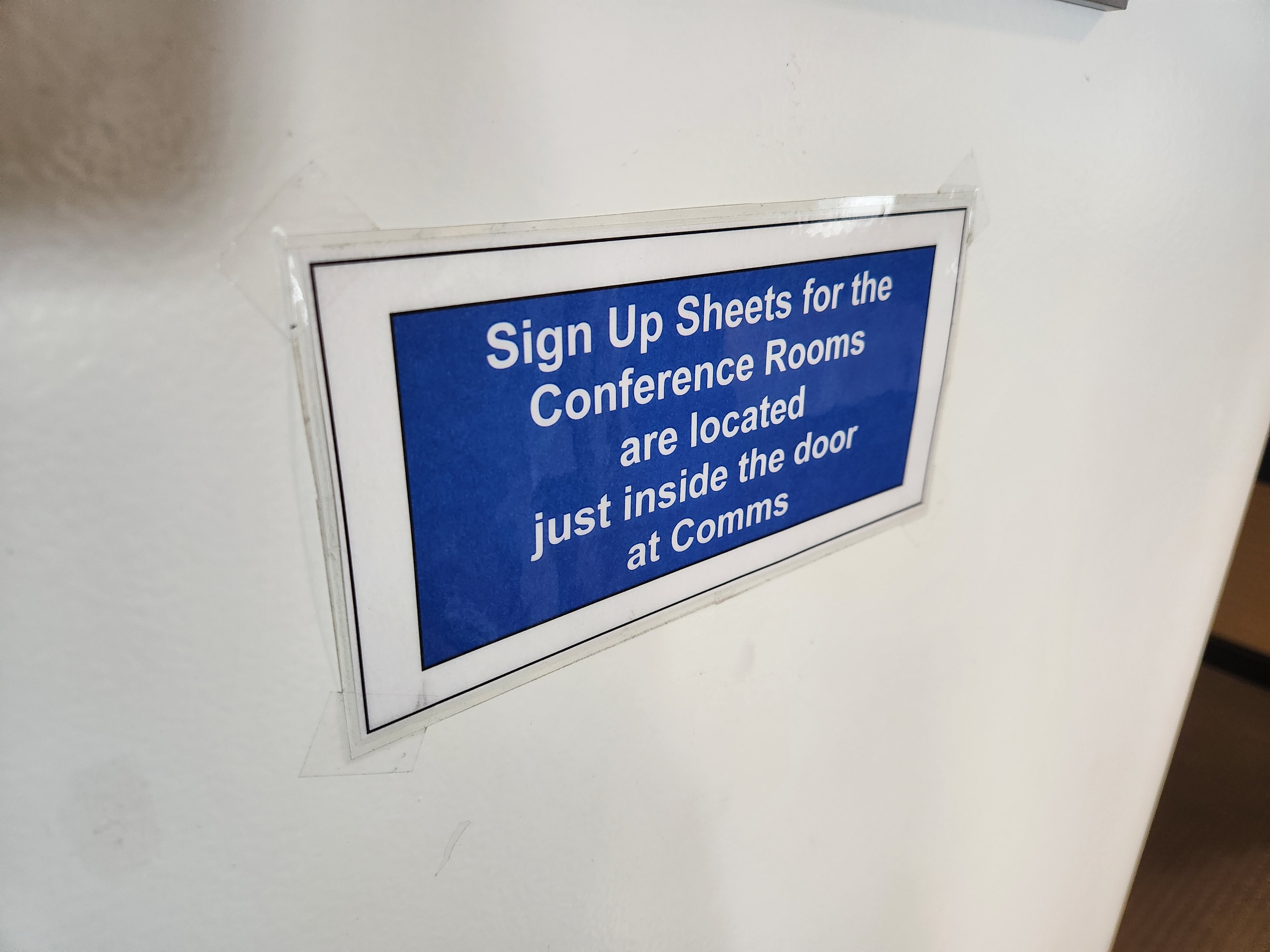 Are we at the South Pole or a suburban office park?
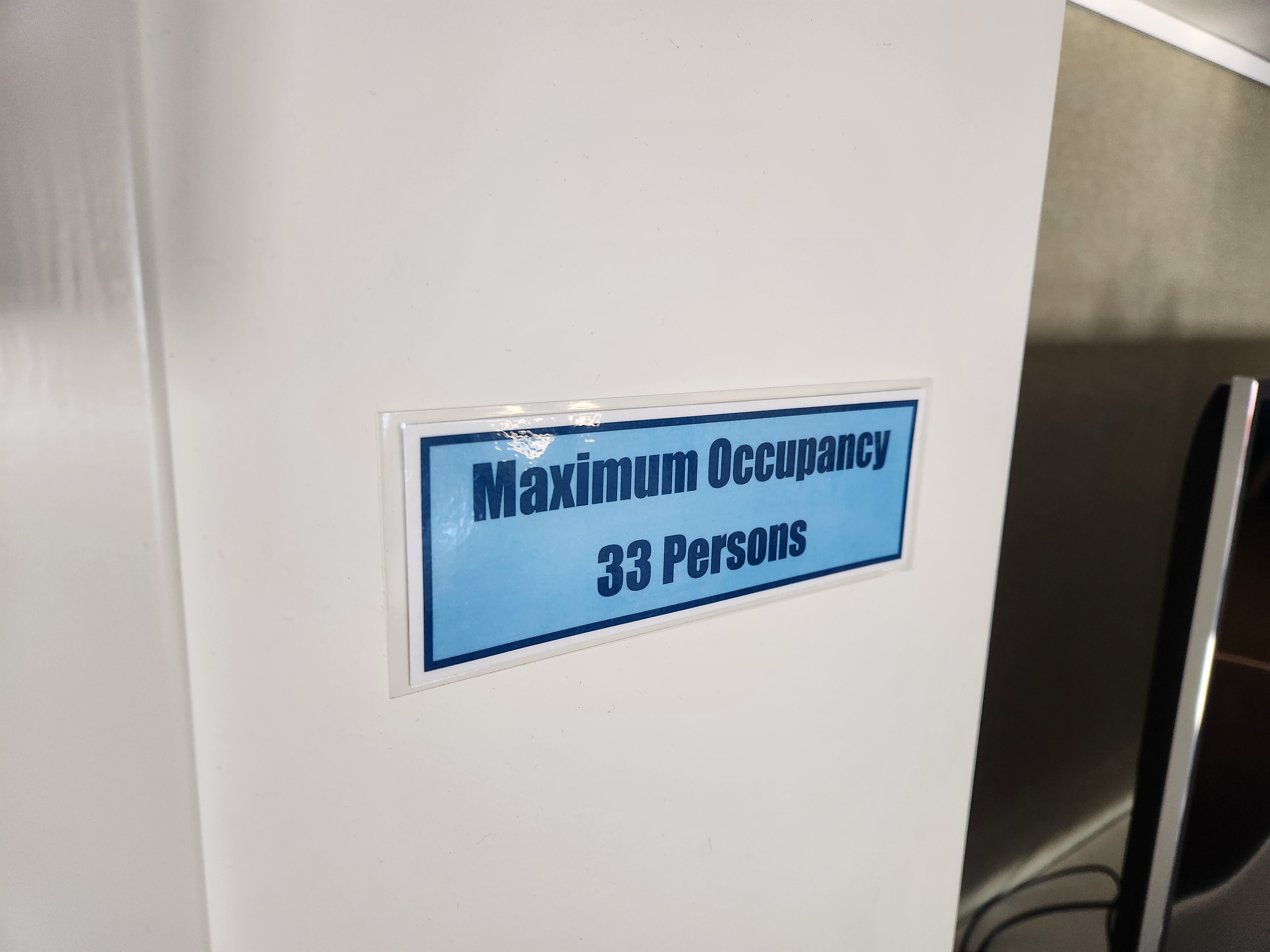 Yes, we're still subject to building codes!
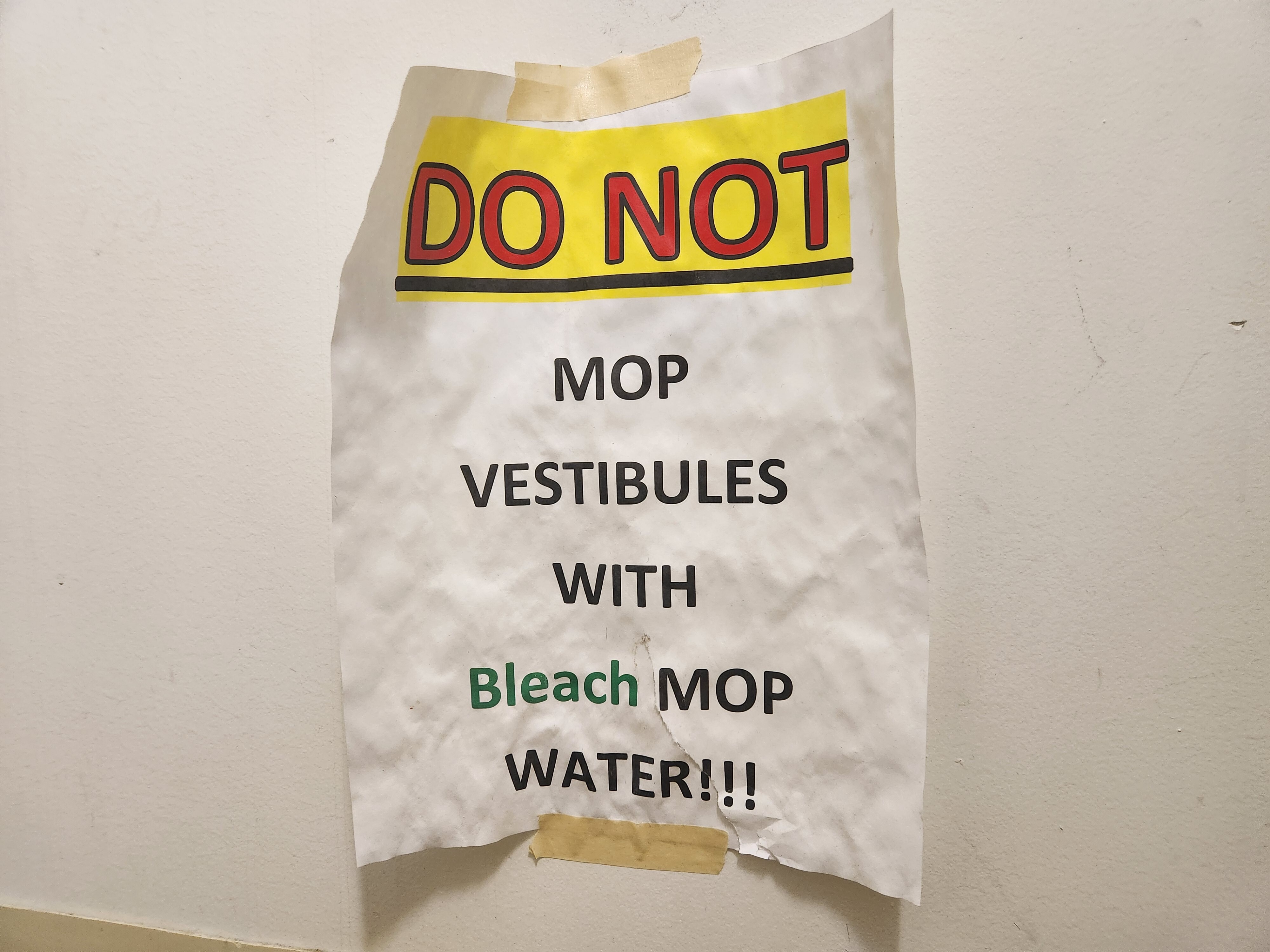 Different chemicals for different surfaces!
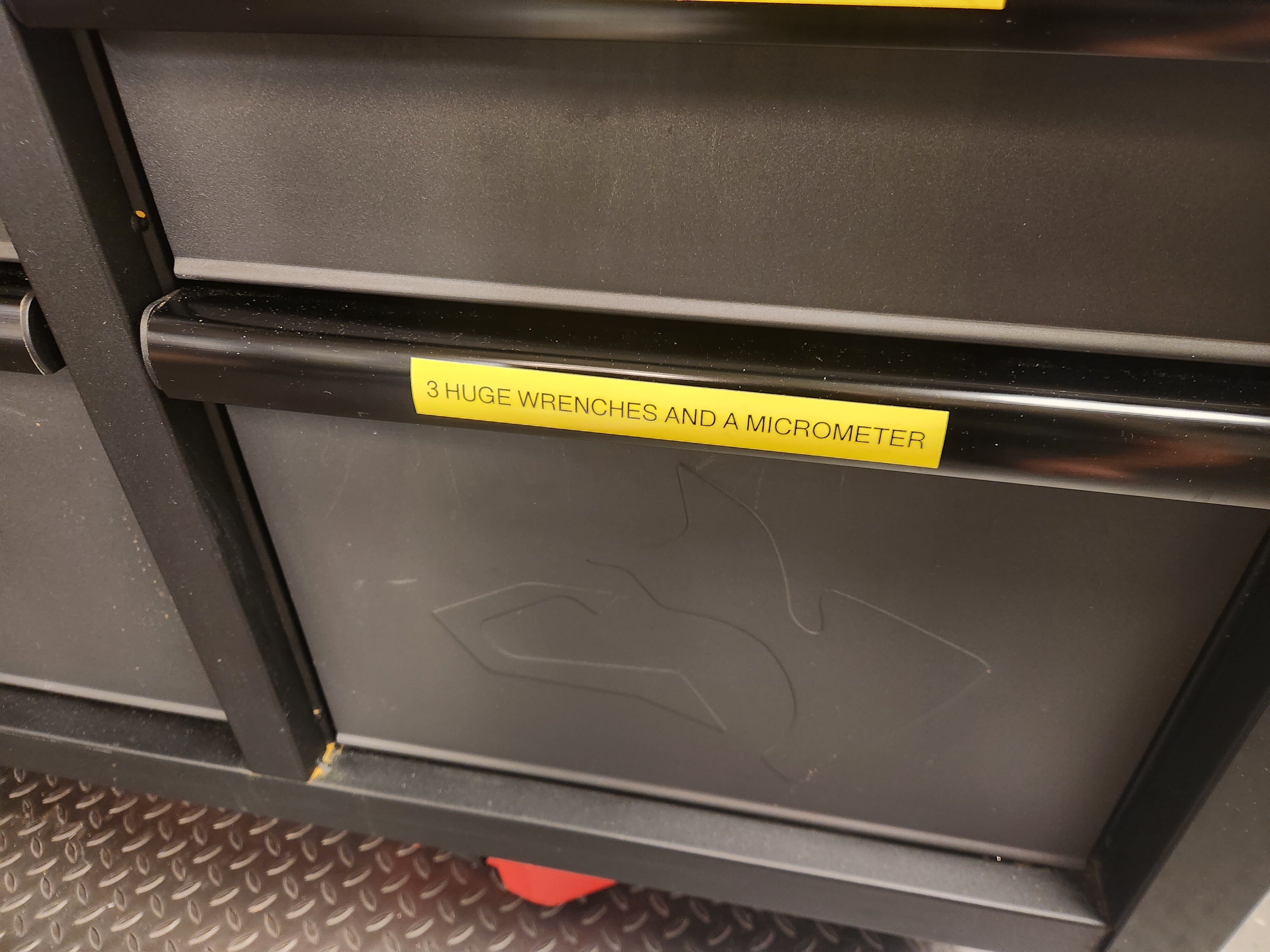 My favorite drawer on station.
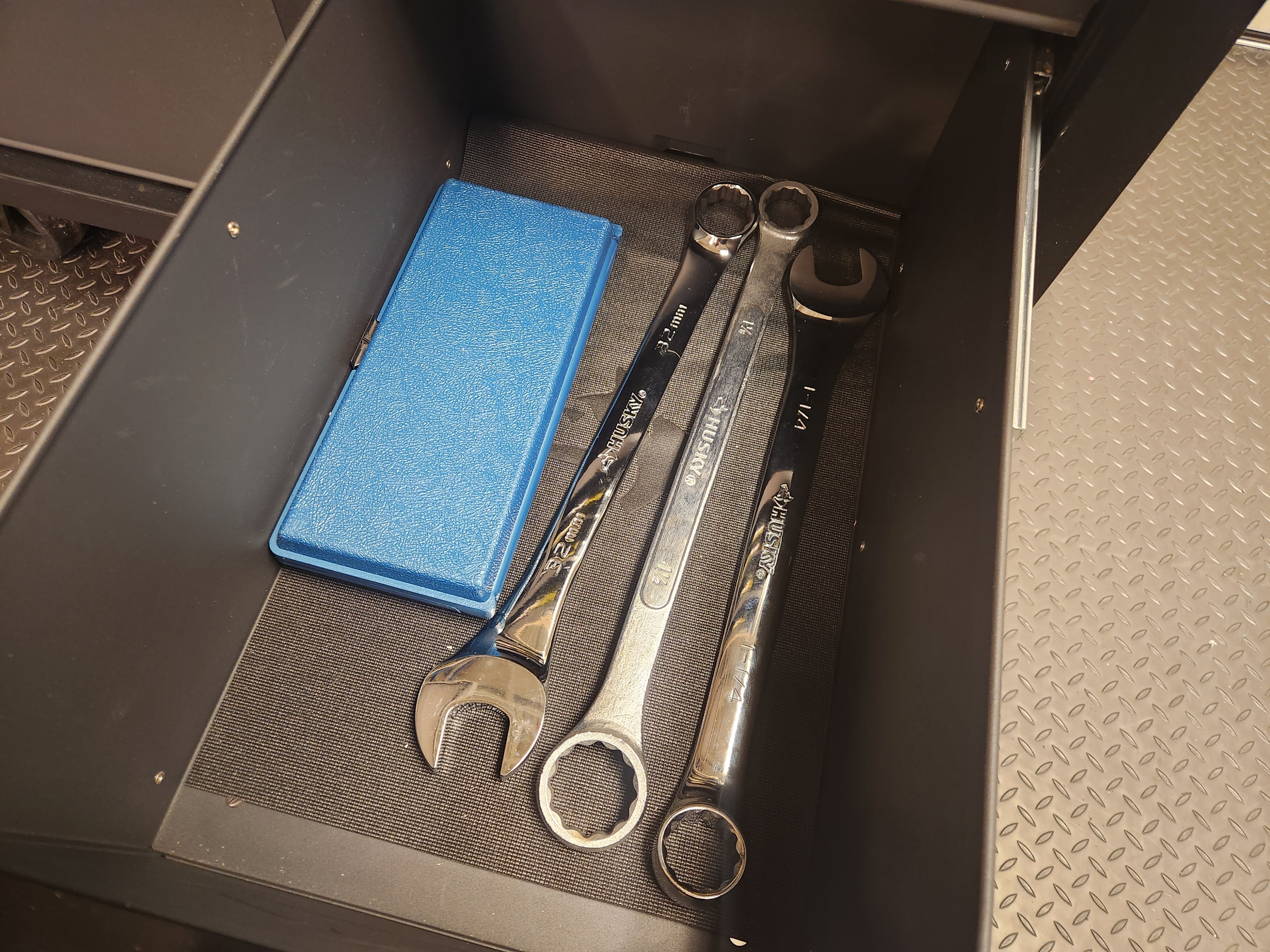 The label did NOT lie about the contents.
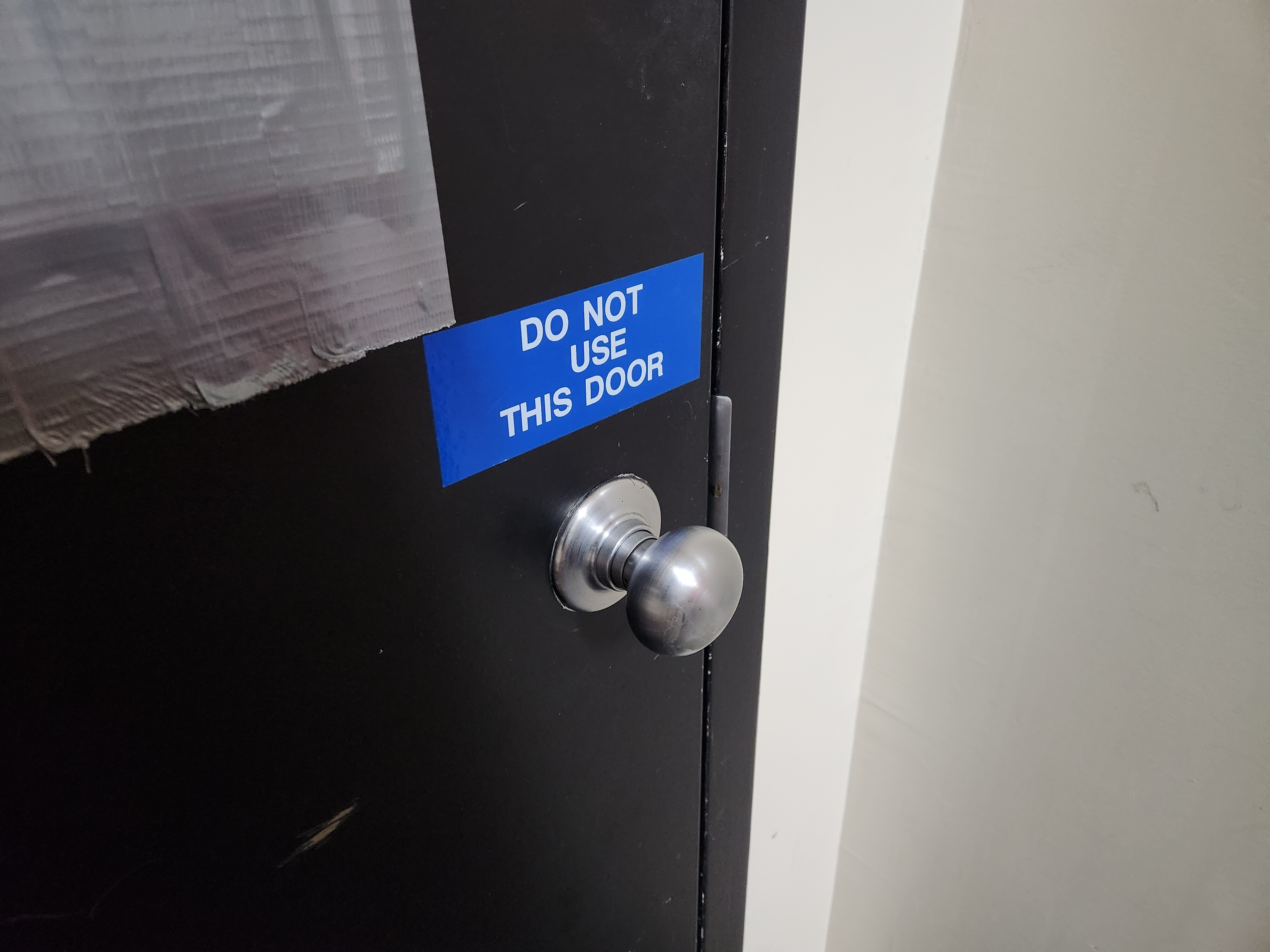 This is out in the Atmospheric Research Observatory (ARO).
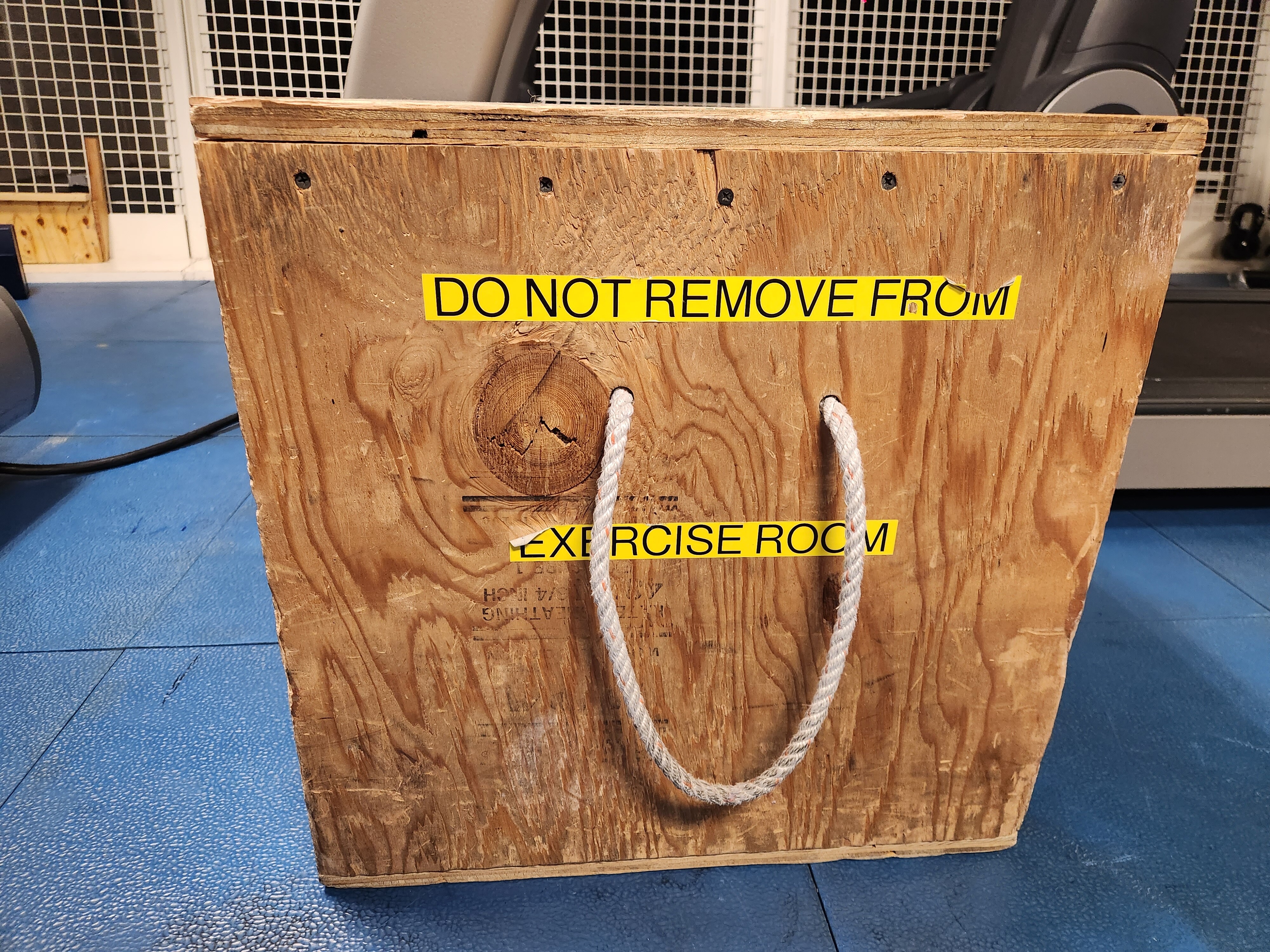 We have a fairly well-equipped weight room, and a lot of stuff is fabricated onsite.
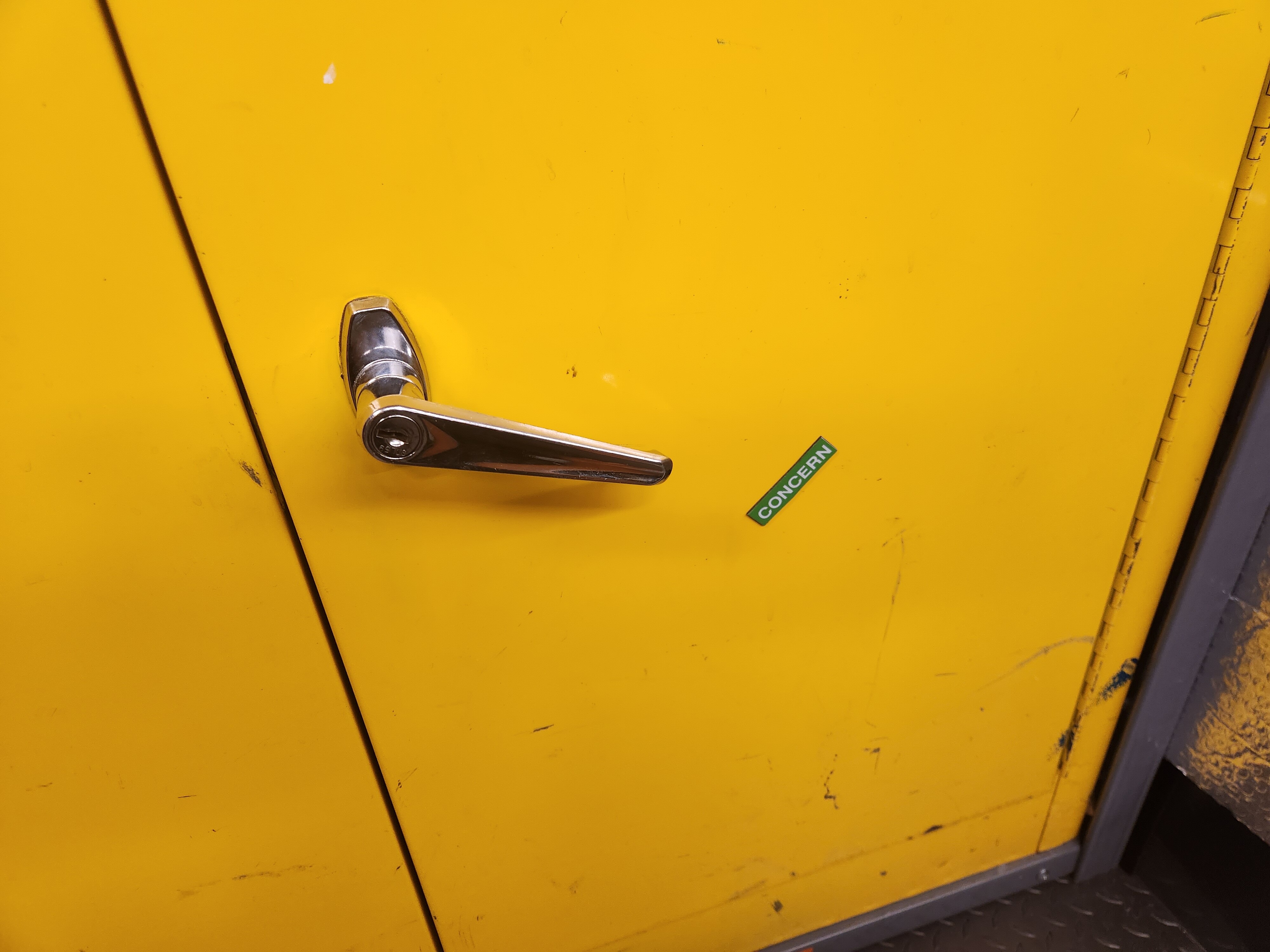 CONCERN. This is a "flams" cabinet, an enclosed storage area for flammable items.
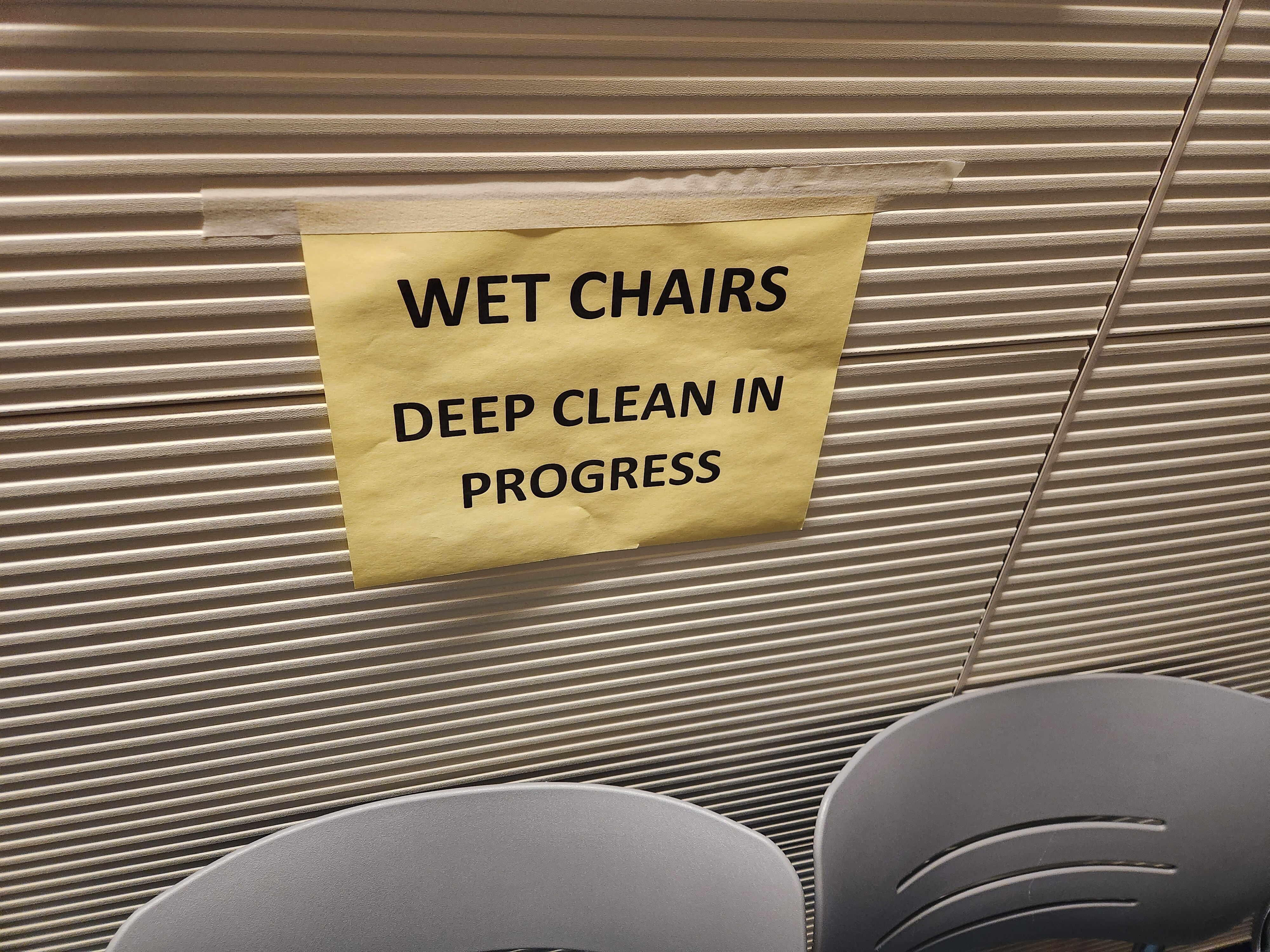 A lot of deep cleaning and equipment maintenance is scheduled for winter, when there are fewer
people on station and fewer demands for equipment.
A lot of deep cleaning and equipment maintenance is scheduled for winter, when there are fewer
people on station and fewer demands for equipment.
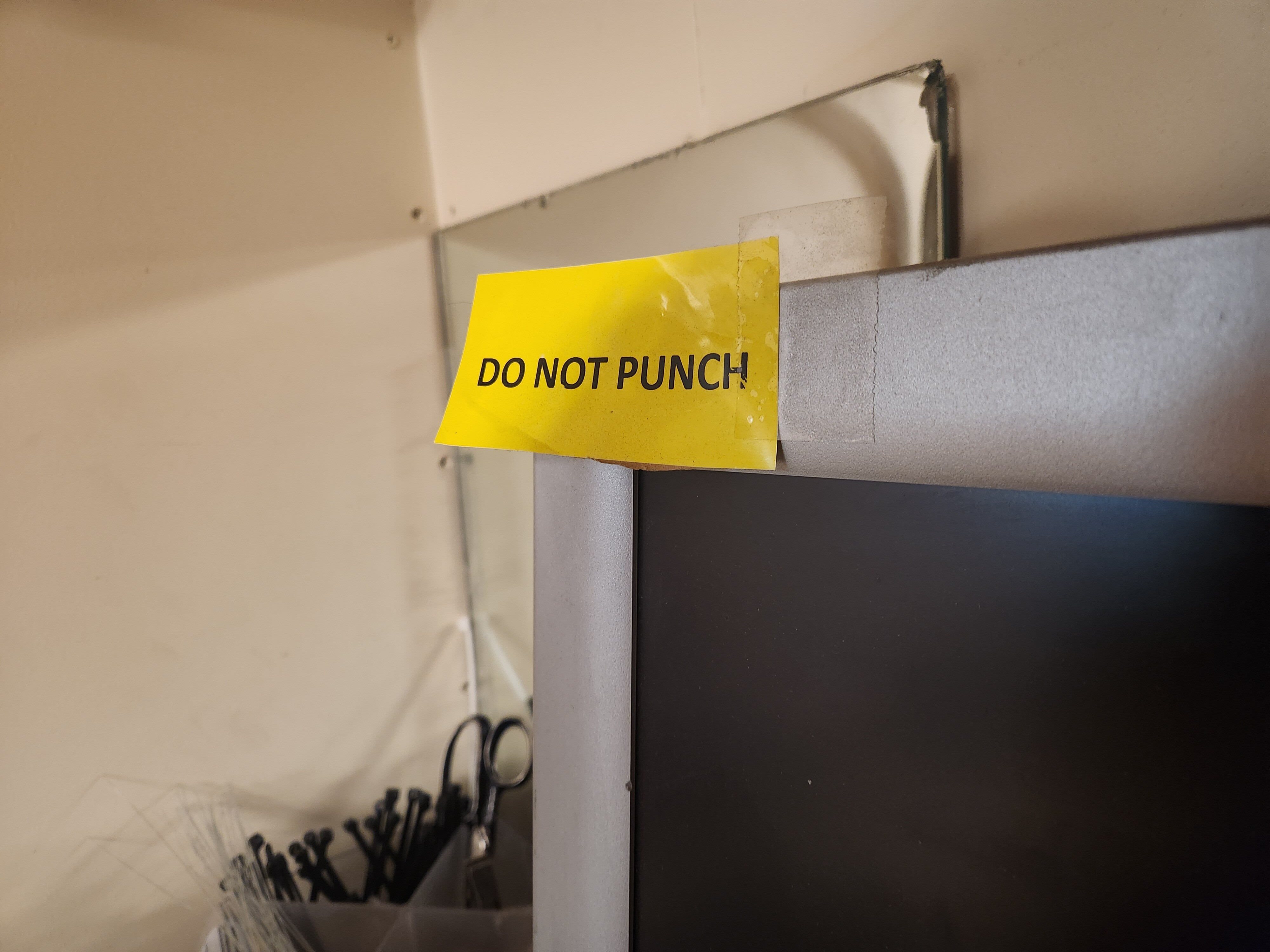 Found affixed to a computer monitor. As a member of station IT staff,
I strongly agree with this message.
Found affixed to a computer monitor. As a member of station IT staff,
I strongly agree with this message.
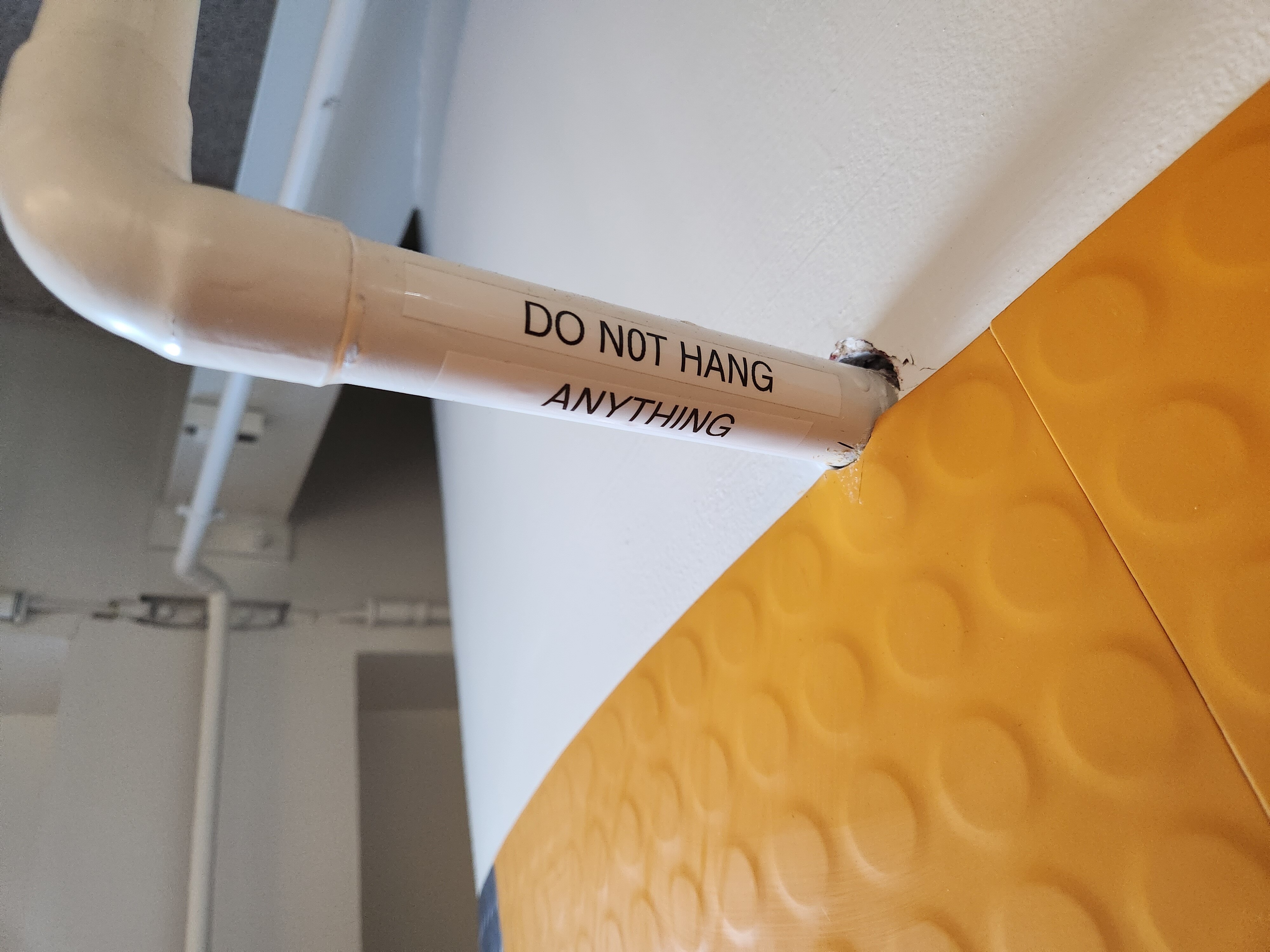 The second "O" is actually a "0" (zero), and it bothers me every time I see it.
I might replace this one.
The second "O" is actually a "0" (zero), and it bothers me every time I see it.
I might replace this one.
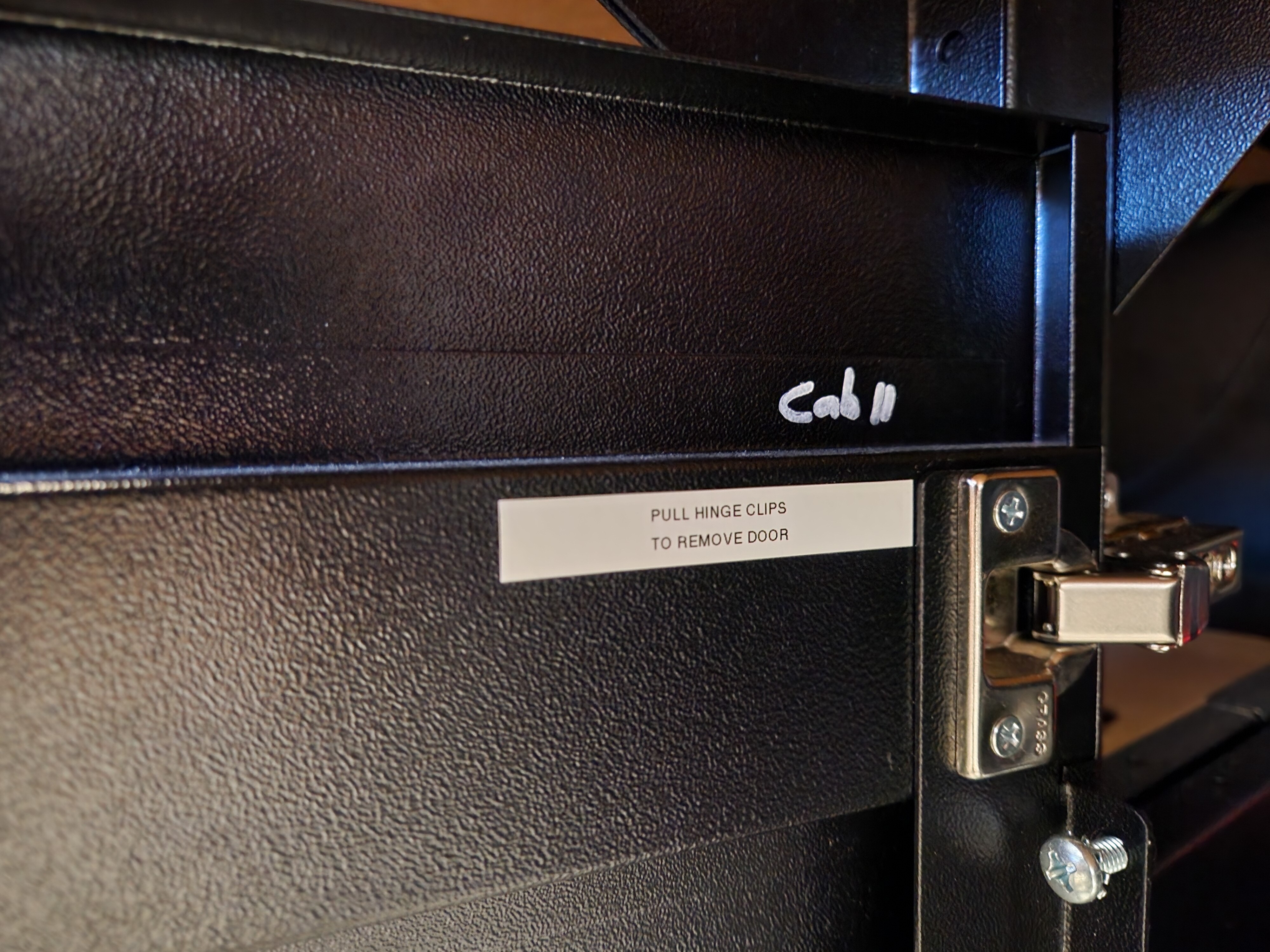 Label was probably placed here after someone fought a valiant battle to remove these
without instructions.
Label was probably placed here after someone fought a valiant battle to remove these
without instructions.
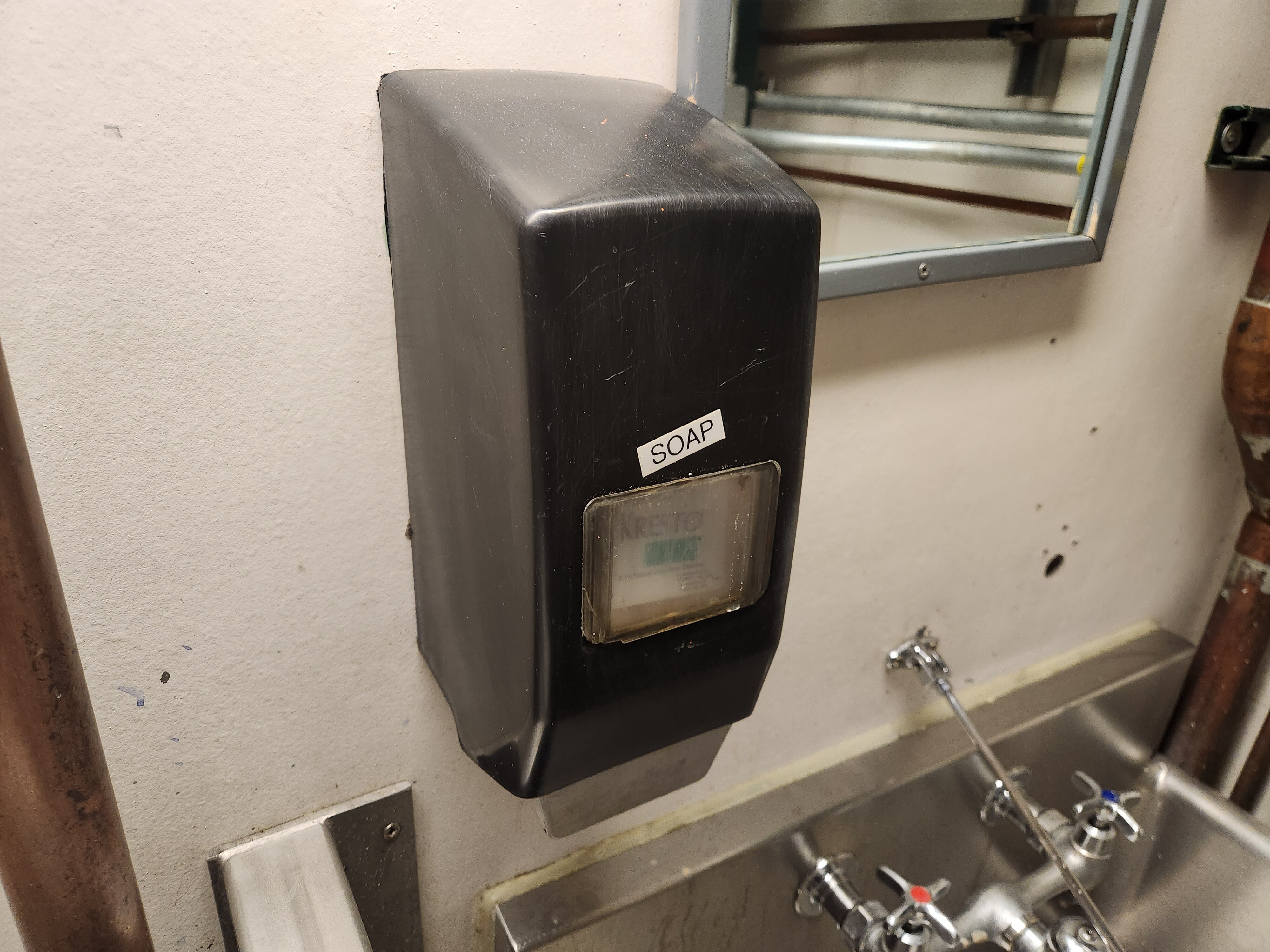 SOAP
SOAP
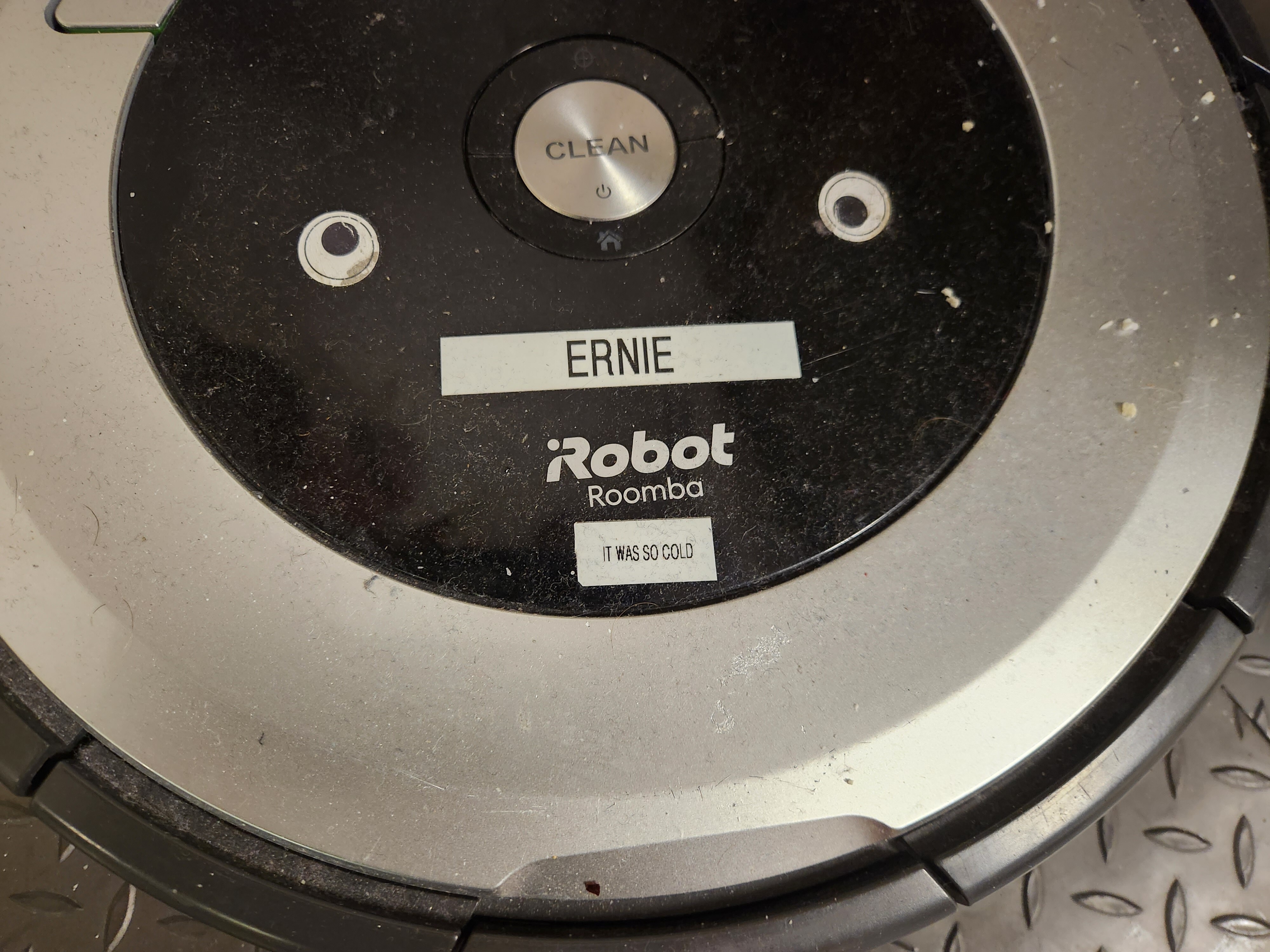 It was so cold
And there you have it! A brief, haphazard tour of South Pole Station, told exclusively through station signage.
I hope others found this as interesting as I did.
Until next time!
Comments
Nothing yet. Say the first thing.
Sign in to join the conversation.