
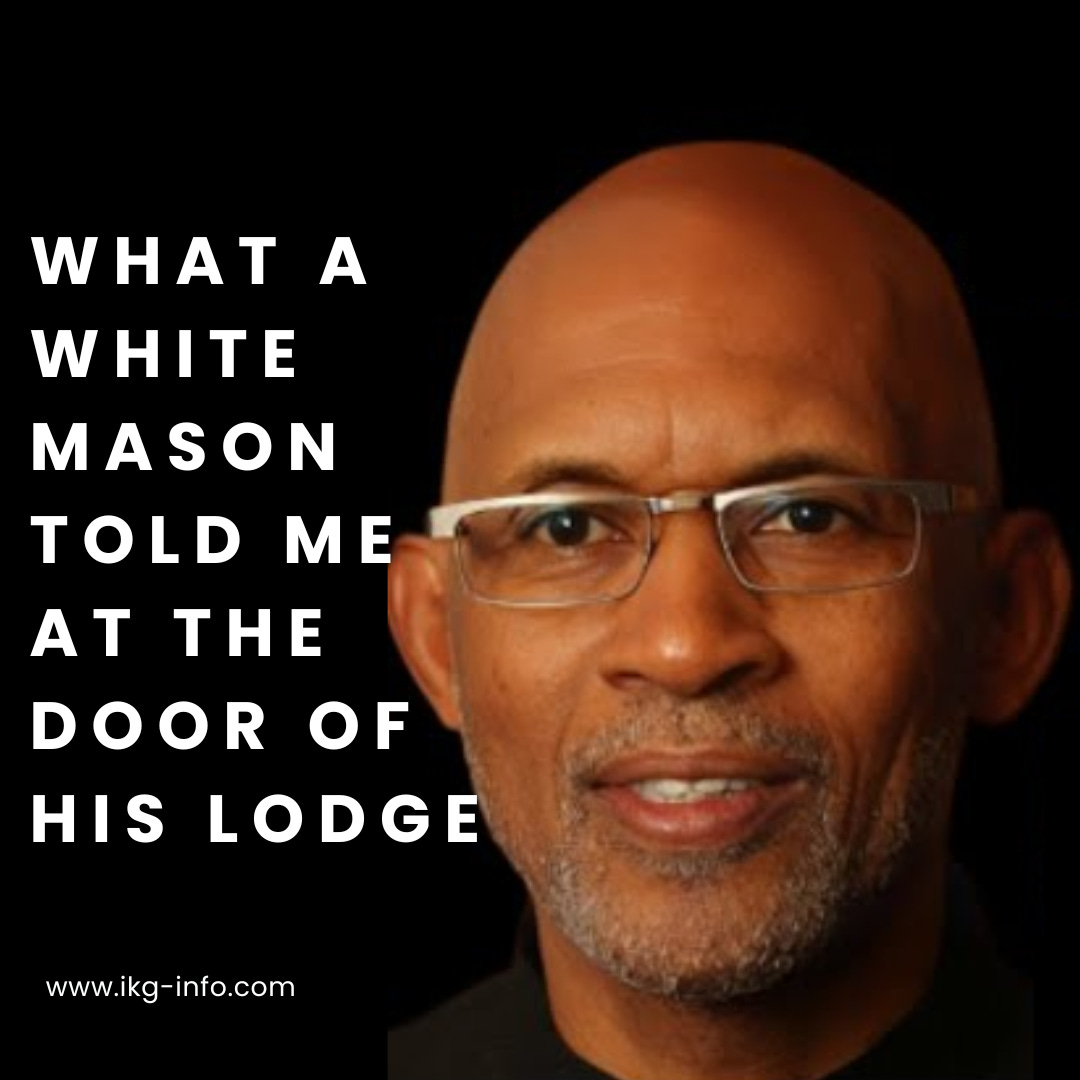
On April 11, The Brothers of Alpha Phi Alpha Fraternity, Inc. (Rho Psi Lambda Chapter) hosted a “Why Kemet Matters” Zoom meeting featuring Professor James Small and myself.
James and I interviewed each other and talked about the people and events that shaped our lives.
James and I have known each other for almost forty years. He is closer to me than family and is one of the few souls whom I would give my life for.
James is among an elite group of scholar/warriors whom Dr. John Henrik Clarke said belonged to a priesthood of knowledge keepers who accepted the responsibility of preserving ancestral wisdom for future generations.
The people who do this work are part of a tradition that stretches back thousands of years. There are male and female light bearers who make sure that Ancestral Intelligence is passed down from mouth to ear and accessible to those worthy of receiving it.
I have been privileged to have met such souls and consider James to one of them. Everything I have done over the years can be attributed to Brothers and Sisters like James Small.
During the Zoom James and I interviewed each other. While answering his questions I found myself reflecting on a forty-year journey that has led me to this moment in time.
It’s been a journey marked by incredible highs and extraordinary accomplishments.
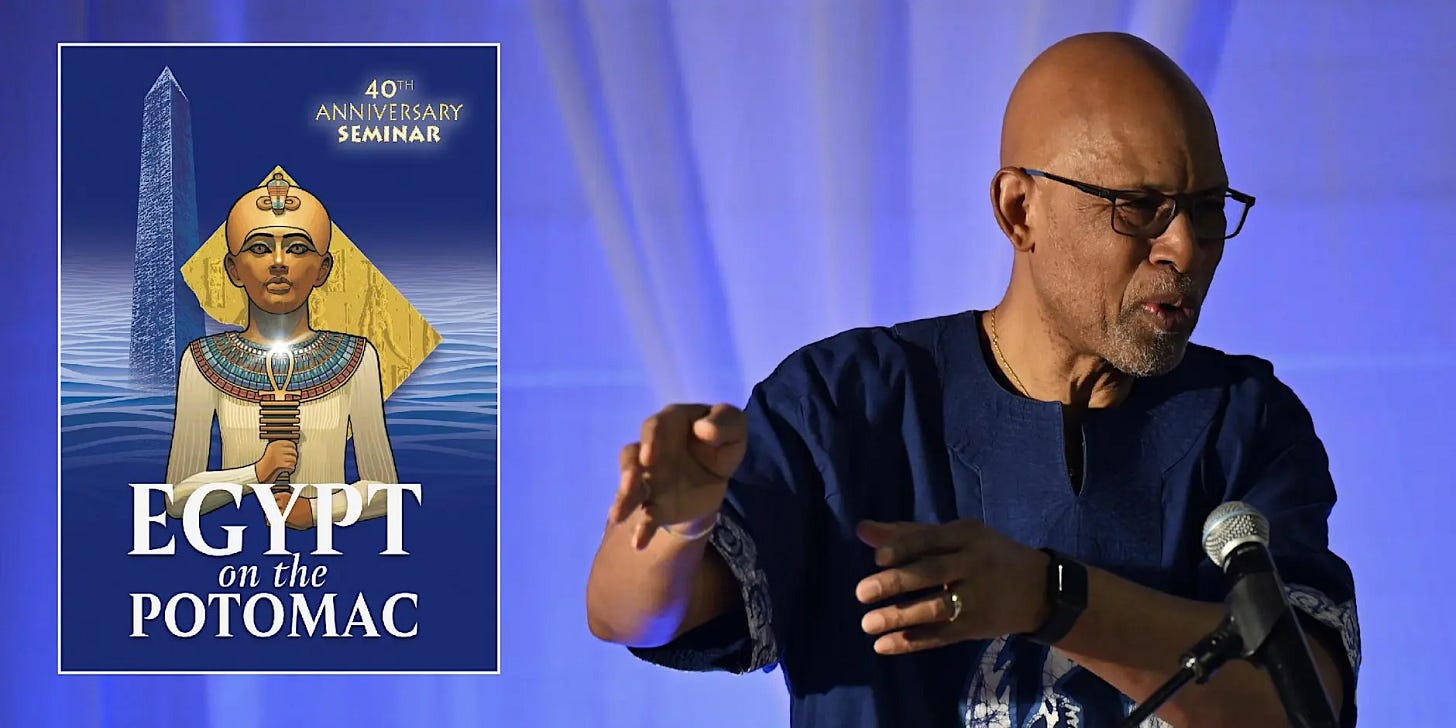
This year marks the 40th anniversary of one of my proudest accomplishments, the Egypt on the Potomac Field Trip of Washington, D.C.
I created the Field Trip in 1986 after returning home from my second trip to Egypt the previous year. The Field Trips have evolved over the past four decades, and I will highlight its evolution in seminars on May 9 and June 13 at the Thurgood Marshall Center in D.C..
More on the seminars later. Now, I want to share my response to a question James Small asked me on our Zoom interview.
His questions was:
“Can you explain when you had your Kemetamorphosis?”
A Kemetamorphosis is a profound transformation of consciousness one experiences after a study tour to Egypt.
I had my first Kemetamorphosis in December of 1980 during my first trip to Egypt.
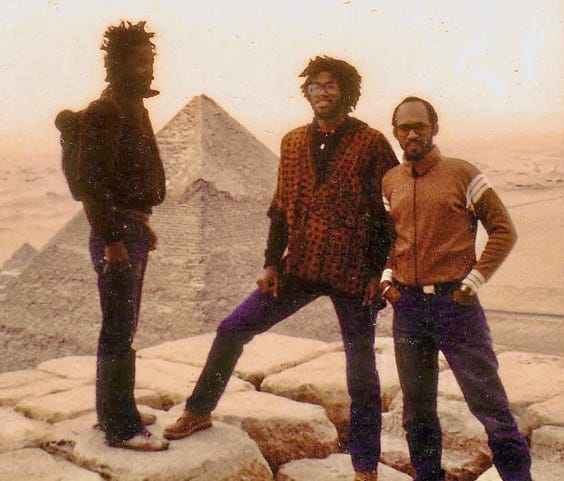
I was twenty-nine years old and travelled to Egypt with Dr. Yosef ben-Jochannan, one of the foremost Kemetic/Egyptian scholars. We arrived on the third day of the winter solstice, and the thirteen days we spent on the Nile altered my life in ways I didn’t realize at the time.
On December 24 I climbed the Great Pyramid and watched the sunrise over the Giza Plateau. Later that morning I stood between the paws of the Sphinx and reflected on the first day of my first trip to Africa.
The most memorable moment of that trip occurred on December 25th when I spent ninety minutes in Great Pyramid by myself. I had returned for a second trip inside the pyramid but when I approached the entrance the guard told me the pyramid was closed because of a power outage. I told him I had a flashlight, and after some persuasion he let me go inside.
On any given day there might be a hundred tourists milling about in the cramped interior of the Great Pyramid. But on this fateful day, I had the entire building to myself.
Granted, I was in the dark, but because I was an only child I was accustomed being alone and was unafraid of the dark.
After ascending the Grand Gallery I entered the King’s Chamber and marvelled at the fact that I was standing in the geographical center of the Earth’s land mass. As I reflected on the significance of the moment, I thought it would be a great opportunity for me to meditate.
Sitting alone in the darkness, with only my thoughts to enlighten me, I began meditating and had several visions. I saw myself walking through the temples we were going to visit in the coming days. Then I saw myself walking through a pillared hall that seemed familiar, though I had never seen it before.
It took me 33 years before I realized what I was looking at that day. What I saw during my meditation was a vision of me standing inside the pillared hall of the tomb of Karakhamun. I established the ASA Restoration Project in 2008 to excavate and restore the tomb of the 25th dynasty priest Karakhamun and had no idea that I had glimpsed my future.
It has become clear to me that that my first trip to Egypt was an initiation which prepared me for a Kemetamorphosis that has continually unfolded over many decades.
The structure the Greeks called a pyramid, was called a mir by the original builders.
Mir means a place of ascension.
Mir were not tombs. They were resurrection machines. Mir were built over tombs and facilitated a soul’s ascent and rebirth in heaven. Ancient ancestors were very specific about where in heaven a soul’s rebirth took place. It was among a group of seven stars in the southern hemisphere.
That star system was called Sahu.
There is a shaft that extends through the southern side of the King’s Chamber in the Great Pyramid. That shaft points directly at the first star in the belt of the constellation Sahu. We know that constellation today by its Greek name, Orion.
There is also a shaft that extends through the southern side of the Queen’s Chamber. That shaft points to the star the ancestors knew as Sopdet. That star is now known to be a binary star system which is called by its Greek name, Sirius.
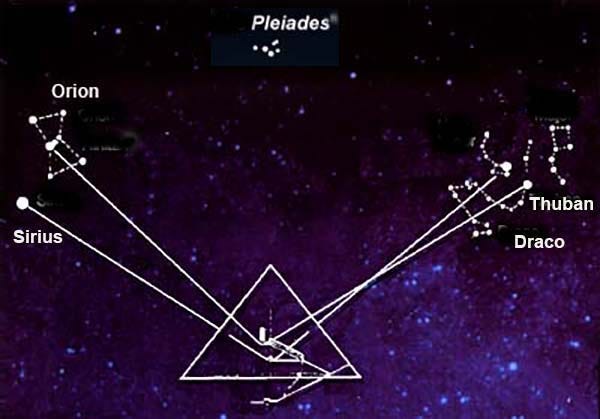
The people of Kemet associated Sahu with Ausar and Sopdet with Aset.
The shafts in the King’s Chamber and Queen’s Chamber of Khufu’s mir point directly at the celestial symbols of Ausar and Aset, who were the first king and queen of Kemet. The story of Ausar and Aset was one of the most important myths of Kemet because it governed how people should live on earth and it determined how they would live in the afterlife.
The myth of Ausar and Aset was carved on the walls of the temple of Abydos, which is one of the oldest temples in Kemet. The myth of Ausar informs us that he was murdered by his brother Set who dismembered Ausar’s body and scattered his pieces throughout Kemet. Some versions of the myth say that Set cut Ausar’s body into fourteen pieces, other versions put the number at forty-two pieces.
Aset searched for, and found, all the parts of Ausar’s body except one. She gathered the various pieces of her husband’s body and literally re-membered him. Aset wrapped Ausar body in linen bandages, and in this form, he was known as Sahu. Thousands of years later Arabs would call a linen wrapped body a mummy.
At Abydos temple we were informed that the spirit of Ausar impregnated Aset before he was laid to rest. Nine months later, the virgin Aset gave birth to her son Heru, who was born to avenge his father’s death and restore his kingdom. If this story has a note of familiarity, one should note that it is over 6000 years old and has been told and retold many times.
The three mir at the Giza plateau represent three generations of African rulers – Khufu, his son Khafre and his grandson Menkaure. Their construction on the Giza plateau was an effort to create a terrestrial replica of the three stars in the belt of Sahu/Orion.
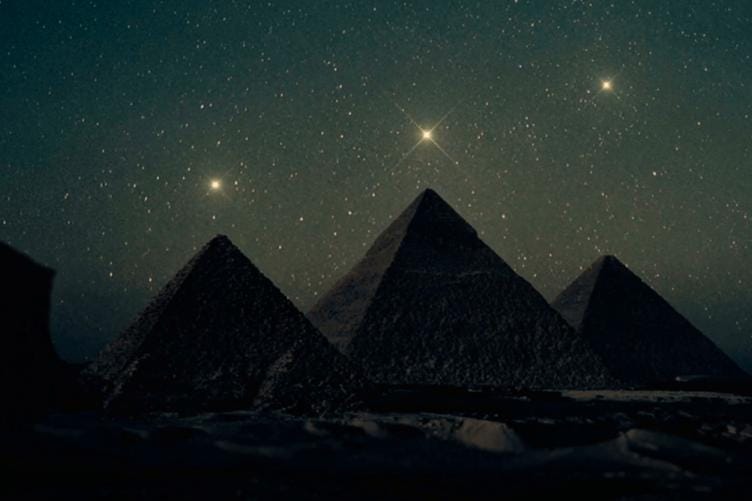
Certain objects in the heavens above, were replicated on earth, in Kemet, below.
The sky (Nut) was the stary vault above earth (Geb). Stellar objects were anthropomorphised and reimagined as netcherw (aspects of God) who brought the knowledge of heaven to earth and ruled in Kemet. That is one of the reasons Kemet was thought to be heaven on earth, and everything outside of Kemet was Isfet – the domain of disorganization and confusion.
Kemet was built as a carbon copy of the cosmos.
The Nile River was a replica of the Milky Way – the cosmic river in the firmament. Stars, constellations and planets were recreated as mir, temples and tombs throughout Kemet to harness cosmic energy, the same way solar panels harness the energy of the sun.
This knowledge was unfamiliar to me on December 25th, 1980, as I stood alone, in the darkness of Khufu’s mir. I didn’t know it at the time, but I now understand that ancestors encoded sacred knowledge into structures so that it could be accessed by those in the future when they are prepared to receive it.
The visions I experienced that Christmas day shaped everything I did over the next four decades.
I grew up in Chicago, the home of American architecture and the city where the first skyscraper and elevator were built.
I took architectural classes in high school and during my freshman year in college. I changed my major to design and advertising when I transferred to Howard University in 1971, but I never lost interest in architecture or art.
I always had a fascination with the design of buildings and how their design influences people who live and work in them.
When I returned from my second trip to Kemet in 1985, I began noticing how Kemetic designs were used in creating the landscape and buildings throughout Washington D.C.
I realized that Kemet was the inspiration for the design of the nation’s capital.
And that realization led to the creation of the Egypt on the Potomac Field Trip.
When I created the Field Trip in 1986, I believed that white Masons (George Washington, Benjamin Franklin and others) had taken the secrets of Kemet and used them to design and construct Washington – the capital of the wealthiest, most powerful nation in history.
I originally thought that African people and culture were stolen to enrich the lives of European Americans. While that is true, there was a deeper truth waiting to be revealed.
I now understand that it was not the white Scottish Rite Masons who were the masterminds behind this work.
I now realize that there was an African spirit working in the background laying a foundation for future discovery and use.
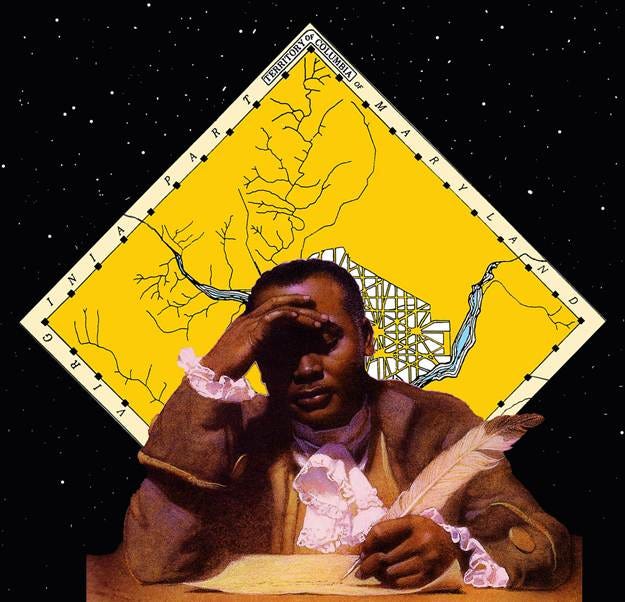
I realize now that free and enslaved Africans, Benjamin Banneker being one of them, ensured that certain information was preserved and embedded in the soil of the city.
These ancestors knew that when the ancestral memory of African Americans was restored, they would rediscover and restore the sacred knowledge that was buried long ago.
A few years into the Field Trip, I brought a group of African American high school students from my daughter Atlantis’s former school, Archbishop Carroll, to the Scottish Rite Temple at 16th and Harvard Streets.
I spoke to the students as I stood at the door of the temple and explained the symbolism of the steps, the door, and plaques on either side of the door.
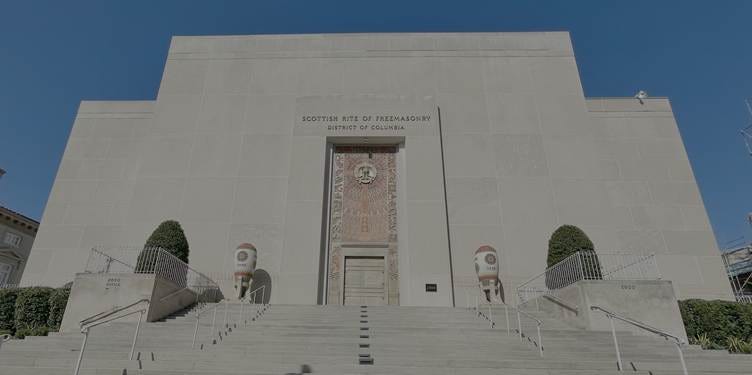
As I was talking, a white member of the lodge emerged from a side door. He stood and listened as I discussed the symbolism of the building.
There are several locations during the Field Trip where participants are given a quiz. And they must answer the quiz correctly before they can get back on the bus. The quizzes are quite revelatory, and we have never left anyone behind.
As I prepared the students for their quiz, the white Mason walked over to me and said:
“You can get in trouble for talking about that information.”
I turned to him and said:
“That’s only if you don’t know what you’re talking about. Let me finish my conversation with these young folk, and then you and I can finish ours.”
I turned to the students, asked them to identify Kemetic objects within their line of sight and explain their significance. A fourteen-year-old young man looked up 16th Street, identified the Kemetic objects he saw and explained their meaning. I congratulated him on his keen observations and analysis and instructed the students to return to the bus.
I then turned around to finish my conversation with the Mason.
He stood dumbfounded, with his mouth wide open, and said “I didn’t know that.”
He made a couple of comments about the White House and 16th Street to test my competency. When I answered with the appropriate responses he nodded and smiled. He then raised a book he had been holding by his side and showed it to me.
It was a directory of the members of his lodge.
He opened the directory and fanned the pages so I could see the pictures and titles of his White lodge members. Then he turned to me with a look of pride and said:
“These men look white. But they’re not. They’re really African.”
I shook his hand.
“I want to thank you for telling me the truth,” I said. “I want to thank you for telling me what I already knew.”
This unexpected encounter confirmed suspicions I held for quite some time.
I knew that White Masons gathered in their Lodges to study Kemetic history.
I knew they studied what my colleagues and I have dedicated our lives to studying and sharing with the community we love.
I knew that White men in possession of certain knowledge swear under oath not to divulge their teachings with non-Masons.
I also knew that Masons are duty-bound to acknowledge an African man or woman who knows who he or she is.
They know that we are not Negro or Colored, and that we are more than Black.
They know Africans were the original man and woman on Earth.
They know our ancestors created architecture, masonry, and other sacred sciences.
They know that this foundational knowledge is in our DNA and lies buried deep in our consciousness.
They know that when we have a Kemetamorphosis and remember who we are, they must acknowledge us.
Masonry, in its original form, is an institution where males were taught to be men, and men were taught to be better than themselves – not better than others.
Masonry is an educational system comprised of multiple rites of passages conferred by degrees.
To be a Mason is to be trained in the development of the mind for the building and maintenance of nations.
Any people intent on maintaining their heritage across generations must create systems for preserving information and rituals for socializing minds. The earliest evidence of the use of such systems and rituals has been found among Africans in the Nile Valley.
Masons see themselves as the custodians of this ancient tradition. Their use of African symbolism, outside and inside their temples, is a testament to the creators of that tradition.
Forty years of Field Trips in Washington was not in my plans when I walked into Khufu’s mir in December of 1980.
But the ancestors do not wait for us to be ready. They wait for us to show up and to keep showing up until readiness finds us.
Our ancestral knowledge is encoded in stone in Kemet, Washington and numerous locations around the world, and it is waiting for those who are prepared to reclaim it, read it, and reapply it.
Our Field Trips will resume in October and November after repairs are completed in Meridian Hill Park.
Until then, I invite you to join me for a deep dive into the Sacred Landscape of Washington D.C .at the Thurgood Marshall Center on May 9 and June 13.
These seminars commemorate the 40th anniversary of Egypt on the Potomac. During each seminar I will share details that the three-hour field trip doesn’t cover and provide additional insights.
Thanks for reading,
Anthony Browder
PS. Reserve your seat here
Comments
Nothing yet. Say the first thing.
Sign in to join the conversation.