

The best skill you could ever develop is the judicious sense to know what not to believe.
This wisdom was instilled in me by watching and spending time with Dr. Ivan Van Sertima over three decades ago.
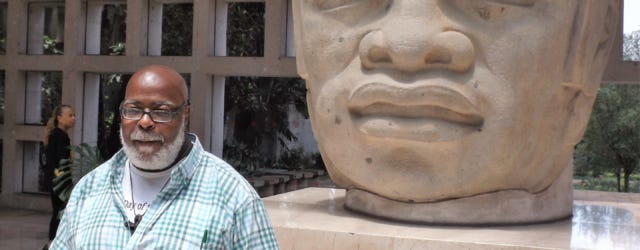
I recall viewing a private art collection in Mexico City, in the home of the former German diplomat Alexander Von Wuthenau. I was looking at his collection of small terracotta figurines, the largest collection of their kind in the world.
The year was 1990. I was on a study tour of Mexico with Ivan Van Sertima.
I was blessed to have traveled to Mexico twice with Ivan, in 1990 and 1991, and to have visited museums and the Olmec sites he wrote about in his 1976 classic, They Came Before Columbus: The African Presence in America. On both trips we visited the home of Alexander Von Wuthenau, an architect, archeologist and diplomat who left Germany when Hitler came to power and settled in Mexico City, where, over decades, he accumulated the largest private collection of pre-Columbian terracotta figurines in the world.
Van Sertima was personal friends with Von Wuthenau, and we visited his home on two occasions and were entertained by this bright eyed, intelligent nonagenarian.
He took us into his private collection of more than 1,500 artifacts, and showed us some incredible things.
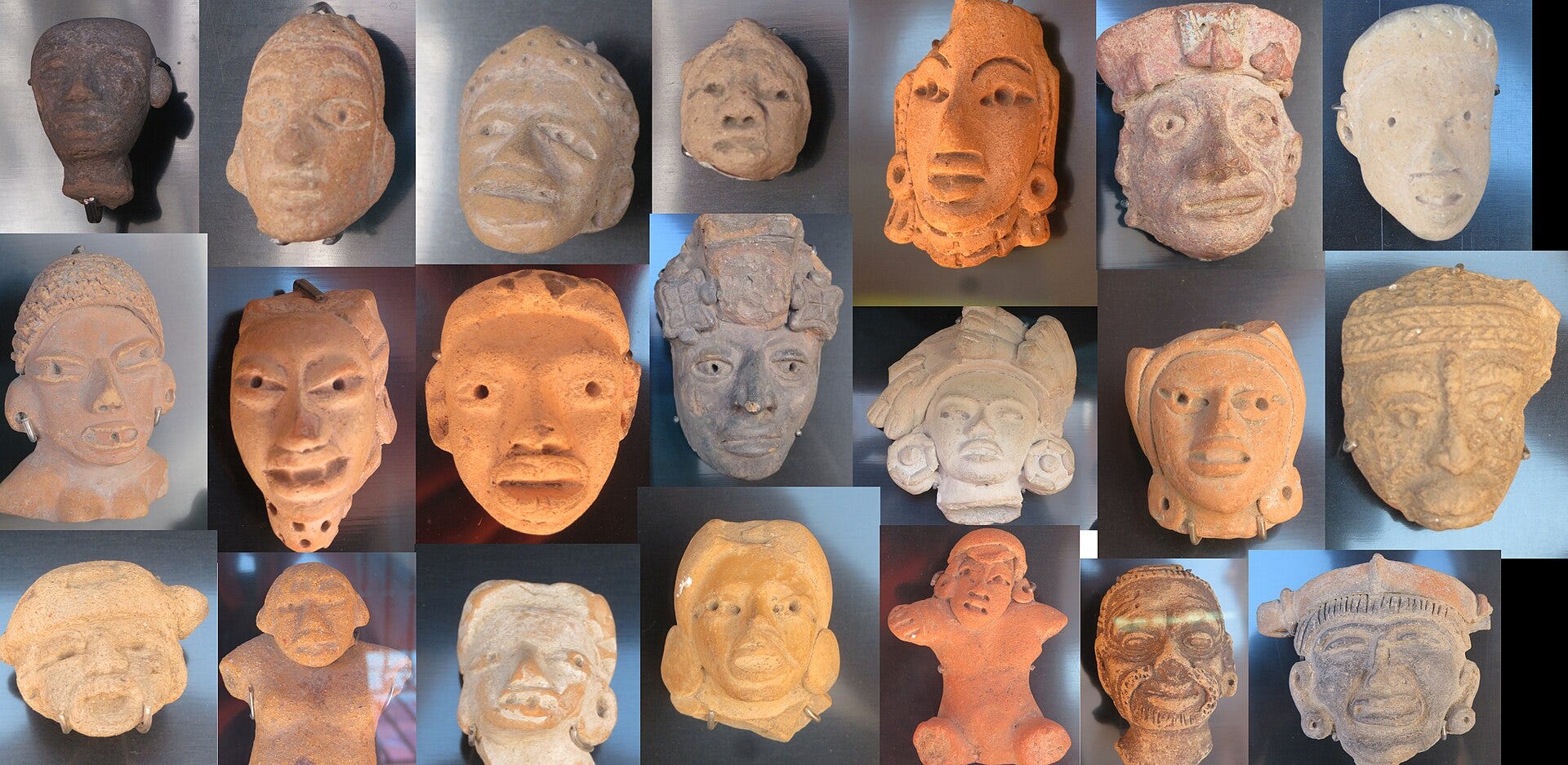
One of the things Von Wuthenau was clear about was that the mud and clay used to create these figurines was dark, because it represented the complexion of the people depicted.
He had different pieces made from clay that represented other peoples, and they were different colors, representing their skin tone. He was emphatic about acknowledging the fact that his Olmec collection depicted African people.
Von Wuthenau published a book a year before Van Sertima, it was called Unexpected Faces in Ancient America, and he concluded:
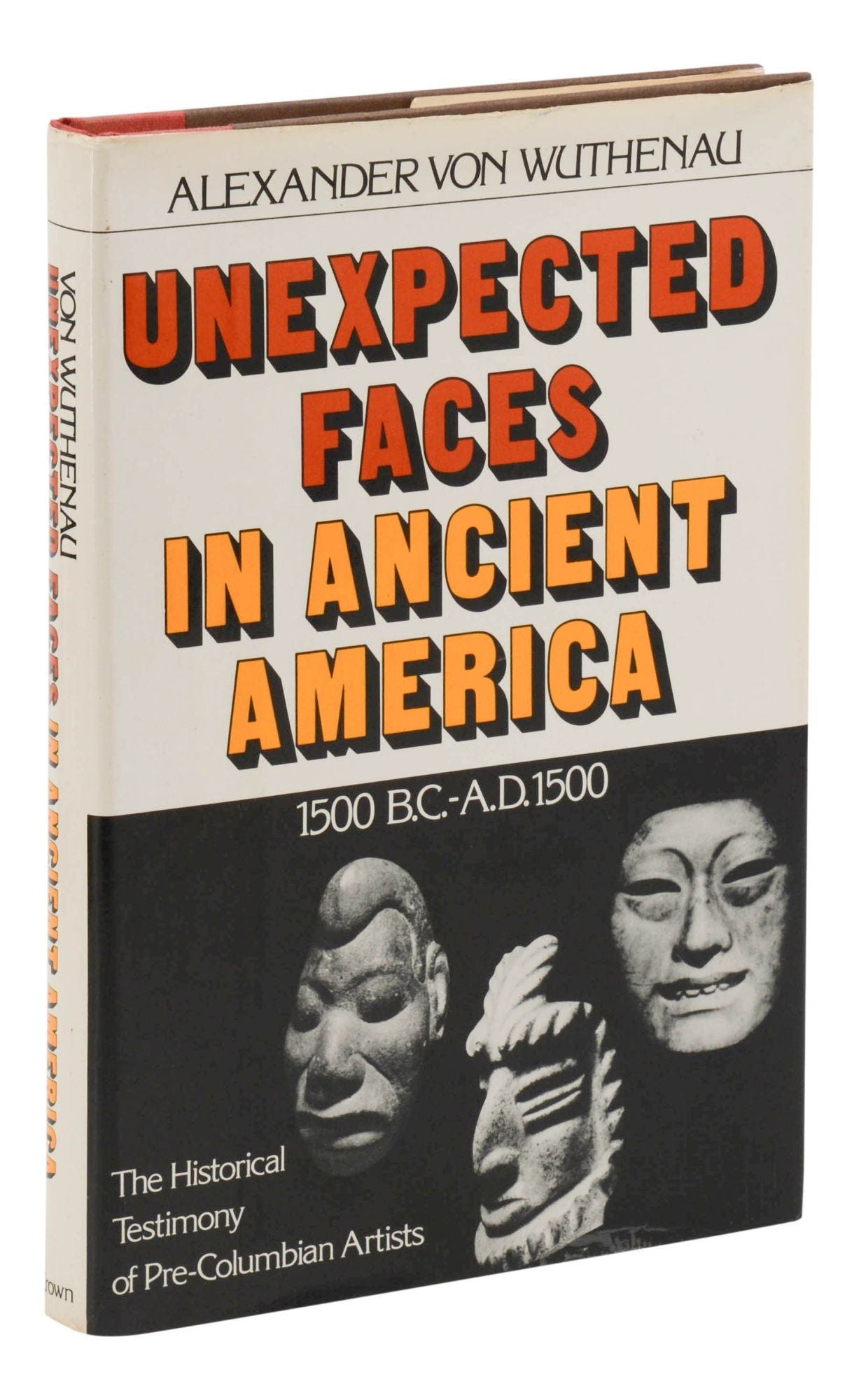
“The Negroid element is well proven by the large Olmec stone monuments as well as the terracotta items and therefore cannot be excluded from the pre-Columbian history of the Americas.”
Van Sertima was part of a cadre of scholars who brought forth to the public, information that academics had been sitting on for decades. It was documented information about the pre-Columbian African presence in the Americas.
I had many great conversations with Ivan. I was blessed.
One of the most important lessons I learned from Van Sertima is that you should never discuss anything in public if you don’t have at least four sources.
That sounds simple. But think about what it means in practice.
It means you must read.
It means you must study.
It means you must verify what you’ve read and studied.
It means you must build a solid case before you open your mouth.
Words have consequences, and we have been taken advantage of far too many times by people (White and Black) who spoke with confidence about things they could not prove or knew too little about.
The scholars I was blessed to learn from, (John Henrik Clarke, John G. Jackson, Yosef ben Jochannan, Asa Hilliard, Frances Welsing, Na’im Akbar, Ivan Van Sertima, Charles Finch, Runoko Rashidi) were all veracious readers. They only talked about what they knew and what they could prove.
Of course, some of them had opinions and theories of issues they couldn’t prove, but they seldom discussed them in public, because they had integrity.
There’s a profound difference in reading something in a book and watching something on YouTube.
Reading a book is tactile learning. It engages multiple areas of the brain and strengthens retention and recall. Viewing something on a screen is passive learning and does not provide as many benefits.
Most information that is of value to people has been written in a book. Reading and writing are one of the oldest forms of knowledge preservation and transmission and has evolved over thousands of years.
YouTube is only 20 years old, and the internet has been around for about 56 years. Many people today are getting their information from YouTube, Instagram and TikTok. Too many people are spending too much time on Facebook and too little time with their face in a book. Consequently, rates of attention and comprehension are declining rapidly among youth and adults who spend more time on social media than socializing with family and friends.
This trend will not bode well for future generations.
If people don’t like to read (or don’t know how to read), and if they don’t know how to analyze what they’ve read, they’ll never become critical thinkers. And they’ll be more inclined to react emotionally to information and misinformation they’re exposed on social media.
There is an awful lot of BS online.
There are too many people trying to make a name for themselves online and are not interested in the truth or the consequences of their posts. They’re just interested in likes and clicks.
In a self-centered attempt to make a name for themselves, they are violating many of the principles of Ma’at and are causing more harm than good.
The only reason the internet exists is because it was first developed in the 1970s for military use. It was created by DARPA (Defense Advanced Research Projects Agency) to allow military computers to communicate with each other. Once military and intelligence agencies worked out the kinks in this new technology, they began looking at its civilian application.
Internet and streaming platforms were designed and utilized as a means of entertainment, distraction, propaganda, miseducation and social engineering.
Don’t get me wrong, this technology does have it’s benefits when used responsibly, but increased research is surfacing showing the short-term and long-term detrimental effects of social media and video games on the development of young minds. This technology should be used with caution… and have age restrictions.
The truth is, there is more misinformation, disinformation and inaccurate information on YouTube and TikTok than you would ever imagine.
A lot of the content is designed to send people down rabbit holes so that they waste time following ideas and theories that have no basis in reality.
With the growing use of generative AI, distortions of historical facts are being created hourly. It’s becoming more difficult to discern fact from fiction.
There is in an alarming increase among people who believe that the enslavement of Africans in America didn’t occur, and people such as Harriett Tubman and Nat Turner didn’t exist. It sounds unbelievable but it’s true. Such cynicism didn’t exist 50 years ago.
If people don’t know how to conduct research, become critical thinkers, and know how to ask the right questions, they will become less likely to know when they are being deceived.
Van Sertima certainly understood the importance of developing critical thinking skills. He learned to read, write and reason and was able to uncover factual evidence to prove that African explorers came to the Americas two thousand years before Christopher Columbus.
Van Sertima knew that people could be socialized to believe in ideas which had no basis in reality or evidence to back them up.
Van Sertima specifically warned against what he called “romantics, dazzled by sensational legends of the lost city of Atlantis,” who made sweeping claims built on the most superficial resemblances.
Van Sertima also knew of the hazards of exposing lies and presenting documented truths.
He told me personally that writing They Came Before Columbus was the end of his academic career at Rutgers University. He knew what he was up against, but he never regretted his decision to challenge disinformation with facts.
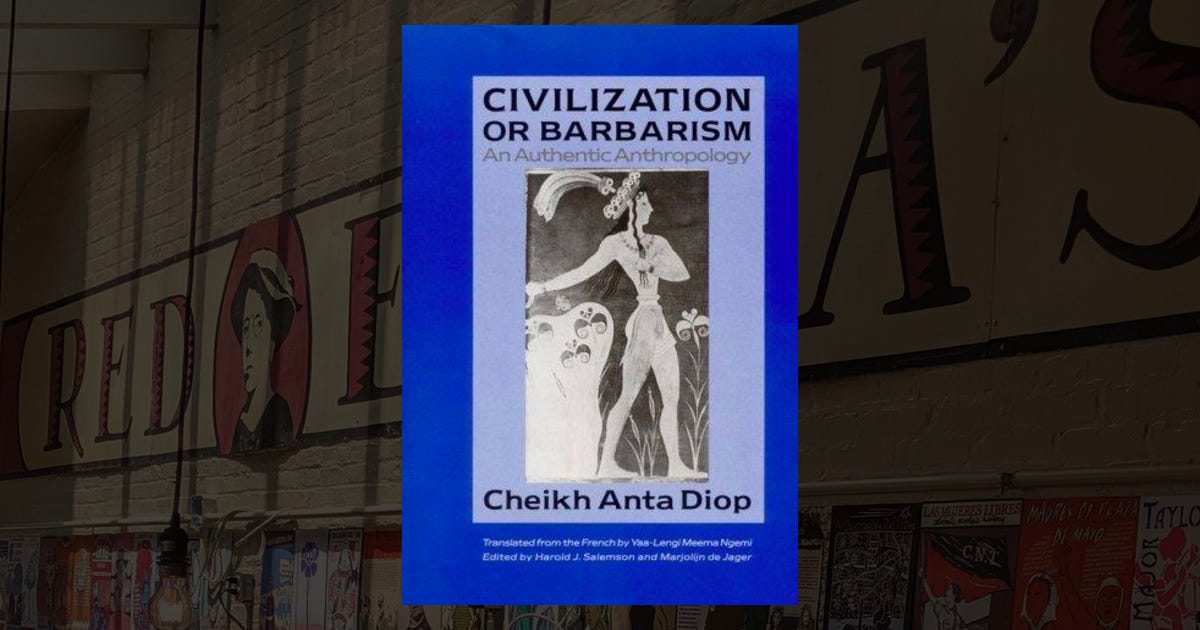
But Van Sertima was also willing to modify his thinking when presented with creditable information. He was one of the scholars responsible for introducing Cheika Anta Diop to the African American community during the 1984 Nile Valley Conference. Diop’s 1981 publication, Civilization or Barbarism, has an entire chapter devoted to Atlantis. Chapter Three is titled: The Myth of Atlantis Restored to Historical Science through Radiocarbon Analysis.
The first meaningful conversation I had with a scholar about Atlantis was during a meeting with John G. Jackson in 1981.
He was one of the most brilliant persons I’d ever met. My favorite book, hands down, is John G. Jackson’s Introduction to African Civilizations.
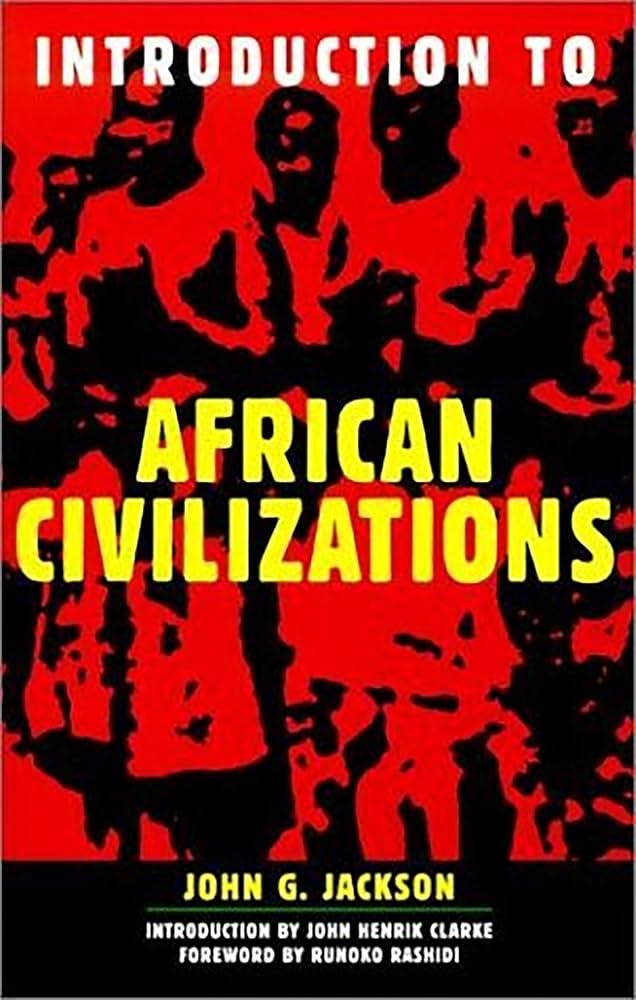
John Jackson was the first person to tell me that Atlantis is an ancient African civilization. And he provided evidence to substantiate that thought.
Jackson described Atlantis not as an island somewhere in the Atlantic Ocean, but as part of the African continent, specifically northwest Africa, near the Atlas Mountains. He argued that it represented one of the oldest civilizations known to mankind.
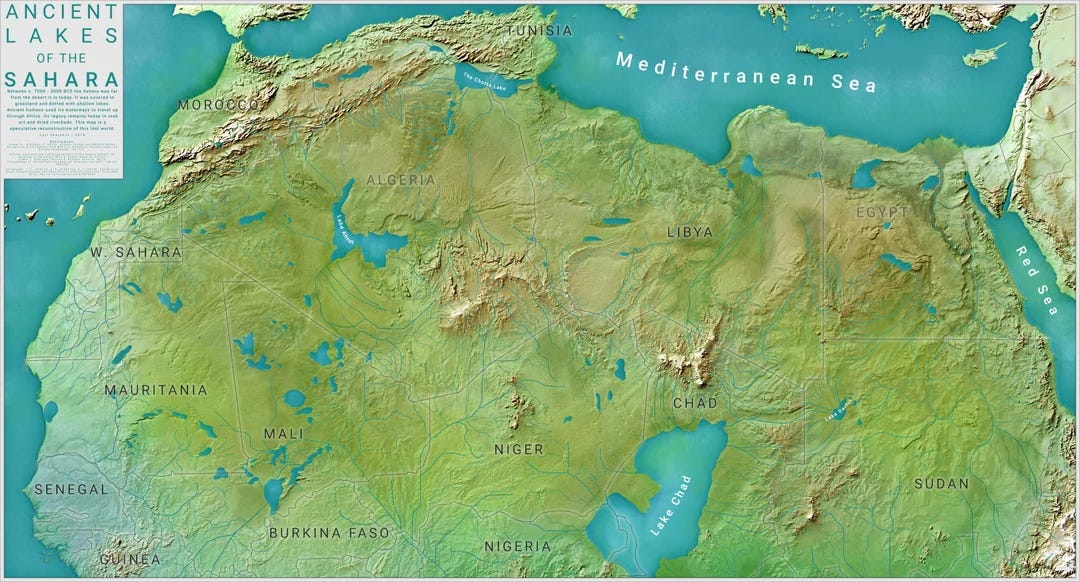
Jackson’s research showed that the story of Atlantis didn’t originate with Plato. The Greek historian Proclus recorded that a scholar named Krantor visited the Temple of Neith in the ancient Egyptian city of Sais, and priests showed him columns of hieroglyphs detailing the story of Atlantis and its peoples.
Diodorus Siculus, one of the great historians of antiquity, specifically stated that western Ethiopia was inhabited by Atlanteans. “Ethiopia” was an adjective Greeks used to describe the “dark skinned” people of Africa.
The story of Atlantis is a story that originated in Kemet and was passed down to Plato thousands of years after it was first documented. What we know of Atlantis today, we know through the interpretation of a Greek scholar who received information that was ancient when it was transmitted to him.
Jackson also documented that the German scholar Eugen Georg concluded that the age following the disappearance of Atlantis “was marked at first by the world-wide dominance of Ethiopian representatives of the black race. They were supreme in Asia and Africa.”
Leo Frobenius (the nineteenth century German archeologist) excavated the ruins of palaces and statuary in Yorubaland, the territory between the Niger River and the Atlantic Ocean, and placed Atlantis not in the ocean but on the West Coast of Africa.
I was so taken by John Jackson’s description of Atlantis that I named my daughter Atlantis.
What Atlantis came to represent to me was the first great civilization in human memory. It was an appropriate name for the first daughter I would raise. There are people who believe that the Kemites are descendants of the survivors of Atlantis.
I’m inclined to believe there’s a great deal of truth to the Atlantis story. But I’m not willing to discuss the topic publicly until I gather more evidence.
That is the standard I was taught and one I hold myself to.
The commonly accepted chronology of ancient Egypt is a falsified chronology.
Classically trained Egyptologists set the founding of the first dynasty in Kemet to around 3200 BC. But nontraditional Egyptological enthusiasts like Robert Bauval, Thomas Brophy, Robert Schoch and John Anthony West, place the beginning of Kemetic civilization somewhere between 10,000 and 7,000 BC.
These men were engineers, astrophysicists, geologists and scholars who examined the history and monuments of ancient Egypt through the lens of their specialized training. They were unencumbered by the dogma of Egyptology and presented documentation to substantiate their unique interpretation of this ancient African civilization.
The American Egyptologist James Henry Breasted considered the civilization of Egypt the oldest in the world and dated the First Dynasty to around 3400 BC. The British archeologist Sir Flinders Petrie, an equally eminent Egyptologist, dated the First Dynasty to 4777 BC.
There is a discrepancy of nearly two thousand years.
How do we account for this?
Breasted studied for his doctorate under Professor Eduard Meyer at the University of Berlin in the 1890s. Meyer, being a Christian, assumed that the world began about 4004 BC, according to the biblical chronology, and that Kemet could not have existed before “God” created the world. Breasted adopted Meyer’s chronology and criticized Petrie and other authorities for adopting an earlier date.
According to Petrie, the Third Dynasty lasted from 4212 to 3998 BC.
If those dates are correct, the Great Pyramid was erected before the creation of the world according to the Christian chronology. Breasted’s dates for the Third Dynasty were 2980 to 2900 BC to make it fit the biblical narrative.
So, the chronology we’ve been given was not based on archaeological evidence. It was based on a Christian scholar’s inability to accept historical dates that contradicted his belief in the Bible.
While many traditional Egyptologists reject the evidence for an earlier chronology, the reasons have nothing to do with academic truth. It’s about maintaining the agreed upon lie and avoiding academic persecution.
One of the reasons why this is so critically important is that the further back you go, the greater the absence of Europeans. One of the reasons you have gatekeepers sitting on information is that Europeans are trying to hold on to the foundations of Kemet and want to present it as a non-African civilization.
They are losing that fight.
Almost every year, new evidence surfaces to prove how wrong the currently accepted chronology is. It’s only a matter of time before new information comes forward that will shift the chronology back one or two thousand years. When it does, people are going to be forced to re-evaluate everything they believed and thought they knew.
When that happens, it will transform the consciousness of the world at a time when it needs transforming the most.
Forty years ago, I created an activity now called Egypt on the Potomac.
I have documented elements of Kemetic architecture, symbolism, mythology, and spirituality that were embedded in the landscape of Washington DC as early as 1800. Over 20,000 people have taken our Field Trips over the past four decades and no one has challenged my work.
That’s because I did my research and documented my sources.
I volunteered as a docent at the Library of Congress for several years, just to get access to information to further my research. My investment of time, talent and treasure paid off.
Similarly, I invested over 15 years excavating, researching and documenting 2700-year-old Kushite tombs in Luxor Egypt. It wasn’t easy, but the information I will produce over the next decade will enhance our understanding of the Kushite presence in Kemet… and possibly America.
Dr. Van Sertima has proven that some of the people known as the Olmec, who traveled to Mexico from the Nile Valley, came from Kush. So, the possibility exists that if Kushites came to Mexico, there was little to stop them from coming to other parts of the North American continent.
There has been much talk recently about Egyptian style tombs discovered in the Grand Canyon in the early 20th century, and the Mississippi River having originally been called the River of Isis. This is nothing more than speculation and lacks any hard physical evidence. But that’s not to say that the evidence doesn’t exist or won’t be found someday.
The information must be dug up. Excavated from the earth or from an unknown library.
I’ve come to understand that talk is cheap. Anybody can say anything, but evidence that tells the tale.
People must be willing to do the work, do the research that will turn talk into truth.
My friend Runoko Rashidi did the research. He traveled to more than 130 countries documenting the presence of African people around the globe. Runoko is the perfect example of a dedicated researcher.
I would encourage anyone who is curious about history to do your research, gather evidence, publish your documentation, build a solid case that you can present to the public and make it available for critique.
If you’ve done sound research, then that becomes part of our knowledge base. It becomes another piece of evidence to tell a tale that others have been trying to suppress.
We can’t afford to be lazy or gullible and build a house of knowledge on a foundation of quicksand.
We can’t afford to believe something simply because it makes us feel good, or because somebody with lots of followers on social media said it.
Ask for evidence and proof. And if it can’t be provided… have the courage to walk away.
We have been conned by too many people for far too long. We can’t afford to keep following people who don’t have our best interest at heart and may be working against our best interests. It’s happened too often in the past and I’m sure it’s happening now.
We don’t have time to waste. Time is a precious commodity that you’ll never get back.
The best skill you could ever develop is the judicious sense to know what not to believe.
The scholars I’ve been blessed to learn from, left that skill as their inheritance.
Now it’s our responsibility to protect it.
Thanks for reading,
Anthony Browder.
PS.
There is a name for the abundance of disinformation I’m currently seeing on social media. It’s called “agnotology” and reminds me the 1972 song “Reelin’ in the Years” by Steely Dan. There is truth in the following lyrics:
So you grab piece of something that you think is gonna last
Your everlasting summer you can see it fading fast
Well you wouldn’t even know a diamond if you held it in your hand
The things you think of precious I can’t understand
Are you reelin’ in the years?
Stowing away the time
Are you gatherin’ up the tears?
Have you had enough of mine?
You been tellin’ me you’re a genius since you were seventeen
In all the time I’ve known you I still don’t know what you mean
The weekend in the college didn’t turn out like you planned
The things that pass for knowledge I can’t understand
Are you reelin’ in the years?
Stowing away the time
Are you gatherin’ up the tears?
Have you had enough of mine?
I only share what I know, and I invite you to join me on my final tour to Egypt in June where I will be sharing everything I know about our ancient African ancestors:
Get you seat on the tour here: ANCIENT EGYPT LIGHT OF THE WORLD: 29TH ANNUAL STUDY TOUR- ANTHONY BROWDER'S LAST TRIP
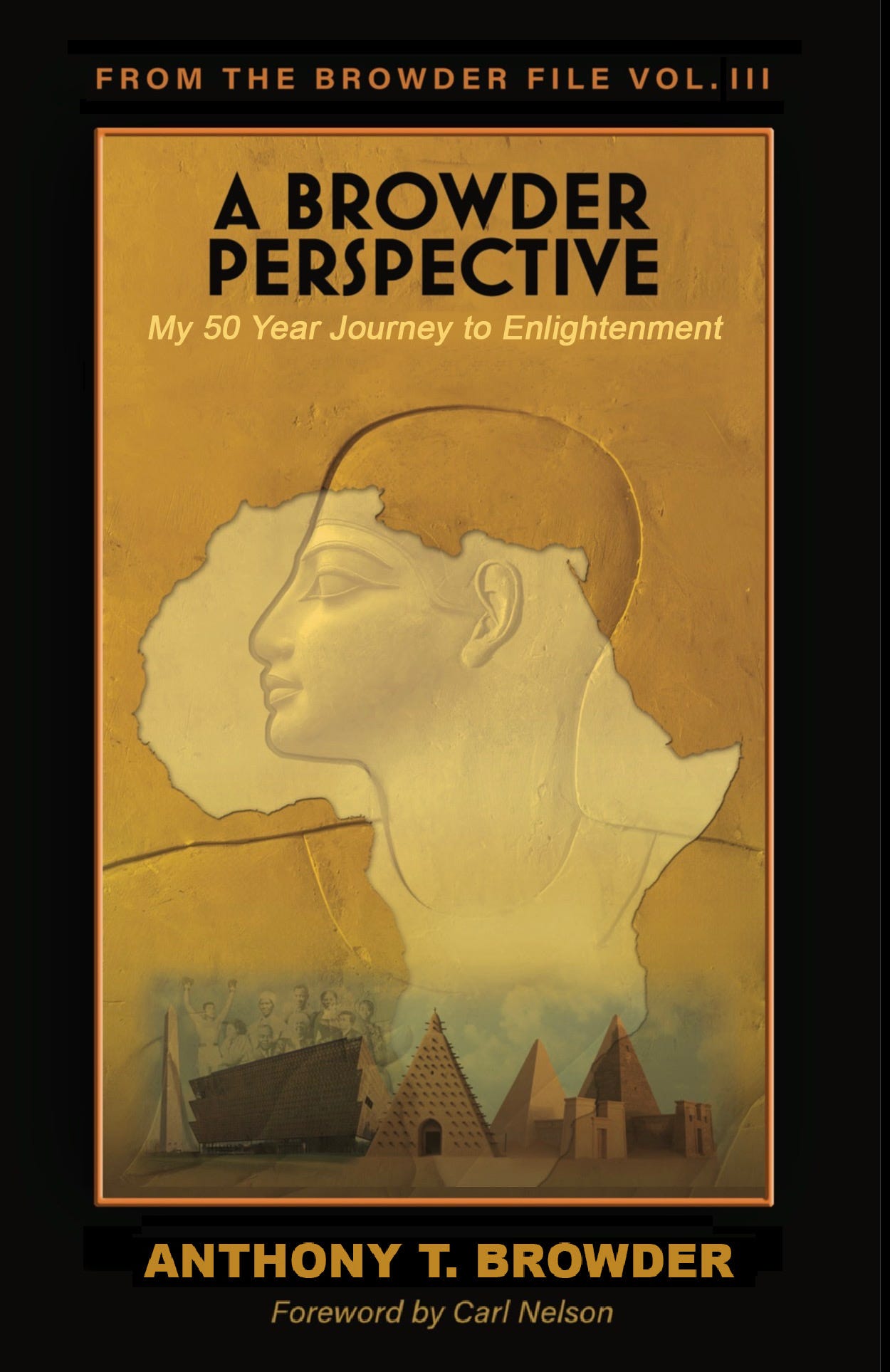
And, if you liked this newsletter, you’ll enjoy my new book:
From The Browder File, Vol. III: A Browder Perspective — My 50-Year Journey to Enlightenment
Comments
Nothing yet. Say the first thing.
Sign in to join the conversation.