
🗺️ Current Dispatch: Route 2, Eastern Montana
⛽ Local Diesel: $4.18/gal
☕ Diner Coffee Index: $3.25 — dark roast, black, poured into a paper road cup. 9/10.
⏳ Days in trip: 42
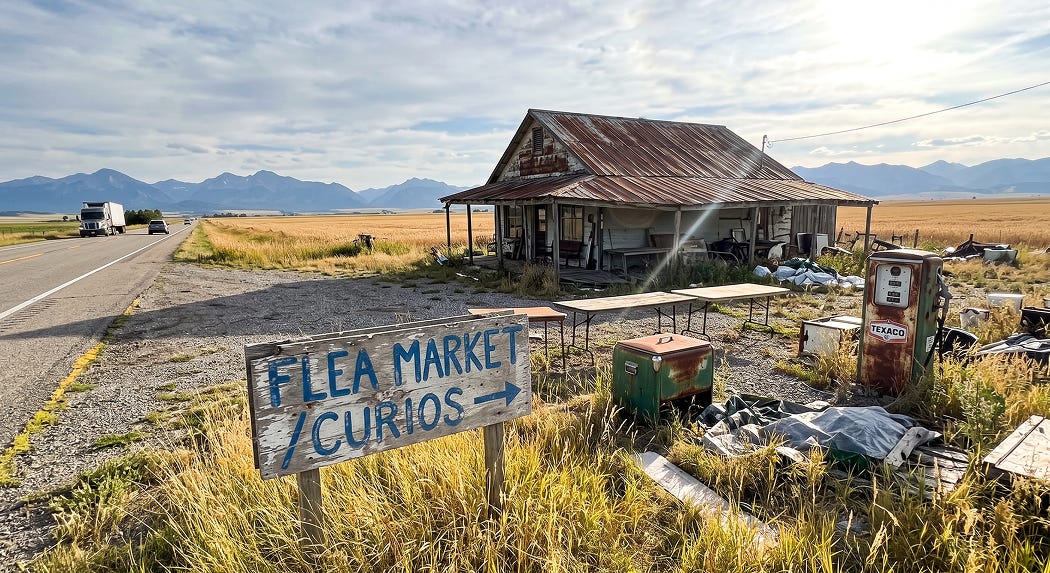
First of all, what a delicious coffee here, guys—9/10, really! Best in a month on the road, yeah guys, beautiful.
Or yeah, main theme:
While everyone’s staring at crude oil spikes and Wall Street tickers, a massive regulatory shift quietly just went down in Washington that impacts every small business owner and LLC operator in the country.
The U.S. Treasury and the Financial Crimes Enforcement Network (FinCEN) just pulled the plug on a major regulatory hammer: they have permanently ended Beneficial Ownership Information (BOI) reporting requirements for domestic small businesses.
Even better? FinCEN isn’t just stopping the program—they announced they’re going to purge previously collected data from their systems for U.S. persons who already filed.
Let’s strip away the Beltway bureaucracy and look at what this actually means on the ground.
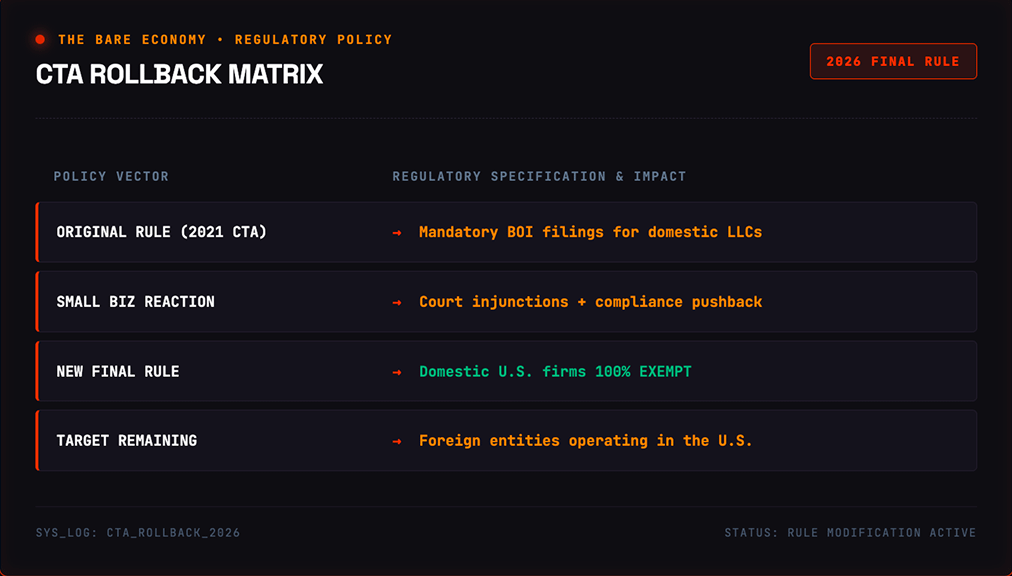
Back in 2021, Congress passed the Corporate Transparency Act (CTA) under the banner of fighting illicit finance. The idea on paper was simple: force tens of millions of small entities, shell companies, and mom-and-pop LLCs to report their true “beneficial owners” to a federal database so bad actors couldn’t hide money behind corporate walls.
In practice? It turned into an administrative nightmare. Millions of honest independent operators—from independent truckers to small-town contractors—were suddenly facing complex annual filings, privacy risks, and massive daily fines for accidental non-compliance.
After a wave of legal challenges from small-business advocacy groups and federal court injunctions, the Treasury finally threw in the towel. Under the newly issued final rule, domestic U.S. companies are officially off the hook. The reporting burden now applies almost exclusively to foreign entities operating on U.S. soil.
To understand why this rollback matters, you have to look at how Main Street was reacting over the last two years.
Under the original CTA guidelines, if you owned a simple 50/50 property LLC or a small transport company, any change in home address, driver’s license status, or minority ownership required an updated filing within 30 days. Miss the deadline? The penalty was up to $500 a day in civil fines and potential criminal exposure.
For large corporations with in-house legal departments, that’s an rounding error in compliance budgets. For an independent logger in Montana or a restaurant owner in Ohio, it was an unprecedented threat to their livelihoods.
By pulling back domestic oversight, Washington is admitting that trying to monitor 32 million domestic small businesses was creating massive drag on real economic growth without delivering meaningful anti-money-laundering results.
Re-refining one of the world’s most abundant energy resources


In the 1800s, John D. Rockefeller started refining oil into the world’s most valuable fuel. Now, another innovator is creating its own “Rockefeller Moment” with one of the world’s most abundant energy resources: coal.
This is more important than ever right now, because a perfect storm of operational breakthroughs and policy shifts has the potential to directly impact this company’s valuation.
What’s creating this “Rockefeller Moment” for coal?
Using their patented FASForm technology, Frontieras North America can transform coal into high-value commodities like hydrogen, diesel, jet fuel, and fertilizer, without burning it.
They’re targeting a $2.1 Trillion total addressable market* where demand for these commodities is virtually unlimited.
Reaching just 2% of the global coal market could mean a trillion-dollar valuation for Frontieras.
That’s why the institutional investors are already moving. Frontieras has secured a $150 million investment commitment from GEM and raised over $45 million from private investors.
But here’s why 2026 is shaping up to be such a historic year for this company:
NASDAQ ticker reserved: Frontieras has officially reserved the “FASF” ticker, a major step toward a public listing. The “Big Beautiful Bill”: Under a White House that favors domestic energy, Frontieras is positioned for rapid scale. Real-world infrastructure: Frontieras just broke ground on their $850 million flagship facility in Mason County, West Virginia.
(ad)
Depending on where you sit at the economic table, this move hits very differently:
Advocacy groups like the National Small Business Association (NSBA) are chalking this up as a huge win against federal overreach and red tape. Independent operators, truckers, landmen, and local contractors no longer have to worry about federal bureaucrats tracking their internal ownership structures under threat of criminal penalties.
On the flip side, anti-corruption groups and financial transparency advocates are raising red flags. They warn that scrapping the central database gut-punches U.S. anti-money-laundering (AML) efforts, making it much easier once again for bad actors to hide capital in domestic shell companies with zero federal visibility.
Did you claim your $2,000 tariff dividend from Trump yet?!
Did you claim your $2,000 tariff dividend from Trump yet?! Trump’s calling it a Here’s the truth: The first checks are just the beginning.
Because it’s not just a payout it’s the first sign of a massive wealth shift already in motion.
Others say it’s “America’s next great reset.”
This isn’t about charity, it’s about taking control back.
Your savings. Your retirement. Your freedom.
The real opportunity? Is what comes next.
👉 Tap here to claim your Restoration Access now »
By the time the media catches up… it’ll already be too late.
(ad)
The FinCEN rollback isn’t happening in a vacuum. It fits directly into the broader deregulation push taking place across the domestic economy this year.
Between permanent extensions of 100% bonus depreciation, expanded Section 179 expensing thresholds, and simplified Qualified Business Income (QBI) deductions, federal policy is aggressively shifting toward reducing the tax and compliance load on domestic capital.
The message from Washington is loud and clear: if you are deploying physical capital inside the United States—whether in manufacturing, agriculture, freight, or energy—the regulatory hurdles are being cleared out of your way.
What’s the ultimate takeaway here?
Washington tried to centralize oversight of every small corporate entity in America, but the system buckled under legal pressure and administrative friction.
Instead of a federal database tracking every LLC owner, the primary filter for financial tracking falls back on traditional commercial banks using existing Customer Due Diligence (CDD) rules whenever an account is opened. The burden shifts from federal reporting forms back to your local bank teller.
The 2026 Estate Clock Is Already Ticking
It shows: • How current exemption laws actually work Once 2026 hits, reactive planning gets expensive.
A new FREE Inheritance & Wealth Transfer Guide just broke down what families are quietly doing right now to prepare for 2026.
• What may change and how fast
• Why tangible assets are being reconsidered
• How to position before policy shifts
Proactive planning builds legacy.
2026 may prove otherwise.
See what’s changing before your heirs do.
Download the Free Inheritance Guide
(ad)
If you run a domestic LLC, sole proprietorship, or small business, here is how you move forward today:
Cancel the Filing Hassle: You no longer need to burn hours or pay compliance fees to file BOI reports with FinCEN. Cross it off your task list completely.
Purge System Reminders: If you set up calendar alerts or paid third-party compliance services for annual CTA updates, cancel those subscriptions immediately.
Maintain Clean Banking Records: Expect your local financial institutions to keep holding the line on standard business account setup requirements.
Keep your paperwork clean, focus on your core cash flow, and keep your business lean.
I’m firing up the rig and rolling down Highway 2.
Keep your eyes on the road, hold your ground, and stay sharp out there.
— Brook
The Bare Economy. From the road. For the road.
This is a paid advertisement for Frontieras’s Regulation A offering. Please read the offering circular at
https://invest.frontieras.com/
Reservation of the ticker symbol is not a guarantee that we will be listed on the NASDAQ. Listing on the NASDAQ is subject to approvals.
Under Regulation A, a company may change its share price by up to 20% without requalifying the offering with the Securities and Exchange Commission.
Sources* The global market for our products is worth a combined value of over $2.1 trillionhttps://www.globenewswire.com/en/news-release/2022/03/24/2409228/0/en/Global-Diesel-Market-Size-To-Surpass-US-1269-87-Billion-By-2027-Europe-Having-Share-About-25-Leading-Players-Strategies-Covid-19-Outbreak-Growth-Opportunities-Emerging-Trends-Segme.html
https://www.marketsandmarkets.com/Market-Reports/hydrogen-market-132975342.html#:~:text=The%20global%20hydrogen%20market%20in,7.8%25%20from%202023%20to%202030
https://www.transparencymarketresearch.com/naphtha-market.html
https://www.fortunebusinessinsights.com/industry-reports/aviation-fuel-market-100427
https://www.marketresearchfuture.com/reports/anthracite-market-2742
https://www.precedenceresearch.com/fertilizer-market#:~:text=According%20to%20precedence%20research%2C%20the,USD%20271.6%20billion%20by%202032
No posts
Comments
Nothing yet. Say the first thing.
Sign in to join the conversation.