
Back when I was fielding memoir submissions for Seal Press in the late 2000s, I developed a sixth sense. An internal lie detector, if you will. I’d get a book proposal that was so unbelievable that it was both cringey and funny. My colleagues and I would read parts of the most egregious proposals aloud at editorial meetings. Call it what you will, but it was a way to blow off steam.
People often say, If it’s too good to be true . . . But you rarely hear the opposite: If it’s too bad to be true . . . We certainly see both playing out when it comes to memoir.
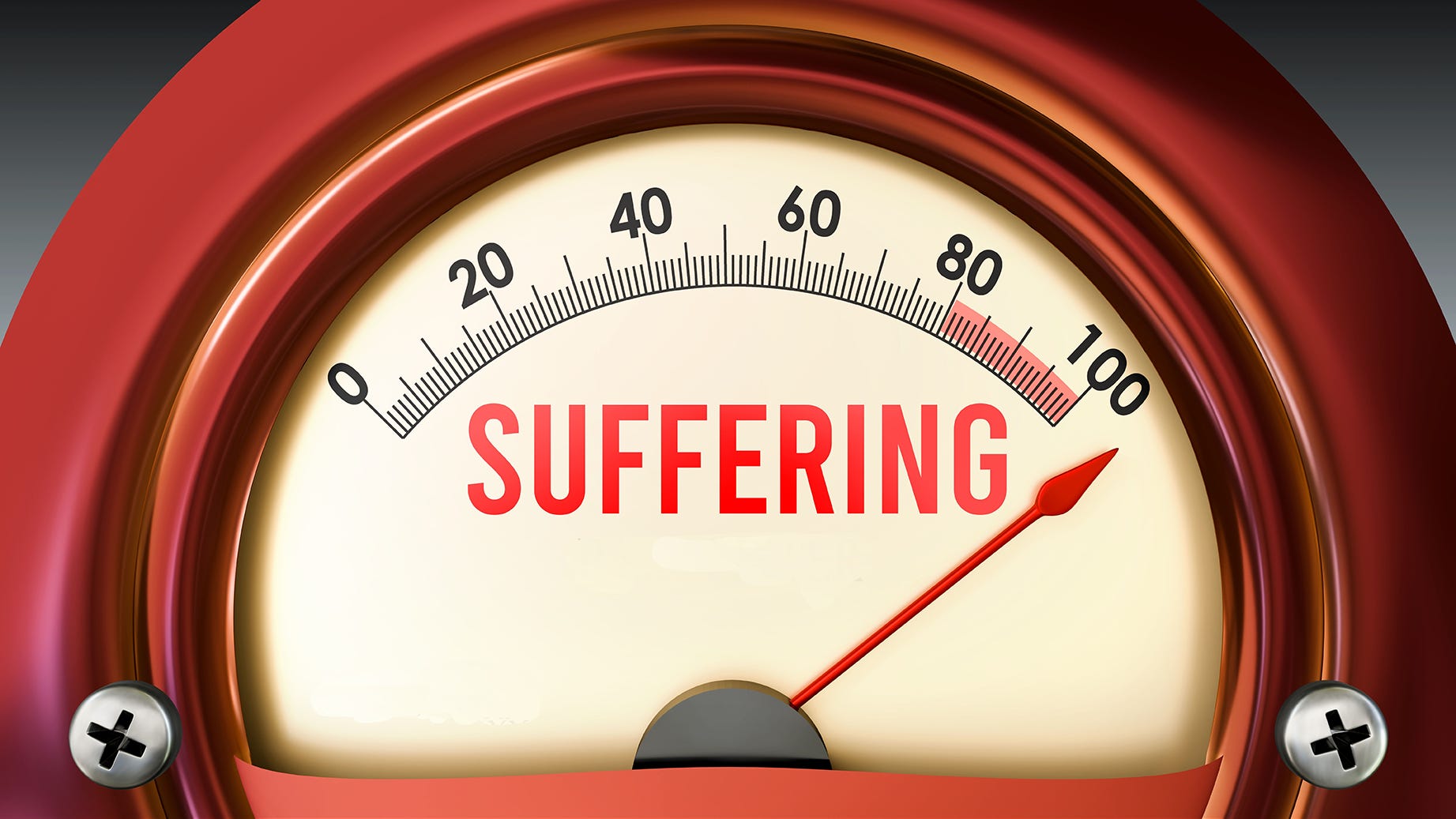
I remember one proposal that actually made my heart catch in my chest, both because the story was so terrible and because I didn’t believe it. What the author had survived was too much. Too many traumas, too tightly packed together, too frantic in their delivery on the page, as if shouting at me to pay attention, to listen, to see her. I started calling proposals like these the Trauma Olympics, as in the author was wanting to win them. I warned writers I worked with against this kind of writing because it doesn’t pass the sniff test. Readers want real stories, but people’s shit detectors are strong—and how you unfold a trauma narrative, and the ensuant resilience part of the story, matters a great deal.
I’m just a single voice in this publishing sea, however, and writers often tell me that the worse and more godawful a person’s experience, the more likely it seems they are to get a book deal.
They aren’t wrong.
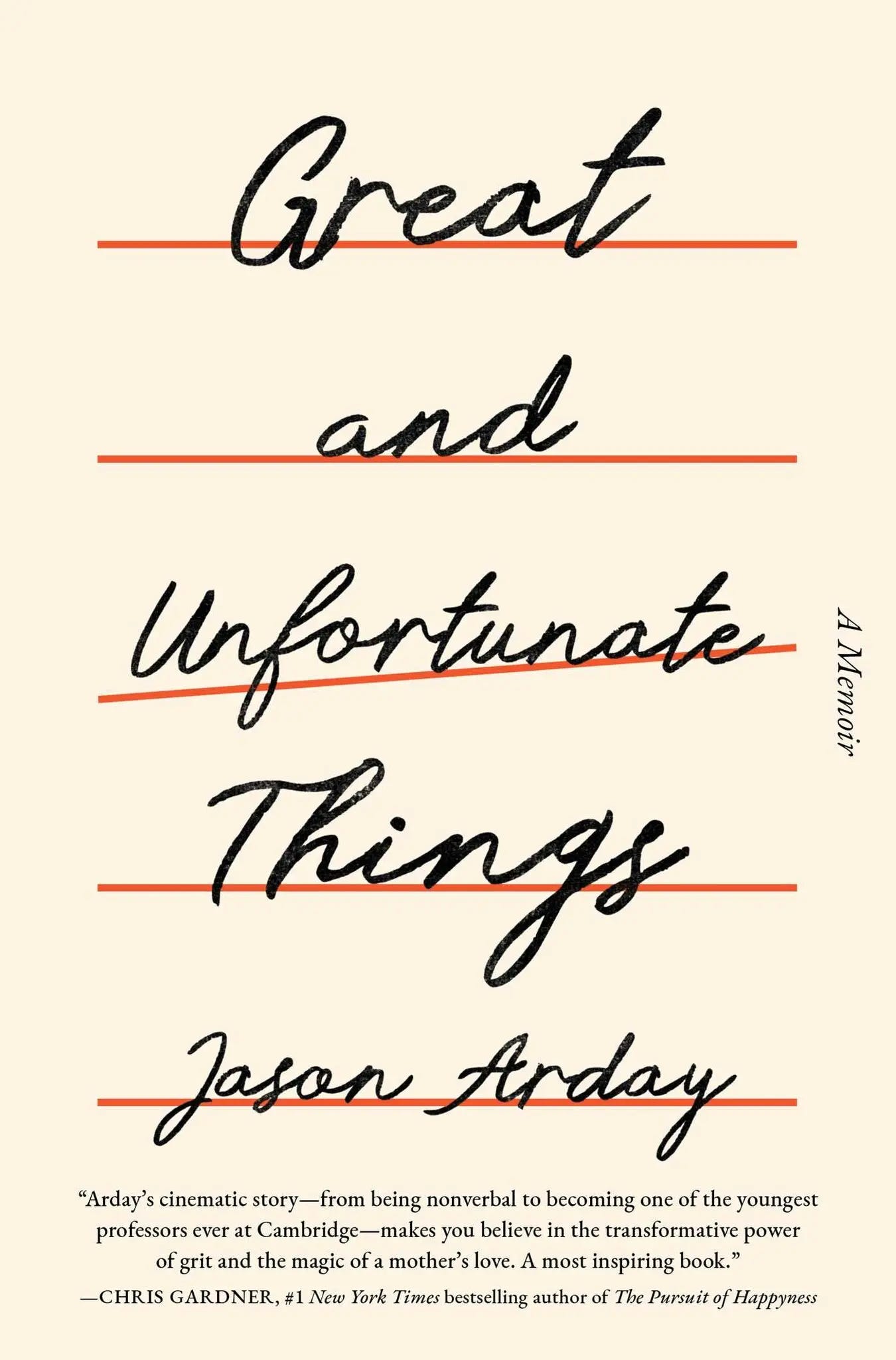
This is a delicate topic, especially because I’m entering it this week on the heels of Jason Arday’s death (apparently by suicide though that’s not been reported). Arday’s memoir, Great and Unfortunate Things, came out on Tuesday. He died on Friday.
There is much to unpack about what happened leading up to his death, from accusations of plagiarism in his PhD dissertation and subsequent publications, to a hysterical public pile-on, to his (reported by him which I could not verify) $1.4-million book advance, to the online excoriation that apparently led him to take his own life. (Arday is Black, and I’m intentionally not writing about the race dynamics at play in what happened to him, but they’re worth reading and knowing about.)
Yesterday in The Atlantic,* Tyler Austin Harper wrote:
The online hive mind, in particular, was brutal until the moment of Arday’s death, at which point the collective swarm did an about-face. The same platform that loosed an algorithmically accelerated torrent of abuse is now dominated by kind remembrances and mawkishness. I find the whole pageantry grotesque.
Though this is the worst and most brutal outcome, Great and Unfortunate Things was already gaining traction to become the next big memoir scandal. Harper wrote that the Arday story was “ultimately a niche academic scandal,” which may have been true, but the memoir scandal was just breaking. Its publication turned out to be his Waterloo.
Earlier this month, I spoke on background with Anna Silman, a reporter at The Wall Street Journal,* about Whitney Frick, who’s acquired and edited Belle Burden’s Strangers and Amy Griffin’s The Tell. Both authors have been accused of lying—Burden more for omission, and Griffin for stealing another woman’s story and publishing it as her own. The profile on Frick ran earlier this month, and my contribution is my assertion that there’s “pressure on memoirists to push the envelope and find ever-more-shocking traumas to mine.”
I’ve been working with memoirists for a long long time, and of course people have lived through shockingly terrible experiences. The trauma is real, and readers are moved by trauma narratives. I believe trauma narratives are helpful for both writers and readers. They support readers to feel less alone. They in fact save lives.
But, in rewarding authors time and again for pushing ever more deeply into trauma, the publishing industry has also created an incentive structure for writers to push that envelope. To the point of lying? Yes, I believe so.
When Silman interviewed me for the Whitney Frick story, she asked me if Frick had overlooked anything about The Tell, specifically. Should she have known something was amiss? Should she or the publisher have done more?
My answer was no. Griffin maintains her innocence, having filed a big ole SLAPP suit against the woman whose story she’s alleged to have stolen to prove it, but it’s hard to say what her editor or publisher should have or could have done differently. Griffin asserts this is her story. And unlike with Jason Arday, the facts aren’t unbelievable. The story just seemingly don’t belong to her.
The increase in the number of memoir scandals of late has many people asking questions about fact-checking. Publishers could implement a fact-checking checklist for due diligence, but what would these facts be without being too intrusive? I think it’s a worthwhile exercise to Google one’s own author. You can see if the broad facts of their story align with public information. But it’s not these kinds of facts that get authors into hot water; rather, it’s things that require corroboration from others, such as some people in Arday’s life now coming forward to say that he wasn’t mute as a child as he asserted he was, and that he could in fact read and write before age eighteen. An editor’s job is not to interrogate their authors, and once fact-checking becomes investigatory work, the author-editor relationship is kaput.
So, should Simon & Schuster have done more? Here’s their statement on the matter in The New York Times:*
“We have worked closely with Professor Jason Arday on ‘Great and Unfortunate Things’ since acquiring it and can speak to the professionalism and integrity he has brought to every stage of the publication,” the statement said. “He worked closely with his co-writer, as well as our editorial and legal teams, to carefully research, write and corroborate the narrative.”
Will this statement come back and bite S&S in the butt? Probably not. The Big Five have miraculous Teflon, as strong as any politician’s. But my guess is that the legal team asked very few questions, and that the narrative was not in fact carefully corroborated. If it were, we would not be here.
We are living in an era of untruth. Our president can’t string together two sentences without lying. The most powerful titans of business speak out of both sides of their mouths. The disinformation machine makes us second-guess ourselves and Truth every day.
Memoir will continue to be embroiled in scandals because truth is a continuum, and all memoir is and must be, to some extent, fabricated. Dialogue is recreated, scenes are resurrected from unreliable memories, and the filter of our own experience will render our takeaways profoundly different from someone else’s.
In The Art of Memoir, Mary Karr tackles Truth as well as anyone I’ve read on the topic:
Truth may have become a foggy, fuzzy nether area. But untruth is simple: making up events with the intention to deceive.
I’ve come back to this often, especially when contemplating recent scandals and authors’ motivations. Jason Arday, by all accounts, seems to have been a lovely human being. It’s clear that he fabricated many parts of his story, but we don’t know why.
People lie, all the time and every day. Some people lie for attention and adoration. Some people lie pathologically, disconnected from the realm of truth. Some people embellish or exaggerate as a hallmark of their personality. (Added this line here due to a comment I want to spotlight below, which is that many people come to believe their own lies, for reasons that are psychologically complex.) Authors are not exempt, of course, and publication itself may be a motivation to lie.
People are comparing this latest scandal to James Frey’s A Million Little Pieces 2006 memoir scandal, for good reason. Frey’s claim that he had two root canals without anesthesia was, as written, implausible to many readers. Similarly, running 600 miles in six days is a bridge too far for most of Arday’s readers—and there are countless other either exaggerations or untruths that people have documented.
People are rightly asking the question of how we got here. There are many reasons he was elevated and celebrated, many reasons he got the book deal he got. I believe, as Tyler Austin Harper suggested in his Atlantic piece, that the institutions (academia and book publishing) are partly to blame.
I can’t speak to how academia can do better, but in book publishing, there needs to be a mechanism for editors to be able to raise questions with their superiors about “untruths.” I think editors who actually read the books they acquire have that sixth sense lie detector well honed, but they might not know how to flag something as a problem, especially if the author is famous, or particularly celebrated, or a big catch for the publishing house. Once a publisher has paid a lot of money for a book, cutting its losses isn’t really on the table.
This is why we saw such different outcomes with the recent cancelation of Jerry Falade’s crime thriller, Call Me, I’ll Hide the Body, while Simon & Schuster forged ahead with H.M. Wolfe’s Daggermouth. Call Me, I’ll Hide the Body had just been acquired, so no money was out the door yet, whereas Daggermouth’s publication was just days away. Those books were printed, preorders were rolling in. Simon & Schuster stood by its author, as it did with Jason Arday, for financial reasons.
Only once was I in a position to cancel a book for plagiarism when I was at Seal Press. And the stakes were low, comparatively. We did not recoup the advance from that author because she didn’t have the money. The entire saga, though a big deal in-house, never got any kind of media attention.
Now, we live in a “gotcha” culture where cancelation and shit-talking and speculative Substack posts garner lots of likes and followers. I’ve been participant in this, so I understand the drive there too. I wrote about Amy Griffin because I don’t believe her. Other people have felt the same way about Jason Arday—but now too many people pushed too far and he’s dead.
When I saw the news about Arday, it hit me hard, mainly because who among us doesn’t participate in this dynamic of self-righteousness and blame-casting? We do it, and people suffer. We do it, and we want accountability. In Arday’s case, that accountability has been delivered by his death.
If I could do anything to change publishing on this front, I’d turn back time to when I was telling authors they didn’t have to win the Trauma Olympics to get a memoir published. But turning back time isn’t a fix, and neither is fact-checking, or more editorial courage. The incentive structure that made Arday’s story irresistible to S&S is the same one that will make the next story too irresistible to pass up.
When Roxane Gay was a guest on Memoir Nation, she said that readers are greedy. They want everything—and publishing has risen to meet that demand. I don’t see how to unravel readers’ insatiability to want to know the worst things that have ever happened to someone, or how to ensure that those worst things that ever happened are true. Jason Arday will be but a name we’ll recall, as someone who paid the ultimate price.
*I realize some of these posts are behind paywalls, so sorry about that. I hyperlink them here for citation and credit purposes.
Thanks for sharing with an author or writer in your life . . . ⤵
No posts
Comments
Nothing yet. Say the first thing.
Sign in to join the conversation.