
It’s almost Met Gala Monday! And the first thing one asks when hearing about The Met Gala is always, “what is the theme?”
The Met Gala is a charity fundraiser for The Metropolitan Museum of Art’s Costume Institute. It has been traditionally timed with the opening of The Costume Institute new fashion exhibition every year. Yearly, the event raises eight figures that support the Costume Institute but in 2025, the most was raised for the event’s 77 year history: $31 million!
More on the Costume Institute can be found in this older post I wrote last year.
The History of the Costume Institute
·
May 2, 2025
To begin discussing the Met Gala, we should first start by understanding the Costume Institute. The Met Gala was started in 1948 as an annual fundraiser supporting the Costume Institute.
And more on the history of The Met Gala can be found here in this post, also from last year.
The History of The Met Gala
·
May 4, 2025
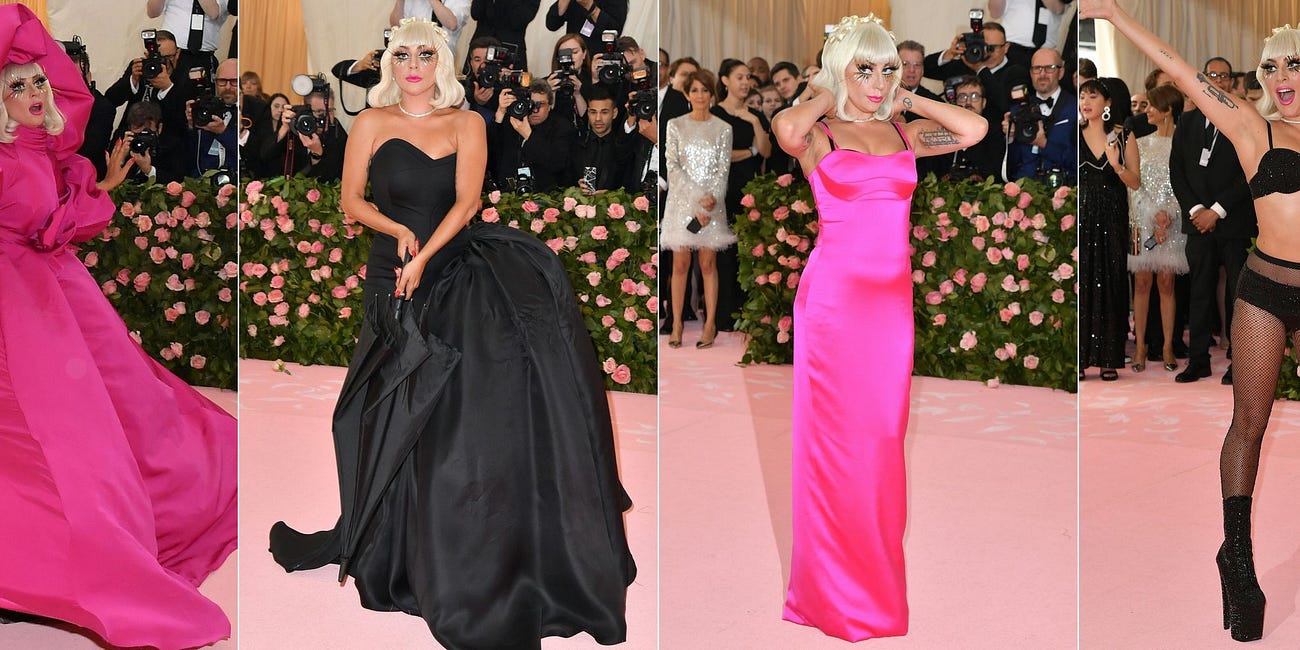
The Met Gala, as we know it today, is one of the biggest nights in fashion, celebrity and pop culture! The fashion industry never fails to pull out all the stops, and this exclusive fête is one of my favorite moments of the year. A true chance for designers to showcase their most spectacular work on …
And now, current(ish) day.
In November of 2025, the Metropolitan Museum of Art announced the theme of the Costume Institute’s spring 2026 exhibition: “Costume Art”.
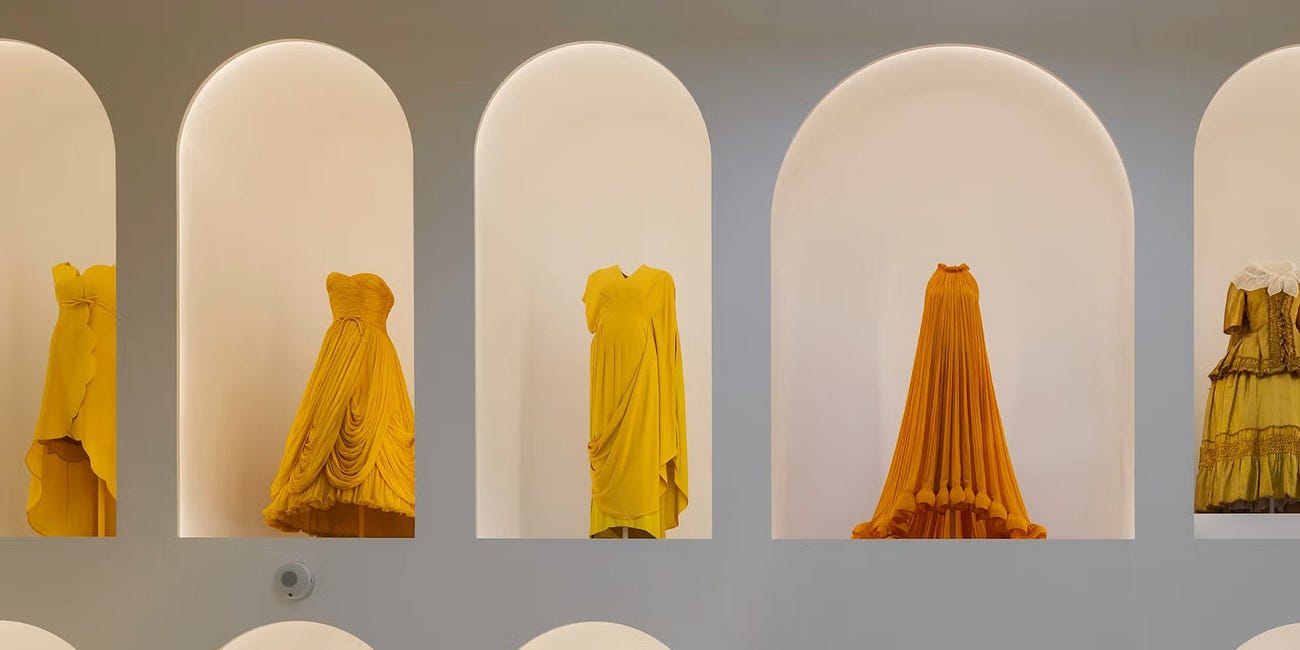
The exhibition will debut in the new Condé M. Nast Galleries and will cover the theme Costume Art: Fashion is Art. This is a big move for fashion to come out of the museum’s basement! The new 12,000 square foot gallery space is adjacent to The Met’s Great Hall. A new, and deserved, central location for the Costume Institute.
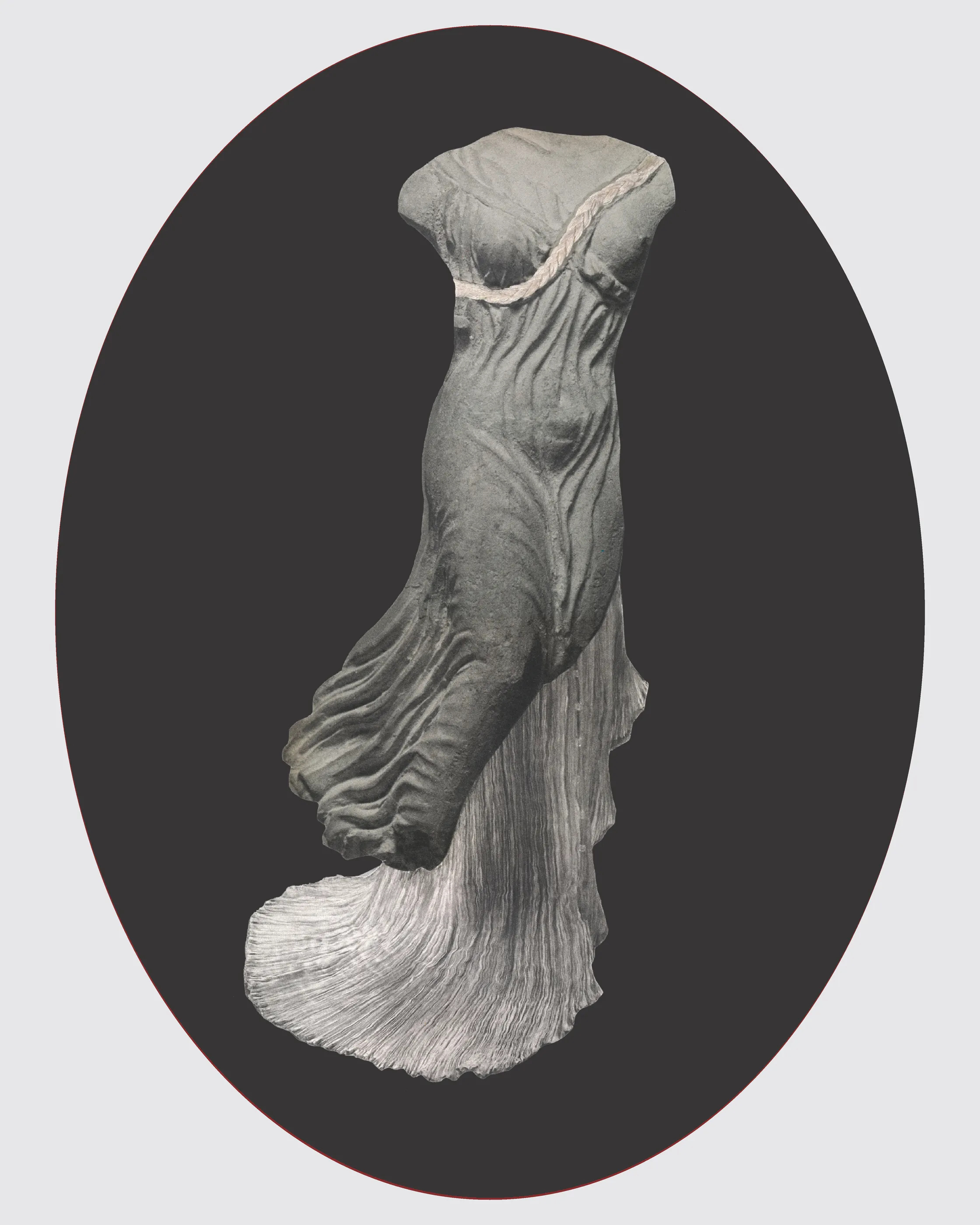
Costume Art will be showcased through art objects from across the Met’s curatorial departments paired with garments and other fashion pieces, and will be broken down into several (13) categories based on thematic body types. I appreciate the exhibit almost being a meta construct on the museum itself! The exhibition will be addressing the centrality of the dressed body within the museum’s vast collections. Self referential, abstraction, it is a very the call is coming from inside the museum moment! Turning the museum itself into a deep well from which sculptures, paintings, and objects from five centuries will be pulled and displayed as historical references for the contemporary garments. The inner nerd in me doesn’t even know how to contain myself! The Met is meta! Doing an exhibit curating all its past exhibits! My sartorial mind is blown.
Let’s try and break this down further. If you were to roam The Metropolitan Museum of Art it would become clear. All 117 curatorial departments of the museum all have one thing in common according to Andrew Bolton, curator in charge of the Costume Institute, the Met’s fashion department. Lacey bibs depicted in paintings by the Dutch masters, breastplates in 18th century Japanese armorers, a tutu wrapped around a bronze ballerina sculpture (more on this later), in every department what will you find? Bodies wearing clothes. The way this is both profoundly obvious and yet revelatory!
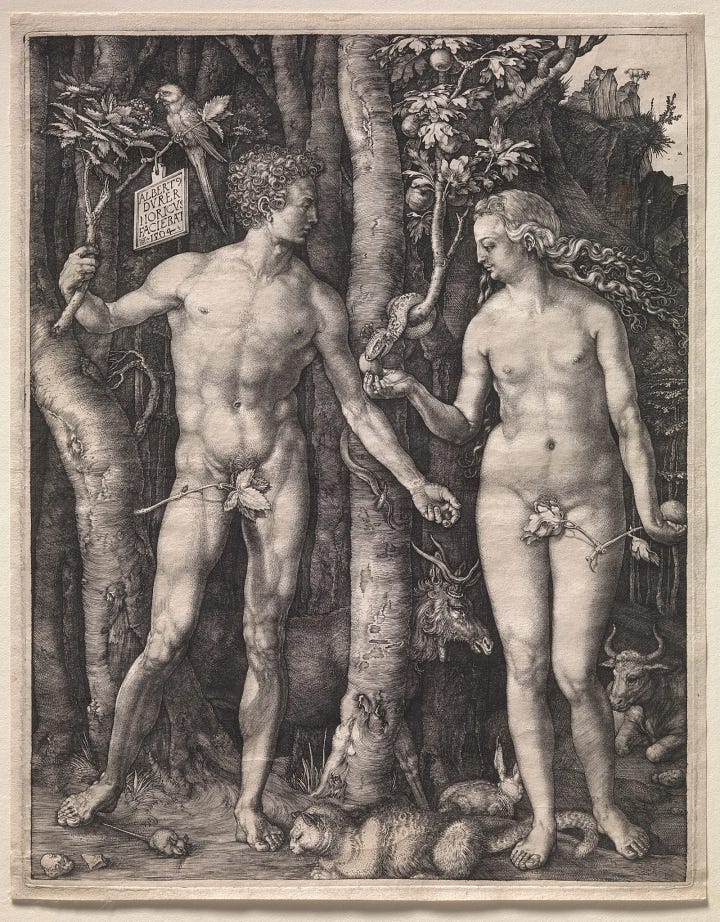
These thematic body types and collections will range from the “Naked Body” and the “Classical Body” - both of which are invariably well represented in the museum’s collections to categories like the “Pregnant Body” and the “Aging Body” that have been more overlooked in previous curations. Classical body and the nude body are omnipresent in most forms of art, but bringing the pregnant body, the corpulent body and the aging body into the conversation will be sure to spark a debate. I also appreciate Bolton’s expansive view of the fashion industry itself, including its darker history, which often, specifically historically, promotes rail thin models and narrow size ranges. He said, “the idea was to put the body back into discussions about art and fashion, and to embrace the body, not to taken away as a way of elevating fashion to an art form.’’

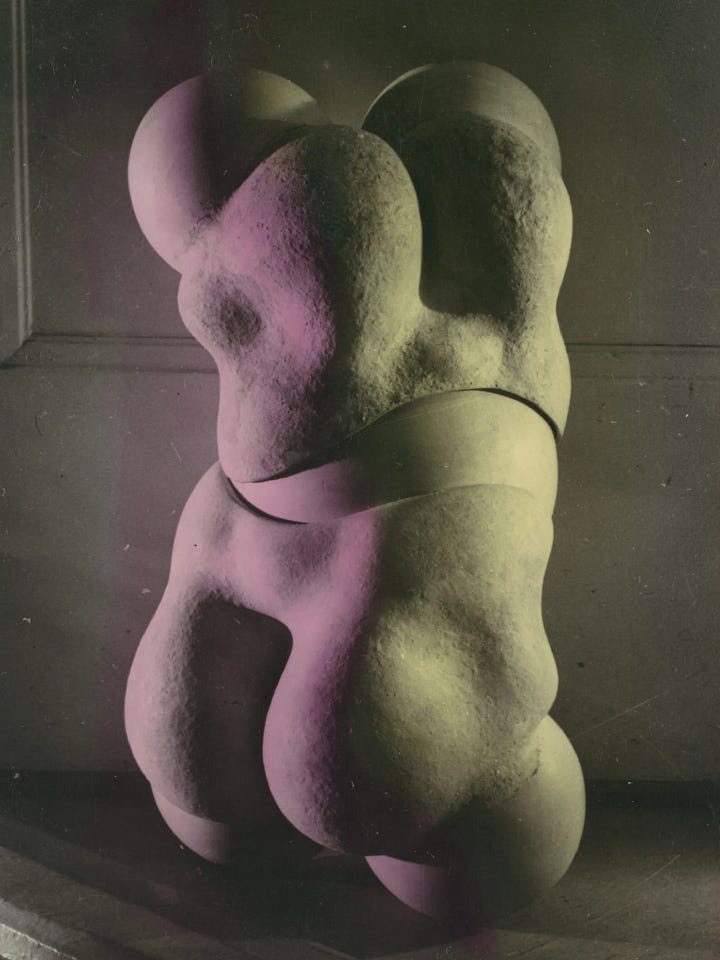
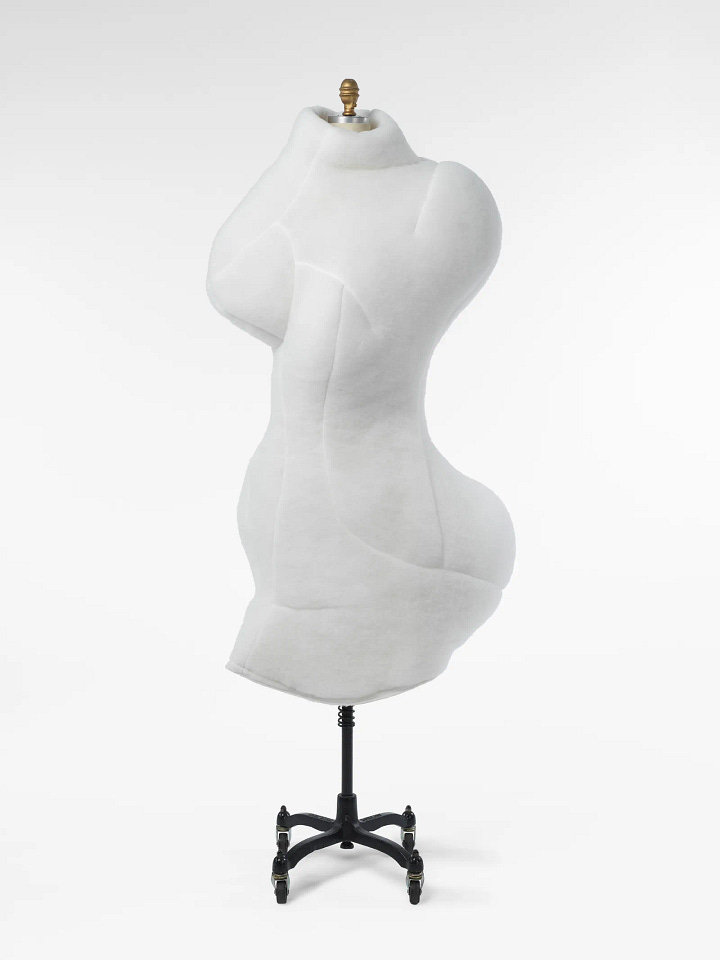

“Fashion’s acceptance as an art form has really occurred on art’s terms.” “It’s premised on the negation, on the renunciation, of the body, and on the [fact that] aesthetics are about disembodied and disinterested contemplation.”
And yet, fashion in this sense, is a valuable discipline as painting or sculpture precisely because of its relationship to the human form.
Honestly? What does that mean? In many cases or years previously, the Costume Institute exhibit and coordinating Met Gala themes have been more obvious, or lend to a very specific dress code. Other times, like this, it can be hard to interpret.
When I first heard the theme my mind immediately went to the intersectionality of fashion and art. Of fashion AS art. And when I read what the curators and team Vogue have to say for themselves about the theme specifically it seems like it is that… plus…
The exhibit will explore fashion as art, specifically with the body as a canvas. There will be nearly 400 garments paired with artworks that highlight the relationship and coexistence between clothing and the human form. It IS an examination of how the human body has been dressed, adorned and depicted through fashion aka art throughout history. It will also be pairing artworks with garments to create a dialogue between them. AND focusing on the differing ways in which we dress anatomical, historical and emotional variations in bodies and the intimate connection between clothing and our lived experience.
I loved the quote I read, again, from curator in charge, Andrew Bolton, that in The Met “the dressed body is front and center in every gallery you come across. Even the nude is never naked, it’s always inscribed with cultural values and ideas.”


In past exhibits in The Costume Institute the setup has emphasized the CLOTHING’s visual appeal, with the mannequins serving only as a form for structure and display. In this, the idea is to insist on the significance that comes from the body itself, and the undeniable and indivisible connection between our bodies and the clothing we wear. Making “fashion, [something that] has an edge on art because it is about one’s lived, embodied experience.’’
I am also hearing that the mannequins displaying the pieces will have mirrored faces designed by artist Samar Hejazi. Thus to better broach the gap between the viewer and the [mannequin] art. I am very excited to see this for myself, and also get to watch as others see themselves inside of the displays themselves. I am truly fascinated by things like this. I always say that I love autobiographical works because I always think there is so much to glean not just from the stories of someone, but from what stories they select to illustrate themselves.
(Very very off topic tangent incoming: What is happening in museum curation and the storytelling of history, art, and in this case, fashion and their intersectionalities is truly remarkable. We live in unprecedented times (of both good and bad I know, but also) where so much can be brought right to our (not literal, no touching in The Met) fingertips to understand, appreciate and learn from. Transforming static exhibits into immersive experiences by weaving objects and art together into a compelling narrative with emotional connection shifts the outcome. Who can truly remember everything they learned in a grade school field trip to a museum still? Most likely, not many. But this is a change from presenting facts that may not register or become meaningful into a life changing moment where history, art, fashion and each guest personally can intertwine for deeper engagement and inclusivity. It is a really thought provoking moment for me.
I know many are unhappy with the patrons of this Met exhibit and its main sponsors. And I understand those concerns. But I also see how there is also to be had a debate that those donations also bring a visitor centered experience that is IMO necessary. We can debate all we want the evils of capitalism until we see how it also enables many to promote art and culture and a longevity of important engagement and personal connectivity with both. Creatively done exhibits shape visitor flow, and guest interpretation by assigning artifacts personality and human context that makes these exhibits immersive, interactive, and sensory journeys that include visitors in an unparalled way and give more representation to cultural relevance and the diverse voices of artists.)
I love this creative and theme. As someone who went back during covid to do an art history degree, and also someone who lives and breathes the history of fashion I almost couldn’t put together a theme I am more interested and curious about, plus, I am the RHOSLC costume or couture queen!
I will admit, my original thoughts were how fashion and art overlap. How fashion, and life often imitate art, or art imitates fashion and life. Fine art and fashion both follow the same goals and descriptives. I also tend to think of fashion as a form of communication of our individual and cultural normative self expression, and therefore a daily art form. While not as nuanced and intellectually stimulating as the exhibit itself, it serves as starting point.
One of the first looks I considered for myself, because I am going to be joining E! and Peacock’s live broadcast of the red carpet as a commentator, was Degas inspired. Years ago I was so fascinated by (and even reposted) a video The Met had of how they conserved the statue of “The Little Fourteen Year Old Dancer”. Reconstructing a new skirt for the sculpture after years.
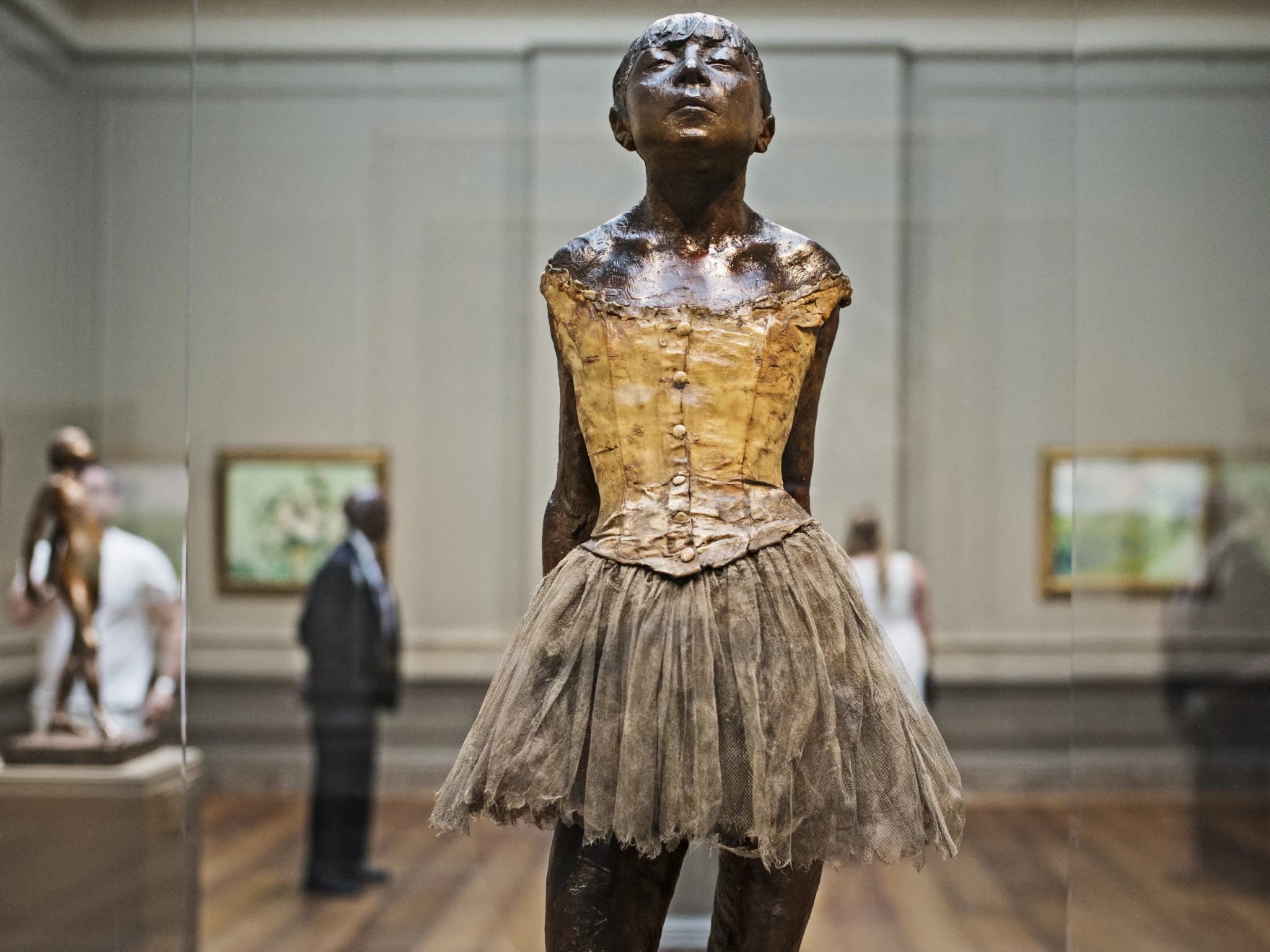
You can watch that video here. It is utterly intriguing and I highly recommend it.
I began planning some looks for myself to potentially wear to do the red carpet commentary that revolved around this statue, and/or other Edgar Degas works.
Degas was one of the founders of impressionism, although he hated and rejected the term, and preferred to be called a realist. He is best known for his pastel drawings, oil paintings and bronze sculptures, most notably often depicting dancers. He was particularly gifted in and a master of depicting movement, as seen in these renditions of dancers (and in his bathing female nudes) and for many reasons my mind went immediately to his work. First, his work has often been in The Metropolitan Museum of Art, as they hold one of the world’s most comprehensive collections of Degas works; paintings, drawings and sculptures. Two, because one of my favorite paintings of all times is The Dance Class (shown below). And three, because of what he is known for… his depictions of movement. What is fashion as art, if not moving and living art that we wear?
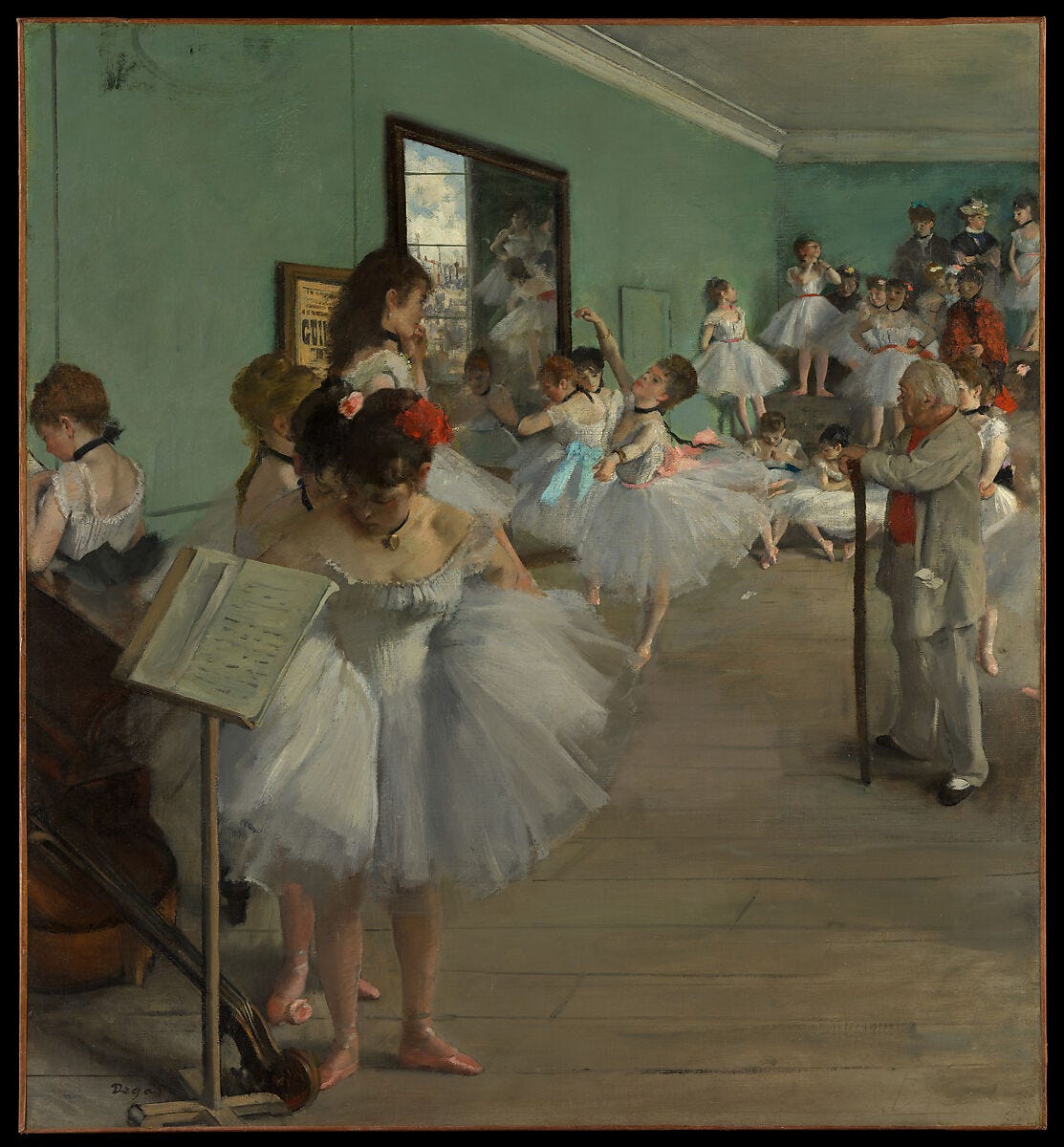
I will do a later post all about what I chose to wear and why, and will give more information then on the Degas inspired options I considered and how one (like me) goes about creating a look that is not costume, not quite couture, and yet right in line with the inspiration and theme of an event like The Met Gala.
But here I would be remiss not to close with the Met’s explanation of their exhibit themselves:
The Costume Institute’s spring 2026 exhibition explores depictions of the dressed body across The Met’s vast collection, pairing garments with artworks to reveal the inherent relationship between clothing and the body.
Focusing primarily on Western art from prehistory to the present, Costume Art presents connections between garments from The Costume Institute and objects from the Museum’s other collecting areas. Pairings between fashions and artworks will present a spectrum of connections and experiences: from the formal to the conceptual, the aesthetic to the political, the individual to the universal, the illustrative to the symbolic, and the playful to the profound. These pairings are organized into a series of thematic body types that reflect their pervasiveness and endurance through time and cultures.
Costume Art is the inaugural exhibition in the new, nearly 12,000-square-foot galleries adjacent to the Great Hall. This space will display The Costume Institute’s annual spring show and, at times, shows from the Museum’s other curatorial departments, including those that explore the intersection of fashion and art.
Which means that The Met Gala theme will jump off from there. Which we will cover in my next segment…
Are you excited about this theme?
No posts
Comments
Nothing yet. Say the first thing.
Sign in to join the conversation.