
Roughly two months ago I set out to see what was possible with AI tools for a filmmaker. Specifically, I wanted to focus on ChatGPT and screenwriting, as that is where every story begins.
If you haven’t seen the episode then scroll to the bottom and watch the complete episode. I have also included scans of my notes and more.
When I started this Substack I always said it would be an intersection of education and creativity, and this is exactly what happened as I embarked on this journey. What started as a way to poke the algorithm actually inspired me to continue pushing what I consider film to be. Why are these tools available to us at this specific point in time? What if they are here for those outside the “industry” and “creative hubs” to pursue something that once seemed impossible?
When I started creating we had just made the transition to digital cameras. My first film was shot on a SD Canon GL-1 mini-dv camera. You would have thought it was top of the line when you saw me make my first film. That film, the one that started it all, will be uploaded to my YouTube next week. This transition was stated as “democratizing” the industry, and it did just that. It allowed someone like me, in a little college in Missouri, to create. The computers, on the other hand, added up quickly. Final Cut was roughly $600 for a student price, and DaVinci Resolve currently has a free version, and your phone shoots 4K video.
Before we go much further: this isn’t going to be about the legal and ethical concerns, as I have covered that in this video and others. It’s something that needs to be addressed, and I believe it will be, from what I saw over two months. Citizens are standing up to corporations and while the fight will be hard, it’s possible.
The goal with this video and the work over the past two months was to poke holes in everything I had seen online. While I had played with ChatGPT before, I was unaware of the creative aspects. As an artist myself, that never concerned me much, but I also wanted to know what others were playing with. So instead of yelling online, I just started creating.
Experiment One: I put in random handwritten notes and asked it to structure a story. This was surprisingly successful. While it was an empty shell, there is a starting point that I think would help a lot of artists and filmmakers. It’s very rough and not super creative, but if you have ever stared at a blank page you know just how helpful that first draft is. So for this test I would say it was helpful. It allowed me to take handwritten notes and structure out a story. This was actually the starting point for my experimental feature called Norton, you can see me live editing this below.
Nothing in this script or story was written by AI, just a personal assistant of sorts to help me structure my rough ideas. I didn’t record this version as I thought it would be easily recreated for the video. I was wrong.
Experiment Two: I started filming some live edit sessions to structure the story. My actual ChatGPT prompting session was successful, although not creatively stimulating when it came to story. It did allow me to see what ChatGPT thought I wanted to hear. This led to multiple tests, including a final one that my live switcher didn’t write to the hard drive. This was the part that changed everything.
Thanks for reading Bronson Collective! This post is public so feel free to share it.
Experiment Three: Structure a script from ChatGPT. This never happened as I didn’t get it recorded. I’d like to say it was technical errors or a sign from the film gods that I wasn’t supposed to spend any more time on this, so I took the sign and switched up the approach.
Experiment Four: I went ahead and started writing on my feature, but for something that will eventually just play in the background of a scene. As a reminder, this was not what I had planned on doing. I wanted to “make” a short script and eventually film it, but the process had other things in mind.
I would go on to write around 25 new pages on my feature film that had sat stagnant for years. I have taken so many notes, but implementing them was the hard part. What started as a joke to see what’s possible led me to writing again—writing on stories that I had plenty of ideas for, but was worried if they would be good enough. Spoiler alert: ChatGPT doesn’t care if it’s good, and this might have been lesson one from this test.
Lesson 1: What is “good”? ChatGPT spits out what it thinks you want to hear. Over the multiple tests I would get better at the prompting, but the story and dialogue never improved. The dialogue was overbearing and incomplete, lacking any subtext or depth. This led me to understand that even my “bad” dialogue is better than a rough draft from this AI tool.
Lesson 2: It is faster to write than to prompt. This was surprising to me, as the internet says how easy it is to prompt something and have a finished project. If that is all that these corporations are doing, then this will be on the audience to demand more from its creators. I didn’t set out to make something quickly, but after two months I realized I could have written the scene in about 30 minutes. Which is what I ended up doing in the end. While it’s still incomplete and rough, it’s my voice, and I can always edit.
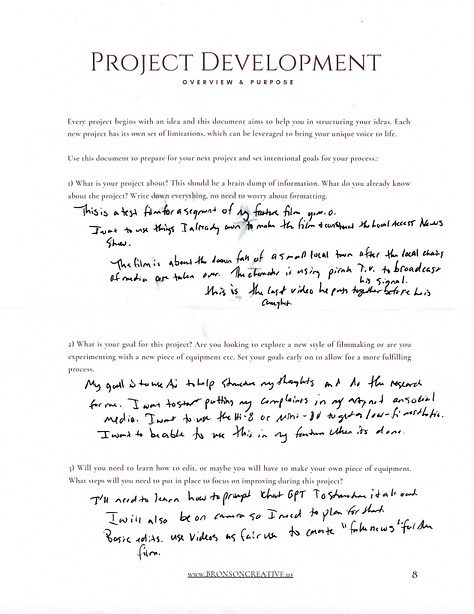
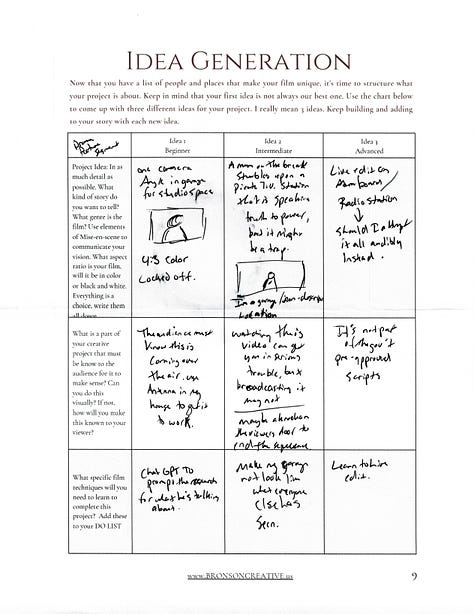
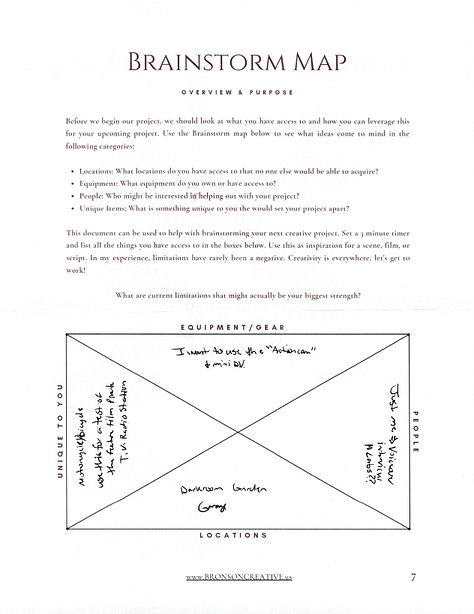
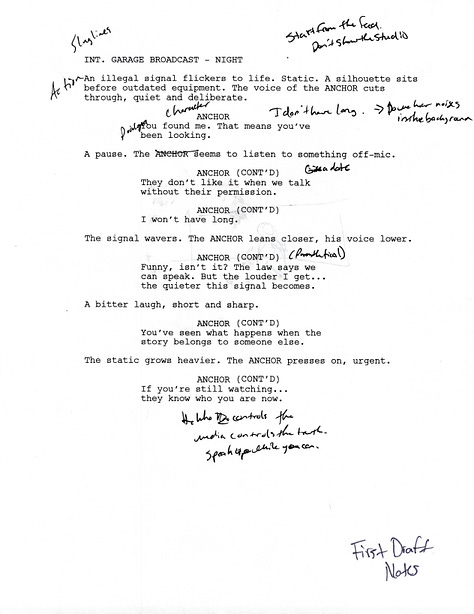
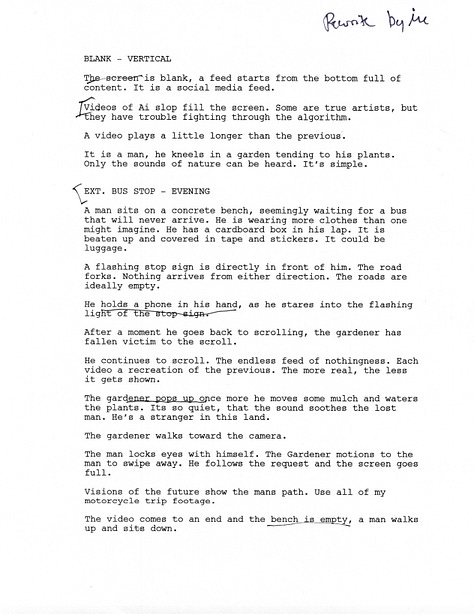
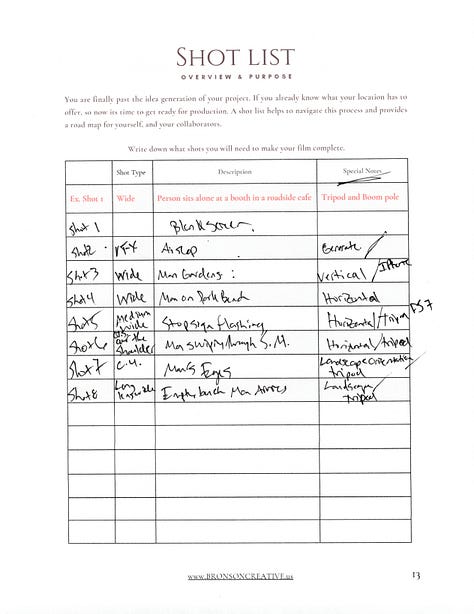
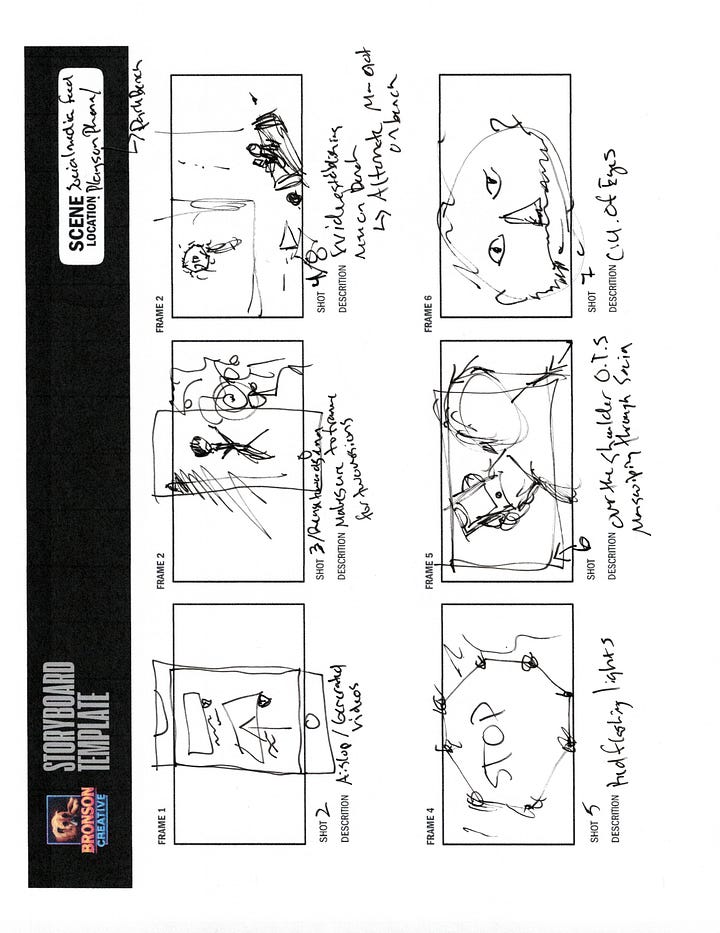
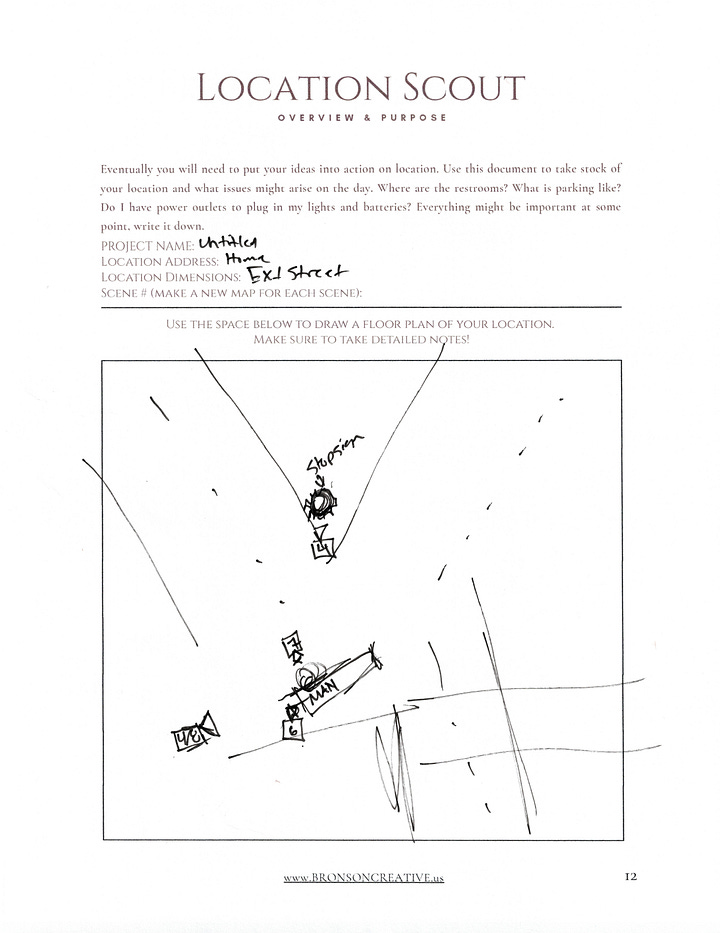
If you would like to download templates of these documents, grab a copy for free over on
www.BronsonCreative.us
Lesson 3: There’s a lot of doom and gloom for a tool that creates incomplete information. One part of the creative process is refining and editing. This was extremely time-consuming, as a prompt only gets you so much. The back and forth made the process not very enjoyable for me. I think part of the process that I enjoy is the failure, and this one allowed me to know what I didn’t like. So I appreciated this part of the journey.
Lesson 4: These tools are a powerhouse for the business side of art. Over the course of 20 years I have spent over 100K on education, books, classes, workshops, and more to learn what you could learn in an afternoon researching ChatGPT. Make sure to ask for sources though—these programs “hallucinate” and make things up, as they are always being fed information that adjusts the coding. Being able to research topics, copyright (which I know is ironic from a company training on stolen information), and trends around the world can be very helpful for artists. Imagine not having to learn the hard way that a film won’t make any money from a distributor—what if you do it on your own?
Now that I am finished with this project, I am more excited than ever to write on my feature again. Doing this project allowed me to approach the subject from a point of curiosity and wonder instead of dread. To the subreddit that banned me early on from this discussion—thank you for inspiring me to keep moving forward. To the students I have had in class—thank you for engaging and pushing me. I don’t think AI is coming for my creativity, but I do think it’s going to make someone out there very creative, and eventually you won’t know where the tools begin and end.
Thank you for your support of this Substack over the past few years. It is my intent to keep this free for students and new artists, as the gatekeeping across platforms is at an all-time high and I believe education should be free and accessible. So if you feel inclined to help support this mission, please consider a paid subscription so I can keep doing this on a consistent basis. Until next time!
Jerry
No posts
Comments
Nothing yet. Say the first thing.
Sign in to join the conversation.