
Memorial Day
This past Memorial Day, I gathered with my wife and members of her extended family around an ICU bed as a beloved uncle, brother, father, and friend, Hari Cohly, was taken off life support.
Hari was a man I had grown very close to over the years. Part mad scientist, part actor who never stepped on stage, he was one of those people whose voice gets permanently lodged in your memory. The kind of person who could tell a story for forty-five minutes, wander through six tangents, several pseudo-scientific hypotheses and still land the punchline.
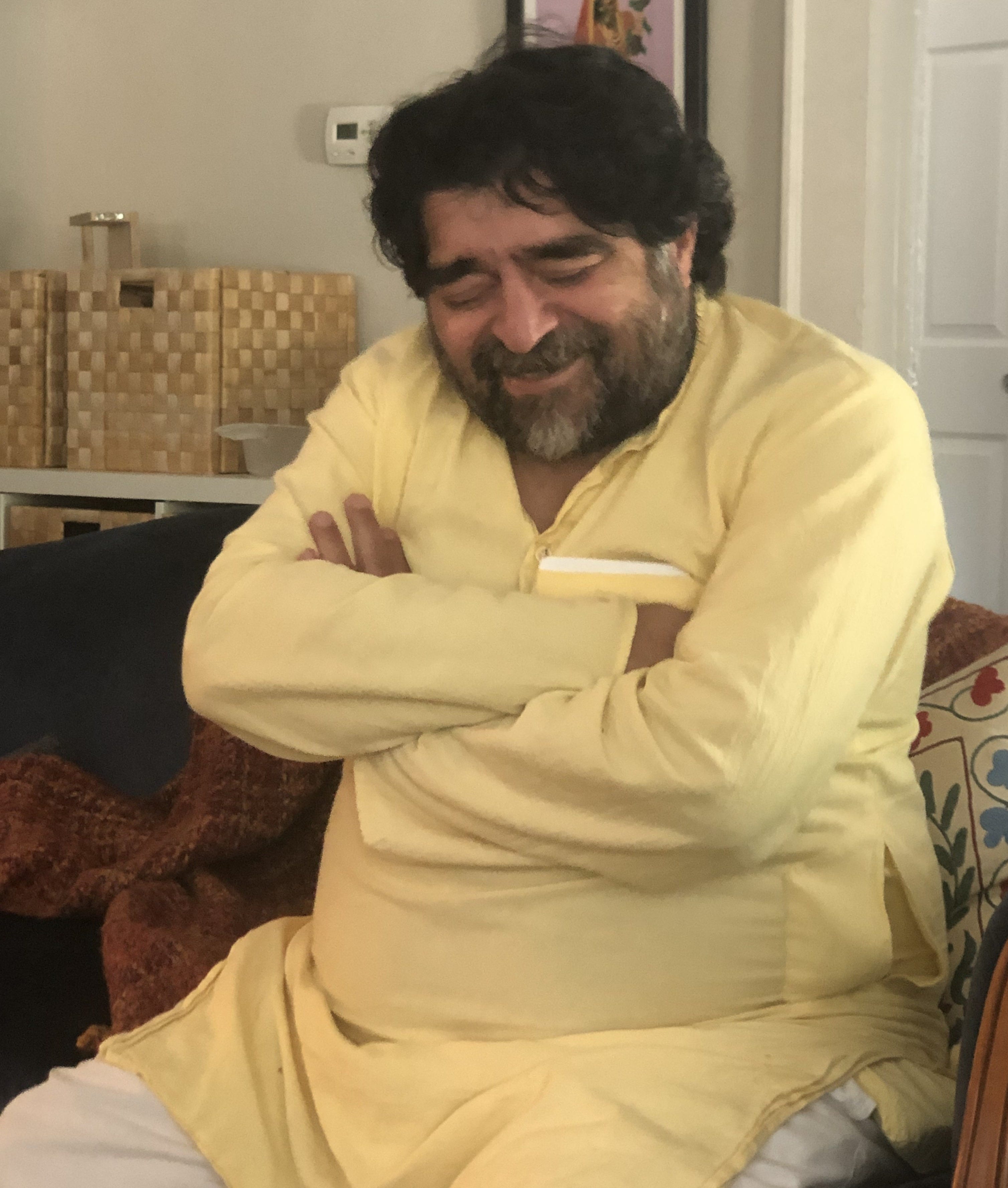
Unfortunately, I hadn’t heard that voice in a long time.
An incredibly aggressive cancer had grown in his tongue.
Why does God have such a cruel sense of humor? That such a gifted speaker should have his tongue swollen, twisted, and ultimately cut away?
The surgery was brutal. Then came radiation and chemo. Eventually organs began to fail. Blood clots spread throughout his body. The battle that everyone hoped he would win took a turn for the worst.
That morning, I arrived at the hospital for a completely different reason.
My wife was in the emergency room with debilitating abdominal pain. The doctor informed her she was experiencing her first “gallstone attack”, likely aided by a combination of stress and the steady diet of greasy takeout that accompanies a family crisis.
They shot her up with morphine.
And I walked her (slowly) from one wing of the hospital to another to say goodbye to her uncle.
As the end drew near, I held my wife’s hand partly to comfort her and partly to keep her upright.
The room echoed with wails of grief.
Everyone understood what was coming.
As Hari took his final breath, a small smile appeared on his lips.
No one else seems to have seen it.
But I know what I saw.
And then he was gone.
The Problem With Witnessing Death
It’s difficult to describe watching someone die without sounding like a psychopath. Words like ‘extraordinary’, ‘surreal’, and ‘profound’ come to mind, yet somehow feel inadequate. (They also make me sound like a psychopath)
Death occupies such a large space in our imagination. Each person spends a certain percentage of their precious waking minutes fearing, philosophizing, avoiding, and rationalizing death.
Then it arrives. surprisingly fast. One moment someone is here. The next moment they aren’t.
Maybe it’s best described as cold. And simple. Painfully natural. (This also makes me sound like a psychopath, so perhaps I’ll stop trying.)
The irony of witnessing death is:
The person dying is released from the wants, desires, ambitions, anxieties, grudges, the desperate need to understand. They are no longer burdened by the ego.
But for those left behind, the opposite seems to happen. Death intensifies our need for meaning. It forces us to confront ourselves.
Trapped inside our diseased flesh suits, we can’t help but interpret another person’s death through the lens of our mortality.
You can’t help but make death about yourself.
That sounds terrible to say out loud, but I think it’s true.
The Smile I Want to See
I know I saw Hari smile. Even now I can close my eyes and picture it. But nobody of the twenty people in that room agree with me.
Why am I so attached to that image? Am I projecting?
If so, then what am I projecting?
What does that say about me?
The answer: If I died right now, I don’t know if I’d be smiling.
My oldest daughter has started noticing how often I’m gone. Before my last screening, she wrapped her arms around me and cried “Daddy, please don’t go.”
I worry constantly about the burden this tour places on my wife. Every screening means another evening she’s handling dinner, bedtime, baths, and all the little emergencies that come with raising children.
Meanwhile, I’ve been struggling to keep up with the sheer volume of work this roadshow requires:
Emails. Phone calls. Meetings. Follow-ups. Press outreach. Partnerships. Content. More content. Somehow still more content.
I haven’t mowed the lawn in over a month. I don’t even believe in lawns. Why would any self-respecting human devote their life to cultivating an over-fertilized ecological disaster in front of their house?
Still, I worry.
What the neighbors think.
What does everyone think?
What do YOU think?
Am I just a failure with a shitty lawn?
The Tour
Right now, every screening feels like a referendum. Every ticket sale feels like evidence. Proof that it’s working (or isn’t). Proof that I’m good enough (or am not). Proof that the pain I’m putting my family through is worth it?
The Charlotte screening didn’t go particularly well for many of the same reasons the Brunswick shows were rough. I didn’t write much about it because it felt repetitive.
The diagnosis remains the same:
Not enough outreach.
Not enough advertising.
Not enough ticket sales.
Painful, yes. Fixable, hopefully.
Our upcoming screenings have far more investment. Promotional partners. Guest introducers. Q&A Moderators. A significantly larger marketing push.
June 10 at The Frida in Orange County
June 16 at PhilaMOCA in Philadelphia
July 9 at the Lumiere in Los Angeles
At this point all I can do is keep building, keep improving, and hope the effort translates into people showing up. Because when you’re on a losing streak, the most dangerous thing you can do is become obsessed with what other people think of you.
FEAR
I watched Game 7 of the Western Conference Finals with my grieving mother-in-law last night. While we were both cheering for the Spurs, I couldn’t help but feel bad for Chet Holmgren - a talented player who was having an absolute existential crisis on national television.
He was playing scared. And fear is a terrible strategist.
It makes you conservative when you should be bold.
You hide when you should be visible.
You avoid failure rather than pursue success.
Fear doesn’t improve the work. It only makes you miserable while doing it.
What Would Make Me Smile?
The image keeps returning to me: Hari’s final smile. Whether it happened exactly the way I remember almost doesn’t matter anymore. I need it to be true.
I think I’m asking myself: what would put that same smile on my face when my time on earth comes to an end?
I don’t want to smile because I’m relieved to escape my inbox. I don’t want to smile because I’m free from stress.
I want to smile because I gave everything I had to the things that mattered: The Films. The people I get to make them with. The creative risks. My family.
And I didn’t use one as an excuse to abandon the other. I don’t know if that balance is possible. Has anyone achieved it? Or is the challenge of trying anyway the whole point of being alive. I don’t know.
All I know is that life keeps happening.
The screenings keep coming.
The bills keep arriving.
The kids keep growing.
The people we love keep getting sick.
Some will die.
And somehow we’re still expected to make art.
Not after life calms down
Or after things become manageable.
Or when the timing improves.
Now.
It’s all we have.
Until it’s gone.
xx
Aaron
Comments
Nothing yet. Say the first thing.
Sign in to join the conversation.