
Over five decades of life, I’ve come to learn a lot about myself and my place in this world. One thing I’ve learned is that anniversaries take hold of me and serve like a ghost that transports me back to an observer of my deepest memories. Twenty years ago today, I was in ICU beginning an arduous recovery from a complex open heart surgery that replaced my aortic valve with a titanium valve and part of my aorta with a synthetic material.
It was the day I became a bionic woman, I like to joke. It was also an event that had an unforeseeable impact on my view of life and understanding of human connection that is still felt today. I don’t know if I will be able to articulate much of what I’m feeling today, but I’m going to try because I have noticed myself gravitating towards writing that feels vulnerable — and human. I believe vulnerability has always been a superpower and this is more true now than ever as the blur between human and machine accelerates.
As this anniversary day approached, I’ve revisited many of the memories from the month preceding my surgery: I recall the day of my routine annual cardiologist visit when I learned I had an aortic aneurysm and attempted to return to my faculty role on campus to attend a meeting. I was physically in that meeting and mentally somewhere else. I recall sharing the news with my husband, parents, and sisters. I recall the additional tests I would undergo in the following weeks, which continued to reveal more data and more reason for concern. I remember being advised not to life anything over ten pounds to minimize the risk of an aortic dissection and thinking, “I have a three and five year old. Are you kidding me?” I remember meeting my surgeon and looking at his hands, thinking about how they would be literally holding my heart soon. I remember intentionally going to the mall by myself to be alone and watching crowds of people rush around to finish their holiday shopping, listening to the Christmas music, feeling separated from them in some way as I slowly walked and breathed. I remember feeling incredibly grateful for having access to healthcare and for the love and compassion of my family and friends. But I also remember a feeling like something was missing.
My surgery was in 2006, which was before social media was widely adopted. It was the start of “web 2.0” when we were just beginning to hear about new approaches to content creation and sharing like blogs and podcasts, but Facebook and YouTube were not “a thing” yet. And it was also before smartphones so being online meant being on a computer or laptop. Late one night, my husband walked into our kitchen and found me in the dark on my laptop at the table. He asked, “What are you doing?” I didn’t know what I was looking for, but I was compelled to search the web. I don’t know why — but I did. I guess to feel more informed and educated about the road ahead? I looked for anything and everything related to aortic valve replacement surgery. There wasn’t much out there back then, compared to what we would find today. And, truly, knowing what I know now about the way I process information, I am relieved that I didn’t have access to the depths of what I would discover today. Yet, there I was — searching.
I remember when I found a website called ValveReplacement.com, which was a very early version of a social network (and still is). It basically had a landing page and various discussion forums designed around specific topics. The members were comprised of those who had already had surgery, those with a diagnosis that would likely lead to surgery, and family members of those two groups. In one of the discussion forums, I met a woman from Australia who was about my same age, had the same diagnosis, and also had two young children. I remember beginning to cry when I found her posts. I wrote to her directly, sharing my story. She wrote back and we exchanged messages up until my surgery day. After I was discharged from the hospital, I re-opened my laptop and logged back into the forums. I saw a post she had made while I was in the hospital, asking if anyone had heard how I was doing.
The conversation we had leading up to my surgery filled a void for me. Despite having all the data and knowledge I had received from my doctors and the love and support of my family and friends, I needed something more. I needed to feel seen by someone who could relate to my situation. And when I saw my new friend looping back to check in on me, that was the moment I felt genuinely seen.
I have spoken about that experience many times, citing it as a moment when I began to recognize the role that emotions play in life — how we think, how we act, how we view ourselves and each other, and the degree to which we can thrive. It has given me insights on how connecting with humans is a basic need but also how complicated connection is.
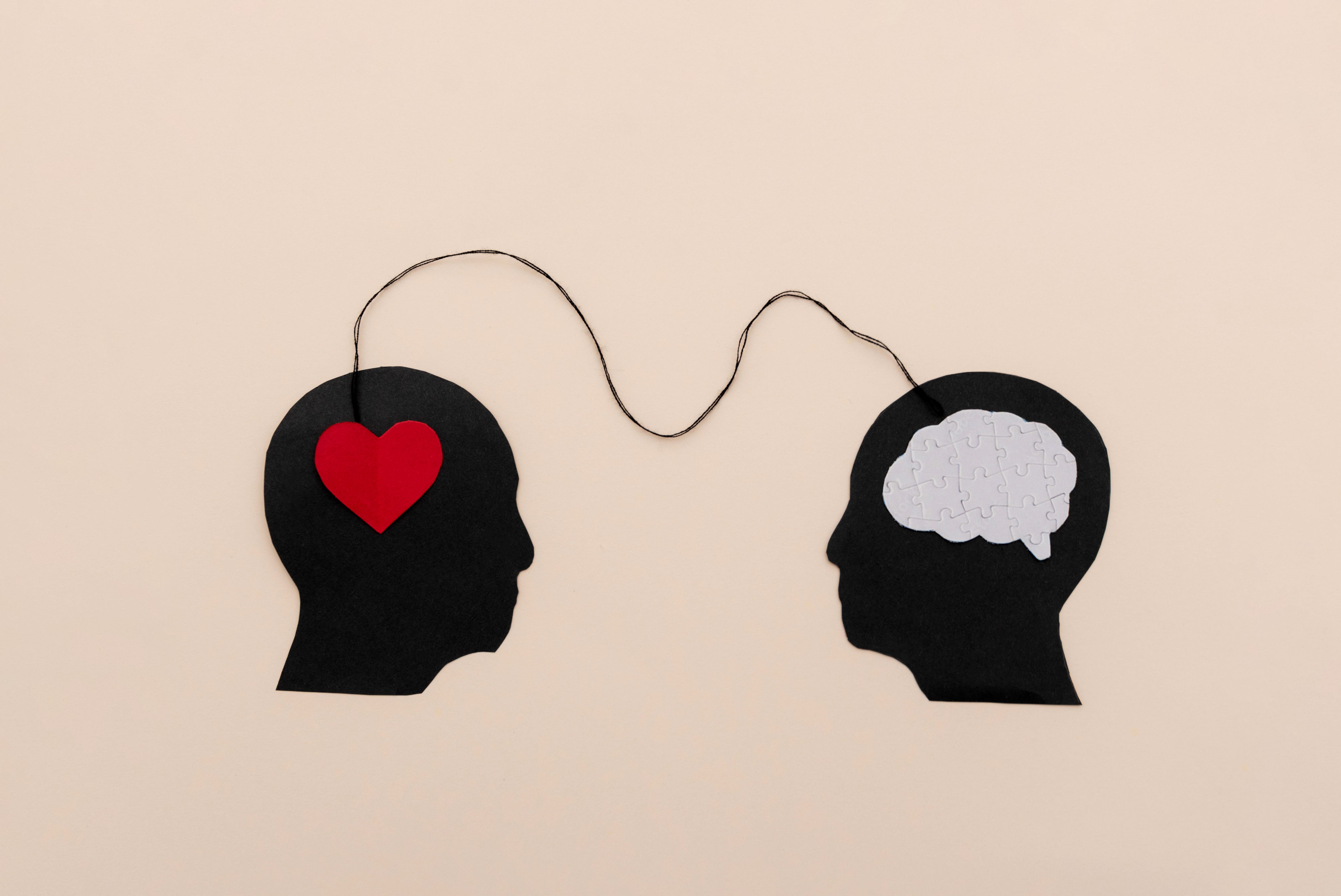
Allison Pugh describes the authentically human experience of being seen by another person as “connective labor.” Connective labor requires two people: both of whom lean into mutual vulnerability. Through the relational exchange both individuals are changed. Through these relational exchanges, we grow, we understand our place in the world, we recognize our values and our differences.
Vulnerability is hard. Brené Brown’s work has found that vulnerability, “Feels like weakness, but looks like courage.” I believe there’s something very powerful and distinctly human in this finding and something we all should try to test. And as I look back at my own teaching, I see myself starting my teaching career with my emotional armor intact and the joy that emerged as I took that armor off and leaned into my teaching. That’s how my connective labor started. That’s how I moved from the mindset of goal keeper to the mindset of a coach. That’s how I moved from being on the other team to being on the same team as students. That’s when I learned the power of relational authority over transactional authority.
I also see evidence of my intentions to provide assignments that invited students to be vulnerable — finding an old photograph and speaking with a family member about the story behind it, selecting a historical photography from a deck and sharing a story about how and why it resonates with you, having a conversation with someone you know from a different generation and asking them what “feminism” means to them. And then discussing the findings with peers and synthesizing patterns.
Vulnerability is the friction in relationships that has eroded through technology. I’m not anti technology. In fact, I have dedicated the past fifteen years of my work to experimenting and researching the influence of human presence in online teaching and learning. And I intentionally opened this post with a story about connecting through technology. The point here is that the way we adopt and use technology does have potential to influence who we become and how we interact with one another. Nearly all (95%) of teens have smartphones — which really are less of a phone and more of a delivery mechanism for addictive apps, fake news, and cleaned up versions of people we think we know. Three out of 4 teens using an AI chatbot as a social companion; evidence of a void for which technology is an easy fix. When I see evidence of growth in an industry named “Grief Tech” that makes money off by trying to fill the void of losing of a loved one by recreating their digital presence, I see markers of a less human world.
Human interactions are relational. They are not a mere transfer of information. Let’s not expect more from technology than we expect from one another (Turkle).
No posts
Comments
Nothing yet. Say the first thing.
Sign in to join the conversation.