

One of the things I struggled with in my very short-lived stint in influencing was keeping up with trends and sharing shopping links (which is basically the entire point of influencing). I loved the creative side of it— putting together outfits, finding unique gifts and items, and styling my home— but as I became more aware of the negative impacts of overconsumption on the environment, while also struggling to keep up with the Joneses myself, my creative joy was diminished by the ick of it all.
Since shifting to sourcing things secondhand and more intentionally building my wardrobe and home, I’ve reignited the joy in sharing styling, gift-giving, and personal expression, knowing I can do so in a more mindful, environmentally-friendly, and wallet-friendly way and hopefully inspire others to choose secondhand when possible.
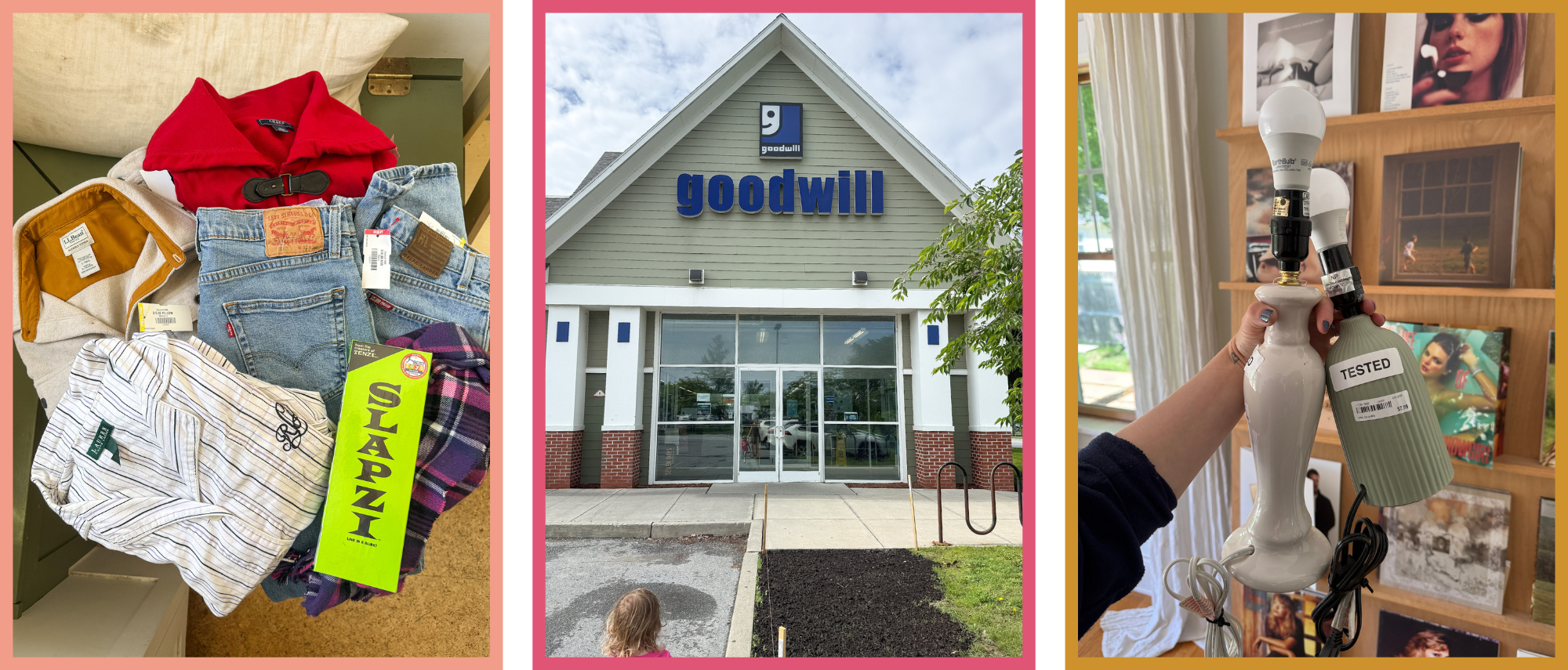
Over the past few months, I’ve received countless messages from readers sharing their thrifting finds and wins— some from folks who are completely new to the secondhand shopping world. This is the kind of influencing I feel proud of and the kind that makes me excited to share more.
Slowly, it feels like the tide is beginning to shift. The veil of influencing and overconsumption is lifting; people are maxed out with stuff, anxious about the tax our modern lives are taking on the planet, and basic needs are getting pricier by the second. On top of that, it’s become glaringly clear that new goods are not produced at the same quality as older goods— many new products are made cheaply and often with synthetic materials (which pose consequences for our bodies, the environment, and our wallets, and ironically the materials last forever but the products don’t hold up) and designed to fall apart more quickly so we replace things more frequently. Oof. Plus, when every influencer is peddling the same fast fashion and Amazon finds, everyone starts to lose their luster. The details of personal expression are surrendered to a sea of sameness.
I share my experiences because I want others to see the potential in thrifting, to shift the narrative that I grew up believing about shopping secondhand, and to experience the joys of it themselves. Any time you choose secondhand over new, anytime you resist a quick tap of the “buy now” button, anytime you pause before making a purchase is a win for you, workers trapped in exploited conditions, and the environment (and really all of us because it’s starting to feel like there isn’t going to be much $$$ left after the 1% are done hoarding it all).
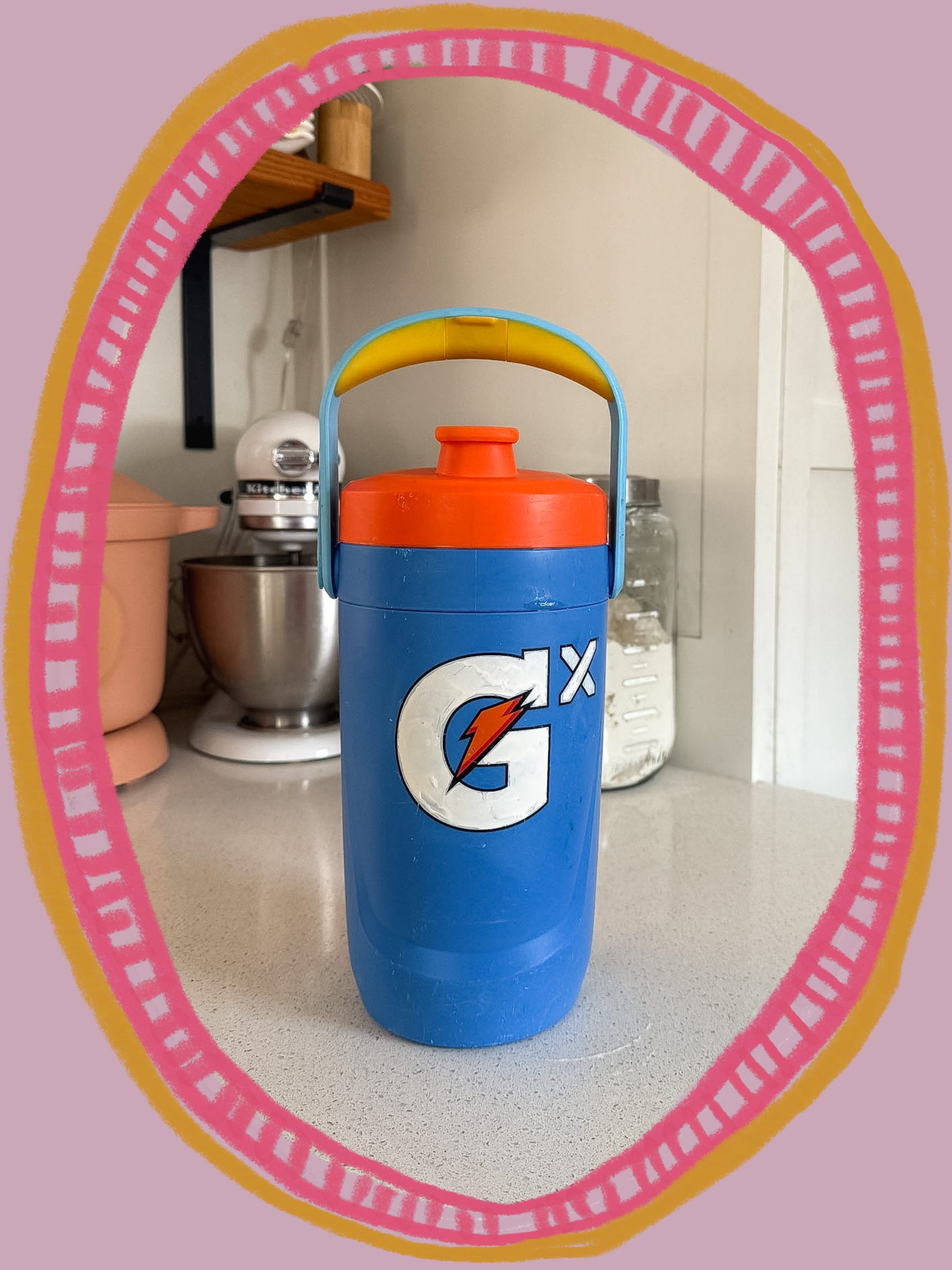
The more I thrift and source things secondhand, the more I see that there is already so much— more than enough— for all of us. When I need something, like a larger waterbottle for my son’s 2-hour summer baseball practice, my default is no longer Amazon/Target/etc. It’s the thrift store. I can find just about anything and everything I need secondhand.
I’ve shared how thrifting has helped my creativity and personal style flourish, about unique gifts I’ve been able to give my children, like my 8-year-old’s birthday stocking, and all the big and small ways the shift in consumption has been all around positive and delightful. And today I’m answering questions from readers in hopes that you feel even more equipped and excited to find your next great outfit, piece of furniture, gift, or whatever else you need at your local thrift store.

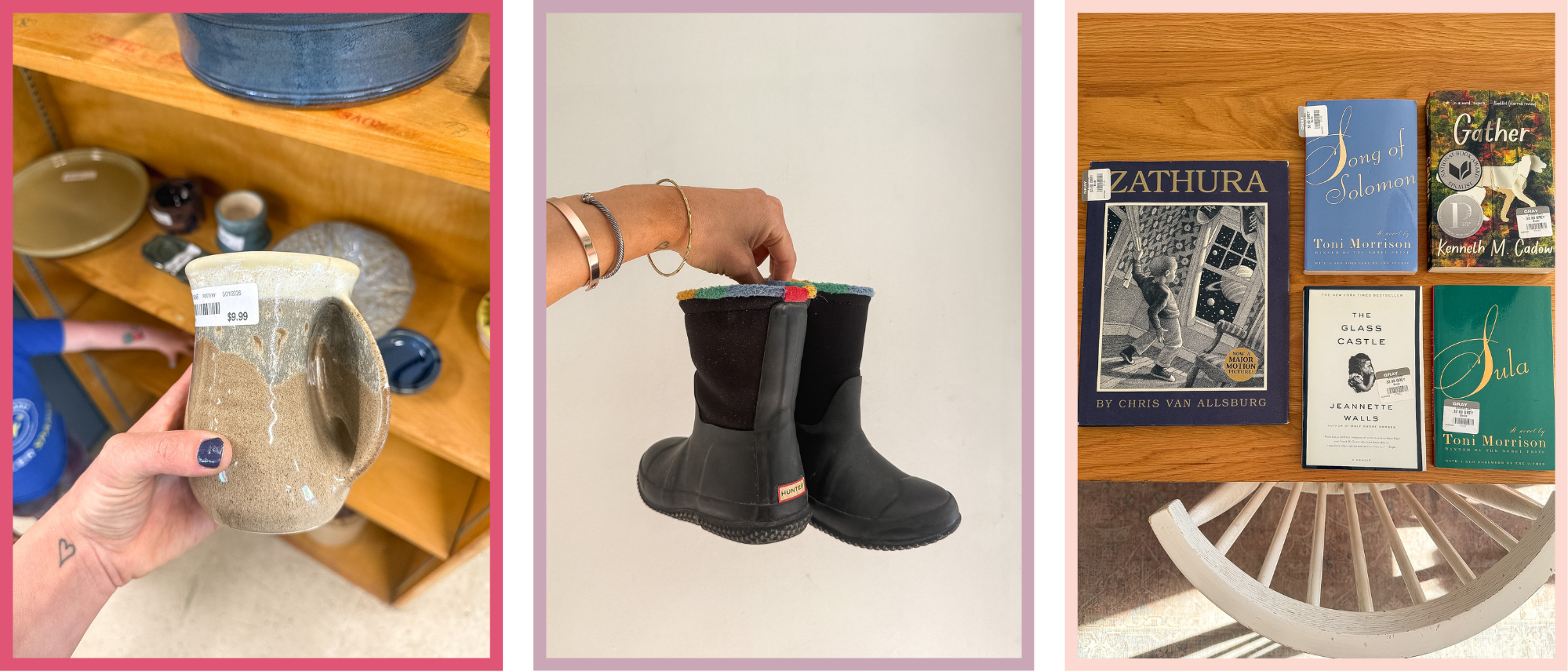
For clothing and things like blankets or stuffed animals, I always wash them as soon as possible. For hard goods (including shoes), I use an all-purpose spray and wipe it clean. Dishes and kitchenware get a good scrub. The only things I haven’t bought secondhand are rugs, simply because I’m anti-shoes-in-the-house. But I do have an entryway rug on my thrift list since that’s where shoes do enter our home. Otherwise, I’m open to just about everything. I’ve thrifted workout wear, swimsuits, shoes, hats, water bottles, and more. Even as a no-shoes-in-the-house germaphobe, I don’t have an issue with these things. I see them as no different than eating at a restaurant or sleeping in a bed/using a towel at a hotel.
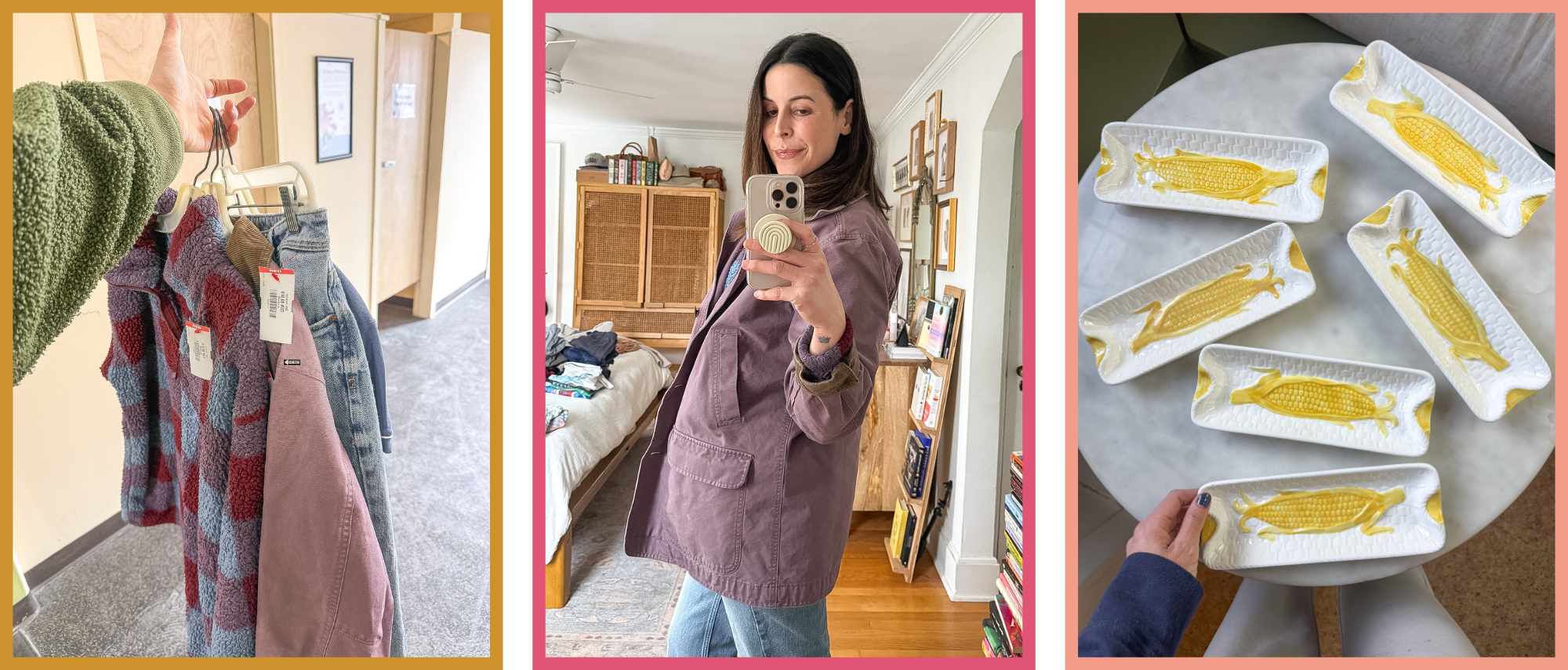
Definitely! Sometimes I’m okay with this— for example, I bought bubbles at a local thrift store for my kids for $2 when I know I could get them for $1.50 at the grocery store, because my main motivation for sourcing secondhand is diverting items from the landfill. But overall I don’t like to overspend on secondhand goods (unless something is vintage and very special like a 90s sweatershit I ordered of my alma mater!) and see it as evening out in other ways like when I bought a bin full of gently used Barbie dolls and clothes, an expansive set of Magic Clip princess dolls (that are going for $65 and up on Ebay!), a Polly Pocket, and other goodies all for $10.
That said, I do think more intentionally about this topic when it comes to clothes. I always, always, look at the fabric tag. A lot of “cheap” goods these days are often made from synthetic materials— aka plastic (polyester, nylon, acrylic, and spandex), so I try to primarily buy goods made with natural materials (most garments should have a tag, often at the neck or along one of the side seams). Then I consider the brand name, but that’s not always an indicator anymore, as even brand-name products are compromising quality and utilizing more and more synthetic materials. The last thing I do if I am unsure about something is a Google image search on my phone to see what the item is selling for on other resale sites to gauge the price. It’s not a perfect system, but as someone who doesn’t shop full price very often anymore, I agree with your sentiment— it’s ideal to make informed choices.
You can also consult the thrift store staff and make a case if you feel like something is overpriced for the condition or quality of the item. They may not always change the price, but it doesn’t hurt to try.
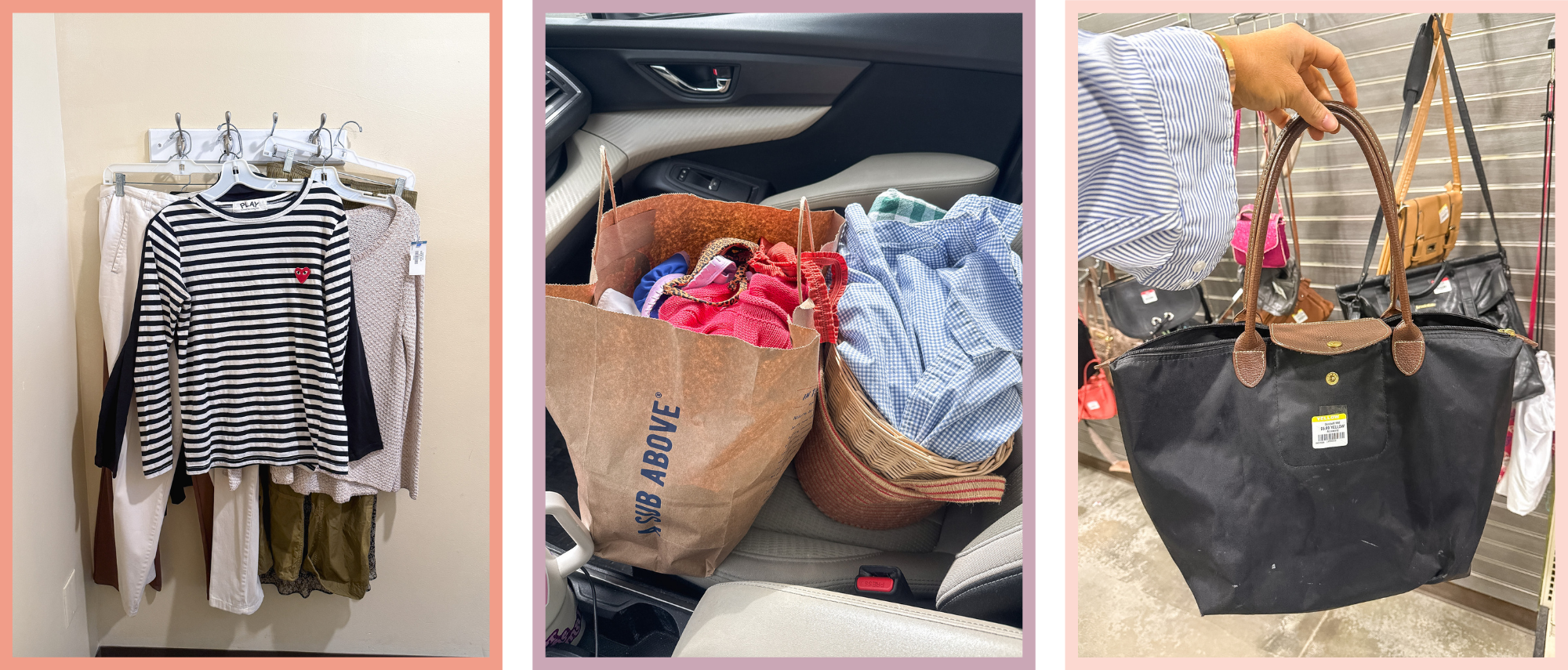
Thrifting is definitely addicting— the thrill of the hunt and finding treasures! And thrifting is not immune to overconsumption. The more I’ve gotten into it, the more addictive it’s become, and the more mindful I try to become. A few things I have tried that worked for me:
Create physical boundaries for whatever you find you are in excess of. For example, with a smaller closet, I am limited by what I have space for and have to be diligent about maintaining a smaller wardrobe (which is actually very helpful for me). The same can go for dishware, games, etc.
It can be easy to thrift something because it feels like you’re getting a deal, but I try to consider if I would pay full price for the item. If I wouldn’t then it’s probably a good indicator that I don’t need it, even discounted (easier said than done, aks me how I know…).
Set a limit for yourself before going into a thrift store. This could be a monetary budget (I am only spending $20 today), or a numerical limit (I am only walking out with 5 items today), or limiting yourself to only the top discounted items (at Goodwill, certain tags are discounted for 50-75% off, so try shopping only those colored tags).
Create a thrift list note in your phone. Before going thrifting, check in with the items and try to stick to only the items on the list. I know this is challenging because you never know what is waiting for you inside the thrift store, but maybe you make a plan for only shopping from your list + 1 bonus item if presented with something you can’t resist.
Have an empty-handed day. Go to the thrift store with the sole intention of walking out empty-handed and practice building the muscle of browsing and not purchasing.
Delete secondhand shopping apps on your phone. Keep them on your computer if you wish, and create a more intentional practice for browsing.
Try a no-buy month coupled with decluttering. And try shopping your home and closet for a few weeks, sometimes we just need the reminder that we have what we need.
Spend time on Pinterest and IRL tuning into your personal style and what you like. There is so much noise in the world, and it requires mindfulness to push a lot of that aside to understand what you actually like and what feels good on you. The clearer you get with this, the more disciplined you will be in your shopping.
If you are not yet trying on clothes, start trying them on so you can be more discerning with what you bring home. If you can’t utilize a fitting room, wear bike shorts and a sports bra and try things on over your clothes. Trying things on is a must for me when thrifting. I tend to try on a lot and only buy a few because once I see something on my body and experience how it feels, I have a lot more information to work with.
And if all else fails, try thrifting for others! Turn your joy of thrifting into shopping for loved ones (ask them) or even curating bundles for others. I see lots of posts about people who love to thrift and turned their curating skills into a job.
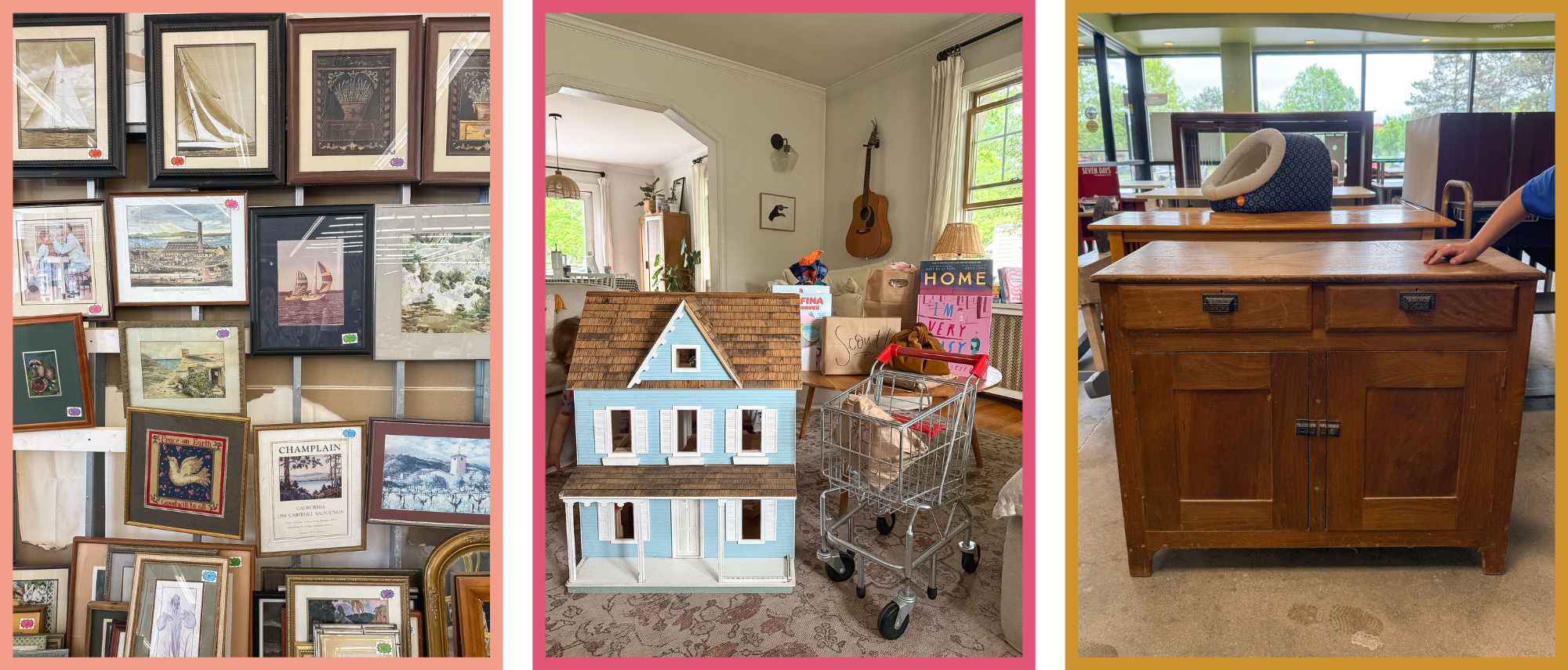
This is a rich question. Honestly, the allure of “new” has very much worn off for me in recent years. I recently purchased a pair of Levi’s secondhand that were new with tags, and I was shocked at how differently they fit compared to the worn-in Levi’s I’ve gotten at the thrift store. But yes, you are so right, older does seem to be better in terms of quality these days. My motivation for shifting towards secondhand shopping was primarily rooted in environmental stewardship, so that drives my choices for the most part. I opt for new when I really can’t find what I need at the thrift store. Lamp shades are an example of something I struggle to find in decent condition that I typically buy new for the lamp bases I thrift. Accessories, like most socks and underwear, I also buy new and choose natural materials and brands like Darn Tough that offer a lifetime guarantee on their socks and will recycle and repurpose your old socks (this is huge for my husband, who wears out his socks like it’s his job). And then anything that is hyper-specific or simply not available at the thrift store— my older kid’s birthday gift requests, specific books, etc. And in those cases, as much as I possibly can, I try to source things locally and/or through small businesses.
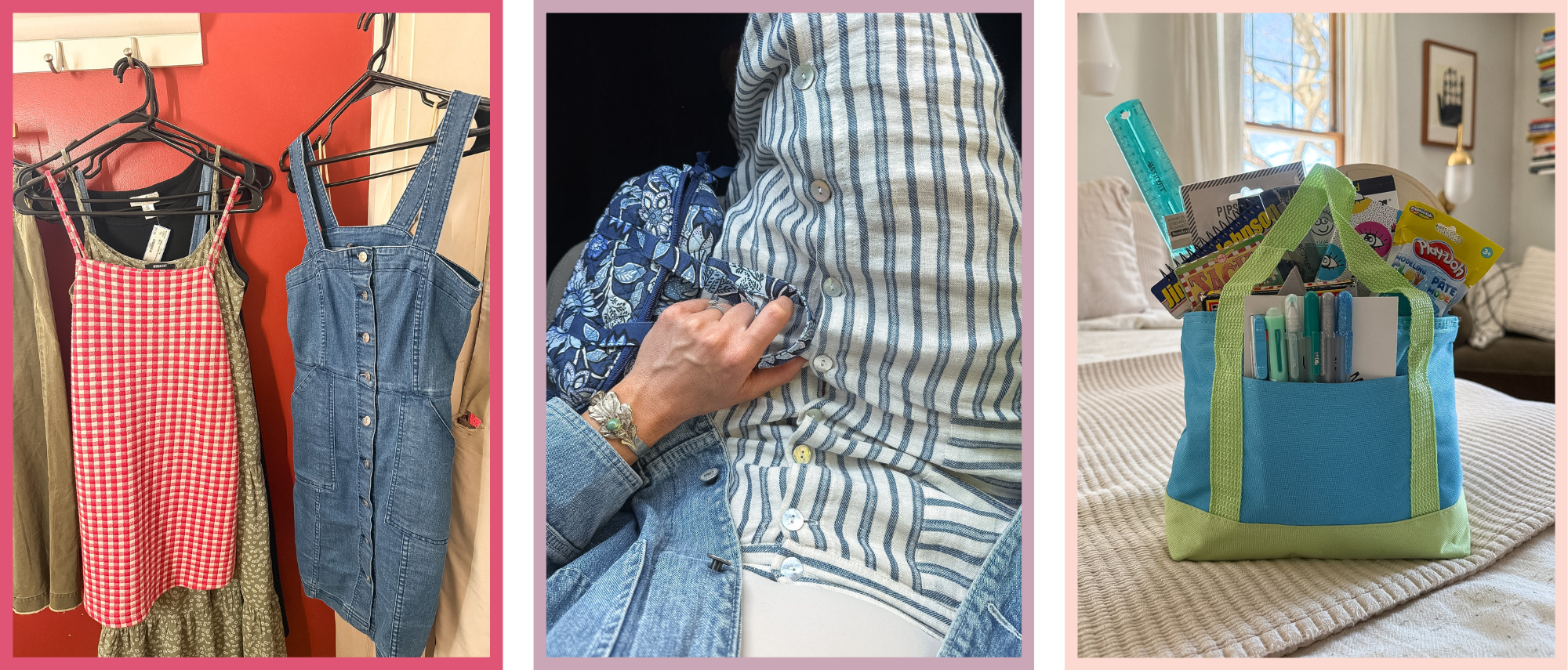
Fair! As someone with a heightened sense of smell who also struggles with overstimulation, I totally get this. Thankfully, this isn’t something I encounter too often at my thrift stores, but still, things like detergent scents can easily overwhelm me. Any clothes or washable goods go straight into the washing machine when I get home. But before that, I think your note about adopting a reframer is brilliant. Personally, I think the thrill of finding something unique, or high-value, trumps the scent of that (albeit heavenly) Anthro candle, and the more I delight in that feeling, the less excited I get about traditional shopping experiences. But readers! Do you have any other ideas for this question? Leave us some thoughts in the comments if you do, please!

Hey! If you enjoyed this, I think you may also love these!

My next thrifting-themed post will focus on where I shop secondhand— online and IRL— and unexpected spots at the thrift store I never sleep on to find some really surprising thrift scores. If there is anything else you want me to cover, please leave a comment and let me know.
Thank you for being on this journey with me and for letting me gush about the joys of secondhand shopping. It’s truly a pleasure.
I hope your new favorite secondhand treasure is just around the corner—

🗞️ curl up and read more from In Joy here
📌 visual inspiration for life and beyond
📱 fine me online here
Comments
Nothing yet. Say the first thing.
Sign in to join the conversation.