
When we signed up to visit the Nyamata Genocide Memorial, I thought we’d visit a place like a museum, buzzing with tourists and shiny plaques. Instead, we were taken to an old church: abandoned, dusty and gated. We were the only people there, besides the tour guide who unlocked the gate to let us inside.
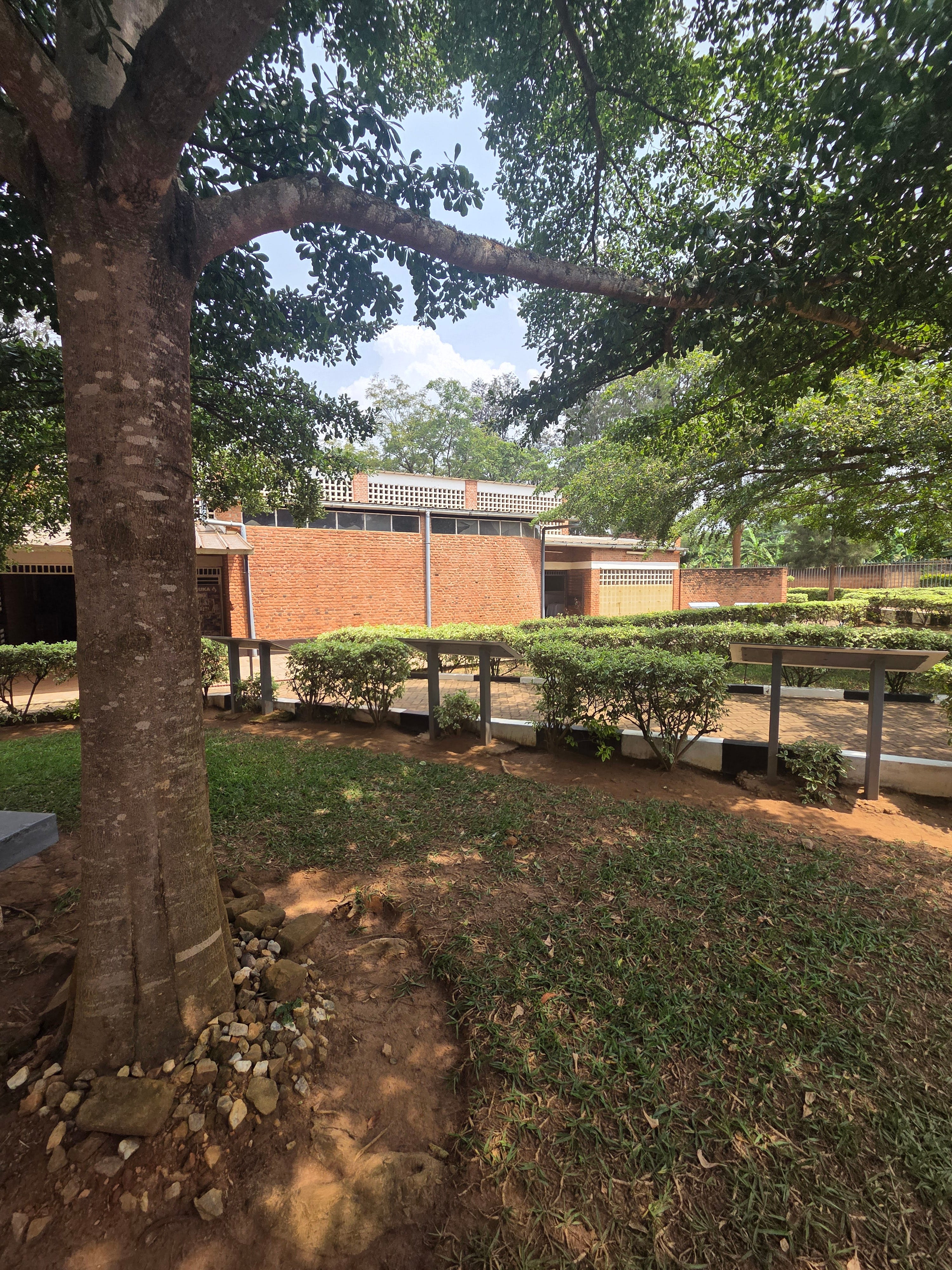
In April of 1994, the Catholic church was housing an estimated 10,000 women and children who were seeking refuge from a political genocide which was unfolding within the country.
Instead, the church was attacked with gut-wrenching violence. Much of the original damage from the attack was left as is, including bloodstains splattered across the ceiling from when grenades exploded.
I asked the tour guide how many survivors there had been. She answered, “at least 7.”
Inside the church, the original benches were covered with the survivors’ clothing. Some of the garments still had the sleeves tied behind their backs, others had large machete holes in them. I respect that Rwandans intentionally left this church this way, but it did not feel clean, pretty or beautifully artistic as many American memorial sites do.
After walking through the church, where many of us had already began crying, we went outside and sat out on the lawn where we met and listened to two genocide survivors’ stories. One survivor was a victim; one was a perpetrator.
We didn’t know it at the beginning of their stories, but they crossed paths one night and one had tried to kill the other.
The incredible thing was, ultimately, they both chose forgiveness.
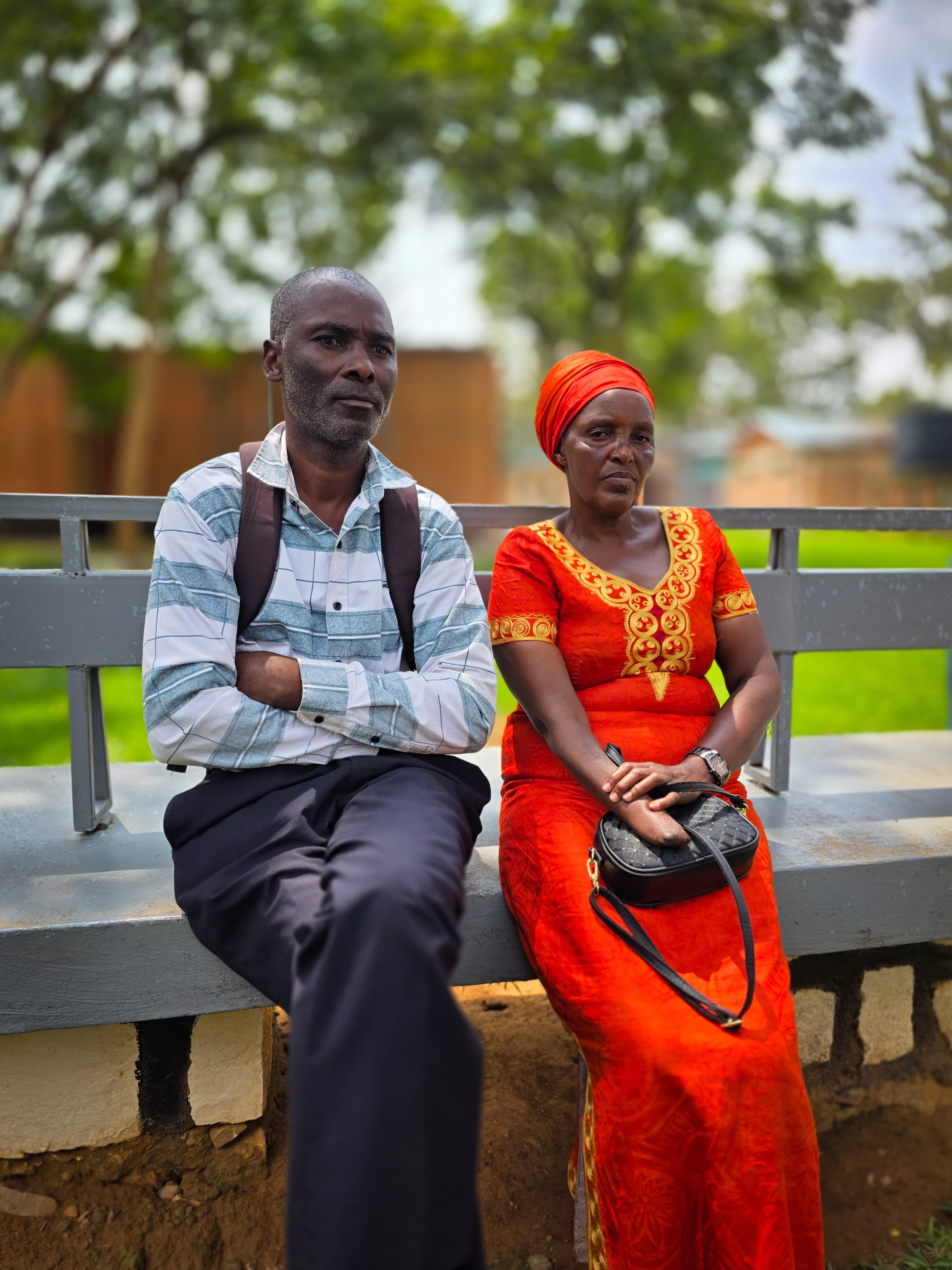
The perpetrator chose to ask for forgiveness a decade after the genocide. He found where Alice, the survivor, was living and knocked on her door.
Alice, in total shock of seeing him and his request, fainted.
But when she woke up, she prayed, and in time chose to forgive him.
They now sat side by side telling their stories.
As a physical symbol of their forgiveness, they planted orange trees in each other’s yards. Their family members are welcome to take oranges from each other’s yard.
Witnessing them sit side by side, telling their stories, felt like nothing less than tangible evidence of God.
As they told their stories, at times, it was hard to focus on their voices.
Partly because it was hard to listen through so much sadness (I’m leaving the details of their stories out here). But partly because next to the old brown church was a brightly painted elementary school where the kids had been let out for recess. And in those moments, you could simultaneously hear both the pain of Rwanda’s past and the joy of the present. It was impossible to sort all the emotions out. I still can’t. But I can tell you, there wasn’t a single dry eye in the group.
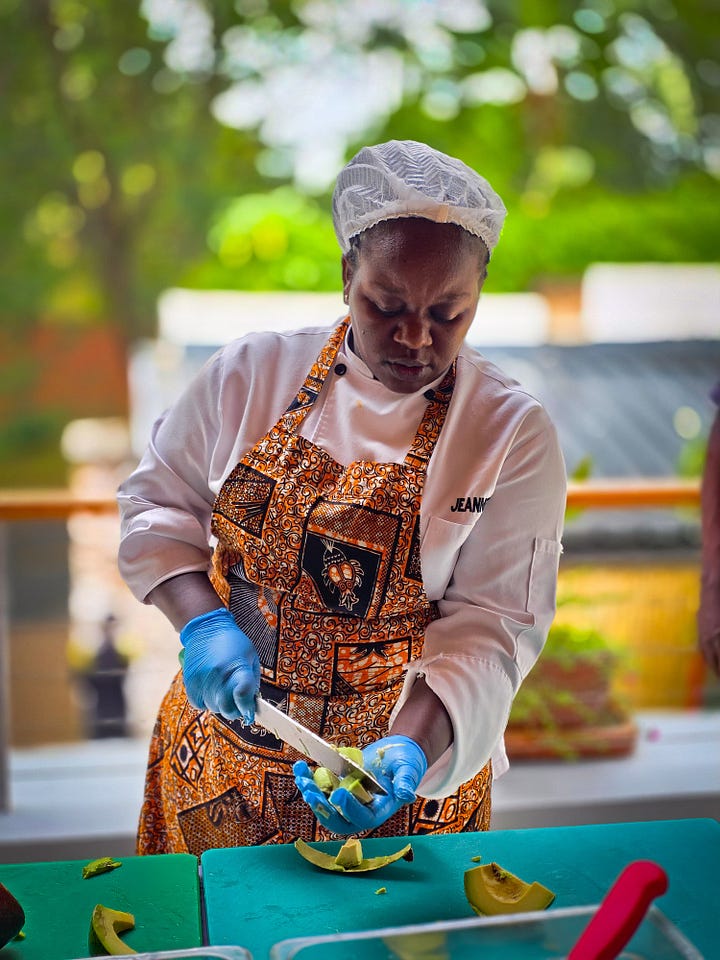
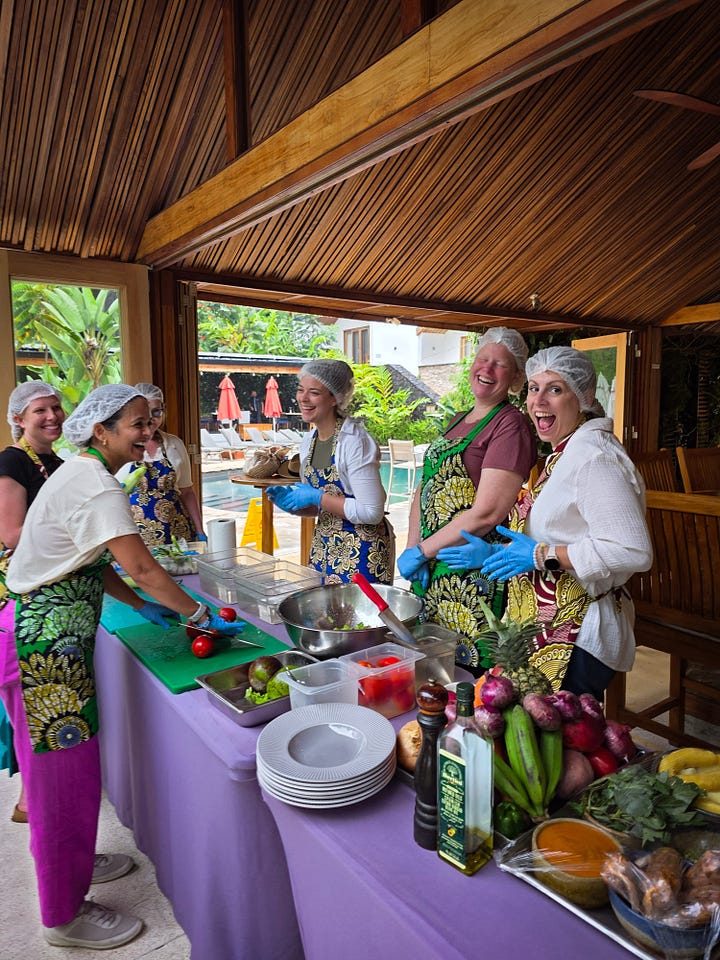
After the weight the morning’s grief, we ended the day back at The Heaven Hotel taking a cooking class with head chef Janet. She taught us how to make Isombe, a traditional Rwandan dish. Her passion for cooking and the delicious food was a nice counterweight to our morning.
We all went to bed that night emotionally drained, but physically full in preparation for a very early morning of gorilla trekking.
In an attempt to save money, and perhaps because we had spent so much of it at the One and Only Nyungwe House, (a decision I have zero regrets on) we decided to go gorilla trekking from Kigali. This meant our day began at 3:30 AM and by 4:00 we were on the road with coffee and snacks in hand.
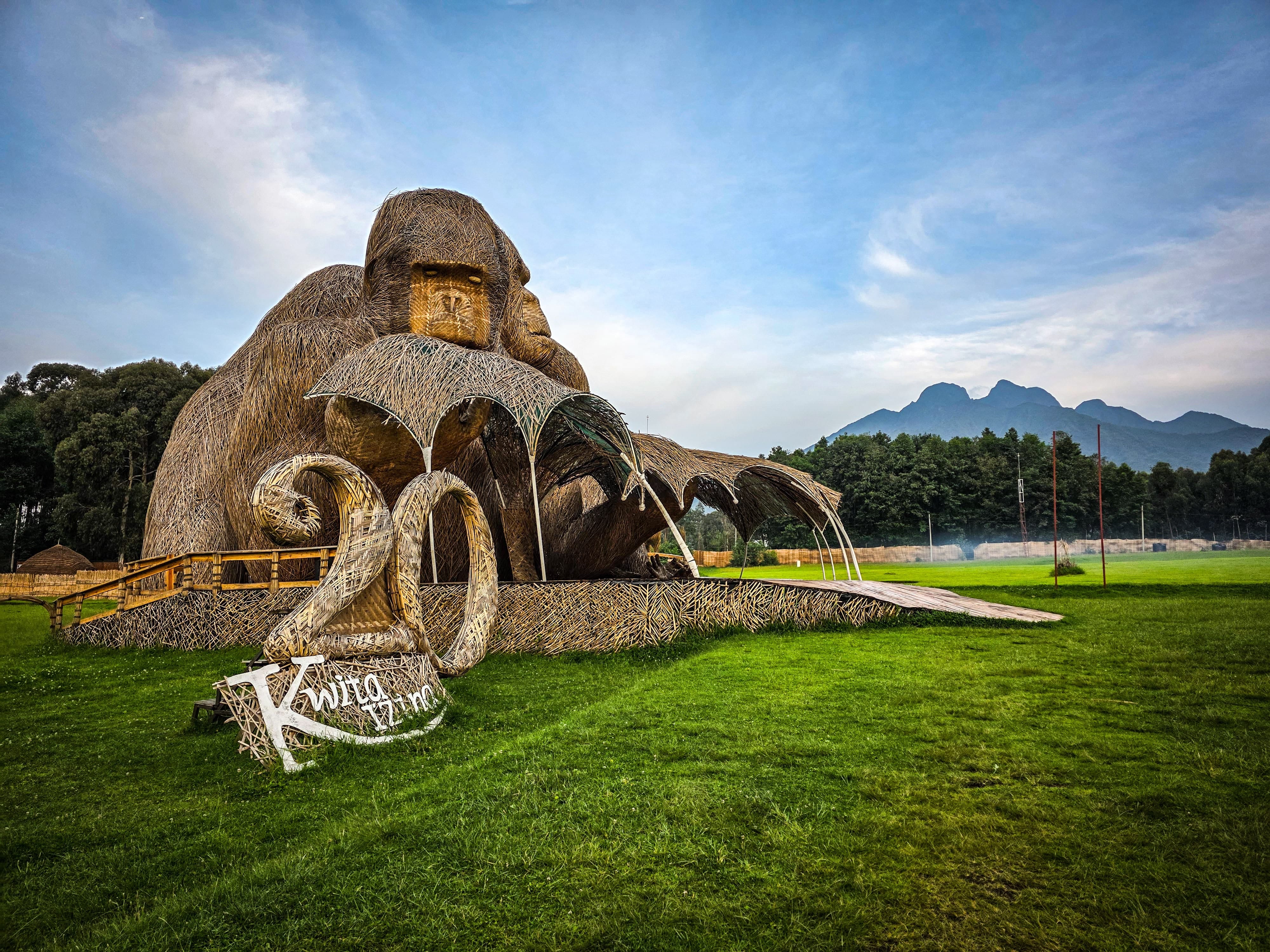
At 7 we arrived at Volcanoes National Park, where we had to attend a safety meeting.
Now, I’m going to back up for a second here and share that before we had left on this trip, we had to sign waivers that we would accept a blood transfusion if needed. Something I’ve never, ever, ever imagined needing to do for a vacation.
And I was beginning to really doubt my travel choices at this point.
But in the midst that doubt, Volcanoes National Park provided me all the reassurance I could possibly need - a coffee shop.
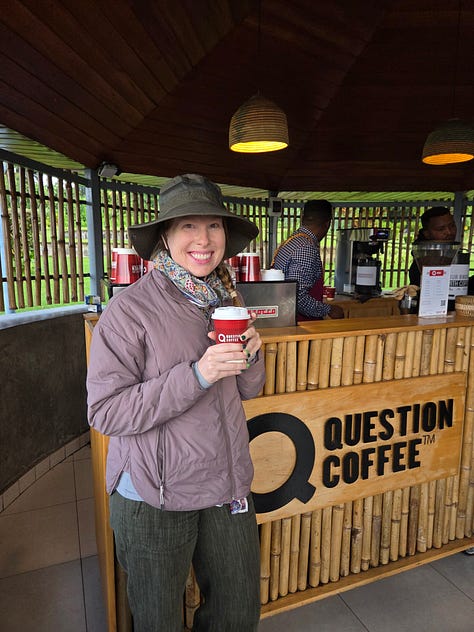
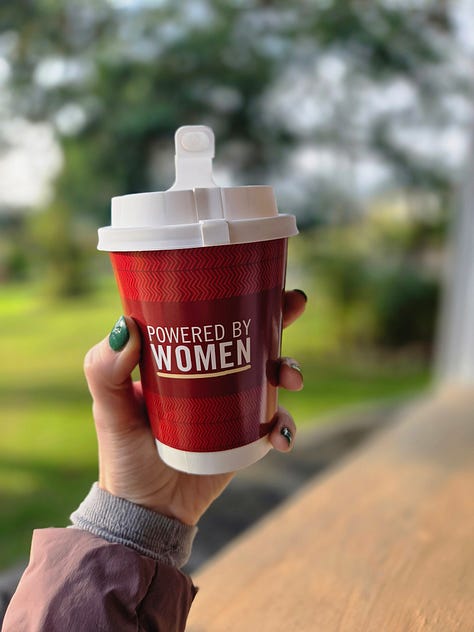
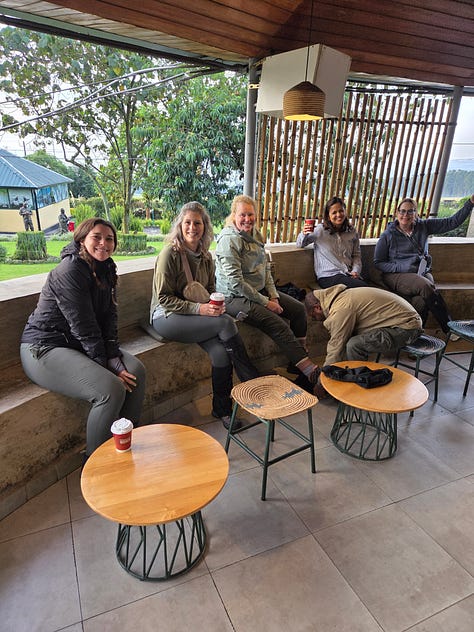
This may be risky, but we had priorities straight:
Coffee first, then death.
After multiple days of tough hikes, including one where we basically sprinted uphill for a mile thanks to Kathy, my friend Ayssa opted to hire a team of porters to carry her in a stretcher through the gorilla trekking.
After the safety briefing, our guide told us we would be visiting the gorilla family called Muhoza. I asked if we’d get to see any babies (this was what I was hoping for most), and he answered, “so many babies!”
In addition to the 8 porters carrying Alyssa, our guide recommended at least 3 more porters to help us, and this time we gladly accepted the recommendation.
Then we were off, first into the farmlands which led to the mountain base, and then traversing muddy puddles all leading us to where the Muhoza family was grazing. The air was thick with humidity and the smell of eucalyptus trees. I felt sweat dripping down my face but dare not wipe it off as I was gripping my hiking pole far too tightly.
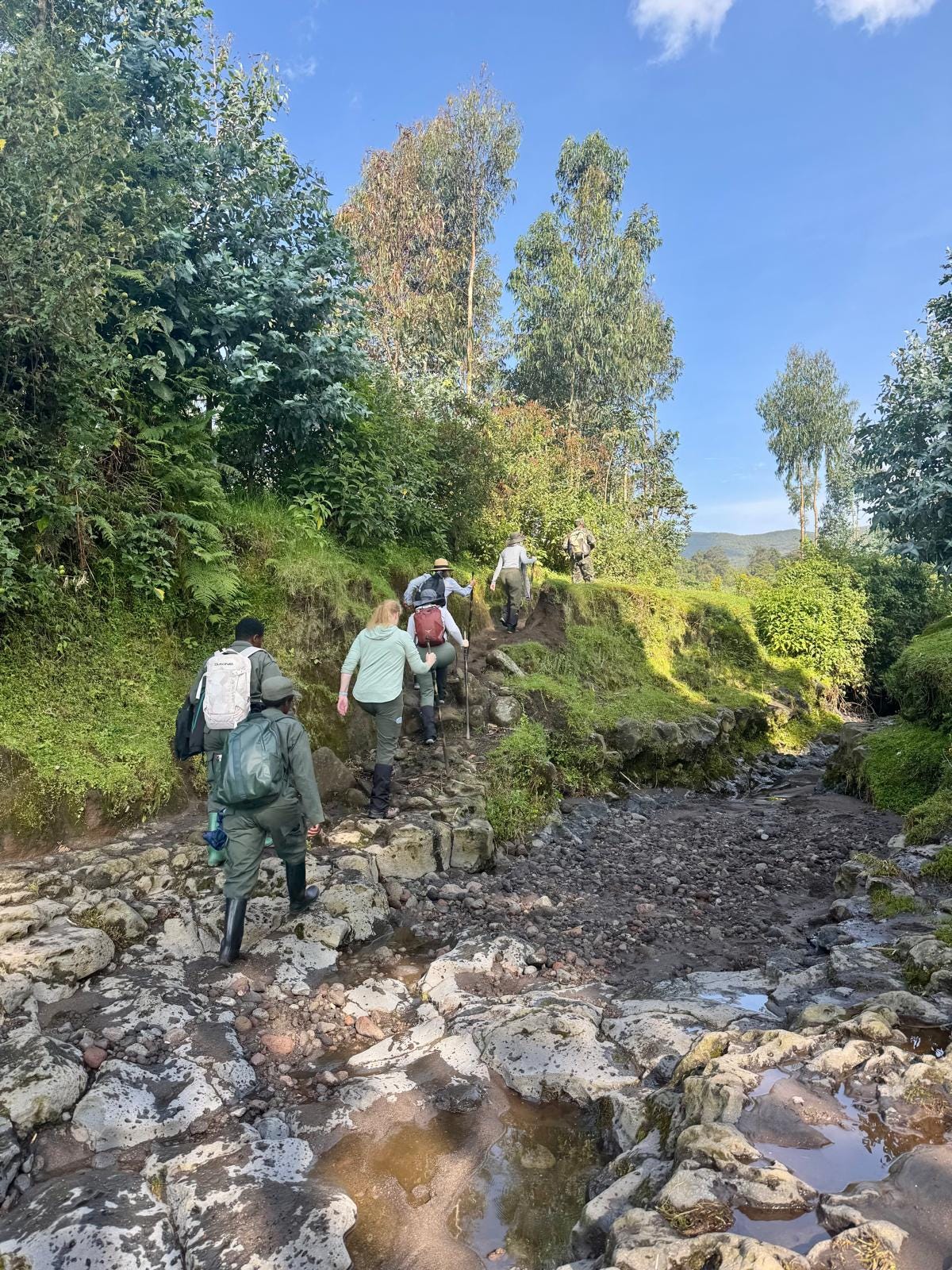
I thought we were keeping a good pace, but couldn’t help but notice that my friend Alyssa, carried high above the mud in her stretcher, was so far ahead of us that we couldn’t even see her. The porters were so strong, they were basically jogging while her.
I was beginning to feel a little discouraged, when our guide told us we needed to put masks on because we’d found the Muhoza family.
We pushed through a final wall of brush and there he was, Marambo, head of the family. Five hundred pounds of muscle, back turned, methodically eating.
He heard us.
Paused.
Turned. Looked directly at us.
Then went back to his leaves, unimpressed.
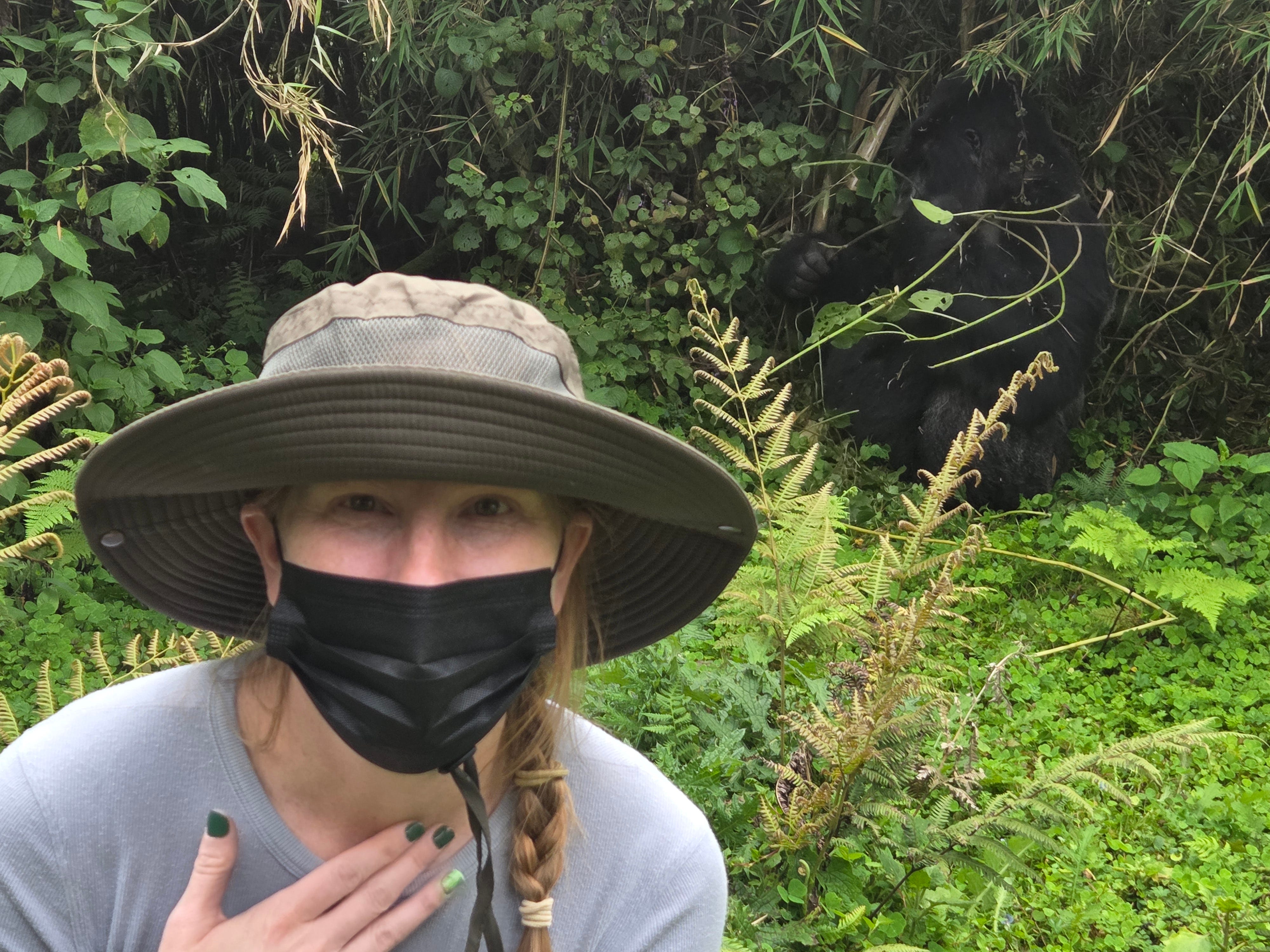
Then we heard more leaves rustling to our left. Inside those leaves was a mother and baby.
Then more leaves were rustling to our right this time. The gorillas seemed to be all around, which was equal parts exhilarating and terrifying.
My favorite gorilla was a 1-year-old who was busy playing in the bamboo, doing flips, picking on his brother and annoying his mom. It was as if he was showing off just for us.
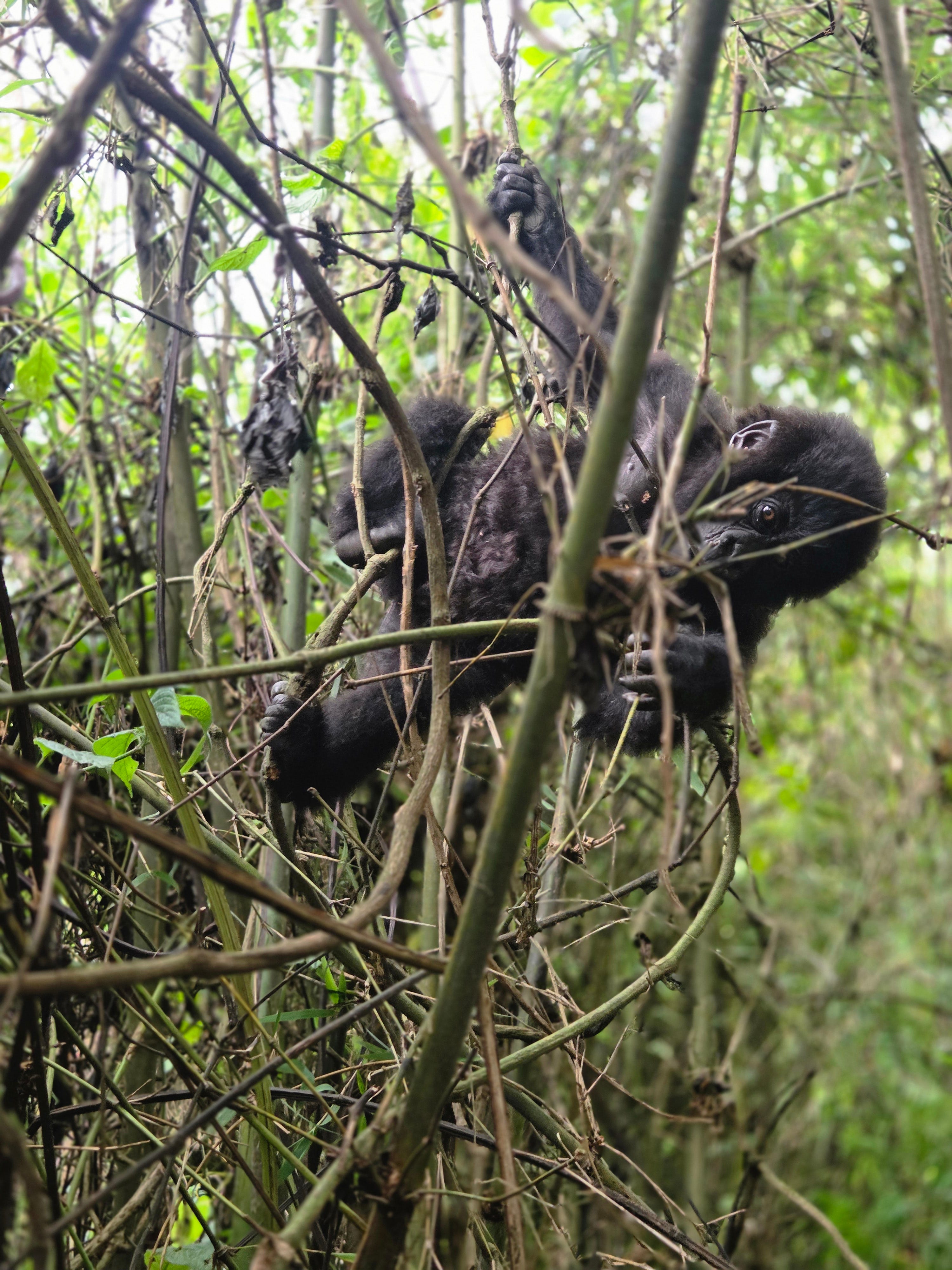
Similar to the chimps, we were allowed to spend an hour with the gorillas before we had to trek back out. But it was harder to leave the gorillas. Somehow they seemed more magical.
Back at the hotel, they offered to clean our boots for $10 a pair. I swear when they returned mine, they looked even better than when I bought them. We ended the evening drinking chilled white wine from South Africa, eating snacks and showing each other our gorilla pictures.
The next day we said goodbye to Rwanda.
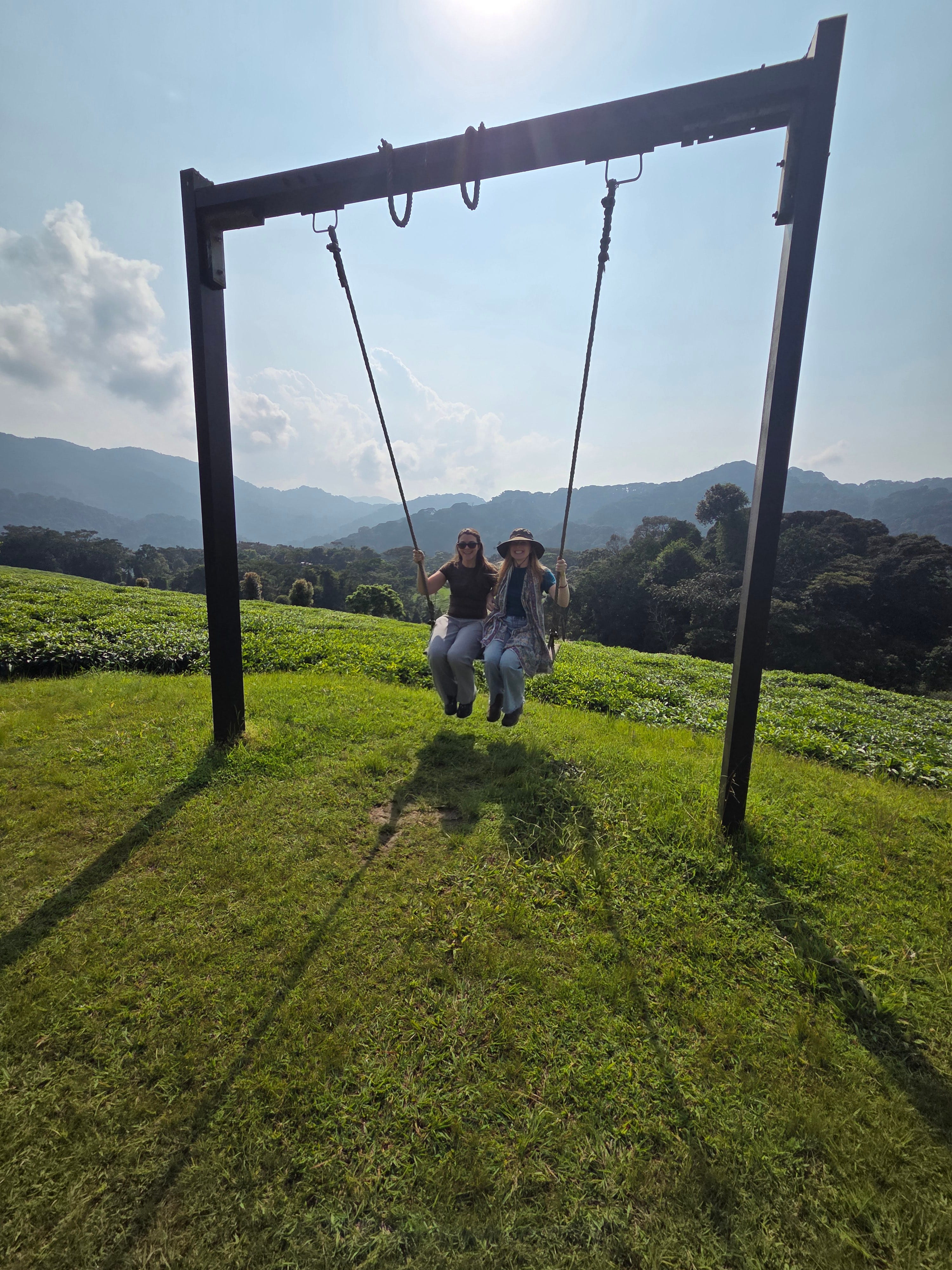
We’d come for the gorillas. But I left thinking about the orange trees planted in former enemies’ yards. Children laughing beside a church that still bears its scars. Ziplining through the rainforest in pouring rain. Receiving warm ginger tea after a long day of travel. And laughing until my abs ached at the idea that another glass of wine was somehow going to save the children.
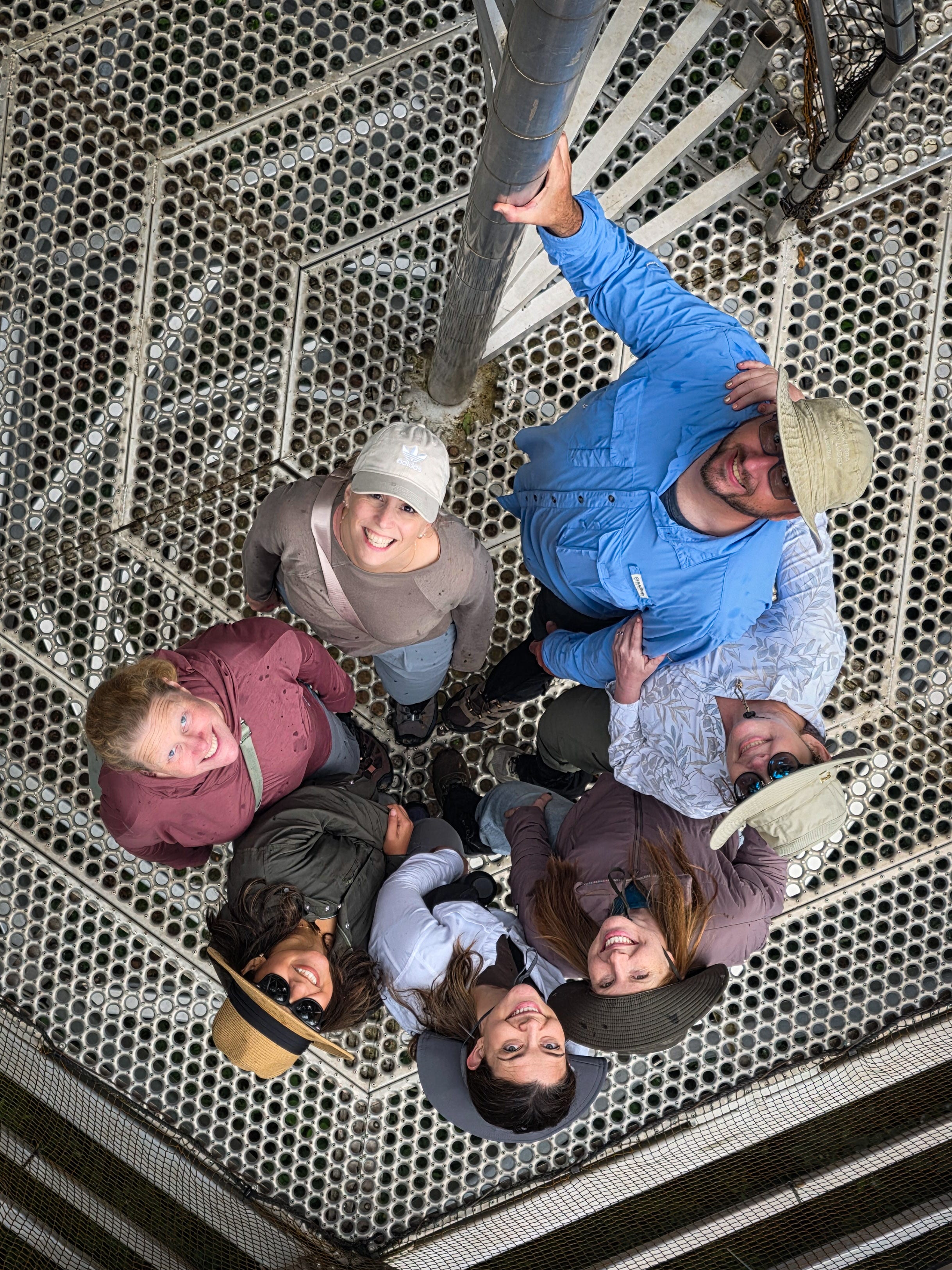
Rwanda doesn’t pretend its past didn’t happen. It keeps building anyway. And somehow, you don’t leave feeling crushed. You leave with hope for even the worst of humanity, and a longing to return.
Thanks for reading The Real Housewife of Nigeria. The best way you can support my work is to share this story with someone who would love hearing about the magic of Rwanda.
P.S.
This post is the last part of a 3-part series. Part 1 of this series is here. And Part 2 is here.
Comments
Nothing yet. Say the first thing.
Sign in to join the conversation.