
By Kate Simon
The race is on to find the German hairy snail. Pseudotrichia rubiginosa may be small – about the size of a fingernail – but right now it’s a big preoccupation with Britain’s conchologists who are leading the hunt for this endangered mollusc on the banks of the River Thames.
The snail is thought to have slid its way to Britain, powered by the hairs on its shell, during the last Ice Age, when the Rhine was still linked to the Thames. Sightings of this rare species that feels at home in the heart of our urban capital have been reported at Kew, Isleworth and Canning Town.
Elliot Newton, director of rewilding at Citizen Zoo, a countrywide organisation of professionals and volunteers dedicated to rebuilding wildlife diversity, told the BBC that it’s “a species that helps spark imagination and open people’s minds to the curious and diverse wildlife that can thrive across Greater London”.
Indeed, London is a veritable menagerie. The Eurasian red fox that stalks the capital’s streets, thought to have come to Britain about 330,000 years ago, is but one example. It’s fair to say it’s not the most popular of residents, and its reputation hits a new low in the depths of winter, the mating season, when the screams of the courtship ritual under cover of the night are blood-curdling enough to wake the dead let alone the neighbours.
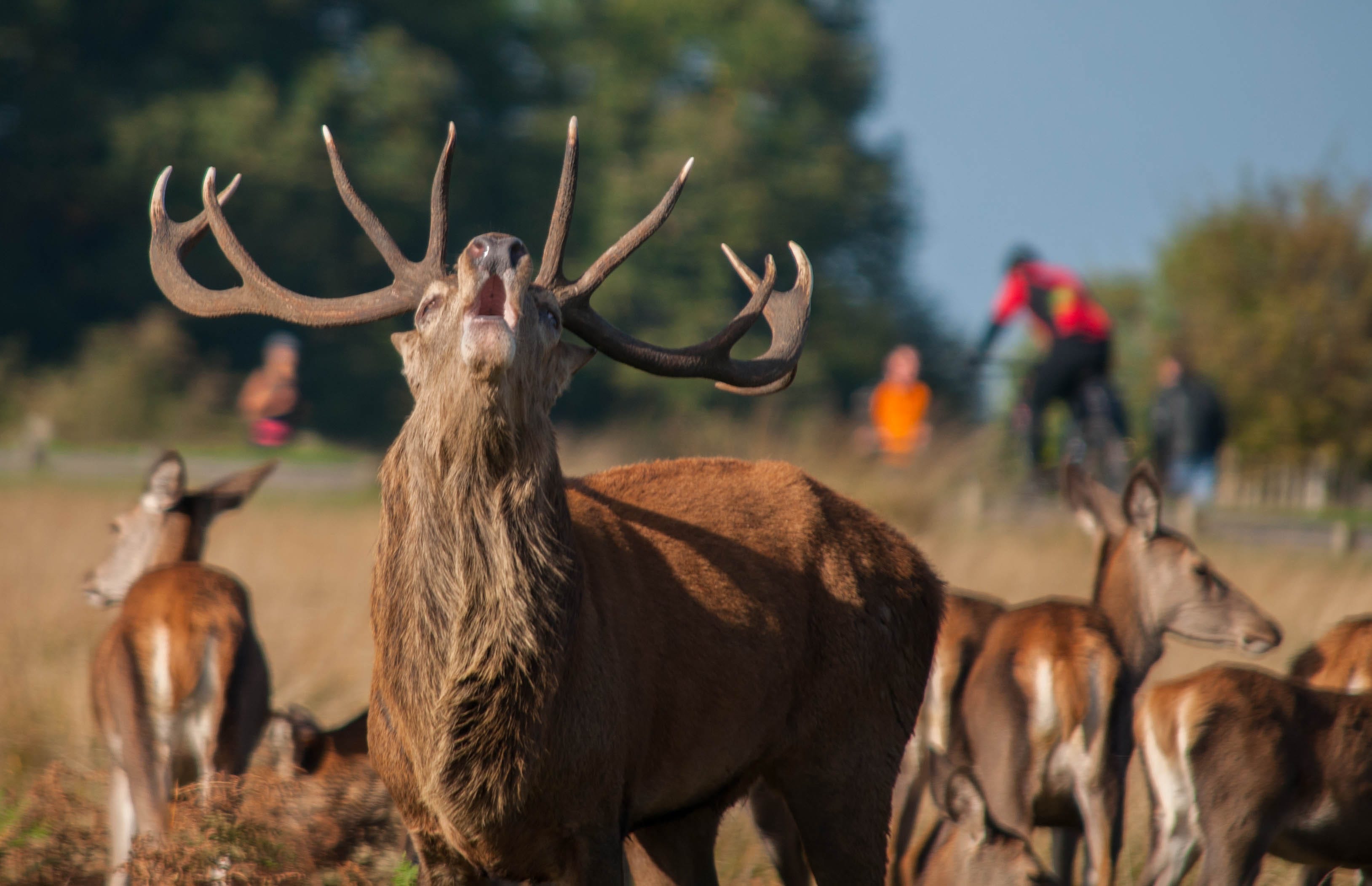
The red deer that roam free in Richmond Park, arriving in Britain from Europe about 11,000 years ago, are more popular with the locals. But then the deer rut, which ends this month, is one of the capital’s, and the country’s, greatest natural spectacles. Although watching two 350-pound stags go head to head with their razor-sharp antlers to win the hearts of the hinds is something to be enjoyed at least 50 yards distant. The reward is a phenomenal display of testosterone to a soundtrack of fearsome roaring.
Richmond is one of the eight Royal Parks, populated by an exotic array of creatures, ranging from the pelicans in St James Park, the legacy of a gift from the Russians in 1664, to the European eels that snake through the waters of the Serpentine in Hyde Park before returning to the Sargasso Sea.
The London Wildlife Trust is another gateway to the animal world, managing 36 nature reserves, including Walthamstow Wetlands, a vast network of reservoirs that still supply the city as well as providing an explorable wildlife haven. Both organisations host walks, talks and other activities throughout the year.
London is full of attractions, some a little wild.
Phil’s Beer Notes
After all that wild excitement you’ll need to wind down with a quiet pint. The Mayflower in Rotherhithe is so close to the Thames mud you might even spot one of those hairy snails while you’re sinking one of the cask ales they have on constant rotation at this characterful 17th-Century pub with a jetty over the water.
Just north of Richmond Park, in East Sheen, you’ll find a lovely little shop called Micro Beers which typically has at least 150 beers in stock, including seven on draught that you can sample as you watch humans in the wild on Upper Richmond Road.
A safari across the Walthamstow Wetlands could be a chance to check out the brewery taprooms congregated in this part of east London, the latest including Queer Brewing and Dalston’s 40ft Brewery, which has recently opened its second venue on the Blackhorse Beer Mile.
Photo: “Red deer Richmond (and cyclist and runners!)“ by CarolineG2011 is licensed under CC BY-SA 2.0.
No posts
Comments
Nothing yet. Say the first thing.
Sign in to join the conversation.