
The first time I saw her - a small red fox - it was only a fleeting glimpse, saw her leap up, pause, and then just through sheer grace, make the grey rock into a geological grotto, a holy place.
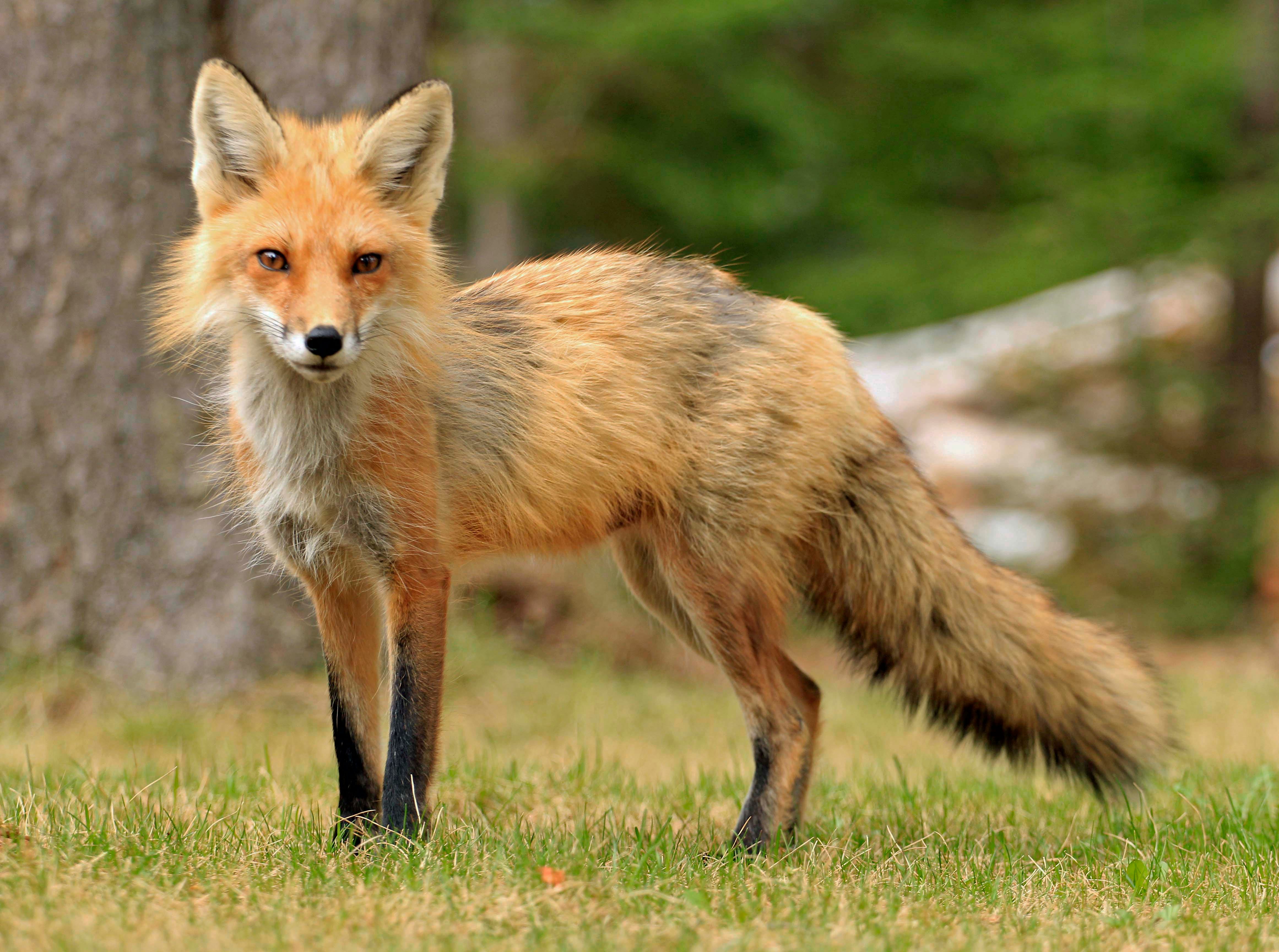
Seeing her, an embodiment of beauty and all of life, animated and never-ending, it was hard not to think of the reified fox at the museum where I volunteer.
The tale of its origins are disturbing, and there are many days that I feel I must have misheard or misremembered or misunderstood the story: a woman brought the taxidermied creature to the museum, saying her husband had been given it at a corporate function, said that many of them had been given out that evening, and that she wanted nothing more to do with it. Each time I see the fox, bound and double-dead in its stuffing and glass case, I cannot help but feel troubled.
The reason the museum might seem an appropriate place for this animal-rendered-object to reside in is because of this mining town’s origin story: 1903, and a man named Alfred LaRose, working on the railway as it pushed up through northern Ontario, was troubled by a pesky fox and threw a hammer at it – the hammer struck rock, chipping it to reveal what was eventually to become millions and millions of ounces of silver.
Hammer/Fox – what a twinning. But then there it was with Darwin too – and what a dreadful thing it was. I’ve always had a soft spot for Darwin, so attentive to creatures around him, more interested in the brilliance of natural selection than all that ‘survival of the fittest - tooth & claw’ nonsense he usually gets saddled with.
So what a disappointment to read about his time on the1834 expedition of the British Navy’s HMS Beagle as it conducted a survey of the water bodies and coastlines of South America. Darwin was along as a geologist and conducted much of his formative field work on the voyage. In his account of the journey he wrote: the “fox (of Chiloe, a rare animal) sat on the point & was so absorbed in watching [survey work], that he allowed me to walk behind him & actually kill him with my geological hammer”.
//The Fox: small and dark, solitary and nocturnal, roundish reddish ears.
The Hammer: with a two-sided head, one flat, the other with a pick end, made for splitting rock, the power of the hammer depending on the weight of the head and the length of the handle.//
Today, this fox species is perversely known as Darwin’s fox (Lycalopex fulvipes). It is endangered. The original creature, like my museum fox, also ended up stuffed and in a collection. Scientific collecting was all the rage in the 19th century, and perhaps in that moment of the fox’s vulnerability, Darwin thought he was acting in the interests of scientific knowledge. Still, it seems an unsettling impulse, to smash a hammer on the head of a creature.
The brilliant Irish philosopher John Moriarty wrote:
“… what else was it, that hammer blow, that geological hammer blow, what else was it but a missed evolutionary opportunity?
If Darwin had sunk down into the fairy-story level of his mind, if he had sunk down into the fairy story level of the world’s mind, who can say where that fox might have led him? All the way back to commonage consciousness maybe.”
Yes, if only the father of evolutionary biology had stayed that impulse, had waited and watched. Could Darwin really not see the fox, see it there considering the activity of the human species below, pondering their busyness and newness? How was Darwin not curious about what the fox was thinking? Perhaps in those heady decades of the birth of the modern sciences, fevered with collecting and the western myth of ‘discovery’, Darwin was unable to remember the vast connectivity between human and animal.
“To suppose that animals first entered the human imagination as meat or leather or horn is to project a 19th century attitude backwards across the millennia. Animals first entered the imagination as messengers and promises.” – John Berger, art critic
I have met the messenger. Glimpsed her there as clear as anything, as concrete as myself, as vivid as an hallucination, as awe-inspiring as a small-bodied god. And the message was also clear, unnerving and simple, remembered in those old, amber eyes: be better, become something else, evolve.
I’m working on it.
Thanks for reading! Subscribe for free to receive new posts and support my work.
Comments
Nothing yet. Say the first thing.
Sign in to join the conversation.