
One of the Substack newsletters I subscribe to is The Beautiful Mess, written by an ex-Pastor troubled by the rise of Christian Nationalism in the U.S.A. In his writing, he wonders what other Christians—and non-Christians—might do to move the dynamic toward a more compassionate way of living, perhaps even a reimagined American Dream.
I thought I would comment.
Bringing Heaven to Earth is a reader-supported publication. To receive new posts and support my work, consider becoming a free or paid subscriber.
The real border is not national or political. It is not between left and right, or even between faith and unbelief. The true border is inward: the border between the idea of separation and the reality of unity, not as a doctrine but as direct experience.
Mystics in every tradition have recognized this border and called humanity beyond it. Christianity is no exception. Yet the voices of its mystics have often been a minority position—overlooked, even mistrusted—while the mainstream of Christianity, whether on the Right or the Left, has tended to reinforce the sense of a separate personal self.
And yet, at the heart of Jesus’ teaching lies an invitation to go beyond that separation.
Jesus and the Border of the Self
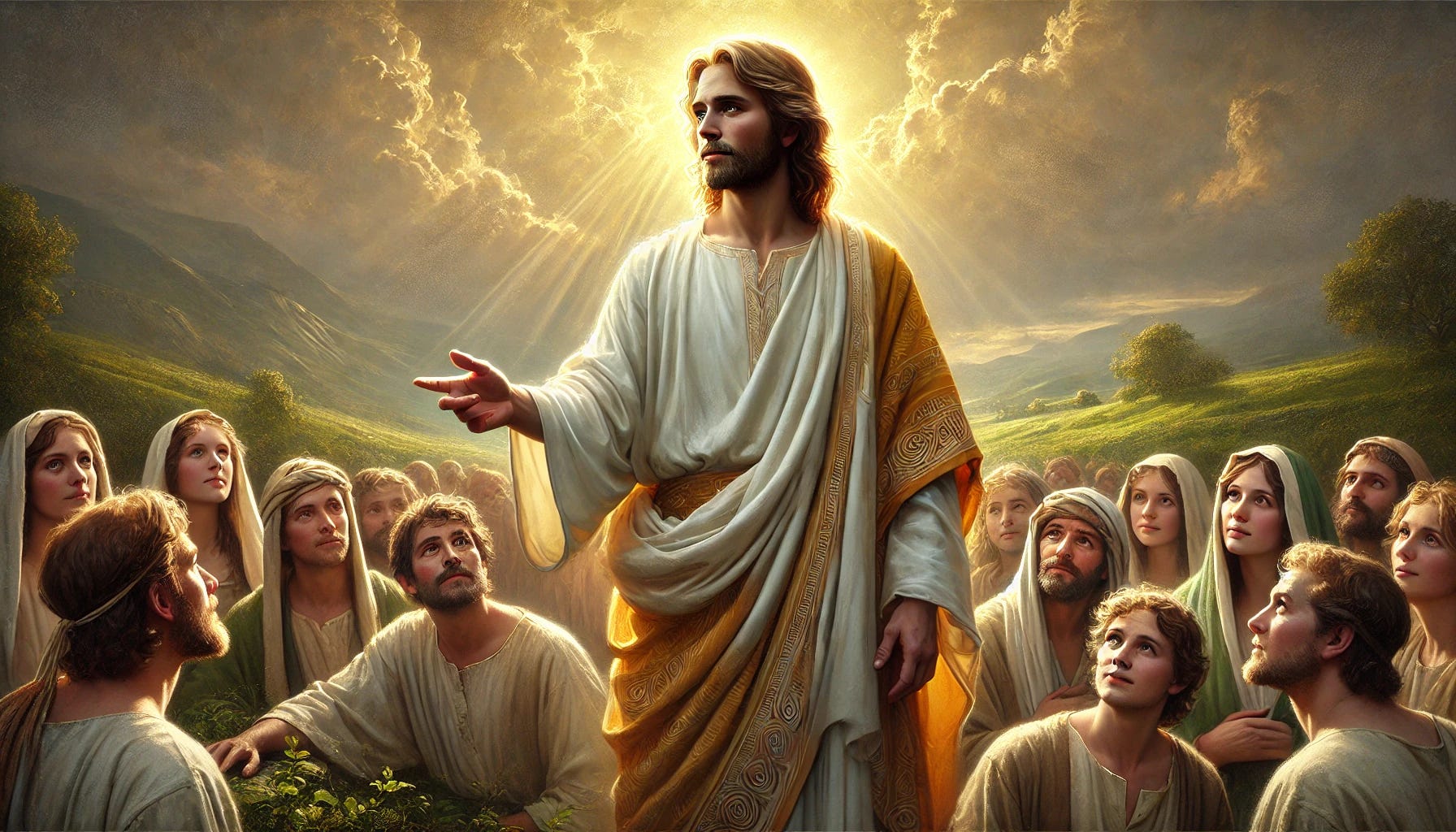
Jesus consistently points to the necessity of emptying, of letting go of the small self and its agendas. This is the meaning of the word “Kenosis.” “If anyone would come after me, let them deny themselves, take up their cross, and follow me” (Mark 8:34). This is not a call to self-hatred, but to self-transcendence. The “cross” here is not simply suffering but surrender—the letting go of control, of ego, of the illusion of separateness. The cross is a symbol of the merging of time (horizonal) with the eternal (vertical).
He also teaches: “Whoever seeks to preserve their life will lose it, but whoever loses their life will keep it” (Luke 17:33). The “life” that must be lost is the small, separate identity—the illusion of being a self apart from God. What is found instead is the deeper life of union with the Divine.
The promised land Jesus speaks of is not a territory but a state of consciousness: “The kingdom of God is within you” (Luke 17:21). To enter this kingdom, one must cross the border of the separate self into the unity of God’s presence. This applies to those on the Christian Right as those on the Christian Left. It applies to everyone who wishes to attain to the fullness of who they are created to be.
Paul and the Mind of Christ
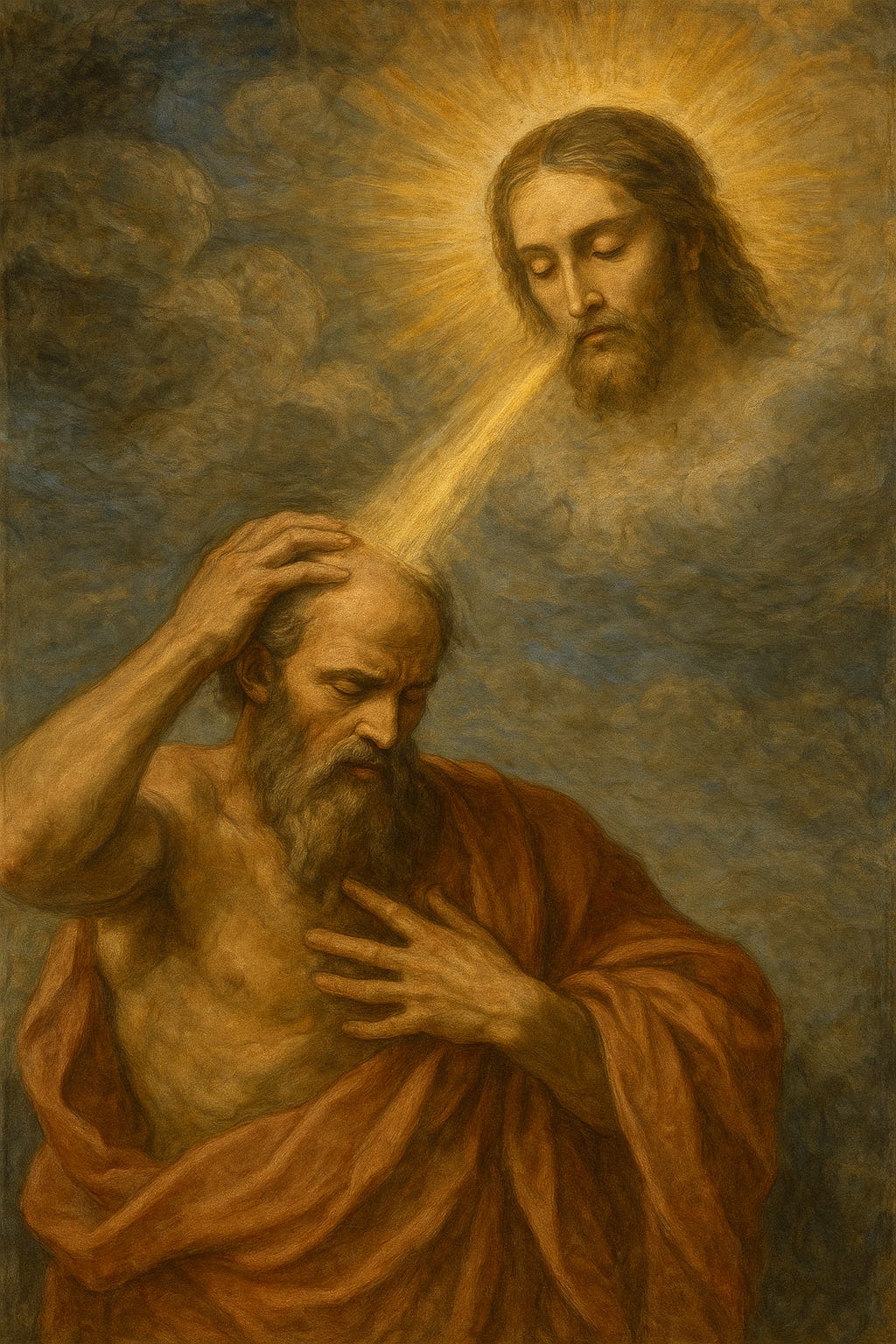
St. Paul echoes this invitation when he urges his communities to “put on the mind of Christ” (Philippians 2:5). This is not about adopting new religious opinions but embodying a new consciousness. The key word here is the word “Consciousness.” He continues: “Though he was in the form of God, he did not regard equality with God as something to be exploited, but emptied himself, taking the form of a servant” (Philippians 2:6–7).
This “emptying”—the famous kenosis—is the pattern for every Christian life. It is not a doctrine to be believed but a way of being to be lived. The border to be crossed is precisely this: dying to the separate, egoic self in order to live in the unity of Christ. If you profess to be a Christian Nationalist then the idea of nationalism has to be given up as has the primary belief in the separate personal self.
As Paul writes elsewhere: “It is no longer I who live, but Christ who lives in me” (Galatians 2:20). This is the transformed state—the promised land—that he himself embodies and offers as testimony.
Voices of the Mystics
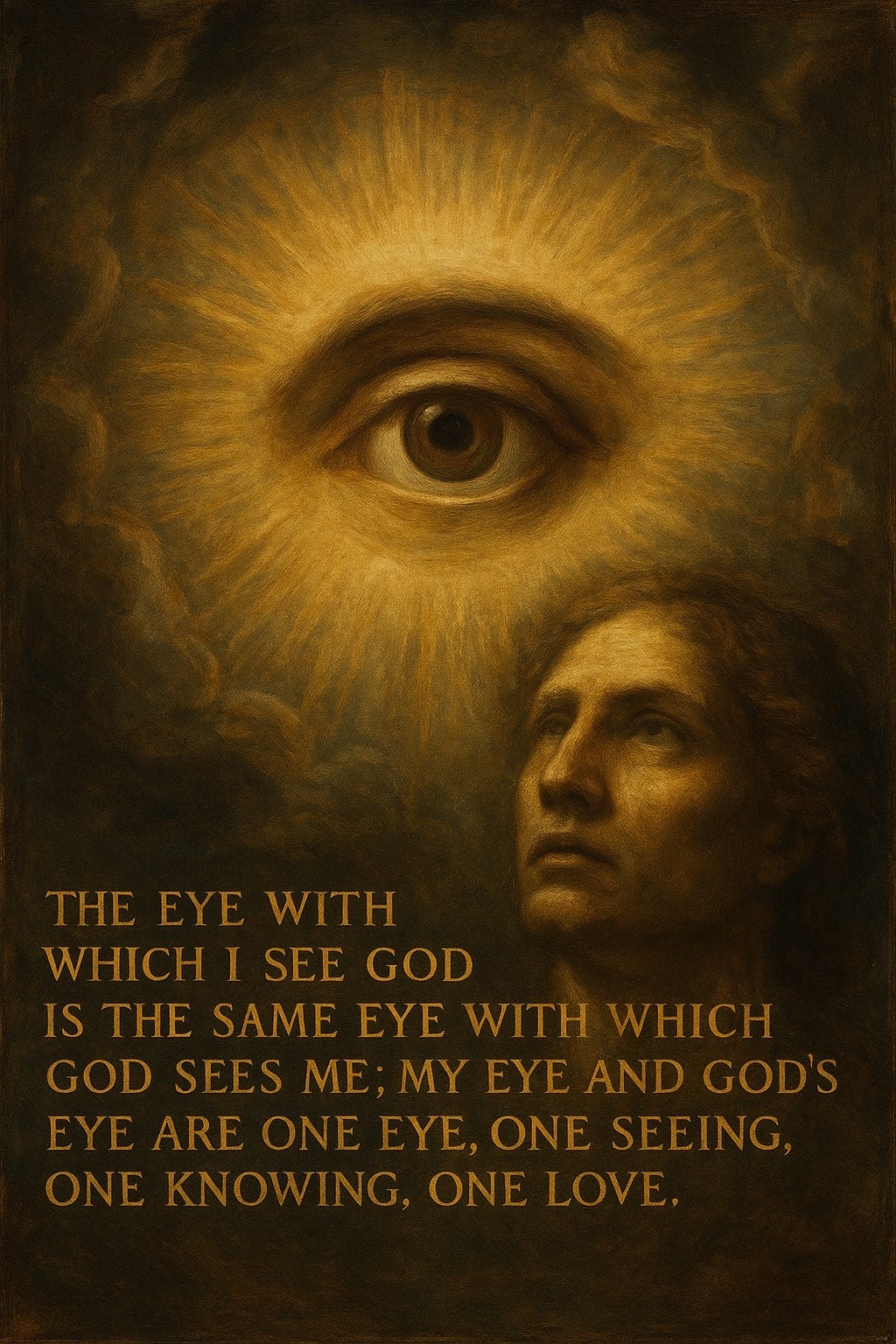
Christian mystics across the centuries have echoed this truth. Meister Eckhart put it starkly: “The eye with which I see God is the same eye with which God sees me; my eye and God’s eye are one eye, one seeing, one knowing, one love.” Here, the separate self has dissolved into unity. Don’t confuse this seeing eye with the physical eye. The eye referred to in this quote from Meister Eckhart is the experience of consciousness or the “I AM.”
St. John of the Cross describes the same crossing: “To reach satisfaction in all, desire satisfaction in nothing. To come to possess all, desire the possession of nothing.” The letting go of ego’s striving is the gateway into divine union. Can you imagine St. John promoting the American Dream by way of “desire the possession of nothing.” Without this as direct experience one does not realize the magic of being open to the NO-THING that is EVERYTHING.
Thomas Merton, a modern contemplative, wrote: “At the center of our being is a point of nothingness which is untouched by sin and by illusion, a point of pure truth…It is in everybody, and if we could see it we would see these billions of points of light coming together in the face and blaze of a sun that would make all the darkness and cruelty of life vanish completely.”
These voices affirm that the real transformation is not belief about Christ but awakening into Christ-consciousness. This is the direct experience beyond belief of the “I AM the Way.”
Beyond the Dream of Separateness
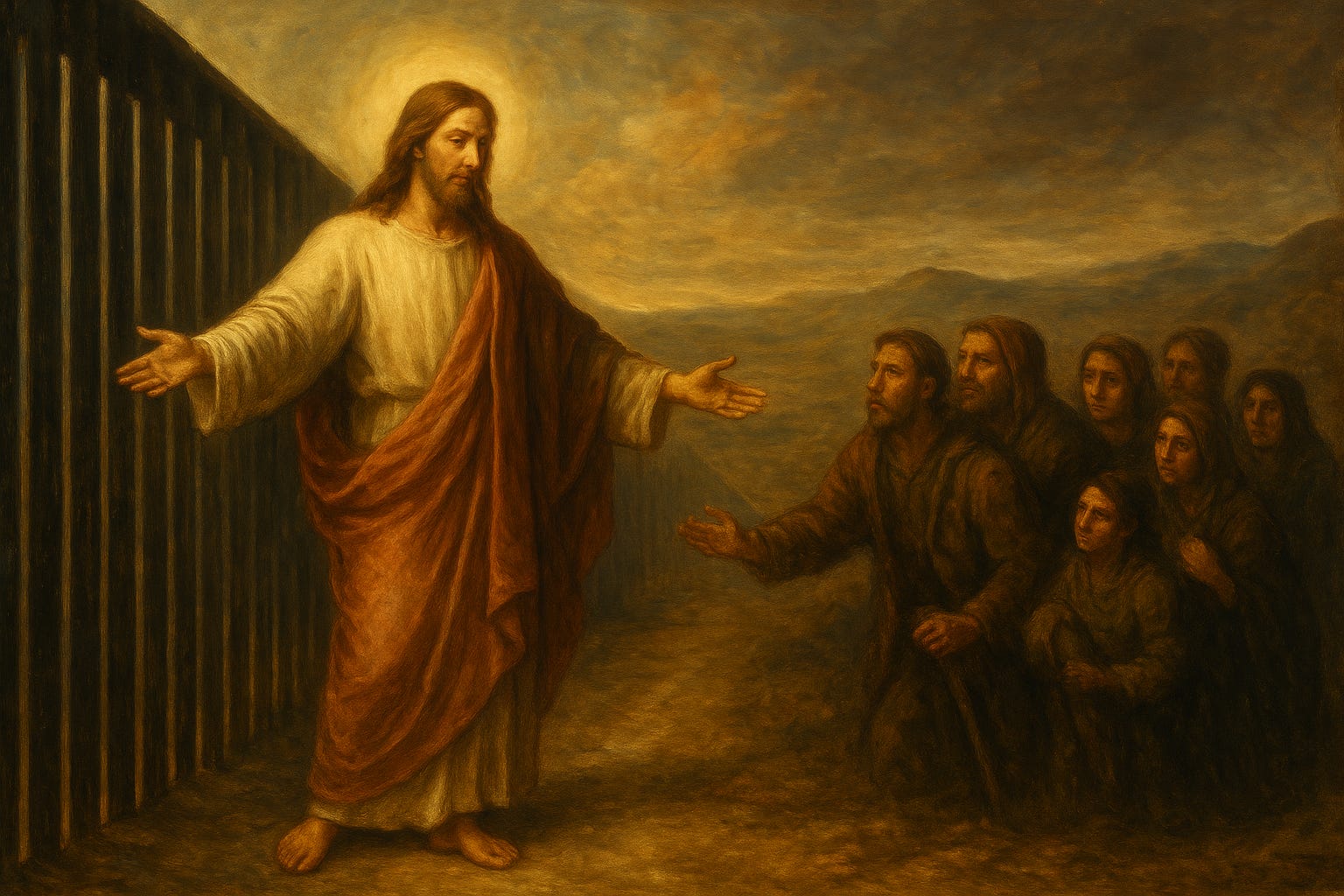
If Christianity remains only at the level of belief—whether liberal or conservative—it may provide moral guidance or cultural identity, but it does not open the border of that sense of separation from the Divine. Most Christians of either persuasion being Right or Left will live their primary dream of separation of the personal sense of self. Transformation comes only through direct experience, through surrender, through dying to your personal agenda. This is not the way of the American Dream, which is built upon achievement, acquisition, and self-assertion. There is nothing wrong achievement but it is so much more magical to have the Divine express through you which then becomes an expression for the highest good. All is added unto you.
Jesus points to that other dream which is not a dream but the direct experience of reality: the dream of unity, compassion, and surrender into God’s will. As he says, “Blessed are the poor in spirit, for theirs is the kingdom of heaven” (Matthew 5:3).
To live from this surrender is to embody what the Hebrew scriptures call the presence of the “ten righteous in the city”—those whose very being holds open the possibility of redemption for the whole. This is the best that you can do and allow yourself to become. Do not confuse the word “righteous” with the idea that you belong to the right belief system. Righteousness is where you KNOW God aright and this is beyond belief and beyond the separate idea of right versus wrong.
Conclusion
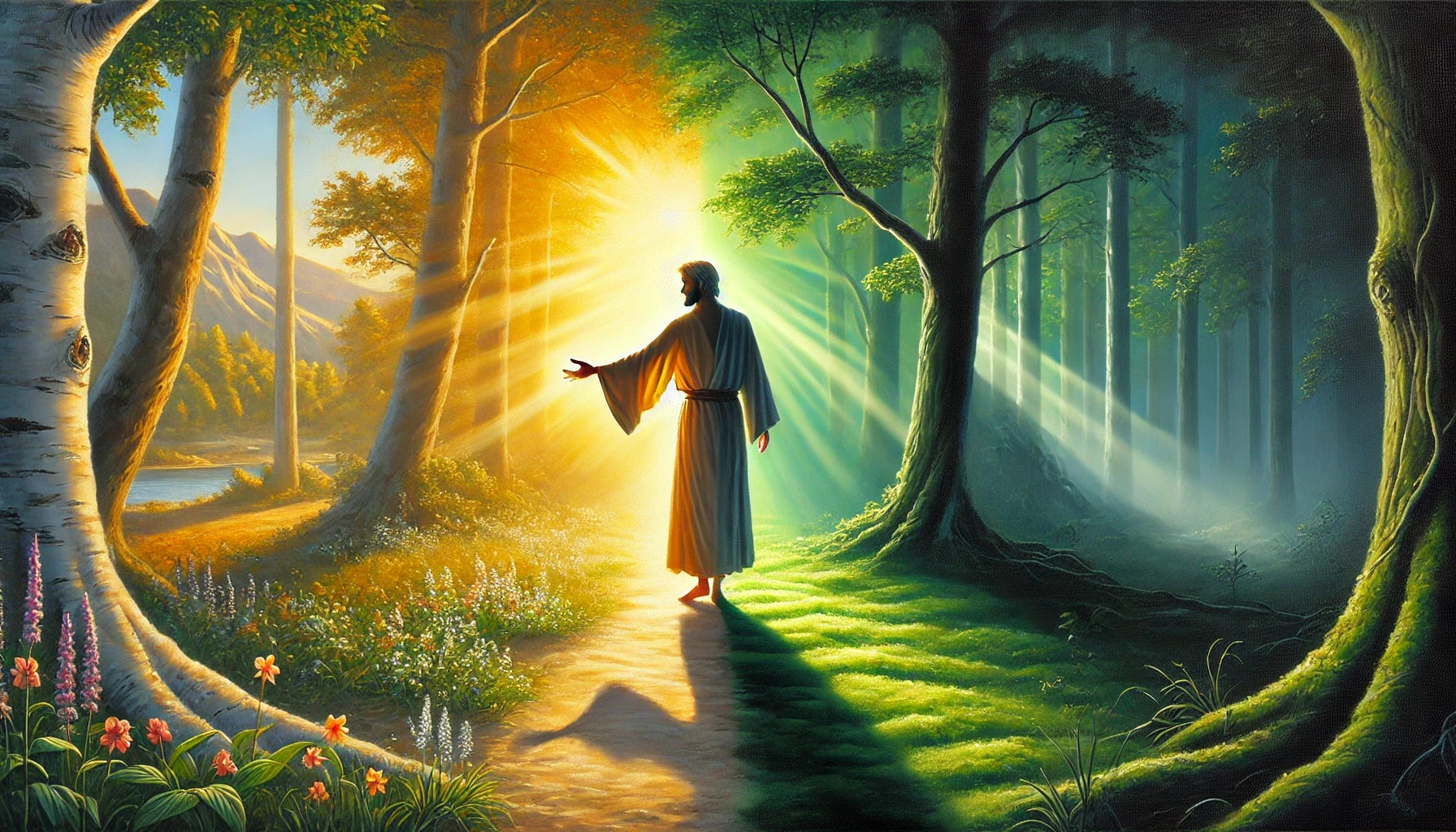
The border to be crossed is within. It is the border of the self. To cross it is to awaken into the kingdom that is already here, the unity that is our true nature in Christ. This opens you to infinite possibility that you allow to pour through you. It not about more effort or more power. Its the opposite. Its more non-doing and allowing. Its more feminine than masculine. Do not confuse feminine or masculine with gender. Its more a level of consciousness. One level involves a deeper trust in not knowing but willingness to be known through.
And perhaps this is the NEW dream that is closer to reality—not just for America, but for humanity—that can carry us forward: a life lived not from separation, but from the mind of Christ, in whom all are one. In this way you become the channel for Bringing Heaven to Earth were everyone can be a unique flow of Divine Intention and not have to fit the idea of some label or script.
Tony Cuckson Cordressagagh Ireland
Bringing Heaven to Earth is a reader-supported publication. To receive new posts and support my work, consider becoming a free or paid subscriber.
Comments
Nothing yet. Say the first thing.
Sign in to join the conversation.