
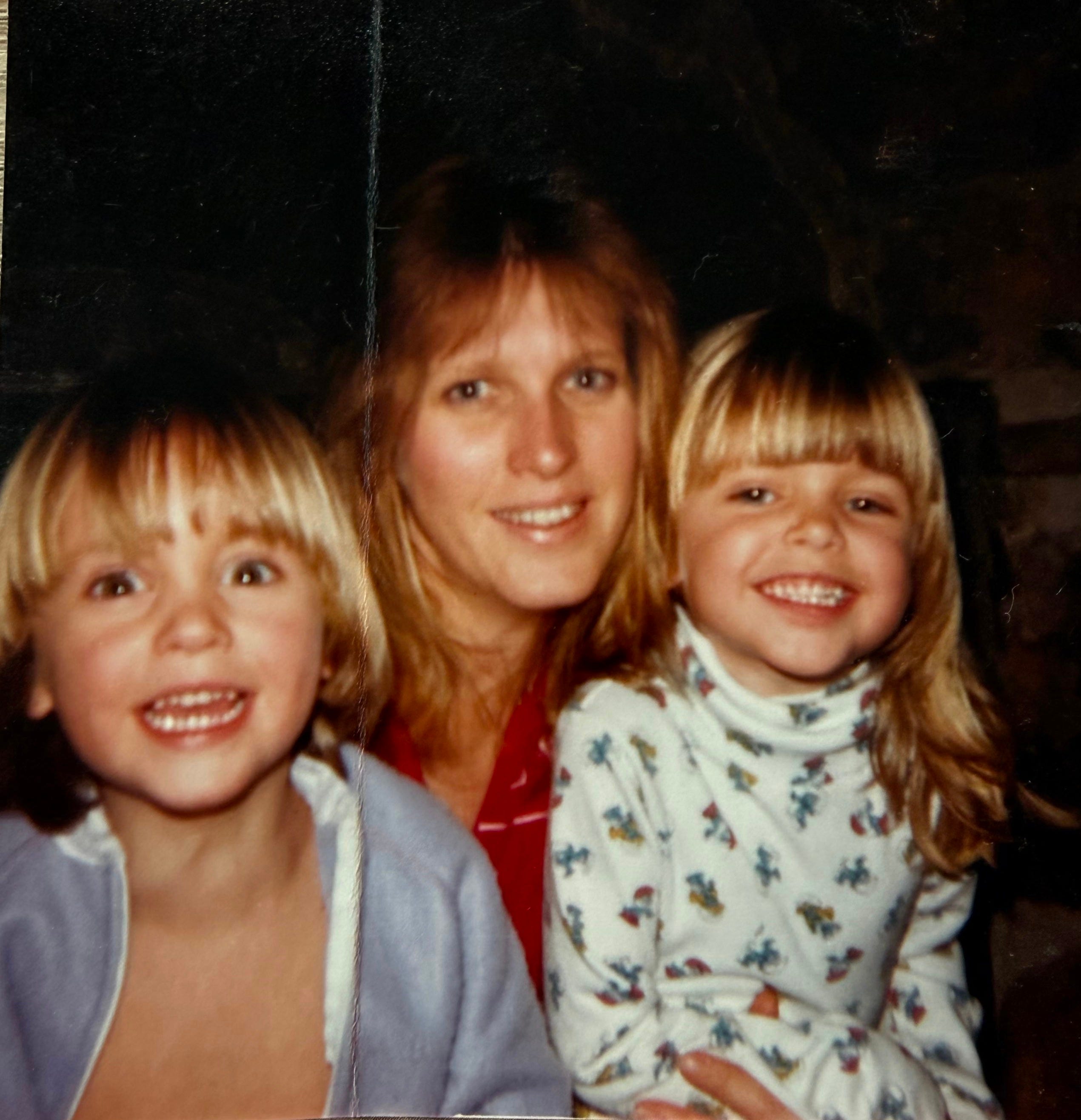
My memories as a small child are incredibly clear. Summers walking to the neighborhood pool - sun tanned and poolside picnics. Big wheels around the high school track with my brother while my mom jogged. Nighttime walks to get ice cream, then back to the playground until bed. Playing with our bunny in the yard. Naps next to my brother, cartoons in the afternoon heat, knocking on neighbors’ doors…
In all of my memories, my mom was present. Or at least nearby.
I’ve come to know in my bones that her unwavering presence was the greatest gift she ever gave me.
My first jobs were all in daycare.
I worked for the YMCA summer camps for years. And then, in after school care.
I remember a girl named Shelly who was not cut out for the burly halls of afterschool care. She was quiet and small for her age, underdeveloped and scared. She was incessantly picked on, and, no matter how the counselors in our teens and twenties tried to protect her, she was always the recipient of school yard abuse.
Her parents were kind people, ambitious professors with full lives and no family in town. So Shelly was often the last to be picked up from daycare at 6pm after being at school all day. She was only six years old.
Then there was William. It was clear that he was getting hurt at home. He also was small for his age. But he had a big personality. He spit in counselors faces, bit our hands, and kicked our shins; he was often in some kind of scuffle with other kids at after school care.
One time, my advisor asked me to restrain him physically in the halls until his father could pick him up; he was hurting too many other children.
He also was a first grader, but sized like a three year old. I could barely hold him. He bit me until I bled and I did my best to coax him into calm, singing to him until his father came.
His dad, who had to leave work to get him, yelled at him down the hall as he approached. William, who just seconds ago hollered and bit me, cowered in my arms, asking to please not go with his father.
Back when I was working in Boulder’s daycares, institutionalized care was utilized mostly by underprivileged families — those who didn’t have the support of family, single mothers, and new to the country folks who were trying to get their footing.
But over the course of my career in care, the population of kids who spend long hours in summer camp daycare, and after school care has dramatically shifted.
No longer is it just the underprivileged. It’s a ubiquitous step for nearly all elementary and middle school kids, who no longer have the option to spend summers and after school hours chilling, eating chips, and binging cartoons at home.
Who raises children is no longer a question of privilege. Rather, it’s one of priorities.
Feminist voices have been important for women and the freedoms we have today. But the second wave of feminism, the post-suffrage voices like Betty Friedan and Gloria Steinem left some confusing messages for mothers that still leave a sour taste in many of our mouths.
Betty Friedan wrote in The Feminine Mystique that “women who choose to “just” be housewives are ‘in as much danger as the millions who walked to their own death in the concentration camps’” — and called the suburban home a “comfortable concentration camp.”
Gloria Steinem declared before Congress in 1970 that “most American children seem to be suffering from too much mother.”
These are the women we credit with our liberation.
And in many ways, rightfully so. The second wave of feminism dismantled real walls. Women earned the right to their own bank accounts, their own credit, their own ambitions.
These were not small things.
But in the urgency to get women out of the home, a question got left behind.
Nobody asked what happens to the children.
To ask it was to risk being called retrograde or sentimental. A “traitor” to the cause. So the question went underground. And generation after generation of children grew up in the silence where that answer should have been.
I met some of those children: Shelly, William. And hundreds more over the years. What I was witnessing was the absence of maternal presence. And the cost of it, written plainly on small bodies.
What I didn’t yet know was that I’d still be watching those same children pay that cost fifteen years later.
Here is what we now know.
The security established in a child’s earliest years — through consistent, attuned, available presence — predicts how they will regulate emotions, navigate stress, and form relationships for the rest of their lives. Insecure attachment is now directly linked to the depression, anxiety, and self-harm defining a generation of teenagers.
The crisis did not arrive from nowhere. It has roots. Long ones.
Underneath all of it is a question we are not asking: what did these children’s earliest years feel like? Was someone there?
In our rush to free women from a diminished life, we accidentally diminished the role of maternal presence in a child’s life. And we never named its shadow.
The shadow is the generation of children who needed someone and found a system instead. The shadow is the teenagers we are desperate to reach now, whose earliest years we are not willing to examine. The shadow is every woman who chose presence and was quietly made to feel she had chosen less.
She had not chosen less.
Research consistently shows that securely attached children are more emotionally regulated, more resilient, more socially competent — and more likely to become peer leaders, form lasting friendships, and build trusting relationships well into adulthood. Here is the paradox: presence produces independence. The child who was held well is the child who eventually needs to be held less.
This is the maternal presence advantage.
This is not a small inheritance. That is everything.
Mother’s Day is almost here.
Every year, we reach for the flowers and the cards printed with words like unconditional and always there. We mean them. And they are not enough.
When we honor a mother who simply showed up, day after unremarkable day, we are honoring something our culture has never had the courage to name.
My mother left me a legacy I didn’t have words for until now. She was simply, consistently, unremarkably there. Because she was, I know how to be there for my own children. That is the legacy I carry. That is the one I intend to leave.
To every woman who built her days around her children’s formation: what you give is not nothing. The science is finally catching up to what you already know.
The presence you give is not the absence of ambition.
It is the fullest expression of it.
Happy Mother’s Day, dear friend.
With love,

To read other writing and learn about my retreats, please see my website. xxo
Comments
Nothing yet. Say the first thing.
Sign in to join the conversation.