
CHROs must lead the next reinvention of work, but they can't do it alone. To reimagine work takes a joint workstream to rethink how roles and tasks can be reimagined with human+AI+AI agents. And that takes HR, tech, and operations (and finance!)
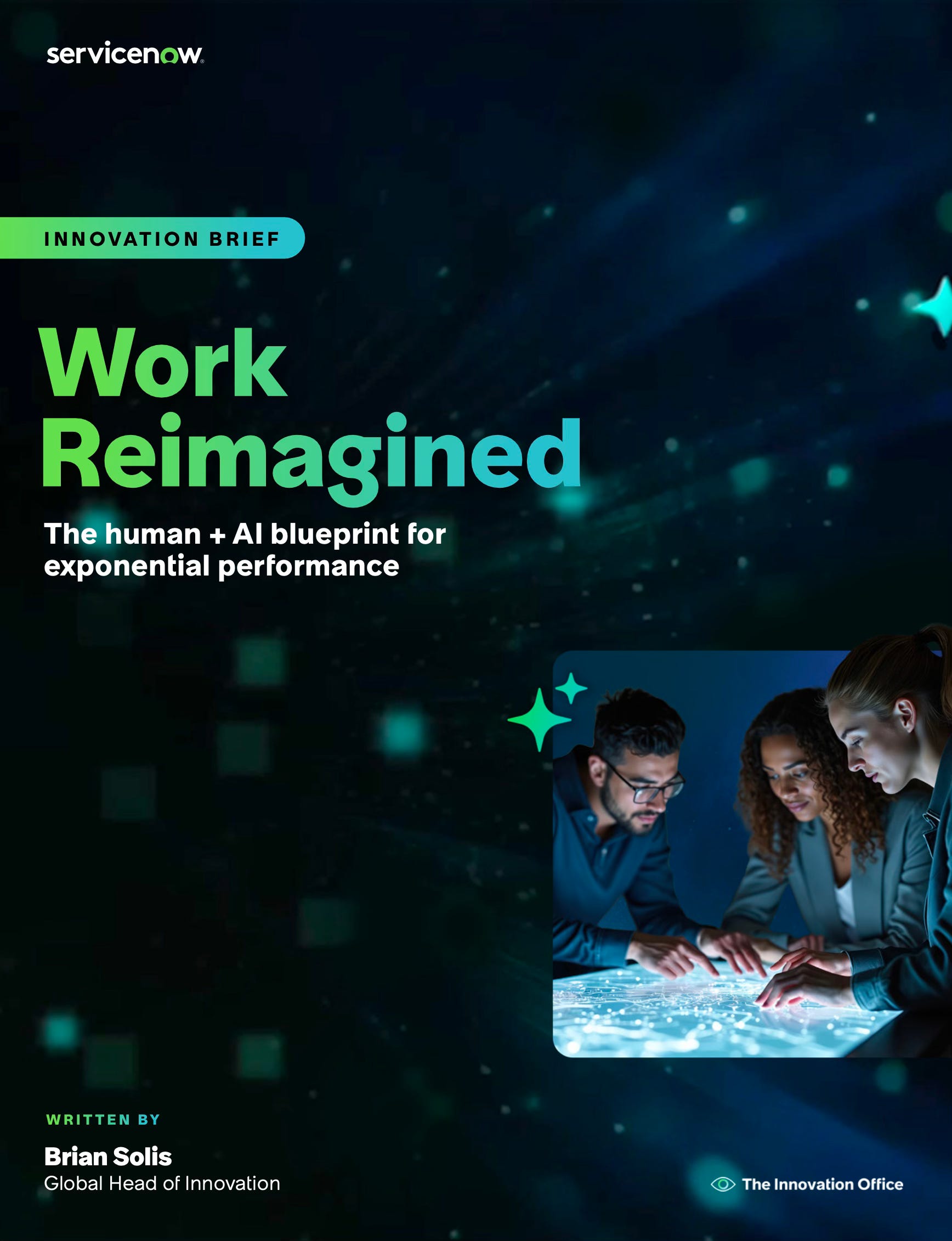
My new ServiceNow report published out of Innovation Office was written to help you. "Work Reimagined: The Human+AI Blueprint for Exponential Performance" provides a blueprint to redesign work, unlock human + AI performance, and build a more resilient future of work.
It’s good to be back in research, innovation, and management thinking mode!
The future of work has been framed as an automation vs. headcount story. AI arrives. Jobs disappear. HR is left to deal with the consequences. The headlines have certainly pushed that narrative: Axios warned of a possible white-collar bloodbath, The Wall Street Journal reported that CEOs said the quiet part out loud about AI and job loss, and Reuters detailed how companies such as Amazon have paired restructuring with a stronger push for AI-driven efficiency. Just recently, Block accounted a 40% reduction in workforce, and Meta is reportedly evaluating a cut of 20%. Those stories are real, and they are shaping boardroom conversations everywhere, even if it isn’t true that AI can do jobs today.
Recent signals are more complex, and perhaps, telling, as to what the more immediate future looks like. A new KPMG U.S. CEO pulse survey found that only 9% of CEOs expect workforce reductions over the next year directly because of AI, while 55% expect AI to increase hiring. At the same time, 67% admit they have not yet redefined roles or career paths for an AI-enabled future.
Anthropic’s new labor-market tracker adds another layer to the conversation: it finds limited evidence so far that AI-exposed workers have become unemployed at meaningfully higher rates, even as hiring for younger workers in exposed occupations appears to be slowing. And CIO reports that 21% of companies have already stopped hiring entry-level employees because of AI, with half expecting to stop by 2027. In other words, we are not looking at a simple story of job replacement. We are watching a redesign of work happen in uneven, confusing, and often unprepared ways. And rarely do I see in these conversations clear delineation or understanding of the differences between tasks and jobs and how they may be broken down, reassembled, and augmented with human to agent ratios.
So while companies are automating people out of jobs “with AI,” market leaders will explore how to reimagine work to 10x performance and output with humans + AI.
This is exactly why CHROs and HR leaders cannot be cast as downstream managers of disruption. They have to become architects of reinvention. Because the central question is no longer, “How do we protect the workforce from AI?” It is, “How do we redesign work so people become more valuable because of AI?” That is a fundamentally different mandate. It is strategic, cultural, operational, and deeply human. And it changes the dynamics of competitiveness. On one side, you have companies automating themselves toward stagnation. On the other, you have augmented roles that can innovate beyond the day-to-day work.
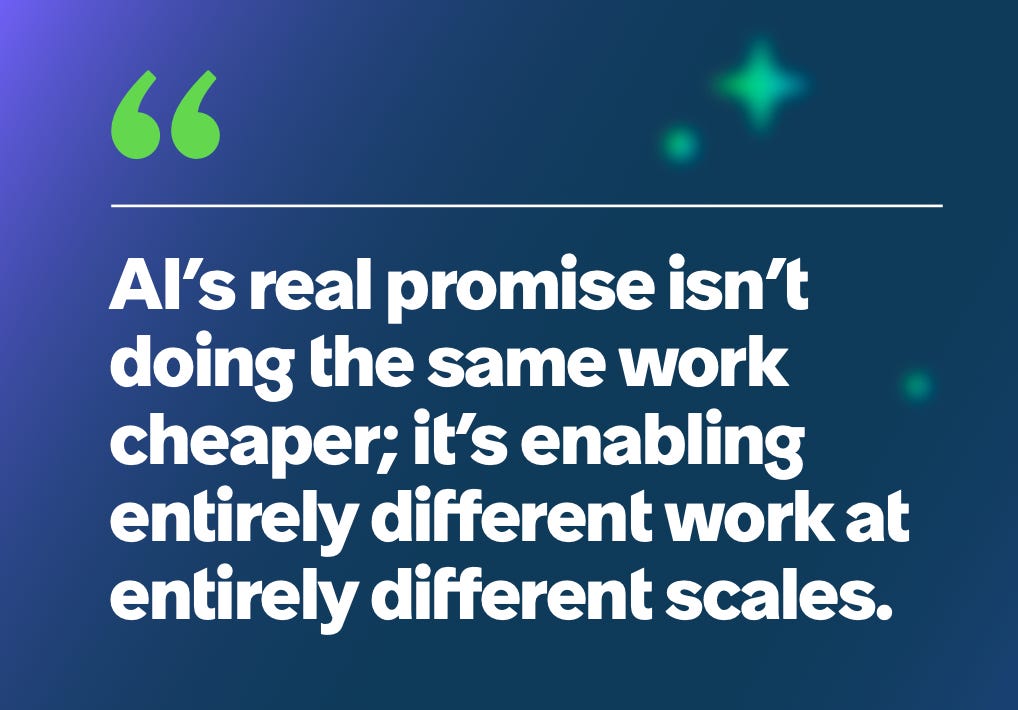
That is also the heart of my new research report, Work Reimagined: The Human + AI Blueprint for Exponential Performance. The report argues that AI’s greatest risk is not job replacement. It is missed opportunity. Organizations that limit AI to automation give up the larger gains that come from human and AI collaboration. As the report puts it, the path forward is not automation alone, but automation to augmentation to exponential performance, or A -> A -> X². The goal is not to only do yesterday’s work cheaper and faster. It is to unlock work, outcomes, and value creation that were previously out of reach or unseen.
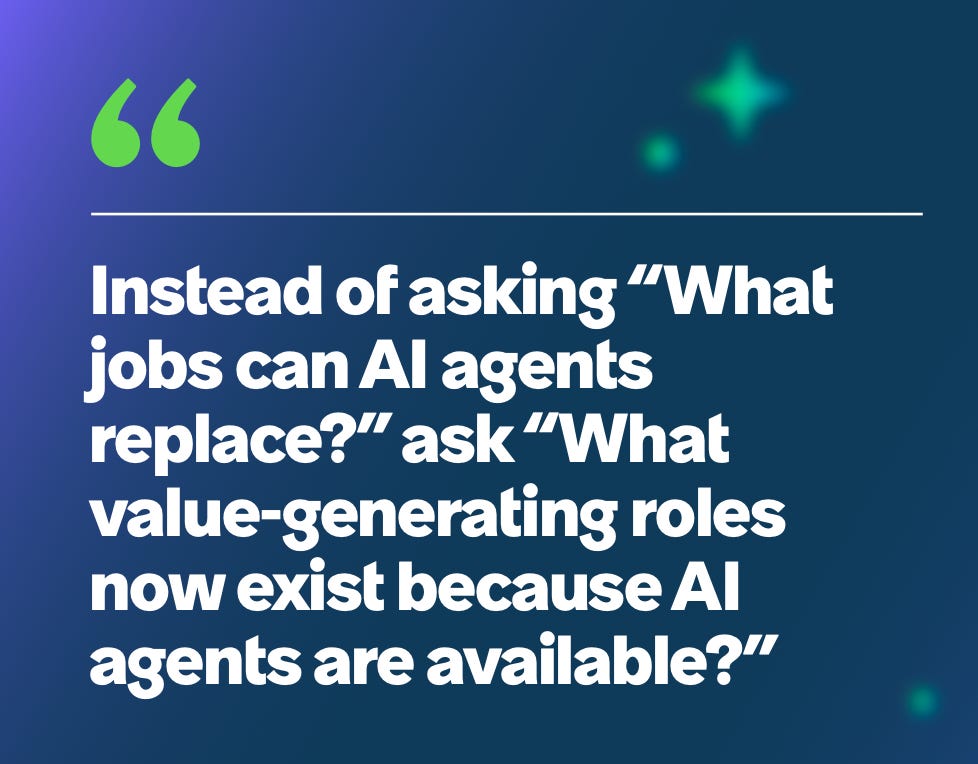
That argumentation is already landing in the market. In his recent Forbes column that covered my new report, Joe McKendrick spotlighted the core mistake companies are making with AI agents: they are using next-generation intelligence to optimize legacy workflows instead of reimagining work itself. That is the automation trap and it can accelerate AI Darwinism. If AI is introduced only as a labor-reduction strategy, then HR inherits fear, confusion, capability gaps, and disengagement. But if AI is introduced as a capacity multiplier, then HR can help convert anxiety into mobility, growth, and new forms of contribution.
The opportunity is not theoretical. Microsoft’s 2025 Work Trend Index found that 45% of leaders say expanding team capacity with digital labor is a top priority in the next 12 to 18 months, while 78% are considering hiring for AI-specific roles. PwC’s 2025 Global AI Jobs Barometer found that industries more exposed to AI are seeing 3x higher growth in revenue per employee, with wages rising 2x faster in those sectors. And the World Economic Forum projects that by 2030, 170 million new jobs will be created while 92 million will be displaced, for a net gain of 78 million roles. The message is clear: the future is not jobless. But it will not reward organizations that cling to static job descriptions, brittle org charts, and outdated talent models.
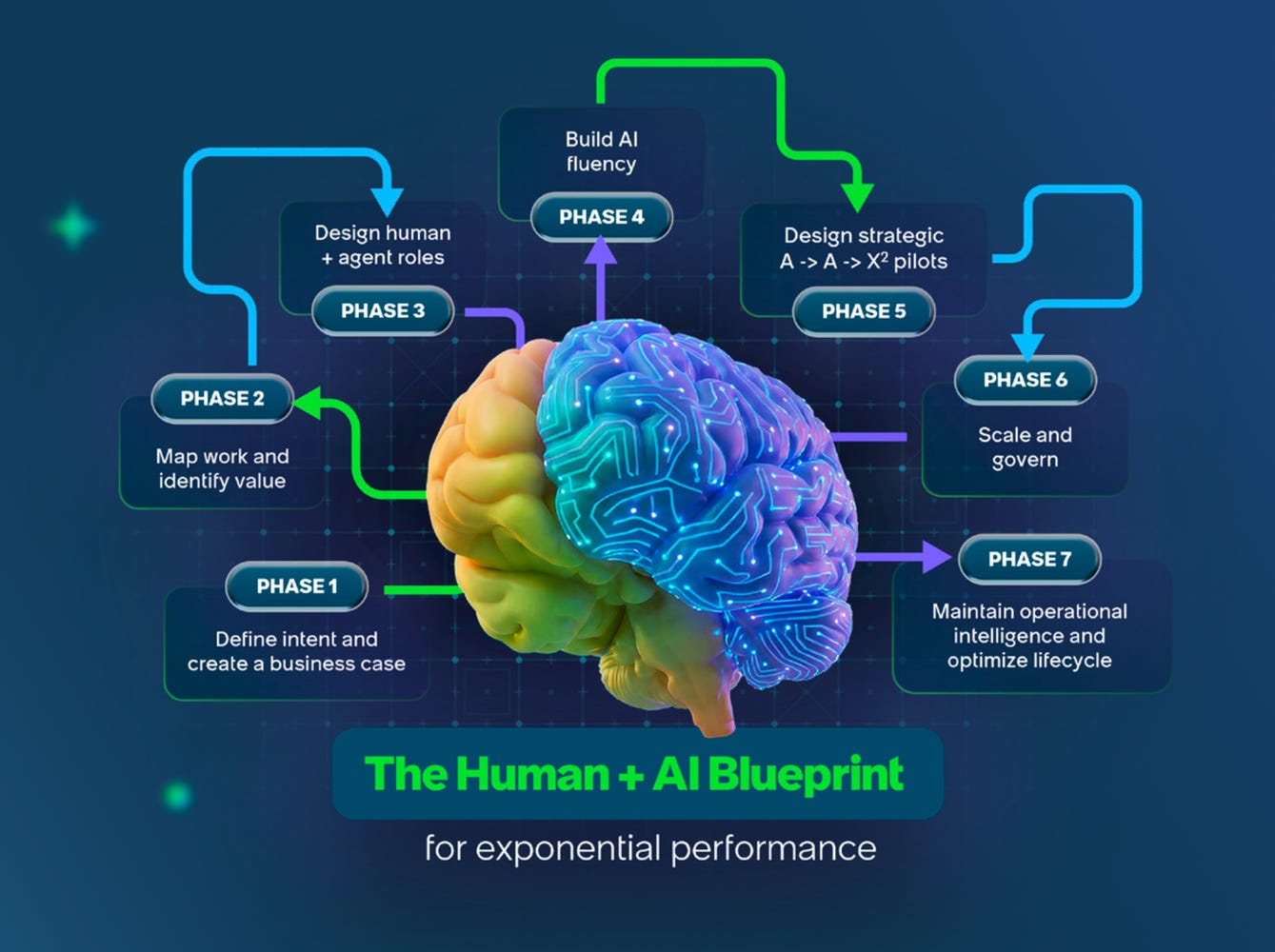
This is where a new framework comes in handy. Work Reimagined lays out seven phases: define intent and build the business case; map work and identify value; design human-plus-agent roles; build AI fluency; run A -> A -> X² lighthouse pilots; scale governance; and maintain operational intelligence through an AI control tower. It is practical by design. It asks leaders to distinguish high-repetition work from high-human-value work, create future job descriptions that pair people with agents, and measure success not only by time saved, but by quality improvement and newly created capacity redeployed to higher-value work. It also calls for an AI Resources Office co-led by HR and IT so agent role definition, onboarding, performance management, compliance, and ethics are built into the operating model, not bolted on after the fact.
For CHROs, this is your leadership brief. Build AI fluency before AI dependency. Redesign roles before redesigning headcount. Decide where saved time goes before productivity gains disappear into more noise. Gartner found that just 7% of organizations provide guidelines for how employees should use time saved by AI, even though 55% of HR leaders want that time redirected toward growth-driving work.
If HR does not define where new capacity goes, the business will default to using AI to accelerate output without increasing meaning, mobility, or resilience.
This is the moment to move HR from support function to transformation engine. Not to preserve yesterday’s jobs exactly as they are, but to help people stay relevant, grow into higher-value roles, and work in partnership with AI to increase performance and possibility.
The future of work will not be decided by the companies that automate the fastest. It will be shaped by the leaders bold enough to redesign work, invest in people, and create a model where human potential scales with intelligent systems instead of shrinking in their shadow. That future has to be reimagined, and designed.
Please download the report (no email gate!)

No posts
Comments
Nothing yet. Say the first thing.
Sign in to join the conversation.