
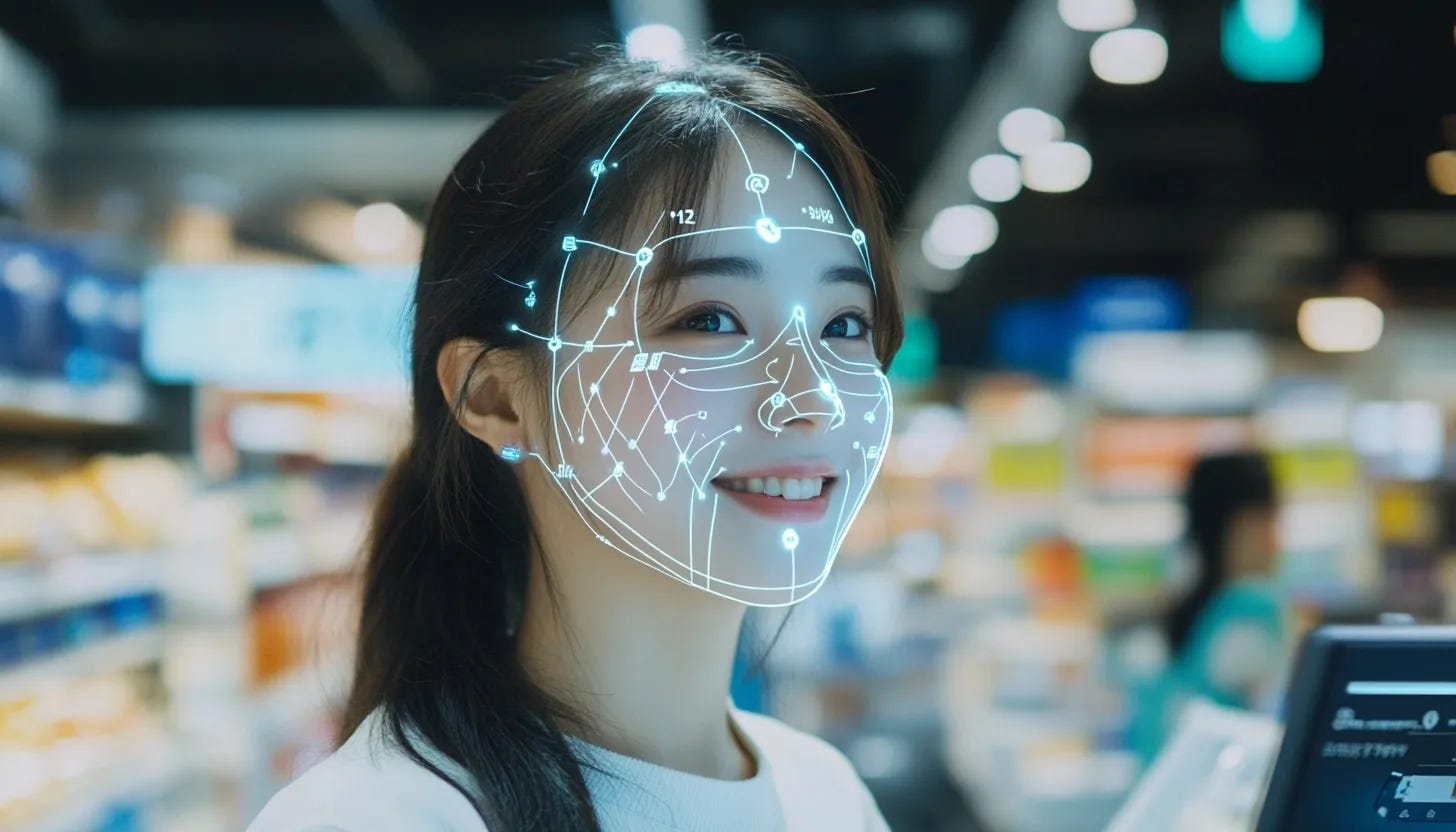
Imagine a world where your every smile, tone of voice, and facial expression at work are monitored by AI. Japanese supermarket chain AEON has introduced 'Mr. Smile,' an AI technology designed to measure and standardize employee smiles. Developed by InstaVR, this system aims to enhance customer satisfaction by ensuring that employees maintain a cheerful demeanor. On the surface, it seems like a step toward better customer service, but the ethical implications run deep.
In a world increasingly dominated by AI, one might hope that the deployment of such technologies would come with a strong ethical framework. Unfortunately, this is not always the case. Critics argue that while AI can indeed improve operational efficiency, it raises significant ethical concerns about surveillance and the impact on employee well-being.
The introduction of 'Mr. Smile' at AEON is not an isolated case but part of a broader trend where emotion-tracking AI is being integrated into various industries. In the United States, more than 50% of large employers have adopted emotion AI technologies to gauge employee emotions and behaviors. This technology uses vocal tone analysis, facial recognition, and data from wearable devices to predict emotional states, all in the name of improving customer interactions and workplace safety.
But this brings us to a crucial question: at what cost? Employees are being monitored more closely than ever, with AI systems analyzing their every move. The potential for misuse is significant, and the line between improving efficiency and infringing on privacy is increasingly blurred.
Emotion AI, while innovative, is not without its risks. The algorithms powering these systems are often opaque and can perpetuate biases related to race, gender, and disability. This is particularly concerning for marginalized groups, who may experience disproportionate harm from biased AI interpretations. Moreover, the constant monitoring can create a stressful work environment, where employees feel pressured to conform to AI-determined emotional standards.
Transparency and accountability are key to addressing these concerns. Companies must develop clear policies that prioritize employee well-being over surveillance. Employees should be informed about how their emotional data is collected, what it will be used for, and who will have access to it. Furthermore, they should have the right to access their own data, which could be used for personal development or to seek support when needed.
As emotion AI becomes more prevalent, the need for ethical implementation becomes more urgent. Companies must approach this technology with empathy, ensuring that it is used to support rather than penalize employees. This involves safeguarding privacy, fostering a workplace culture that values emotional authenticity, and ensuring that AI systems are not used punitively.
Policymakers also have a role in regulating the use of emotion AI, ensuring it is used in ways that protect workers' rights and dignity. As AI technology continues to evolve, ongoing dialogue between employers, employees, and regulators will be crucial in shaping a future where AI enhances rather than undermines the human experience in the workplace.
The rise of AI in the workplace offers both opportunities and challenges. While emotion-tracking AI can provide valuable insights into employee well-being and improve customer service, it also risks creating a surveillance state where employees are constantly judged based on their emotional output. The path forward requires a careful balance of innovation and empathy, with a commitment to transparency and ethical use.
As we navigate this complex landscape, it is up to companies, policymakers, and society as a whole to ensure that AI is used to enhance the human experience, not diminish it. Social media, AI, and other technologies are tools—powerful ones—but how we choose to use them will determine their impact on our lives and our workplaces.
For now, the focus should be on developing AI systems that respect privacy, promote well-being, and foster trust between employees and employers. Only then can we truly say that we are using technology for the betterment of society.
Until next time, keep on rezzing.
Brian Selzer (Chief Rezonator)
Resonating Wisdom in the Age of Accelerated Technology
rezdom.com
No posts
Comments
Nothing yet. Say the first thing.
Sign in to join the conversation.