
What Going On?
Let’s face it Winnipeg, we are a city in crisis right now. Many may not recognize it, but we all see it. Some of us are living it, every day. Particularly in our downtown and inner city.
I live in West Broadway, a couple of blocks outside of what is defined as “downtown” but definitely inner city. One of the most common questions we, as residents, are asking is “what the hell is going on?”. We are seeing more public drug use, more people on the streets, more “public disorder” (I hate calling it that). Essentially, the social challenges we face as a community our now in our face.
How Did We Get Here?
How did we get to this point? In particular given that addressing these issues has been a priority for our provincial and municipal government. The “Your Way Home” program was initiated specifically to move people from encampments into housing. The City of Winnipeg was fully on board with that approach saying they were a partner in the program. A commitment to opening a safe consumption site was made in July of 2024. It has been re-announced several times since then, and still hasn't opened by June 2026. Despite the various commitments over the past years, despite the recognition that we are in a homelessness and drug crisis, very little progress has been made.
For all the laudable rhetoric and targets from our political leaders, there are many reasons for the lack of progress: lack of funding, lack of coordination, siloing, public pushback. You name it, at every turn there has been an excuse for delay and lack of progress.
So, let’s dig into it. How did we get to the point where, rather than great progress, it seems like we are going backwards?
In Your Face, Winnipeg!
A good starting point is looking at how this is impacting our communities. There have been several media stories the past few weeks that highlight this. The crisis is affecting everyone, pretty much everywhere in Winnipeg’s inner city.
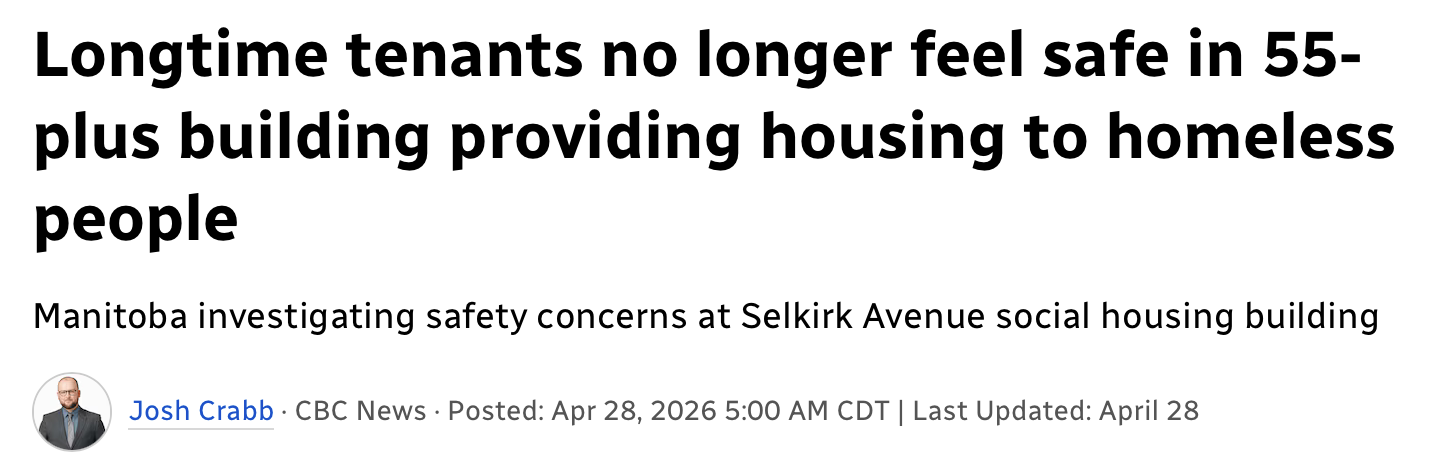
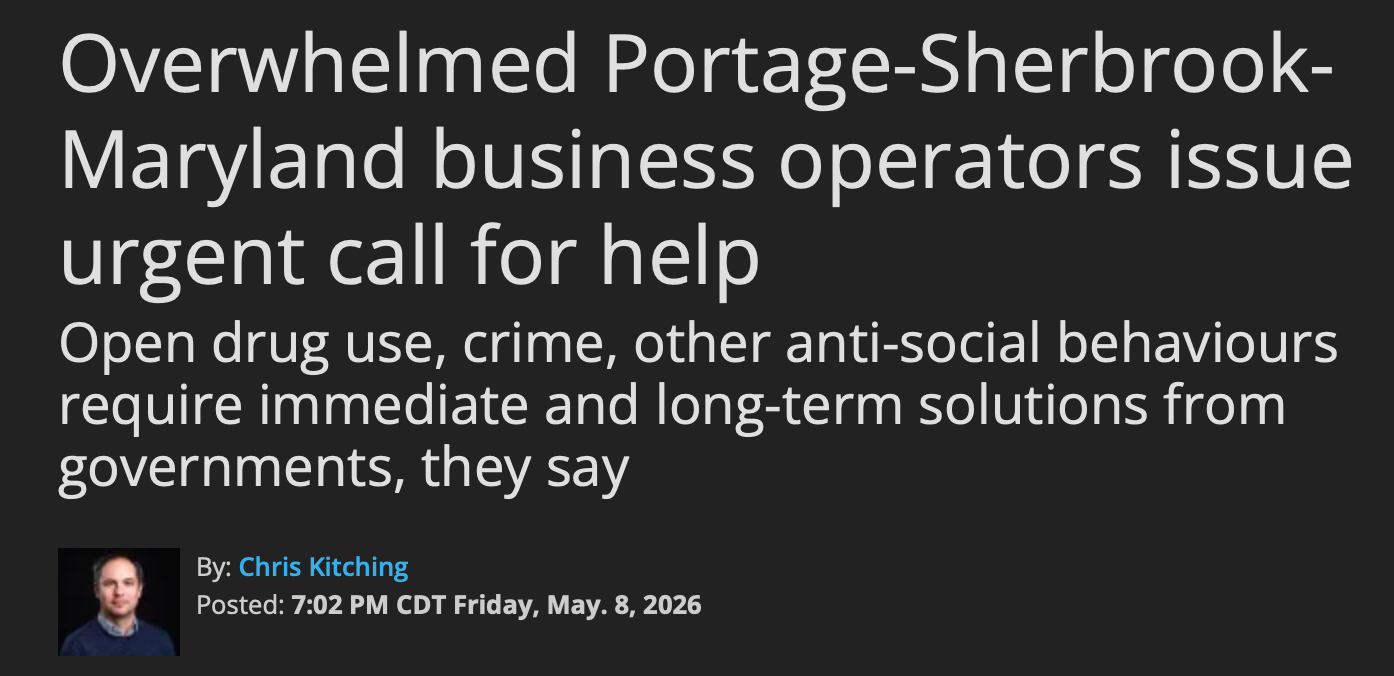
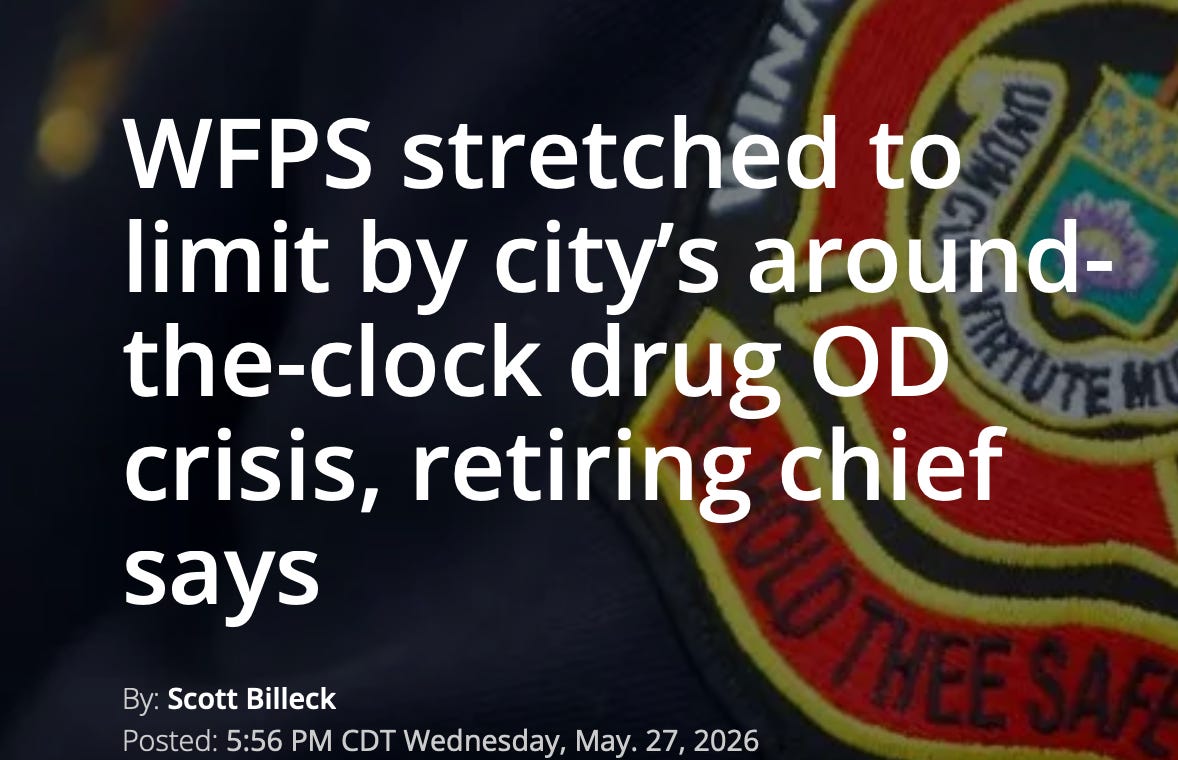
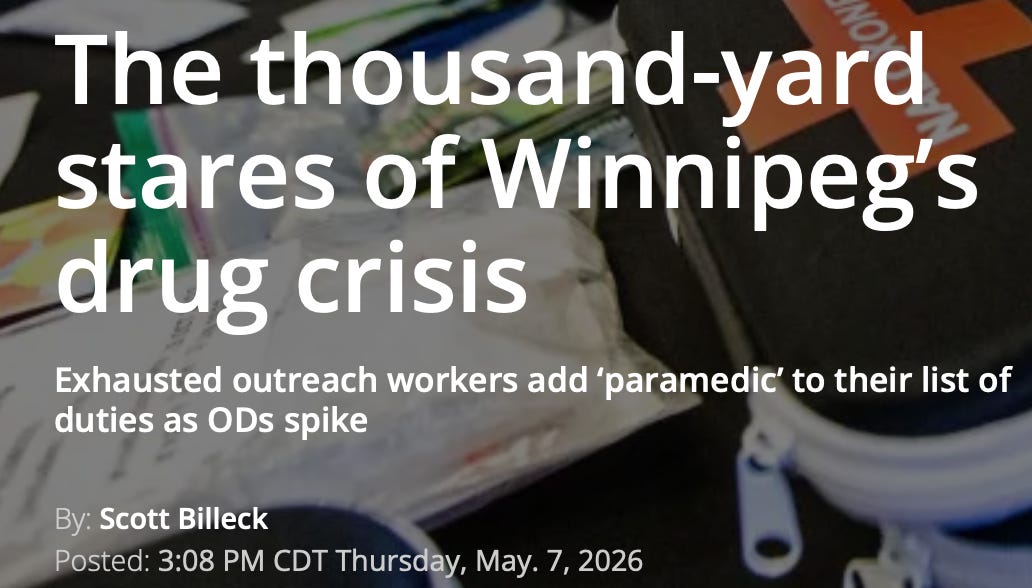
All this in the past month! I can add personal notes to this as well.
In the past week neighbours on my block have had to administer naloxone twice.
I’ve called DCSP (the Downtown Community Safety Partnership) twice for people in distress. BTW, call DCSP rather than call the police: 204-947-3277
I live 2 blocks from the corner of Portage & Sherbrook, it has never been this bad.
There is more yelling at night from people in distress than I’ve experienced before
I have direct experience over the past several months of people breaking in to apartment buildings looking for a place to sleep. That leads to all kinds of issues such as defecation in stairwells, destruction of property, graffiti, drug use and needles in stairwells.
I love my community. We are a caring supportive neighbourhood. Most of us now have naloxone at home so we can be there for people in crisis. We are now very much on the front line of this crisis.
What’s Different This Time?
Individually, none of this is new. We have been dealing with a drug crisis for years. If you google “drug crisis” you will find news stories dating back well into the last decade. Yes, it does seem to come in waves, where they are more poisoned drugs out there, but it hasn’t gone away in a very long time.
Homelessness too is nothing new. We have seen the rise of homelessness for decades as well. Almost 20 years ago most cities in Canada developed their “10 Year Plans to End Homelessness”. Winnipeg’s The 10-Year Plan to End Homelessness was launched in 2014. At the outset, it was estimated that 700 Winnipeggers were in homeless shelters, and another 1,400 were precariously housed. 12 years later, no progress has been made, in fact it is worse. (yes, counting methodologies are different, but inarguably, it’s worse than 2014).
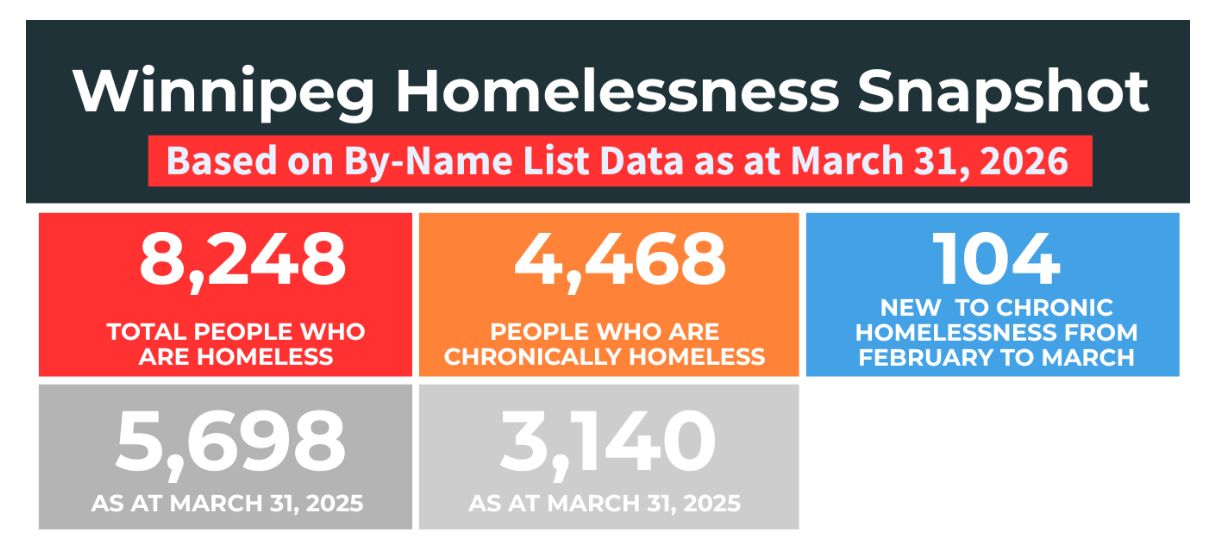
Why Is It Different This Time?
None of this is new. We’ve been here for a while, but this time is different. We have to go back to almost a year ago, in July 2025. That was when City Council proposed restricting encampments. First it was proposed to restrict them from near playgrounds. That expanded to our “image” roadways, with McPhillips and Pembina as examples. (yeah… really!!). This shockingly short-sighted approach to encampments continued a history of displacement from the City of Winnipeg, which I chronicled last summer.
In November 2025 a bylaw regulating where and when encampments can be set up came into effect. The full list of locations now being enforced are:
Within 50 metres of the perimeter of playgrounds, pools, spray pads or outdoor recreational facilities designed for children, families or seniors
Within 50 metres of the perimeter of schools, daycares, or adult care facilities
Where a hazard or obstruction to vehicular or pedestrian traffic exists
Within a median or traffic island
Within 30 metres of a transit shelter
Within 30 metres of bridges, docks, or piers
Within 50 metres of a rail line or crossing
Where life safety issues exist
While there was some enforcement over the winter, with a number of encampments being dismantled, enforcement really ramped up this spring. Since March, city officials have significantly increased site visits and enforcement. This coincides with the increase of activity on our streets and in our neighbourhoods.
The Red Map
While the City of Winnipeg releases its list of restricted locations you could make an argument for each of those locations, whether based in reality or perception. But that is just a list.
This past week, an alliance of community advocates released a map showing all of the areas together. The result, mapping each location where encampments are illegal, is a map entirely in red. Not only that, but for the rare locations where encampments might be allowed, the restrictions are that it must be removed 1 hour after sunrise and not be set up until 1 hour before sunset.
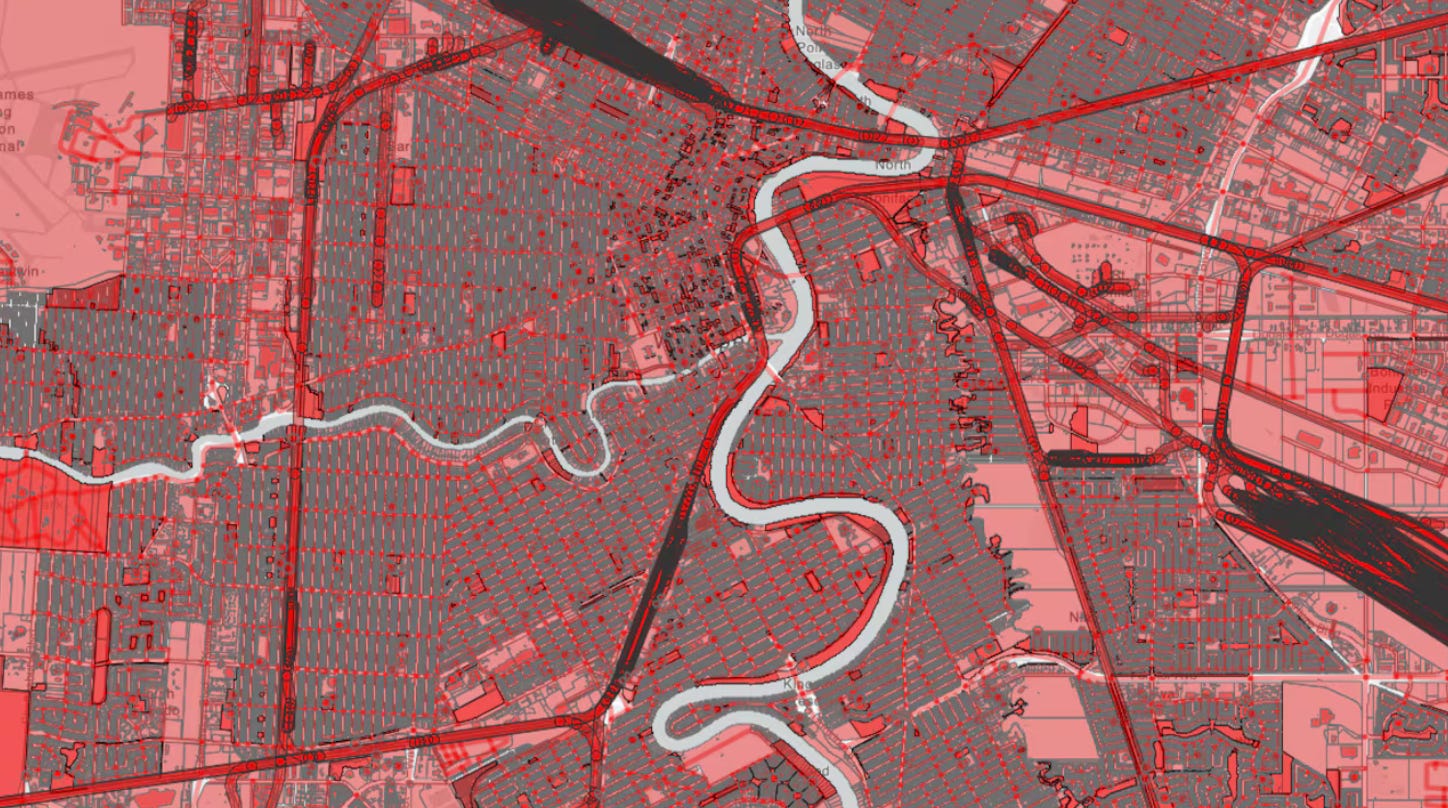
The resulting report, Pushed off the Map: Living Unsheltered in Winnipeg, is well worth the read.
The Result
The result, as predicted by many last summer, is that people living in homelessness lose access to services. They become more dispersed and difficult for agencies to find. Not only are people displaced, but the mutual support and community they’ve built within an encampment is destroyed. Encampment residents look out for each other, support each other, make sure their community is safe. That security is ripped from them when the encampment is removed by loaders and trucks.
There aren’t enough shelters or housing in place to move people in to. And those who do end up with housing through the provincial “Your Way Home” program or the federal “Reaching Home” program are not receiving the supports required to make sure they are successful. Those supports are typically delivered by non-profit agencies that are particularly stressed for funding and overwhelmed by the need.
In response to the release of the Red Map this past week, the City said it will continue with its efforts to enforce the encampment ban.
Gillingham said he stands with the encampment bylaw change and suggested council passed it “to give parks and playgrounds back to families.”
“We’ve got too many people that are struggling with addiction, we have too much open drug use, we have too much crime,” he told reporters Tuesday.
“This is not the time to be going in different directions. This is [the] time to be uniting to combat the challenges on our streets.”
The Disconnect
The disconnect between continuing with the enforcement and the recognition of the community struggle is emblematic of the larger disconnect. With the plethora of news in the past month about addiction, overdoses, safety concerns, encampment bans, and “anti-social behaviour”, we are still not connecting the dots. The media, while reporting on these issues, is not asking the next question: why is this happening? The City wilfully ignores the impacts of its decisions on unhoused Winnipeggers. The Province implements a housing first type program without appropriately supporting the social agencies needed to support people to be successful. The safe consumption site promised for 2025, then for January 2026, then March, is still not open and saving lives. Meanwhile, people are dying. And we, the public, are overwhelmed, not knowing what to do or how to react, find it easier to avoid, to not make eye contact, to think “but for the grace of god there go I”.
Where to Start
We need to start from a place of recognizing each other’s humanity. We have too much “othering” in our community. When we see people as other, we no longer see them as members of our community and our neighbours. This attitude is not limited to the current crisis, but can be found in attitudes towards immigration, language, income and so many more qualifiers. It is easier to ignore someone’s problems when we don’t consider them part of our “group”. I just wrote a bit about this when it comes to how we think of public transit.
We need our leaders to bring a sense of empathy to the table when they are seeking solutions. While decision makers say they hear from their constituents they want enforcement, our elected leaders have a responsibility to those they don’t hear from. Yes, they may receive 100 emails, or 500 emails (that would be a LOT!) wanting said enforcement or more, but they have to remember they are ONLY hearing from those who have the ability and capacity to reach out to them. In ward or constituency of 40,000 residents, 100 emails does not constitute a majority. Yes, it is important to listen to and acknowledge the people that share their opinions, but it is a greater responsibility to represent those who can’t and don’t have the ability to have their voices heard.
We need patience from the public, and our decision makers, to underhand this will take a long time to resolve. A program to house people from encampments doesn’t mean you can ban encampments. A ban does not build more housing, a ban at best moves the problem along. Out of sight, out of mind, or more appropriately into someone else’s backyard.
We need government to be willing to listen to agencies, the frontline professionals who demonstrate and model the empathy and respect that needs to be brought to the decision making table. Too often, consultation is perfunctory. Too often, such as the crisis we find ourselves in today, frontline workers have warned against.
The Front Line
The decisions and approach to address the combined crisis of homelessness and drugs has moved the front line into our neighbourhoods. And neighbours are arming themselves to help, carrying naloxone, calling for assistance, cleaning up the needles and detritus.
And those needed help in our communities are my neighbours.
My neighbours are demonstrating the empathy and caring for their community that our leaders should be.
When it feels so hopeless, my neighbours rescue me and give me hope.
I am lucky to live where I do.
brian
J’ai oublié de mentionner que nous avons abordé ce sujet vendredi dans l’émission L’Actuel. La discussion était intéressante.
Politique Municipale 29 mai, 2026
b
Comments
Nothing yet. Say the first thing.
Sign in to join the conversation.