
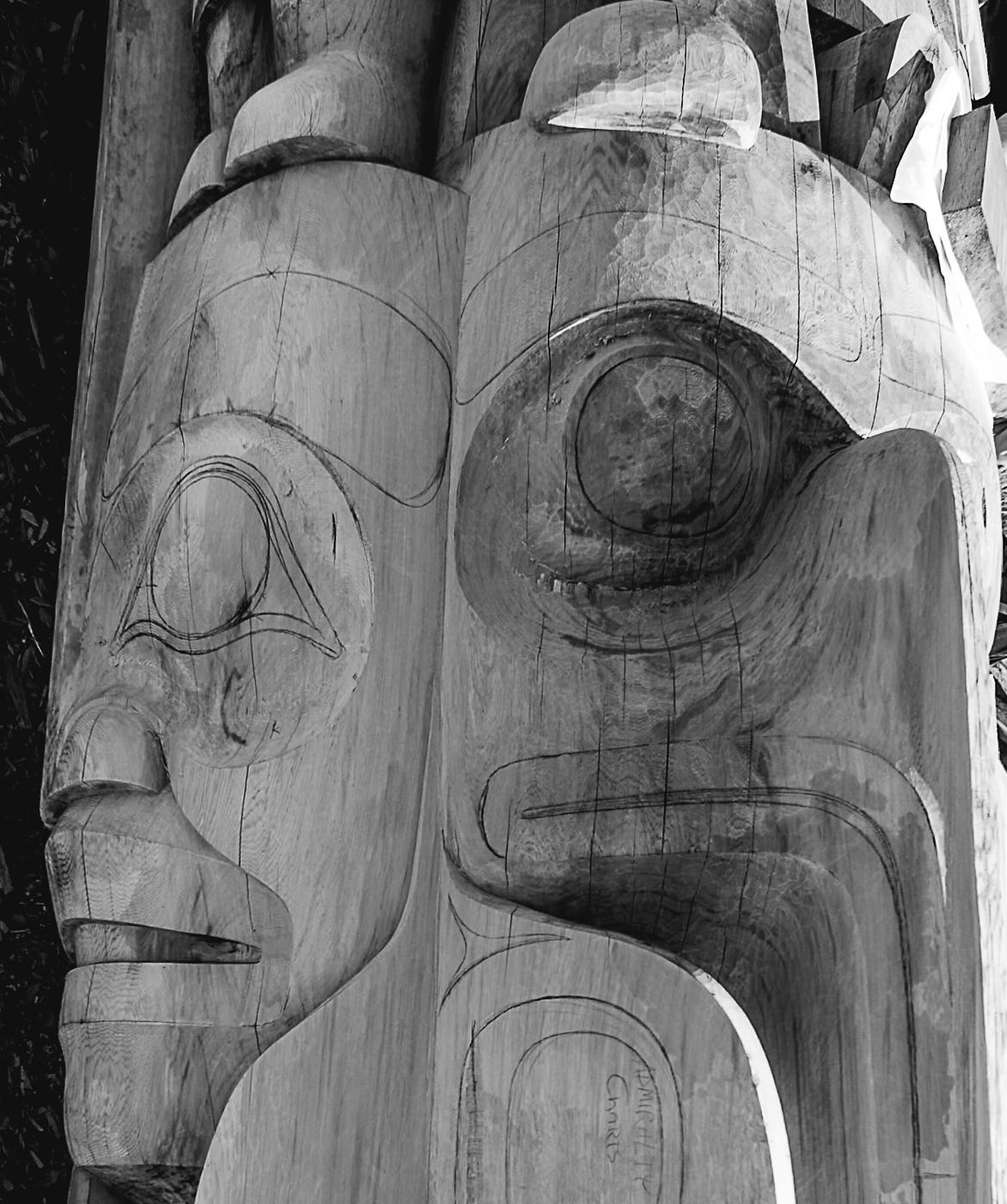
A detail during the carving of the UBC Reconciliation pole. Carved by Haida master carver and hereditary chief 7idansuu (James Hart). Photograph by Brian Palmquist
My 200+ City Conversations have been pretty quiet about how Vancouver arrived at indigenous1 developments such as Senakw’ and the Jericho Lands. Sure, I’ve talked about the results from a planning and urban design perspective, but I’ve been largely quiet about the processes that led to their designs—largely because my involvement in their evolution was late and spotty2.
This past week I attended the Royal Architectural Institute of Canada (RAIC) national conference in Vancouver—admittedly because I needed to amass a considerable number of continuing education credits to maintain my BC architectural registration. All good and no complaints. I suspect a majority of attendees had a similar motive.
BC in its wisdom requires that about 6% of these credits be on the subjects of “Indigenous Peoples Learning.” For me that comprised three one-hour somewhat interactive sessions—one focused on indigenous engagement strategies for a government building in the maritimes; the second examined the application of the UN Declaration of the Rights of Indigenous Peoples (UNDRP) to architecture; and the third examined the subject of reconciliation as applied to specific architectural projects. All were excellent and informative.
But as the presenters, a clear majority of whom are indigenous from across Canada, recounted their experiences, their learnings and their philosophies, I noted some recurring themes that are strange to my Vancouver context. I paraphrase the presenters’s words:
“It’s essential to involve knowledge keepers and elders in most design and planning discussions and incorporate their thoughts in a respectful way.”
“All parties must be in the room, including knowledge keepers and elders, the design professionals, governments and the communities they represent.”
“Elder/knowledge keeper engagement must be maintained throughout all phases of design and decision making, up to and including dedication, occupancy and post occupancy celebration.”
“It’s essential to build relationships with these knowledge keepers and elders—not simply “consulting,” but actually seeking mutual and deep knowledge and understanding and being prepared to devote the necessary time to develop these relationships.”
“Consultation and these relationships must be broad and deep, including where appropriate multiple indigenous nations and tribal/band groups.”
I say that these themes are strange to me because of the contrast with how reconciliation, learning, relationships and consultation with city staff as well as indigenous proponents and sponsors occurs in Vancouver. I refer as an example to the Jericho Lands planning process, which I somewhat participated in, but also many other city planning efforts that are indigenous in the sense that they all occur on unceded indigenous lands and include in the city’s documents significant statements about indigenous rights and requirements. I include in that list: the Vancouver Official Development Plan (ODP); the recently added Villages Plan; and the many other area plans that are proceeding.
A couple of consistent aspects of those city-and-proponent-led planning efforts that catch my attention in relation to reconciliation, consultation and relationship building:
Indigenous participation in Vancouver planning is largely hidden from the general public. A very diplomatic and gentle friend confirms that during the four-year community consultation process around Jericho, which he attended religiously, he was exposed to only one elder on one occasion for a short period, who was carefully guided by the proponent. There was no ability for them to build a relationship with elders and knowledge keepers. Nor was there any explanation of the importance to reconciliation of developing such meaningful relationships.
All of these initiatives clearly state in their planning documents that they included significant staff/indigenous consultations, but none of those discussions was open to Vancouver’s other citizens. So city staff may have developed relationships with Vancouver’s indigenous populations—we don’t know because we were not parties—but they very clearly prevented affected neighbourhoods and interest groups, some with deep knowledge3, from having dialogue or developing relationships with their indigenous neighbours.
At the end of the third RAIC presentation, an attendee (not me) asked the panel how to identify if attempts at reconciliation and relationship building were genuine. An indigenous panel member answered:
“Ours are generally matrilineal societies. Most knowledge keepers and elders are women. Look around the room and ask, “Where are all the Grammas?””
This post is about 750 words—about the 3-5 minutes citizens are allowed when they are allowed with less and less frequency to speak to the current Vancouver City Council, in their efforts to suppress democracy. If you appreciated this post, please share to your social media and consider becoming a free subscriber to City Conversations at
Brian Palmquist writes in the ancestral lands of the Musqueam people. He is a Vancouver-based architect, building envelope and building code consultant and LEED Accredited Professional (the first green building system). He is semi-retired, still teaching, writing and consulting a bit, but not beholden to any client or city hall. City Conversations mix real discussion with research and observations based on a 50-year career including the planning, design and construction of almost every type and scale of project. He is the author of the Amazon best seller and AIBC Construction Administration course text, “An Architect’s Guide to Construction.” A glutton for punishment, he is threatening to write a book about how we can Embrace, Enhance and Evolve the places where we love to live. Some of its content may appear above.
I am using indigenous throughout this post as the most inclusive term for all of the First Nations, Métis and Inuit groups who were discussed by the representatives from across Canada.
Some of that spottiness arose due to COVID, which curtailed some meetings.
for example the Jericho Lands Working Group that included estuary, water and drainage experts to name just a few.
Comments
Nothing yet. Say the first thing.
Sign in to join the conversation.