
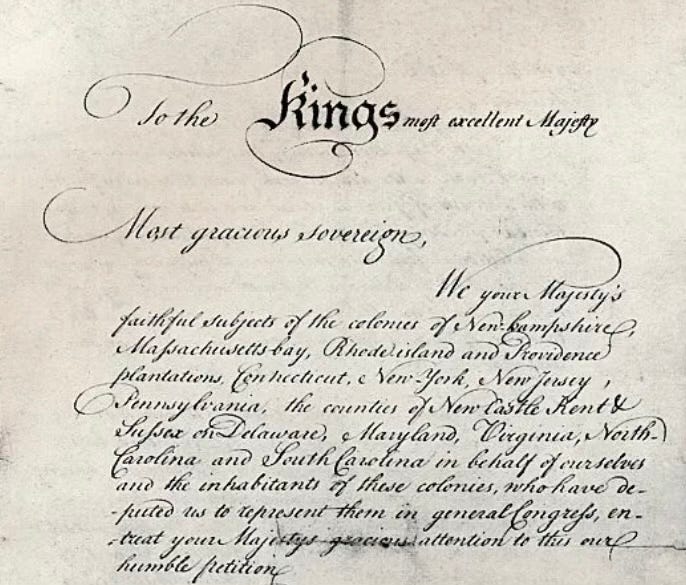
After reading this, I think that most of you who believe that yesterday marked the anniversary of a memorable moment in our Nation's history will probably agree that today is a date that the proud patriots among you would rather forget.
The second paragraph of the Declaration of Independence includes the sentence, "Such has been the patient sufferance of these Colonies; and such is now the necessity which constrains them to alter their former Systems of Government."
Just a year earlier, it would seem, they were more disposed to suffer, while evils were sufferable.
That was despite a long train of abuses and usurpations, beginning with the Sugar Act in 1764. The following year, it was the Stamp Act and the Quartering Act.
Due to boycotts and difficulties in enforcing the Stamp Act, it was repealed less than a year later. However, on the day it was repealed, Parliament passed the Declaratory Act, asserting its "full power and authority to make laws and statutes of sufficient force and validity to bind the colonies and people of America, subjects of the crown of Great Britain, in all cases whatsoever."
In 1767, the Townsend Acts imposed taxes on imports such as paper, glass and tea. They also reduced taxes on tea imported to Britain by the British East India Company, effectively giving it a monopoly in the colonies, and suspended the New York Assembly until it complied with the Quartering Act.
On March 5, 1770, British soldiers fired into an unruly crowd on King Street in Boston, killing five colonists. The Boston Massacre significantly amplified the anti-British sentiment that had previously been kept to a relative simmer.
The 1773 Tea Act, of course, led Boston's Sons of Liberty to famously dump 342 chests of tea, imported by the British East India Company, into the city's harbor.
In response to that act of rebellion, Parliament instituted the Coercive Acts, a series of laws meant to punish the people of Massachusetts. The acts closed the Port of Boston, revoked the colony's charter and expanded the requirements to house British officers pursuant to the Quartering Act.
When you reflect on all of this, you have to wonder what took the colonies so long to rebel.
It wasn't until April 19, 1775, that the shot heard 'round the world was fired. American casualties at the battles of Lexington and Concord totaled 49 killed, 39 wounded, and five missing.
Two months later, at Bunker Hill, 115 Americans were killed, more than 300 wounded, and 30 captured.
And yet…
Comments
Nothing yet. Say the first thing.
Sign in to join the conversation.