
For the next several weeks I’m going to be walking through the chapters of my book Created to Play and adding some additional thoughts, background stories, and even sections that got cut from the final round. If you’ve already read, take this as another dip back in- and if you haven’t- here’s a chance to grab a copy and read along with me!
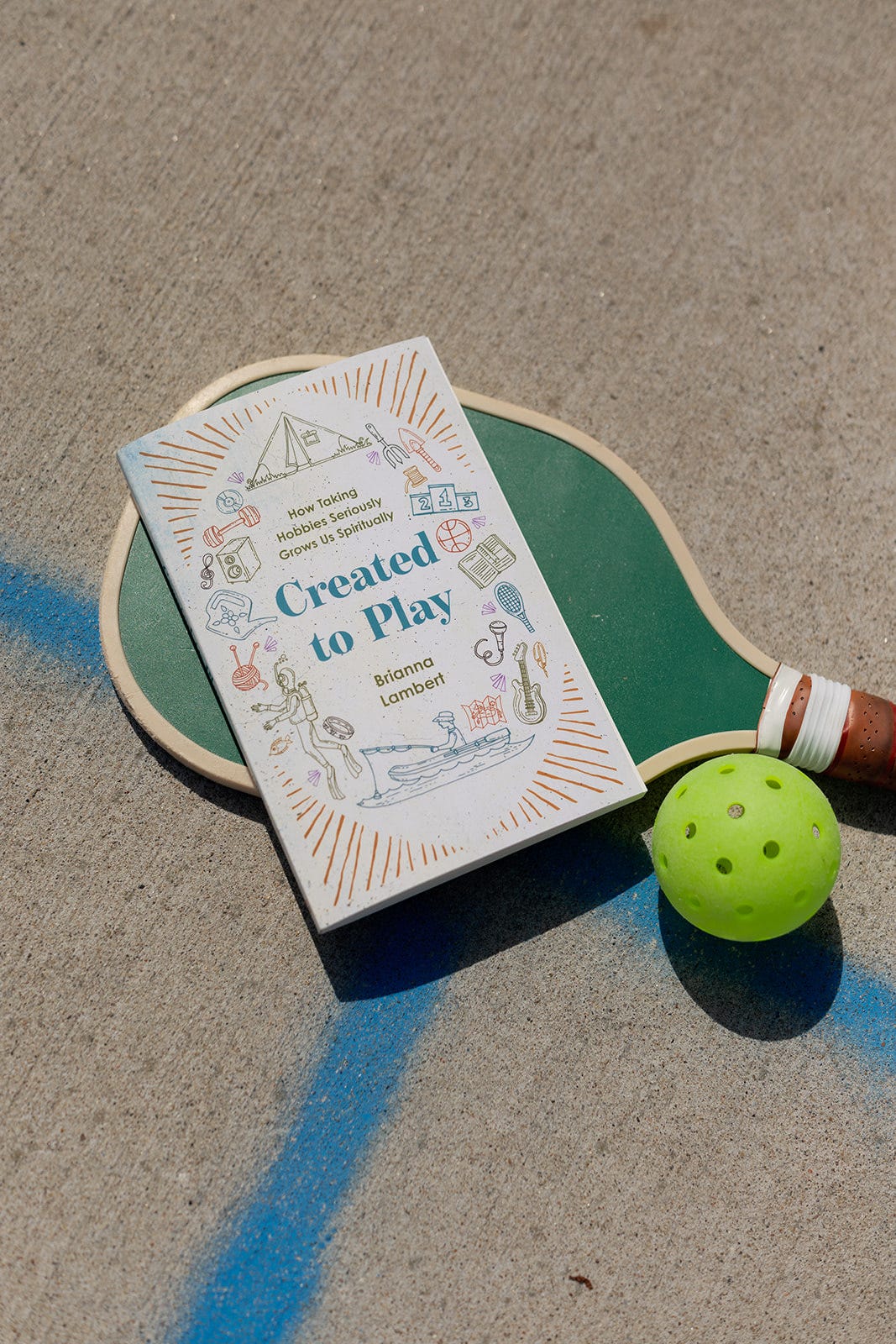
The introduction and first chapter of Created to Play quickly became one of my favorite parts of the book. In order to deal with the gift of play in specific hobbies, I first needed to establish the foundation of the importance of play in general. The theology of play is worth its own full book, and there have been and will be others to tackle this worthy topic (Ray Ortlund’s latest, I believe offers a great pairing alongside my book, as well as the forthcoming work of Katy Bowser Hutson).
Walking in the boundaries of my work, the introduction and first chapter fights off the misconceptions we believe about play and builds an understanding of how play fulfills the purposes the Lord has made us for. Of course, I’d love to have written more, and one of those topics I wish I could have talked about was the nature of play within community.
I briefly touch on communal play in each chapter, as I talk about how each specific role builds us up as we participate within a community. But there is much more to be said about the way playing- particularly together- pulls us away from the utilitarian mode of life we are so used to.
As I argue in chapter 1, this utilitarian way of viewing life is all around us, permeating the air we breathe. The other day I read an article that highlighted this obsession, entitled, “The Hidden Cost of Having a Husband.” The author chronicled her life since her divorce from her husband, which suddenly allowed for many projects, decisions, and much-needed work to get done because she could make every decision on her own. She no longer needed to check in or depend upon anyone but herself.
Now, I want to be clear— from her anecdotes, her situation didn’t sound like a healthy situation, nor a partner who was interested in sacrificing much for the home and family he was a part of. My observations in reading weren’t about her marriage or other apathetic marriages, but moreso the way that the language of efficiency seeps into all parts of our lives, and how tempting it is to adopt.
The author notes that we don’t talk about “the economy of obstruction.” She writes, “A tremendous amount of a woman’s life can be consumed by tiny negotiations that theoretically do not require two people in the first place.” She says most of us don’t “calculate the cost” of being required to wait on another person in our decisions and tasks. While her unhealthy marriage lived out this tension to the extreme, it’s one even healthy marriages must contend with on some level. When efficiency is the highest good, quantifiable results will bleed into our relationships, leaving us tallying the books and asking ourselves how much more we could get done without our spouse, child, or friend.
The author’s point is compelling because it’s true. Instead of waiting for our spouse to give an opinion on the new faucet handle we like, we could just click buy. Instead of going to their preferred lunch spot, we could choose what sounded good to us. Instead of driving to help a friend who was stranded, we could finish up the project we needed to get done at work. People obstruct each other. In a world where efficiency ruled, the best answer would be to remove those obstructions, but God has a different end in mind. Instead of production, he is concerned with formation.1 He’s growing us in his likeness, bringing us from one degree of glory to the next, and he’s doing so while you wait for that faucet handle or while you drive to help your friend.
In a world where most of our lives are streamlined around removing as many difficulties as possible, perhaps we need to enter into more situations that purposely place us within them. Communal play is a great place to start. Playing together places us smack in the middle of a realm of obstructions. The person across the board game takes too long at his turn or disrupts the play of the game. The child out on a hike has to stop and eat, tie their shoe, and whine for a break. The club at the RC field forces you to patiently wait your turn, listen to their stories, and abide by their rules. The book club conversation strays off into tangents you didn’t want to talk about. The friend crocheting with you needs to you stop what you’re doing in order to help them with a stitch.
Playing together will always require us to give up something of ourselves for the sake of another. We need that practice. We need more opportunities not to tally what others cost us, but to sit beneath the tender chisel of formation. Of course, in God’s world, often what looks like loss, is the seed of a bursting fruit. Those obstructions to efficiency become the friends you care for, the club members you learn from, and the children who have a childhood full of memories playing with you. They become the avenues of multiplied joy and the means by which we can work together to bless and serve even more people around us.
On our own, we might run a few more miles. We might finish the book faster. We will face less resistance. But who would wants to settle for that?
We were made for more, and playing together is another chance to remember that.
I’m sure I’m not the first to say this line, so if it belongs to someone else- I will give them credit!
No posts
Comments
Nothing yet. Say the first thing.
Sign in to join the conversation.