
Last week, one of the most memorable moments of the Olympics occurred as twenty-year-old, Alysa Liu, became the first gold medal winner in figure skating for the United States after a lengthy twenty-four years. While the return of the women’s figure skating gold was exciting, the greater story landed on Alysa’s personal return to the sport after a two-year hiatus. After competing for years in ice skating, sixteen-year-old Liu had become exhausted and burnt out. She stepped completely away from the sport and all its schedules and restrictions. In her newfound freedom Liu attended concerts, got her driver’s license, and even went to a year of college. This time off eventually led Liu back to a renewed love of skating, and in 2024 she decided to re-enter the competition—this time with a new mindset.
Before her competition in Milan, Liu remarked to NBC, “A lot of people are really nervous because they think of the Olympics as kind of the end, like the end of a movie, but for me, I know that's not the end of a movie, you know what I mean? There's things I'm looking forward to after Olympics."
It was hard not to see this perspective in every move of her routine. Liu took to the ice with a freedom that was enviable. The smile on her face betrayed the delight she felt irrespective of the outcome.
The response to Liu’s routine and her win exploded throughout social media. I scrolled through post after post admiring the beauty of Liu’s comeback and her pure love of the sport. While many different angles about her performance can be (and have been) explored, I can’t help but notice what our hunger for Alysa’s message says about us.
For a few minutes during that skate we received a picture of what it looks like to participate in something you love purely for the love of it. We saw a figure skater not driven by results, fame, money, or any other kind of tangible outcome. Instead, we just saw an opportunity for joy—and we wanted more.
Because while we may not be Olympians vying for medals with strict workout routines and diets, we all fall prey to the same ideologies. We get sucked into the idea that our to-do list is the most important part of our day. We’re ruled by efficiency and whatever will churn out the best results. We flock to apps that will help us use our time to the fullest evidenced by the way we can track everything from our heart rate to our sleep scores at night. Money, likes, follows, and measurable results are the medals for our ordinary days.
In this world where productivity reigns, Alysa Liu reminded us what life could be like if we simply just received. What happens when we stop straining and producing? What occurs when we stop striving to do and instead just delight in what God has given? What happens when we create and move not because it checks our boxes, but simply because the Lord has made us to create and move—and we want to?
Alysa answered these questions with her beaming smile. For when we toss aside the strain and burnout of our productivity mindset, we will find delight. We’ll find humility and gratitude, and we’ll discover our hearts turning in worship towards the God who made us.
For whether or not Liu acknowledges this, every move of her feet against the ice was a gift of her Creator who formed a world where his image bearers could figure skate. So it is with each of our different fields of play—whether it be kayaking, puzzling, fishing, woodworking, or embroidery. Every activity that gives us joy is a gift from his hand, and these gifts don’t have to come with results. They don’t necessarily have to contribute to our efficiency or productivity. They can simply remain a gift.
Of course, the irony is, Liu’s performance did come with results. She did earn the medal. My cynical side wants to ask, would the world have been been as excited and inspired if she didn’t earn the gold? Would her message have been as encouraging for us to delight in our passions if those passions ended in further obscurity?
We’ll never know how our social media feeds may have responded to that question, but we can answer it for ourselves. We can answer it by picking up a paintbrush this afternoon and painting a flower that will end up in a drawer. We can answer it by sitting at the piano and stumbling through a song, and building a Lego with your daughter this evening that will get taken apart tomorrow. We can answer it by delighting in the gift of play absent of any tangible outcomes.
We can answer it by receiving our Father’s gifts—even when he is the only one who sees the smile stretching across our face.
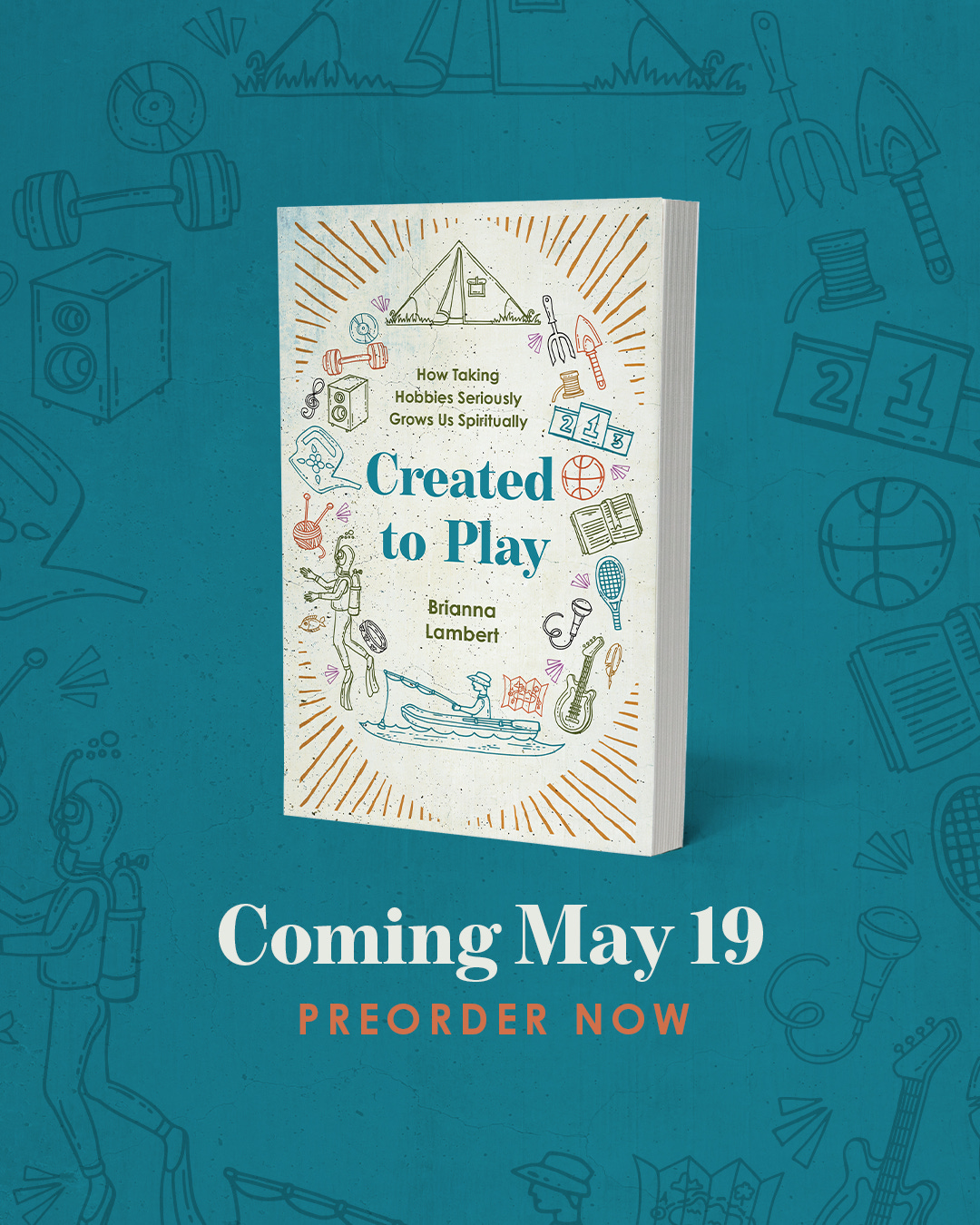
Want to talk more about the way hobbies bring you to worship? Check out my upcoming book, Created to Play: How Taking Hobbies Seriously Grows Us Spiritually. (You can even get the download the first chapter today!)
No posts
Comments
Nothing yet. Say the first thing.
Sign in to join the conversation.